Parshat Vayakhel5 min read

Friday Fire and the Weight of the Sabbath

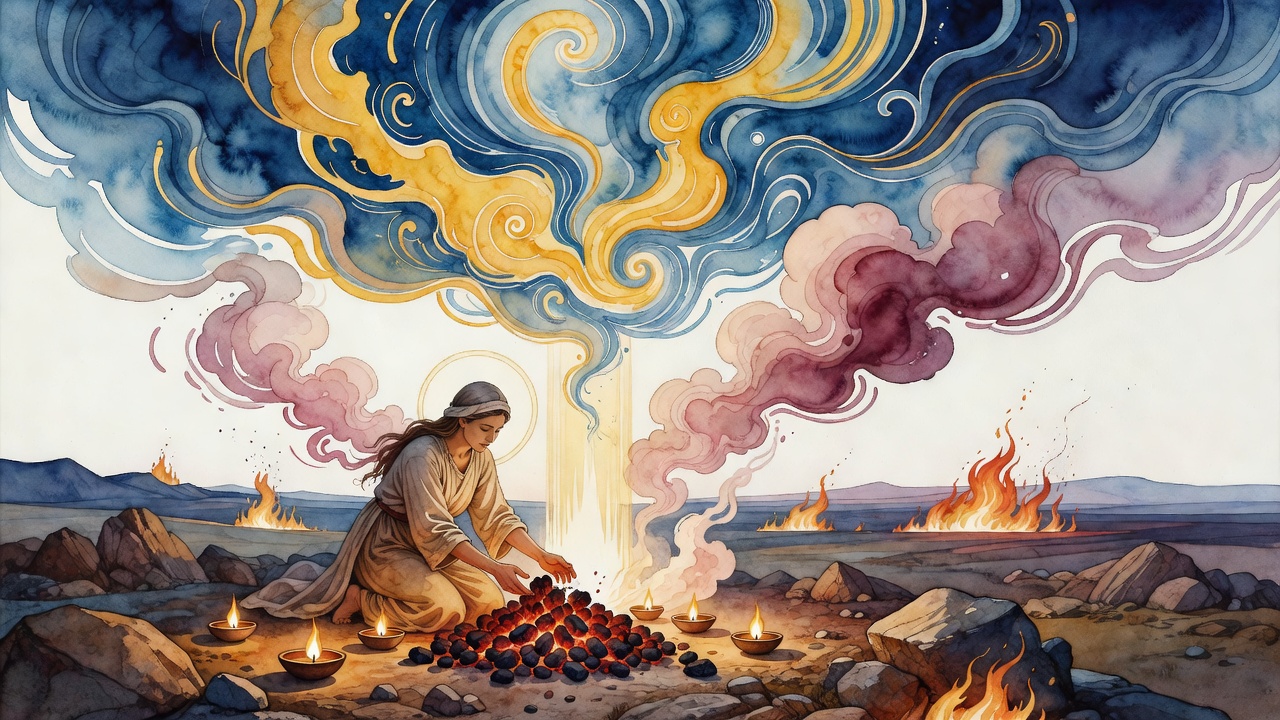
She raked the coals into a pile and set the pot where the heat would hold. Fire may be lit on Friday, not on the Sabbath. She lit the lamp before dark.

Curated by Arthur · Told by Maggid ·
Table of Contents
  1. Coals Before the Dark
  2. From the Lighter Rest to the Heavier
  3. Her Hands Knew the Difference
  4. Inheritance That Does Not Expire
  5. Night Without New Fire
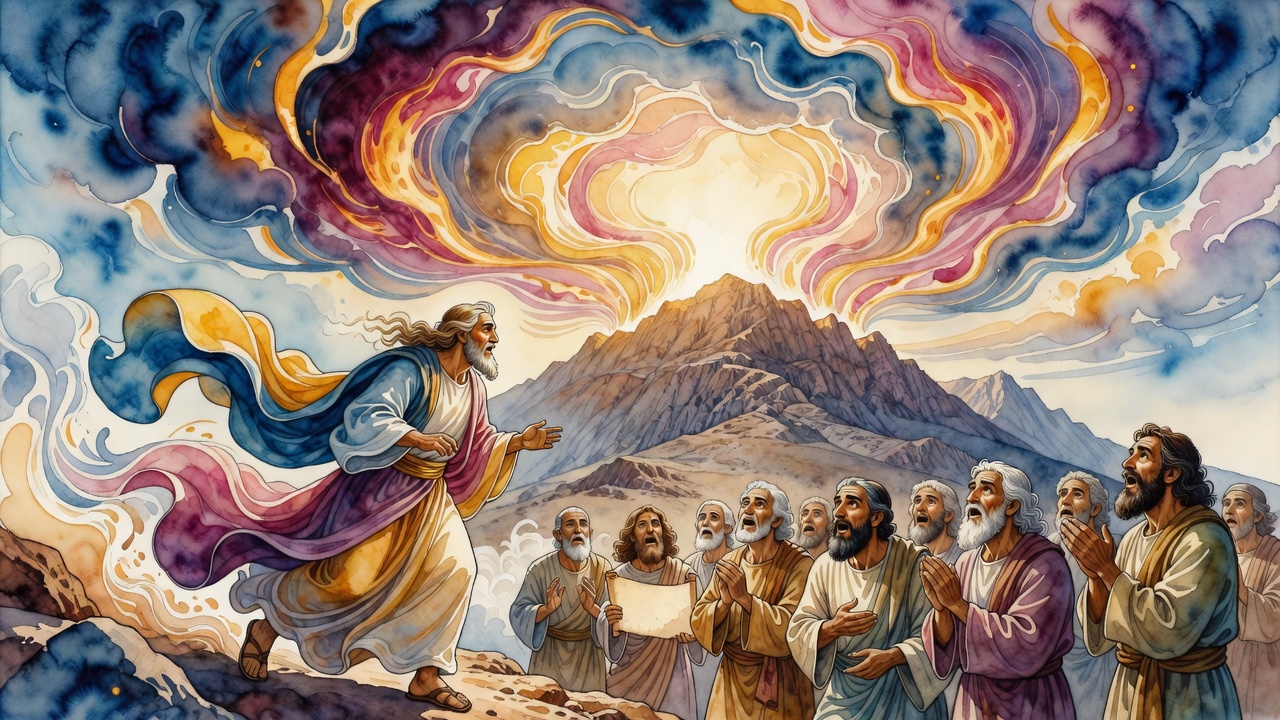
Friday Fire and the Weight of the Sabbath Click for full size

Coals Before the Dark

She raked the coals into a nest and set the pot where heat would hold without a new flame. Outside, the sun thinned toward the edge of the week. Inside, the house smelled of bread baked early and oil ready for lamps. Sabbath was not yet in the door, but its weight already pressed the room. A neighbor's boy asked if lighting now counted as work later. She said, watch the wick, not the argument, and lit the lamp while the sky still held color.

From the Lighter Rest to the Heavier

The sages built a kal va-chomer (from the lighter case to the heavier) from the land's seventh year. In the shemitah a farmer must let the field lie still across a long span, though working the land then does not carry the same karet and court-death that Sabbath violation carries. If the lighter rest demands continuous restraint, how much more the weekly Sabbath, whose breach cuts and kills in the law's hardest language.

The argument could run too far. A person might conclude that even Friday flame is forbidden, that no candle may be lit before night if it will burn into the holy day, that no dish may be banked to keep warmth. Scripture answered with a narrow edge: you shall not light a fire on the day of Sabbath itself. On the day, not on the eve that prepares the day. The verse saved Friday's lamps.

Her Hands Knew the Difference

She did not recite the full derashah (a homiletic reading) while she worked, but her hands lived inside its conclusion. Kindling belonged to the sixth day. Enjoying the light belonged to the seventh. The pot would stay hot without a new coal added after dark. If the flame died, they would sit in dimness rather than rebuild fire on the day that forbids it.

Her daughter watched and learned the timing the way other children learn songs. When the sun's last rim went, the mother set down the poker and wiped her palms. Work ended mid-gesture if need be. The house accepted a colder corner of the room as the price of keeping the line.

Inheritance That Does Not Expire

The same school that fixed Friday fire also taught that the Torah is Jacob's inheritance without conditions, and Aaron's priesthood a covenant of salt that does not rot. Sabbath sits inside that forever gift. It is not a mood. It is a possession that returns every seventh dusk whether the week was kind or cruel.

Fear of a teacher, derived in the same air of seriousness, trained students to treat words of law as edges, not as suggestions. In this kitchen the teacher was the tradition itself, and the student was anyone whose hand hovered near a flame after the wrong minute.

Night Without New Fire

Dark completed itself. Lamps already lit threw soft circles on the wall. No one struck a spark. The banked coals breathed under ash. Across the village other houses made the same quiet choice. The land's long seventh year would come in its season with its own hard rest; tonight the heavier rest arrived on schedule, lighter in duration, heavier in penalty, held in place by a verse that allowed preparation and forbade kindling once the day had claimed the clock.

She blessed the light that was already burning. The boy who had asked the question fell asleep without seeing a single new flame born. In the morning the pot would still hold a little warmth, proof that Friday's work can serve a day that refuses new fire, and that a careful argument can leave a woman enough permission to feed her household without breaking the week open.

Her husband came in from the field with dirt on his ankles and stopped in the doorway when he saw the poker already hung up. "Still light outside," he said. "On the horizon," she answered, "not in the law's clock." He washed, blessed, and let the argument end where good weeks end: at the table. The banked heat under the ash would give them a warm corner of stew. If it failed, bread and cold would still be a feast compared with a broken day.

Across the lane a student hurried home late from his teacher's house, carrying the day's lesson like a live coal of its own: revere the one who teaches you as you revere heaven's seriousness. He saw the lamps already lit in windows and understood Friday as a kind of teacher too, strict about timing, generous about what may be prepared in advance. He whispered the blessing over his own small light and felt the week click shut.

In the deep night a wind tested the shutters. No one rose to rebuild a flame. The Torah as inheritance does not ask permission of weather. Sabbath as weight does not float away because a room grows chilly. Morning would bring leftover heat, leftover light in the memory of oil, and the clean pride of a household that knew when to stop the hand.


← All myths
From the tradition

Sources

3 sources

The texts behind this telling. Some cards carry a translation of the source; others are our own retelling of it, and each card says which. Every card links out to the original.

Mekhilta Tractate Shabbata 2:9Mekhilta DeRabbi Yishmael

Retold in our words. Read the original at the link below.Mechilta, translated by Rabbi Shraga Silverstein · CC-BY

The Mekhilta here builds a kal va-chomer, a reasoning from the lighter case to the weightier, to fix the boundaries of Sabbath observance. The sages compare the sabbatical year, shemitah, to the weekly Sabbath. Working the land during the seventh year is a transgression, yet it carries neither kareth, the spiritual cutting-off, nor a judicial death penalty. Even so, a farmer is required to cease his labor and let the land lie still from one shemitah straight through to the next, an entire span of rest. If the lighter prohibition demands such continuous restraint, the rabbis argue, then how much more must the Sabbath be guarded, for its violation carries both kareth and the death penalty imposed by the court.

One might therefore reason, by force of this argument, that a person must begin resting from Sabbath eve onward, never igniting a flame on Friday that would carry into the holy day. If so, lighting a candle before nightfall to burn on the Sabbath, or banking hot dishes in a chafing stove to preserve their warmth, would be forbidden. To prevent that mistaken conclusion, Scripture states, "You shall not light a fire in all of your dwellings on the day of Sabbath" (Exodus 35:3). The Torah specifies the day of Sabbath itself as the time of prohibition. On the day you may not kindle, but from the eve of Sabbath, in preparation for the Sabbath, you may. The verse thus narrows the strict inference and permits the Friday preparations that warm the day of rest.

Full source
Mekhilta Tractate Amalek 1:14Mekhilta DeRabbi Yishmael

Retold in our words. Read the original at the link below.Mechilta, translated by Rabbi Shraga Silverstein · CC-BY

How seriously should a student revere a teacher? The Mekhilta answers with a statement that sounds almost blasphemous: the fear of one's teacher is to be equated with the fear of Heaven itself.

The proof comes from Joshua, the devoted attendant of Moses. When rogue prophets began prophesying in the camp without authorization, Joshua was incensed. He turned to Moses and cried out: "My lord, Moses, destroy them!" (Numbers 11:28). The language is extraordinary. "Destroy them" is the kind of command one directs at God, not at a human being. Just as the Lord has the power to annihilate, Joshua spoke to Moses as though he possessed the same authority.

The Mekhilta reads Joshua's words literally: "Just as the Lord can destroy them, so can you." Joshua was not being hyperbolic. He genuinely equated Moses' authority with divine power. And rather than rebuking Joshua for the comparison, the rabbis hold it up as a model.

The principle extends beyond Moses and Joshua to every teacher-student relationship. A student who truly understands what a teacher represents, the living transmission of Torah from Sinai, will naturally feel the same awe standing before a rabbi that one feels standing before God. The teacher is not God, but the teacher carries God's Torah. And the vessel that holds the sacred must be treated as sacred itself.

Full source
Mekhilta Tractate Amalek 4:32Mekhilta DeRabbi Yishmael

Retold in our words. Read the original at the link below.Mechilta, translated by Rabbi Shraga Silverstein · CC-BY

The Mekhilta extends its analysis of conditional versus unconditional covenants to two more foundational gifts: the Torah scroll and the priesthood of Aaron.

Whence is it derived that the Torah scroll was given unconditionally? From the verse (Deuteronomy 33:4): "The Torah which Moses commanded us is the eternal inheritance of the congregation of Jacob." The key word is "inheritance." An inheritance does not come with conditions attached. A father does not tell his son, "You may keep your inheritance if you behave well, but if you misbehave I will take it back." An inheritance, once given, belongs to the recipient permanently. By calling the Torah an inheritance of the congregation of Jacob, Scripture established that it belongs to the Jewish people forever, not as a loan, not as a conditional grant, but as an irrevocable possession.

The same unconditional permanence applies to the covenant with Aaron's priestly line. God declared (Numbers 18:19): "It is a covenant of salt forever." Salt preserves. Salt does not decay. A covenant of salt is one designed to last without deterioration. And the Torah reinforces this with a second verse (Numbers 25:13): "And it shall be unto him and to his seed after him a covenant of eternal priesthood."

Two gifts, both unconditional. The Torah belongs to all of Israel without conditions, and the priesthood belongs to Aaron's descendants without conditions. Neither can be revoked, neither can expire, and neither depends on the worthiness of the recipients.

Full source