5 min read

Hagar Fled Sarai and a Different Maidservant Later Walked Free

An angel found Hagar by a spring on the road to Shur and asked where she was going. The Torah gave a different servant a door that opens without a coin.

Curated by Arthur · Told by Maggid ·
Table of Contents
  1. Dust Between Two Women
  2. Centuries Later, a Different Maidservant Speaks
  3. The Door That Opens Without a Coin
  4. Two Kinds of Going Out
  5. What Remains in the Mouth
Hagar Fled Sarai and a Different Maidservant Later Walked Free Click for full size

Dust Between Two Women

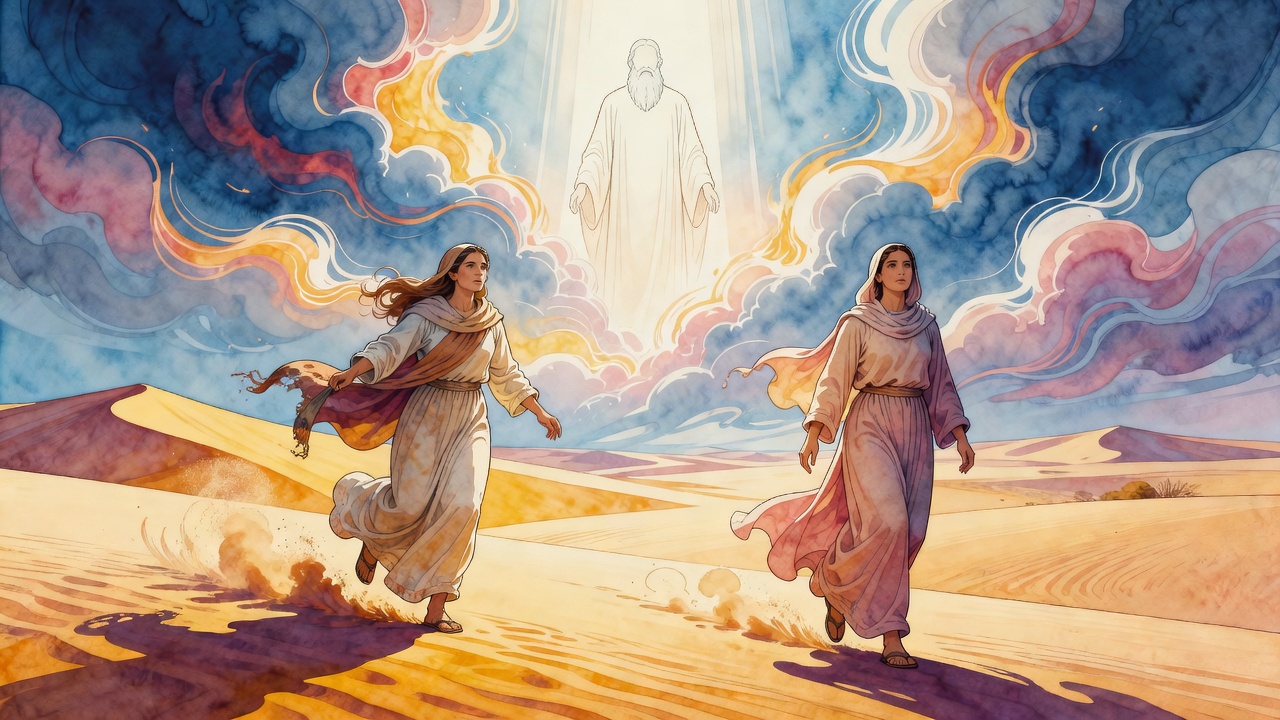
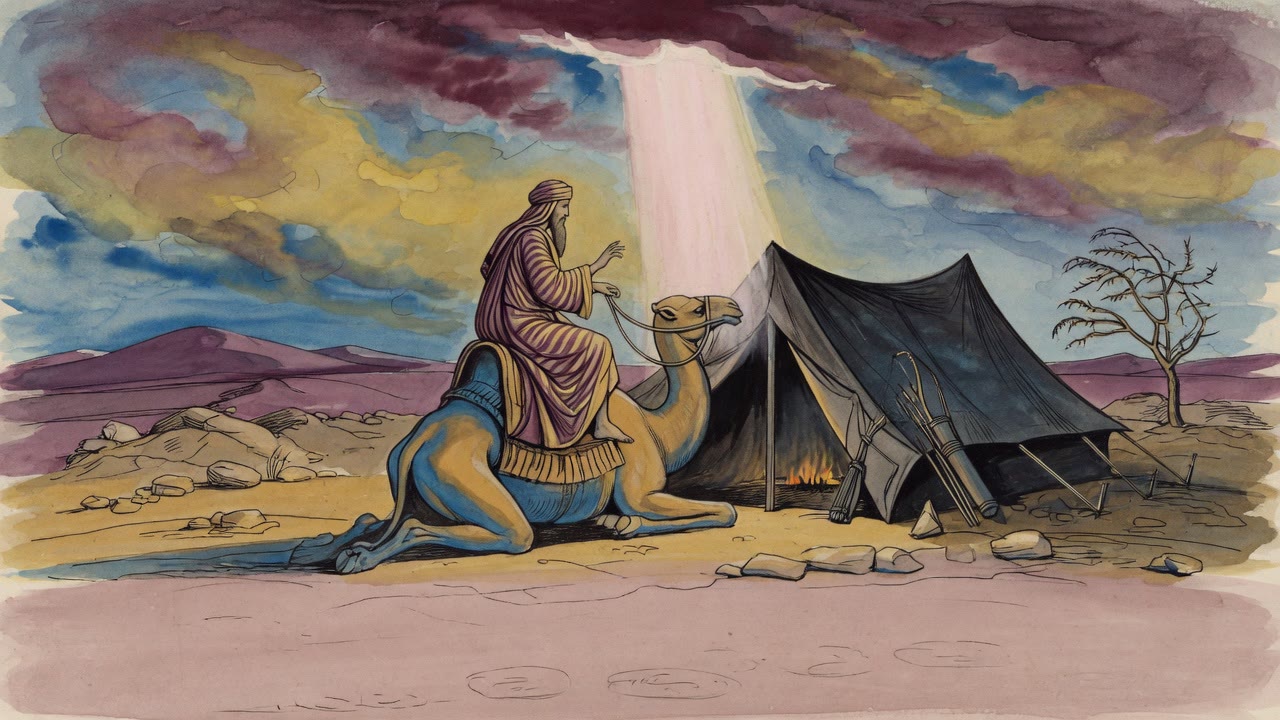
Hagar did not leave the tent with a plan. She left with a bruise of words still hot on her skin and a child-weight that made running both necessary and nearly impossible. The desert took her without ceremony. Heat rose from the ground in sheets. Behind her, Sarai's household continued its ordered life: water skins, bread, the quiet authority of a mistress who had spoken and been obeyed.

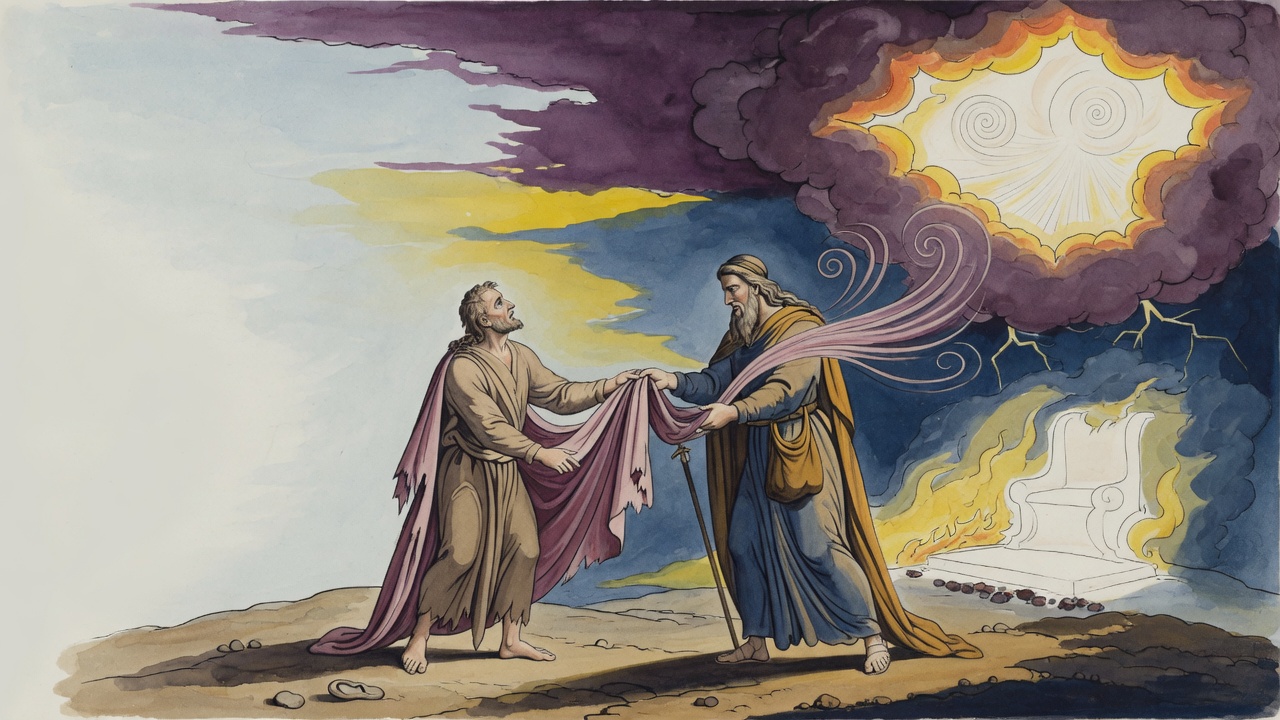
An angel found her by a spring on the road to Shur and asked the question that refuses to stay only in Genesis: "Hagar, Sarai's maid, whence camest thou? and whither wilt thou go?" (Genesis 16:8). She answered with the only honesty left in her mouth. She was fleeing from her mistress. The angel sent her back under a promise large enough to hold a nation, yet small enough to fit a single body still shaking.

Centuries Later, a Different Maidservant Speaks

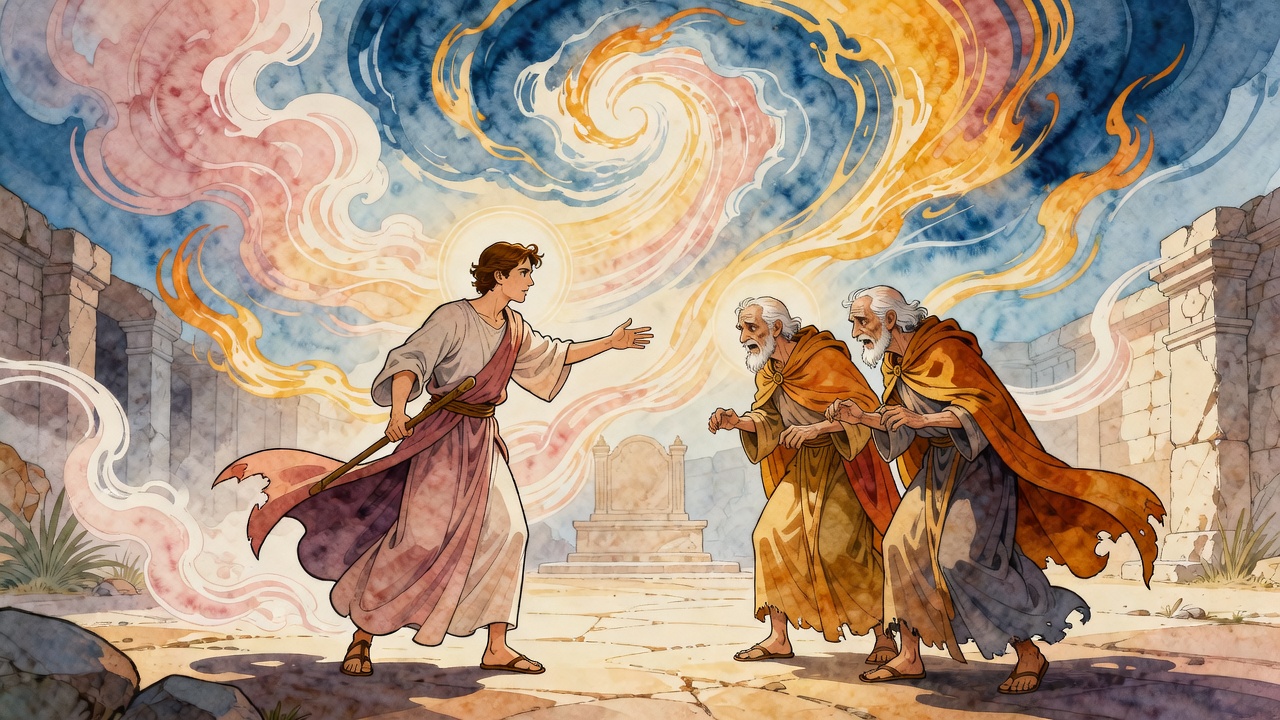
Long after, when Jerusalem fell and enemies gloated over her undoing, a voice rose in the rubble like a maidservant who had watched a household collapse. The Tikkunei Zohar hears her compare the city's ruin to what Sarai did to Hagar. Is this the same pattern again, she asks, power used hard against the one who serves?

Heaven's answer is not gentle. God names the difference without flattery. Sarai expelled Hagar, and God still showed mercy to her and to Ishmael in the wilderness. The later kingdom that mocked Jerusalem had offered evil in place of good. The Holy One promises to remove that wicked rule from the world, and says there will be no joy before Him until it is gone, reading Proverbs as a hard verdict: "When the wicked perish, there is joy" (Proverbs 11:10).

Hagar's flight is not canceled by later history. It becomes a measuring rod. Mercy given once becomes an accusation against those who refuse mercy later.

The Door That Opens Without a Coin

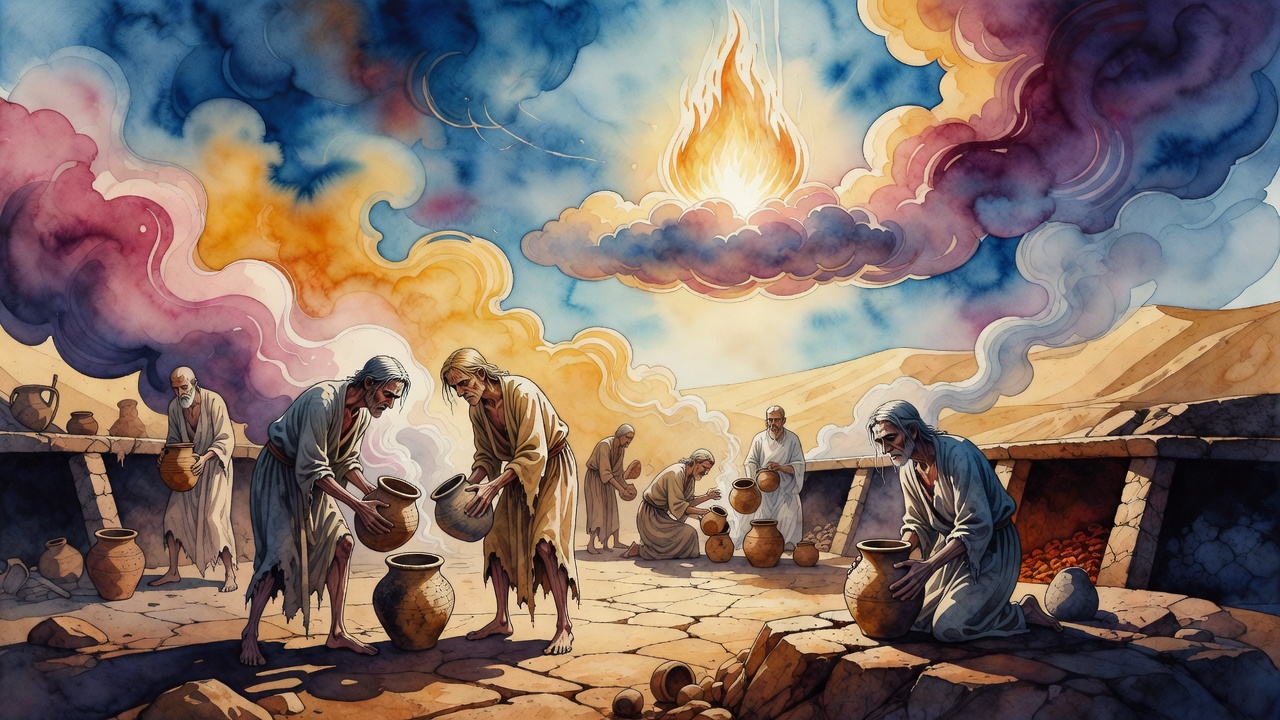
Another maidservant stands in a different doorway, not of desert flight but of law. The Torah says of the Hebrew maidservant, "And she shall go out free, without money" (Exodus 21:11). Rabbi Yose the Galilean heard generosity in the phrase. Her master collects nothing when she leaves. Freedom is not a purchase she must fund from empty hands. Another teacher read the same words as a calendar of growing up: girlhood and womanhood each named so that no stage of her body can be held as permanent property.

The debate grew sharp in the study hall. Why name both thresholds if one already frees her? Rava said each clause lights the other. Abaye pressed the wording until it strained. Mar bar Rav Ashi settled the hardest case, the girl whose body never keeps the ordinary calendar of years, and still confirmed that justice does not abandon her to a sale without exit. The doubled language closes loopholes that cruelty loves.

Two Kinds of Going Out

Hagar goes out into heat and risk, then returns under angelic command. The Hebrew maidservant goes out into a life that may include marriage and a household of her own, without paying the master who releases her. One exit is flight. The other is release. Both refuse the lie that a woman who serves has no story once the powerful have finished speaking.

In the desert Hagar receives a well and a future for her son. In the law she receives a clock that belongs to her body and a door that opens without a coin. The Tikkunei Zohar's harsh dialogue over Jerusalem does not erase either gift. It insists that heaven keeps the ledger of how the strong treat the ones who pour their water and carry their bread.

On the morning of her release, the Hebrew maidservant folds the few garments that are hers and does not look back at the tools she used for years. Her former master stands in the doorway counting nothing, because the verse has already counted for him. She steps into a street that smells of bread and animals and ordinary noise. Freedom is not a speech. It is the absence of a claim on her hours. Somewhere in the long memory of the people, Hagar's running feet and this quiet exit keep answering each other: one under angelic pressure, one under legal protection, both insisting that a servant's life is not a blank the powerful may write forever.

What Remains in the Mouth

When Hagar first named the God who saw her, she left a well called Beer-lahai-roi, the well of the Living One who sees me (Genesis 16:13-14). Seeing is not a soft word in that story. It is survival. The maidservant who walks free without money carries a quieter victory: no one can sell the last years of her girlhood back to her as a debt.

Between the tent, the spring, the study hall, and the ruined city, the same pressure returns. Who owns a woman's going out? The sources answer with scenes, not slogans. A body runs. A body is released. A city falls. Heaven remembers which hands were heavy and which were open.


← All myths
From the tradition

Sources

2 sources

The texts behind this telling. Some cards carry a translation of the source; others are our own retelling of it, and each card says which. Every card links out to the original.

Tikkunei Zohar 48:4Tikkunei Zohar

Retold in our words. Read the original at the link below.Sefaria-hosted English translation · CC-BY

The Tikkunei (spiritual repair) Zohar, a profound and expansive section of the Zohar – the foundational text of Jewish mysticism – explores exactly that. It explores the hidden meanings and interconnectedness of seemingly disparate biblical verses. And in Tikkunei Zohar 48, we find a particularly poignant connection between two moments of suffering and redemption, separated by centuries.

The passage starts with a verse from Lamentations (1:7): "… enemies were gloating over her undoing…". A stark image. The Tikkunei Zohar then makes a surprising move, juxtaposing this with a much earlier scene from Genesis (16:8): "..from Sarai my mistress I am fleeing…" This is Hagar, Sarai's maidservant, running away into the desert.

What’s the connection?

The Tikkunei Zohar presents a fascinating, and frankly, a bit harsh, interpretation. It imagines a dialogue where a maidservant, witnessing the downfall of Jerusalem, cries out, "Isn’t this just like what Sarai did to her maidservant?" In other words, is this current suffering just a repeat of past injustices?

Then, according to the Tikkunei Zohar, the Holy One, Blessed be He, responds. And the response is… intense. God says (and I'm paraphrasing here), "You daughter of a wicked, guilty one! Sarai might have expelled Hagar, but I showed mercy to her and her son, Ishmael. You, on the other hand, offered evil instead of good." Ouch.

God then makes a powerful declaration: "I promise to remove the wicked kingdom from the world, and there shall be no joy before Me, until they are vanquished from the world – and at that time, there shall be joy before Me.” It ends with a quote from Proverbs (11:10): "And in the perishing of the wicked there is joy."

So, what are we to make of this? It's certainly not a straightforward, feel-good message.

It's a complex tapestry weaving together themes of suffering, redemption, divine justice, and the interconnectedness of history. The Tikkunei Zohar isn't just telling a story; it's pushing us to examine our own actions, our own potential for both cruelty and compassion. It is a warning that echoes of past injustices can stain the present, and a hope that by choosing mercy and justice, we can help usher in a future where wickedness is vanquished, and joy can finally flourish.

Full source
Yalkut Shimoni on Torah 321:3Yalkut Shimoni on Torah

Translation of the source text.Torat Emet (Yalkut Shimoni) · CC-BY-NC

Rabbi Yose the Galilean says: "And she shall go out free, without money" (Exodus 21:11) means there is no money for this master, but there is money for another master [the verse teaches that the maidservant who has been freed without payment may still be acquired in marriage by another with money]. But does this "and she shall go out free" really come for that lesson? That phrase is needed for what was taught: "And she shall go out free" - these are the days of full maturity; "without money" - these are the days of girlhood [a maidservant goes free when she reaches these stages without her master receiving payment]. Ravina said: If so, let the verse write "without money" [spelled defectively]; what is the force of the fuller spelling of "without"? It teaches there is no money for this master and so forth.

And from where do we know that we expound in this way? As it was taught: "And she has no child" (Leviticus 22:13) - I have only her child; from where do I include her child's child? Scripture says "and she has no child" - examine her case in any event [the extra letter signals an expansion to descendants]. But you have already used that for her child's child! The child's child does not require a verse, for grandchildren are like children, and the verse is needed only for unfit offspring. And the very teacher who expounds in this way, from where does he learn it? They said: It is written "my brother-in-law refuses" (Deuteronomy 25:7) and "Balaam refused to go with us," and there the word is written without a yod, whereas here it is written with a yod; learn from this that it comes for an exposition.

"And she shall go out free" - these are the days of maturity. "Without money" - these are the days of girlhood. But let the Merciful One write only girlhood and not require maturity! Rava said: This one came and taught about that one, just as in the case of the resident and the hired laborer, as it was taught: "a resident" (Exodus 12:45 and elsewhere) - this is one acquired as a permanent possession, and so forth. Abaye said to him: Are the cases comparable? There you have two separate bodies, but here, once she leaves girlhood, what need is there of maturity beside it? Mar bar Rav Ashi said: It is needed only for the essential validity of the sale of a barren woman incapable of bearing children. You might have thought that if she develops the signs of girlhood the sale is a valid sale, and if she does not develop the signs of girlhood the sale is not a valid sale; the verse therefore teaches us otherwise.

Full source