From the Pit to the Second Chariot of Egypt
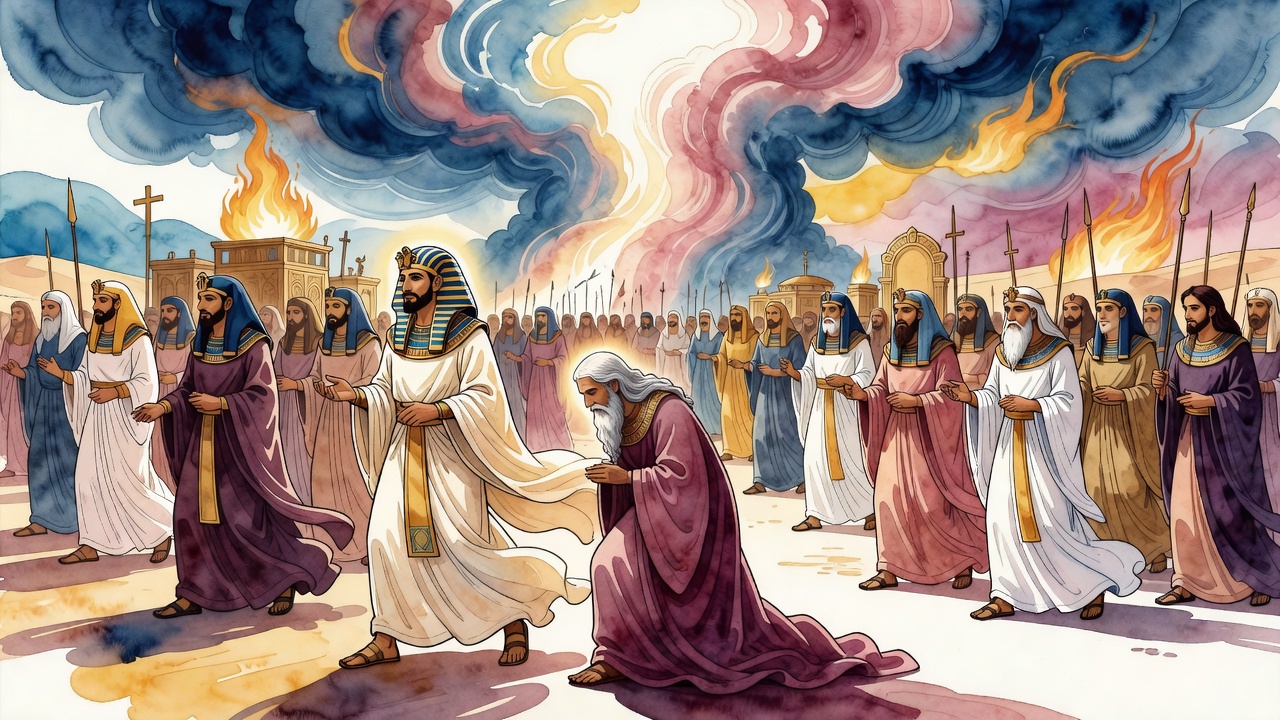
Hauled from a dungeon at dawn, Joseph rides Pharaoh's second chariot while heralds shout his praise, and a strange new name spells out his whole life.
Table of Contents
 Click for full size
Up From the Pit at Dawn
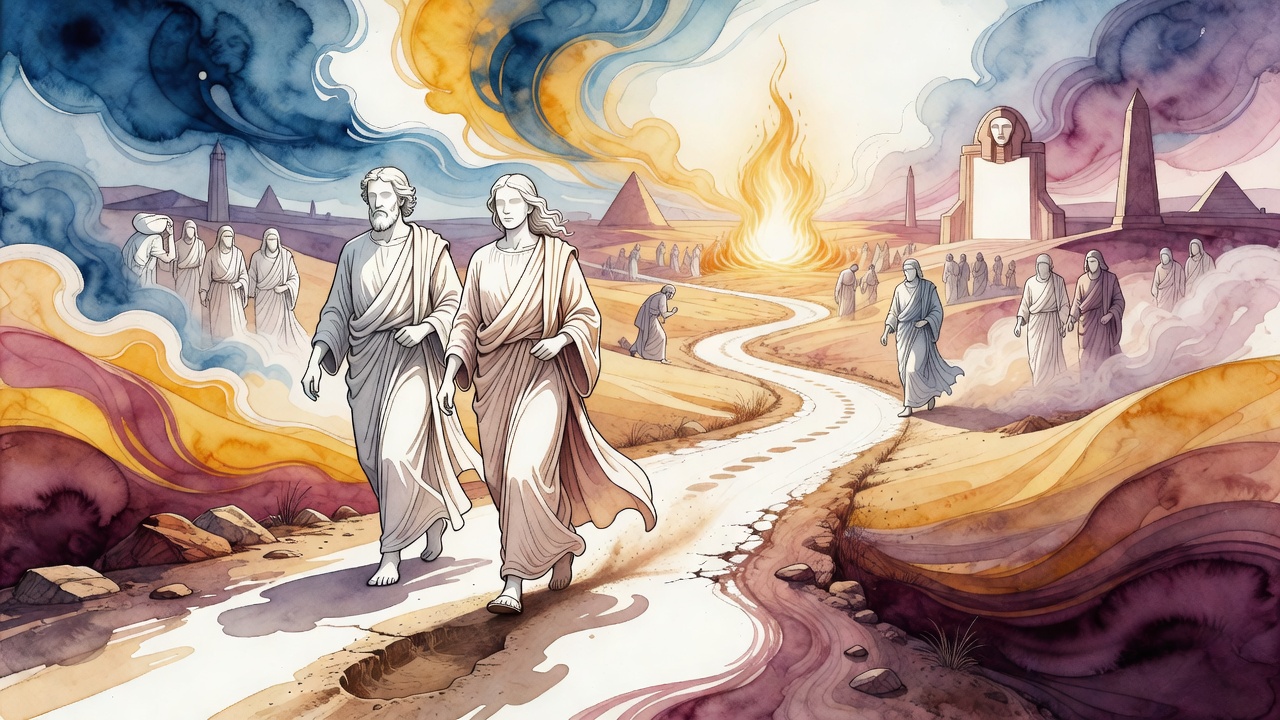
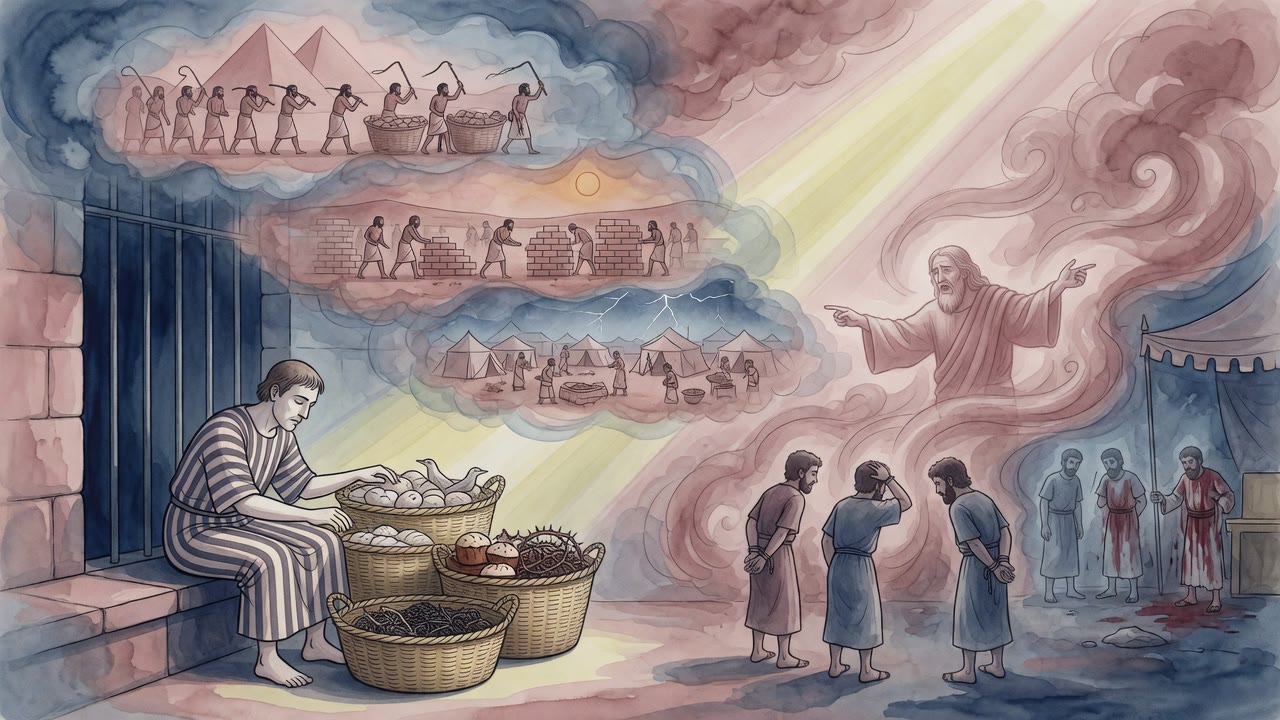
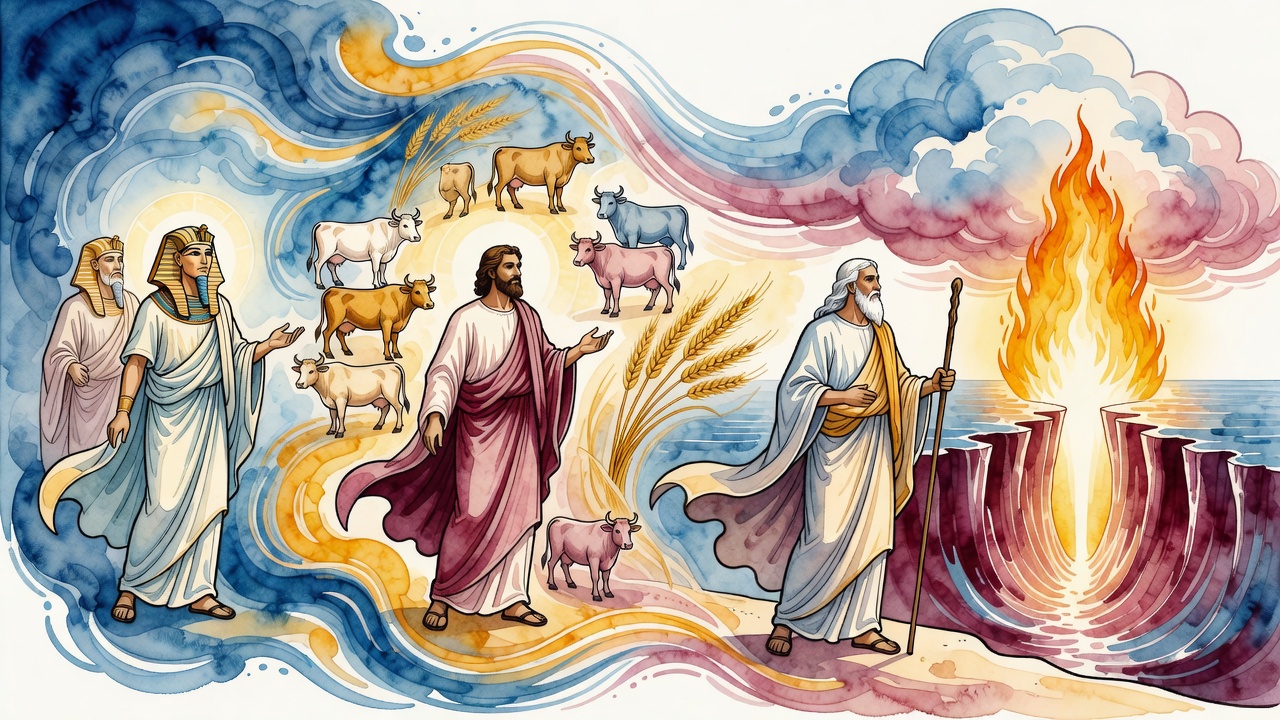
They came for Joseph before the sun cleared the river. Down the stone stair, into the pit where the king's forgotten men were kept, the guards hauled him up by the arms. Razors scraped the prison off his face. Someone pulled a clean robe over his shoulders. He had gone to sleep a slave in irons, and now he walked a corridor of painted lions toward the throne of Pharaoh, king of Egypt, who had dreamed of fat cattle and withered grain and could not find one man in the whole land to tell him what the dreams meant.
Joseph told him. Seven fat years, then seven starving ones, and a plan to hoard bread against the famine. Pharaoh leaned forward. "You will be over my house," he said, "and by your word my whole people will be fed. Only the throne will be greater than you."
The Ring, the Linen, and the Gold
Then the honors came, and each one landed on the exact part of him that had once refused. Years before, in the house of Potiphar, another man's wife had pressed herself on Joseph day after day, and he had turned her away every time. Heaven had kept the account.
His mouth had not kissed her in sin, so now his mouth would feed a kingdom by its word. His hands had not reached for her, so Pharaoh drew the signet ring off his own finger and pushed it onto Joseph's hand. His body had not touched her, so they dressed him in linen so fine it moved like water. His neck had not bent toward her, so they hung a chain of gold across it. Every refusal from those dark years came back to him as a jewel.
The Second Chariot Through the Streets
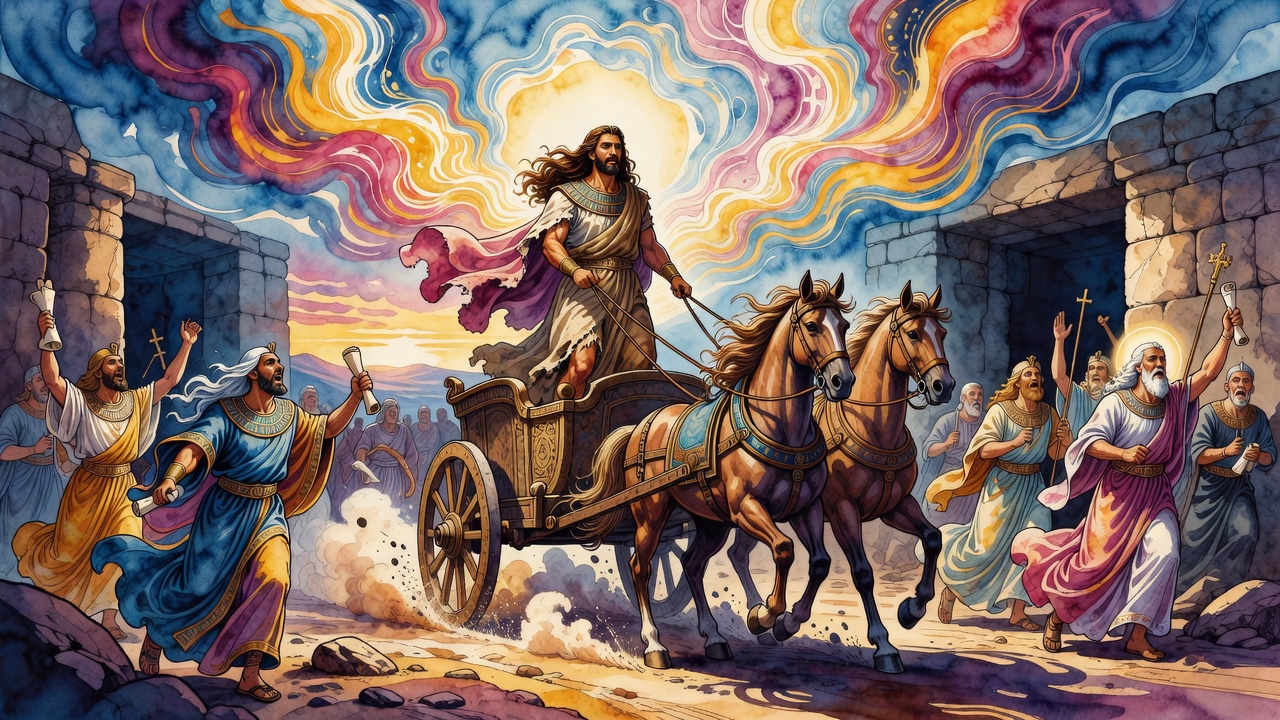
They set him in the second chariot of Egypt, the one that rode just behind the king's. His feet, which had never once walked toward her bed, now stood in a moving throne of bronze. Runners went ahead of the wheels and cried a single word through the crowds: "Avrekh!"
The word carried two things at once. Av, great, for a wisdom deeper than any elder in Egypt. Rakh, tender, for a man not yet past his youth. Great in mind, young in years. Far to the east the Babylonians would one day crown the opposite kind of man and call him tafsar, ripe in age and empty in sense. Joseph was the reverse of that, and the streets shouted it as the chariot rolled past the same markets where boys like him were sold for silver.
Only the Throne
Power like that can turn a man's head, so Pharaoh had built a fence into his own gift. "Only the throne," he had said, and that one small word held Joseph in place. No one in Egypt could rise without Joseph's leave. No hand lifted a weapon and no foot mounted a horse without his command. A courtier could not so much as kiss the king unless Joseph allowed the approach. He held everything now except the crown, and the crown Pharaoh kept for himself.
"I am Pharaoh," the king said, and it was not a greeting between equals. It was a line scratched into the floor of the court. My greatness stays above yours. You will feed the world, and I will still be the throne you serve.
A Name Like a Whole Life
Pharaoh gave him a wife, Asenat, daughter of the priest of On, and gave him a new name to wear over the old one: Tzafenat Paaneach. It was a strange name, thick with buried things, and its letters read out like a life. One letter stood for the seer, the man who looked into a dream and saw the years hiding inside it. One stood for the redeemer. One for the prophet. One for the man who holds others up. One for the interpreter, one for the clever, one for the discerning, one for the one who foresees what has not yet come. A whole biography folded into a handful of sounds. Here was the one who uncovers what lies hidden, and speaks it plainly, and quiets the frightened heart with what he knows.
The Boy Who Stood in Front of His Mother
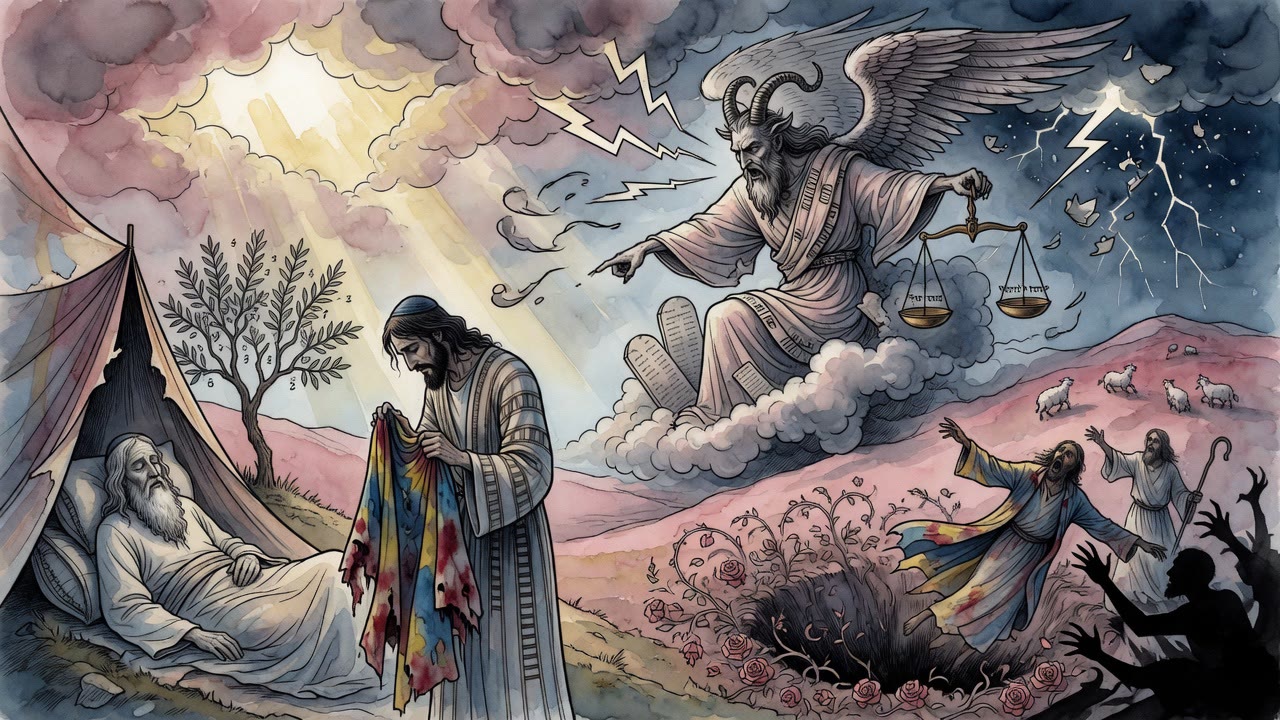
The name held one thing more. Tzafun means hidden, and Heaven remembered a hidden boy. Years earlier, on the road home, Jacob had lined his family up to meet his brother Esau, whose eye was known to be greedy and cruel. The maidservants stepped forward. Leah stepped forward. Then came Joseph and his mother, Rachel, and the order was wrong: the boy moved in front of the woman. Joseph had heard what Esau was, and he planted himself between that hungry gaze and his mother, his small body stretched as tall as it would go, and hid her behind him.
God had watched a child shield his mother and make himself as tall as he could. "You covered your mother from sight and stood tall," He said. "I will lift you up and make you tall in return." The pit, the prison, the false charge, the forgotten years, and then a boy of thirty standing before the throne of Egypt in linen and gold, second man in the empire that had bought him for a fistful of silver.
← All myths