Gibeonites Refuse Gold and Demand Seven Sons
David offers silver for Saul's dead, the Gibeonites demand seven lives instead, and the king names three gifts they lack that mark Israel.
Table of Contents
 Click for full size
Seven Names, Seven Crafts
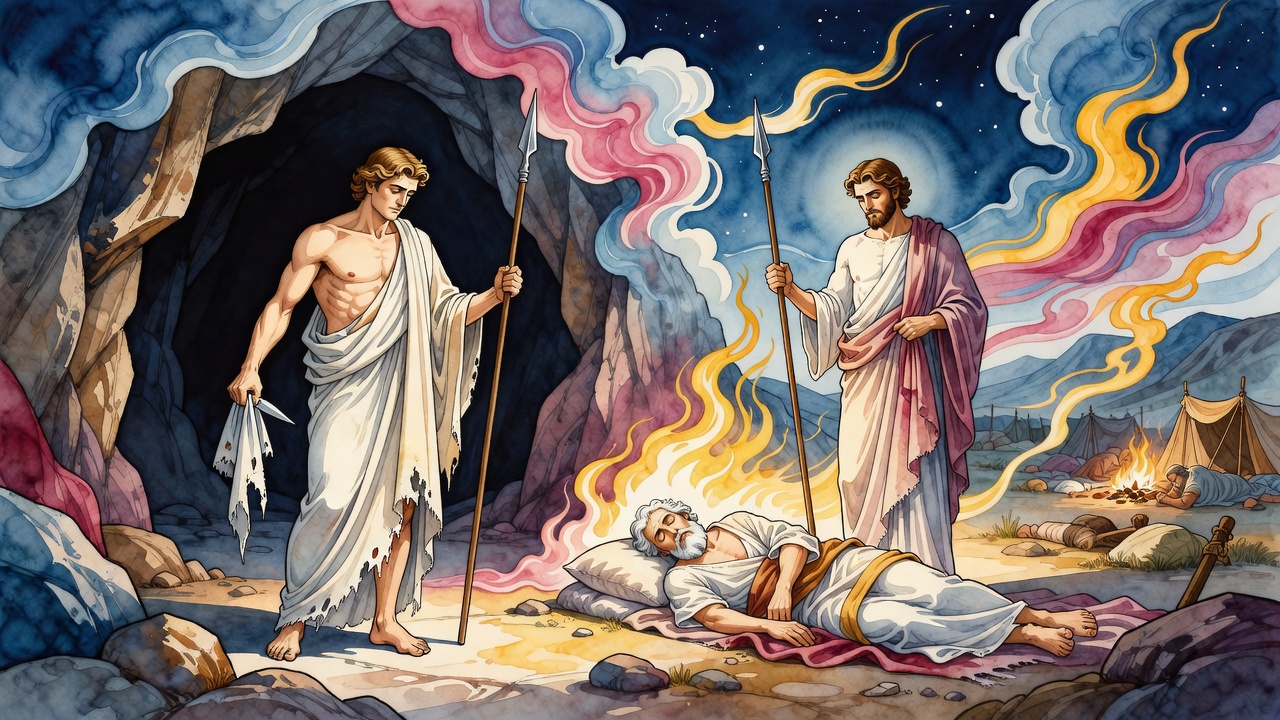
David summoned the Gibeonites and asked what quarrel they kept with Saul's house. They did not speak in generalities. They named seven men Saul had slain, each by his humble craft, until the room filled with ordinary lives cut short. Then they named their price. Seven of Saul's sons.
David felt the old machinery of blood revenge turn. He tried to stop it with treasure.
Gold That Could Not Buy Mercy
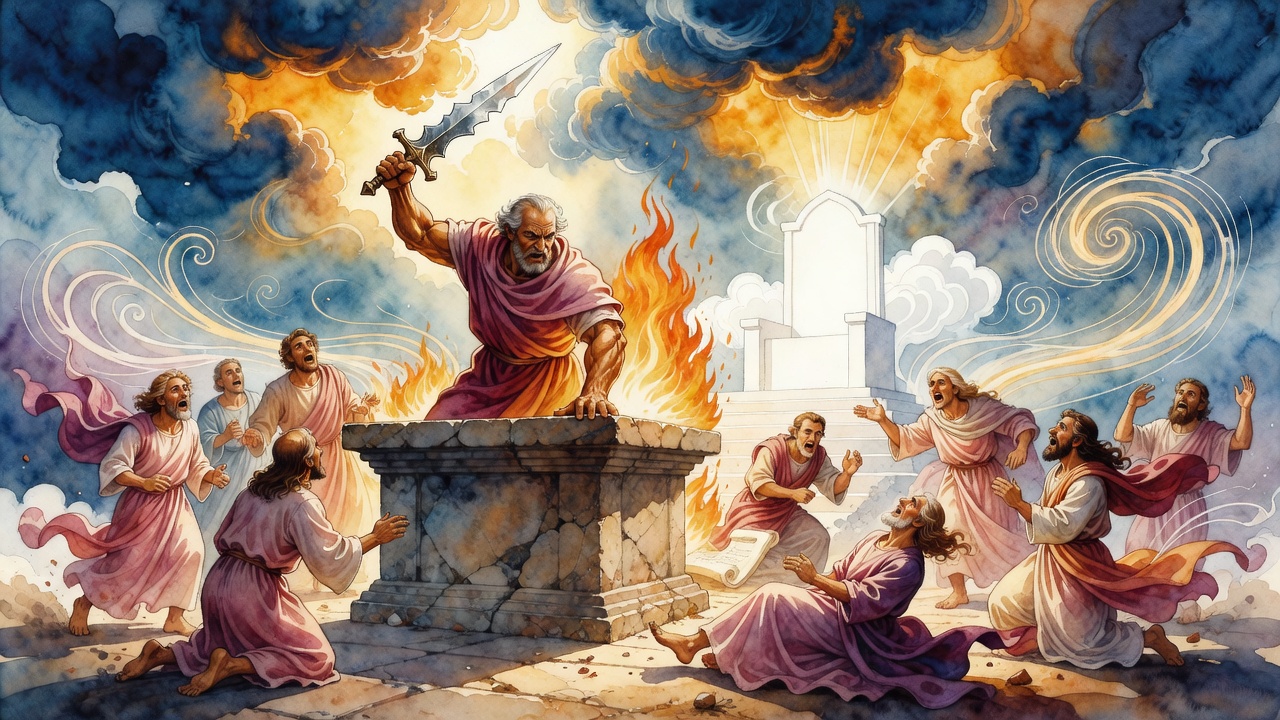
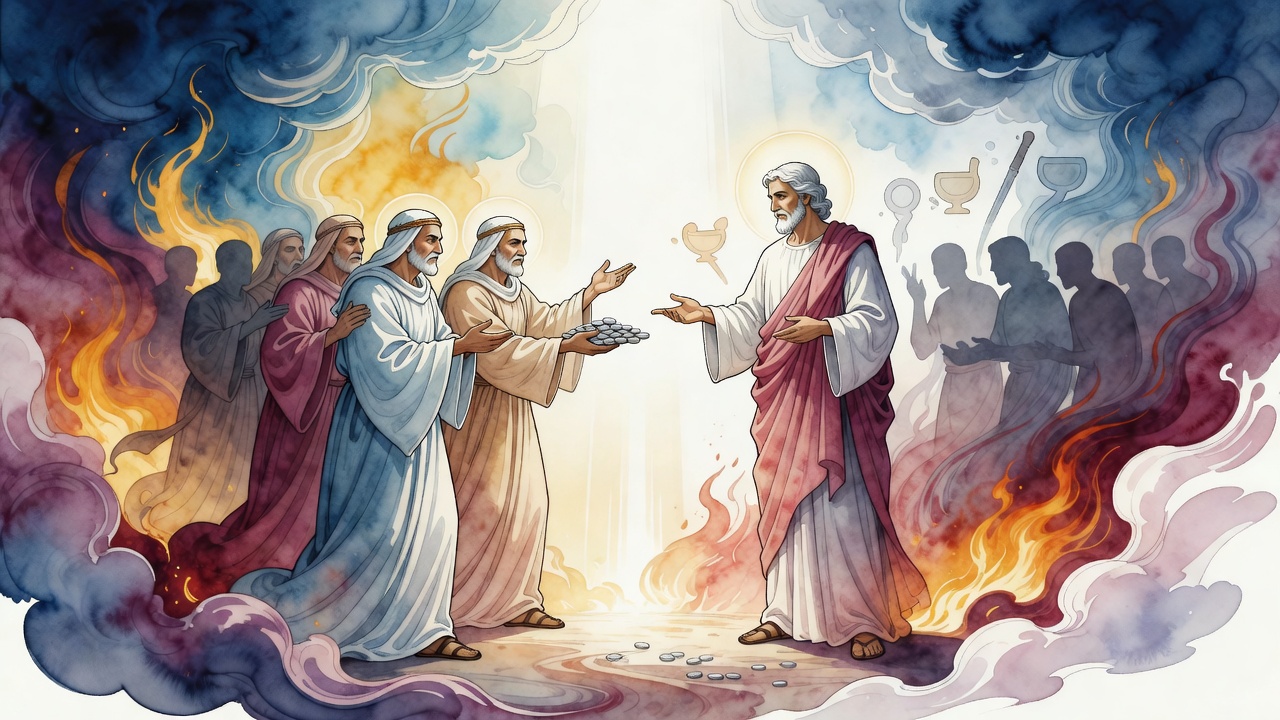
He offered gold and silver in place of blood. They refused. "We have no silver or gold with Saul or with his house." He divided wealth among them anyway, piece by piece, hoping the metal would cool the demand. Hands closed on coins. Eyes did not soften.
In that hardness David understood something about his own people by seeing its absence.
Three Gifts They Did Not Carry
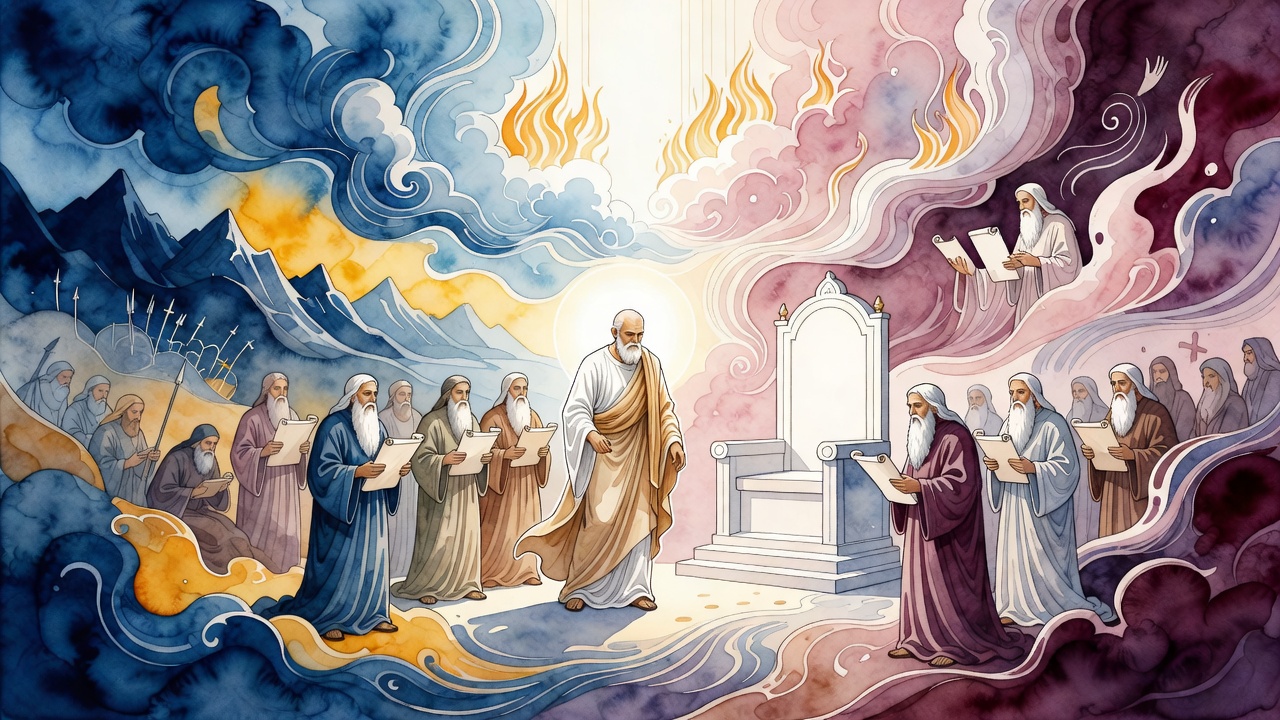
Three good gifts, he said, the Holy One gave Israel. They are compassionate. They are modest. They are doers of loving-kindness. These men possessed none of the three. So David set them apart, for Scripture would say the Gibeonites were not of the children of Israel. Ezra would later distance them again. Heaven, the teaching adds, will confirm the distance at the end of days.
Mercy, face-fear that keeps shame alive, and covenant kindness: without them a people can still keep accounts, but it cannot keep the name Israel the way David meant it.
Leah's Spindle of Thanksgiving
Elsewhere the mothers of Israel take up spindles that spin character into children. Leah seized the spindle of thanksgiving, and praise rose in her line. Judah heard Jacob say his brothers would praise him. David sang, "Give thanks to the Lord, for He is good." Daniel gave thanks under a decree of death. Open mouths full of gratitude became a crown.
That spindle is one way compassion and kindness stay loud in a family.
Rachel's Spindle of Silence
Rachel seized the spindle of silence. Her children mastered hidden things. Benjamin's jasper, yashpeh, was heard as yesh peh, "there is a mouth," a mouth that knew Joseph's sale and kept still. Saul, newly anointed, told his uncle nothing of the kingship. Esther hid her people and her birth inside a palace. Guarded silence can be modesty's weapon when speech would only feed pride or panic.
David, facing men who would not trade blood for gold, stood between those two spindles. Israel was meant to praise and to know when not to speak, to soften and to blush. The Gibeonites' demand taught him the shape of the gifts by the shock of their opposite. He left the chamber carrying three measures that no scale for silver could weigh.
The Gibeonites sat with spines unbent by the king's presence. Their grief had hardened into policy. Saul's zeal had cut their men in a season when politics wore the mask of piety, and they had waited for a court that would hear craft-names as seriously as princely ones. David heard them. Hearing is not the same as agreeing to become their executioner of another generation, yet the famine and the oracle had boxed him into a grim jurisprudence.
He still tried gold first because he wanted Israel to be a people who pay rather than a people who harvest sons. The refusal taught him that some outside the covenant can learn Israel's language of justice without learning Israel's three interior gifts. Compassion would have taken silver and rebuilt. Modesty would have blushed at demanding royal blood as theater. Loving-kindness would have left a door cracked. None of those doors cracked.
After they left, David sat with the spindle stories his mother-line knew. Leah's open thanks. Rachel's sealed mouth. He thought of Esther in a future he could only guess, hiding names to save a people, and of Saul his predecessor hiding kingship from an uncle with a silence that was almost virtue. Silence and thanks were both Israeli tools. The Gibeonites had used neither. They had used a third tool: exact revenge without remainder.
He ordered what the grim hour required and hated the ordering. Later teachers would argue the episode from every angle of law and ethics. In the room itself there was only the king, the three gifts named aloud like amulets, and the knowledge that a nation is not proven by winning a negotiation. It is proven by which qualities it refuses to auction.
That evening he sent charity to a household that had nothing to do with Gibeon, as if kindness needed immediate exercise before it atrophied under state necessity. He wrote a line of thanks that would later sound like psalm. He kept one political secret in his mouth all night and did not spit it into a courtier's ear. Praise, silence, mercy: practiced while the harder decree still dried on the clerk's tablet.
Israel would fail these gifts often. David had failed them. Naming them in the face of men who lacked them was not triumphalism. It was a king reminding himself what the people are for when blood calculations threaten to become their only fluency.
← All myths