The Gibeonites Schemed Like the Serpent of Eden
Joshua tasted the dry bread and swore peace. Their city sat three days away, inside the land. The oath was already in heaven's mouth.
Table of Contents
 Click for full size
Worn Sandals and Stale Bread
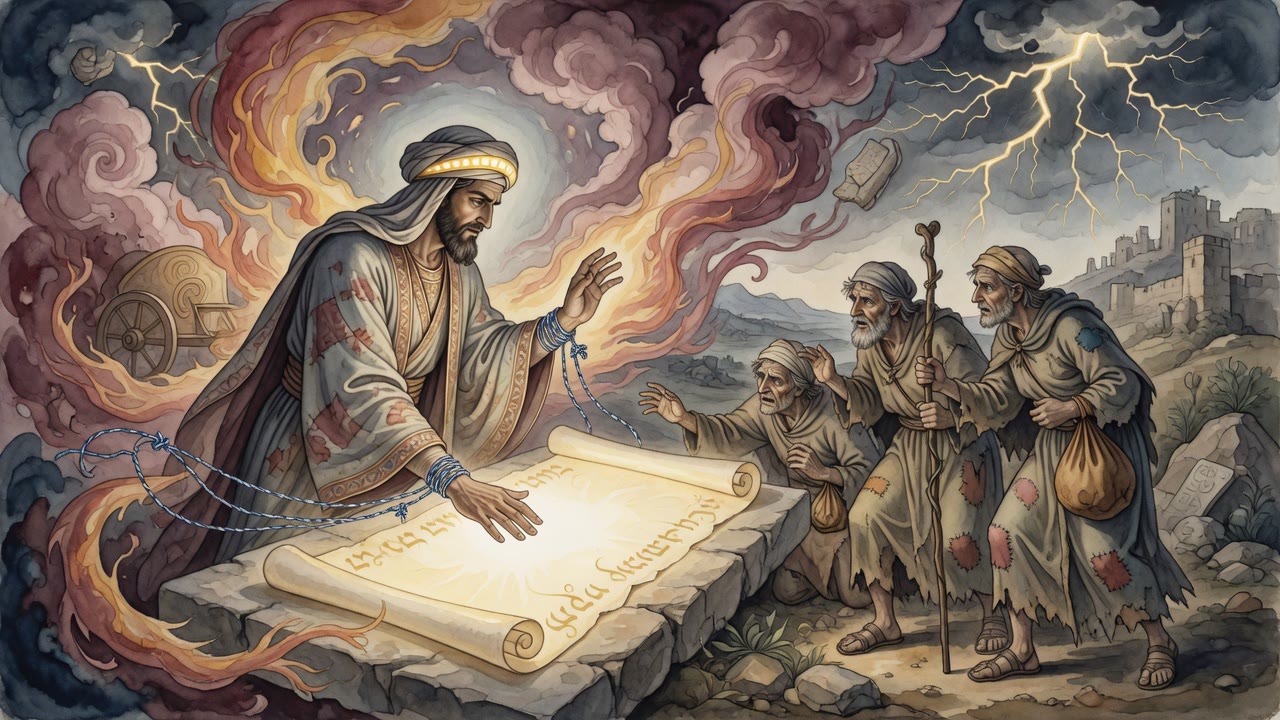
The men of Gibeon sat in the dust and cut their own sandals. They had not walked a year. They needed the look of a year. One man took a wineskin still sound in the seam and cracked it with a stone until it would not hold. Another packed bread that had already gone hard. A third rubbed dirt into a cloak washed last week.
They lived three days from Joshua's camp. Israel had been told to make no covenant with the nations of this land, and to put those nations under the ban. The elders of Gibeon knew that command as well as anyone. They also knew what a snake had once tried in a garden.
"If they kill us they break the oath," one of them said. "If they keep us they break the ban. Either way they sin, and the land slips."
They put the ruined sandals on and walked into the camp as travelers from a far country.
Joshua Swore Before He Knew
Joshua tasted the bread. It was dry enough to believe. The men said they had come from very far, having heard what God had done in Egypt and at the Jordan. Israel sampled the provisions and did not ask the mouth of the Lord.
They swore.
Peace sat on the camp like a lid. Then ordinary feet came back from a short ride and named the towns: Gibeon, Chephirah, Beeroth, Kiriath-jearim, all inside the land Israel had been commanded to clear. The lie had not needed a long road. It had needed dry bread and a hurried oath.
Rage rose. The people wanted blood. The oath stood in the way of blood. Joshua looked at the men in their ruined clothes and did not unmake the vow. He had given his word. Heaven had heard it.
And Now You Are Cursed
He said, "And now you are cursed" (Joshua 9:23). He bound them as hewers of wood and drawers of water for the congregation and for the altar of God.
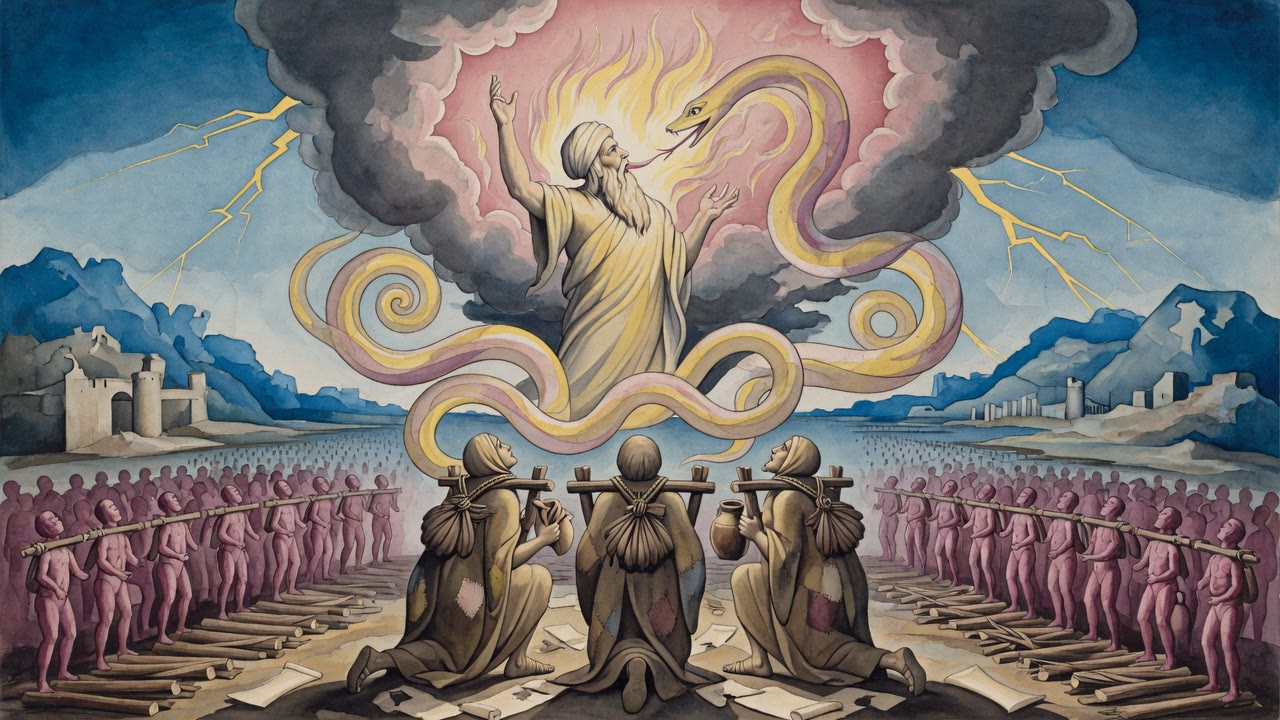
The formula was older than Canaan. In the garden God had said to the serpent, "Cursed are you" (Genesis 3:14). The same two words, the same "and now." The Gibeonites had schemed the way the serpent schemed in Eden. Trick the humans into a bind that cuts both ways. Wait for heaven to punish them. Inherit what falls.
The snake had wanted the earth. These men wanted the land. Joshua kept the oath and bound the fraud in one stroke, so Israel would not have to choose between two sins.
Someone in the camp asked if they were Hivites. They were Gibeonites. The older name marked the craft. Hivite work. Snake work. A plot built to jam a people between an oath and a ban.
Wood and Water for Three Ages
Moses had already named such people in his last address, standing Israel before God: the hewer of your wood and the drawer of your water. That sentence covered his own generation. The labor was already in the mouth of the law before Joshua ever tasted the bread.
Joshua's ruling covered the long years when the Temple would stand. Wood for the altar. Water for the court. The fake far-country became a real forever of service while the house of God still burned its daily fire.
Years later famine sat on David's land for three seasons. He asked God and was told the cause ran back to Saul's blood-guilt against Gibeon. David summoned them. They stood in his court, not of the children of Israel, and would not take silver. They named men. Moses had spoken wood and water for his generation. Joshua had bound them to the altar while the house stood. Now there was no house, and the same people still held a claim.
They wanted the land without the ban. They got the land as servants of the altar.
They Carried What They Wanted
The serpent crawled. The Gibeonites carried. Neither took the garden. Neither dissolved Israel.
A man of Gibeon walked past the altar with a load of wood on his neck. Heat came off the stones. The curse was still in Joshua's mouth. The oath was still whole. The trap had been built to force a people into two sins at once. It forced them into neither. It forced the schemers into sweat.
Dry bread. Cut sandals. Skins that would never again pretend to have come from far away.
← All myths