6 min read

God Encircled the Camp Before Edom Struck

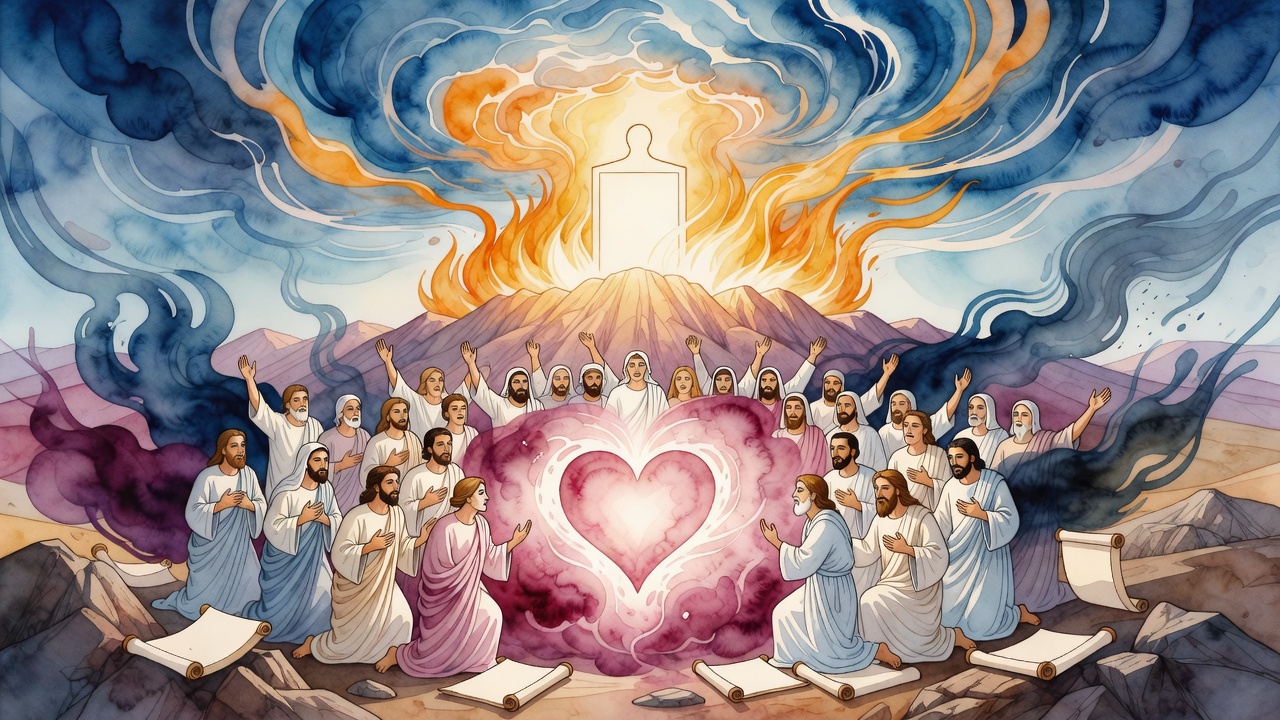
As Edom, Moab, and Canaan massed to strike the leaving slaves, God encircled the camp like a shepherd before any spear could land.

Curated by Arthur · Told by Maggid ·
Table of Contents
  1. Wolves at the Edge of the Road
  2. Led Around, Not Only Forward
  3. The Wall of Fire That Would Not Open
  4. The King Who Opened a Prison Door

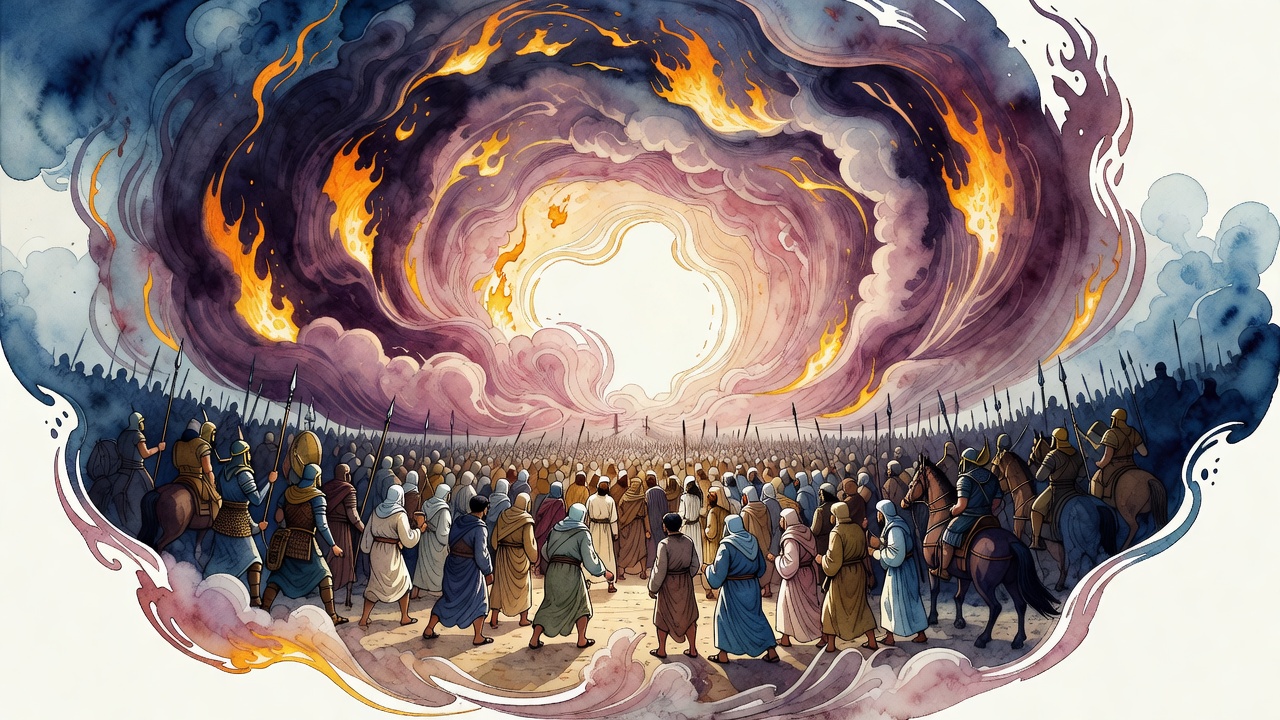
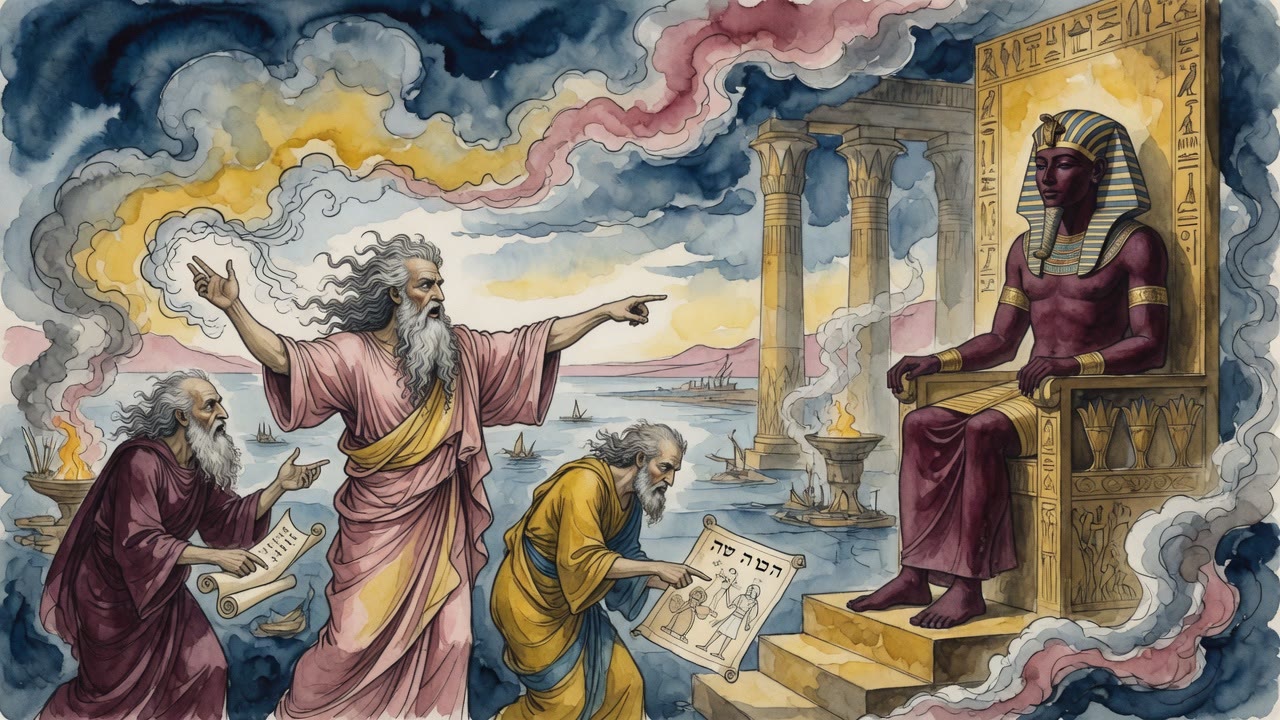
The chieftains of Edom watched the dust of a nation on the move and counted spears. Moab sent runners along the ridge. Canaan waited where the roads pinched. Fresh slaves with children and carts looked like easy meat if the desert left them open. They meant to strike before the column found water again.

God Encircled the Camp Before Edom Struck Click for full size

Inside the dust, Israel walked with a pillar ahead of them by day and a fire at night. They thought the pillar was a guide. They did not yet know God had already encircled them, or that the ring could close like a wall before any spear struck home.

Wolves at the Edge of the Road

Egypt still stank in their clothes. The sea was behind them. The open land ahead looked like freedom until the watchers on the hills began to mass.

Edom's captains wanted the livestock. Moab's priests wanted the fear tax. Canaan's kings wanted no free people learning how to walk without a master. Three borders, one plan: strike when the column stretched thin between water and water.

A child tripped on a pack rope. A woman pulled him up without looking at the hills. The men at the rear kept glancing back toward Egypt as if bricks might be safer than open sky.

The wolves did not howl. They counted. They chose a morning.

Led Around, Not Only Forward

"God led the people around" (Exodus 13:18). The Hebrew does more than draw a line on a map. Vayasev turns the path. It rings the walkers. It does not only point; it encircles.

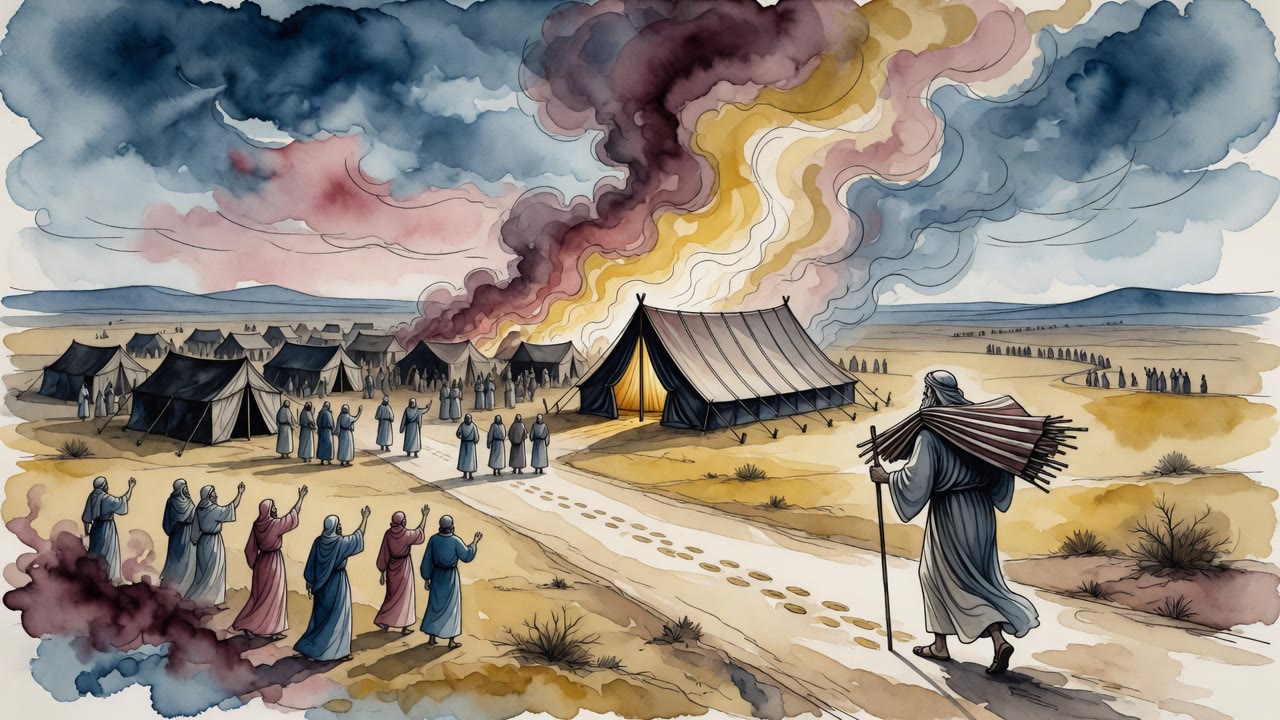
The pillar that had seemed to float ahead slid sideways. Cloud thickened on the flank where Edom's dust already rose. Fire walked the other side after dark, a moving fence of heat. The column stopped feeling like a line of prey and started feeling like a flock pressed into a fold.

Men at the edge of the camp put their hands out and felt warmth without smoke they could command. Children slept closer to the center. The chieftains on the hills lost their clean angle of attack. Every approach met the same problem: something stood between their spears and the carts, and it was not a human shield wall.

A shepherd does not only whistle a direction when wolves come. He moves his own body into the gap. He becomes the ring. That is what the midrash sees in the verb. God did not outsource the guard to luck or to Israel's thin spears. God closed around the people.

The Wall of Fire That Would Not Open

"I will be for it a wall of fire around," says the later prophet's line the midrash pulls tight to this hour (Zechariah 2:9). On the sand it looked simpler and stranger. Heat without fuel. Light that did not need oil. A border no captain could bribe.

Edom's first probe broke and fell back. Moab's scouts returned with eyes raw from glare. Canaan's plan needed a soft flank and found only a sealed ring. The nation of slaves kept walking inside that ring, day cloud, night fire, a mobile fortress that did not ask their permission to save them.

David would sing it later as if the geography itself remembered: mountains around Jerusalem, and the Lord around His people (Psalm 125:2). On the road out of Egypt the song was still only heat and cloud and the sound of wolves failing.

Israel did not win a battle that week. They were denied as targets. What changed for good was not a sword stroke. It was the discovery that leaving Egypt meant walking inside a living wall, not walking alone into the open.

The King Who Opened a Prison Door

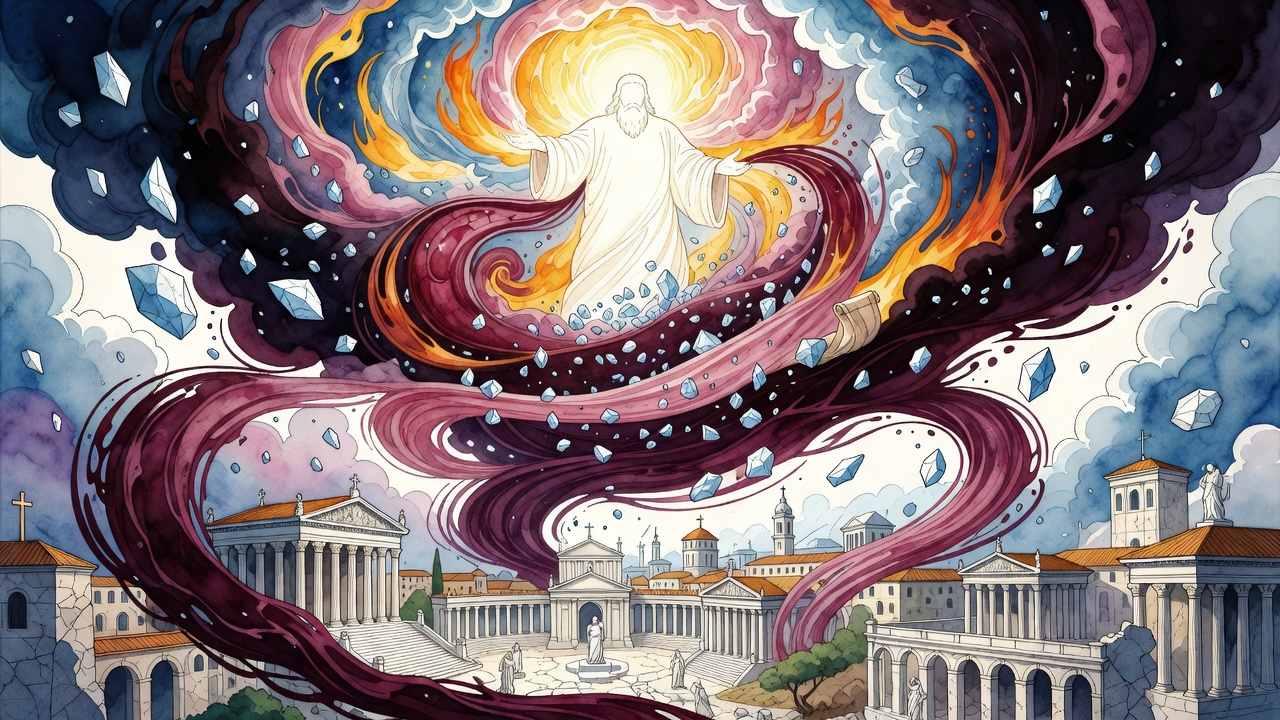
Another picture runs beside the ring of fire. A king hears that his son has been locked under iron. He does not send a note. He goes down, breaks the lock, and pulls the boy into light. Then he declares that day a festival forever, because on that day the son moved from darkness to light, from an iron yoke to free life, from slavery to a name that can stand in the open.

That is how heaven names the first month for Jacob's house. When God made the world, months and years were set for all creatures. When God chose Jacob and his seed, the beginnings of the months became a drum of redemption. Isaac was born and bound in that season's logic of rescue. Jacob took his blessings in it. Egypt's door would open in it. Later wonders would rhyme with the exit the way Micah hears them: as in the days of leaving Egypt, wonders again (Micah 7:15).

The people who walked inside the fire-wall were that son on the day the lock broke. Their iron yoke came off. A different yoke waited in the teaching still ahead, but the prison smell left their skin. Even the poorest among them would later recline at a meal of free people, because the verb of being led "around" also tastes like the verb of reclining in freedom.

On the sand, under cloud and fire, no one yet wrote a Haggadah. They only felt the ring hold when the hills wanted them dead, and they kept walking because the wall walked with them.

Edom still watched. Moab still hated. Canaan still waited for another decade's war. None of that undid the morning the pillar closed. The camp had been prey. Then it was a flock with a shepherd in the gap, and the road out of slavery became a road no wolf could enter clean.


← All myths
From the tradition

Sources

2 sources

The texts behind this telling. Some cards carry a translation of the source; others are our own retelling of it, and each card says which. Every card links out to the original.

Shemot Rabbah 15:11Shemot Rabbah

Retold in our words. Read the original at the link below.The Sefaria Midrash Rabbah, 2022 · CC-BY

It's a declaration. The text connects it to the verse "Happy is the nation that the Lord is its God" (Psalms 33:12), suggesting a deep link between national identity, divine providence, and the rhythms of time. when God chose to create the world, He established months and years. But when He chose Jacob and his descendants, He specifically designated the beginnings of the months as a time of redemption. This wasn't just about the Exodus from Egypt; it was about a pattern of liberation that would continue throughout history. As the prophet Micah (7:15) says, "Like the days of your departure from the land of Egypt, I will show it wonders."

The Midrash, a method of interpreting scripture that looks for deeper meanings, points out that Isaac was born and bound on the altar during this month. Jacob received his blessings then, too. It’s as if God was subtly hinting to Israel that this month holds the promise of salvation. It's "the first month of the year for you," a fresh start imbued with hope.

The Midrash then uses a powerful analogy: a king who frees his son from prison. Overjoyed, the king declares that day a perpetual festival. Why? Because on that day, his son emerged "from darkness to light, from an iron yoke to life [as a free man], from slavery to freedom, from enslavement to redemption."

Isn’t that a potent image? It mirrors what God did for Israel. Just as the king rescued his son, the Holy One, Blessed be He, took Israel out of their own "prison." We find this echoed in (Psalms 68:7), "He takes out prisoners from chains," and (Psalms 107:14), "He took them from darkness and the shadow of death."

But the transformation didn’t stop there. According to this Midrash, the "iron yoke" of slavery was replaced with the "yoke of Torah." Slavery transformed into freedom, a freedom that comes from being "children to the Lord your God" (Deuteronomy 14:1). Enslavement was exchanged for redemption, a redemption so powerful that "Their Redeemer is strong, the Lord of hosts is His name" (Jeremiah 50:34).

The Midrash concludes by saying that God assigned this month as a time for rejoicing, a time to remember that He exacted retribution against our enemies. As Isaiah (43:4) puts it, "I will give men in your stead." Those who mistreated you will be mistreated instead. It’s a powerful message of justice and divine reversal.

So, what does it all boil down to? This passage from Shemot Rabbah isn't just about the Exodus. It's about the cyclical nature of redemption, the promise that even in the darkest of times, liberation is possible. It’s about the power of time, and how specific moments can be imbued with divine significance, shaping our identity and destiny. And it's about remembering that even now, we are part of that ongoing story of freedom and renewal.

Full source
Shemot Rabbah 20:18Shemot Rabbah

Retold in our words. Read the original at the link below.The Sefaria Midrash Rabbah, 2022 · CC-BY

Jewish tradition teaches us that this feeling might be more than just a lucky coincidence. It might be the very presence of the Divine.

Shemot Rabbah, a classic compilation of rabbinic interpretations on the Book of Exodus, asks a fascinating question about a seemingly simple phrase: "God led the people around" (Exodus 13:18). The Hebrew word used here is vayasev. What does it really mean to be led "around"?

This teaching paints a beautiful picture. It suggests that God wasn't just guiding the Israelites geographically. Instead, God ENCIRCLED them, creating a protective barrier. As (Zechariah 2:9) says, "I will be for it, the utterance of the Lord, a wall of fire around."

A shepherd watching over their flock. Seeing wolves approach, the shepherd doesn't just point the sheep in a direction. No, the shepherd encircles the flock, becoming a living shield against harm. According to Shemot Rabbah, that's precisely what God did for the Israelites as they left Egypt. The chieftains of Edom, Moab, and Canaan were plotting to attack, but God, in His infinite care, surrounded His people, preventing the assault.

Isn't that a powerful image? It speaks to God's active, engaged protection. It’s not a passive, hands-off approach. It's a proactive, loving embrace.

And it doesn't stop there. This idea of divine encirclement extends beyond this world. As David sings in (Psalm 125:2), “Jerusalem, mountains surround it, and the Lord surrounds His people.” The protection, the guidance, the divine embrace – it’s eternal.

But there's another layer to the interpretation of vayasev. The Rabbis connect it to the act of reclining, yasev, particularly at the Passover Seder. The Mishnah (the earliest code of rabbinic law) in Pesaḥim (10:1) states that even the poorest person in Israel should recline while eating at the Seder. Why? Because that's what God did for them, leading them "around" – providing them with comfort and freedom.

So, what does this all mean for us today? We may not always see the dangers, the "wolves" lurking, but we can trust that a protective force is at work. And it's an invitation to find comfort and freedom, to "recline" into the security of that divine embrace, even in the midst of life's challenges. It is a call to remember and emulate the divine protection by ensuring even the most vulnerable among us have the space and opportunity to find comfort and dignity.

Full source