Parshat Tazria5 min read

God Fashioned the Child in Water Not on Stone

She was four days into the clean count when she saw blood. It takes about five seconds to learn that fifteen days of counting are gone.

Curated by Arthur · Told by Maggid ·
Table of Contents
  1. She Kept the Count in Her Head
  2. The Eleventh Day
  3. Water After Sunset
  4. Nobody Carves an Image on Water
  5. The Image That Stands Up and Answers
God Fashioned the Child in Water Not on Stone Click for full size

She Kept the Count in Her Head

Seven days from the first sign. Then seven more that had to come up clean, one after another with nothing in between. Then the eighth day, and after the eighth day the sun had to go all the way down, and after the sun went down there was the water.
Fifteen days from one end to the other, and she carried the number in her head the way other people carry a debt. She knew which day it was when she woke. She knew it while she was grinding, while she was answering the door, while her husband slept on the other side of a room she was not allowed to cross.

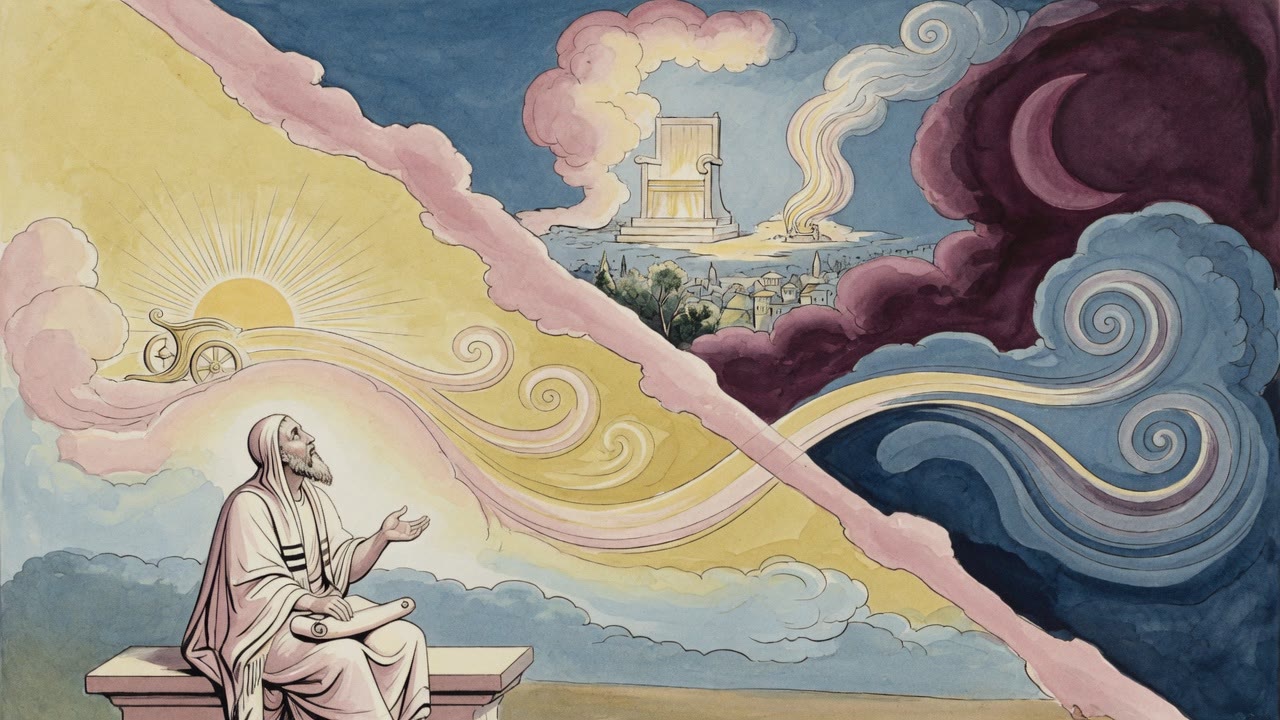
Seven days is seven days. The verse that governs her calls them many days, and it uses that same phrase for the years Israel spent in Egypt, and for the famine in Elijah's time, which was a month and a year and a month and is still called many days. Days that hurt are counted differently. Nobody counts a hungry year the way they count a full one.

The Eleventh Day

She was four days into the clean count when she saw blood.

It takes about five seconds. Long enough to look, and to look again, and to understand that the number she has been carrying since the last new moon is gone. Not paused. Gone. Tonight is day one.

The rule Rabbi Hiyya taught is exact and it does not bend for anybody. Blood on the eighth day, keep that day and you are clean. Blood on the ninth, keep it. Blood on the tenth, keep it, and those three are the many days the verse meant. But blood on the eleventh, on the fourth day of her cleansing, and the whole seven of menstruation start over from nothing.

She went and told her husband. Then she started again at one.

Water After Sunset

One month the count held all the way through.

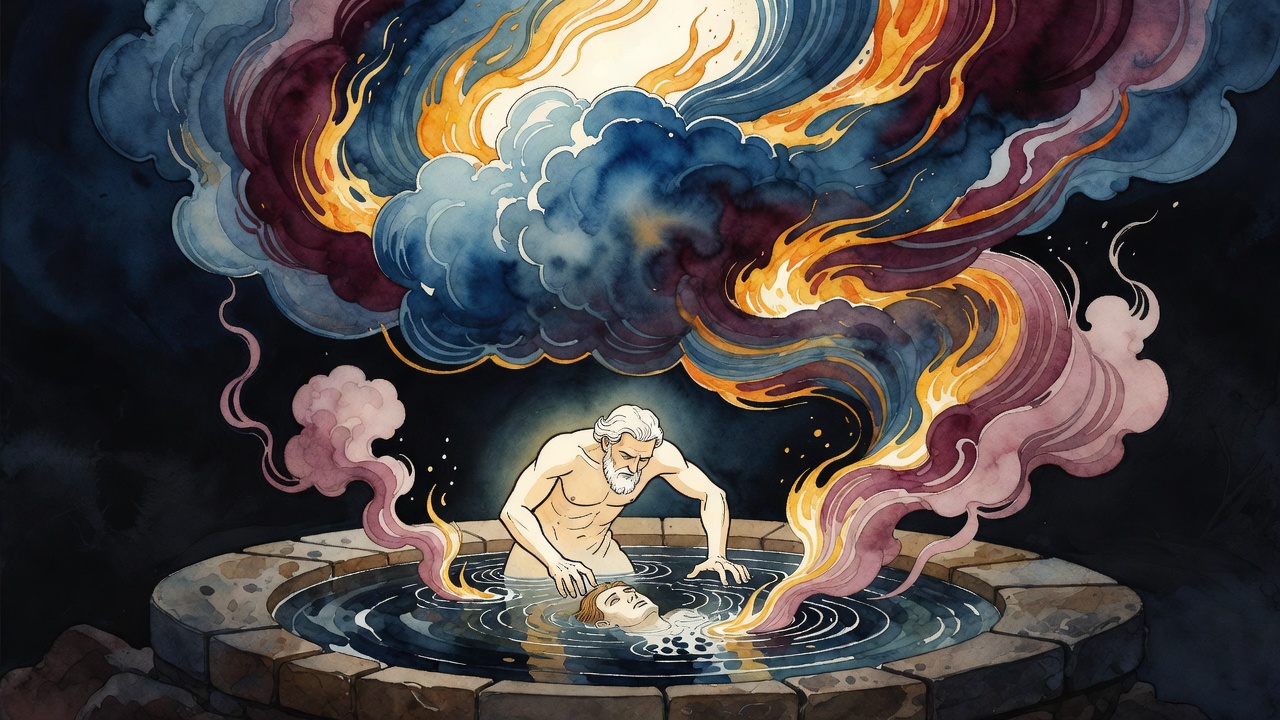
Seven days, then seven clean ones, and clean on the eighth, and when the sun was down she went out and down the steps and into the water and put her head under it, and came up, and she was lawful to her husband again.

She walked back up in the dark with her hair soaking and her shoulders steaming a little in the cold. Somebody had left a lamp burning at the top of the steps. She had counted fifteen days to get to that lamp and she could have named every one of them by number.

Nobody Carves an Image on Water

What happened after that was the work no craftsman in the province could copy.

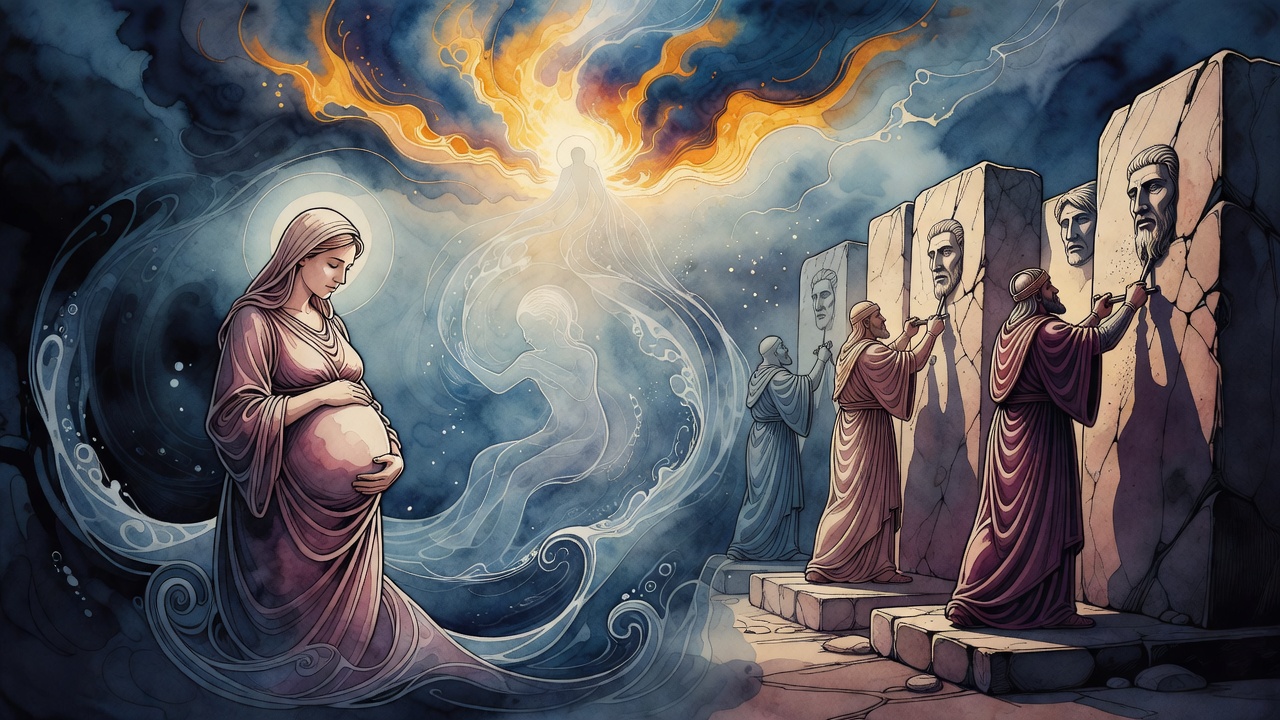
A man of flesh and blood cuts a face into a stone wall and steps back to look at it. Let him try to cut one into water.

God fashioned the child in the middle of water, inside her, where nothing should hold its shape for a second. That is what Hannah meant at Shiloh when she handed her son over and sang that there is no rock like our God. The word for rock is the word for forming. The forming happens exactly where the stone would sink.

Count what a carver needs before he starts. A wall. Plaster. Lime. Pigment. A rule, a chisel, a mallet, a full day and light to work by. And when he dies the wall outlives him, which is the humiliating part of being a builder.

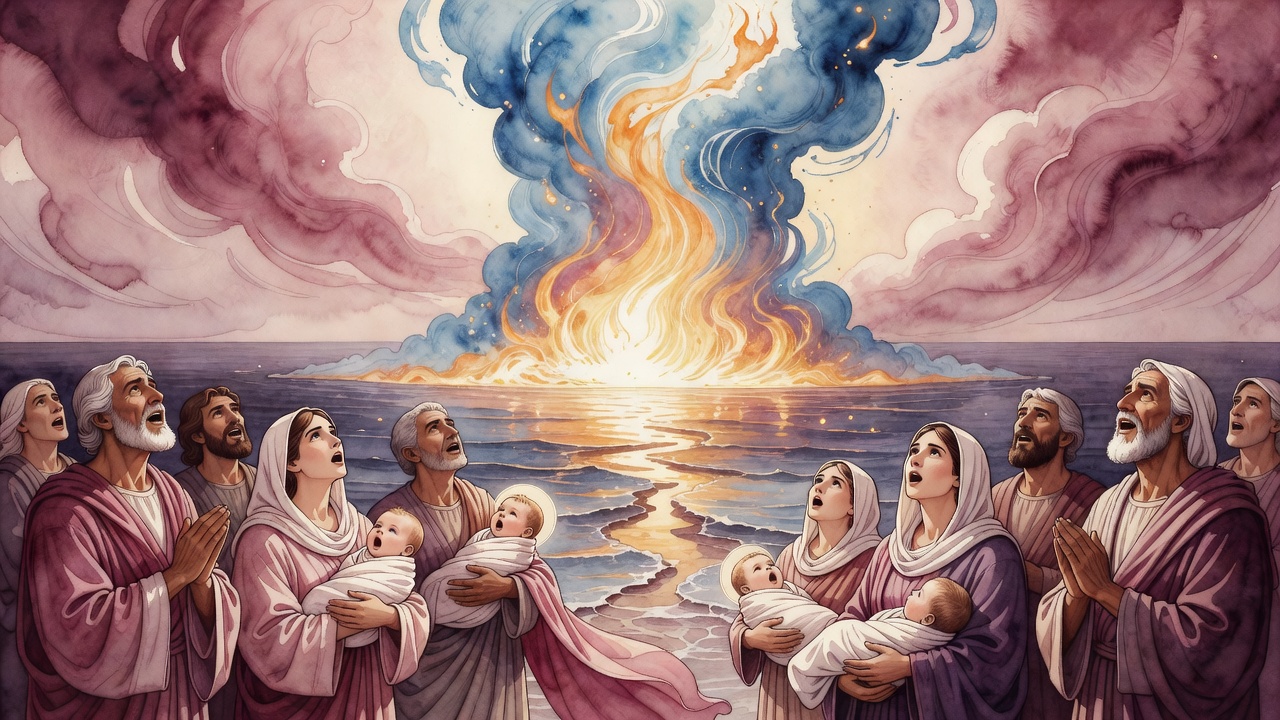
God starts with one drop of white and nothing else. Out of one drop comes a peacock with three hundred and sixty-six kinds of color standing in its feathers. Out of one drop comes a person, in a dark wet room with no lamp in it at all.

The Image That Stands Up and Answers

Here is the rest of the difference. A man finishes a face on a wall and stands in front of it and praises his own work, and the face says nothing back, because nothing was ever put inside it.

God finishes his image and the image gets up on its feet and praises him.

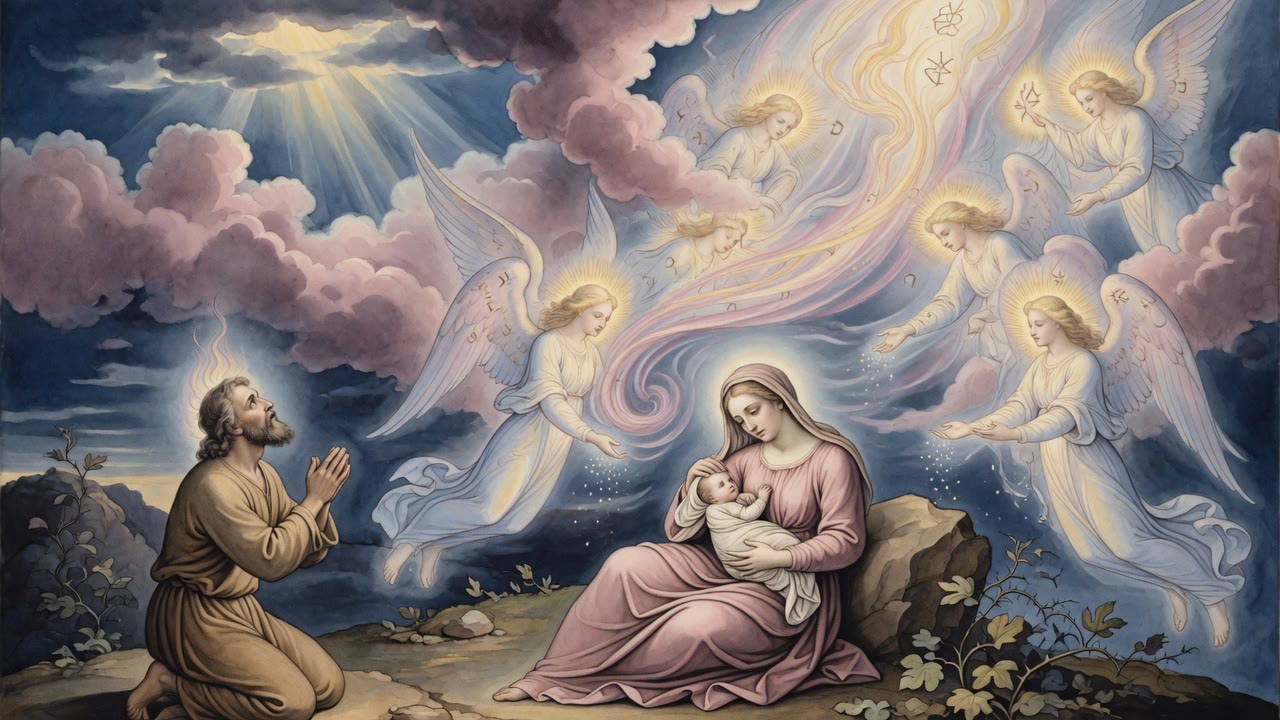
And a carver's image will never make another image. This one will. The girl formed in water grows up and forms a child in water of her own, and the work goes on in the same medium, in the dark, at her cost, with the days counted out again on the far side of it.

The sun went down on the eighth day and the counting stopped. Months later, in the same room, something turned under her hand, and she held very still to find out whether it would do it again.


← All myths

From the tradition

Sources

3 sources

The texts behind this telling. Some cards carry a translation of the source; others are our own retelling of it, and each card says which. Every card links out to the original.

Midrash Tanchuma, Tazria 2Midrash Tanchuma

Retold in our words. Read the original at the link below.Townsend 1989 translation of Midrash Tanhuma, S. Buber Recension · CC-BY

Another interpretation (of Lev. 12:2), “and bears a male”: This text is related (to I Sam. 2:2), “There is no holy one like the Lord, for there is none beside You.” What is the meaning of “for there is none beside You (bltk, traditionally voweled as biltekha)?” A king of flesh and blood builds a palace, and his building outlasts (rt. blh) him; but the Holy One, blessed be He, is outlasting the world, as it were, “for there is none outlasting you (reading bltk, voweled as ballotekha).” (I Sam. 2:2, cont.) “And there is no rock (tswr) like our God.” How so? Flesh and blood fashions (rt. tswr) an image (rt. tswr) upon the wall, but is he able to fashion (tswr) it upon the water? The Holy One, blessed be He, fashions (rt. tswr) the embryo in its mother's belly in the middle of water. Ergo (in I Sam. 2:2), “and there is no rock (tswr) like our God.” Another interpretation (of I Sam. 2:2), “and there is no rock (tswr) like our God: Flesh and blood fashions (rt. tswr) an image (rt. tswr) upon the wall, but is he able to fashion (tswr) a spirit and a soul into it? The Holy One, blessed be He, fashions (rt. tswr) the embryo in its mother's belly and places a spirit and soul into it. Ergo (in I Sam. 2:2), “and there is no rock (tswr) like our God.” Another interpretation (of I Sam. 2:2), “and there is no rock (tswr) like our God”: When flesh and blood fashions (rt. tswr) an image (rt. tswr), he (the fashioner) speaks, but his image does not speak. [Still, he] praises his image. In the case of the Holy One, blessed be He, however, His image stands up and praises Him. When flesh and blood wants to fashion an image, how many ingredients must he bring before he fashions it? But the Holy One, blessed be He, fashions an image out of a single drop (of seminal fluid). Come and see the peacock in which there are three hundred sixty-six kinds of colors; yet it is created from a single drop of white stuff. Now you should not [only] speak about a bird, but also about a human being, who is fashioned from a single drop of white stuff. Thus it is stated (in Lev. 12:2), “When a woman emits her seed and bears a male.” Ergo (in I Sam. 2:2), “and there is no rock (tswr) like our God.” When a king of flesh and blood fashions an image, his image does not make [another] image; but when the Holy One, blessed be He, fashions an image, His image does make [another] image, for it fashions the woman, and the woman bears an image like it.

Full source
Midrash Tanchuma, Metzora 6Midrash Tanchuma

Retold in our words. Read the original at the link below.Townsend 1989 translation of Midrash Tanhuma, S. Buber Recension · CC-BY

(Lev. 15:25:) “And when a woman has had a discharge of blood for many days.” But are there not seven days in a menstrual period? So why did it call them “many days?” Simply because she is separated from her husband and they are days of suffering, they are called “many days.” Similarly (in Exod. 2:23), “And it came to pass in the course of those many days [that the king of Egypt died].” It calls them “many days,” because they were days of suffering. [Likewise] (I Kings 18:1) “And it came to pass in those many days that the word of the Lord came to Elijah in the third year.” And is it not that there were not [even] three years, but rather a month from the first, the whole second year and a month from the third? Simply because they were years of famine, they are called “many days.” Similarly (in (Esther 1:4)), “In his displaying the glory of his kingdom and the preciousness of the splendor of his greatness many days, one hundred and eighty days.” Simply because they were days of suffering, it calls them, “many days.” Similarly (in (Joshua 11:1)8), “Joshua made war many days.” Similarly (in II Chronicles 16:3), “Israel has gone many days without the true God, without a priest to give instruction.” And [yet] it is written (Joshua 24:31), “Israel served the Lord all the days of Joshua and all of the days of the elders who had length of days.” It is simply that since they [also] worshipped idolatry, they are called, “many days.” Here too, because she is separated from her husband and they are days of suffering, they are called “many days.”

Full source
Midrash Tanchuma, Metzora 7Midrash Tanchuma

Retold in our words. Read the original at the link below.Townsend 1989 translation of Midrash Tanhuma, S. Buber Recension · CC-BY

(Lev. 15:25:) “And when a woman has had a discharge of blood [for many days].” Thus did R. Hiya teach: Any place where [Scripture] says, “days,” it is two days; and any place where it says, “many days,” it is three days. How so? The woman is unclean from menstruation for seven days and becomes clean on the eighth day. [If] she sees blood on that day, she observes a day [like the rest] and becomes clean. [If] she sees it again on the ninth day, she observes that day and becomes clean. [If] she sees it again on the tenth day, she observes that one and is clean. Ergo, three days which are “many days.” However, if she sees blood on day eleven, which is the fourth day of her cleansing, she returns to her uncleanness, and observes her seven days of menstruation from the beginning. For so have the sages taught: There are eleven days between one menstrual period and another; therefore, the woman has to keep fifteen days. How does she do so? She keeps seven days of her menstrual period. Then after that she counts seven clean days and becomes clean on the eighth day. Then she performs a strict immersion after sunset, and she is lawful for her husband. Thus it is stated (in Lev. 15:28), “And when she is clean from her discharge, she shall count off seven days, and after that she shall be clean.”

Full source