5 min read

God Felt Every Lash That Struck Israel Hard

When the whip fell on Israel's back in Egypt, the Presence did not watch from a cool height. He was afflicted with them, and Job still blessed the Name in ash.

Curated by Arthur · Told by Maggid ·
Table of Contents
  1. The Whip and the Presence
  2. Thanks When the Cup Is Bitter
  3. Power That Does Not Tire of Mercy
  4. The Heart That Grew Fat and Was Still Called
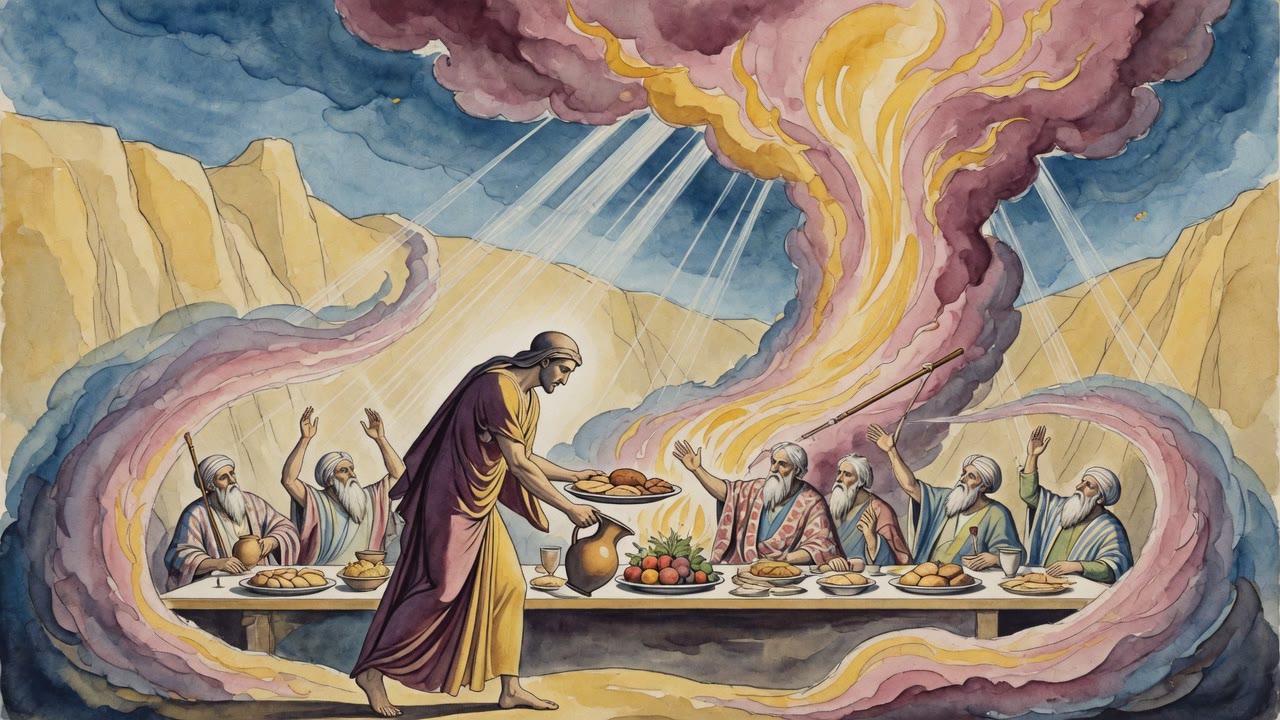
God Felt Every Lash That Struck Israel Hard Click for full size

The Whip and the Presence

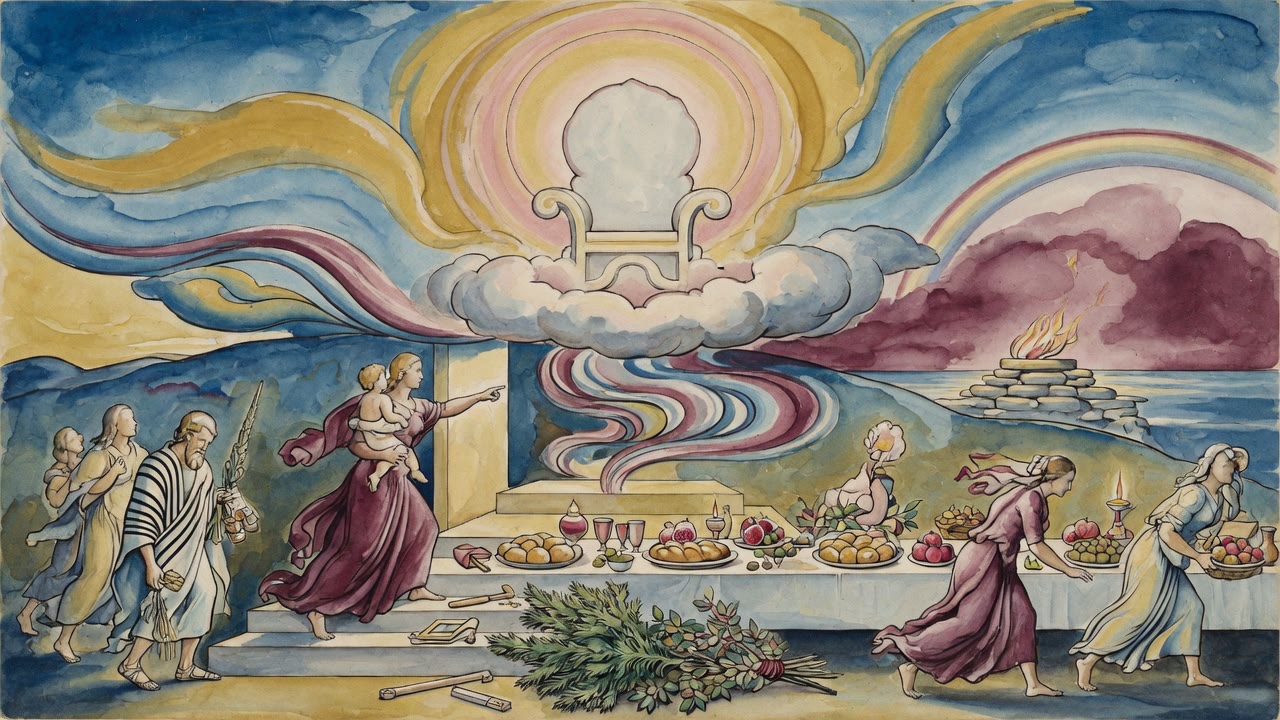
The lash rose over a Hebrew back in Egypt and did not fall on skin alone. God was afflicted in their affliction. The verse does not say He watched. It says He was struck with them (Isaiah 63:9). In the brickyards the air filled with dust and blood, and the Presence did not keep a clean distance. When they bent, something of heaven bent too.

He called them His people, children who would not lie, even while He knew mouths would later fail Him. The word "surely" holds that knowing. He saved them not as men destined only to anger Him, but as men who could return. Mercy kept a seat at the table before the first song at the sea.

A taskmaster wiped sweat and counted bricks. He did not know the count included a God who refused to stay outside the pain. The slave who bit through his lip to keep from crying out was not alone in the cry he swallowed.

Thanks When the Cup Is Bitter

Rabbi Akiva refused the market habit of the nations. When good comes, they honor their gods. When evil comes, they curse them. Israel is commanded another posture. Good arrives, give thanks. Affliction arrives, give thanks. David lifts the cup of salvation and calls on the Name. David finds trouble and sorrow and still calls on the Name. One Name. Two cups.

Job sat in ash with the news of his dead still ringing and said what the nations cannot say cleanly. The Lord has given and the Lord has taken. Let the name of the Lord be blessed. His wife urged him to curse and die. He would not trade the Name for a scream that ends in silence.

The ash stuck to his sores. Friends arrived with speeches that mistook theology for comfort. Job kept the blessing like a last coin. Akiva later line and Job old line share a spine. Do not treat God like a net that only earns sacrifice when it is full of fish.

Power That Does Not Tire of Mercy

Job book also holds a different pressure. God is beyond reach in power, great in strength, and still the teaching turns toward increase for the righteous and instruction that no other teacher can match. Power without mercy would crush the ash-heap. Mercy without power would leave Egypt whip unanswered. The same mouth that numbers the clouds also numbers the lashes on a slave back as His own wound.

Israel in the pit of exile learned to speak both truths without splitting God into two gods. The Accuser may prosecute in the heavenly court. The Presence still sits in the pain of the prosecuted people. The thanksgiving of Job is not a pretty song for full tables. It is a refusal to let suffering turn the Name into an enemy.

In the brickyards a man who still whispered blessings under the whip was practicing the same art Job practiced in ash. The art is not denial. The welts are real. The art is refusing to hand heaven over to the taskmaster theology.

The Heart That Grew Fat and Was Still Called

Later mouths would deceive. Hearts would grow heavy. Psalms and prophets would record the lies and the fatness. Still the same compassion that shared the lash would forgive transgression. He does not save them as finished righteous ones. He saves them as people who can still turn. The whip in Egypt and the confession in ash are one long rope. God holds both ends.

A man who blesses only in daylight has not yet learned the Name. A man who blesses in the dark has stood near Job and near the brickfields, where the Presence did not stay clean. When the sea finally split, the song rose from throats that had practiced thanks under pressure.

In a corner of the brickyard an old woman pressed clay and hummed a line that was almost a blessing and almost a groan. The hum did not stop the lash on the man beside her. It kept the Name from leaving her mouth empty. Heaven court may still hold prosecution. Ha-Satan (the Accuser) may still accuse with permission. None of that requires a God who stands cool while Israel bleeds. The Presence that shares the lash is not weak. He is near. Nearness is the scandal the verse insists on. Night in Egypt. A back that will scar. A God who will not outsource the pain. That is the scene Job answers when he blesses instead of cursing.

Breath shortened. Choices hardened. The next step still had to be taken on the same ground.


← All myths

From the tradition

Sources

3 sources

The texts behind this telling. Some cards carry a translation of the source; others are our own retelling of it, and each card says which. Every card links out to the original.

Mekhilta Tractate Bachodesh 1:17Mekhilta DeRabbi Yishmael

Retold in our words. Read the original at the link below.Mechilta, translated by Rabbi Shraga Silverstein · CC-BY

Similarly, R. Eliezer b. Yossi expounded (Isaiah 63:9) "In all of their afflictions, He was afflicted," (Ibid. 8) "And He said: 'Surely, they are My people, children who will not lie.'" But did He not know that they would lie? It is, therefore, written "Surely." (i.e. it was surely known to Him (that they would lie.) How, then, are we to understand (Ibid.) "and I will be their salvation"?. He did not save them as men who were destined to anger Him, but as men who (by repentance) were not destined to be faithless to Him forever. And thus is it written (Psalms 78:36-37) "And they deceived Him with their mouths, and with their tongues they lied to Him, and their hearts were not constant with Him, and they were not faithful to His covenant", in spite of which (Ibid. 38) "But He, being merciful, will forgive transgression," and (Isaiah 6:10) "The heart of this people has become fat, and its ears have become heavy, etc." (, in spite of which) (Ibid.) "if he repents, he will be healed."

Full source
Mekhilta Tractate Bachodesh 10:3Mekhilta DeRabbi Yishmael

Retold in our words. Read the original at the link below.Mechilta, translated by Rabbi Shraga Silverstein · CC-BY

R. Akiva says: "You shall not do (i.e. deport yourselves) with Me" as others do with their gods. When good befalls them, they honor their gods, viz. (Habakkuk 1:16) "Therefore, he sacrifices to his "nets" (i.e. to his idols, which "net" him riches). And when evil befalls them, they curse their gods, viz. (Isaiah 8:21) "… and he will curse his king and his gods." But, as for you, if I bring good upon you, you give thanks, and when I bring afflictions upon you, you give thanks. And thus did David say (Psalms 116:3) "the cup of salvation shall I raise, and in the name of the L-td will I call", (Ibid. 4) "Trouble and sorrow will I find, and in the name of the L–rd shall I call." And thus, Iyyov says (Iyyov 1:21) "the L–rd has given and the L–rd has taken. Let the name of the L–rd be blessed!" Both for the good and for the evil. What does his wife say to him? (Ibid. 2:9) "Do you still hold on to your innocence? Blaspheme G–d and die!" He answers (Ibid. 10) "You speak as one of the lowly ones!

Full source
Yalkut Shimoni on Nach 920:20Yalkut Shimoni on Nach

Retold in our words. Read the original at the link below.Sefaria Community Translation · CC-BY

Yalkut Shimoni on Nach turns to How Job Reveals God's Infinite Power and Mercy.

The Yalkut Shimoni, a fascinating collection of rabbinic commentary on the Hebrew Bible, tackles this very issue, drawing on verses from Job, Hosea, Ezekiel, and Numbers. Specifically, Yalkut Shimoni on Nach 920 dives into two seemingly contradictory verses from the Book of Job: "See, God is beyond reach in His power" (Job 36:22) and "The Omnipotent – we cannot attain to Him; He is great in power" (Job 37:23). How can we reconcile these statements?

Rav Berakhiah offers a beautiful interpretation, starting with the word "hen" in (Job 36:22). He points out that hen can also mean "one" in Greek. So, the verse could be read as "One is our God; exalted in His power." But it doesn't stop there. Rav Berakhiah continues, "He increases the strength of the righteous to perform His will. And who teaches like Him – to the sinners, He teaches the path of repentance; repent O Israel." (alluding to Hosea 14:2).

So, what's the answer? The Yalkut Shimoni proposes a striking balance: when God gives, He gives according to His boundless power. Think of the imagery from (Ezekiel 47:12): "The stream on the banks will grow," an overflowing abundance. Or the story in (Numbers 11:31), where "A wind from the Lord started up, swept quail… about a day’s journey on this side!" A massive, almost unbelievable gift.

But – and this is a crucial "but" – when God asks something of us, He only asks according to our capacity. We aren't expected to offer more than we can give. As the Torah says, "You shall offer one lamb in the morning" (Numbers 28:4). A single, manageable offering. Or "And the tabernacle, make ten curtains" (Exodus 26:1). Specific, achievable tasks.

Isn't that incredible? God's power is limitless, but His expectations of us are not. God meets us where we are. It’s not about superhuman feats or impossible sacrifices. It's about the one lamb, the ten curtains – the things we can do, offered with a sincere heart.

The Yalkut Shimoni offers a comforting and empowering message: we don't have to be perfect. We just have to be willing to offer what we can, knowing that God’s grace fills in the gaps. He asks for our "one lamb" knowing that He will shower us with abundance in return. What "one lamb" offering can you make today?

Full source