Three Times Israel Ran Back Toward Egypt
Judah looked south for horses and walls. An angel emptied the Assyrian camp by morning. The next generation packed for Egypt anyway.
Table of Contents
The road to Egypt looked like common sense while the north was on fire. Horses. Grain. Walls older than fear. A river that does not dry.
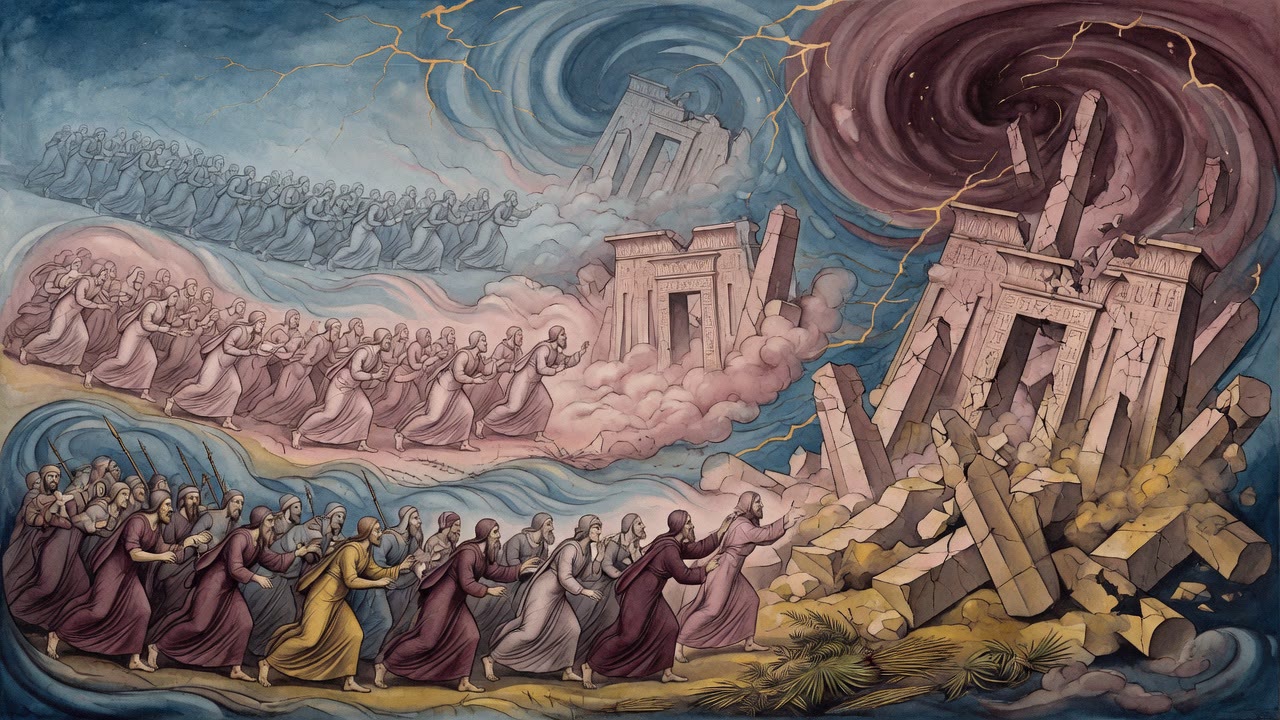 Click for full size
Judah packed. Elders counted stores. Mothers counted days of bread. Someone with a good memory of Egyptian streets argued that a known oppression was safer than an unknown siege.
"Ephraim is a silly dove, without a heart. They have called to Egypt" (Hosea 7:11). The dove does not study nets. It sees a shape that looks like shelter and flies.
Judah Looked South for Horses
In the days of Sancheriv (Sennacherib), Judah looked south for chariots against the Assyrian machine. The prophet's voice cut across the alliance talk. "Woe unto those who go down to Egypt for help" (Isaiah 31:1). Trust in horses is a theology whether or not the riders admit it.
Sancheriv swallowed the northern kingdom and turned toward Jerusalem. He mocked the God who, he assumed, would fail like every other local deity under Assyrian boots (Isaiah 37:24). He had blasphemed through his servants. He had counted on mass.
One angel answered for the whole argument. "And the Lord sent an angel who annihilated every warrior" (II Chronicles 32:21). Morning light found a camp of corpses. One hundred eighty-five thousand (II Kings 19:35). Not one Judean sword needed to leave its sheath.
The men who had argued for Egyptian horses stood on the wall and looked at a silence no chariot had bought. Swords stayed in their sheaths. The camp below did not rise. Judah had asked Egypt for horses and received an angel instead.
The Remnant Packed After the Fire
After the First Temple burned, a remnant under Yochanan ben Kareach decided the safer future was Egyptian soil again. Jeremiah stood in their way with a word no one wanted.
"The sword you fear will find you there," he said. "The famine you dread will follow you, and there you will die" (Jeremiah 42:16-17).
They went anyway. They put children on carts. They took the prophet with them against his word. The dangers they fled became the address where the dangers lived.
The dove's wings were sincere. Sincerity did not untie the net. The house they chose as antidote finished the sentence they had been running from.
A Third Flight Under Rome
In the days of Trajan, Jews sought haven in Egypt again. They packed the same way the remnant had packed. They named the same river as safety. They met destruction again. The old house collapsed under new weight.
Egypt was a reflex as much as a country. Outsource trust to an empire that once drowned under its own pursuit. The sea should have cured the reflex. The cure did not hold.
Night on a later border. A courier argued for the southern alliance again, charts spread under a lamp. An old man who remembered the three falls did not bother with charts. He asked only who was being asked to save them, and whether that name had ever kept its promises when the north burned. The courier kept pointing at the river. The old man kept pointing at the empty Assyrian camp, and at the carts that had rolled south after the Temple burned, and at the graves those carts had found.
Those Who Rise Against the Children
They had sung it at the sea, with the water still in their clothes. "In the greatness of Your grandeur You break those who rise up against You" (Exodus 15:7). Who rises against God? Those who rise against His children.
Pharaoh thought he was chasing escaped labor. Heaven booked it as war against the throne. Sancheriv thought he was managing a siege. Heaven booked it as blasphemy that required an angel, not a debate.
Run to Egypt and the net closes. Stand where God places the camp and even an empire can wake to silence. Sancheriv's dead camp should have broken the habit. An angel emptied an empire's pride overnight while Judah's swords stayed clean. That is help that arrives without demanding a kneel to a foreign horse.
Still the later generations packed for the south again. Memory went into the packs as optional equipment. Strike the children and a claim has been filed against the Parent. The sea answered one filing. The angel answered another. Egypt as savior answers none. It only recycles the old house's collapse under new tenants who thought they were guests.
← All myths