God Kept Naming Merivah Like a King's Wound
Speak, they had been told. They struck. Water ran. After that the Holy One could not pass the place without saying the brothers' names.
Table of Contents
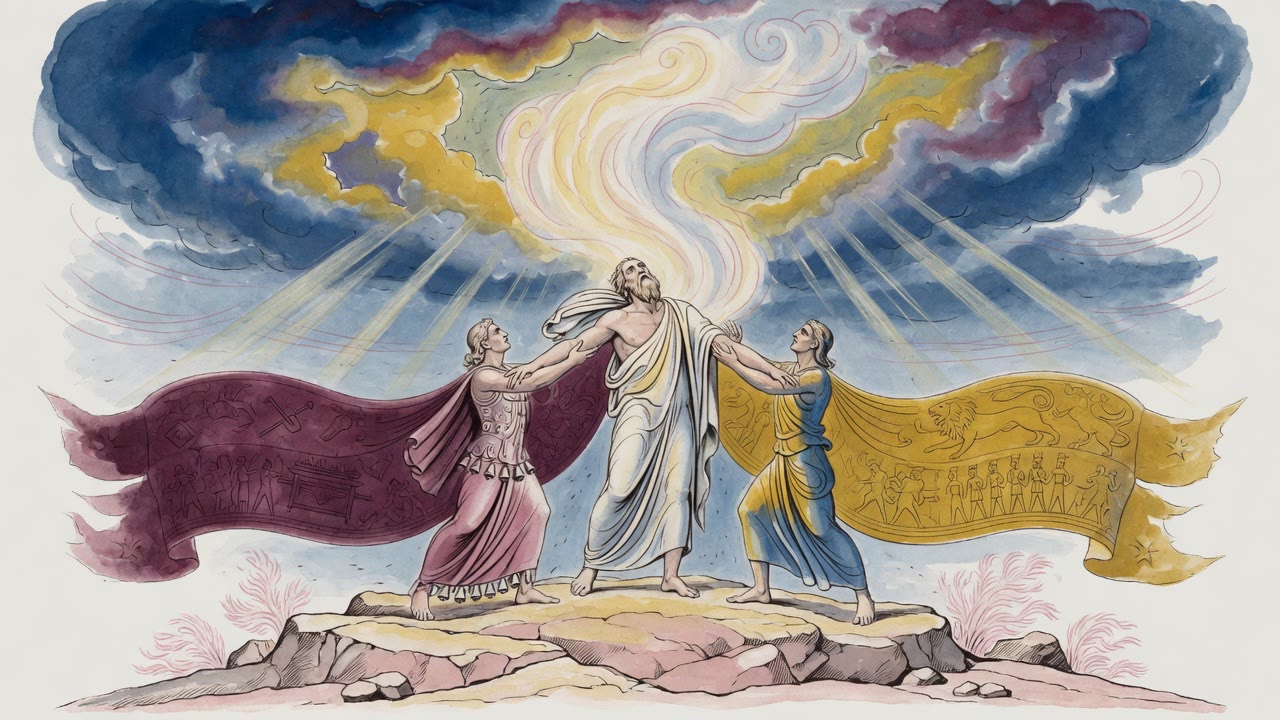
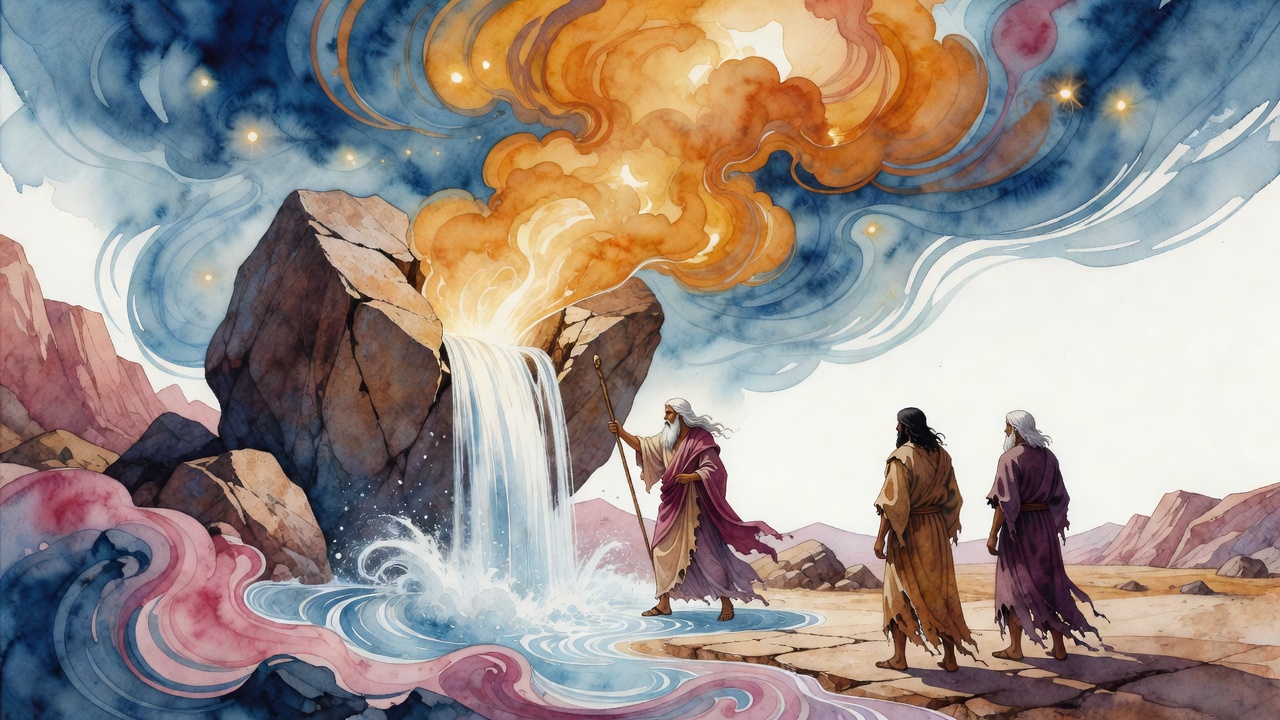
The camp screamed for water. Moses lifted the staff. Aaron stood in the heat with dust in his beard. They had been told to speak. They struck.
 Click for full size
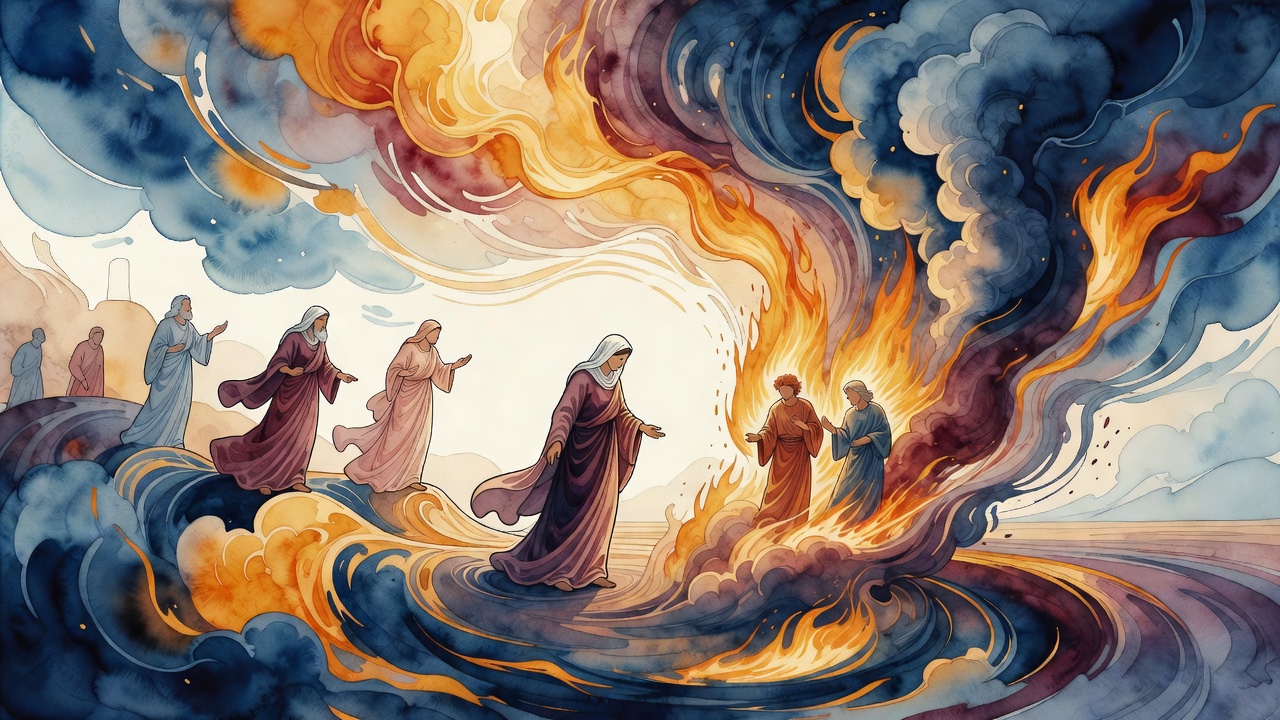
The rock split. Cold water ran into the dust. Children laughed with wet chins. The brothers tasted metal. Mei Merivah, the Waters of Contention, filled the skins, and with the water ran a decree neither man could reverse. The border of the Land closed on both of them like a gate no hand had touched.
The people sang over full waterskins. The leaders watched the stream and already heard the longer sentence forming above it. They had saved a camp and spent themselves doing it wrong.
Water That Cost a Future
Aaron's eyes, when they met his brother's, carried the shared knowledge of a command spoken and a command broken. Speak, they had been told. A staff can be holy and still be the wrong tool for the hour. The camp drank. The future of two men went out with the first swallow.
A place can give life and take a crossing in the same hour. Moses watched the wet stone and knew the blow would be remembered longer than the thirst. The water would be called miracle. The strike would be called the hinge of an exile from the Land for the two who had carried everyone else toward it.
The judges of Israel had slipped on that rock. Heaven kept the bruise in its speech.
Here I Lost Aaron, Here I Lost Moses
A king was traveling with his son. The coach came to a narrow place and overturned. The son's eye was blinded, his foot severed, his hand broken. Forever after, when the king reached that pass, he pointed at the stones. Here the eye. Here the foot. Here the hand. He could not ride through without naming the injury.
So the Holy One returns to Mei Merivah again and again (Numbers 20:13), (Numbers 20:24), (Deuteronomy 33:8). Here I lost Aaron for the Land. Here I lost Moses. Not by sword. By a slip at a rock that should have been spoken to.
Each return is not a clerk repeating a file. It is a King who will not pretend the injury was small. Years later, when the people complained about other thirsts, Moses still heard Merivah under their voices. The rock in memory stayed wet. The staff in memory stayed heavy.
Neither King Nor Commoner
On the last heights Moses tried every door left to a desperate servant. "If I cannot come as a king, let me come as a commoner." Let me slip in without the cloud, without the honor, without the staff raised high. "If I cannot come alive, let me come dead." Let my bones rest in the soil I have described until my throat went dry.
The answers stacked like bars. You shall not come (Deuteronomy 32:52). You shall not pass through (Deuteronomy 34:4). Not in glory. Not in rags. Not breathing. Not buried there.
He tried the commoner's door because forty years of other people's failures had already burned the pride out of him. He tried the corpse's door because even dignity of burial felt like a small ask. Both doors stayed locked. The tutor who could open the sea could not open this.
He Went Up After He Prayed
"There is much owing you in the world to come," the Holy One said, as a man says to his neighbor, you need not petition what is already yours. The debt of reward was real. The land under his gaze would never be his address. Merivah had written the first line of that refusal in water and stone.
He went up only after prayer. All the deeds of Moses had not drawn the command "Go up." The hour of prayer did. Rabbi Elazar ben Yaakov would later say it plainly: better one hour of prayer than good deeds, because only after Moses prayed was he told to climb.
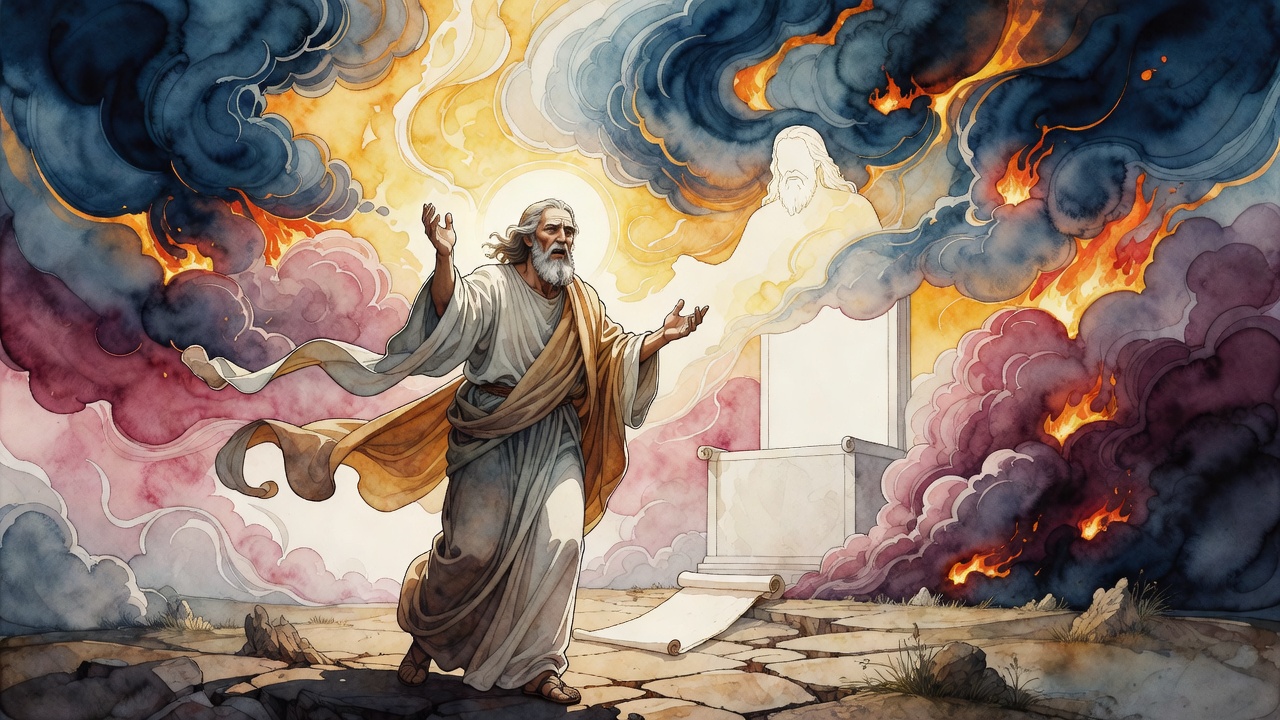
From the top he saw what he would never touch. He lifted his eyes as he had been told. Valleys. Cities. The far edge of the promise. His feet stayed on the wrong stone.
The Place That Would Not Heal
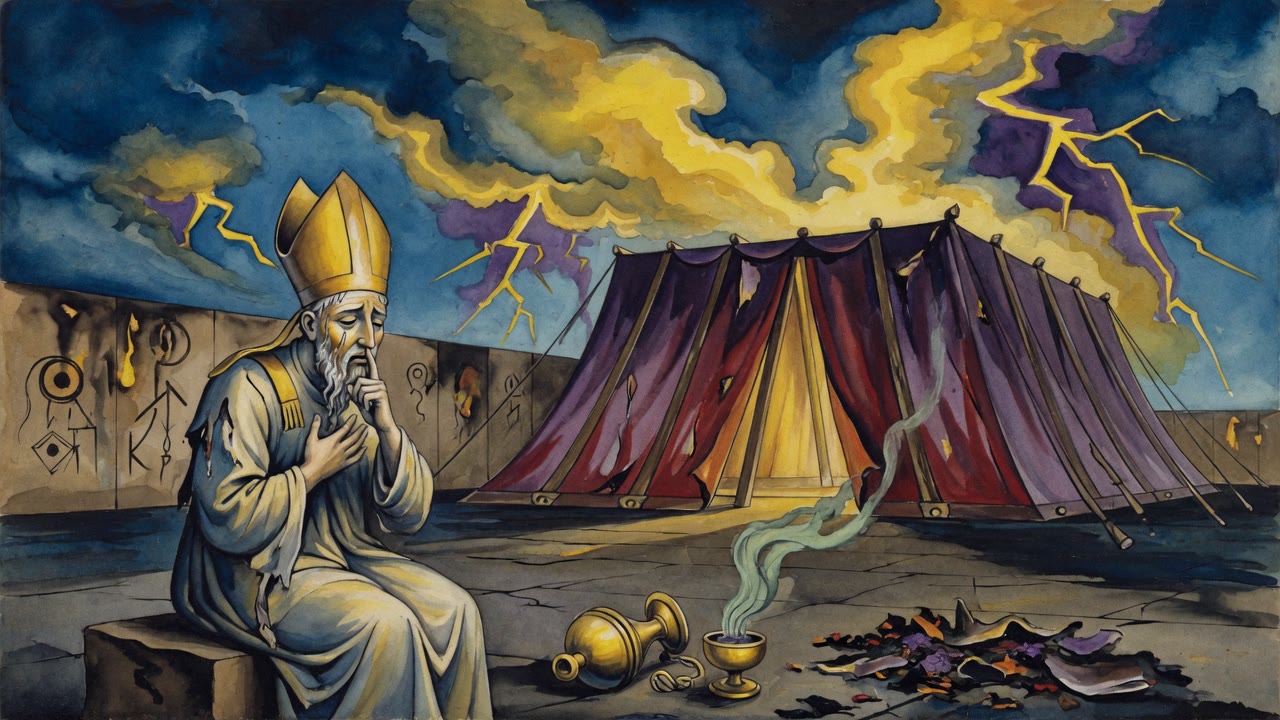
Aaron died on the mountain of Hor with the garments stripped for his son, the priesthood moving like a flame from one wick to the next. Moses died with the view and without the crossing. The people walked on with full canteens and a lighter chain of command.
The King kept pointing at the pass. Here. Here. Here.
On the last ridge Moses could still point, if he chose, to the exact weather of that day: heat, noise, the demand for water now, the failure to sanctify God in the eyes of the people by speech instead of force. Heaven pointed with him. Every mention of Merivah in Torah is that shared finger on the map, unblinking. The camp that drank that day walks under both gifts: the stream that saved them, and the decree that broke the men who struck it open.
← All myths