Parshat Chukat5 min read

Moses Asked Why Israel Was Forgiven Not Him

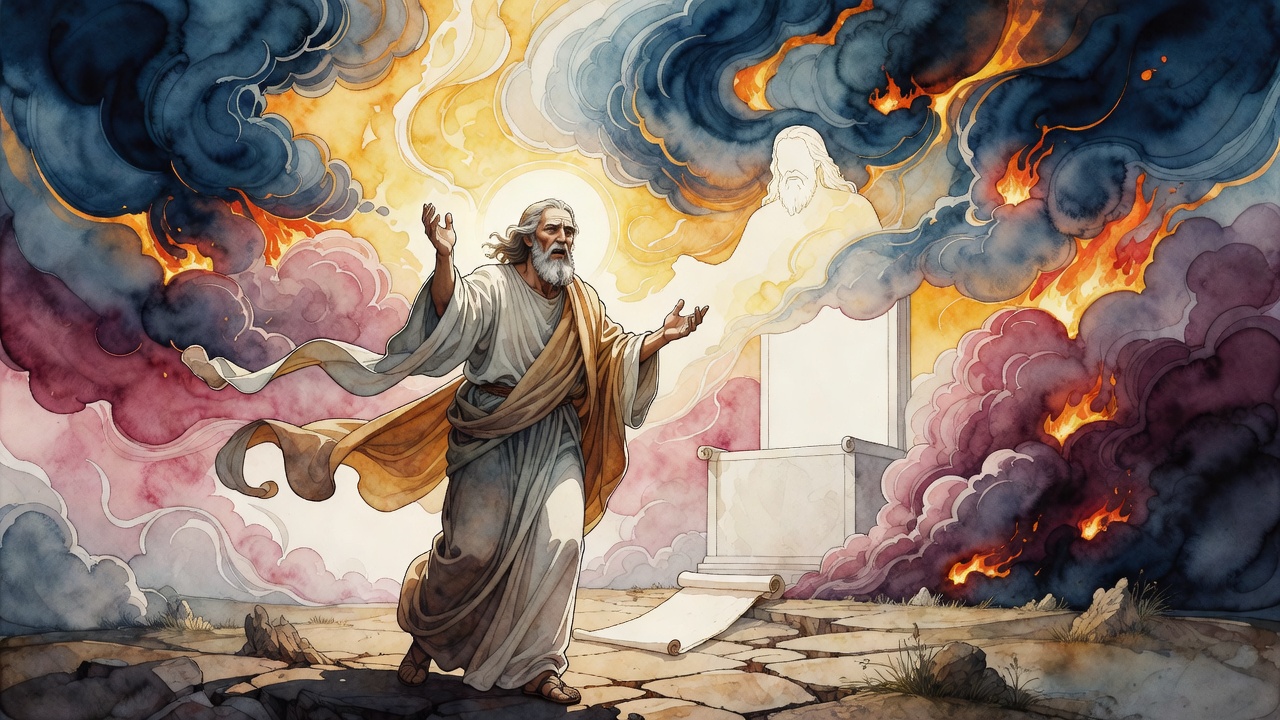
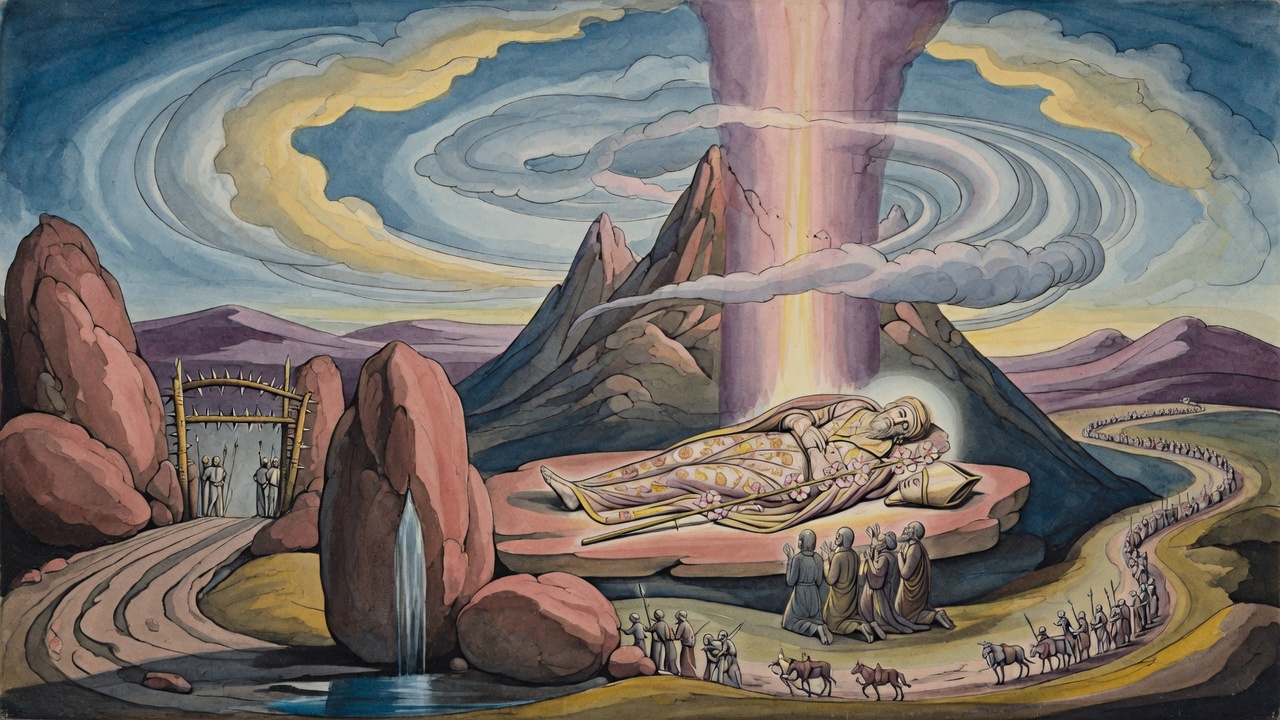
At Meribah an oath of death settled on Moses. He begged for the mercy he had won for sixty myriads and heard that fate was no longer his.

Curated by Arthur · Told by Maggid ·
Table of Contents
  1. Water That Already Knew His Name
  2. Sixty Myriads Forgiven, One Man Refused
  3. Aaron Without a Plea
  4. The Staff That Could Not Buy the Land
  5. What the Rock Remembered
Moses Asked Why Israel Was Forgiven Not Him Click for full size

Water That Already Knew His Name

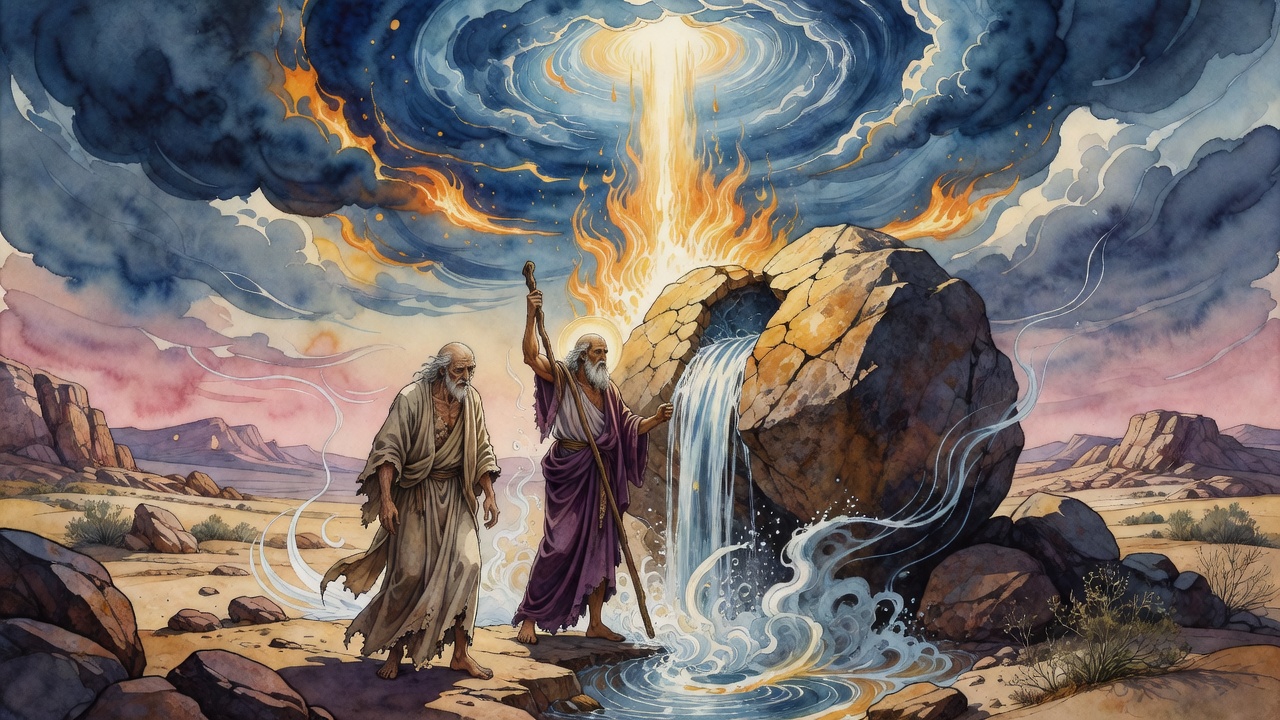
Moses stood at Meribah with a rock, a staff, and a people shouting for water. The sentence that fell afterward did not sound like praise. "Because you did not have faith in Me" (Numbers 20:12). Aaron stood beside him under the same verdict, though his hands had not struck the stone.

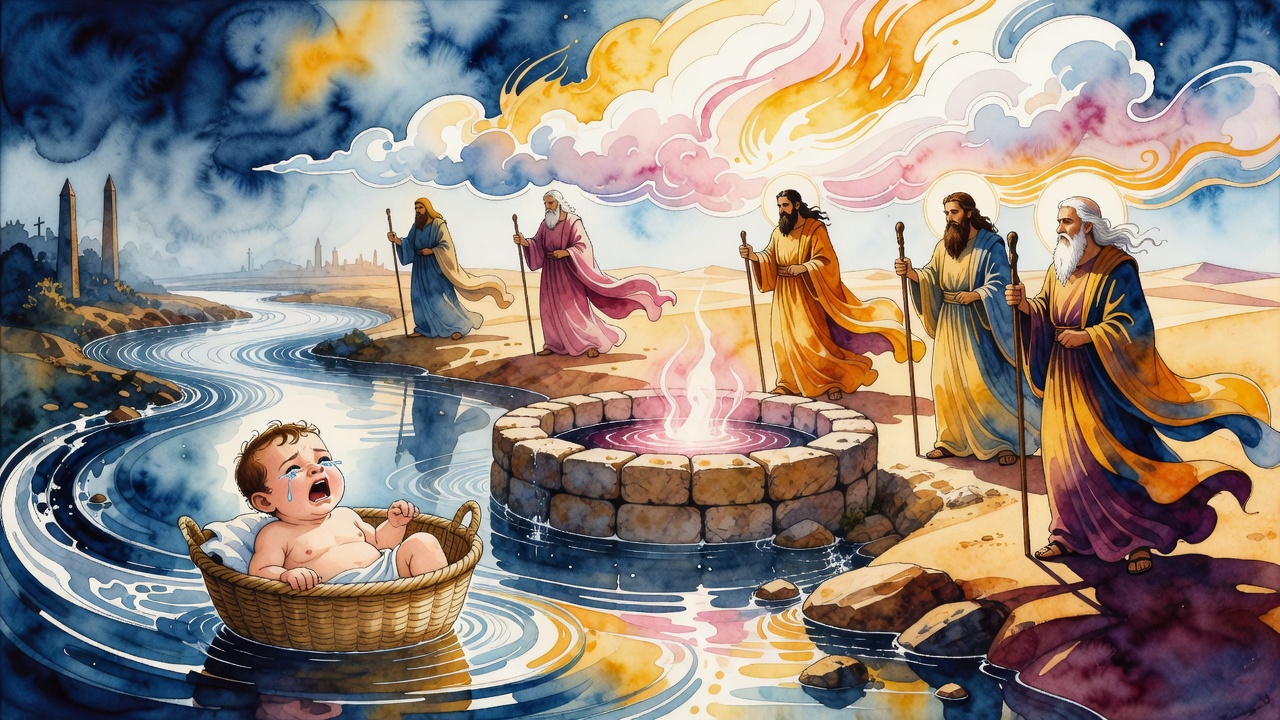
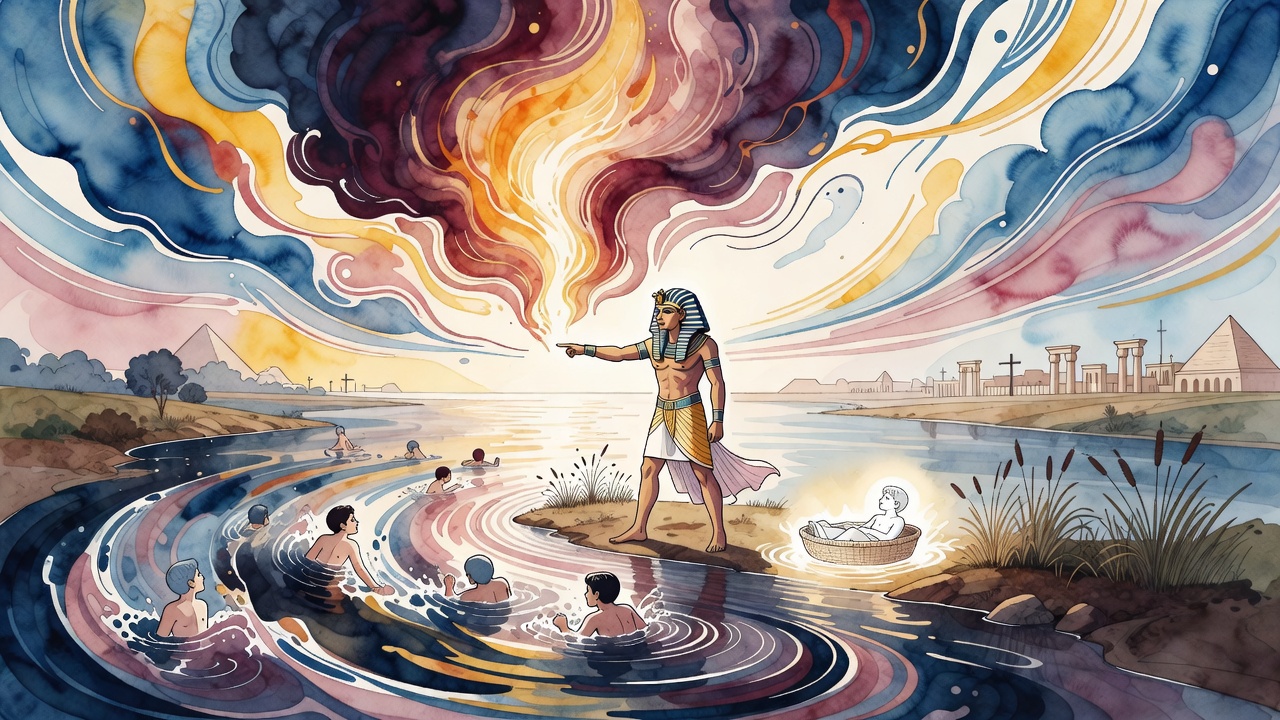
Egypt's astrologers had seen this long before. They had glimpsed a savior who would be undone by water. "These are the waters of dispute," the verse says, "and He was sanctified through them." The word that follows, lachen, "therefore," is the language of an oath. Heaven does not spend "therefore" lightly. It is the same oath-word that sealed death upon the house of Eli.

Where Moses and Aaron failed the command at the rock, holiness was established in the breach. Glory is upheld even in the falling of the great.

Sixty Myriads Forgiven, One Man Refused

Later Moses argued the books of heaven open on the table of justice. "O Lord of the world!" he cried. "How often did Israel sin before Thee, and when I begged and implored mercy for them, Thou forgavest them. For my sake Thou forgavest the sins of sixty myriads, and now Thou wilt not forgive my sin?"

God answered with a distinction that cut deeper than any refusal. Punishment laid upon the community is not the same as punishment laid upon the individual. He is not so severe with a nation as with one soul. Then came the second blow: until now fate had been in Moses' power. Now fate was no longer in his power.

Moses begged Him to rise from the Throne of Justice and seat Himself on the Throne of Mercy. He begged not to be handed to the Angel of Death. He promised to keep singing the works of the Lord if only more years were granted. The gate of the Lord, the answer came, is the gate the righteous enter as well as other creatures. Death had been decreed for humankind from the beginning.

Aaron Without a Plea

In Bamidbar Rabbah the unfairness is named without polish. There are righteous who receive what the wicked seem to deserve. The serpent in Eden was cursed without being allowed to argue its case. Aaron could have said, "I did not disobey You. Why am I sentenced with death?" The midrash does not invent a neat balance sheet. It holds the discomfort open.

Moses himself had once stood over Nadav and Avihu and said, "This is what the Lord spoke." At Sinai the altar had already been told: it shall be sanctified by My glory. The glory does not step aside for greatness.

The Staff That Could Not Buy the Land

He had split seas and drawn water before. He had stood between plague and people until the smoke of incense thinned. At Meribah the old tools did not rewrite the oath. Water still came. The land did not. The man who had carried sixty myriads through forgiveness could not carry himself across the Jordan on the strength of past intercessions.

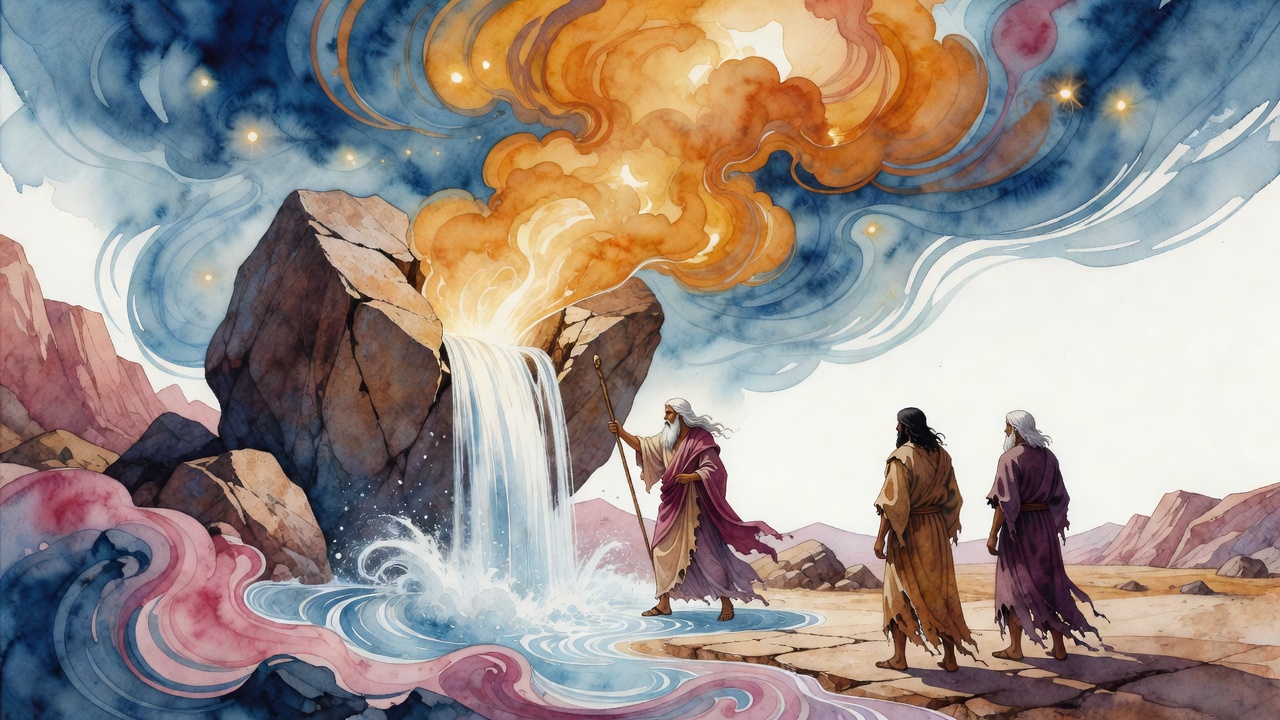
He walked the remaining years knowing the gate waited. The people drank. The rock kept its silence. The "therefore" of Meribah did not unclench.

What the Rock Remembered

The people had crowded the rock with accusations older than thirst. Why did you bring us out. Why this desert. Why these graves of brothers along the way. Moses had answered crowds before with signs that split nature open. At Meribah the command was specific, and specificity is where greatness trips.

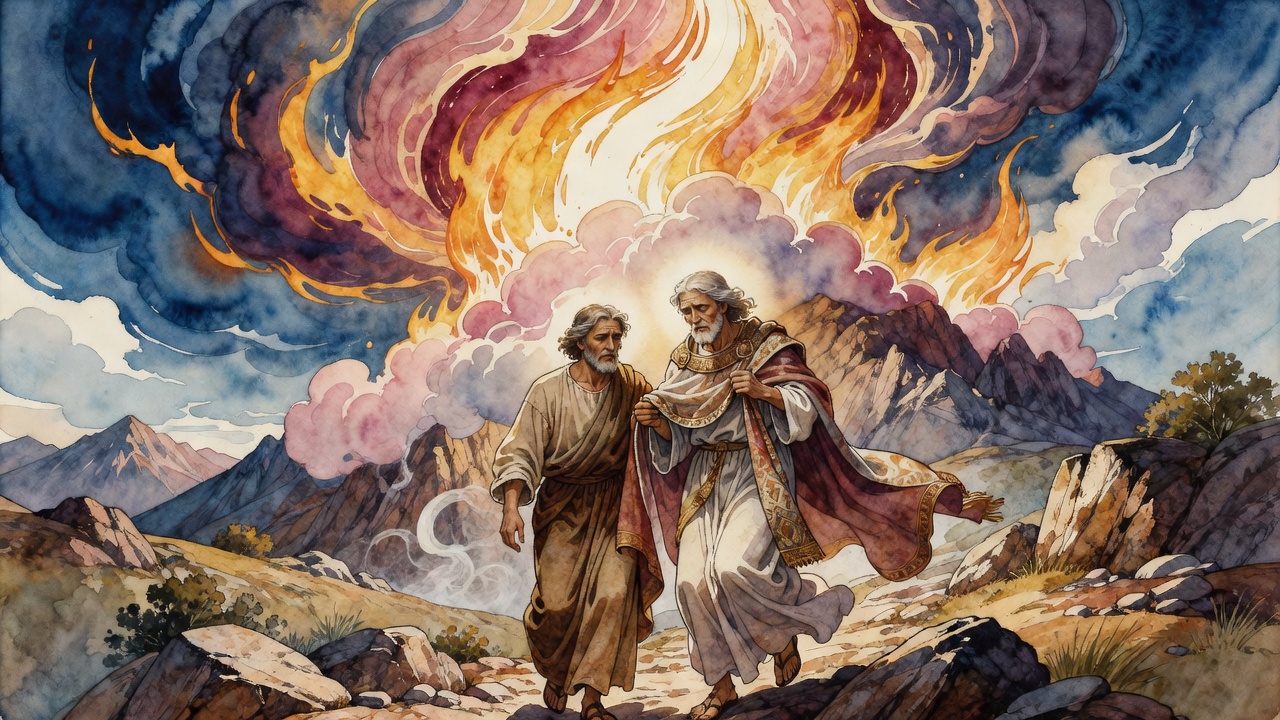
Aaron's silence in the midrash is almost louder than Moses' speech. He is yoked to a failure he did not perform with his own staff, the way a partner is yoked to a debt he did not sign. The serpent in Eden, denied a hearing, becomes the pattern: some sentences fall before the defense can stand up. Bamidbar Rabbah does not pretend this feels fair. It only refuses to lie about the feeling.

When Moses later counted the myriads he had saved by intercession, he was not bragging. He was presenting evidence in a court that had already moved the docket. Community sin can be borne and remitted in waves. An individual's breach at the point of public sanctification is written in oath-language. Lachen is not a mood. It is a seal.

He asked for the Throne of Mercy as if furniture could be rearranged by grief. He offered more years of praise like a wage. The answer returned him to the human gate every creature enters. The leader who had stood between plague and camp discovered he could not stand between himself and the decree that water had been waiting to announce since Pharaoh's stargazers first flinched at a baby's name.


← All myths
From the tradition

Sources

3 sources

The texts behind this telling. Some cards carry a translation of the source; others are our own retelling of it, and each card says which. Every card links out to the original.

Legends of the Jews 6:131Legends of the Jews

Retold in our words. Read the original at the link below.The Legends of the Jews by Louis Ginzberg (1909) · Public Domain

He had led the Israelites through unimaginable hardship, pleaded with God on their behalf countless times, and witnessed miracles beyond comprehension. Yet, when he faltered, the hammer of divine judgment seemed to fall with particular force.

In this poignant passage from Legends of the Jews, as retold by Ginzberg, we find MOSES at a critical juncture, begging God for forgiveness. "O Lord of the world!" he cries out, a raw plea born of desperation. "How often did Israel sin before Thee, and when I begged and implored mercy for them, Thou forgavest them... For my sake Thou forgavest the sins of sixty myriads, and now Thou wilt not forgive my sin?"

After all he'd done, after all the times God had shown mercy because of MOSES's intercession, why this seemingly unyielding stance now?

God's response is… well, it's complicated. "The punishment that is laid upon the community is different from the punishment that is laid upon the individual, for I am not so severe in my treatment of the community as I am in dealing with an individual." God explains. It's a glimpse into the divine calculus, a suggestion that the rules are different for the individual than for the collective. There's a certain logic there. The fate of a nation can't hinge on the perfection of one person.

But it doesn't end there. There's another layer to this. God continues, "But know, furthermore, that until now fate had been in thy power, but now fate is no longer in thy power."

What does that even mean?

It's heavy. It implies that MOSES, in his role as leader, possessed a unique ability to influence destiny, a power that's now slipping away. He’s no longer the master of his fate. It's a profound shift, a humbling realization that even the greatest among us are ultimately subject to forces beyond our control.

In his anguish, MOSES continues to implore, "O Lord of the world! Rise up from the Throne of Justice, and seat Thyself upon the Throne of Mercy, so that in Thy mercy, Thou mayest grant me life…" He begs not to be handed over to the Angel of Death, promising to sing God's praises if only granted more time. He wishes to live and declare the works of the Lord, echoing a sentiment we find elsewhere in Jewish tradition – the immense value placed on life and the opportunity to do good in the world.

But the decree, it seems, is final. God replies, "'This is the gate of the Lord; the righteous shall enter into it,' this is the gate into which the righteous must enter as well as other creatures, for death had been decreed for man since the beginning of the world."

It's a stark, unavoidable truth: even the most righteous must face mortality. Death is the ultimate equalizer, a fate shared by all.

This passage isn't just about MOSES's personal tragedy. It's a reflection on leadership, responsibility, and the limitations of even the most extraordinary individuals. It's about the delicate balance between justice and mercy, and the acceptance of our shared human destiny.

It leaves us pondering: What do we do with the time we have? How do we reconcile our desire for justice with the need for compassion? And how do we find peace in the face of the inevitable?

Full source
Bamidbar Rabbah 19:11Bamidbar Rabbah

Retold in our words. Read the original at the link below.The Sefaria Midrash Rabbah, 2022 · CC-BY

That feeling isn't new. It’s a feeling that echoes through the ages, a question that’s been wrestled with in our texts for millennia.

Bamidbar Rabbah 19, a section of the ancient Midrash Rabbah, grapples with just this. It starts with that heartbreaking line from (Numbers 20:12), the one that hits Moses and Aaron so hard: “Because you did not have faith in Me.” It’s a harsh judgment, a seemingly disproportionate consequence.

The Midrash (rabbinic interpretive commentary) then throws us into Ecclesiastes (Kohelet) 8:14: “There is futility that is performed on the earth, in that there are righteous who receive as accords with the action of the wicked, and there are wicked who receive as accords with the action of the righteous. I said that this too is futility.” Isn’t that frustrating? It feels like the universe is playing a cruel joke. The tzadik (righteous person) suffers, while the rasha (wicked person) prospers. Where's the justice in that?

To illustrate this apparent cosmic unfairness, the text brings up the story of the serpent in the Garden of Eden. Remember him? God curses the serpent after the whole forbidden fruit incident. But, the Midrash points out, God doesn't even let the serpent plead his case! The serpent could have argued, “You told Adam not to eat, but I just suggested he should. Why are you cursing me?” It’s a valid point. The serpent's being punished for… well, for being a serpent, it seems.

And then, the text brings it back to Aaron. Poor Aaron. He could have protested, “I didn’t disobey You, God! So why am I being punished with death?”

What’s the Midrash trying to tell us here? Is it saying God is unfair? Of course not!

But maybe, just maybe, it's acknowledging the inherent complexities of divine judgment. It's not always a simple equation of action and consequence. There are layers upon layers, mysteries we can't fully grasp.

The Midrash isn't offering easy answers. It’s holding space for the discomfort, for the questions that don't have neat and tidy resolutions. It’s saying, “Yes, life can feel unfair. Yes, sometimes the righteous suffer. But don’t lose faith.”

Perhaps the point isn’t to understand why these things happen, but how we respond to them. Do we become bitter and cynical? Or do we hold onto our faith, even when it’s challenged? Do we continue to strive for righteousness, even when it seems like it doesn't matter?

As Rabbi Tarfon famously said in Pirkei Avot (Ethics of the Fathers), “It is not your responsibility to finish the work [of perfecting the world], but you are not free to desist from it either.”

Maybe that’s the answer. We may never fully understand the ways of the Divine, but we are still called to act with goodness and compassion in a world that so desperately needs it. And maybe, just maybe, that’s enough.

Full source
Midrash Aggadah, Numbers 20:13Midrash Aggadah

Translation of the source text.Midrash Aggadah (Buber), Public Domain, on Sefaria · CC-BY-SA

"These are the waters of Meribah" (Numbers 20:13). "These" are those whom Pharaoh's astrologers foresaw. "And He was sanctified through them", because they did not fulfill His words, He was sanctified through them. "Therefore", this denotes an oath of death, for "therefore" means nothing other than an oath, as it is said, "Therefore I have sworn to the house of Eli" (1 Samuel 3:14). And "and He was sanctified through them" means nothing other than killing, at the time when they transgressed His command, just as Moses said, "This is what the LORD spoke" (Leviticus 10:3). And where did He speak it? "And it shall be sanctified by My glory" (Exodus 29:43).

Full source