Israel Lost Aaron After Edom's Hard Refusal
Edom would not open the road. Aaron climbed a mountain like a small apple on a large one. The garments left him while he stood.
Table of Contents
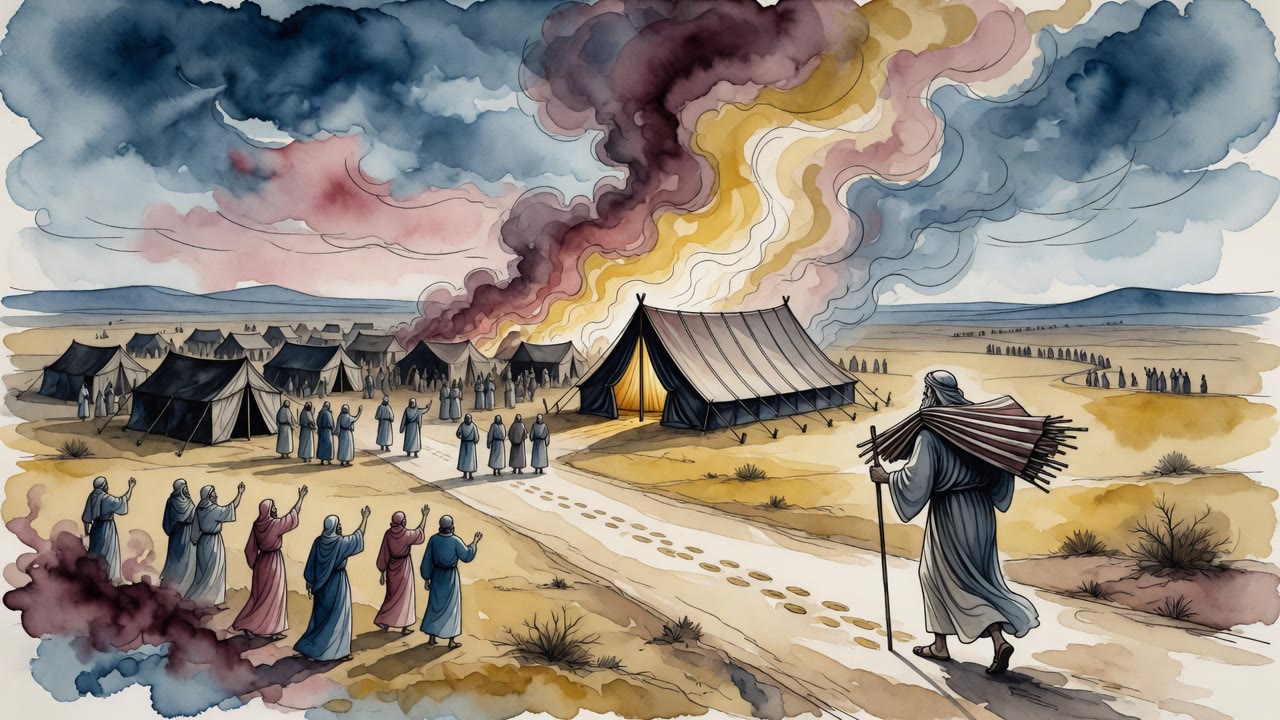
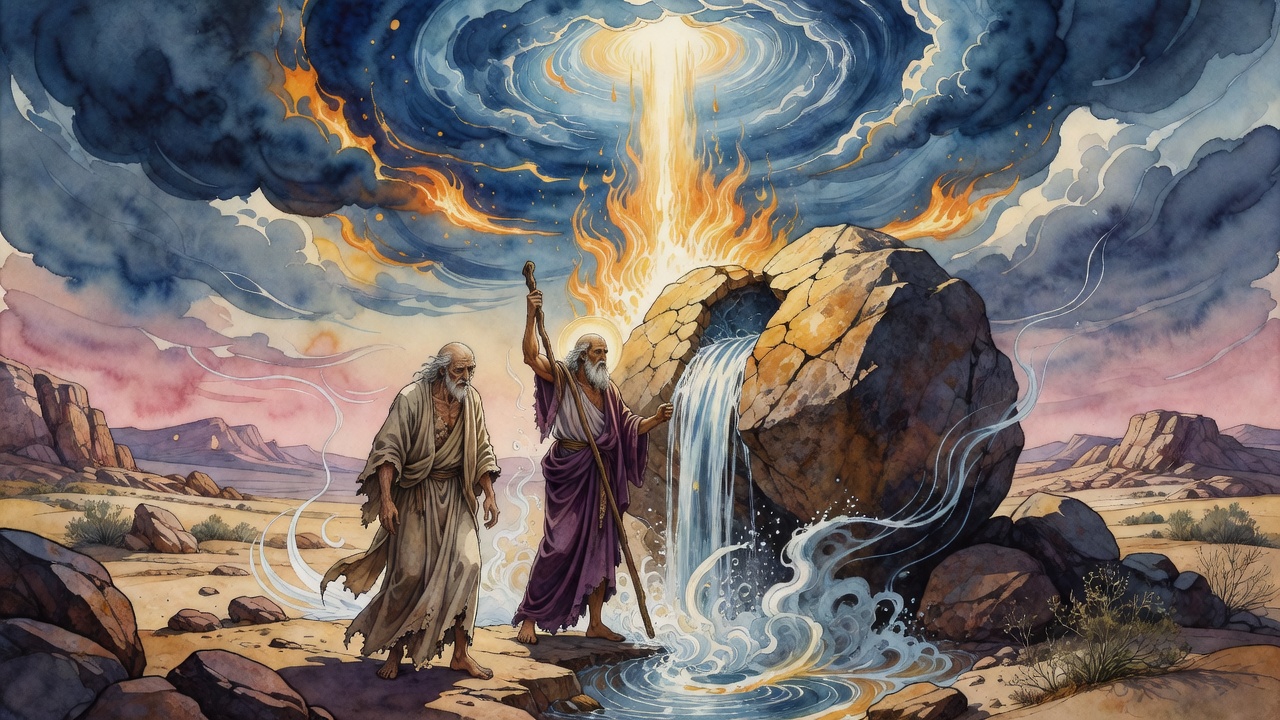
Moses and Aaron gathered the whole camp at the rock. Every person stood as if he himself were at that stone. Heaven had said to take the rod and give water to the people and even to the cattle, for the Holy One is concerned for Israel's wealth, not only for its thirst (Numbers 20:8).
 Click for full size
The people began to mutter that Moses knew the natural properties of rock. If he wished, he could draw water from this one or from that one. Moses faced a trap. If he listened to them, he would disregard the word of the Omnipresent.
The Rock and the Crowd
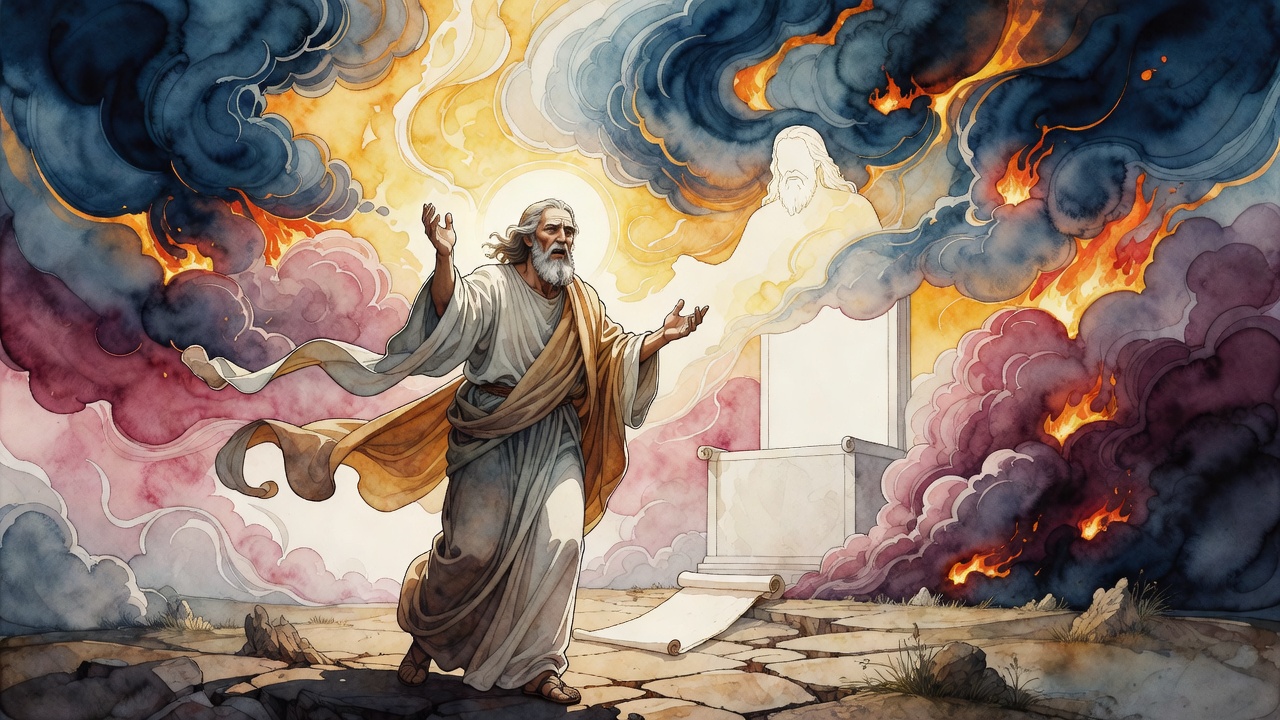
For forty years he had kept himself from anger, fearing the oath that not one of that evil generation would see the good land. Now the pressure found a crack. "Please listen, you rebels, shall we bring forth water for you from this rock?" (Numbers 20:10).
They pressed him. "Here is a rock. Just as you wish to bring water from another rock, you should bring it from this one." He struck once. A trickle came, like drops from a sick body. They mocked him. "Son of Amram, is this water for nursing children?" He struck twice. A lot of water came forth.
Water came. The cost was already moving down the road toward Mount Hor.
Edom Closed the Road
Then the camp asked passage of Edom and met a hard refusal. Scripture sets Aaron's death immediately after that turning away. Because they made an alliance of hope with a ruler who would not let them pass, they lost this righteous man. "Because you have joined with a wicked king, the Lord will destroy your work." So Israel turned away from Edom, and the whole congregation came to Mount Hor (Numbers 20:21-22).
The whole congregation meant a complete congregation, the one that would enter the land, since those who had come out of Egypt had died. These were the ones of whom it is written, "But you who clung to the Lord your God are all alive today" (Deuteronomy 4:4).
Aaron had stood through plagues and a golden calf and the long count of desert years. The closed road of Edom now stood between him and the rest of the journey.
A Mountain Left as a Sample
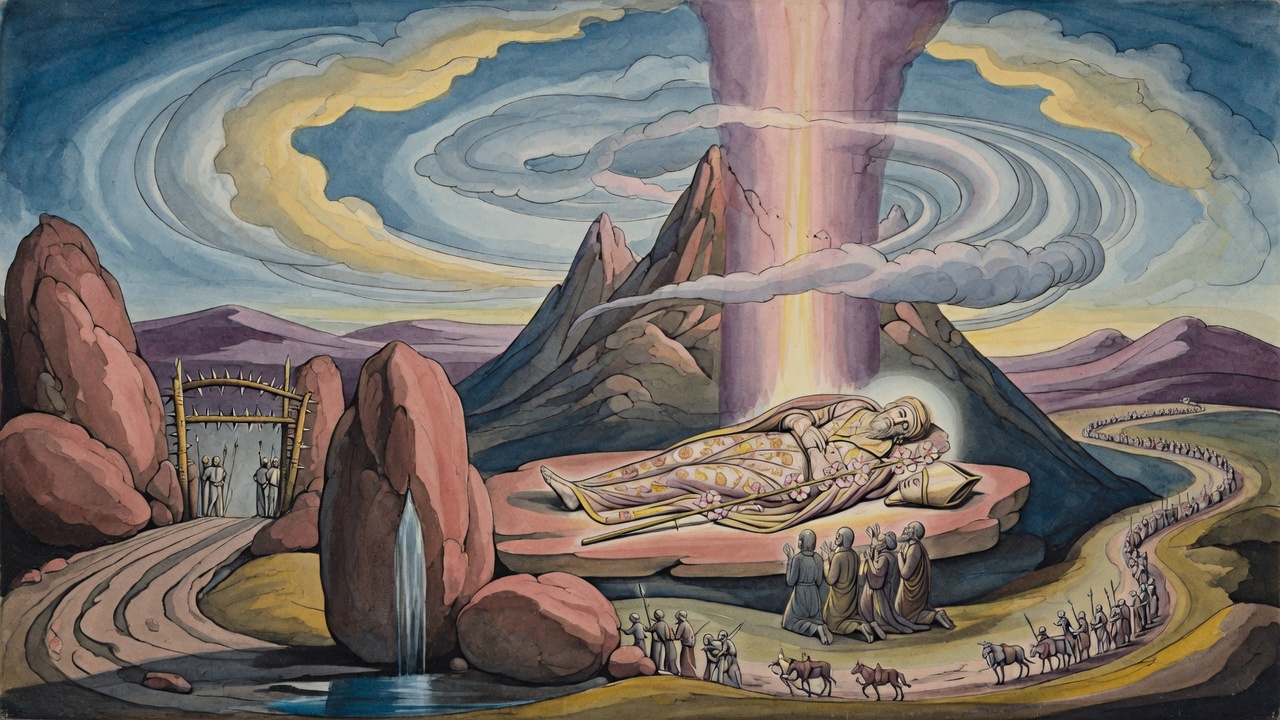
Mount Hor is a mountain on a mountain, like a small apple on a large apple. The cloud that went before Israel leveled high places and raised low ones so the people would not weary themselves climbing. The Holy One left this peak as a sample, so they would know what miracles had been done for them.
He also left three mountains with purpose. Sinai for the Divine Presence. Nebo for the burial of Moses. Hor for the burial of Aaron.
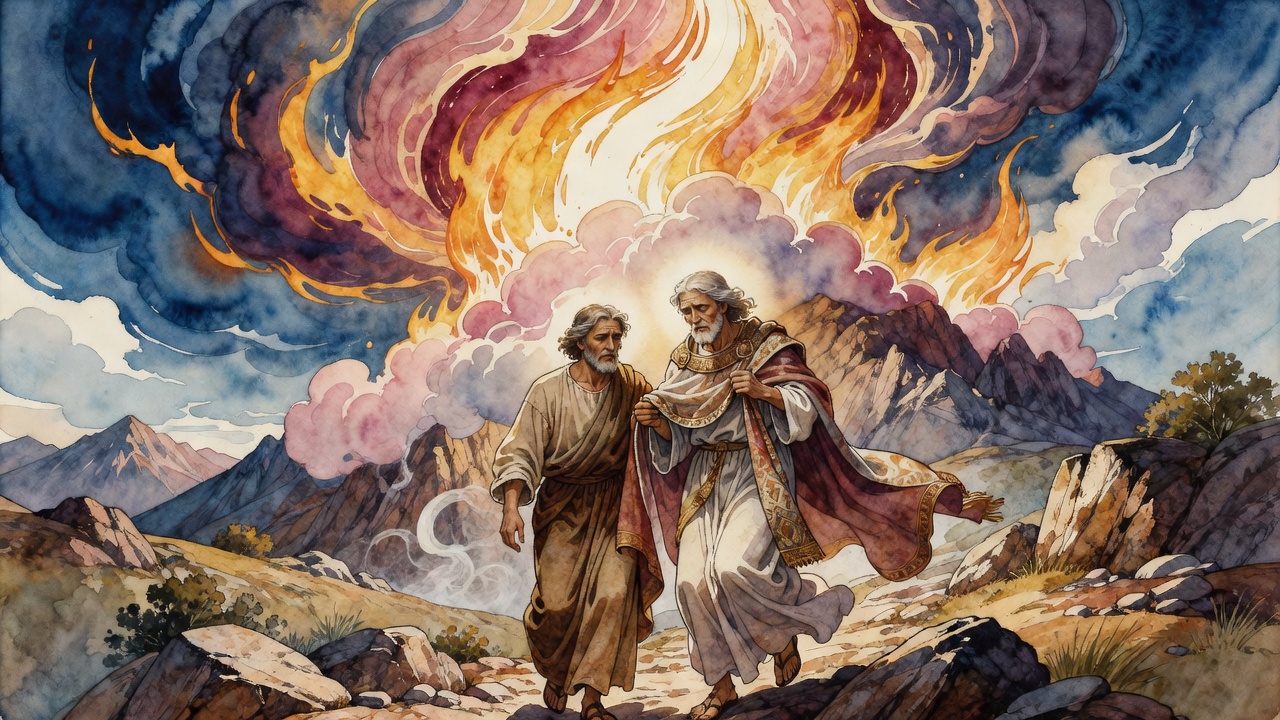
Aaron's garments passed to Eleazar on that height. They left his body while he still lived, and Eleazar put them on in the sight of the camp. The high priest died as the office continued. Israel would not walk into the land without a priest, only without this priest.
Moses came down without his brother. The people who would one day fit between the poles of the ark at the Jordan would stand whole again, but not with Aaron among them. On the day the cloud lifted from the mountain apple, the camp was thinner by one high priest.
Messengers Before Swords
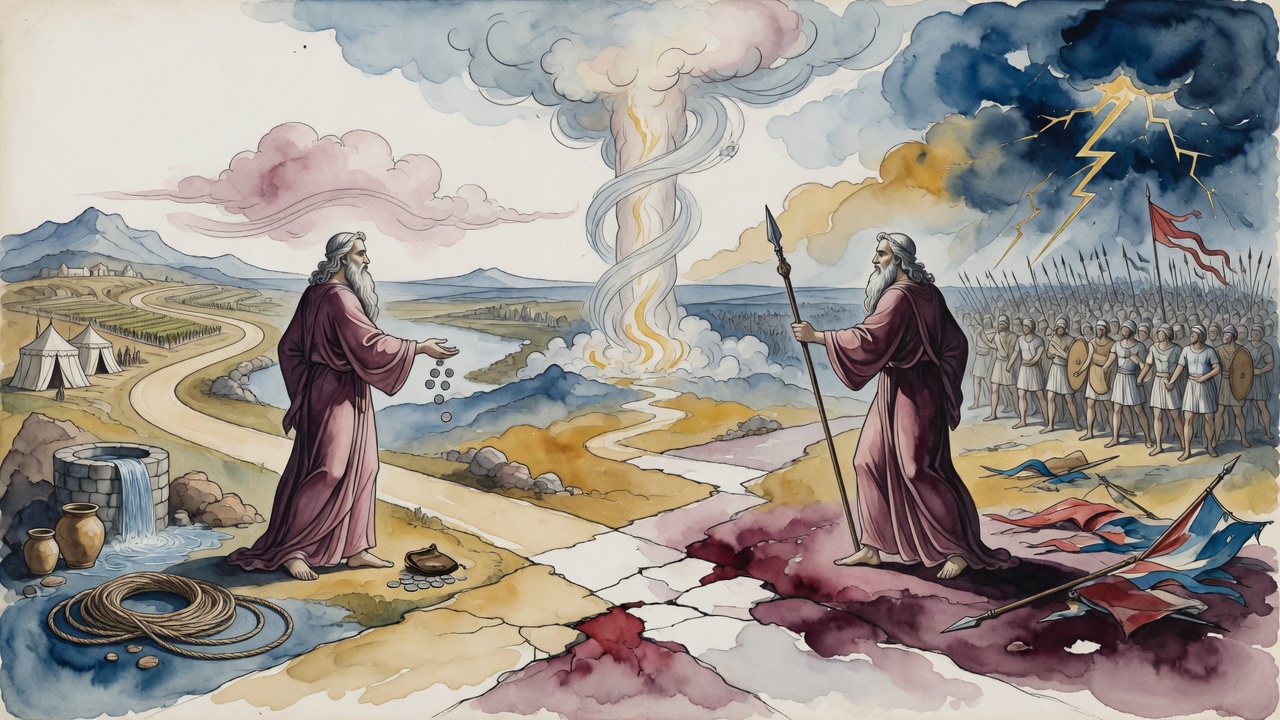
After the loss, the road still required war. Then Israel sent messengers to Sihon (Numbers 21:21). Depart from evil and do good. Seek peace and pursue it (Psalm 34:15).
Most commandments wait for a situation to present itself. "When you come on a bird's nest." "When you encounter the ox of one who hates you." "When you beat your olive tree." If the case appears, the law applies. A person is not told to roam the world hunting nests and hated oxen.
Peace is different. Seek it wherever the camp stands. Pursue it wherever else it may be. Although the Holy One had said begin to take possession and engage him in battle (Deuteronomy 2:24), Israel still went after peace first. Messengers before swords. A request before a siege.
The people who had just buried Aaron on a mountain sample of miracles did not become drunk on force. They chased peace even when battle had already been permitted.
After mourning, the messengers to Sihon still went out. Seek peace and pursue it is not a soft slogan for quiet years. It is an order for a camp that has just buried its priest and still chooses words before iron. On the day the cloud lifted from the mountain apple, Israel still knew how to send word before it sent iron.
Aaron's grave stayed on the sample peak. Eleazar wore the garments down the slope. Moses walked without his brother. The envoys to Sihon carried a request the camp had not been required to make, and made it anyway.
← All myths