Parshat Chukat5 min read

Thirst Turned Israel Against Aaron and Kept Moses Out of the Land

After nineteen years near Kadesh, thirst turned on Aaron, Moses struck the rock for water, and a deeper sin sealed him out of the land.

Curated by Arthur · Told by Maggid ·
Table of Contents
  1. Nineteen Years in One Place
  2. Anger Finds the Peacemaker
  3. The Rod and the Rock
  4. The Deeper Barring
  5. Thirst, Blame, and a Closed Gate
Thirst Turned Israel Against Aaron and Kept Moses Out of the Land Click for full size

Nineteen Years in One Place

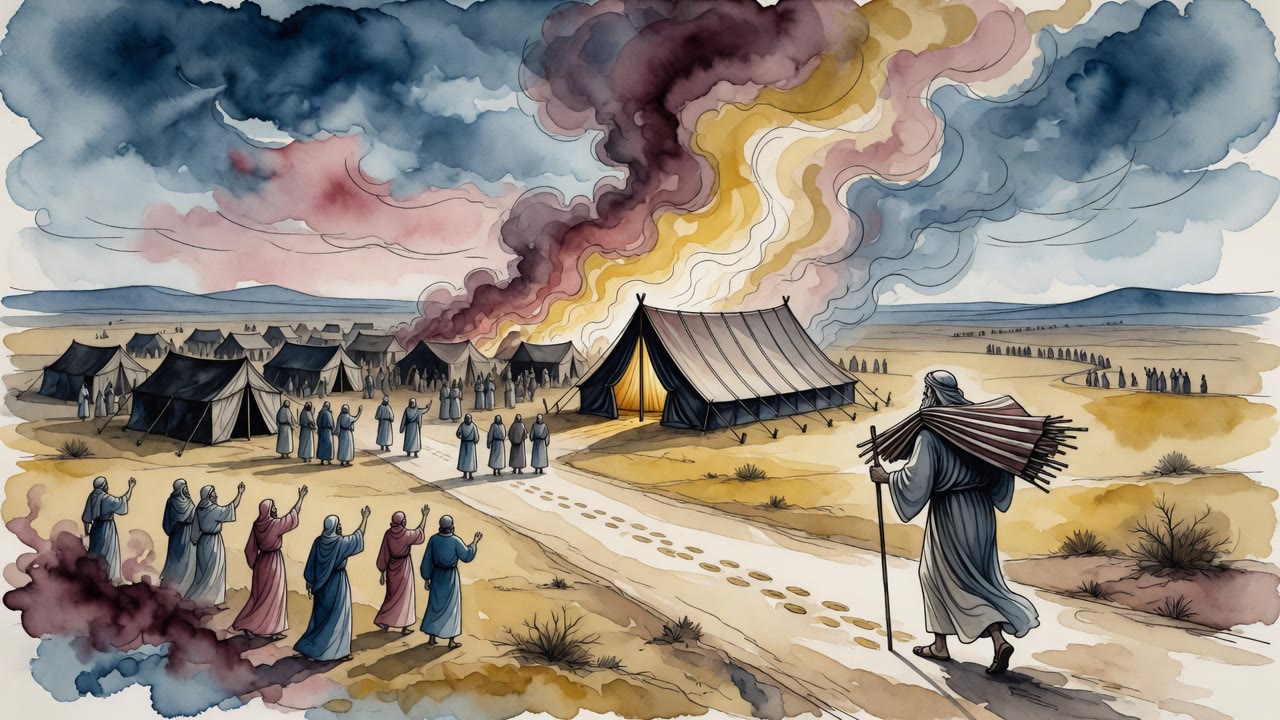
After the spies broke faith, Israel did not march in clean stages. Legend counts nineteen years stalled around Kadesh-Barnea, a long stillness that felt like motion because tents rose and fell while the map stayed the same. The desert taught delay as a nation. Children grew into adults who had never seen Egypt's bricks and still inherited Egypt's doubts. When the camp finally strained toward the land again, thirst found them ready to forget every prior well.

Stagnation is a kind of heat. It softens patience and hardens necks. The people who had watched seas open now measured God by the next dry throat. Nineteen years of circling write a special fatigue into bone. Men begin to think the wilderness is the only country they will ever own. Women raise children who know manna better than rain. Into that fatigue a new water crisis fell like a match.

The decree after the spies had already closed the Jordan to a generation. Kadesh became a waiting room with sand for walls. Waiting rooms breed sharp tongues.

Anger Finds the Peacemaker

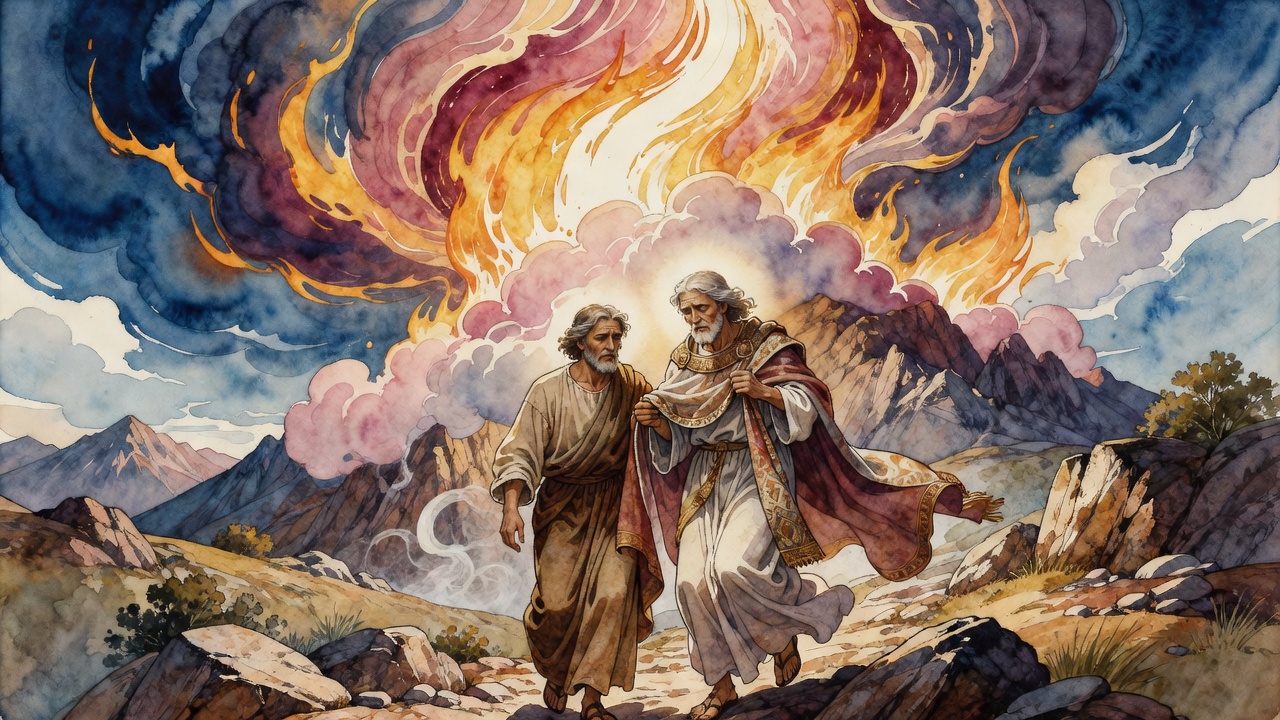
At first the rage aimed at Moses. Then it found Aaron. The man famous for loving peace, for turning enemies into friends with soft speech, lost that reputation under the same drought. Thirst does not respect a resume of kindness. The people who once trusted Aaron's calm now counted him among those who had led them to die without water. Beloved status crumbled in a day because empty skins speak louder than years of peacemaking.

Moses felt the double blow: his own burden and the collapse of the brother who had always stood between him and the crowd's worst edge. Leadership became a pair of men blamed for a sky that held back rain. Aaron, who had once stopped plagues with incense, could not stop a rumor that he had failed the camp. Popular love is a shallow well. Drought shows the bottom.

The shift from Moses alone as target to Aaron as shared target marks how panic widens its aim. When fear needs a face, it will use two.

The Rod and the Rock

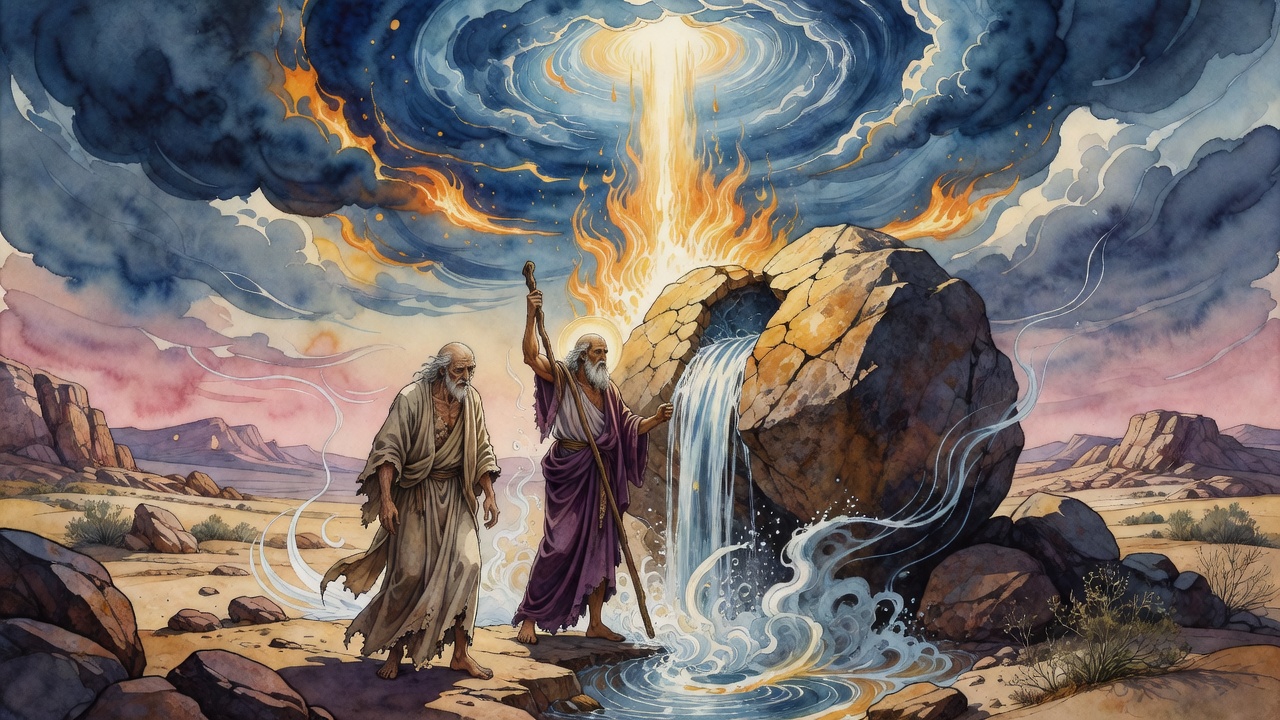
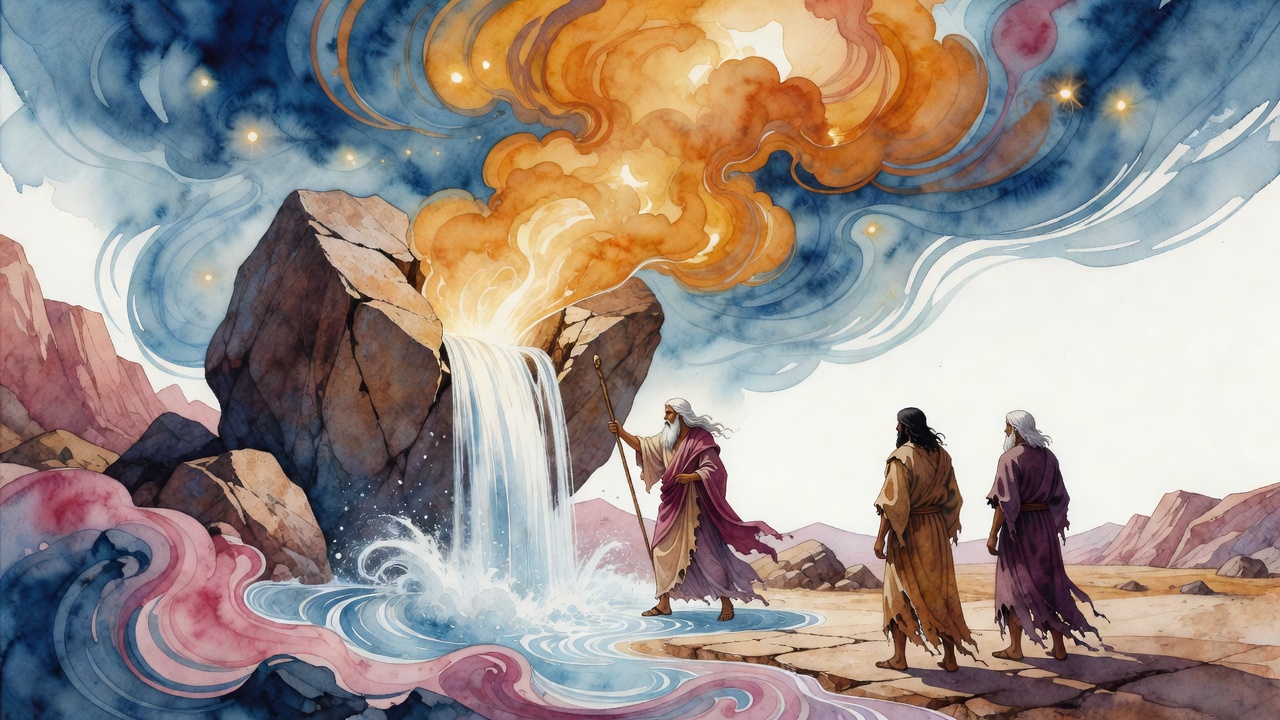
Moses went for the rod of God, the staff that had already signed plagues and sea. He was told to draw water in a way that would sanctify the Name before the eyes of the rebels. Speak to the rock, in the plain command many remember. The scene at Meribah went wrong in the eyes of heaven. Water came. Faith did not, not in the form required. The blow that opened stone also opened a decree. Readers point to that hour as the reason Moses never crossed the Jordan. The legends press further. The rock incident was real, and it was not the whole file on why the land stayed closed to him.

A faithful servant can fail in public and still carry older weights. The staff that saved a people can, in one mis-struck hour, become the exhibit in his own trial. Water for the camp and judgment for the shepherd arrived in the same spray. Children drank. The leader who fetched the drink learned he would not drink from the vines of Canaan.

The Deeper Barring

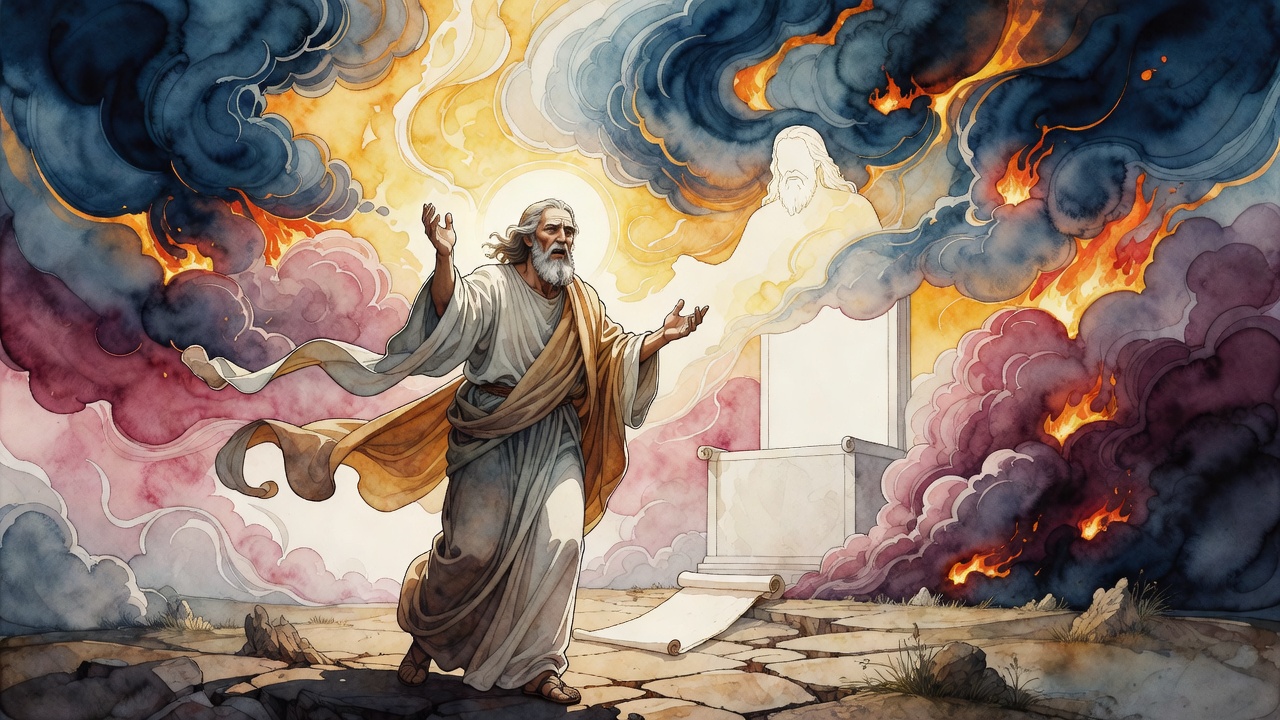
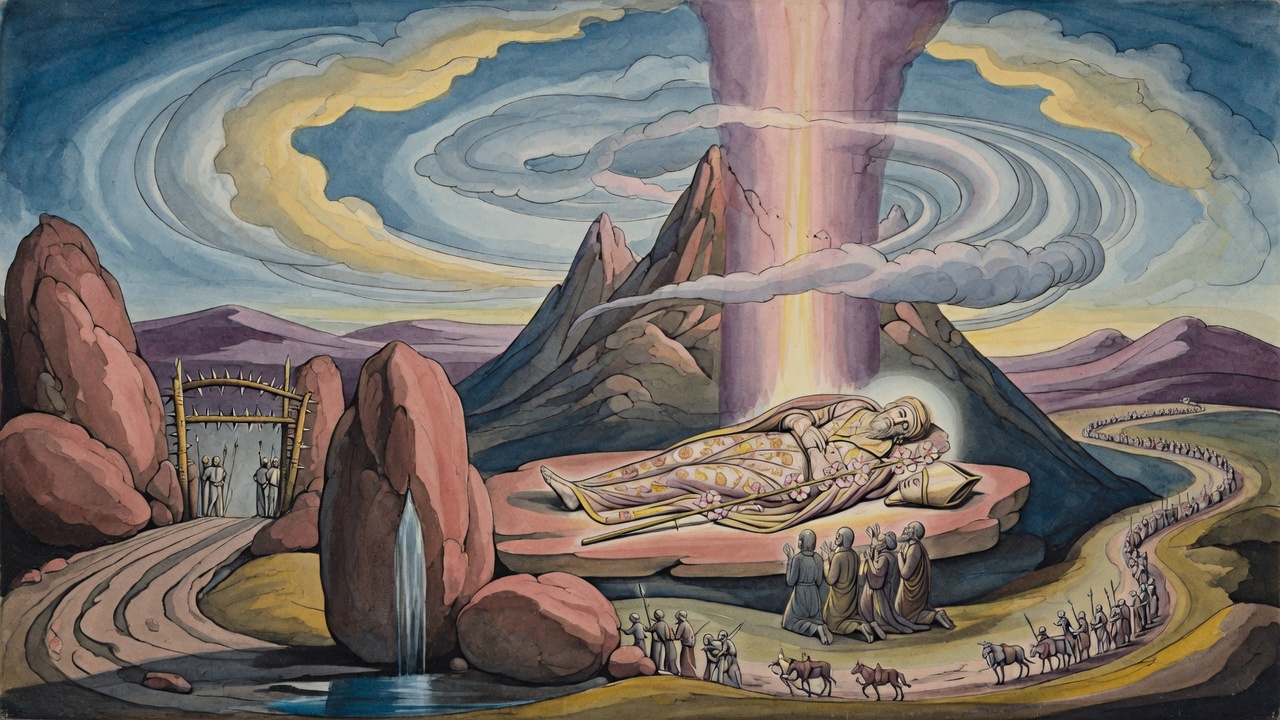
Why was Moses truly kept from the land? The surface answer is the rock. Deeper voices in the tradition speak of a leader who must die in the wilderness so the generation of the wilderness can die with a shepherd who shared their sentence. Other strands stress that his full entry would have changed the measure of later sin, or that harsh words to a thirsty people sealed a fate already bending toward Joshua's era. The barring is justice and mercy braided until a man who spoke with God's face to face accepts a border he will not cross.

He could see the land. He could not claim it. The rod that found water could not find a loophole in that decree. Prophecy does not always equal possession. The greatest teacher of Israel ends as a man who points across a river he will not ford, because the story of the people must become a story that can continue without him.

Thirst, Blame, and a Closed Gate

Nineteen years of delay, a peacemaker stripped of love, a rock struck, and a gate closed form one long thirst. Aaron's fall in public esteem warned that reputation is not armor against panic. Moses' exclusion warned that even the greatest prophet remains under law. The people who demanded water received it and still lost, in the long run, the man who had argued for them more times than they could count.

When later generations stand at their own Kadesh, they inherit both gifts: wells that open under grace, and leaders who may not finish every road they start. The wilderness keeps the memory of a brother blamed without full cause and a lawgiver barred with cause, and of a nation that learned too late how costly a dry camp can be when faith has already spent nineteen years walking in place. Thirst writes history as surely as swords. At Meribah the ink was water, and the page still reads of a closed gate on the far side of a flowing rock.


← All myths
From the tradition

Sources

4 sources

The texts behind this telling. Some cards carry a translation of the source; others are our own retelling of it, and each card says which. Every card links out to the original.

Legends of the Jews 5:38Legends of the Jews

Retold in our words. Read the original at the link below.The Legends of the Jews by Louis Ginzberg (1909) · Public Domain

Legends of the Jews turns to Aaron's Beloved Reputation Crumbles Under Thirst.

Initially, the people focused their anger on Moses. Aaron, with his legendary love of peace and his kind heart, was generally beloved. He was the people's favorite. But desperation can erode even the strongest bonds.

Driven to the edge by suffering and rage, the Israelites turned on both brothers, their words like stinging barbs. "Before," they cried, "you always told us that our sorrows were a consequence, that God wasn't with us because of the sinners in our midst." It's a classic blame game. But now? Now they were "a congregation of the Lord," a 'edat Adonai – a phrase dripping with irony considering their behavior. If they were truly God's congregation, why were they suffering so? Their question cuts deep: "Why have you led us to this desolate place, a place devoid of water, where neither human nor animal can survive?"

The accusation continues. "Why don't you implore God to have mercy on us?" they demanded. It's a poignant plea, tinged with resentment. They remind Moses and Aaron of a past blessing: "The well of Miriam disappeared when she died!" Miriam's well – a miraculous source of water that had sustained them throughout their journey – was now gone. (Ginzberg, Legends of the Jews, references (Numbers 20:1-13) here.)

To see them as whiny and ungrateful. But imagine their thirst, their fear, their utter dependence on leaders who seemed powerless to help. It’s a stark reminder that even faith can be tested to its breaking point under the weight of hardship. And it raises a timeless question: When faced with adversity, do we turn inward and blame, or do we find a way to draw strength from each other and from the wellsprings of our own faith?

Full source
Legends of the Jews 5:40Legends of the Jews

Retold in our words. Read the original at the link below.The Legends of the Jews by Louis Ginzberg (1909) · Public Domain

It’s a story filled with faith, doubt, and the heavy burden of leadership.

Our tale picks up with the Israelites, once again, thirsty and grumbling. Moses, ever the faithful servant, retrieves the holy rod, the one inscribed with the Ineffable Name of God, the Shem HaMeforash, from the Tabernacle. Accompanied by Aaron, he sets out to find water, a mission fraught with tension.

As they journey, the people follow, but not exactly with trust. According to Ginzberg's retelling in Legends of the Jews, they stop at every rock along the way, each person hoping to find their own source of water. Everyone searching for an easy fix, a shortcut to salvation.

There were those, the grumblers as Ginzberg calls them, who actively worked against Moses, whispering doubts and fueling discontent. "He was a shepherd, remember? He knows where the water is hidden. He'll trick us!" they hissed. They accused him of leading them to a pre-existing water source and then taking credit for a miracle. "If he can really bring water from a rock," they challenged, "let him do it from our rock!"

Now, here's where it gets really interesting. God, in his infinite wisdom, actually gave Moses permission to do just that. "Let them see the water flow from the rock they choose," God said. A chance to quell the doubt, to prove his connection to the Divine.

But Moses, looking back, sees the people scattered, each group fixated on their chosen rock. They weren’t following him; they were following their own desires, their own stubborn wills. He commands them to follow him to the specific rock he had chosen, perhaps guided by divine instruction.

And what was their response? Defiance. "We demand water from our rock! If not, we don't care for water from any other!" It's a stark moment, revealing a deep-seated lack of trust and a refusal to follow even when salvation is within reach. They were so insistent on their own way, so blinded by their own doubts, that they were willing to forgo water altogether.

What does this story from Legends of the Jews tell us? Perhaps it’s a reminder that faith requires trust, not just in a leader, but in something larger than ourselves. It’s a cautionary tale about the dangers of stubbornness and the importance of unity in the face of adversity. And maybe, just maybe, it's a reflection on our own lives, are we sometimes so focused on our own "rocks" that we miss the larger miracle unfolding around us?

Full source
Legends of the Jews 5:43Legends of the Jews

Retold in our words. Read the original at the link below.The Legends of the Jews by Louis Ginzberg (1909) · Public Domain

Like Moses, for instance. He led the Israelites out of Egypt, received the Torah, and yet, he never set foot in the Promised Land. Why?

Readers often point to the incident at Kadesh, where Moses struck the rock instead of speaking to it, as God commanded (Numbers 20:1-13). But could there be more to the story? The Talmud (Sanhedrin 110b) hints at this, suggesting that God sometimes uses even the "craftiness" of the wise to fulfill a larger plan.

In Ginzberg's retelling in, Legends of the Jews, God had already decreed that Moses would die in the desert. The incident at Kadesh, in this view, became a necessary pretext. Why? To avoid the appearance of injustice. But here's the truly fascinating part: God revealed the real reason to Moses himself.

God tells Moses, "Would it truly add to your glory to lead a new generation into the land, after you led the sixty myriads out of Egypt and watched them perish in the desert?" The implication? That people might think the generation of the desert, the generation of sin, had no part in the world to come. So, God wanted Moses to remain with them, to lead them into the Promised Land after the Resurrection.

Moses, understandably, was distraught. "You've decreed I die like the generation that angered You," he pleaded, according to Legends of the Jews. "I beg You, write in Your Torah why I was punished, so future generations won't think I was like them!"

And God, in His mercy, granted this wish. That's why we find multiple passages in the Scriptures explaining the transgression at the rock in Kadesh. It wasn't simply about disobedience; it was about sanctifying God's name. As we find in Midrash Rabbah, God was sanctified by allowing justice to take its course, even on Moses.

The place itself became evidence of this. It was called Kadesh, meaning "sanctity," and En Mishpat, "fountain of justice," because it was there that judgment was passed on Moses, and God's name was sanctified by that very sentence.

So, next time you read about Moses and Kadesh, remember it’s not just a story of disobedience and punishment. It's a story about justice, legacy, and the ultimate sanctification of God's name. It also reminds us that even in apparent endings, there can be deeper purposes at play, ones that resonate across generations. What does it mean to be punished for a reason you don't fully understand? And what does it mean to trust in a divine plan that might be beyond your comprehension?

Full source
Legends of the Jews 5:35Legends of the Jews

Retold in our words. Read the original at the link below.The Legends of the Jews by Louis Ginzberg (1909) · Public Domain

That’s kind of the vibe of the Israelites' story as they wander the desert. After the infamous spy incident, where they balked at entering the Promised Land, they were sentenced to wander for forty years. Ginzberg, in Legends of the Jews, tells us that a good chunk of that time – nineteen years, in fact – was spent kicking around Kadesh-Barnea.

Nineteen years in one place in the desert? They eventually wandered from place to place again until the time came for the generation that doubted God to pass away. Then, they circled back to Kadesh-Barnea. They settled in, maybe started to unpack their tents with a little more enthusiasm. Finally, a chance to relax and enjoy themselves!

Then… tragedy strikes.

Miriam, the prophetess, sister of Moses and Aaron, dies.

Now, Miriam wasn't just anyone. She was a leader, a prophetess in her own right, and her loss was felt deeply by everyone, the pious and the not-so-pious alike. According to Legends of the Jews, Miriam held a place of importance equal to that of her brothers. Her death seems to come as a direct result of the decree that kept her brothers from leading the people into the Promised Land. As a leader herself, she had to share their fate.

And here's where things get really interesting. Remember that well that miraculously provided water for the Israelites throughout their desert journey? Tradition tells us it was no ordinary well. It was a gift from God, a reward for Miriam's good deeds. The Midrash Rabbah goes so far as to say that the well disappeared upon Miriam's death. It was tied to her life force.

So, when Miriam passed, the well dried up. Symbolically, it’s powerful. The source of sustenance, of life, was linked to this incredible woman. Her death marked the end of one era and the beginning of another, a transition from wandering to, hopefully, settling down. It reminds us that even in the midst of grand, sweeping narratives, the individual lives and contributions of figures like Miriam truly matter. They shape the very landscape of the story.

Full source