5 min read

Moses Stays Outside to Lead the Desert Dead Home

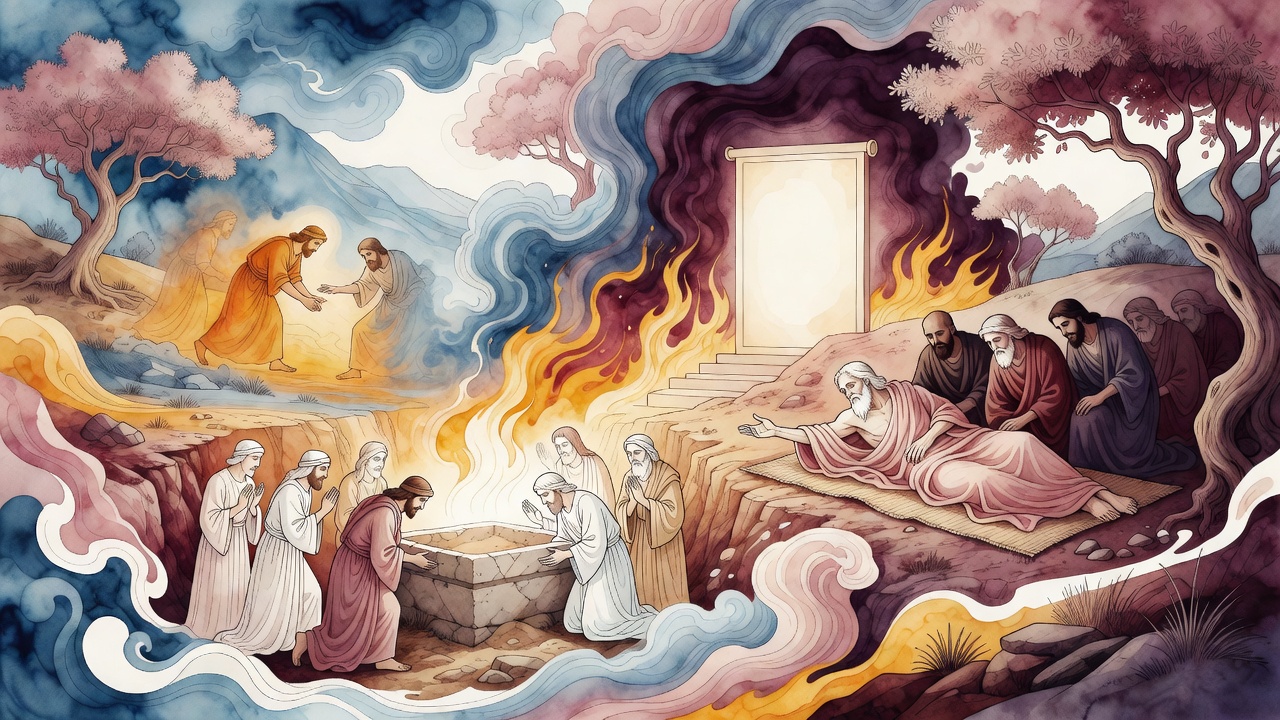
Moses begged to enter the land. God told him the desert dead needed their captain for the resurrection, so Kadesh became the public reason he stayed outside.

Curated by Arthur · Told by Maggid ·
Table of Contents
  1. The Coffin That Opened the Road
  2. The Rock at Kadesh
  3. The Reason Behind the Pretext
  4. Write It So They Will Not Misread Me
  5. Bones Going Home Without Their Guide

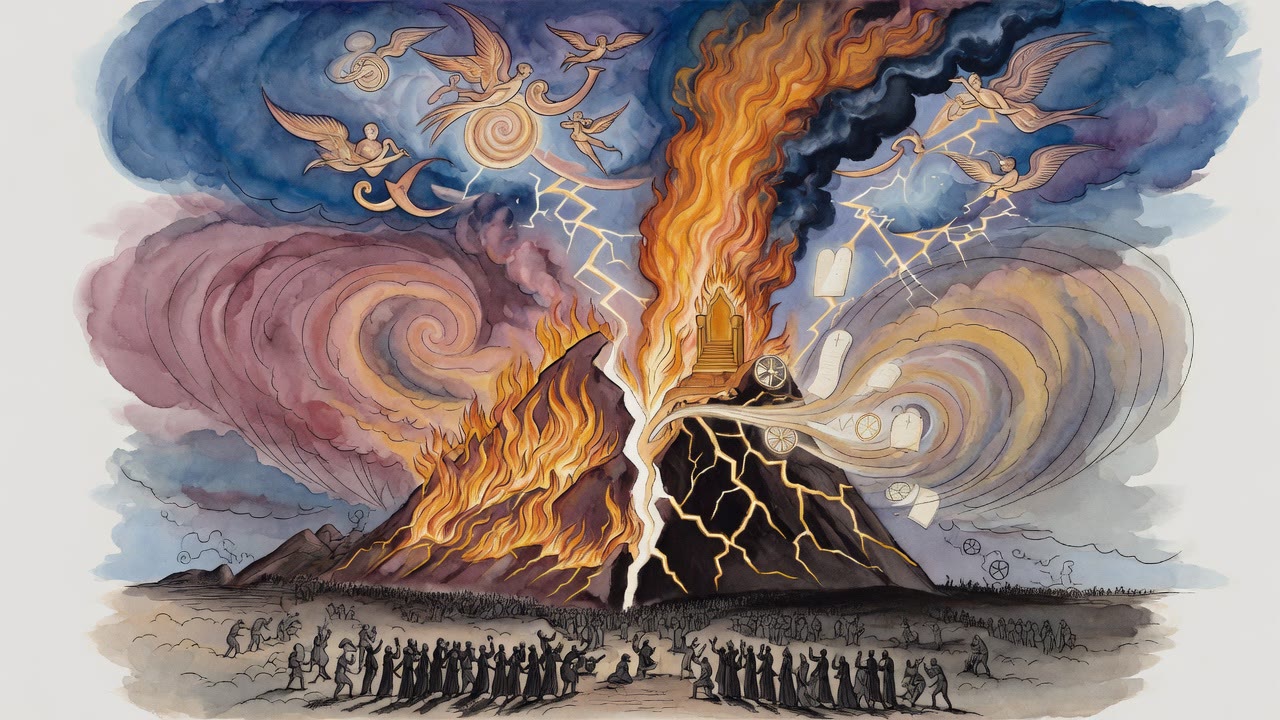
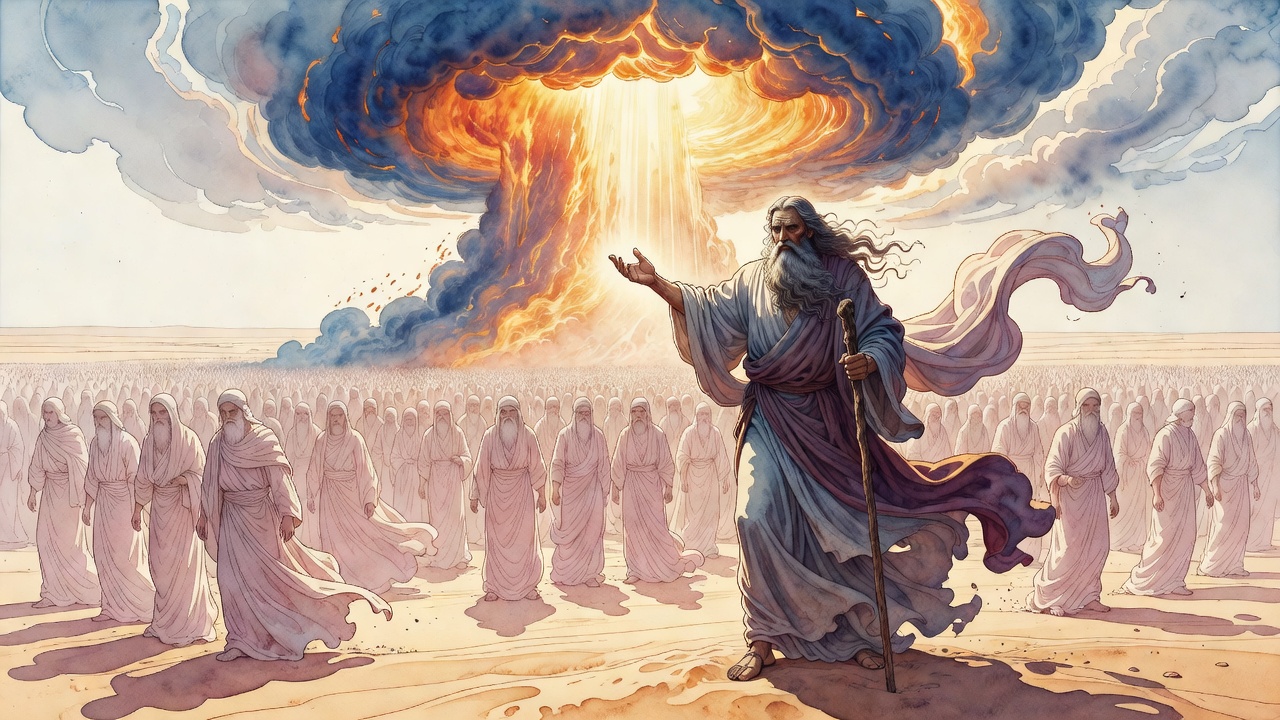
Moses stood with sand in his sandals and a nation's bones behind him, staring at hills he would never climb. Behind him lay the generation that had left Egypt under his hand. Ahead lay the land he had carried in his mouth for forty years. Between them stood a decree he could not argue past.
Moses Stays Outside to Lead the Desert Dead Home Click for full size

The Coffin That Opened the Road

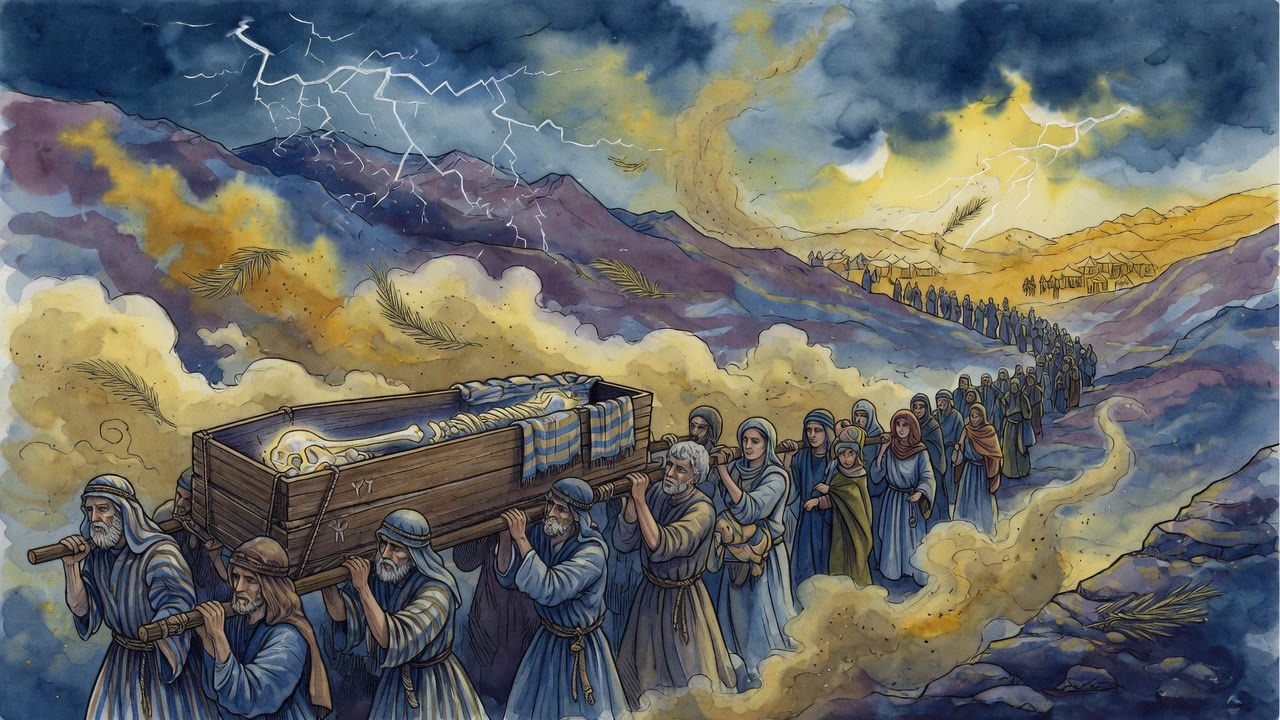
The journey had begun with a load that was not gold. Before the first march from Egypt, Moses had hunted for one thing the living could not replace: the coffin of Joseph. Generations after Joseph's death, those bones still held the promise of a homeland. Without them, the road would not open.

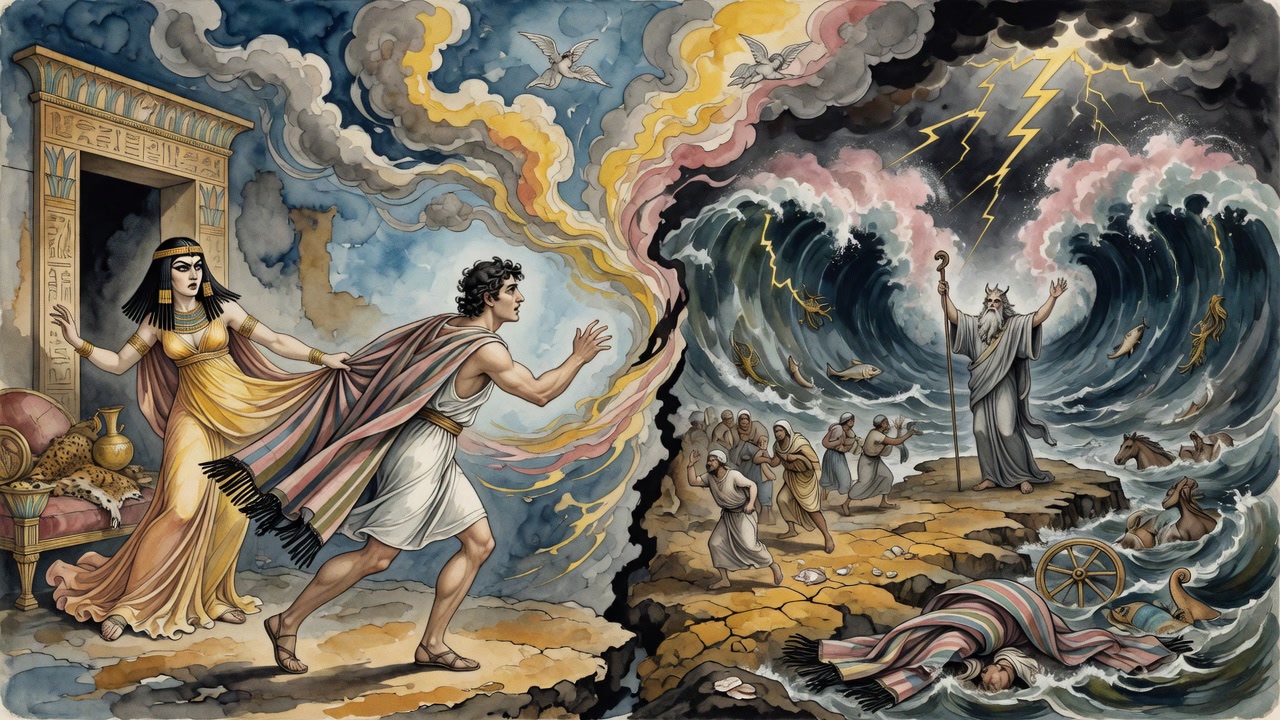
The camp had waited while Moses searched. He found the coffin where Egyptian memory had sealed it, and he set it at the head of the column. Only then did the people move. Pharaoh, furious at counsel that had failed him, even struck down advisors in his rage, then escorted Israel out himself, as if his presence could hurry them over the border and off his conscience.

God did not send them by the short road. Sinai waited with the Torah. The time fixed for the nations to hold the land had not yet run out. The wilderness itself was part of the gift: if they had stepped straight into fields and fences, daily labor would have swallowed the hours needed for the Teaching. Dust and manna made room for learning. Joseph's bones traveled that long road beside the living, a quiet claim that home still meant a place, not only a hope.

The Rock at Kadesh

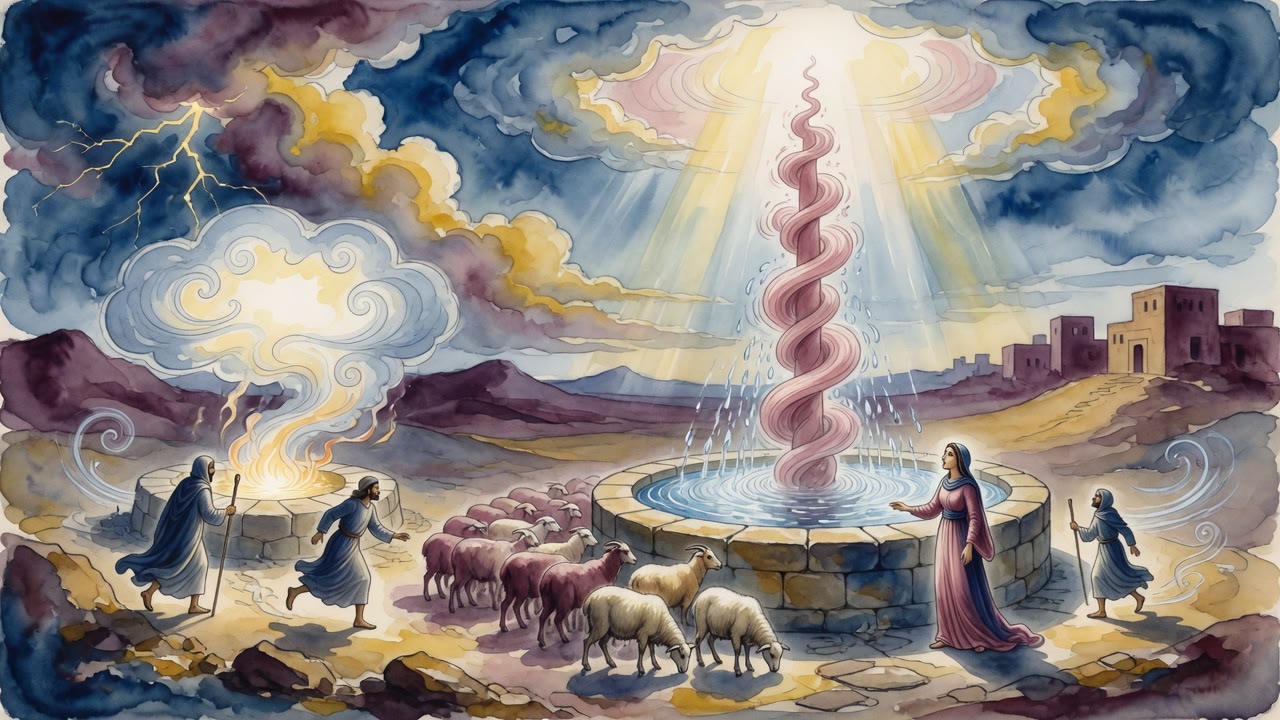
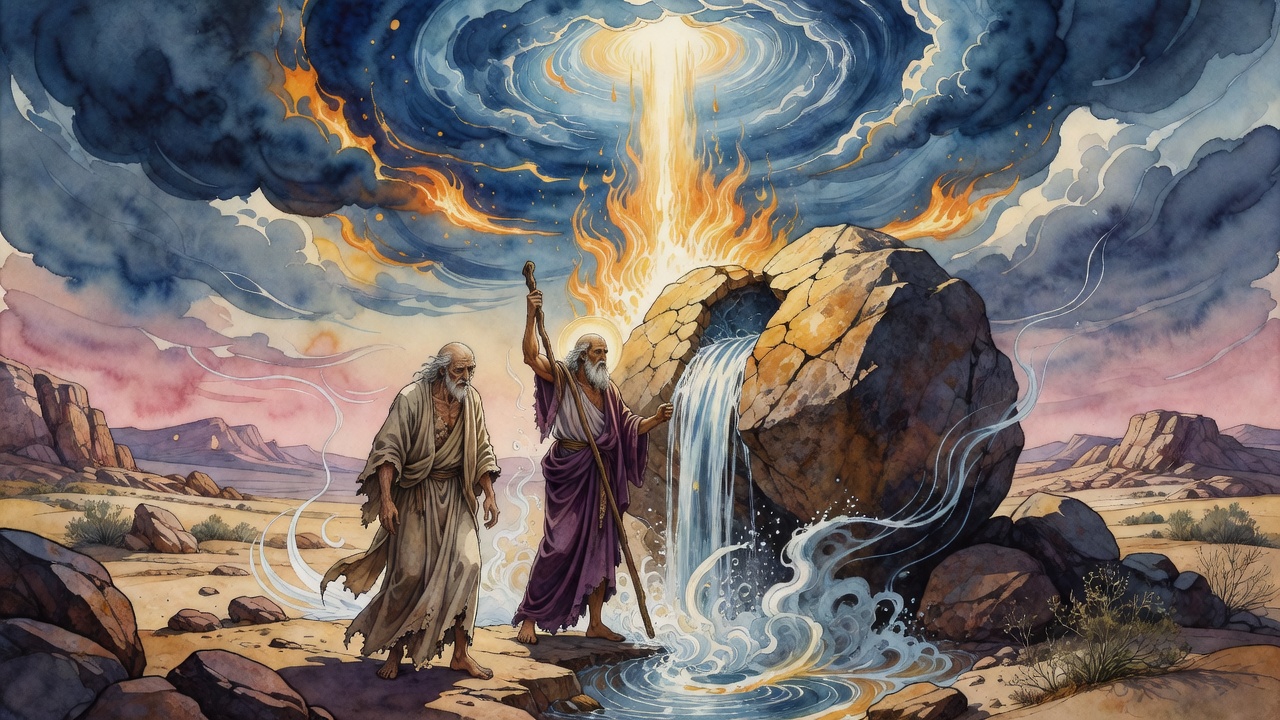
Years later, at Kadesh, the people pressed for water. God told Moses to speak to the rock. Moses struck it instead (Numbers 20:1-13). Water came. The sentence came with it. On the public face of the story, the blow was the crime, and the land closed like a door.

Moses knew the weight of that door. He had watched sixty myriads leave Egypt under his staff. He had watched them fall, one after another, until the desert held more graves than tents. To lead the children of those graves across the Jordan while their parents slept under sand felt, to him, like betrayal dressed as triumph.

He still wanted the land. Want is not erased by grief. He wanted to set one foot on the soil Joseph's bones had been promised. He wanted to finish the road he had opened with that coffin.

The Reason Behind the Pretext

God had already fixed Moses's death in the wilderness. The rock was not the first cause. It was the face the world would see, so justice would not look like a whim. The true reason God spoke to Moses himself, without soft edges.

"Would it truly add to your glory," God asked, "to lead a new generation into the land after you led the sixty myriads out of Egypt and watched them perish in the desert?"

If Moses crossed with the young alone, people would read the desert dead as cut off forever, a generation with no share in the world to come. God wanted Moses to remain with them. When the dead rise, that same captain would lead the wilderness generation into the land they had died without seeing.

Moses heard the honor and the sentence at once. He was to stay with the fallen, not abandon them for a living parade.

Write It So They Will Not Misread Me

Distress still rose in him. "You have decreed I die like the generation that angered You," he pleaded. "I beg You, write in Your Torah why I was punished, so future generations will not think I was like them."

God granted the plea. The rock at Kadesh entered the scroll in more than one place. The strike, the water, the ban: all of it stood as a written seal. Sanctity needed a public judgment even for the man who had spoken with God's face to face. The place itself took two names in memory: Kadesh, sanctity, and En Mishpat, fountain of justice, because there the sentence fell and God's name was made holy by the fairness of the fall.

Moses would not walk the last miles. He would die with the sand people, the ones he had failed to keep alive and the ones he would still lead when graves open.

Bones Going Home Without Their Guide

Joseph's coffin had needed a living hand to leave Egypt. Moses's body would need none of the land's welcome. He had carried Joseph toward the promise. He would not enter it. The new generation would cross with Joshua. The old generation would wait for Moses on the far side of death.

On the last ridge, the land still lay bright. Moses looked once, then turned his face toward the graves he had been given to command later. What changed for good was not the rock alone. It was the choice heaven made for him: stay with the dead so they would never be left without their shepherd when the world turns upright again.


← All myths
From the tradition

Sources

2 sources

The texts behind this telling. Some cards carry a translation of the source; others are our own retelling of it, and each card says which. Every card links out to the original.

Legends of the Jews 1:6Legends of the Jews

Retold in our words. Read the original at the link below.The Legends of the Jews by Louis Ginzberg (1909) · Public Domain

You're finally free. Free from centuries of enslavement, free from back-breaking labor, free from the sting of the whip. But where do you go?

The Israelites, fresh from their miraculous escape from Egypt, faced just that question. According to Legends of the Jews, before the Exodus could even truly begin, Moses had to have one crucial thing: Joseph's coffin. Generations after Joseph's death, his remains were still a potent symbol of hope and a promise of a future homeland. Only with Joseph's earthly presence in tow could the journey begin.

What of the Egyptians? You might picture them as a unified force of opposition. But Ginzberg's retelling paints a more chaotic scene. Pharaoh, in his fury at his advisors for their terrible advice, even slays them! He’s so desperate to see the Israelites gone that he escorts them himself, just to be absolutely sure.

So, why didn't God lead the Israelites on the most direct path to the Promised Land? It seems logical. Straight from Egypt to Canaan. But, as we find in Legends of the Jews, there were several divine reasons for the circuitous route. First, God wanted them to go to Sinai and receive the Torah, the divine law.

But there's more to it than just divine instruction. The time wasn't right. "The time divinely appointed for the occupation of the land by the Gentiles had not yet elapsed," the text says. Divine timing is everything, it seems.

And there's also a very practical reason. Ginzberg, drawing on various Midrashic (rabbinic interpretive commentary) sources, including Midrash Rabbah, explains that the wilderness was essential for the Israelites' spiritual and material well-being. If they had immediately entered Eretz Yisrael, the Land of Israel, they would have been consumed by the day-to-day labor of cultivating the land, leaving no time for the study of Torah. The wilderness, a harsh and unforgiving place, paradoxically offered them freedom from daily worries, allowing them to dedicate themselves to learning God's law.

Think of it: manna from heaven, water from a rock. All their physical needs were met, freeing them to focus on the spiritual.

Beyond that, consider the state of Eretz Yisrael itself. The Canaanites, upon hearing of the Israelites' approach, engaged in a scorched-earth policy. They destroyed crops, felled trees, and choked water springs to make the land uninhabitable. God, however, had promised their ancestors a land "full of all good things," not a wasteland. So, the forty years in the wilderness served a dual purpose: it allowed the Canaanites time to repair the damage they had inflicted.

The miracles performed for the Israelites during their desert wanderings instilled fear in the hearts of other nations. As we read, their hearts melted, and there remained no more spirit in any man. They didn't dare attack the Israelites, making the eventual conquest of the land much easier.

So, what seems like a detour, a delay, a punishment even, was in reality a carefully orchestrated plan. A plan to prepare the Israelites, physically, spiritually, and emotionally, for their destiny. A plan to ensure that when they finally entered the Promised Land, they were ready to receive it, and to build a nation dedicated to God's law. Perhaps they aren't delays at all, but essential steps on a path we can't yet see.

Full source
Legends of the Jews 5:43Legends of the Jews

Retold in our words. Read the original at the link below.The Legends of the Jews by Louis Ginzberg (1909) · Public Domain

Like Moses, for instance. He led the Israelites out of Egypt, received the Torah, and yet, he never set foot in the Promised Land. Why?

Readers often point to the incident at Kadesh, where Moses struck the rock instead of speaking to it, as God commanded (Numbers 20:1-13). But could there be more to the story? The Talmud (Sanhedrin 110b) hints at this, suggesting that God sometimes uses even the "craftiness" of the wise to fulfill a larger plan.

In Ginzberg's retelling in, Legends of the Jews, God had already decreed that Moses would die in the desert. The incident at Kadesh, in this view, became a necessary pretext. Why? To avoid the appearance of injustice. But here's the truly fascinating part: God revealed the real reason to Moses himself.

God tells Moses, "Would it truly add to your glory to lead a new generation into the land, after you led the sixty myriads out of Egypt and watched them perish in the desert?" The implication? That people might think the generation of the desert, the generation of sin, had no part in the world to come. So, God wanted Moses to remain with them, to lead them into the Promised Land after the Resurrection.

Moses, understandably, was distraught. "You've decreed I die like the generation that angered You," he pleaded, according to Legends of the Jews. "I beg You, write in Your Torah why I was punished, so future generations won't think I was like them!"

And God, in His mercy, granted this wish. That's why we find multiple passages in the Scriptures explaining the transgression at the rock in Kadesh. It wasn't simply about disobedience; it was about sanctifying God's name. As we find in Midrash Rabbah, God was sanctified by allowing justice to take its course, even on Moses.

The place itself became evidence of this. It was called Kadesh, meaning "sanctity," and En Mishpat, "fountain of justice," because it was there that judgment was passed on Moses, and God's name was sanctified by that very sentence.

So, next time you read about Moses and Kadesh, remember it’s not just a story of disobedience and punishment. It's a story about justice, legacy, and the ultimate sanctification of God's name. It also reminds us that even in apparent endings, there can be deeper purposes at play, ones that resonate across generations. What does it mean to be punished for a reason you don't fully understand? And what does it mean to trust in a divine plan that might be beyond your comprehension?

Full source