Parshat Vayishlach5 min read

God Recited Jacob's Vow Back Line by Line

Twenty years earlier a frightened boy had asked for bread, a coat, and a road home. Now he was back, and four hundred men were riding toward him.

Curated by Arthur · Told by Maggid ·
Table of Contents
  1. The Sun Went Down on Him at That Place
  2. Every Clause Paid
  3. My Lord Esau
  4. One Ox, One Ass
  5. Your Servant Judah
God Recited Jacob's Vow Back Line by Line Click for full size

The Sun Went Down on Him at That Place

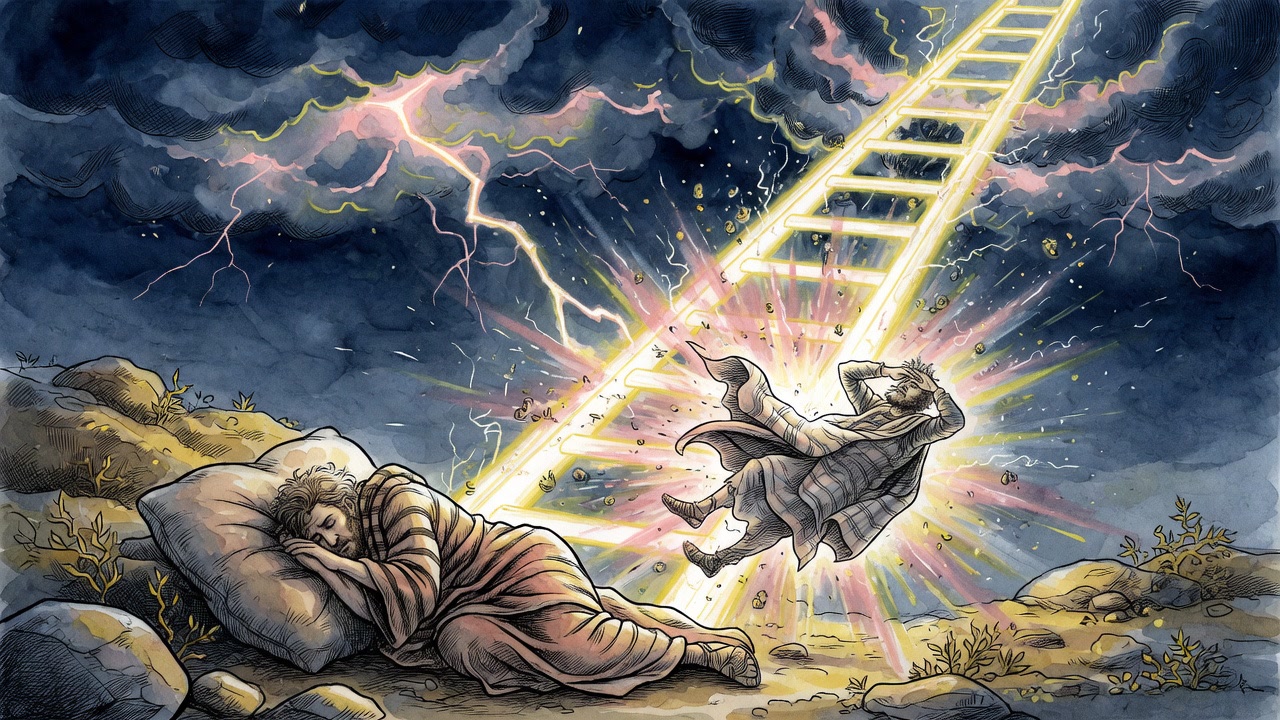
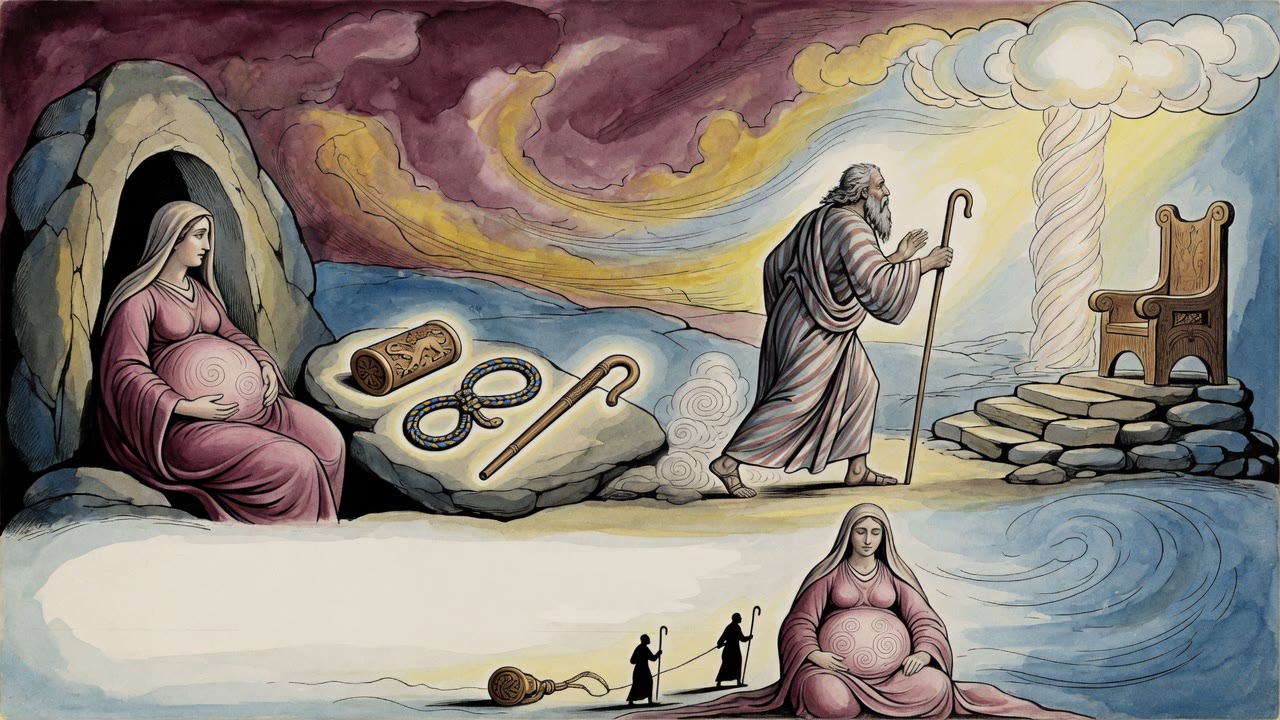
The sun went down and Jacob stopped where he stood, out in open country with a stone for a pillow and his brother's promise to kill him still fresh behind him.

He ran into the place. That is the verb the verse uses, and it is the verb the prophets use for what happens when a man runs into God. Jeremiah uses it of the true prophets, let them entreat the Lord. So the Holy Spirit came down on Jacob in the dirt, and Jacob prophesied.

What he got was not only a ladder with angels going up and down it. He saw his children, generations out, sinning. He saw the Spirit lift off them and go. The sun setting over his head was the sun Micah would later watch go down over the prophets, the day turning black above them and the word shutting in their mouths.

He woke and made a vow out of pure fear, and the terms were small. "If God will be with me, and will keep me on this road I am walking, and will give me bread to eat and a garment to wear, and I come back to my father's house in peace, then the Lord will be my God."

Every Clause Paid

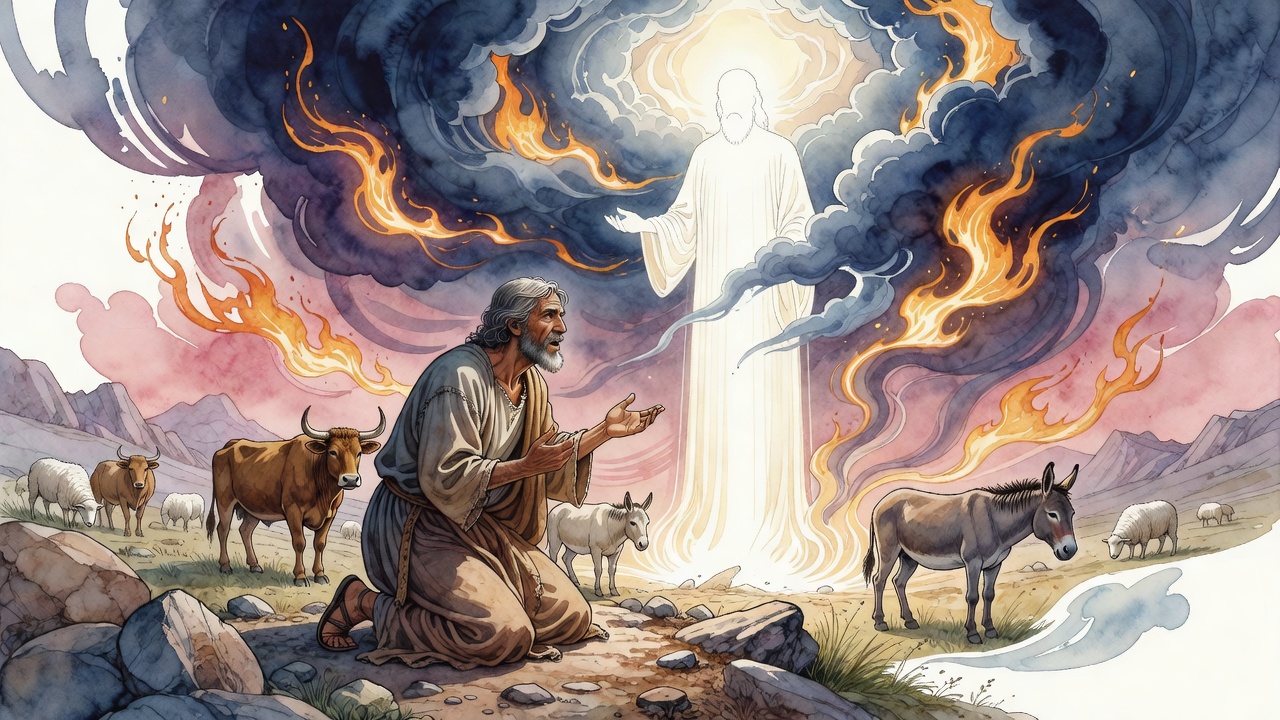
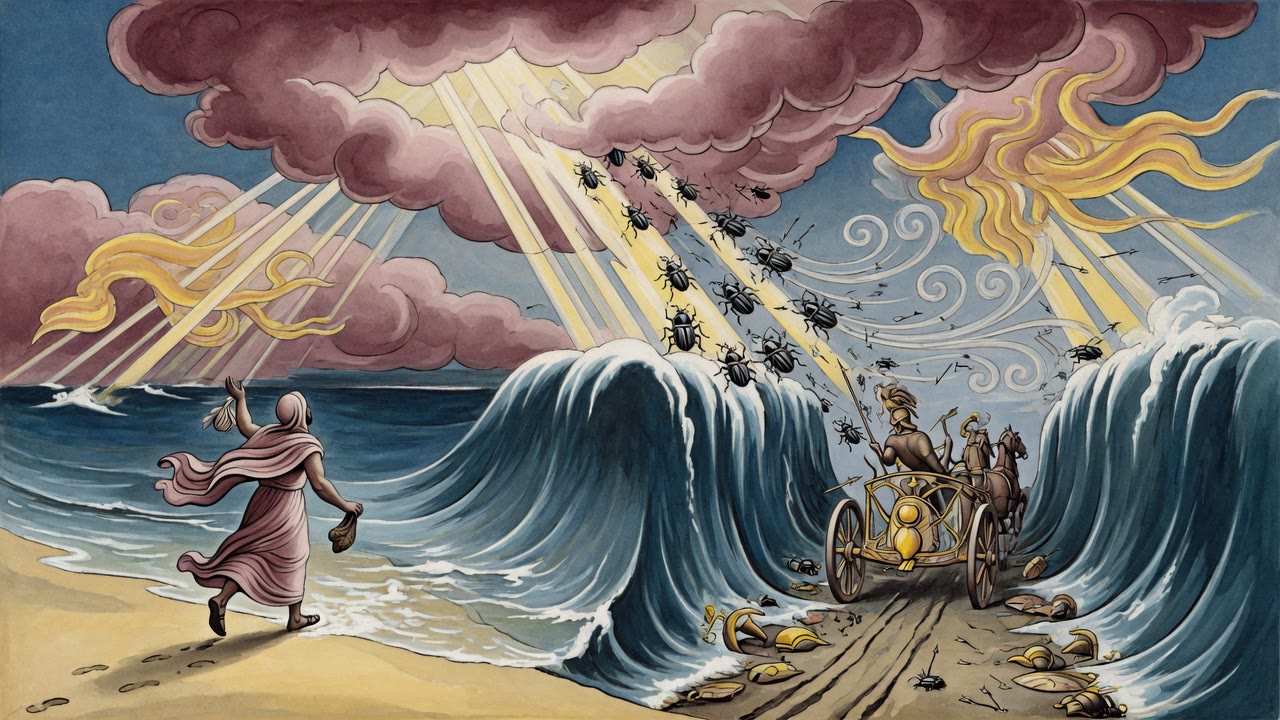
Twenty years later he was on the road home with four hundred men riding toward him, and he heard the vow read back.

"You testified about Me yourself," the Holy One said. "You told your wives, the God of my father has been with me. That was the first thing you asked for.

"You asked Me to keep you. I kept you from Laban.

"You asked for bread to eat. I took your father-in-law's livestock off him and put it in your hands.

"You asked for a garment to wear. Think about the day the streaked goats were separated out of the flock.

"You asked to come home in peace. You came whole into the city of Shechem."

Not one clause dropped in twenty years. A frightened boy's list, kept and returned with the items ticked off in the order he had said them.

My Lord Esau

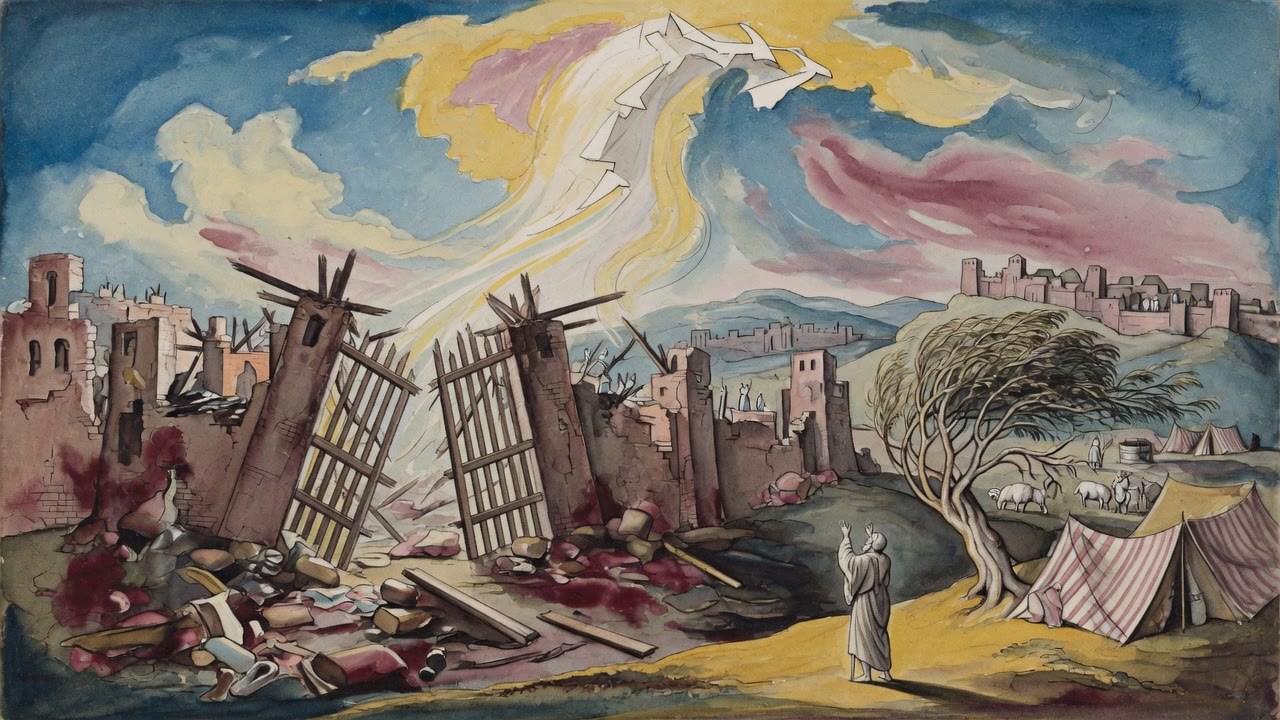
With all of that still in his ears, Jacob sent his messengers ahead and told them exactly what to say. "Thus shall you say to my lord, to Esau."

My lord. He handed his brother the title with his own mouth.

And then this. "Your servant Jacob says: I stayed with Laban as a stranger and nothing more. Not one of the blessings your father gave me has ever reached my hand. He blessed me with the dew of heaven and the fat of the earth, and what I have is an ox, an ass, and a flock, and those are not heaven and they are not earth. If you hate me, you hate me over blessings I never got."

Jeremiah had a line for a man who does that. What will you say when He calls you to account, since you yourself taught them to be captains over you.

One Ox, One Ass

Rabbi Judah heard nothing in the inventory but an ordinary man talking the ordinary way, the way anyone says the dog barked when he owns four dogs. Rabbi Nehemiah counted the animals one at a time and heard something else.

The ox is Joseph, the firstborn bull with the horns, and it is carried down as a tradition that Esau falls to nobody except the sons of Rachel. The ass is the King Messiah, poor and riding on an ass. The flock is Israel. The manservant and the maidservant are Israel too, with their eyes going up to their master's hand and staying there.

So Jacob sent his brother a careful list of everything he did not own, and the list was the roster of everyone who would eventually finish him.

Your Servant Judah

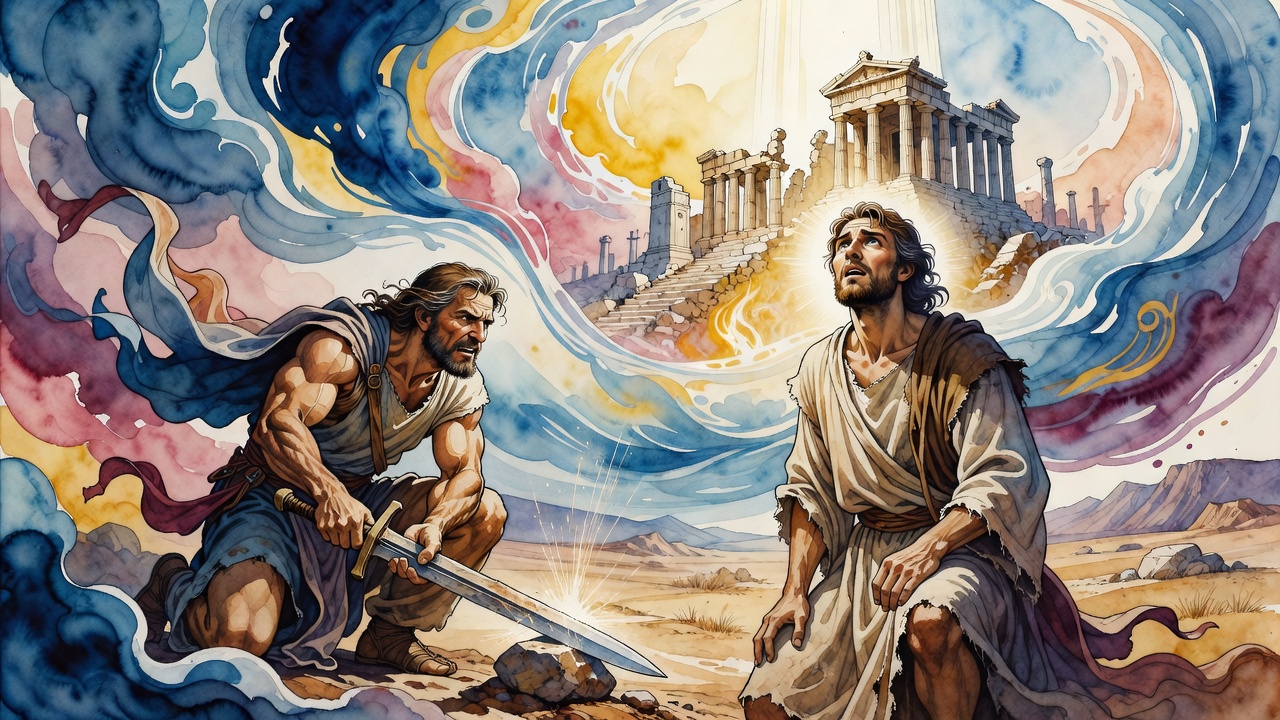
Centuries later the same sentence was still being written out by hand. Antoninus could not do enough for Rabbi Judah the Prince. Rabbi Pinchas remembered the honors as past counting. And every time Rabbi Judah sent a letter back, he signed it the same way: your servant Judah asks after your welfare.

It grated. Antoninus finally told him to stop. Do not write to me like that again.

Rabbi Judah wrote back and kept the signature. "I write to you this way because I am no better than Jacob my father. When he sent word to Esau, what did he say? Thus says your servant Jacob. I never made myself anyone's master."

The ox and the ass are still on the list. The man holding it still calls the other one my lord.


← All myths
From the tradition

Sources

3 sources

The texts behind this telling. Some cards carry a translation of the source; others are our own retelling of it, and each card says which. Every card links out to the original.

Midrash Tanchuma Buber, Vayishlach 10:3Midrash Tanchuma Buber, Vayishlach

Translation of the source text.Midrash Tanchuma (Buber), Public Domain, on Sefaria · CC-BY-SA

The Holy One, blessed be He, said to him: You have testified concerning Me that I was with you, as it is said, "But the God of my father has been with me" (Gen. 31:5). "And will keep me" (Gen. 28:20), and I kept you from Laban. "And will give me bread to eat" (ibid.), "And God took away your father's cattle and gave them to me" (Gen. 31:9). "And a garment to wear" (Gen. 28:20), "And on that day he removed the he-goats, etc." (Gen. 30:35). "And I will return in peace, etc." (Gen. 28:21), "And Jacob came in peace, etc." (Gen. 33:18).

Full source
Midrash Tanchuma Buber, Vayishlach 5:1Midrash Tanchuma Buber, Vayishlach

Translation of the source text.Midrash Tanchuma (Buber), Public Domain, on Sefaria · CC-BY-SA

(Genesis 32:5) "And he commanded them, saying: Thus shall you say to my lord, to Esau." He called him "my lord." Jeremiah said (Jeremiah 13:21): "What will you say when He appoints over you those whom you had trained against yourself as chiefs, as head?"

Rabbi Pinchas said: Antoninus honored Our Rabbi (Rabbi Judah the Prince) beyond all measure. And when Our Rabbi would send me to him, he would write him a letter and write in it, "Your servant Judah asks after your welfare." And it displeased Antoninus that he called himself a servant. He said to him: Do not write again in this manner. Our Rabbi said to him: This is how I write to you, for I am no better than Jacob my father. When he sent to Esau, what did he say to him? "Thus says your servant Jacob" (Genesis 32:5): I have not become an independent master; "with Laban I have sojourned" (Genesis 32:5); not one of the blessings with which your father blessed me has reached me. Your father blessed me, "And may God give you of the dew of heaven and of the fatness of the earth" (Genesis 27:28), and I have not one of them in hand; rather, "and I have acquired ox and ass and flock," which is neither of the heavens nor of the earth. Do you hate me only because of the blessings? [Yet not even one of them has reached me.]

And did he have only one ox and one ass, that he says "and I have ox and ass" (in the singular)? Rabbi Judah and Rabbi Nehemiah differ. Rabbi Judah says: It is the manner of speech, as a man who says about everything collectively, "the ass went," "the cock crowed." But Rabbi Nehemiah said: He said to him, "your servant Jacob", behold, I humble myself before you; if you wish, well and good; and if not, "I have ox and ass." [The ox], this is Joseph, as it is said, "His firstling ox, majesty is his" (Deuteronomy 33:17). And it is a tradition of the aggadah that Esau falls only by the hand of the children of Rachel. Why? Because it says, "Surely the youngest of the flock shall drag them away" (Jeremiah 49:20), these are the children of Rachel. And the ass, this is the King Messiah, as it is said, "Rejoice greatly, O daughter of Zion, shout, O daughter of Jerusalem... humble and riding upon an ass" (Zechariah 9:9). The flock, these are Israel, as it is said, "And you, My flock, the flock of My pasture, you are man" (Ezekiel 34:31). And the manservant and maidservant, these are Israel, of whom it is said, "Behold, as the eyes of servants..." (Psalms 123:2).

Full source
Midrash Tanchuma Buber, Vayetzei 4:2Midrash Tanchuma Buber, Vayetzei

Translation of the source text.Midrash Tanchuma (Buber), Public Domain, on Sefaria · CC-BY-SA

Another interpretation of (Genesis 28:11): "And he encountered the place" (va-yifga ba-makom), that the Holy Spirit rested upon him, upon Jacob, and he prophesied that Israel was destined to sin, and that the Holy Spirit would depart from them. (And this is derived from "because the sun had set" (Genesis 28:11), for so we find in the prophecy of Micah, as it is written, "And the sun shall set" (Micah 3:6), which signifies retribution and the removal of prophecy.) As it is said, "And if they are prophets, and if the word of the LORD is with them, let them now entreat (yifge'u na) the LORD" (Jeremiah 27:18), this teaches that this "encountering" (pegi'ah) is prophecy. "And he encountered the place, because the sun had set", what is it that is written? "And the sun shall set upon the prophets, and the day shall be dark over them" (Micah 3:6).

Full source