Jacob Waited for Mercy While Esau Sharpened His Sword
Esau timed a killing for the days of mourning, Jacob waited under the eye of Heaven through sword and famine, and at Bethel he saw the Temple fall and rise.
Table of Contents
 Click for full size
The Murder Timed for Mourning
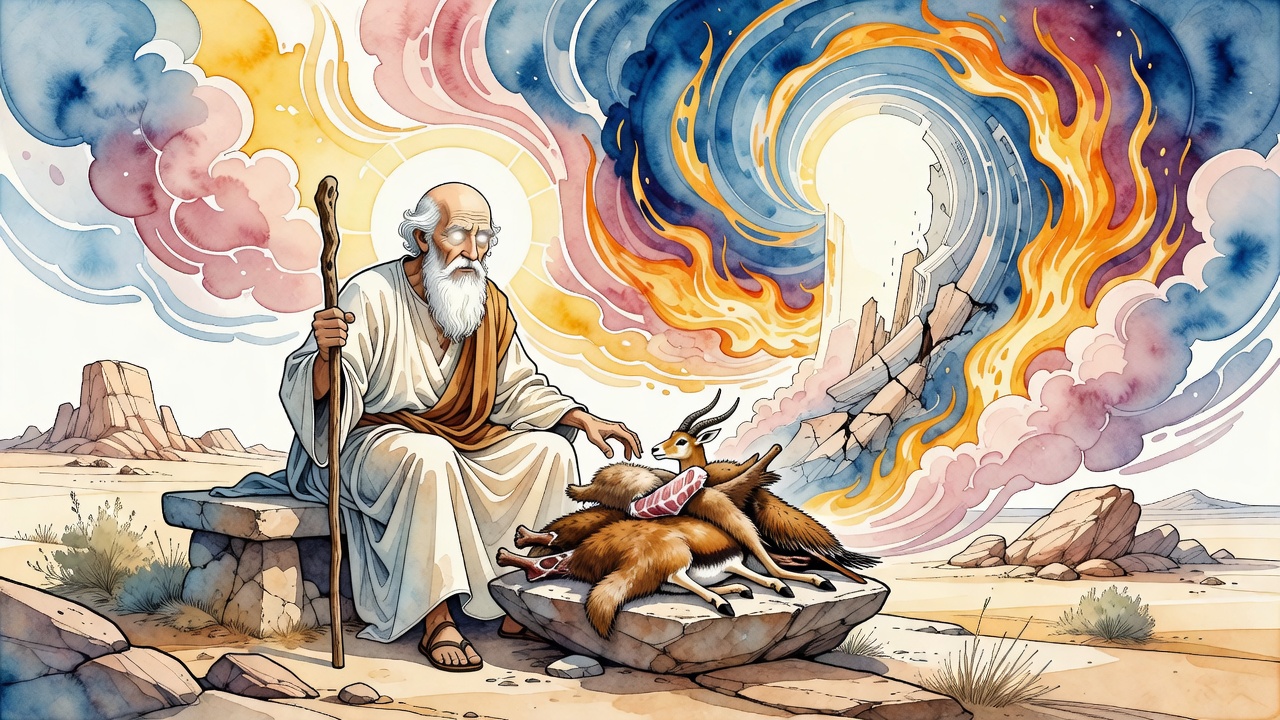
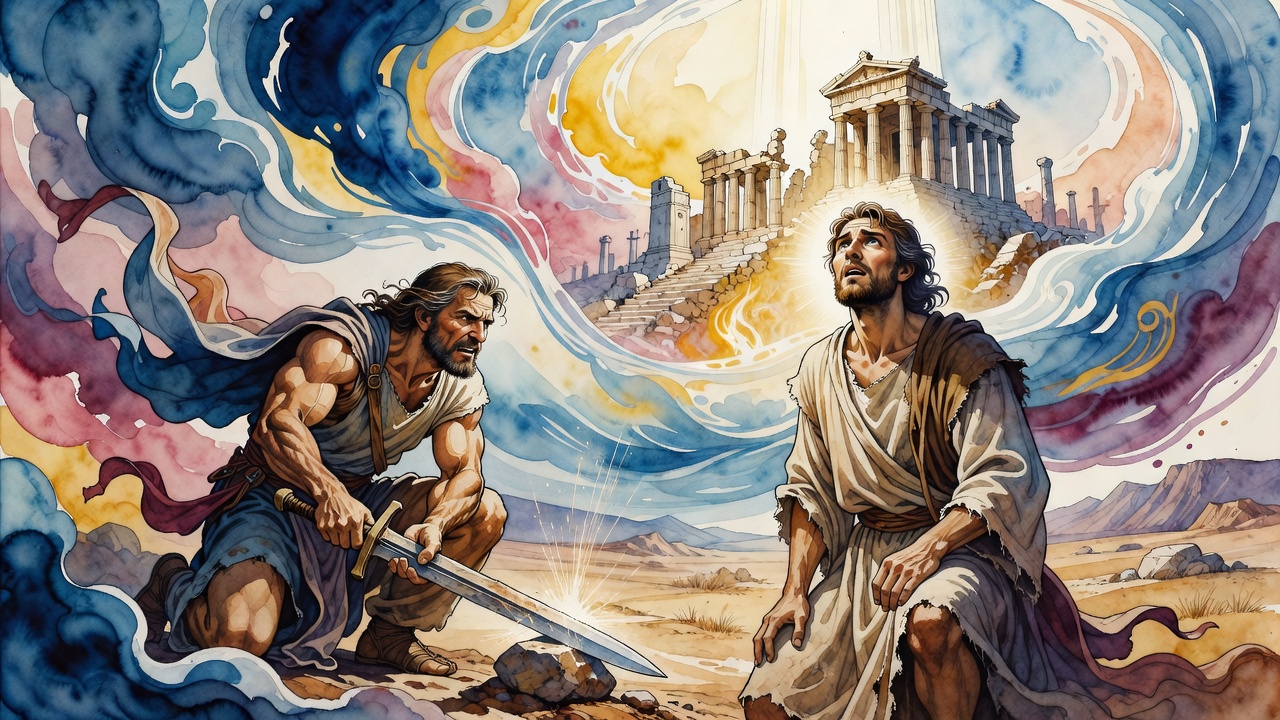
Esau did not rush the knife. He waited for a funeral. In his heart he set the calendar: let the days of mourning for my father draw near, and I will kill my brother Jacob. The grave for Isaac was not yet open, and already Esau had dug a second grave in his mind for the brother who had taken blessing and birthright. Hatred that can wait is not weaker than rage. It is colder and more exact.
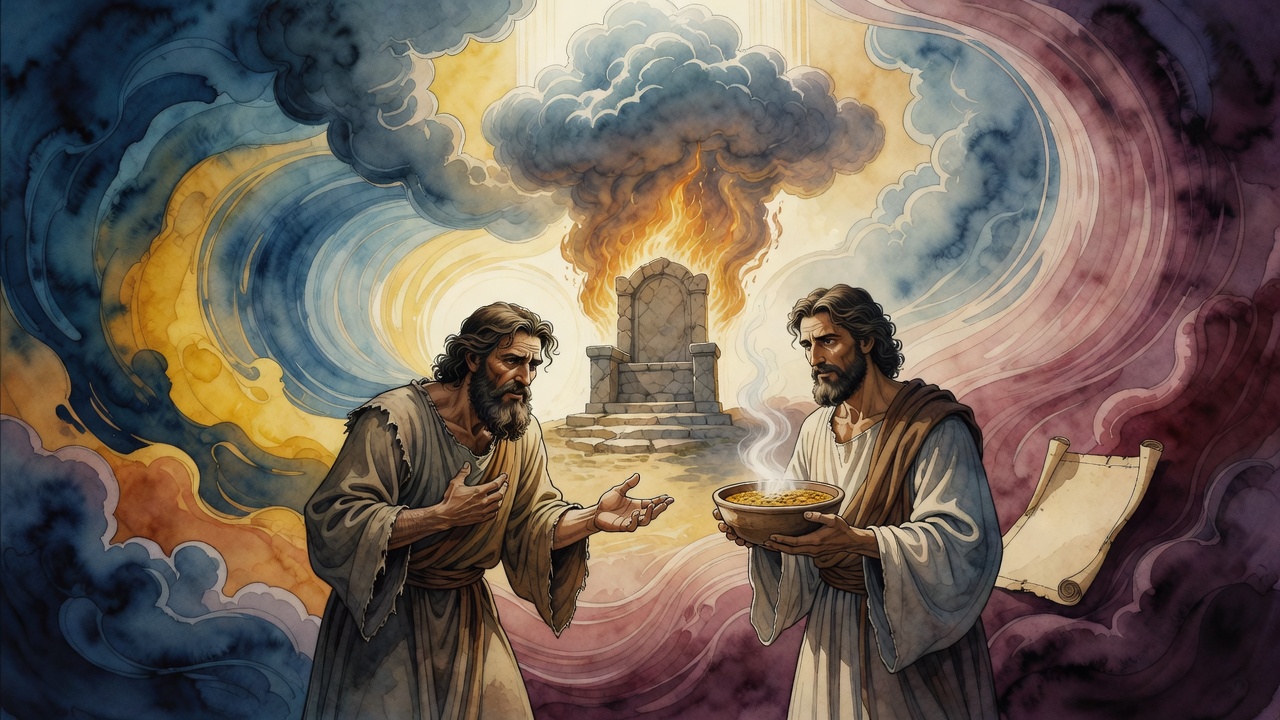
Jacob did not answer steel with steel. The midrash places him under a verse from the Psalms: the eye of the LORD is upon those who fear Him, upon those who wait for His steadfast love. Jacob was a man who waited. He hung his hope on the Holy One, blessed be He, and did not seize his rescue by force. The road away from home was not victory. It was trust walking with a staff and a fear he refused to make into Esau's likeness.
Sword on One Side, Famine on the Other
"To deliver their soul from death", from what death? From Esau's blade, already named in the brother's muttering, already scheduled for the days when the house would be soft with grief. "To keep them alive in famine", and famine came in Jacob's days, driving the household toward Egypt with empty sacks and a father's dread that the world itself had turned hunter.
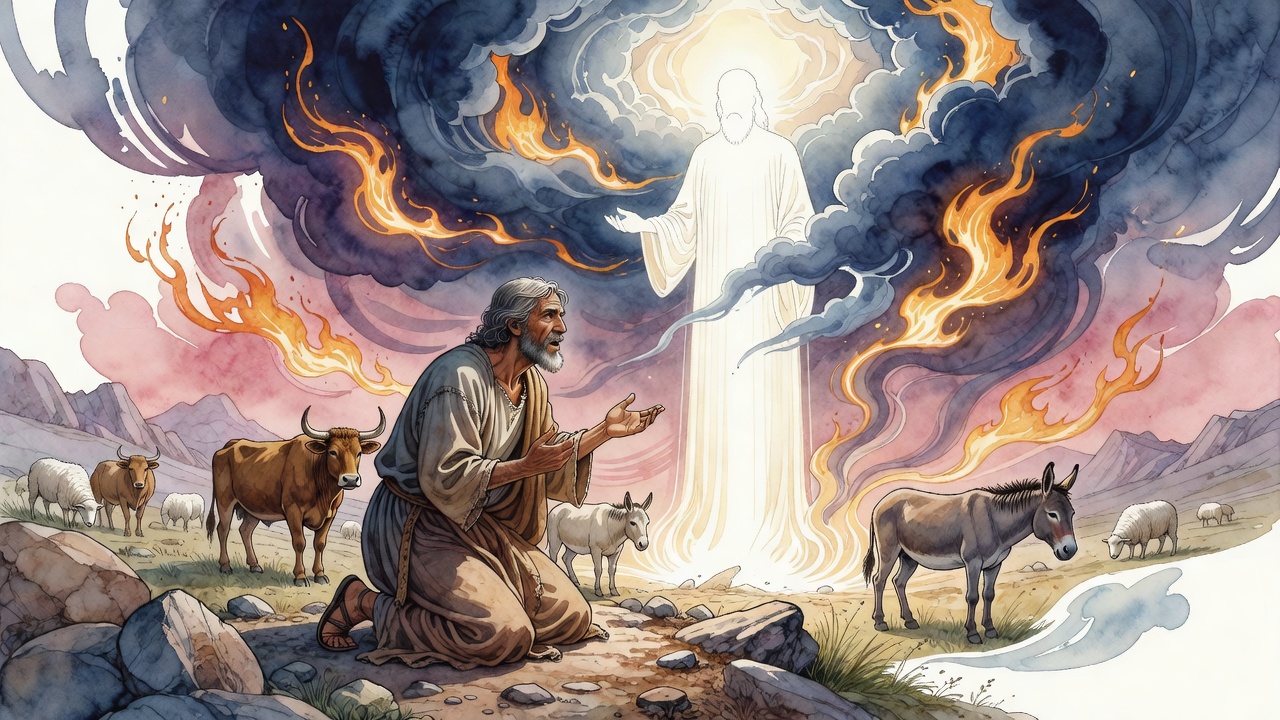
Sword on one side, hunger on the other, and a man with nothing in his hand but trust. From both the LORD delivered him, because his eye was lifted toward the One who keeps those who wait. Waiting here is not passivity. It is the refusal to become Esau in order to survive Esau, the hard discipline of not writing justice with the enemy's tools.
Awesome Place, Double Sight
On the road, stone for a pillow, Jacob dreamed and woke trembling. "How awesome is this place!" The sages hear more than a sleeper's fright. "Awesome" is a word Scripture ties to the sanctuaries of God. "This place" is the mountain of the House, the border of the holy, the spot where earth admits it is thinner than it looks.
In that single moment he saw the House of God standing, and he saw it fallen, and he saw it standing again. "This is nothing," when the ruin filled his sight; "but the house of God," when the rebuilt walls rose. Time folded over a stone. The ladder was not only angels climbing. It was history leaning on a pillow of rock in the dark, teaching a fugitive that his personal terror was not the widest frame.
Every Prophet's Threefold Vision
This double vision was no private gift. Every prophet after him saw the same threefold sight: built, destroyed, and built once more. The Holy One made a promise across the generations. You have seen My House laid waste in this world. Do not let the ruin be the last word. In the world to come I will not wait for human hands. I Myself will build it, and I will return and dwell within it, eye to eye when the Lord returns to Zion.
Jacob the waiter becomes Jacob the seer. The man who will not force Esau's hour is given the long hour of the Temple's fall and rise. Personal survival and national future share one vocabulary of patience under pressure that looks, from outside, like mere delay.
A Name Confirmed at Midnight
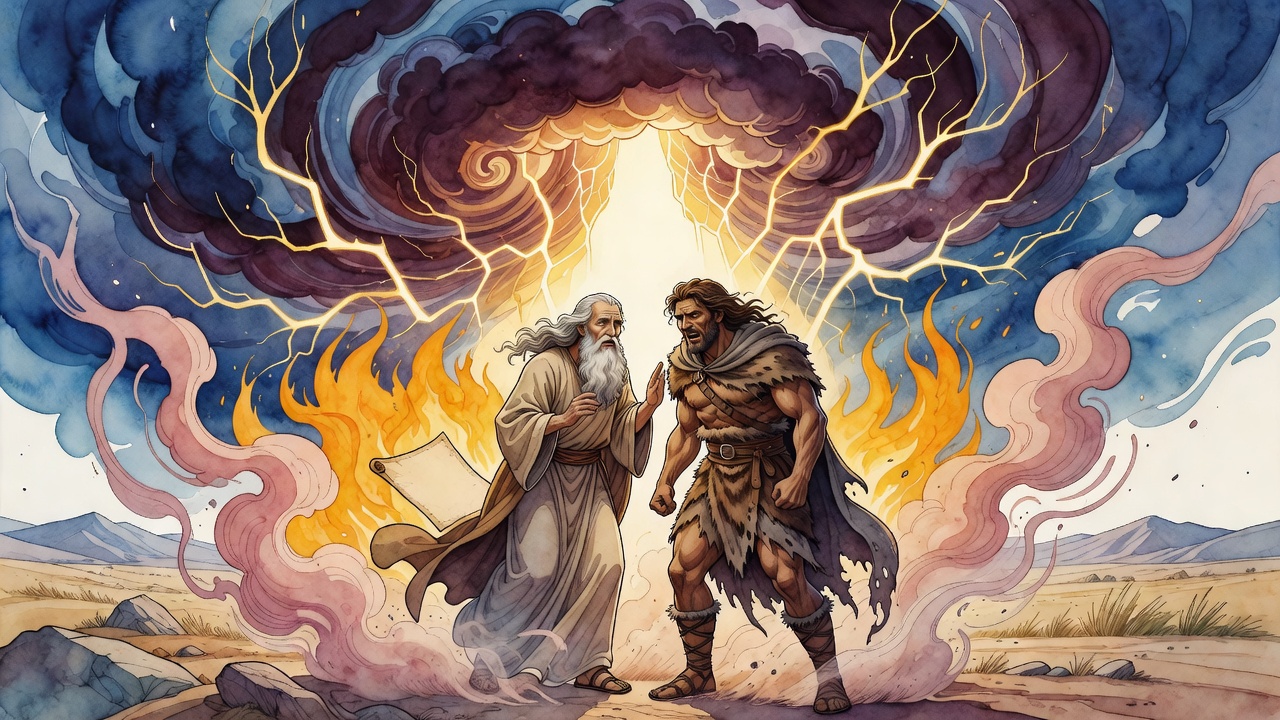
Later, in the night struggle by the river, an angel demanded his name and declared him Israel. An angel has no authority to grant a name alone. So the Holy One Himself came down to ratify the messenger's word: no longer Jacob, but Israel shall be your name. God confirms the word of His servant and fulfills the counsel of His messengers, even when the messenger spoke in a wrestling dark.
If Heaven descends to confirm one angel's sentence over one man, how much more will Jerusalem's promised rebuilding stand, over which every prophet has lifted a voice. The waiter becomes the named one. The sword does not get the last naming. Esau's calendar does not outrun the God who keeps those who wait and rebuilds what human hands cannot finish.
The midrash keeps the scene close to the body on purpose. Names move. Choices cost. Heaven writes while people still think they have more time to finish what fear postponed.
In the years between the flight and the night of renaming, Jacob learned the cost of waiting in smaller hours: Laban's contracts, Rachel's tears, Leah's sons, the fear that Esau's four hundred men still knew his scent. The midrash's Jacob is not a statue of patience. He is a man who keeps choosing not to become the sword he fled, even when the road offers easier steel.
When he finally bows toward Esau with gifts and distance, the old muttering about mourning days has not vanished from the world's memory. It has only been outlasted by a life that kept looking up while a brother looked for a calendar of death.
← All myths