God Seated the Bull First to Clear Israel's Name
A rumor named the queen and an officer. The king searched the rooms and found nothing. He sat her at the head of the table anyway.
Table of Contents
Someone in the palace linked the matron of the court to a great officer. The words were soft enough to travel. They were hard enough to stain.
 Click for full size
The king did not rage, and he did not look away. He investigated. He weighed the charge and found nothing in it. No proof. Only the bad taste of other people's mouths.
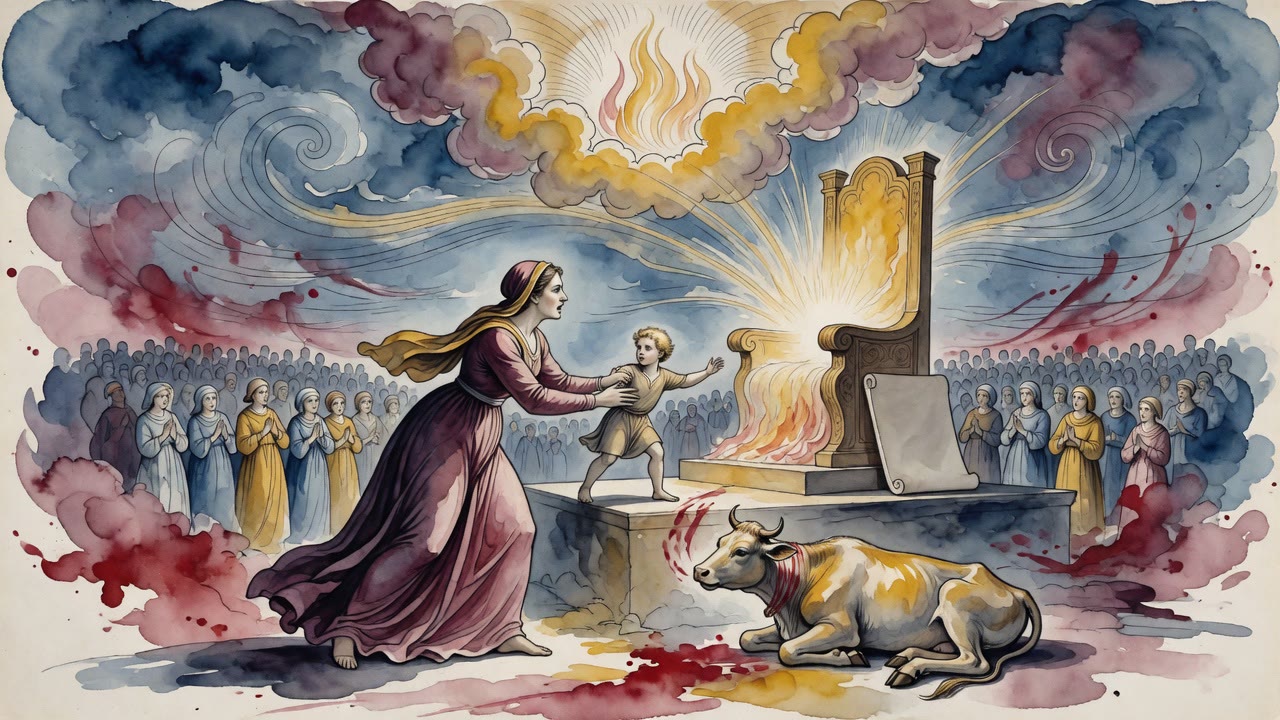
How does a king clear a name gossip has darkened? He throws open a banquet. Guests recline. Cups lift. Before every eye, he seats the matron at the head of the table. Let the room see. The king searched. The charge dissolved.
He Sat Her at the Head
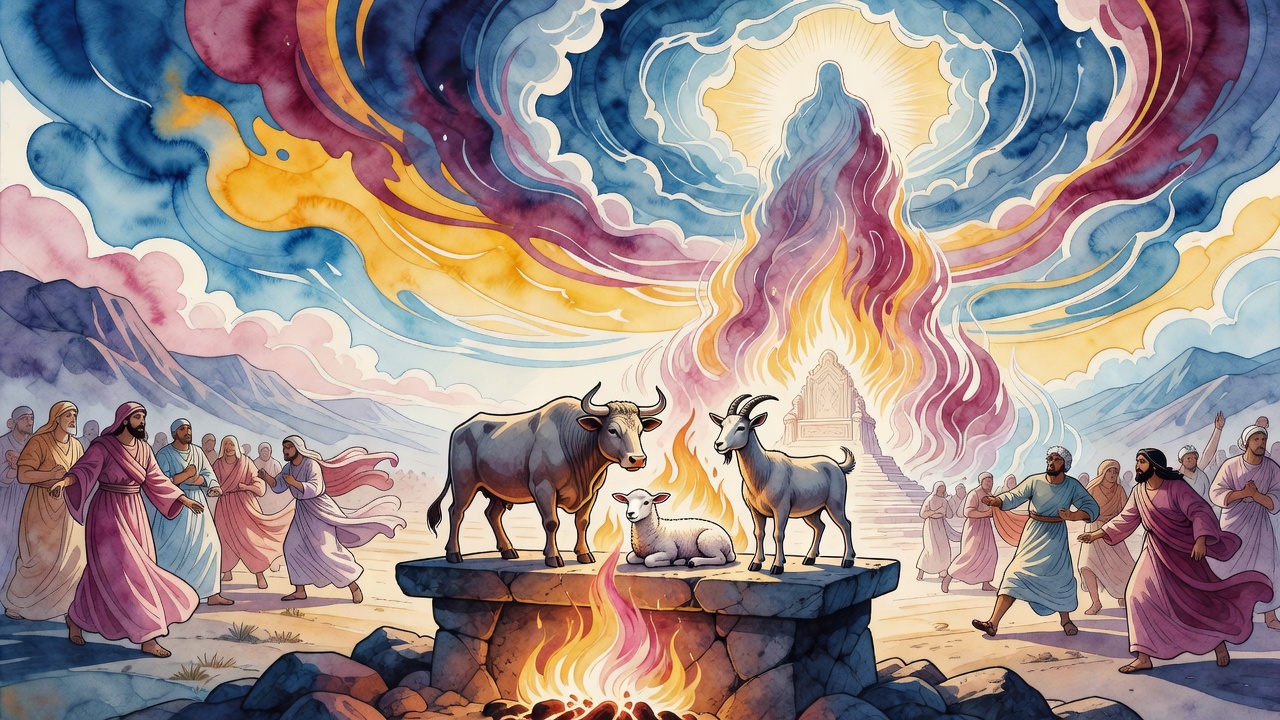
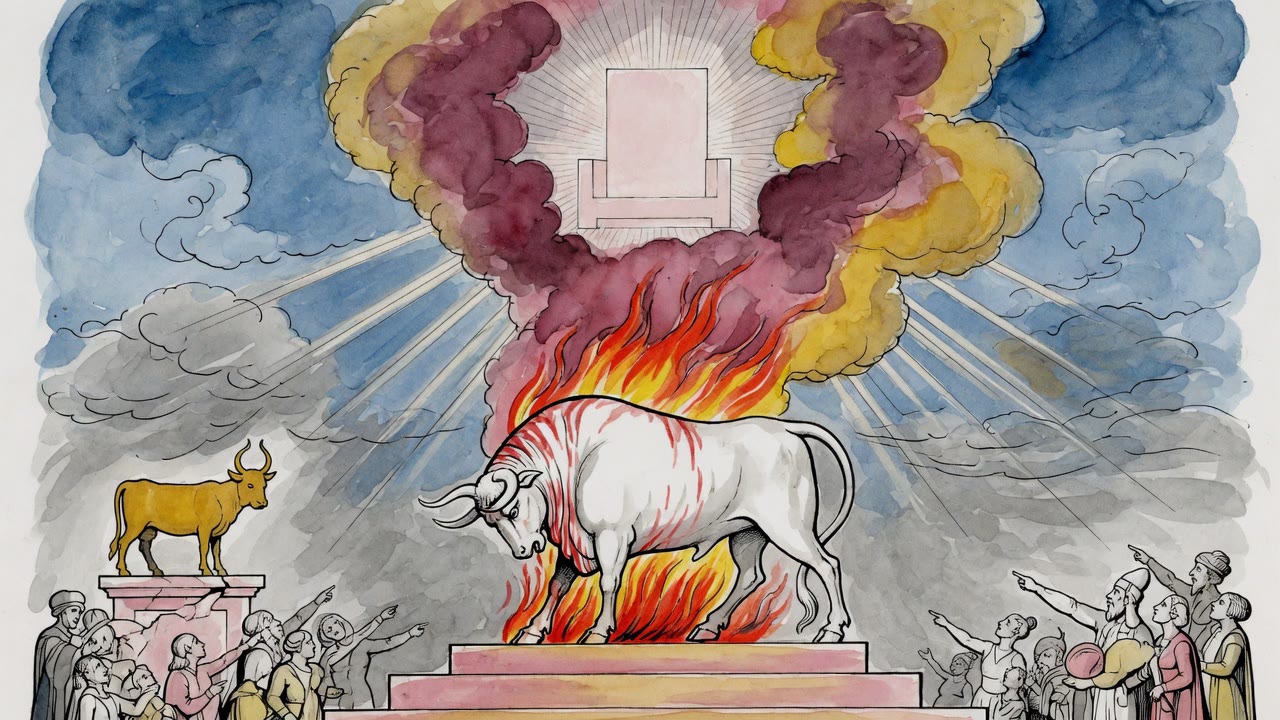
So the nations pointed at Israel after the calf of gold. "You made the calf." The Holy One examined the matter and found in their accusation nothing worth its weight. Then He honored the bull, the very image they sneered at, by setting it first among the sacrifices drawn near to Him. "A bull or a sheep or a goat."
The shame they meant as a stain, God turned into a seat at the head of the fire. He did not send a private note. He rearranged the room.
Your Gods, Not Ours
In the camp the metal cooled. Hands that were not Israel's had shaped it. Mouths that were not Israel's offered it to the people who had come up out of Egypt.
"These are your gods, O Israel" (Exodus 32:4).
Your. Not our. The pronoun pointed sideways. If the children of Israel had cast the idol with their own hands and claimed it with their own mouths, they would have cried, "These are our gods." That confession would have stuck. The verse does not record it.
The mixed multitude, the proselytes who came up with Israel, fashioned the calf and pressed it on the camp. The gift they had not asked for arrived already named, already pointed at them. Other hands built it. Other mouths offered it. The one who builds an idol and the one to whom it is shoved are not the same defendant.
Abraham Ran to the Herd
Abraham ran. Three travelers stood at the tent door in the heat, and he did not send a servant. He ran to the herd himself and took a calf, tender and good, and gave it to the young man to dress. Years later a priest would lead a bull up the ramp, and that run would still be inside the animal.
The ox on the altar is not a lecture about hospitality. It is a man in a hurry, dust on his heels, pulling a calf from the herd because guests have arrived and the house has to feed them.
A Ram and Two Kids
Isaac lay bound on the wood. The knife was up. Then a ram, caught in the thicket by its horns, and the ram went on the altar in his place. A sheep would climb the same ramp later, carrying that hour.
Jacob's mother sent him. "Go now to the flock, and fetch me from there two good kids of the goats." He went. He fetched. The kids bought a blessing that should have gone to the older brother.
What is that small word "good"? Good for Jacob, who drew down a father's blessing through those kids. Good for every generation after him, for through the goat of the altar atonement is made on the Day of Atonement. The goat keeps climbing. The kids keep working.
The Bull Walked First
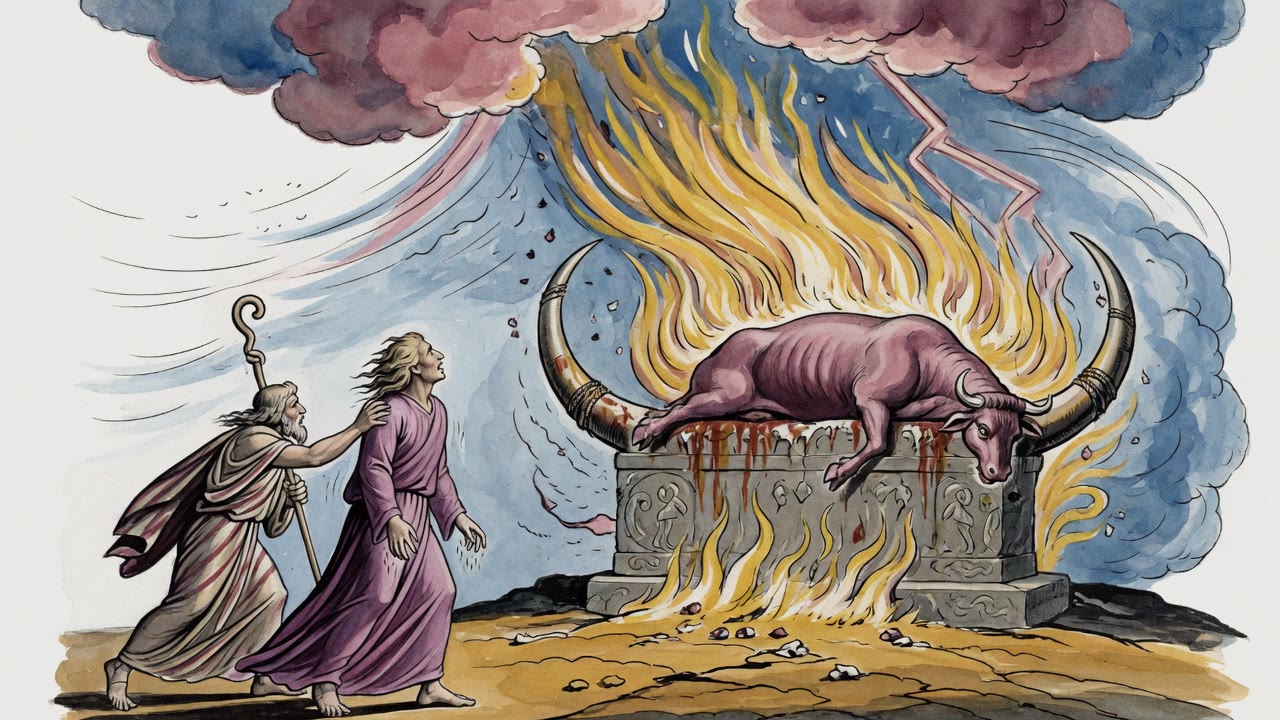
A priest later took a bullock by the lead. The list in his mouth ran in a fixed order. Bull first. Then sheep. Then goat.
Israel still carried the calf's smoke in memory. The altar answered with that order. The fathers were inside the beasts: Abraham's run, Isaac's bound hour, Jacob's two good kids made flesh again.
The nations could still point if they wanted. They would be pointing at the head of the table. The matron sat there. The charge had no weight. The bull walked first, and the fire took him in the place of honor the gossip had tried to deny.
← All myths