6 min read

God Shouldered Israel When Wolves Closed In

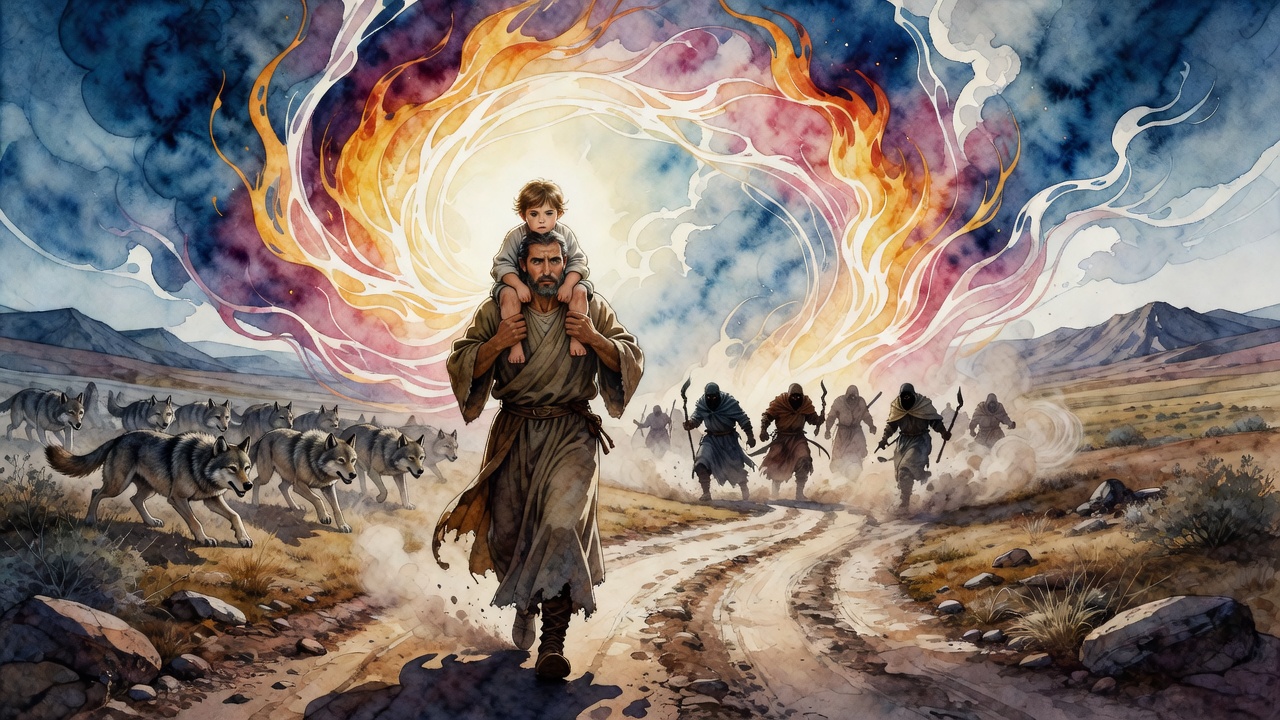
Robbers ahead and a wolf behind left no safe place for the child. The father lifted him onto his shoulders and walked the road.

Curated by Arthur · Told by Maggid ·
Table of Contents
  1. No Side Left Safe
  2. The Shepherd Who Does Not Sleep
  3. Wrath for Those Who Afflict
  4. Above the Reach
  5. The Road Still Walked

The father put the boy in front of him on the road so he could watch every step. Dust rose. The child's sandals scuffed. Then shapes appeared ahead, men with knives, robbers who knew a small body was easy to snatch.

God Shouldered Israel When Wolves Closed In Click for full size

He swung the boy behind him and set his own chest toward the threat. Breath settled for half a moment. Behind them a wolf stepped out of the brush, low and patient, and the safe place vanished again.

No Side Left Safe

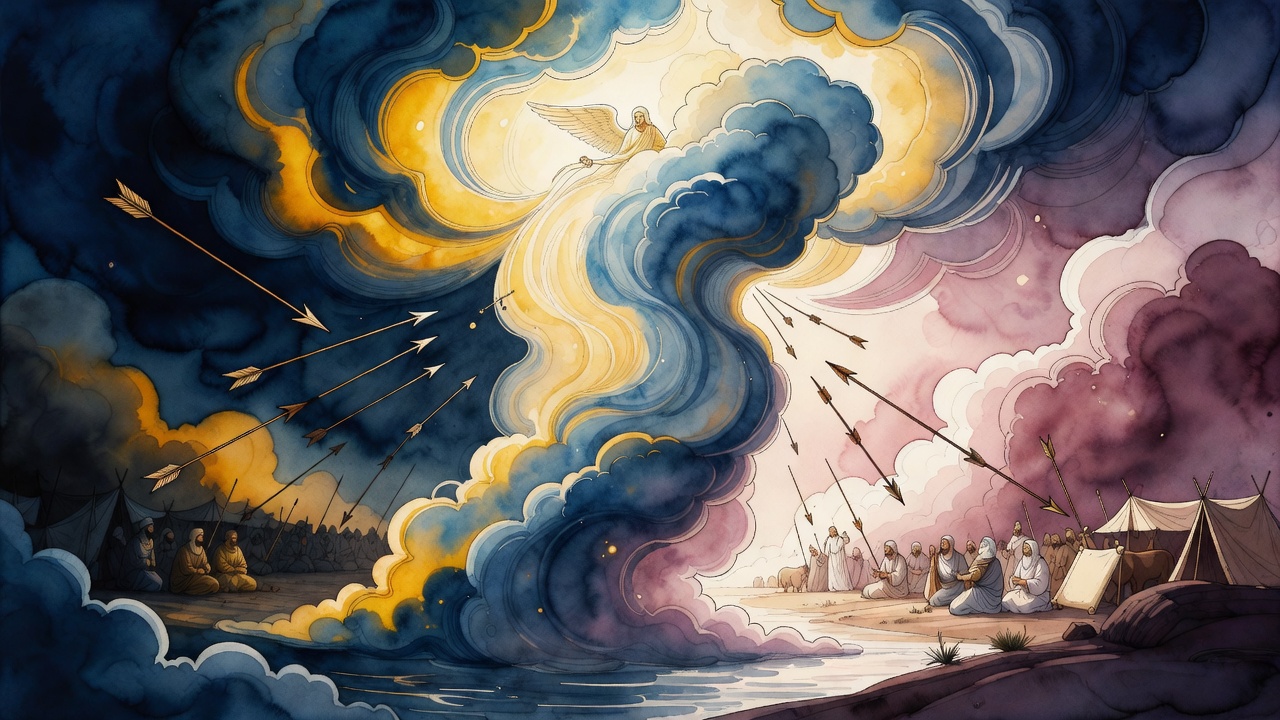
Robbers ahead. Wolf behind. Every position on the ground failed. The father did the only thing left. He lifted his son onto his shoulders and walked with the child's weight on his neck, above the reach of teeth and steel.

The Mekhilta of Rabbi Ishmael, a third-century tannaitic midrash on Exodus, tells the parable and then names the cast. The father is God. The son is Israel. The road is the wilderness between Egypt and the land of promise. The verse under the image is plain: "And in the desert, where you saw how the Lord your God bore you, as a man bears his son" (Deuteronomy 1:31).

Pharaoh's army pressed from the rear. Hostile nations waited ahead. When no earthly formation could hold, the nation rode on shoulders that did not tire.

The Shepherd Who Does Not Sleep

Why call Israel a flock? Because a shepherd never rests. By day he guards against heat that can kill a lamb. By night he stands against wolves. Midrash Tanchuma Buber on Beshalach hears the same care in the psalm, "You led Your people like a flock," and opens the word nachita, "You led," like a sealed box.

One reading hears Egypt broken: wonders shown, wrath poured, a right hand that swallowed the foe, the deep closing over chariots. Rabbi Yehoshua hears tenderness: wonders for Israel, freedom granted, a sea split, Torah placed in their hands. Rabbi Elazar of Modi'im hears life itself: miracles, life given, a hand revealed, a head lifted in dignity. The Sages hear harvest across generations: prophets, the pious, the upright, the blameless springing from a people once carried.

Four readings, one leading hand. And the midrash insists the leading ran through the merit of Moses, for Scripture says Moses had Israel set out.

Wrath for Those Who Afflict

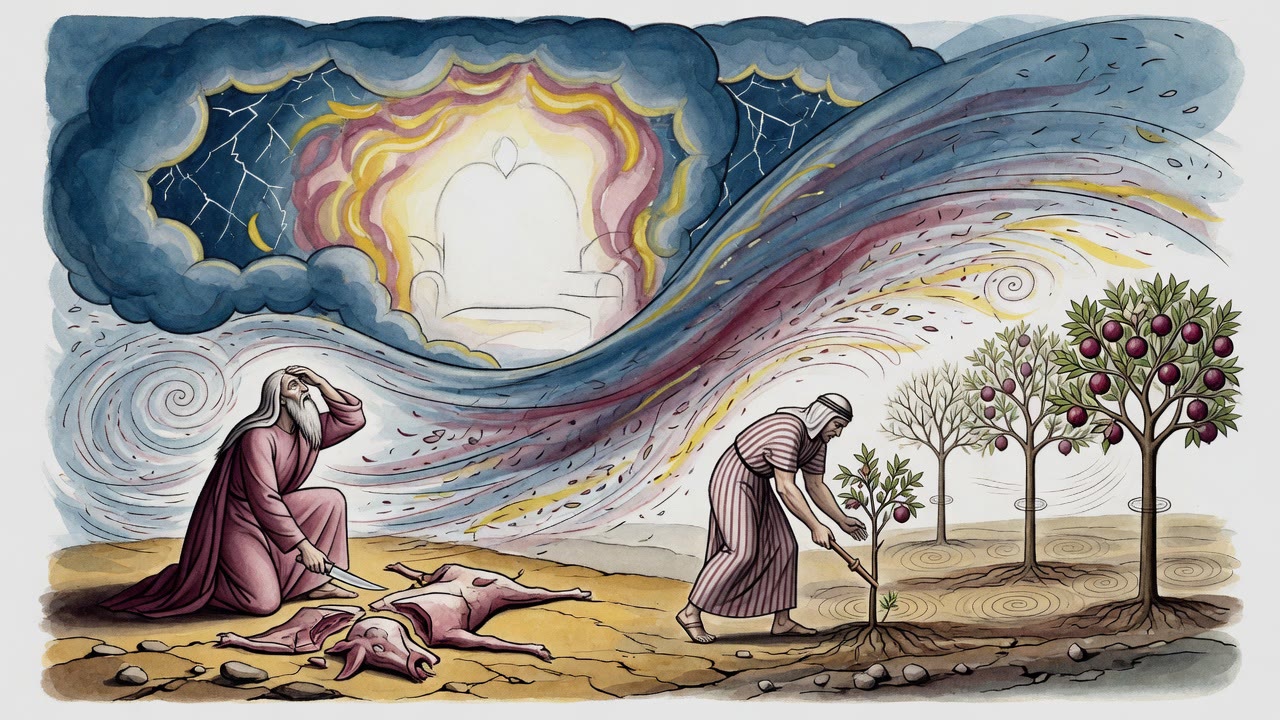
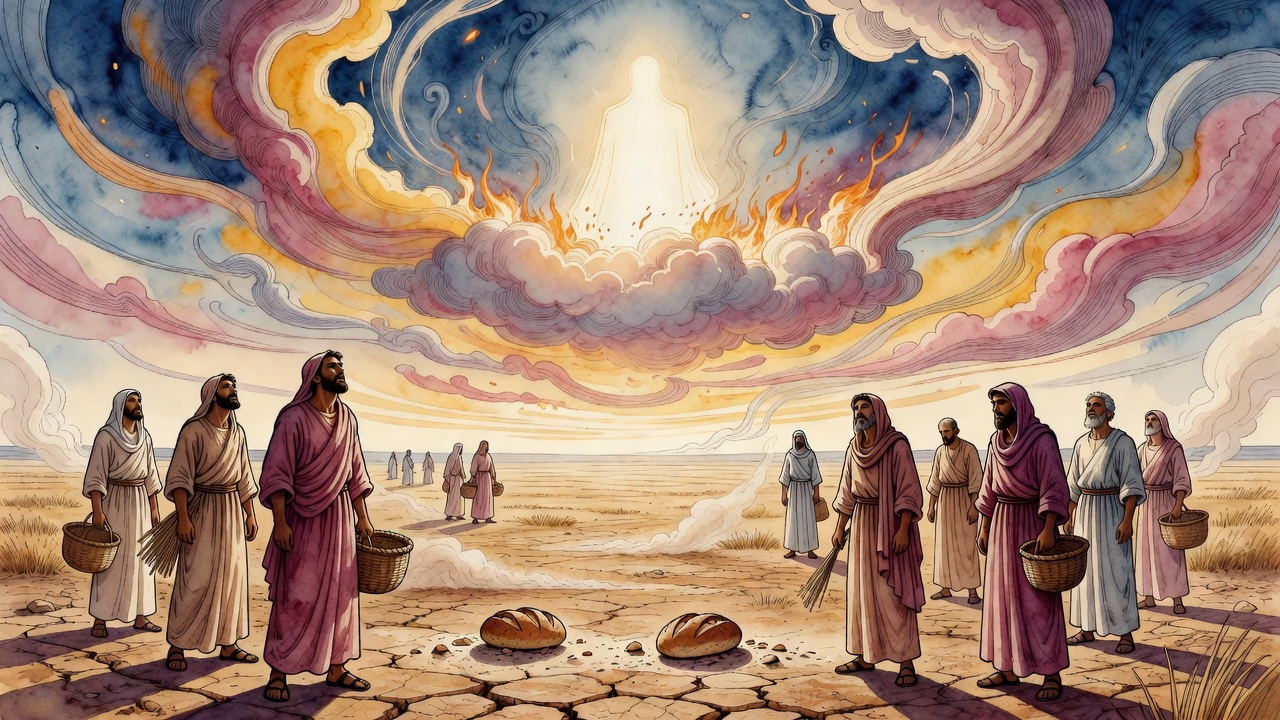
The same God who lifts the child does not shrug when the weak are crushed. In Mekhilta Nezikin, Rabbi Yishmael links "And my wrath shall burn" to the drought, famine, and exile of Deuteronomy (Deuteronomy 11:17). Afflict widows and orphans, and the rain stops. The land fails. The sword enters. The welfare of the vulnerable is not private ethics; it is national weather.

A father who shoulders a son still judges the hands that would snatch him. Carry and wrath are not opposite moods. They are one protection seen from two angles.

Above the Reach

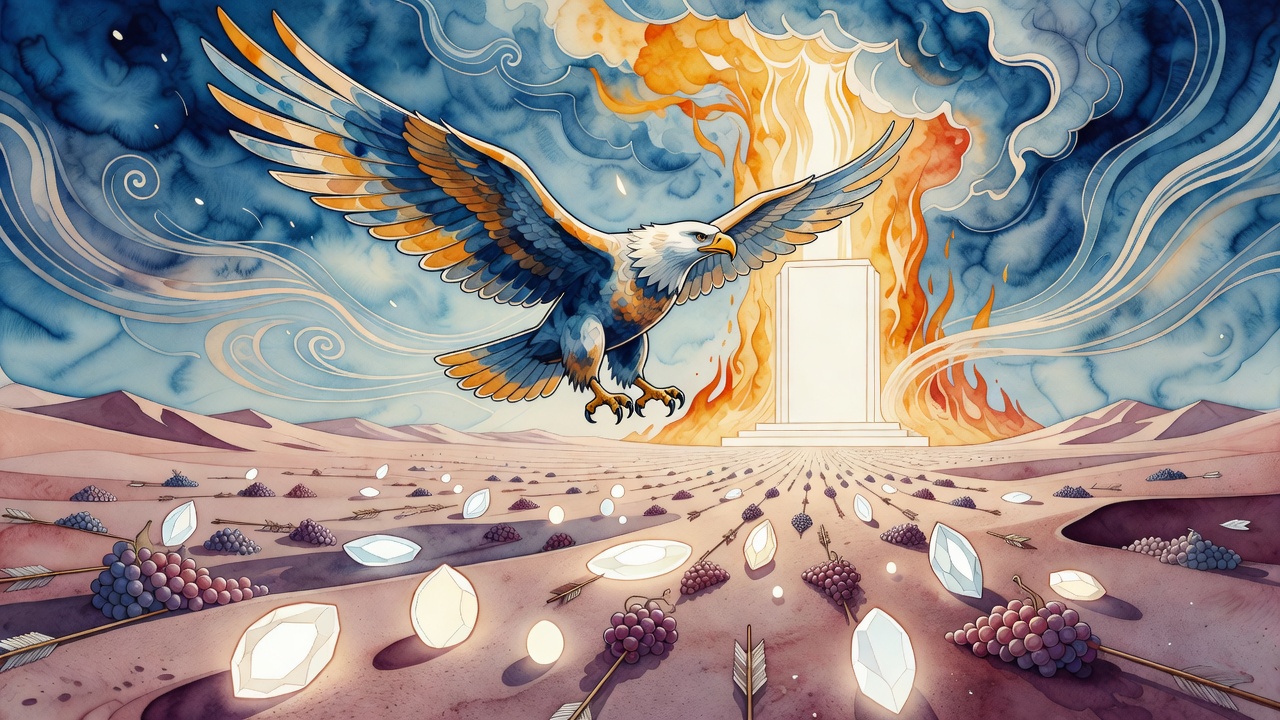
Picture the boy on the shoulders looking down. The wolf snaps at empty air. The robbers curse a height they cannot climb. That is how the tradition wants the Exodus felt in the body: not as a map of marches only, but as weight transferred, a people who could not save themselves lifted clear of both jaws.

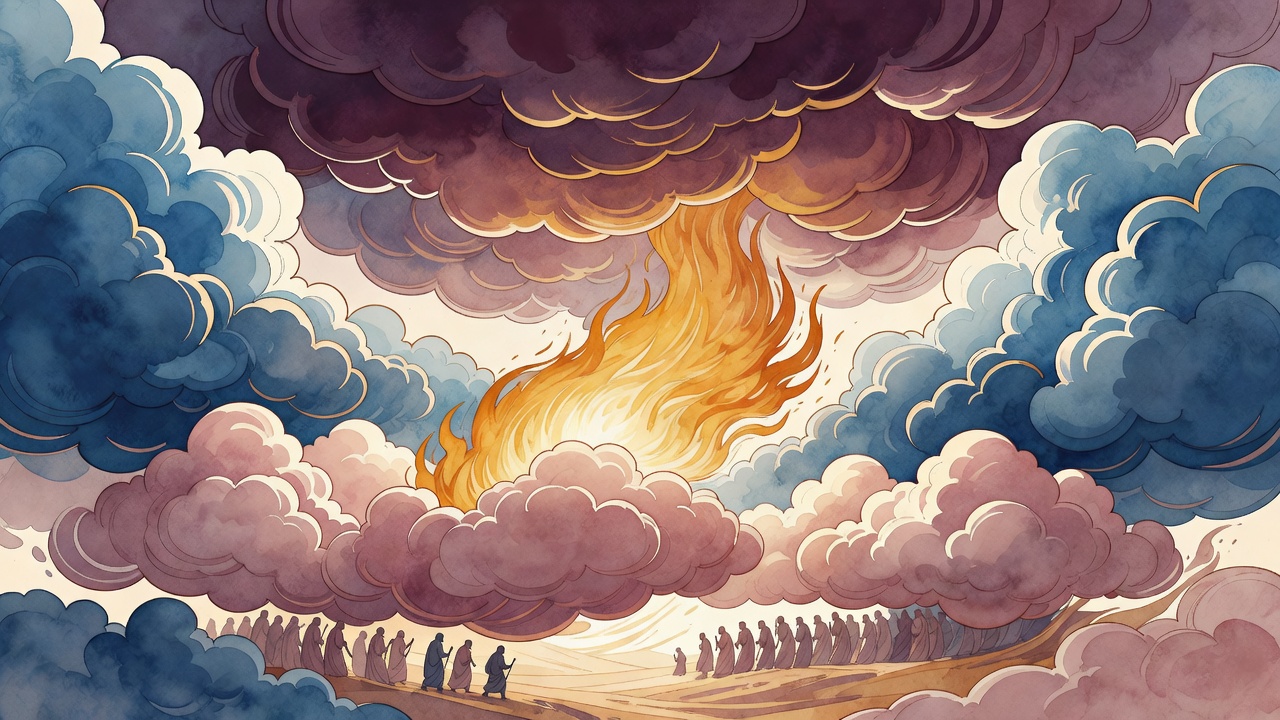
The pillar of cloud by day and fire by night are the long form of the same gesture. Shade against the scorch. Light against the night. A booth of protection that does not clock out.

When Israel later forgets and begins to afflict the stranger, the widow, the orphan, the Mekhilta's wrath-chain is the father turning toward anyone who would reenact Egypt inside the camp.

The Road Still Walked

The parable ends with the child safe, but the road does not end. Flocks still need shepherds. Nations still invent new wolves. The image remains because the pressure remains: danger rarely stands on only one side of a people.

God bore Israel as a man bears his son. The shoulders did not negotiate with the wolf. They rose.

At the sea the camp felt the double pressure in their bones. Water in front. Chariots behind. No formation on the sand could open both jaws at once. The father of the parable does not argue with geometry. He rises under the weight until the child is out of reach.

Israel sang on the far shore because the shoulders had held. The wolf of Egypt drowned. The robbers of later roads would come, Amalek and others, and the same God would still be the one who leads like a flock by day and night without a shift change.

When the Mekhilta speaks of wrath burning against those who afflict widows and orphans, it is not a second god. It is the same father turning toward anyone inside the camp who would reenact the snatch. Rain stops. Crops fail. Exile follows. The nation that was carried must not become a nation that preys.

Moses leads the people out, and the midrash ties the leading to his merit, yet the shoulders in the parable are not human. Leadership walks the road. The lift is divine. That split keeps Israel from worshiping a man while still honoring the servant who sets the march in order.

Deuteronomy's memory is sensory. "Where you saw" how God bore you. The parable gives the eyes something to see: a child above the road, a father walking, threats snapping at empty air.

Four readings of nachita keep the leading from becoming a single mood. Terror for Egypt. Tenderness for Israel. Life and dignity. A harvest of prophets and the blameless. The father on the road is all of those at once depending on who is watching the shoulders.

Wrath that shuts heaven is the policy face of protection. A society that afflicts the weak trains God as enemy of its harvest. The parable's wolf is outside the family. The Mekhilta's burning wrath answers wolves who grew up inside the camp and turned on widows.

Carry the child. Judge the snatcher. Lead the flock through heat and night. The sources refuse a God who only comforts or only punishes. The road requires both arms.


← All myths

From the tradition

Sources

3 sources

The texts behind this telling. Some cards carry a translation of the source; others are our own retelling of it, and each card says which. Every card links out to the original.

Mekhilta Tractate Bachodesh 2:8Mekhilta DeRabbi Yishmael

Retold in our words. Read the original at the link below.Mechilta, translated by Rabbi Shraga Silverstein · CC-BY

The Mekhilta tells a parable about a man walking along a road with his young son. At first, the father leads his child in front of him, keeping the boy in sight. But then robbers appear ahead on the road, ready to snatch the child. The father quickly moves his son behind him, placing himself between the boy and the threat.

No sooner has he done this than a wolf appears behind them, stalking from the rear, ready to seize the child from behind. The father pulls the boy forward again. Now the danger is on both sides, robbers ahead and a wolf behind. Threats in every direction, no safe position left.

So the father does the only thing he can. He lifts his son onto his shoulders and carries him above all the dangers. The robbers cannot reach him. The wolf cannot reach him. The child rides above it all, borne by his father's strength.

The Mekhilta connects this parable to the verse from Deuteronomy (1:31): "And in the desert, where you saw how the Lord your God bore you, as a man bears his son." The father in the story is God. The son is Israel. The road is the wilderness between Egypt and the Promised Land. The robbers and the wolf are the enemies who threatened Israel from every side, Pharaoh's pursuing army behind them, hostile nations ahead of them.

When danger surrounded Israel on all sides and no earthly strategy could protect them, God lifted the entire nation onto His shoulders. This was not a metaphor the rabbis used lightly. It captures the essence of the Exodus, a people carried through impossible circumstances by a Father who refused to let any threat, from any direction, touch His child.

Full source
Midrash Tanchuma Buber, Beshalach 15:4Midrash Tanchuma Buber, Beshalach

Translation of the source text.Midrash Tanchuma (Buber), Public Domain, on Sefaria · CC-BY-SA

Another interpretation: Why "like sheep" (Psalms 78:52)? Rather, just as the shepherd is watchful over his flock by day because of the heat, and by night because of the wolves, so was the Holy One, blessed be He, watchful over Israel, as it is said, "And there shall be a booth for shade by day" and so forth (Isaiah 4:6); and it says, "The pillar of cloud did not depart" and so forth (Exodus 13:22); and it says, "You led Your people like a flock" and so forth (Psalms 77:21).

What is the meaning of "You led" (nachita)? Rather, "You led" is a notarikon (acronym): "N, Awesome things (nora'ot) You showed in Egypt; Ch, Your wrath (charonkha) You poured out upon them; Y, Your right hand (yeminkha) swallowed them; T, the deep (tehom) You covered over them."

Rabbi Yehoshua says: "N, Wonders (nifla'ot) You did for us; Ch, Freedom (cherut) You gave to us; Y, A sea (yam) You split for us; T, Torah You gave to us."

Rabbi Elazar of Modi'im said: "N, Miracles (nissim) You did for us; Ch, Life (chayyim) You gave to us; Y, Your hand (yadkha) You showed to us; T, An uplifted head (tiluy rosh) You gave to us."

And the Sages say: "N, Prophets (nevi'im) You raised up from among us; Ch, Pious ones (chasidim) You raised up from among us; Y, Upright ones (yesharim); T, Blameless ones (temimim) You raised up from among us." And all of these were in the merit of Moses; therefore it is said, "And Moses had Israel set out" (Exodus 15:22).

Full source
Mekhilta Tractate Nezikin 18:21Mekhilta DeRabbi Yishmael

Retold in our words. Read the original at the link below.Mechilta, translated by Rabbi Shraga Silverstein · CC-BY

"And my wrath shall burn", Rabbi Yishmael connected this phrase to a parallel verse in Deuteronomy through a gezeirah shavah, drawing devastating consequences for the affliction of the vulnerable.

(Deuteronomy 11:17) says: "And the wrath of the Lord shall burn in you, and He will shut up the heavens, and there will be no rain, and the land will not give its produce, and you shall perish quickly from the good land." That verse explicitly links divine wrath to the withholding of rain, agricultural failure, and exile from the land.

Since "burning of wrath" appears in both contexts, Rabbi Yishmael transferred the consequences from Deuteronomy to Exodus. When God says "my wrath shall burn" against those who afflict widows and orphans, He means: rain will stop, crops will fail, and exile will follow.

The Exodus verse adds its own specific consequence: death "by the sword." Rabbi Yishmael transferred this back to Deuteronomy as well. The two passages mutually enrich each other. Deuteronomy contributes drought and exile. Exodus contributes violent death. Together, they describe the complete catastrophe that befalls a society that mistreats its most vulnerable members.

The message is stark: afflicting widows and orphans is not merely a personal sin. It triggers national consequences, drought, famine, war, and exile. The welfare of the weak determines the fate of the entire nation.

Full source