God Sought the Hunted From Abel Through Noah
Cain hunts Abel, a generation hunts Noah, Nimrod hunts Abraham. In each chase God turns toward the one being driven, never toward the driver.
Table of Contents
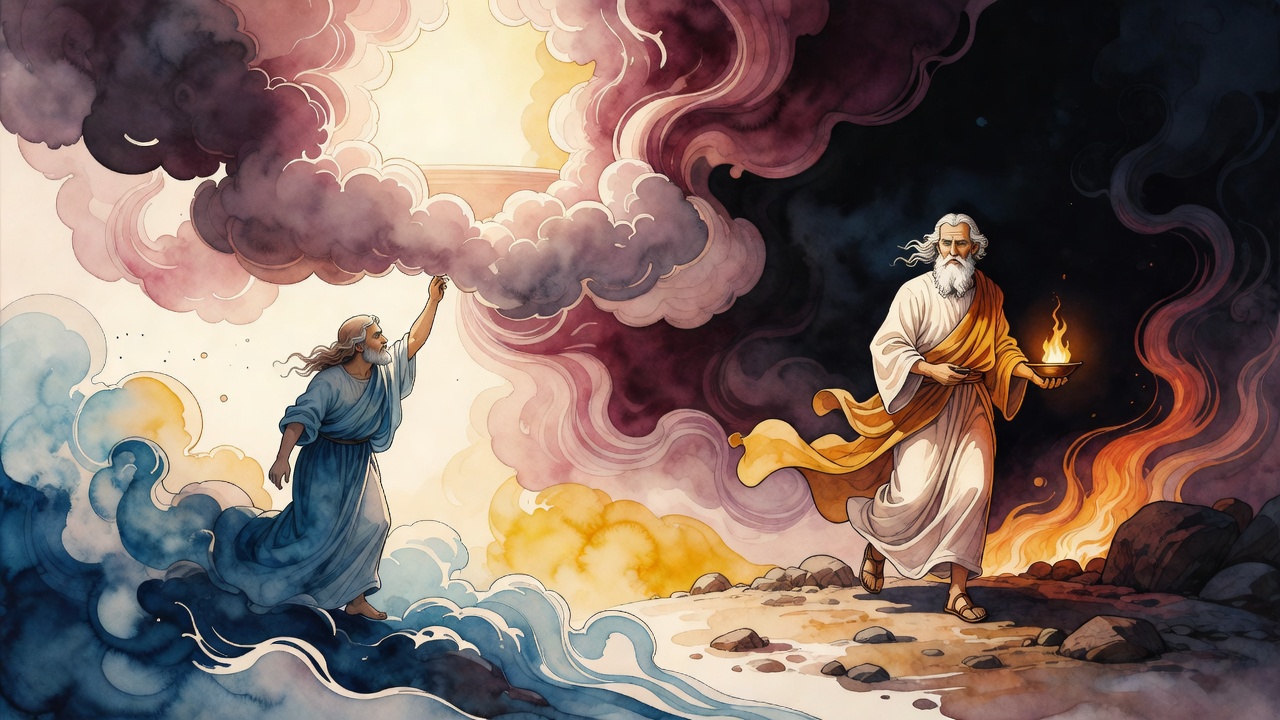
Abel led the better of his flock toward the altar and did not see his brother until the field closed around them. Cain had already chosen the shape of his hands. The first blood that left a human body left it because one man could not stand another man's favor. When the blow fell, heaven did not lean toward the stronger arm. The Lord turned to Abel and to his offering, and the ground that swallowed the hunted brother kept a voice (Genesis 4:4).
 Click for full size
From that hour the pattern held. God seeks the persecuted. Always. Righteous chasing righteous, wicked chasing righteous, even righteous chasing wicked: the claim of the hunted still rises first.
Blood That Would Not Stay Quiet
Cain wiped his hands on grass that would not stay clean. He walked as if the field were his. Above him a demand came for his brother, and the blood answered from the soil before Cain could invent a soft story. The persecutor had the strength. The persecuted had the hearing of heaven. Abel never stood up again in that field, and still the turn of divine attention fixed on him, not on the man who could still stand.
The Holy One demands the blood of the persecuted from the persecutors. That is not a soft proverb. It is the memory of a first murder heaven refused to file under family quarrel. Someone was driven. Someone drove. The driver did not keep the last word. The dust kept speaking after the fist had gone home to sleep.
Abel had brought fat and firstlings. Cain had brought fruit of the ground. Favor fell on one pile of smoke and not the other, and jealousy filled the gap until it had a body and a stone. When the body went still, the favor did not switch to the living brother. It stayed with the dead one, as if the hunted kept their case open even when their mouths closed.
The One Man the Water Did Not Erase
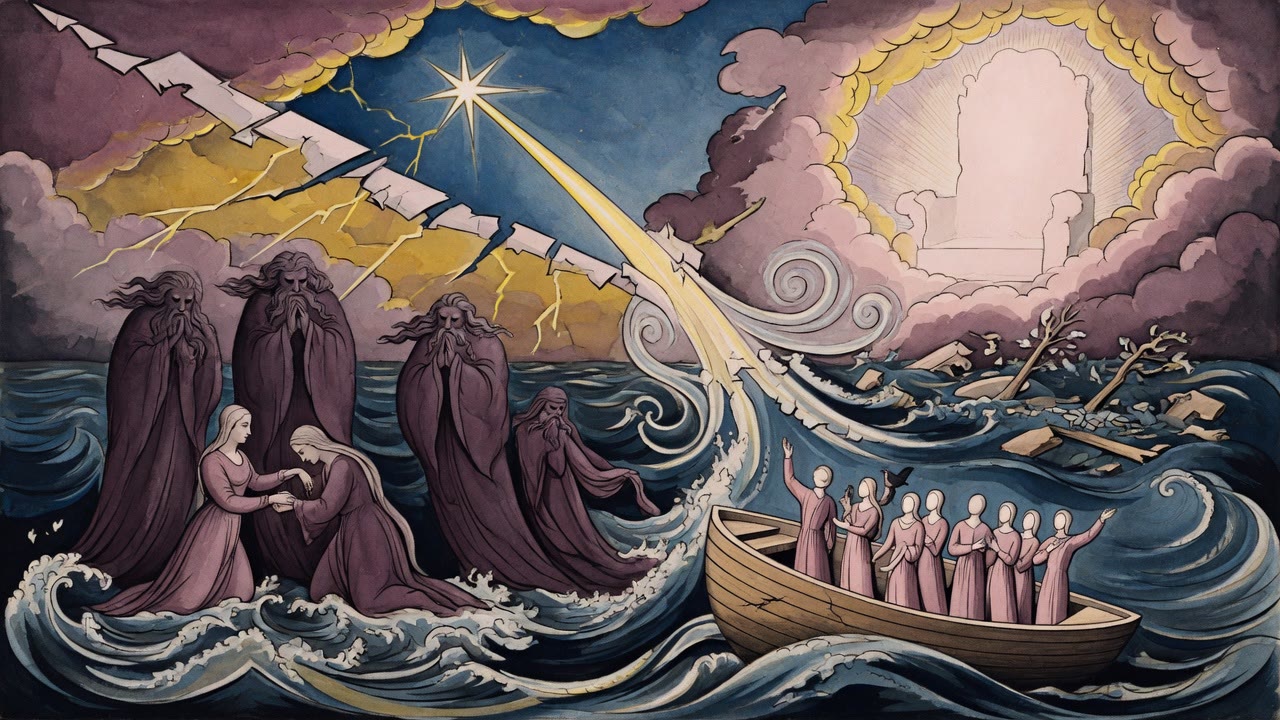
Generations thickened with appetite. Licentiousness filled the roads until chaos no longer chose between good and wicked; it killed both, the way a flood does not read ledgers before it takes a house. A generation wrote its wrongs into contracts and callings that broke every boundary, and the world answered with water.
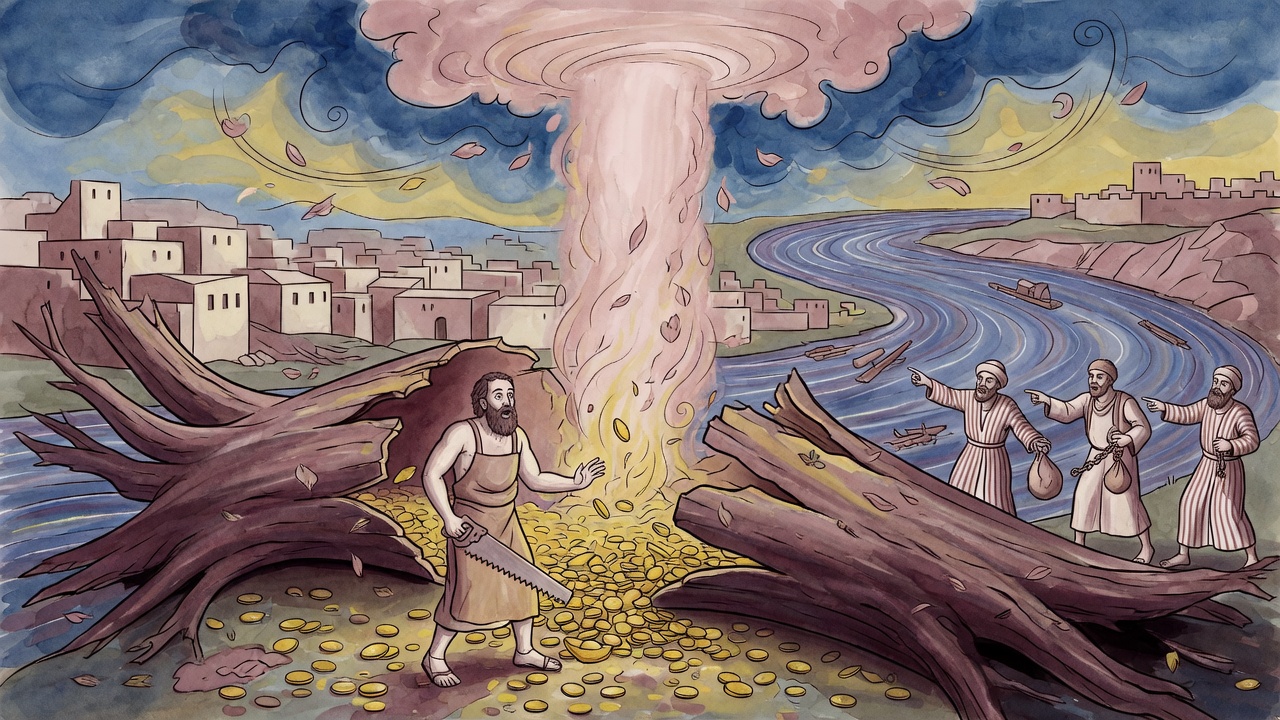
Noah was the hunted quiet kind, not chased by one brother's arm but crowded by a whole age that found his building ridiculous. He cut wood while they laughed. He sealed pitch while they married their hungers to whatever would have them. Hammers rang. Mockers gathered. Children of the street threw words at the rising hull the way other children throw stones.
When the fountains broke, the laughers learned that God had already sided with the one man they treated as a fool. "I have seen you to be righteous before Me in this generation," the voice had said, and the ark rose while the pursuers of every soft limit went under (Genesis 7:1).
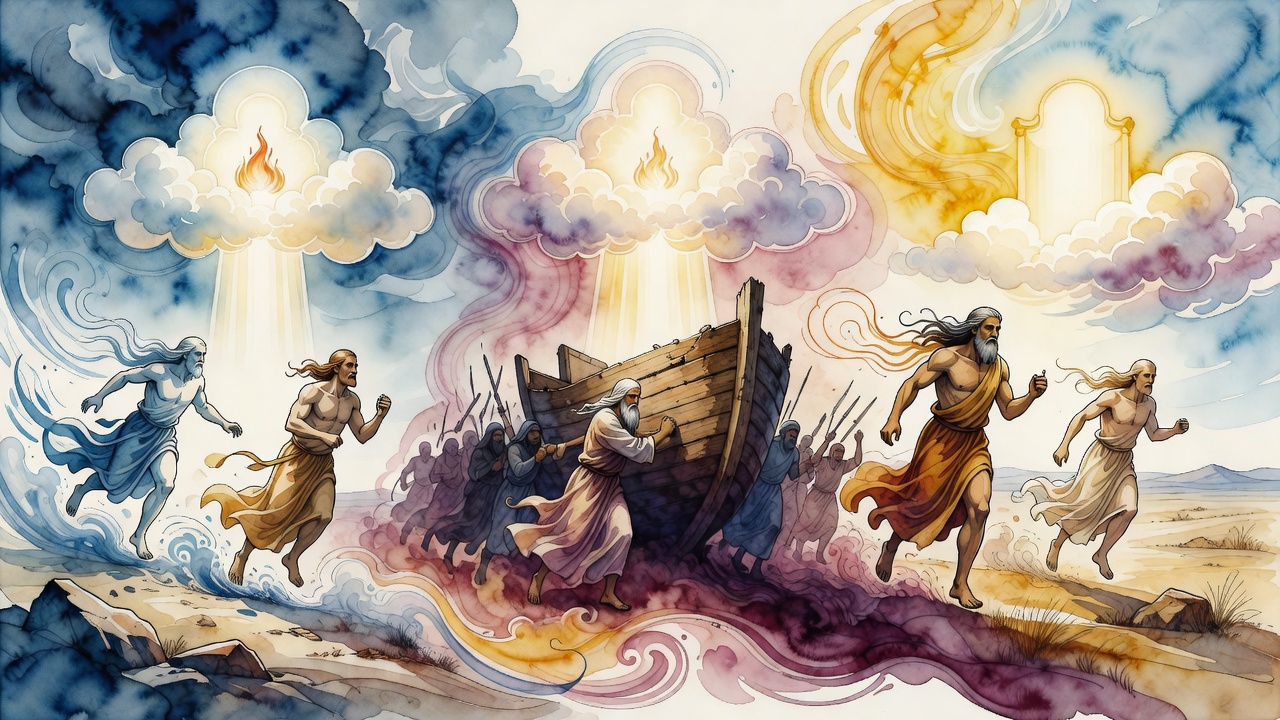
Noah did not win a street fight. He survived a verdict. The persecuted remnant floated. The culture that had pressed him to the edge of mockery became silt on mountain shoulders. A world that hunted the straight man with scorn was scoured until only the straight man's household walked out breathing. Inside the dark tiers, animals shifted and sons moved with hay on their hands, and outside the old jokes drowned without an audience left to finish them.
Furnace, Road, and the Chosen Name
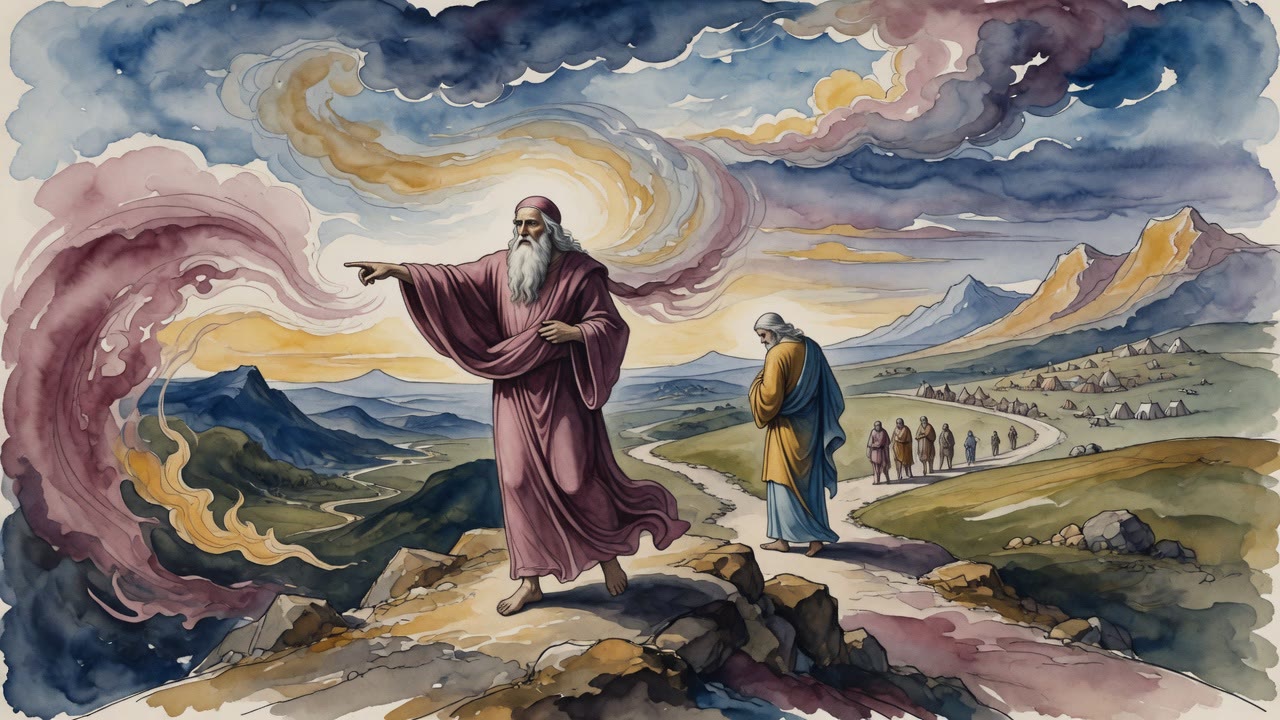
Abraham stood in a different court of danger. Nimrod's age had no patience for a man who smashed idols and walked away from the local gods. Heat was prepared for him. The furnace of that youth clung to his name the way smoke clings to wool. Whether flames licked his skin or the road of exile did the burning, the pressure was the same: the powerful wanted him smaller, quieter, gone.
God chose Abram anyway, pulled him toward a land and a name larger than any furnace (Nehemiah 9:7). He left Ur with a wife, a nephew, and a promise that made every border official look temporary. Later Isaac would dig wells the Philistines stopped up, and still the blessing would sit on him until even rivals admitted the Lord was with him (Genesis 26:28). Jacob would run from a brother's knife-hand and wake with a ladder and a promise on a stone pillow. The chain does not require the hunted to be flawless. It requires that heaven keep preferring the one under the boot to the boot.
Abraham bought no safety with clever silence. He broke clay gods, crossed rivers, and stood where kings could reach him. Each time the reach of the powerful failed to close the case. The hunted kept receiving the next instruction. The hunters kept receiving only the echo of a man already farther down the road.
Egypt and Canaan as Roads of Chase
Egypt and Canaan became names of warning for practices that invite the same chaos the Flood generation learned too late. "You shall not act in accordance with the practices of the land of Egypt… and… of the land of Canaan" sits beside a doubled claim: "I am the Lord" written twice, a double edge (Leviticus 18:2-4). The same God who exacted from Flood, Sodom, and Egypt will exact from anyone who walks their roads of unbound appetite.
Those roads are not only maps. They are chases. A people that fills the land with licentiousness turns the weak into prey and calls the prey ordinary. Chaos comes and kills good and wicked together, because once the hunt is the culture, the flood does not pause to sort white wool from black. The persecuted poor and the hunted righteous are not separate files in that court. Both sit under the same seeking eye.
So the warning is not a tourist pamphlet. It is the field of Abel stretched across nations. It is Noah's street laughter written into imperial habits. It is Nimrod's heat offered as public policy. Walk those practices and the old pattern wakes: heaven turns from the driver to the driven, and the driver's strength becomes the evidence against him.
Abel in the field. Noah under the laugh of his street. Abraham under a tyrant's heat. Different centuries. Same turn of the head above. The driver always looks larger on the ground. The record above keeps naming the driven, and the blood, the ark, and the road out of the furnace keep proving the naming is not a metaphor.
← All myths