Parshat Lech Lecha5 min read

God Spoke the Same Lech Lecha Twice to Abraham

From furnace stoker to priest like Adam, Abraham answered lech lecha leaving home and again climbing Moriah, ten trials under one shield.

Curated by Arthur · Told by Maggid ·
Table of Contents
  1. Thirteen Years Without Sun
  2. The Same Words at the Hardest Hour
  3. Famine, Sarah, War
  4. The Shield Still Named for Him

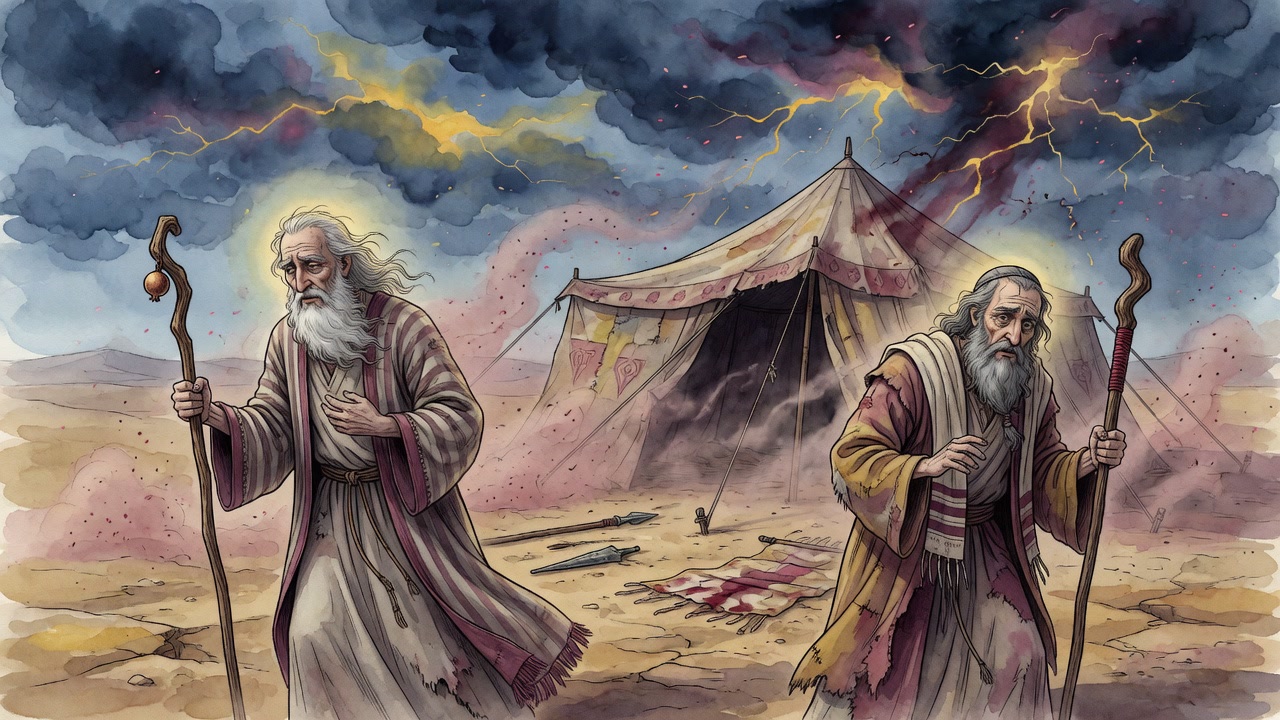
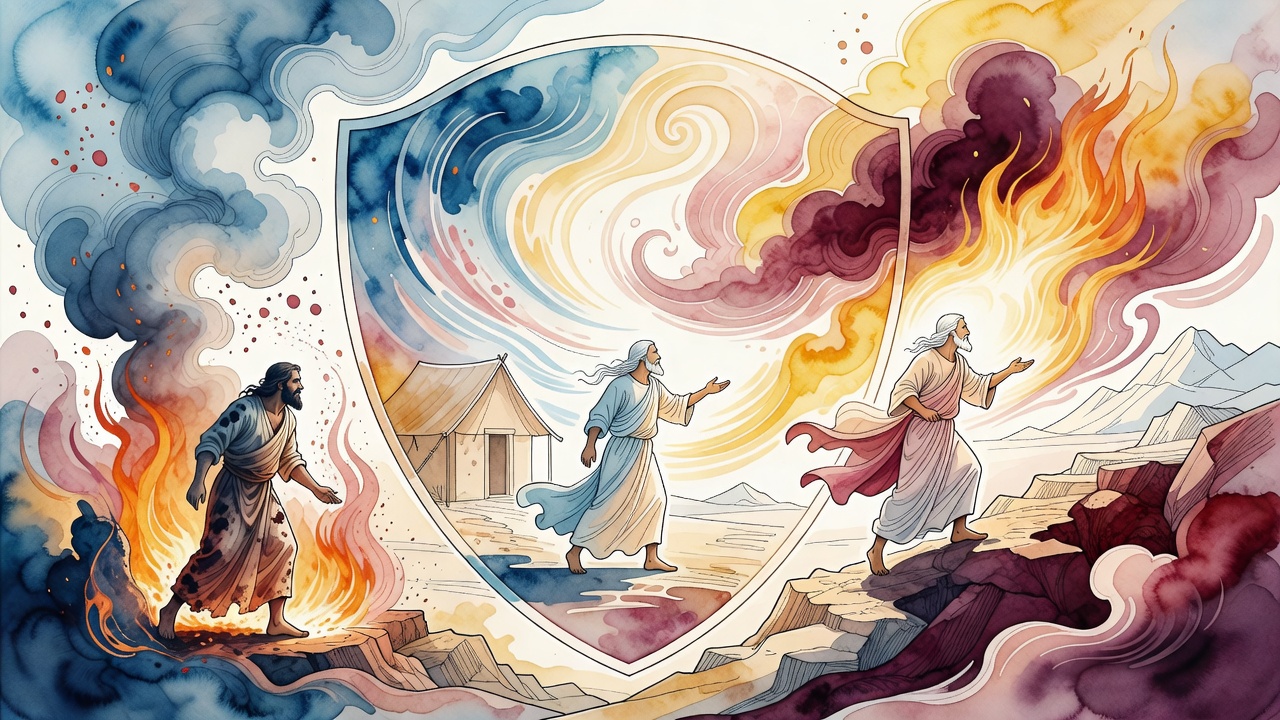
Abraham fed wood into a furnace that was meant to end him at Ur, soot on his face, the lowest place a man can stand before a king pulls him out.
God Spoke the Same Lech Lecha Twice to Abraham Click for full size

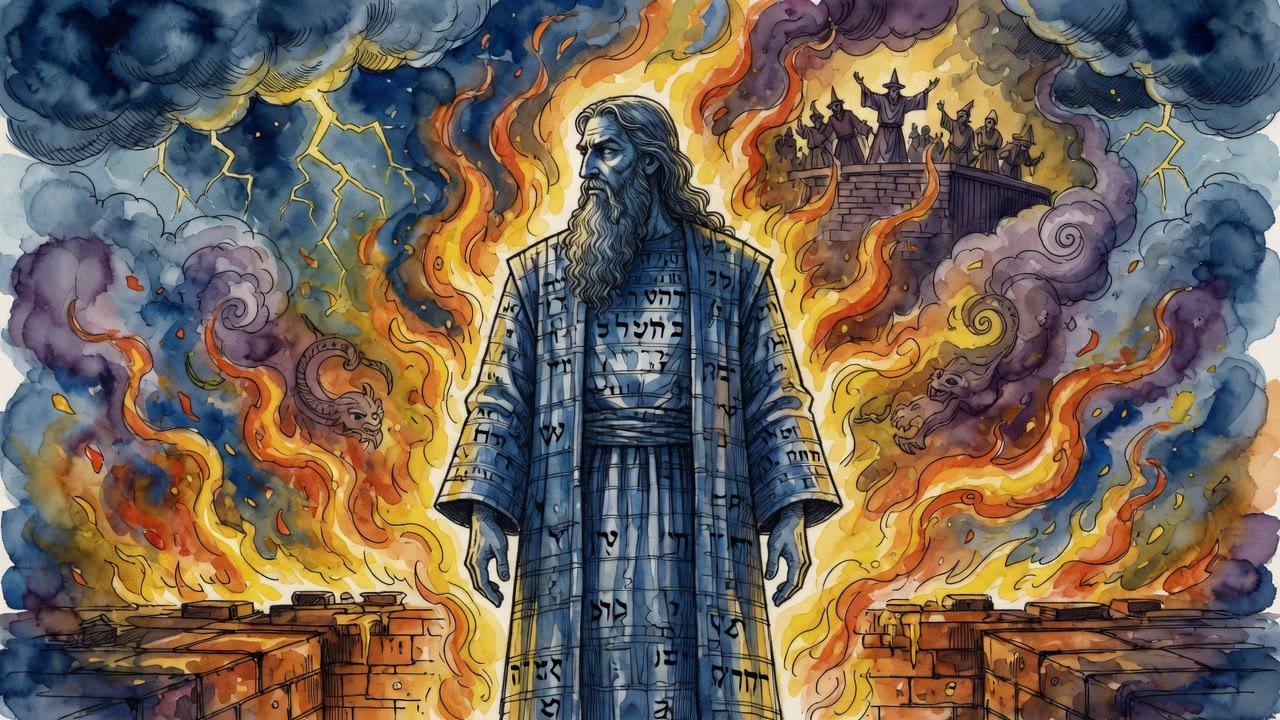
The midrash tells it as a king walking into a province and spotting a handsome young man feeding the public bathhouse fire, the lowest job in town. "Come with me," the king said, "and I will set you up in my palace." The young man followed. Before long he held high office. The courtiers hissed: yesterday a stoker, today one of us. That is what God did for Abraham. Come after Me, and I will make you a High Priest like Adam the first man. "I will make you into a great nation" was elevation as well as nationhood, the rank of sacred service once tied to Malki-Tzedek, priest forever.

Abraham did not begin as royalty. He began among idolaters, as good as the boy at the furnace, and the hand that pulled him free still had more tests to speak.

Thirteen Years Without Sun

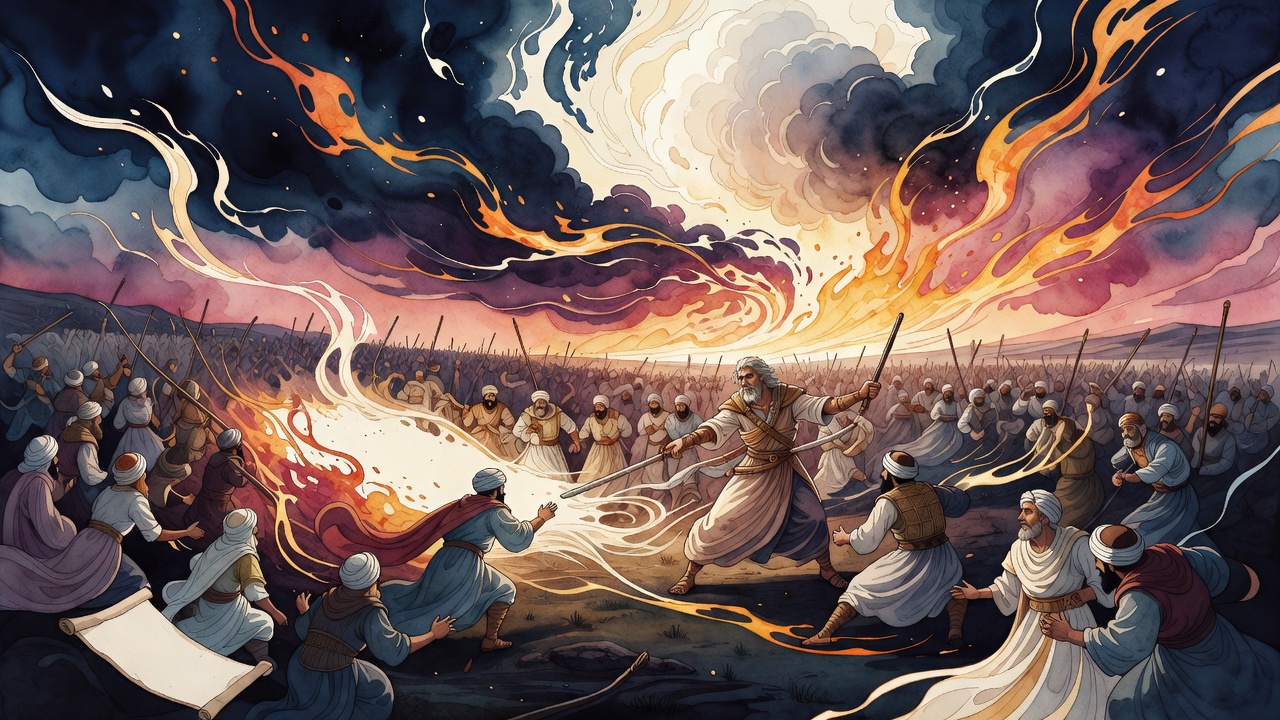
The chain of ten ordeals started before he could walk free under the sky. At his birth kings and astrologers wanted him dead, so he lay hidden underground for thirteen years, never seeing sun or moon, and emerged speaking the holy tongue and scorning idols. Then ten years of prison. Then the furnace at Ur, from which the King of Glory reached out His right hand and pulled him free.

Then the first lekh lecha: go forth from your land, your birthplace, your father's house. The sages call uprooting the hardest thing a person can bear. Abraham answered a call he did not fully understand, and that schooling began to train his ear.

The Same Words at the Hardest Hour

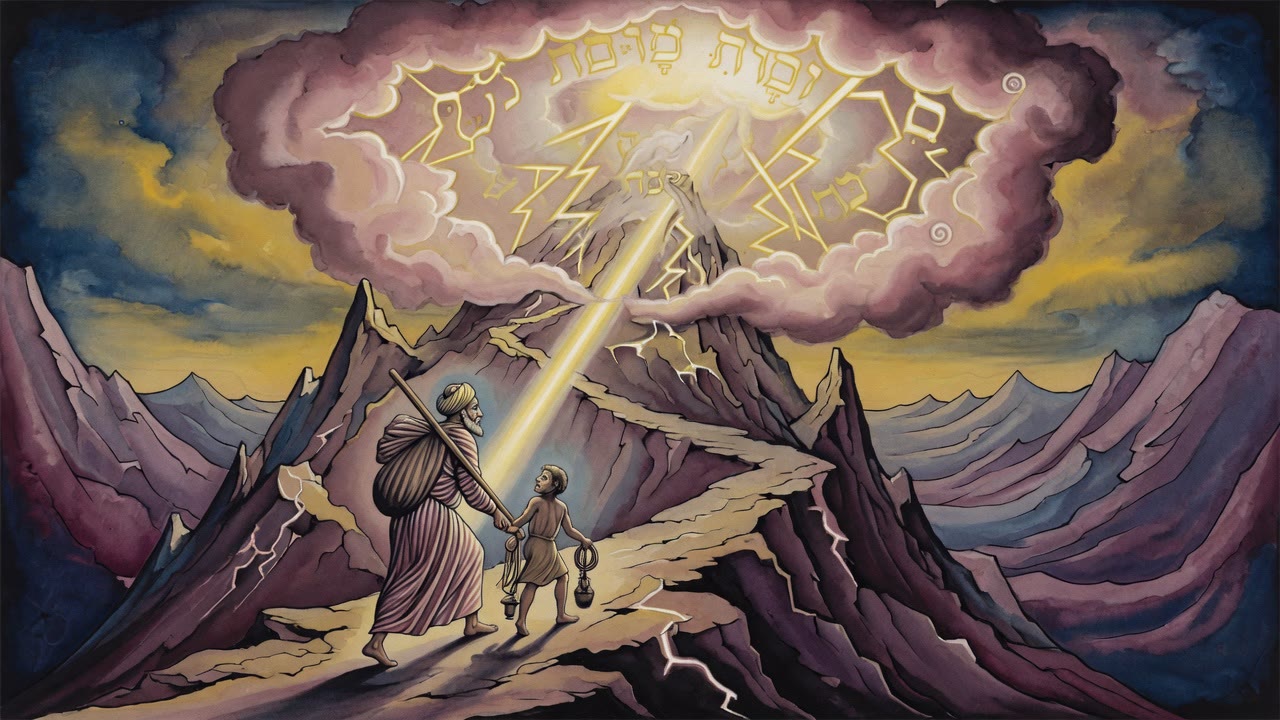
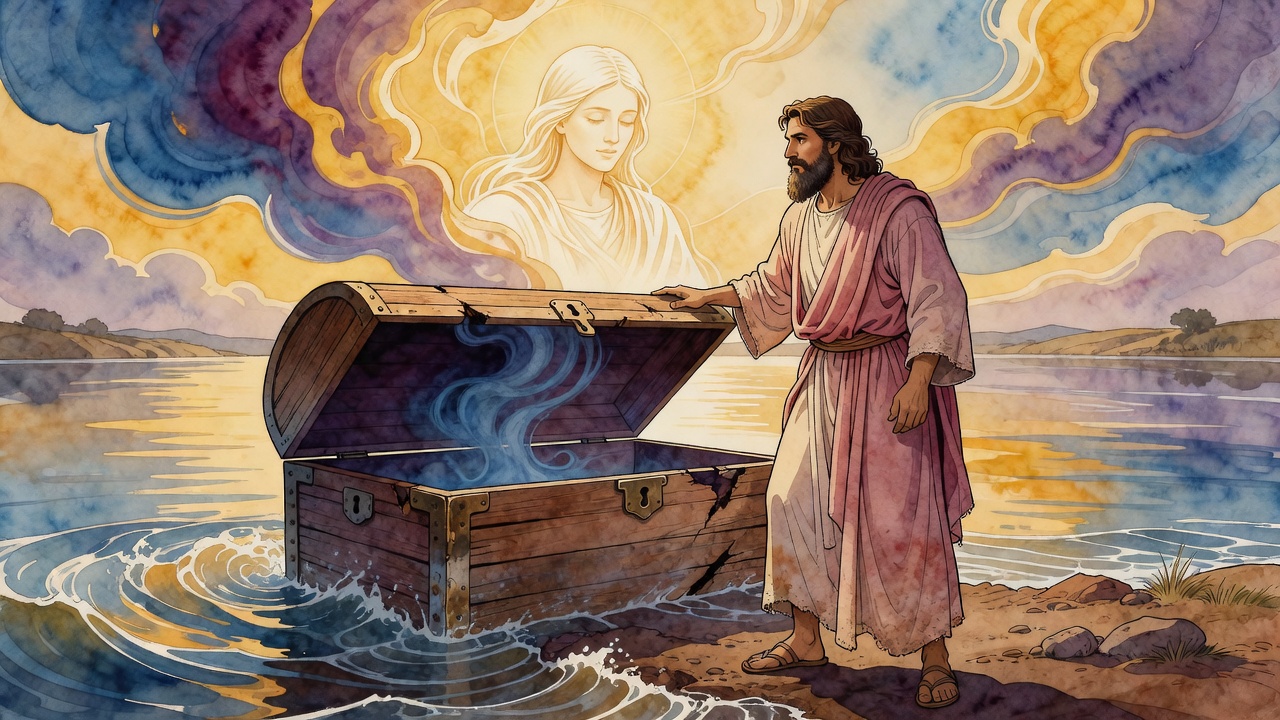
Years later the last and hardest summons opened with those very same words. Go forth to the land of Moriah. The Holy One did not vary the language. The first trial and the last trial were spoken in one phrase. The journey that began with leaving everything behind would end with the offer of the one thing he could not bear to lose, and both were called by the same name.

Abraham recognized the voice. The God who tested him last was the God he had already trusted first. He had learned at the beginning how to walk without a map. That learning carried him to the top of the mountain.

Famine, Sarah, War

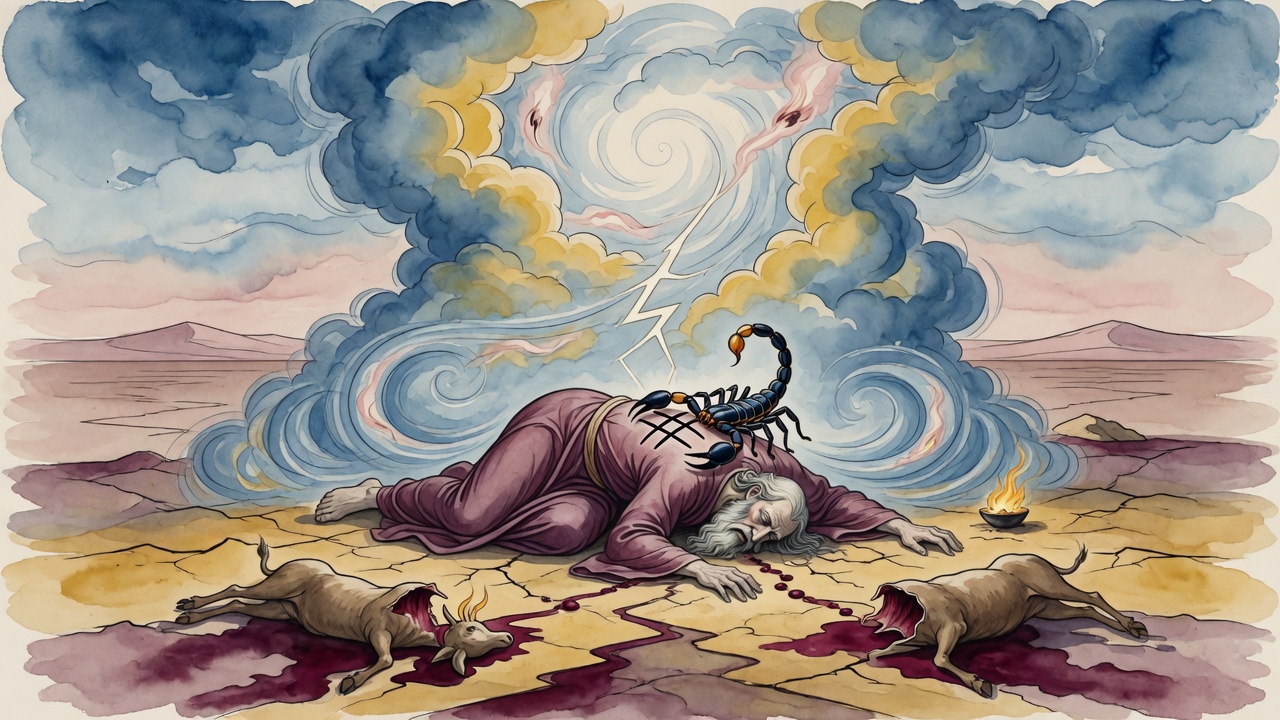
Between the two lekh lechas the middle trials cut deep. A famine aimed at Canaan alone drove him toward Egypt. Sarah was seized on the very night that would one day be Passover. Pharaoh was struck with plagues, a rehearsal of later blows, and in his infatuation deeded wealth, the land of Goshen, and his daughter Hagar as a servant. Then the war of the kings. Warned by an escaped fugitive the sages identify with the angel Michael, Abraham took Eliezer and pursued the armies to recover Lot.

When the victory was won he refused all credit. Not by the strength of my hand, but by the strength of Your right hand, he prayed. Heaven answered: Blessed are You, Shield of Abraham.

The Shield Still Named for Him

The stoker stood in the palace and still smelled of smoke. The priest like Adam still remembered the furnace. Every trial left a mark that later prayer would wear as a name. Shield of Abraham is not a title invented for comfort. It is the answer spoken over a man who left home twice under the same two words, once to lose his past and once to risk his future, and who kept walking both times because the voice did not change.

The first lekh lecha tasted of dust and goodbye. Abraham packed what a stoker-turned-traveler packs: little, and all of it heavy with memory. His father's house receded like a shoreline. He did not know the land ahead would starve him, seize his wife, and send him to war for a nephew. He only knew the two words and the hand that had already pulled him from fire.

On Moriah the same two words arrived with a knife's weight. Isaac walked beside him asking about the lamb. Abraham heard the old summons inside the new one and understood that recognition is not the same as ease. The ear that learned to answer without a map must answer again when the map ends at an altar. He bound his son because the voice had not changed its signature, only its cost.

Between those bookends the shield was forged: underground years, prison years, furnace, famine, Sarah's night in Egypt, the pursuit of kings with Eliezer at his side. Each ordeal left a scar that later liturgy would polish into a name. Shield of Abraham is what heaven said when a man refused to credit his own sword. The courtiers of the world still hiss when a furnace-stoker wears priestly rank. The story does not care. It cares that he kept walking when the words repeated.


← All myths

From the tradition

Sources

3 sources

The texts behind this telling. Some cards carry a translation of the source; others are our own retelling of it, and each card says which. Every card links out to the original.

Yalkut Shimoni on Torah 63:2Yalkut Shimoni on Torah

Translation of the source text.Torat Emet (Yalkut Shimoni) · CC-BY-NC

Another interpretation: The Holy One, blessed be He, said to him: The first trial and the last trial I will test you with none but this same expression: "Go forth from your land," and "Go forth to the land of Moriah."

Full source
Yalkut Shimoni on Torah 63:4Yalkut Shimoni on Torah

Translation of the source text.Torat Emet (Yalkut Shimoni) · CC-BY-NC

Another interpretation: To what may the matter be compared? To a king who entered a province and saw a handsome young man stoking the fires in the bathhouse furnace. The king said to him: Come with me, and I will place you in my palace. He went with him, and he made him an officer [pakostor]. The members of the palace said: Yesterday he was stoking the furnace, and now he is an officer! So too the Holy One, blessed be He, said: Come after Me, and I will make you a High Priest like Adam the first man. As it is stated, "And I will make you into a great nation," and it is written, "And the priest who is greatest among his brothers," and it is written, "You are a priest forever according to the order of Malki-Tzedek."

Full source
Yalkut Shimoni on Torah 68:1Yalkut Shimoni on Torah

Translation of the source text.Torat Emet (Yalkut Shimoni) · CC-BY-NC

"And the woman was taken into Pharaoh's house" (Genesis 12:15). With ten trials was our father Abraham tried, and he withstood them all. The first trial: when he was born, all the great men of the kingdom and the astrologers sought to kill him, and he was hidden in the earth thirteen years, so that he saw neither sun nor moon; afterward he came out speaking the holy tongue and despising the idols. The second trial: he was imprisoned in the house of bondage ten years, three in Kutha and seven in Kardo, and some say seven in Kutha and three in Kardo; afterward they cast him into the fiery furnace, and the King of Glory stretched out His right hand and saved him, as it says, "I am the LORD who brought you out of Ur of the Chaldees" (Genesis 15:7). The third trial: He uprooted him from his father's house, as it says, "And the LORD said to Abram, Get you out" (Genesis 12:1); and uprooting is harder for a person than anything. The fourth trial: "And there was a famine in the land" (Genesis 12:10) and not in all the lands, but only in the land of Canaan, to try him and to bring him down to Egypt. The fifth trial: Sarah was taken, as it says, "And the woman was taken into Pharaoh's house," and that night was the festival day of Passover, and the Holy One, blessed be He, brought upon Pharaoh and his house plagues, to make known that this is how He would in time strike his land, as it says, "Yet one plague more will I bring upon Pharaoh" (Exodus 11:1). Out of his love for her, Pharaoh wrote her a deed of her marriage-portion from all his wealth, whether silver or gold, whether menservants or maidservants and lands, and he wrote her the land of Goshen; therefore Israel dwelt in the land of Goshen; and he wrote her his daughter Hagar, one of his concubines, as a maidservant. And Abimelech too took her, and Michael the angel came down and drew his sword over him to kill him. The sixth trial: all the kings came upon him to kill him, and they said, let us begin first with his nephew, and for Lot's sake they took all the goods of Sodom and Gomorrah; and Michael came and told Abraham, as it says, "And there came one that had escaped" (Genesis 14:13) this is what is written, "And that which has wings shall tell the matter" (Ecclesiastes 10:20). And why was his name called "the one who escaped"? Because at the hour when the Holy One, blessed be He, cast Samael down from his holiness from heaven, he seized the wing of Michael to drag him down with him, and the Holy One, blessed be He, delivered him from his hand; therefore his name was called "the one who escaped." And of him Ezekiel said, "One that had escaped out of Jerusalem came to me, saying, The city is smitten" (Ezekiel 33:21). Abraham rose early and took his three disciples, Aner, Eshkol, and Mamre, and Eliezer, and pursued them as far as Dan, and there he was delayed because of the idolatry, as it says, "and the other in Dan" (1 Kings 12:29). And there he left his three disciples and took his servant Eliezer, the letters of whose name number three hundred and eighteen, and pursued them as far as the left of Damascus. "And he divided himself against them by night" (Genesis 14:15) this is the night on which Israel went out of Egypt "and he brought back all the goods." Abraham stood and prayed: Master of the worlds, not by the strength of my hand did I do this, but by the strength of Your right hand, for You are a shield to me in this world and in the world to come. And those on high answered and said: Blessed are You, O LORD, Shield of Abraham.

Full source