God Took Enoch Before His Goodness Could Break
Every father in the list had a death beside his name. At the seventh name the page went blank. Enoch was gone. No grave was marked.
Table of Contents
 Click for full size
The Seventh Name Left No Grave
Adam died. Seth died. Enosh died. The names rose and fell like steps worn into stone. A man lived, fathered children, counted out his years, and the book closed over him with the old phrase. Then Enoch appeared in the seventh place, and the rhythm broke.
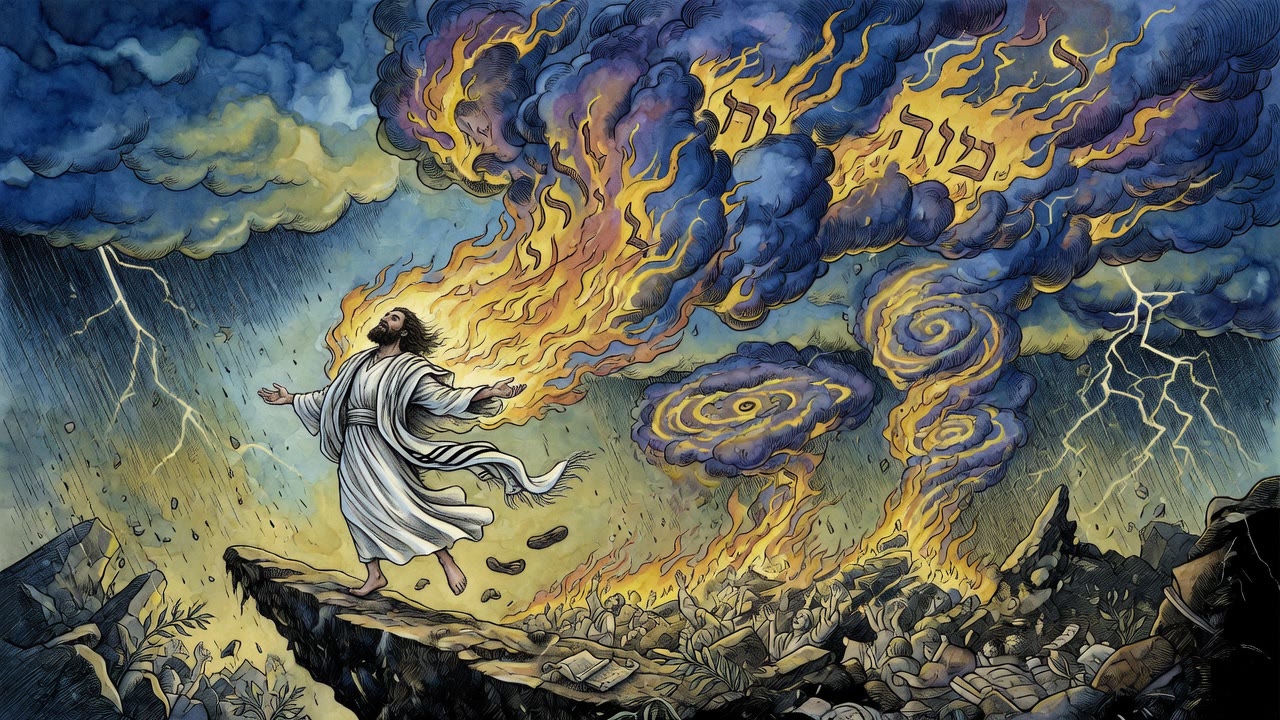
He walked with God. Then he was gone, because God took him.
No grave. No death notice. No last age sealed with the usual words. The page simply opened under his feet.
The book of Adam's descendants already held strange freight. Adam had learned every craft the world would later claim as its own: houses, tools, even the scoring of parchment so a book could be written at all. The family record was the first archive of human skill. It was also a ledger of endings. Every line taught how a life finishes when time is done with it. Enoch's line refused to finish.
He Walked Both Ways
Enoch was not simple. One hour he turned toward God. Another hour he turned away. He could walk with God, but the walk did not mean his feet never slipped. A wicked man can be judged by the road he has chosen. Enoch was a weather change. Heaven saw the swing before the world did.
In the morning his face was lifted. He named God and kept the Name in his mouth like bread. By nightfall a different hunger had him, and the Name sat unused. He was not a hardened villain. He was worse for prediction. The next step was never guaranteed.
God watched the pendulum. While righteousness still had hold of him, God spoke a decision no neighbor heard.
"While he is still in his righteousness, I will take him away."
Not as a trophy snatched from earth. Not as a public miracle for astonished neighbors. More like a father seeing a child near the edge of a roof and crossing the room before the next step happens. The hand came down while Enoch was still walking in the right direction.
The Hand Came Down in Time
They judged him on Rosh Hashanah, the day heaven weighs every life. The account was still in credit. God closed it there. His unfinished goodness was saved from its own next hour.
The taking was quiet. No chariot in the street. No fire for a crowd to point at. One day Enoch was in the house. The next day the house had no master, and the genealogy had a hole where a death date should have been. His sons would die in order, as his fathers had. He would not.
Some later voices wanted the hole to mean glory. Perhaps he had gone alive where Elijah would later go, lifted out before decay could touch him. Perhaps the seventh man had become a heavenly survivor. That reading shines. It also lets him float too cleanly into a sainthood the walk had not earned.
The other reading is harsher and closer to the swing. Enoch was not too pure for the world. He was too unstable to be left to himself. The door closed while light was still inside the room.
The Heretics Brought Elijah
Years later heretics stood in front of Rabbi Abahu and put a verse on the table like a claim.
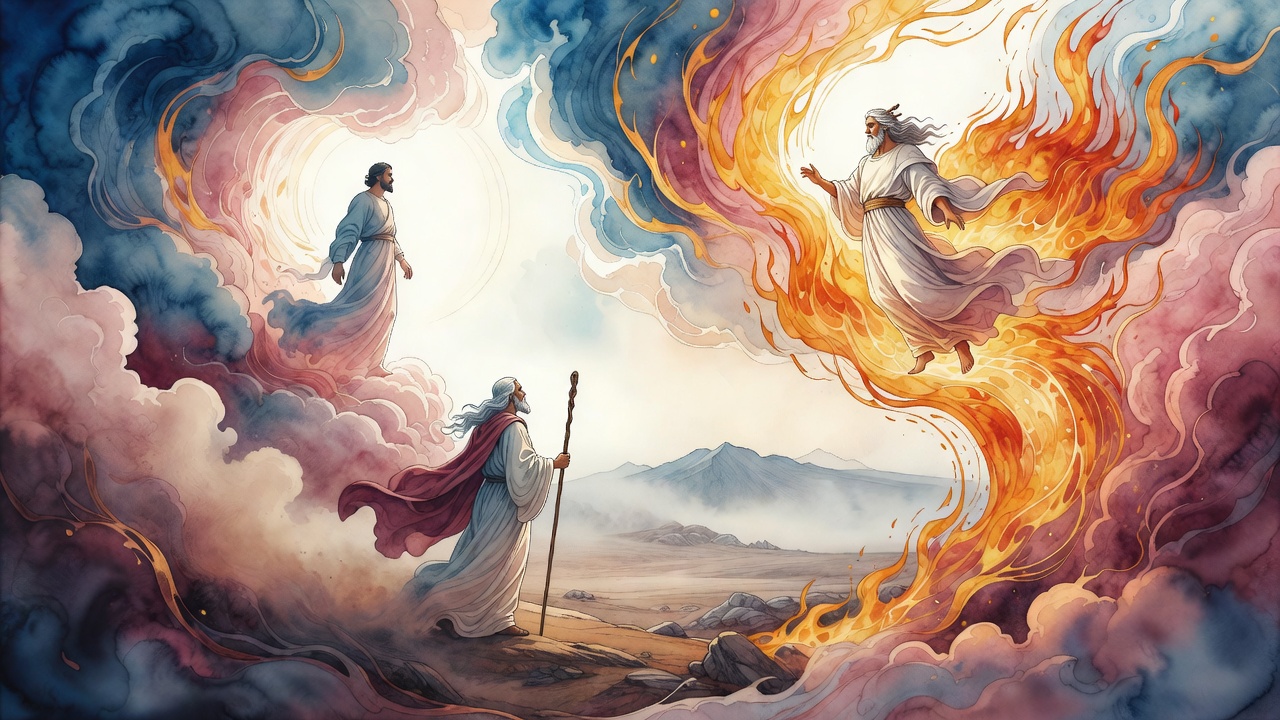
"We do not find death mentioned in regard to Enoch," they said. They had a proof ready. Taking is said here, and taking is said of Elijah, when the Lord was taking the master from upon Elisha's head (2 Kings 2:5). Elijah rose in storm and fire. Why should Enoch's taking mean anything smaller?
Abahu did not give them the chariot. He gave them another taking. "Behold, I am taking from you the delight of your eyes," God told Ezekiel, and then Ezekiel's wife died (Ezekiel 24:16). There was no storm there. No fiery horses waiting by the road. There was a wound left in a house. The same verb can mean a grave.
A noblewoman asked Rabbi Yosei the same question. He told her that if the verse had stopped at "Enoch walked with God," he might have granted her reading. It does not stop. It says he was no longer, because God took him. He was no longer in this world. The silence after the seventh name is not a trumpet. It is a closed door.
The early world was young enough that every life taught the generations what a human being could become. Adam taught craft and failure. Cain taught blood. Enoch's house stood empty. The book of descendants had a blank where a grave should have been. He had walked with God. Then the door closed while the light was still in the room.
← All myths