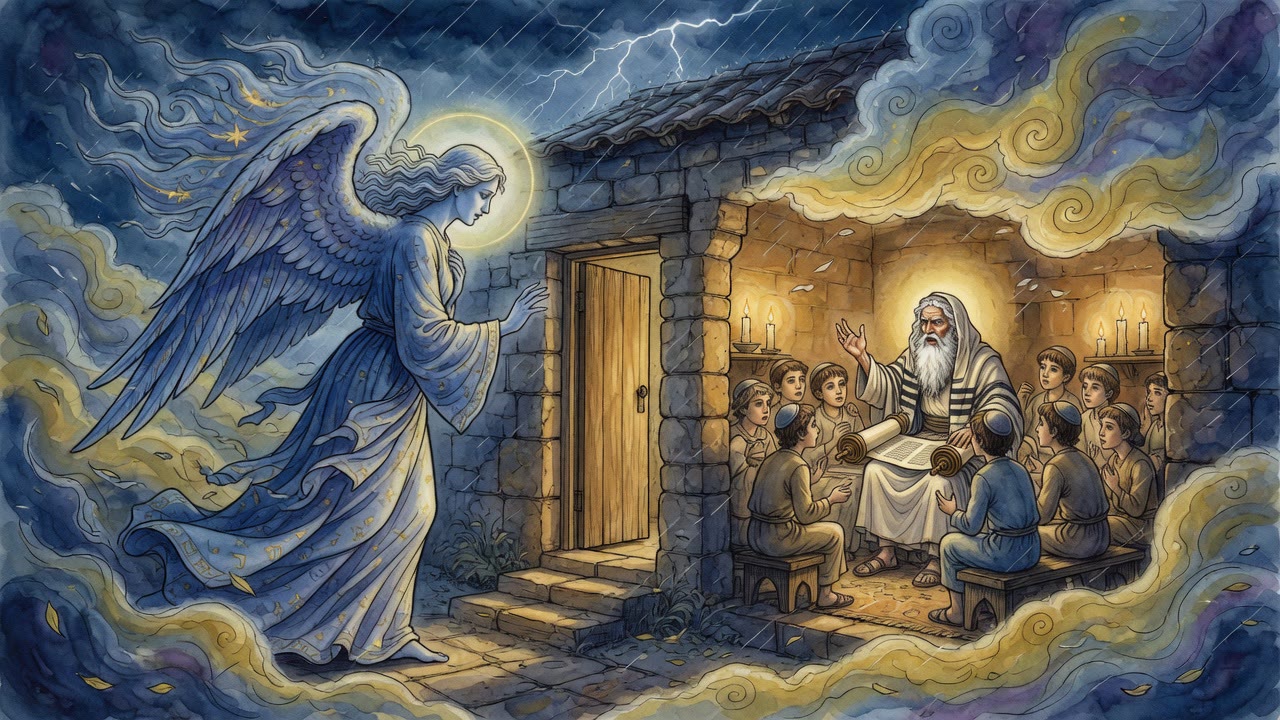
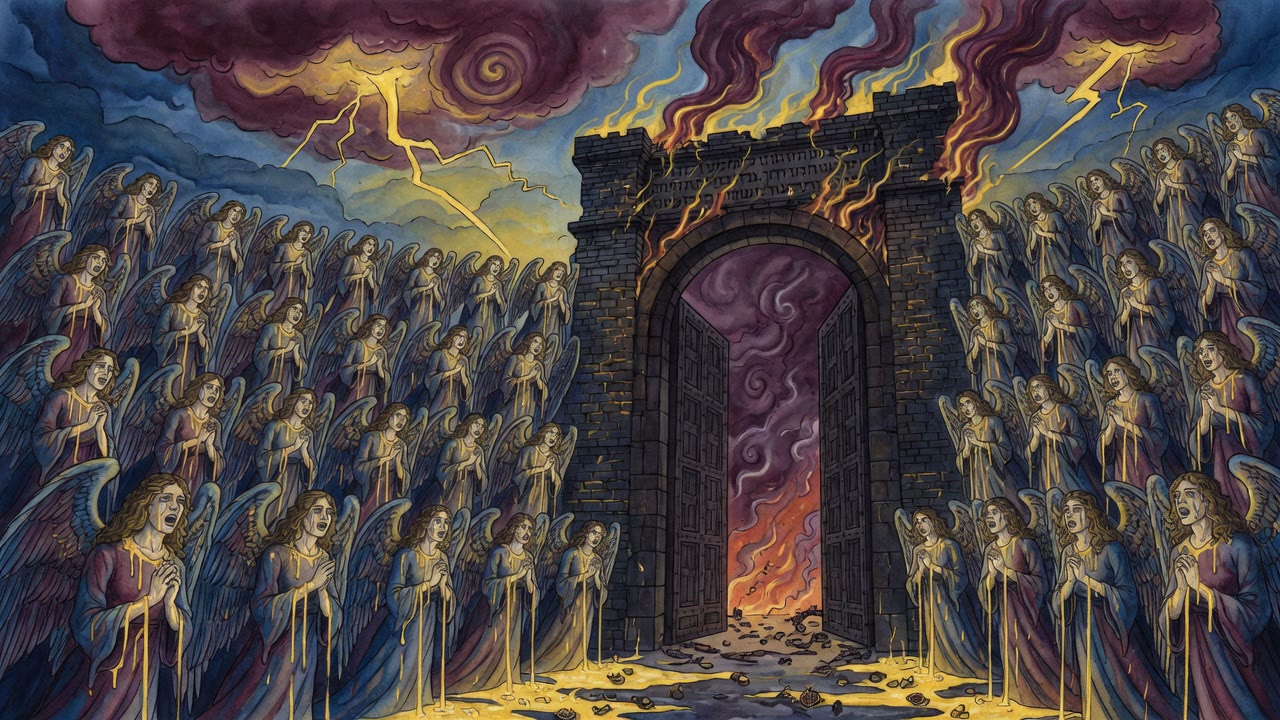
Elijah Showed Rabbi Joshua Gehinnom and the New Jerusalem
Men hung by their hair, their eyes, their tongues. Rabbi Joshua had studied the afterlife for years. Elijah was offering him the door.
Table of Contents
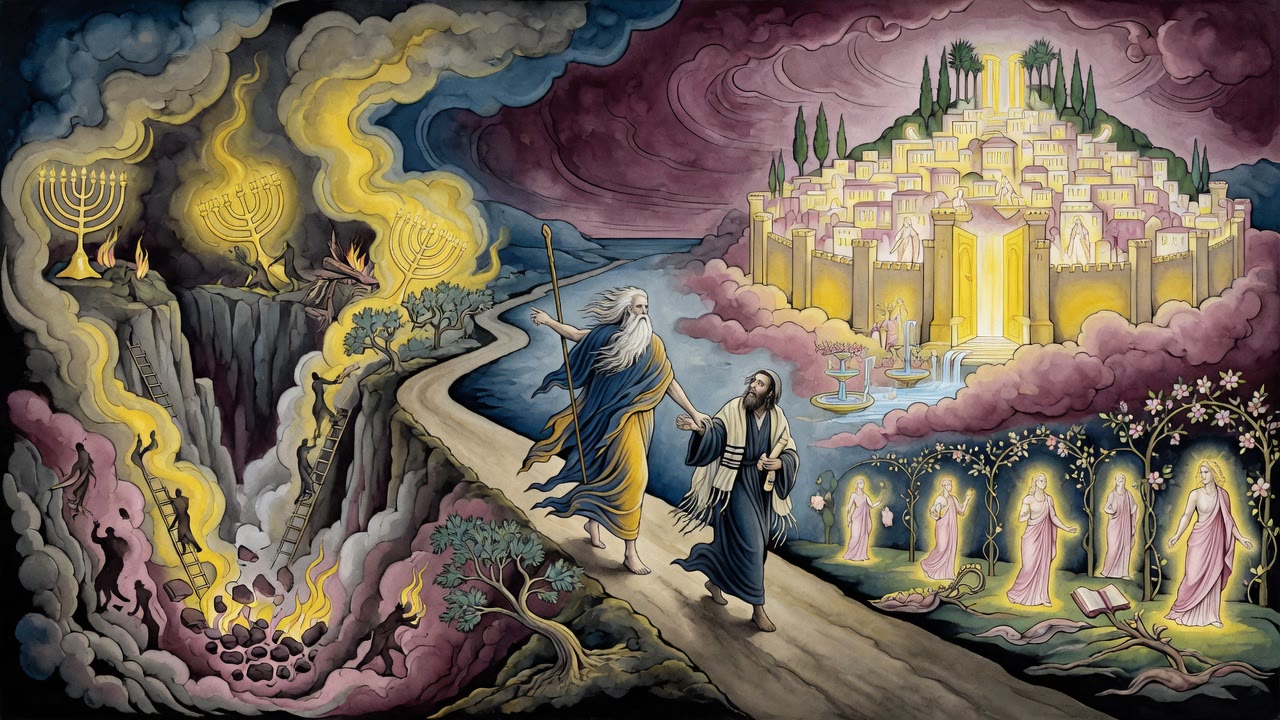 Click for full size
The Offer on the Road
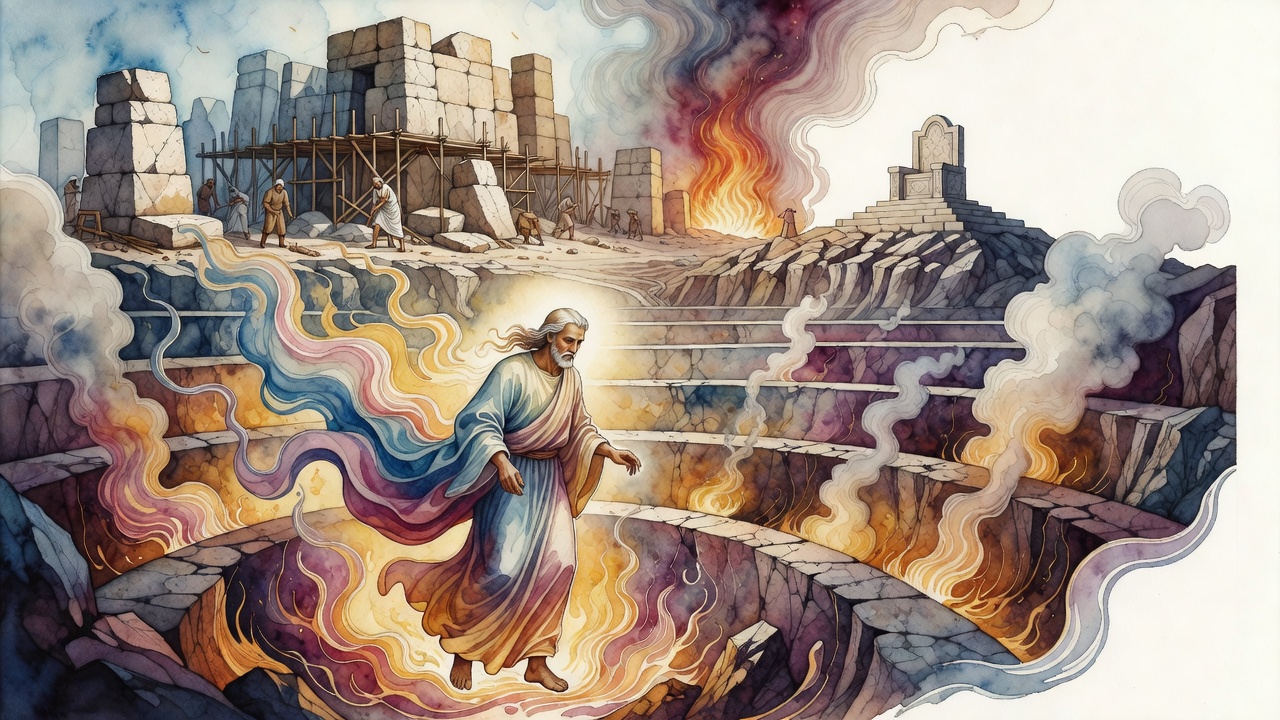
Elijah was already walking beside him when Rabbi Joshua ben Levi noticed. The prophet never announced himself in these meetings. He was simply there, as if the road had always had a second set of feet on it.
He had an offer, not a greeting. "Would you like to see the gates of Gehinnom (גיהנם)?"
Rabbi Joshua said yes. He had spent his life on texts about the world after death. Elijah was offering him a door no page could open. They went together.
Hung by What They Used
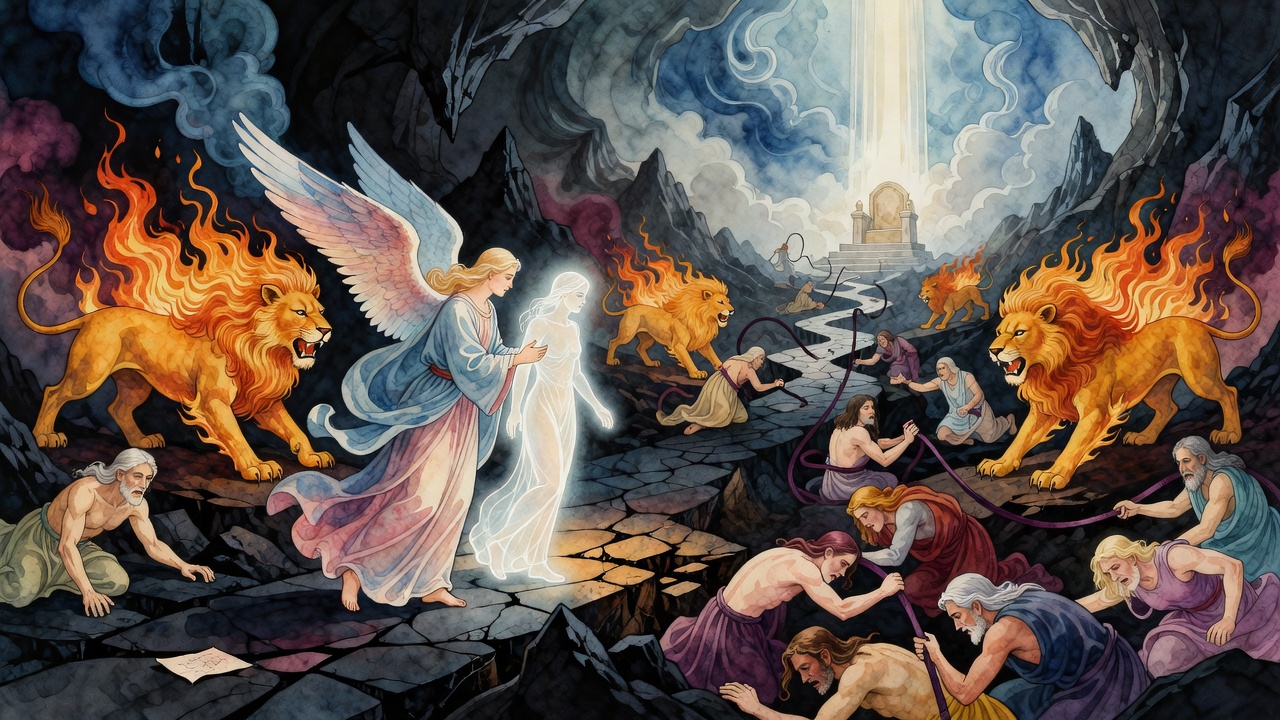
The first chamber was exact in a way that made Joshua's stomach go tight. Men hung by their hair. Elijah named them. These had grown it long to adorn themselves for sin. Others hung by their eyes, which had followed the gaze into transgression. Others by their noses, which had perfumed themselves for the same work. Others by their tongues, which had spread slander. Others by their hands, which had stolen. Others by their feet, which had run to do evil. Women hung by their breasts, for having uncovered themselves to pull men off the path.
Deeper in, men were fed hot coals. These had blasphemed. Others were forced to drink bitter gall. These had eaten on fast days. Others ate fine sand until their teeth broke, and a voice said over them that stolen food had been sweet in the mouth, and this would not be. Some were thrown from fire to snow and from snow to fire, the ones who had driven the poor away empty. Some were driven from mountain to mountain like a flock with death for a shepherd.
Joshua walked. He did not interrupt. Each body part had become the hook. The thing a person had used was the thing that held them now.
Rabbi Shimon Would Not Speak
On another day Elijah found him in a marketplace and tried a different introduction. He offered to put Joshua into speech with the departed Rabbi Shimon bar Yochai, who had gone into a cave in life and had not come back ordinary.
Rabbi Shimon declined. He had already asked Joshua a question. Joshua, in his modesty, had given an answer that did not raise him in the dead sage's estimate. Elijah could open Gehinnom. He could not make a great man spend a conversation he did not wish to spend.
Joshua accepted it. The market went on selling. The prophet did not argue. Even Elijah's introductions had a door that could stay shut.
Gates of Carbuncle
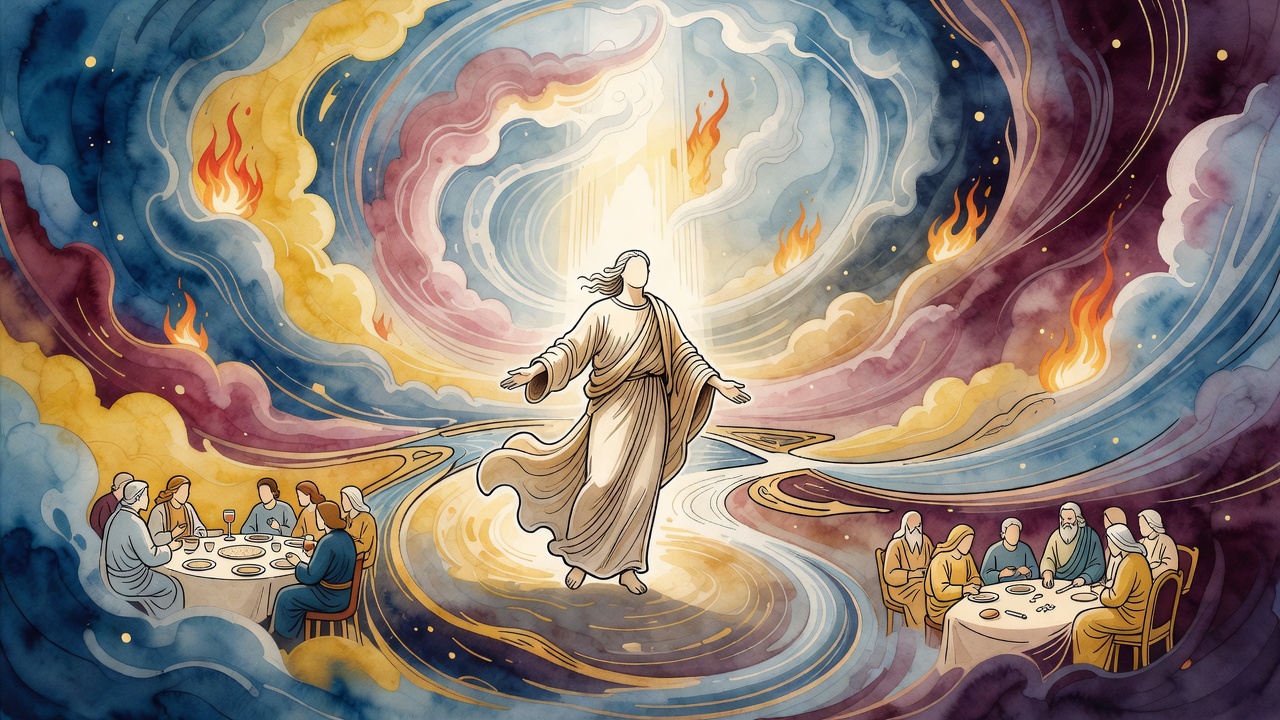
Elijah showed him the other end of the road. Not ash. Not hooks. The Jerusalem that would stand at the end of days, the city not rebuilt by masons but kept until it could descend whole. Not the Jerusalem of occupation. Not the city whose Temple had been reduced to a surviving wall. The New Jerusalem, held in reserve.
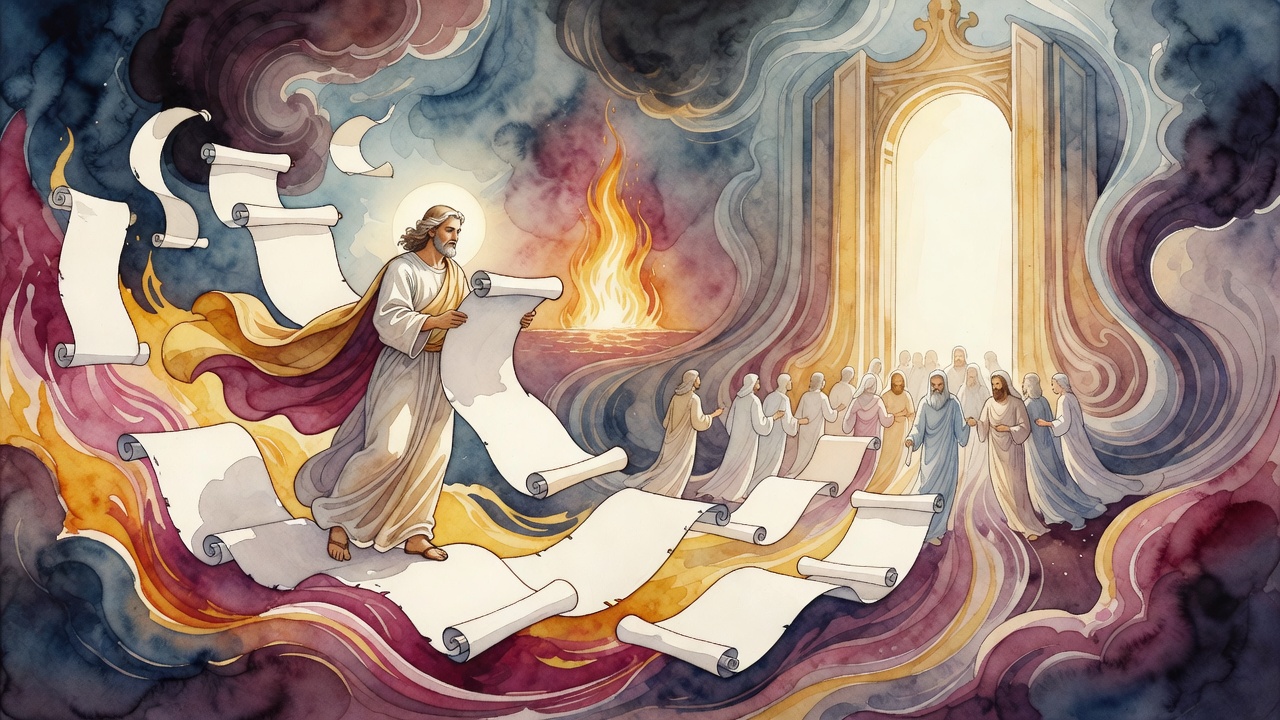
The gates were carbuncle, enormous stones that blazed with their own light. Not reflected light from torches or oil lamps or even the sun. The gates themselves threw brilliance. Joshua stood in front of them and could not find a sentence. The portals were pure light, and the city behind them was a city God had not yet released into time.
He looked until looking hurt. Elijah did not hurry him. The prophet who had offered Gehinnom without warning now let him take the gates at the speed a living pair of eyes could bear.
He Finished the Walk in Silence
Joshua came back from both tours with the same hard pair in his mind. In Gehinnom the punishment fit the tool. Hair for hair. Eye for eye. Tongue for tongue. The gates of Jerusalem were not a fog of comfort. They were stone, carbuncle, a light that did not borrow from any lamp.
He had walked with a prophet who had never died, through corridors of the dead and a city that had not yet been born. The rest of the road he finished without talking. Elijah did not fill the quiet. The market, when they reached it again, sounded too loud, and the ordinary sun on ordinary lintels looked dim after carbuncle, and still it was the sun he had to walk under.
Make room for the son of Levi, Elijah would later call, when Joshua entered Paradise. On this road there was no call. Only the prophet beside him, and the two maps, and the dust.
← All myths