Two Walls of Angels Cry Out for Souls at Gehinnom's Gate
Inside the gate the angel Dumah waits. A soul arriving there has to say aloud its own name, its father's house, and the sin that brought it there.
Table of Contents
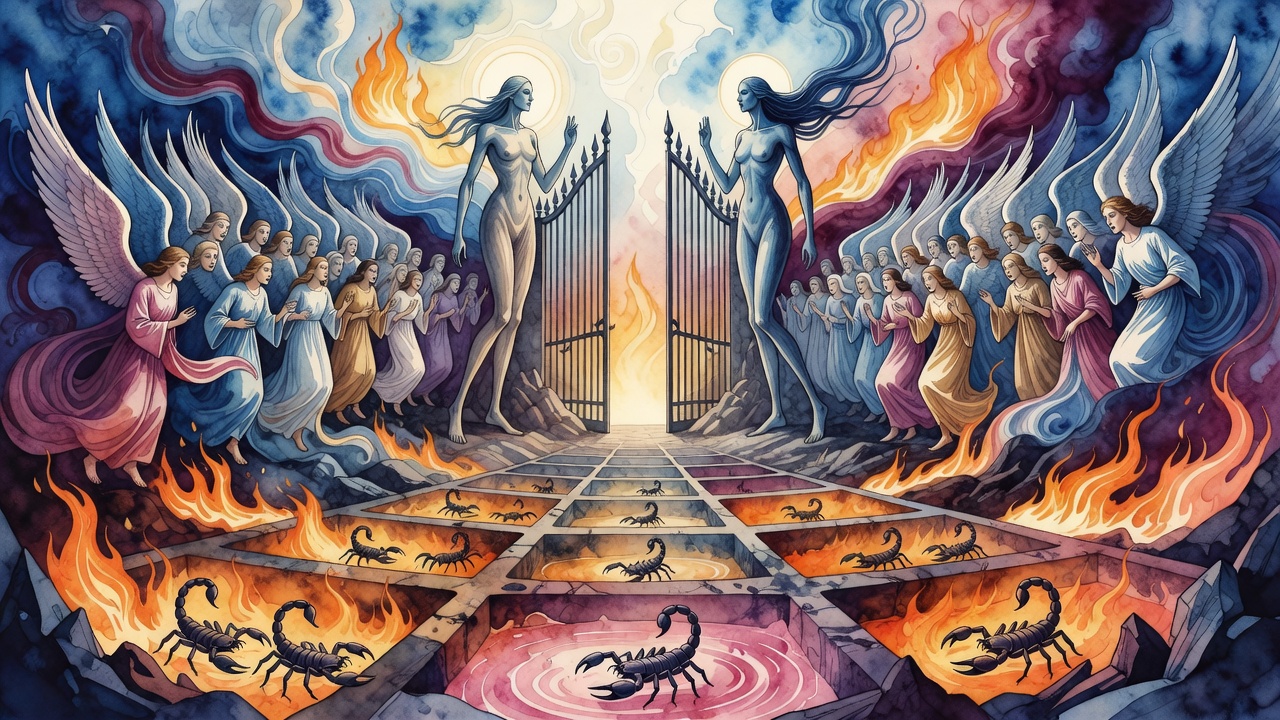
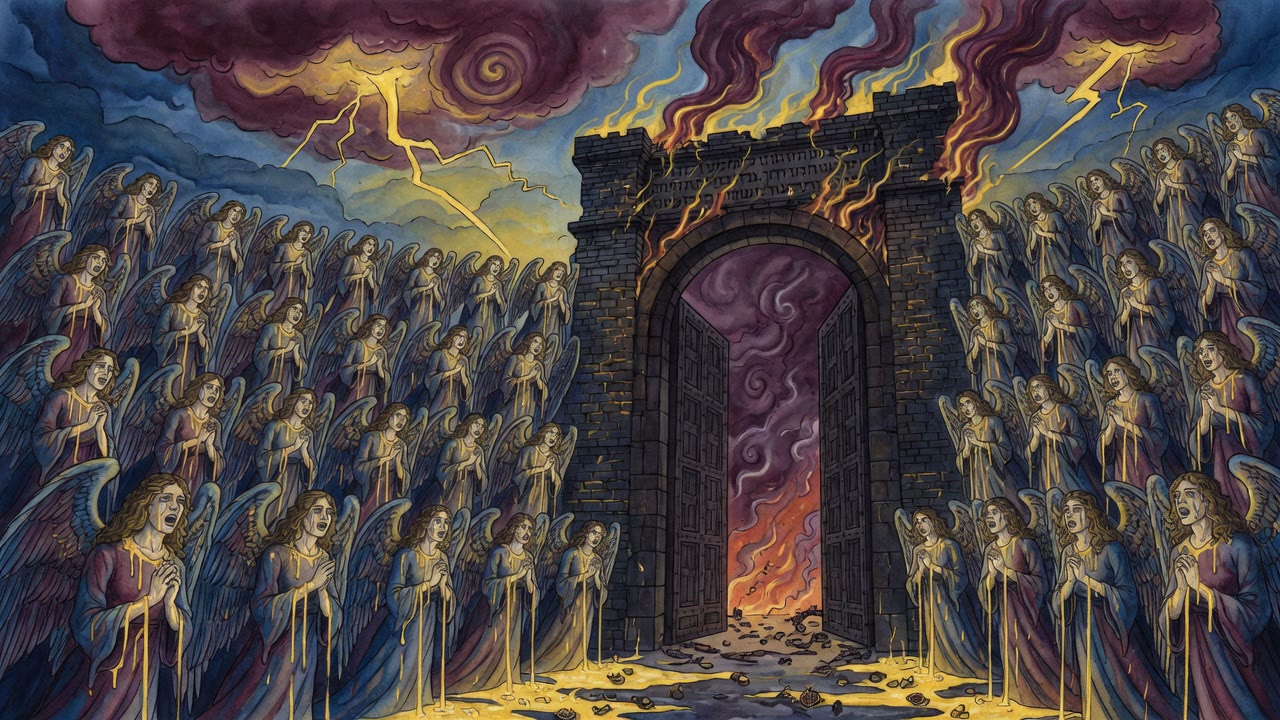
The gate did not open quietly.
 Click for full size
Two walls of angels stood there, and they cried the same word again and again. Give. Give. The sound was not begging. It was demand, appetite, judgment calling for the soul that had spent a lifetime hiding from its own record.
Gehinnom (the place where the wicked are judged after death) began with a voice.
Rabbi Zeira heard the leech's daughters in Proverbs crying Give, Give, and the midrash made those daughters into the walls at the entrance. A soul approached, and the gate itself shouted for truth.
Dumah Received the Soul
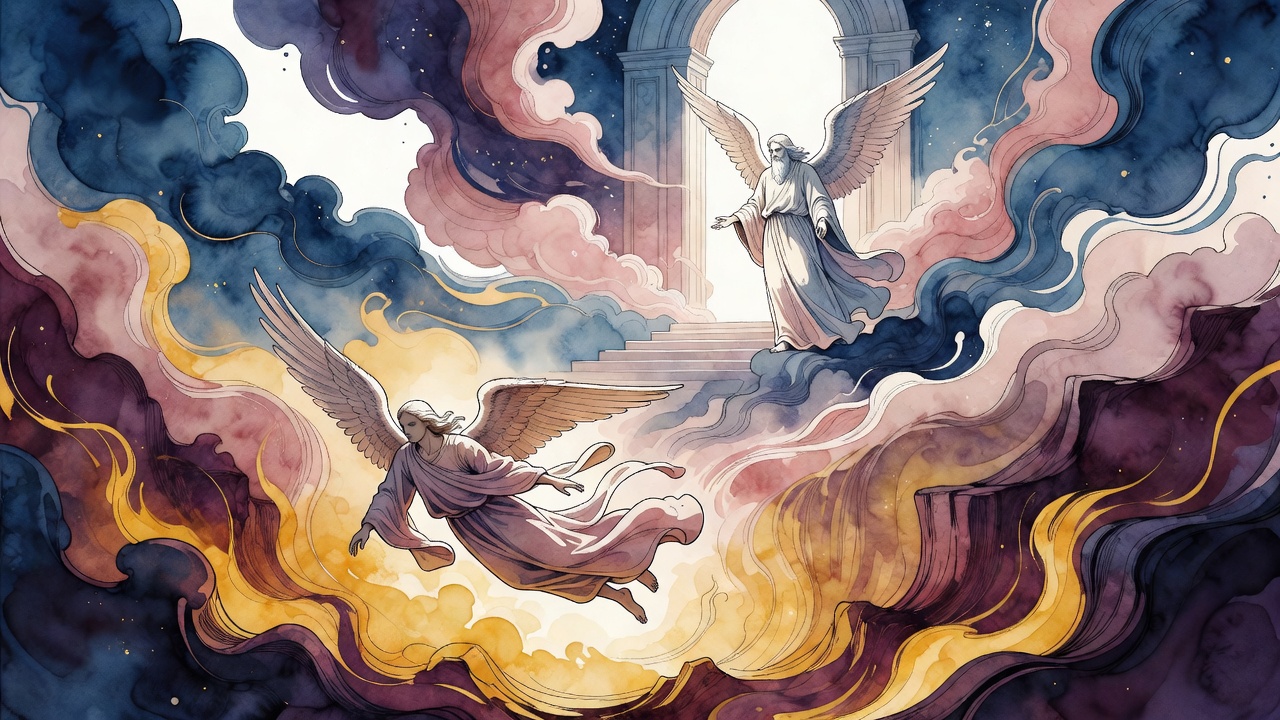
The angel Dumah waited inside.
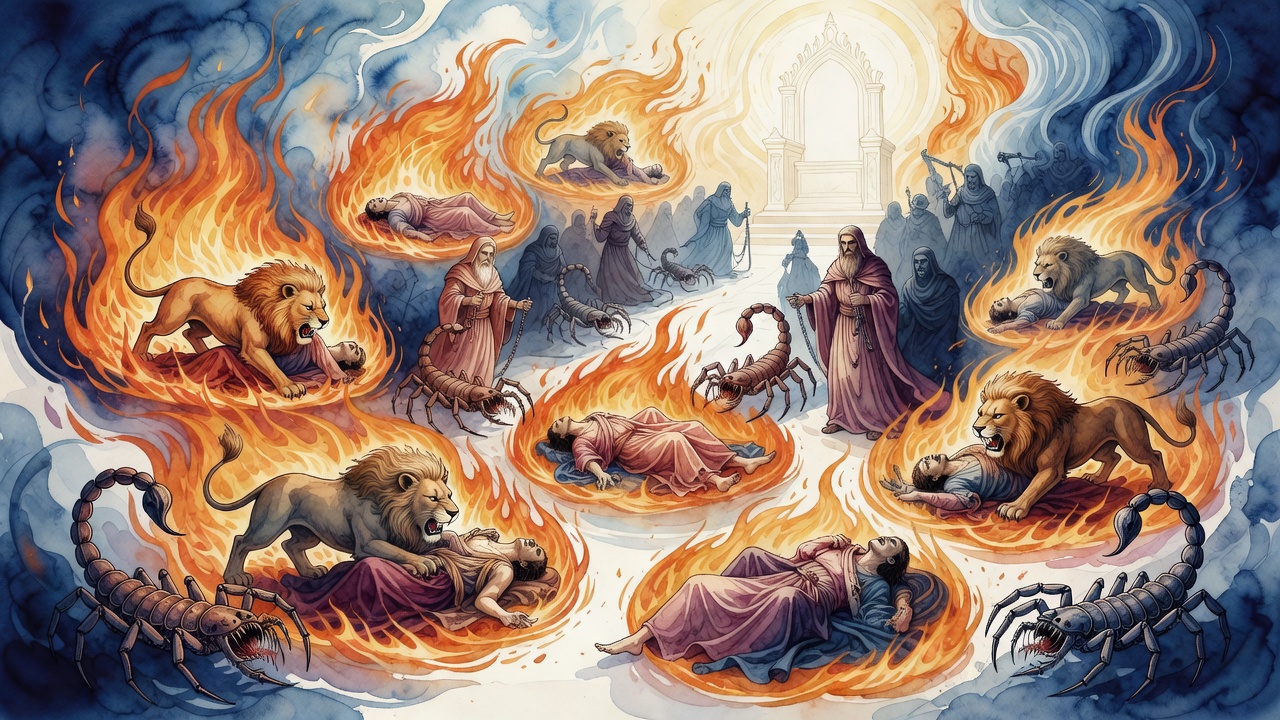
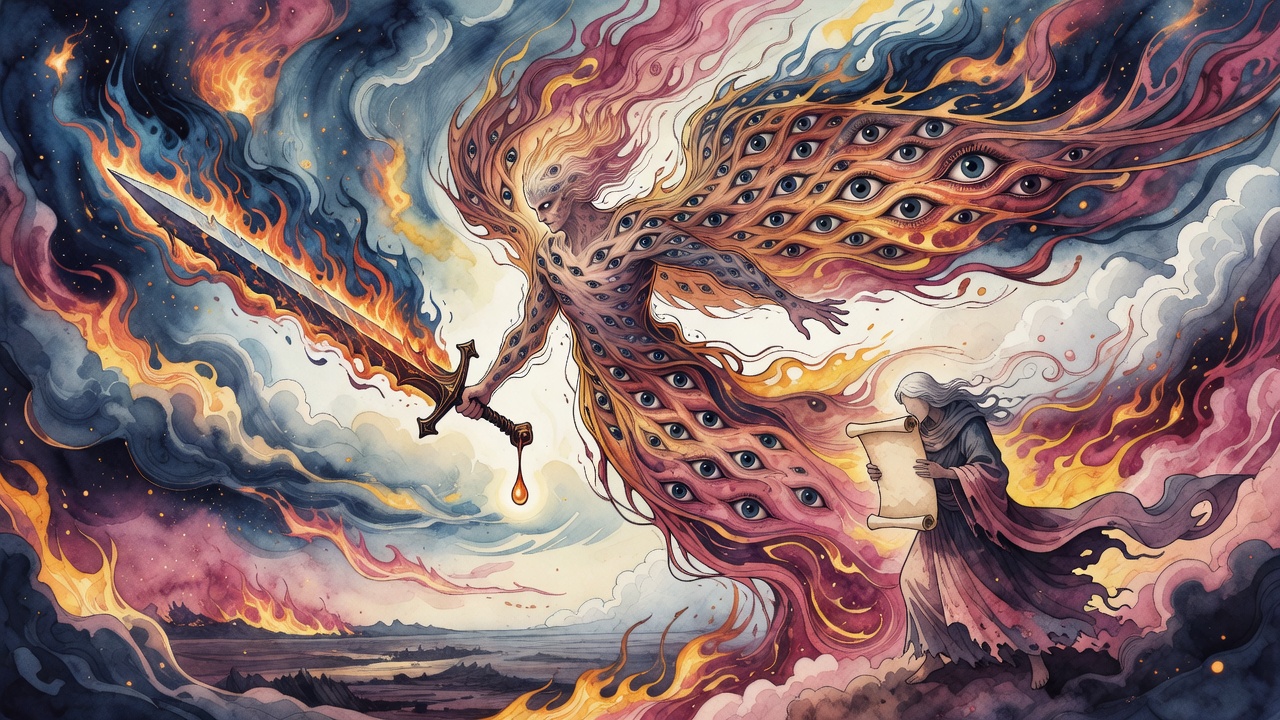
The soul was not led into vague flame. It was received, named, and handed into process. Angels of destruction beat it and exposed its deeds. Every act the person had hidden rose up with terrible clarity. Sin became visible matter.
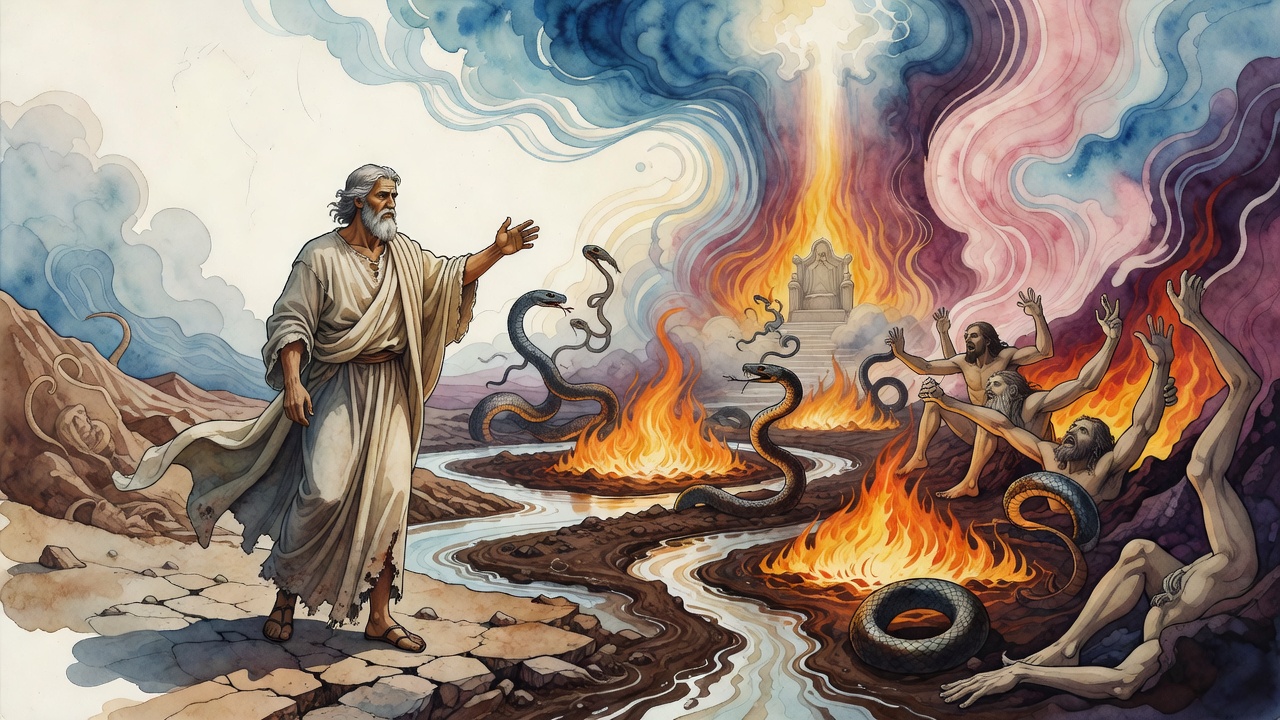
Gehinnom (the realm of judgment after death) had many names because one name could not hold every chamber. Tofteh was the pit reached by the evil inclination, the path a person had walked step by step while pretending not to know where it led. The valley of weeping forced the wicked to speak aloud. A person named himself, named his father's house, and named the sin that brought him there.
The first torment was no longer being able to lie.
Fire, Snow, Darkness, and Shame
The punishments moved through opposites.
Fire burned. Snow froze. Darkness closed. Shame stripped away the last shelter of self-deception. Gehinnom in this vision was not random cruelty. It was memory made unbearable, each chamber giving the soul back the shape of what it had done.
Some fires were ordinary only in name. Some were black. Some consumed with a force no earthly flame could teach. The place groaned from one end of the world to the other, and still the groaning did not drown out confession.
The soul could not edit the life anymore. It could only face it.
Eden Set the Other Table
The same collection holds another door.
In the Garden of Eden, the righteous enter a feast and refuse to begin without the Host. Wine preserved from creation waits. The hidden reasons of Torah open. God comes in and sits with them, and the table becomes reward, understanding, and nearness all at once.
That feast makes Gehinnom sharper.
Both places are forms of revealed truth. In Eden, the righteous discover why the commandments mattered. In Gehinnom, the wicked discover why their deeds mattered. One table is set with wine from creation. One gate cries Give. Both insist that nothing done in the world has vanished.
The First Mercy Was Truth
The midrash leaves a narrow mercy inside the terror.
Confession is painful because it ends the reign of falsehood. A soul that can finally say what it did has crossed the first threshold out of concealment. Gehinnom forces speech from the place where evasion used to live.
The angel walls cry Give because judgment demands the real person, not the mask. Dumah receives what arrives. The fires, snow, darkness, and shame do their work. Somewhere beyond them stands the possibility that truth, even terrible truth, is the first movement toward repair.
At the gate, the angels keep crying. The soul keeps answering until there is nothing left to hide.
The contrast with Eden also guards the image from despair. Judgment is not the only furniture of the next world. A feast is set elsewhere. A Host enters elsewhere. The same God who lets angel walls demand confession also sits with the righteous when hidden reasons finally open.
That does not soften the gate. It makes the gate part of a larger order. The afterlife is not forgetfulness. It is disclosure. The righteous receive disclosed Torah as food and wine. The wicked receive disclosed deeds as fire and shame.
Rabbi Yehoshua ben Levi's tours of the unseen world belong to that same hunger for disclosure. The living want to know what stands behind the veil because ordinary life hides too much. Gehinnom answers with the harsh side of revelation. Eden answers with the sweet side. Neither place allows the soul to pretend the world was weightless.
The gate cries Give because the life must be handed over whole.
Nothing there is decorative. The walls cry because the gate has a mouth. The chambers burn because deeds have texture. Even the snow and darkness are not scenery. They are the climate of a soul meeting itself without escape.
← All myths