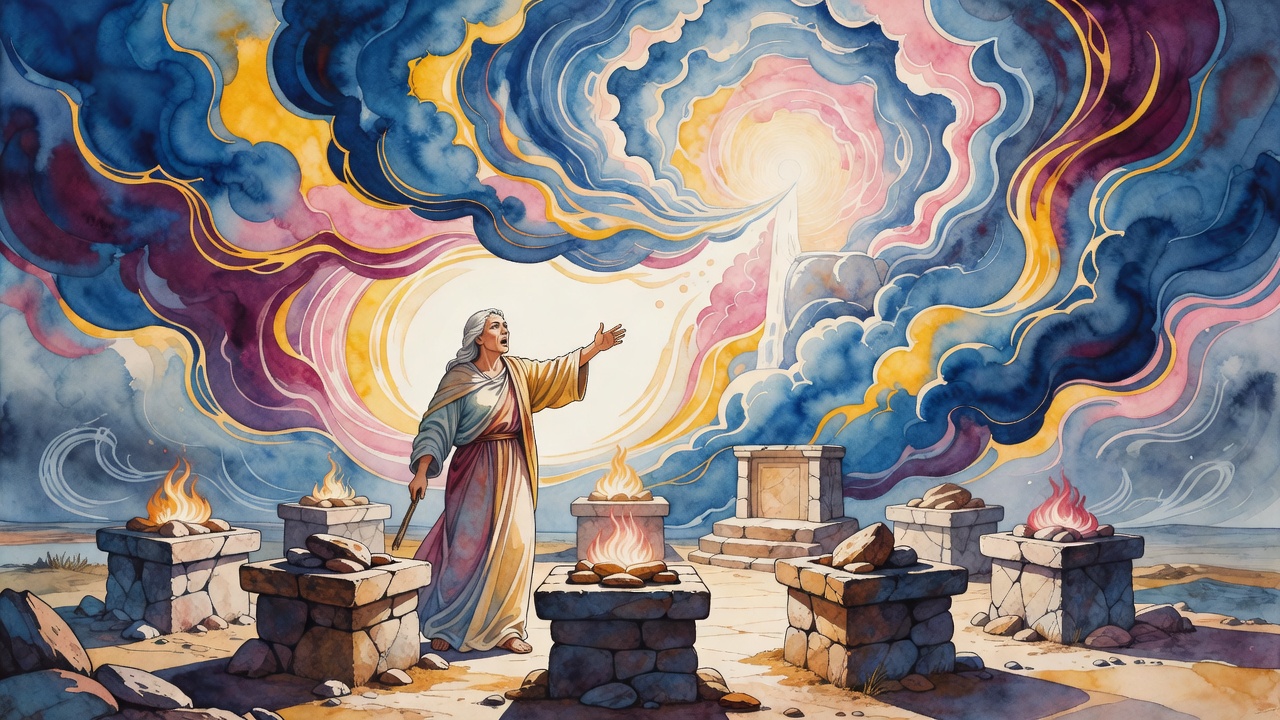
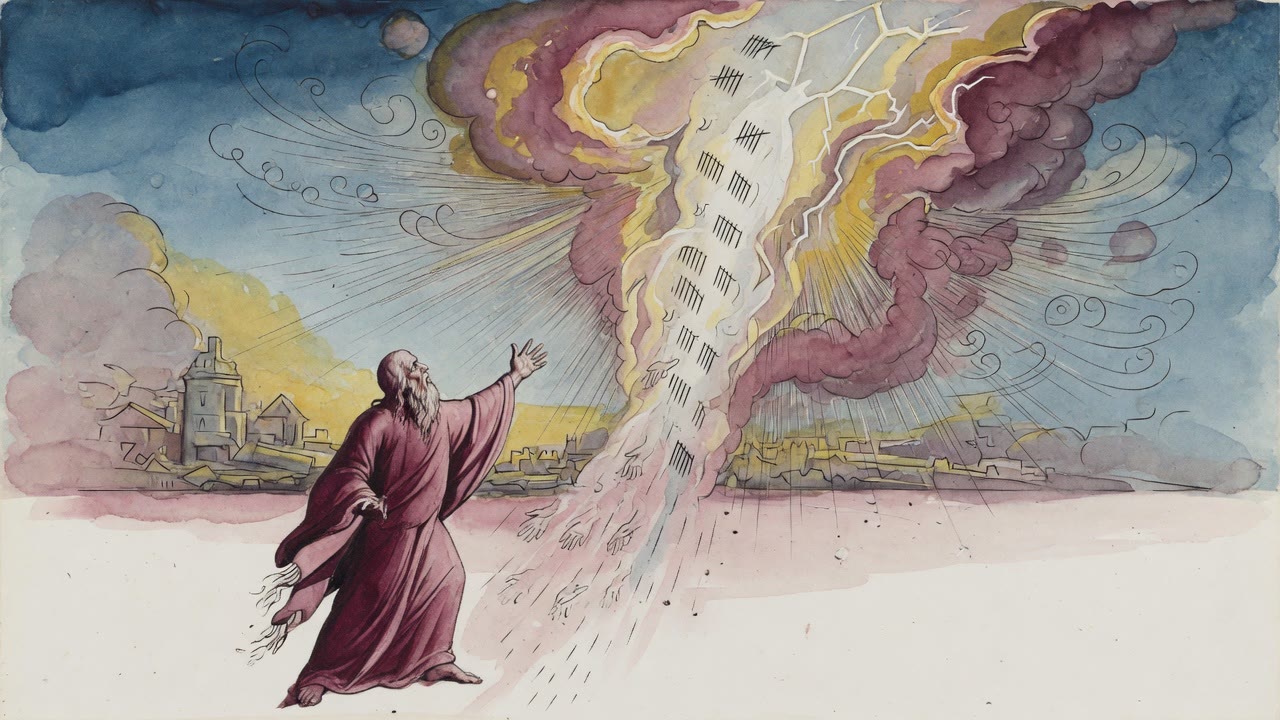
God Weeps into the Sea and Prays for Mercy
The road shook under Rav Katina. He mocked the necromancer in the doorway. From inside the house, the man called his name twice.
Table of Contents
The packed earth jumped under his sandal. Once. Then again. Rav Katina planted his feet and waited to see if the world would hold.
 Click for full size
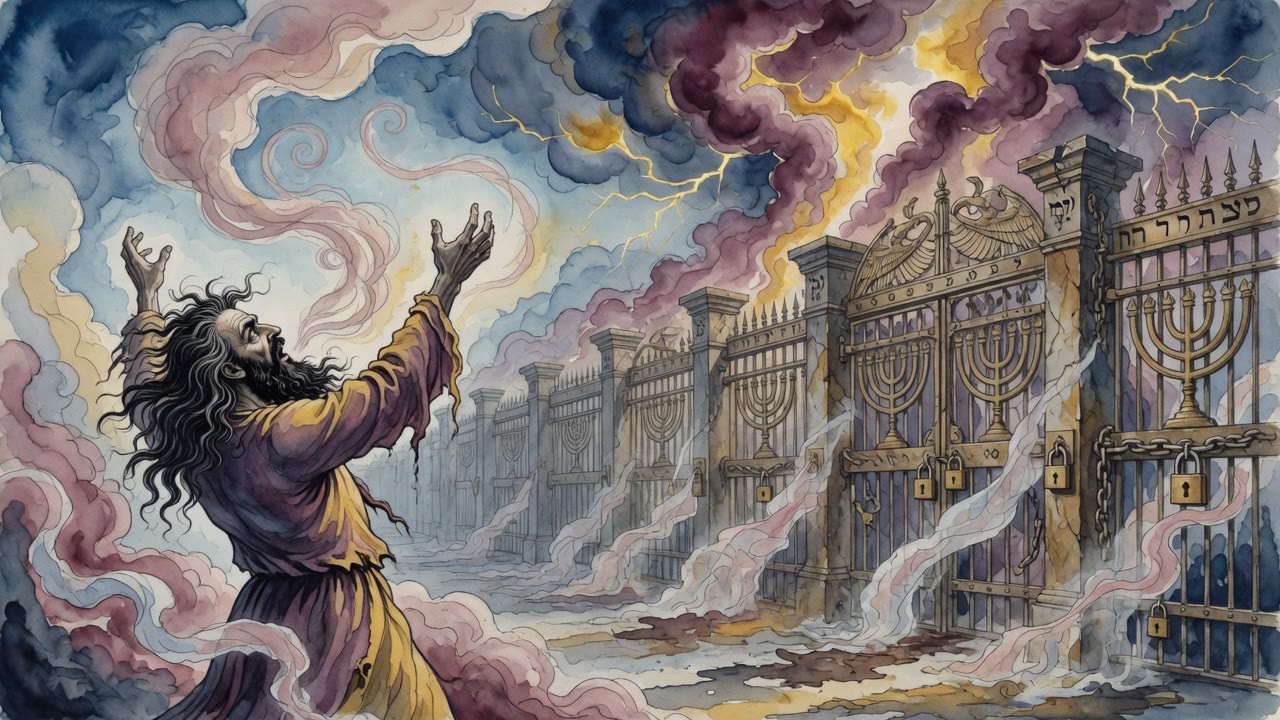
He had halted at the doorway of a necromancer, a man who called up the dead for a fee. Katina had no use for him. He said it out loud, the way a man does when he wants a fraud to overhear. "Does the necromancer know what this earthquake is?"
A voice came back from inside the house.
The Voice Knew His Name
"Katina, Katina. Why should I not know?"
The man in the dark did not guess. He named a mechanism no roadside cheat would have invented for a paying customer.
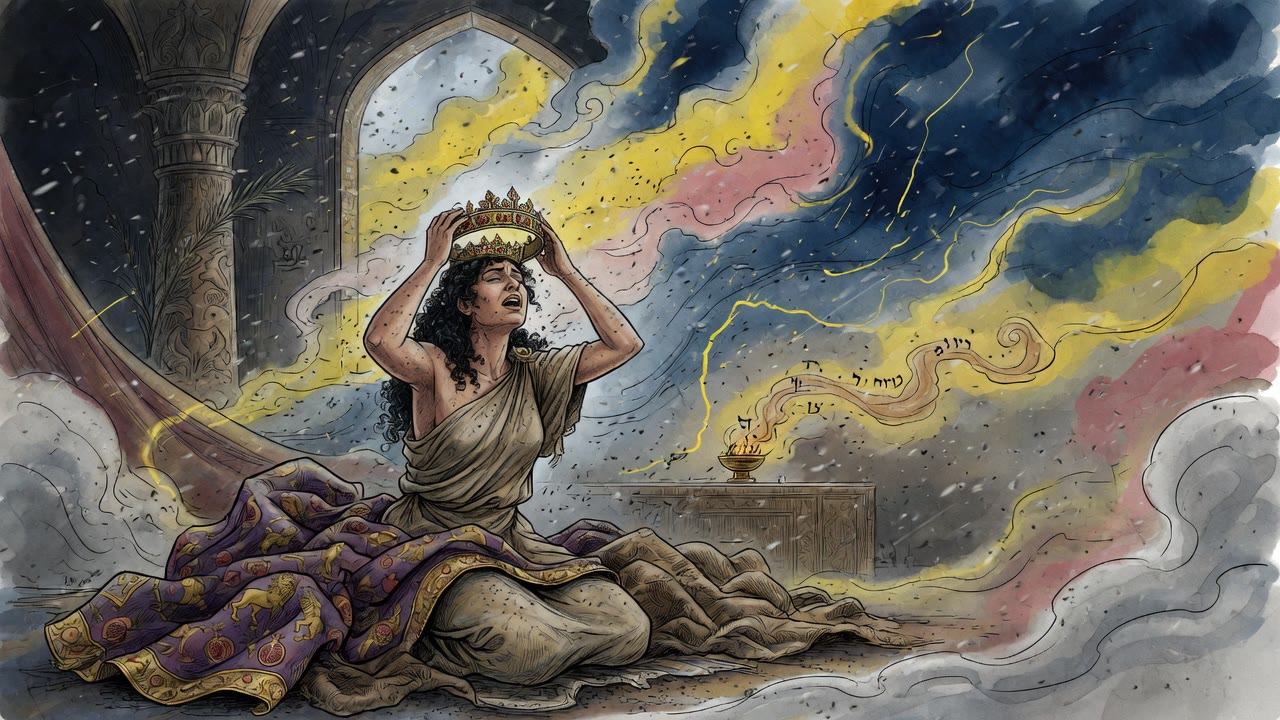
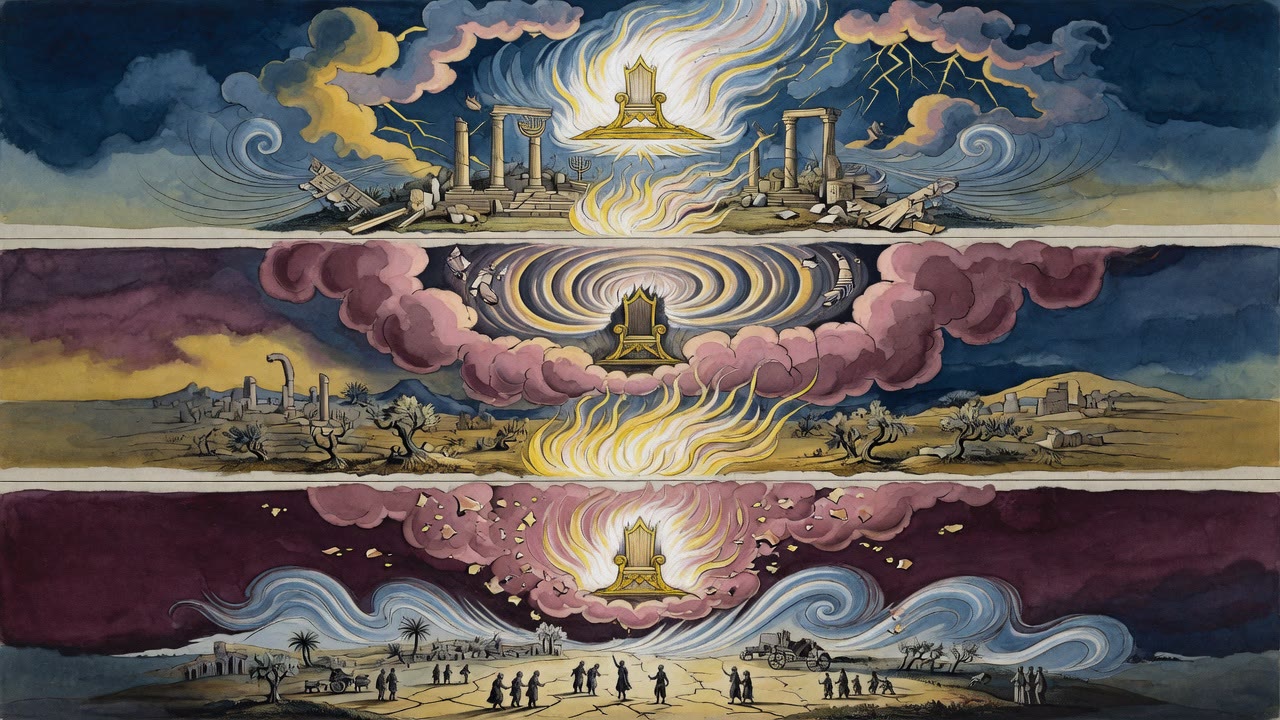
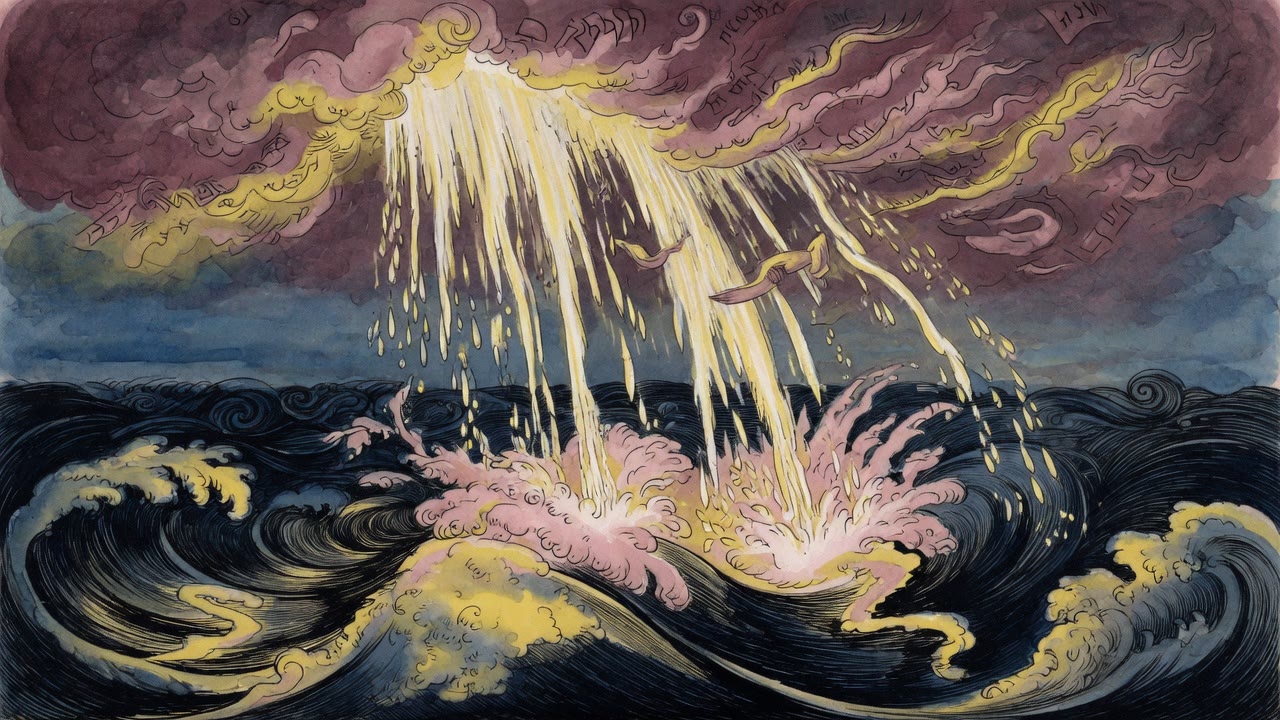
"When the Holy One remembers His children, who dwell in suffering among the nations of the world, He lets fall two tears into the Great Sea. His voice is heard from one end of the world to the other. That is the earthquake."
Two. Not a flood of them. Two, counted, aimed at the largest water there is. The sound of the fall ran the length of creation and came up through the soles of a man standing in a doorway he had no business standing in.
Two Tears Hit the Great Sea
Katina went on with that in his mouth. He had asked a cheap question and been handed the inner weather of God.
He did not repeat the necromancer's answer as his own. In the study house, when the shaking came up again, Katina clapped his palms together so the others could hear the sound. That, he said, is what the Holy One does, and the earth answers. Rabbi Nathan let out a long breath and held it. A sigh, he said. The kind a man makes when anger has nowhere to go. Others drove a heel into the floor, the way a man treading grapes puts his weight down. Rav Aha bar Yaakov braced both feet under the bench, as if the Throne of Glory were a wall he could press against so he would not break something.
Katina kept the two tears to himself. A necromancer's doorway was not a witness he wanted to name. The sea had them anyway.
Miles down the road the ground groaned again. He stood still and counted. One. Two. Then the world went quiet, and he walked on with the salt of a sea he could not see.
Ishmael Carried the Censer Inside
The other man who got close enough to hear it was a priest, and he went in through the front.
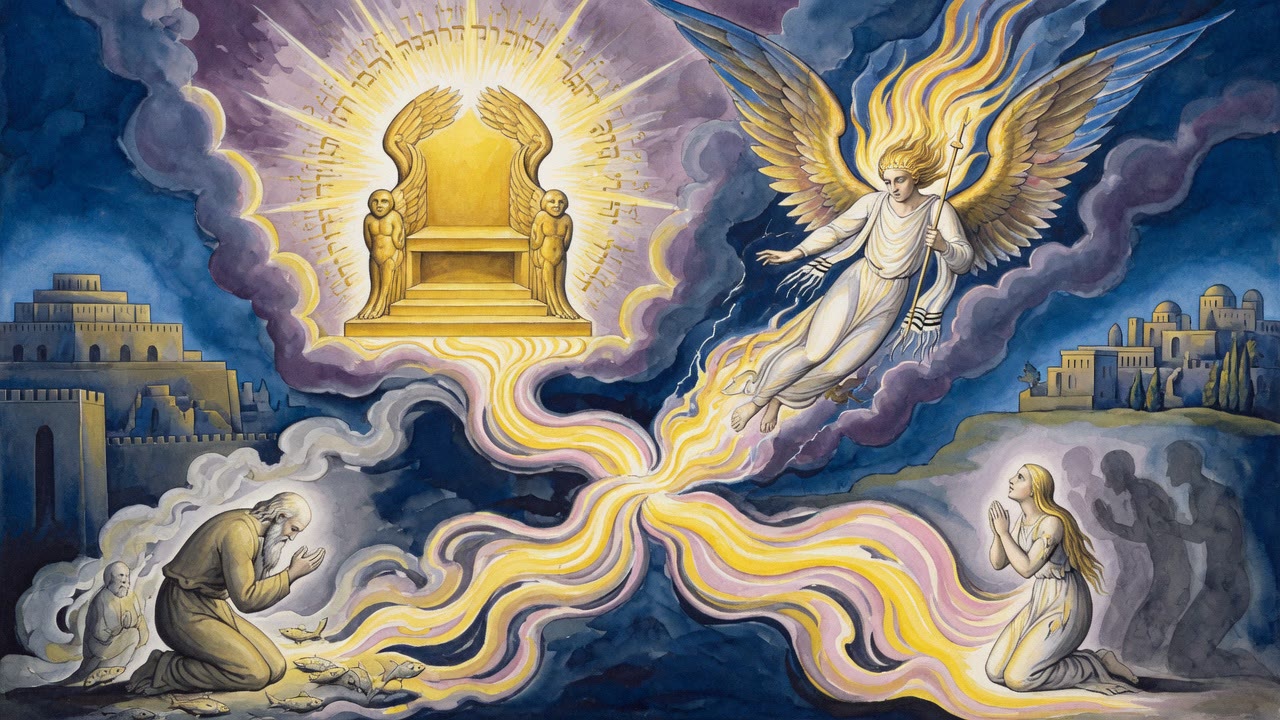
Rabbi Ishmael ben Elisha entered the innermost chamber to burn the incense, on the one day and in the one room where that is done. Heat met him at the curtain. The censer shook in his hand. The smoke rose. The air changed. He came out later and told what was in there.
Akatriel Yah, the Lord of Hosts, seated on a throne high and lifted up.
And the throne spoke to him. "Ishmael, My son. Bless Me."
God Asked a Priest to Bless Him
A man stood in the Holy of Holies holding a censer, and the One on the throne asked him for a blessing. There is no procedure for this. Ishmael had no text to fall back on. He had a mouth and a few seconds.
What he said was this. "May it be Your will that Your mercy overcome Your anger. May Your mercy roll over Your attributes. May You act toward Your children with the attribute of mercy, and enter for them within the line of the law."
He asked God to go easy on his people, standing inside the room where the verdict lives, using the only leverage a small man ever has, which is being asked.
Ishmael finished the sentence. The smoke hung between them. He waited for fire, or a voice, or a refusal.
The Holy One lowered His head. Once. Down, then back.
That was the whole answer. No fire. No voice from between the cherubim. Nothing Ishmael could have written down and had witnessed. A movement of the head. He told it afterward so that nobody would treat the blessing of an ordinary person as a light thing.
Rav taught that the Holy One prays, and that this is what He prays, in His own mouth, about Himself. May it be My will that My mercy overcome My anger, that My mercy roll over My attributes, that I act toward My children with the attribute of mercy and enter for them within the line of the law. Rachamim (רחמים), mercy, spoken first, before anger gets the floor.
God speaks of bringing them to His holy mountain and making them joyful in His house of prayer (Isaiah 56:7). Not their house of prayer. His.
So the priest with the censer had not invented a blessing. Standing in front of the throne, he had said out loud the sentence the throne had been saying to itself. And the head lowered.
Somewhere below, the sea took another two.
← All myths