5 min read

When Hailstones and Fire Arrows Guarded Sinai

At Sinai a hand that touched the mountain met hail or fire from heaven. The cloud held until the pillar of fire rose so the camp never walked dark.

Curated by Arthur · Told by Maggid ·
Table of Contents
  1. The Boundary That Armed Itself
  2. When the Trumpet Would Invert the Gate
  3. One Glory in Two Clothes
  4. No Gap Between the Watches
  5. Hands That Stay Off the Rock
When Hailstones and Fire Arrows Guarded Sinai Click for full size

The Boundary That Armed Itself

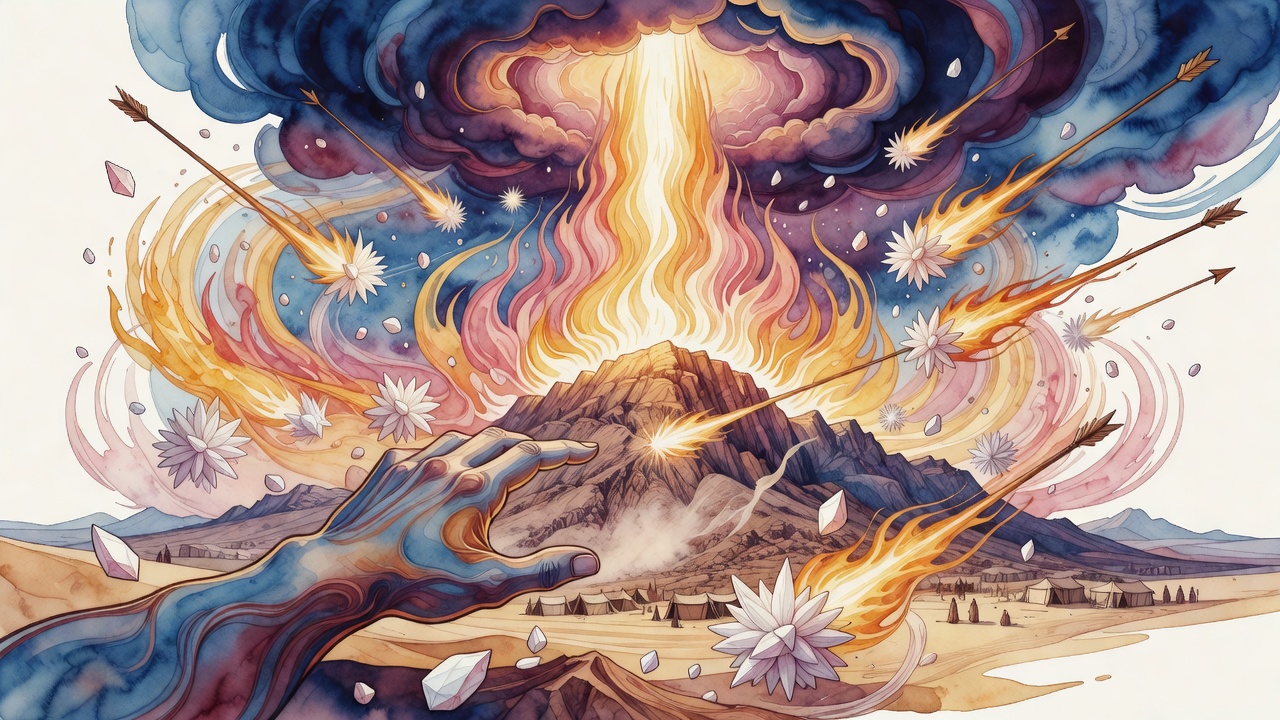
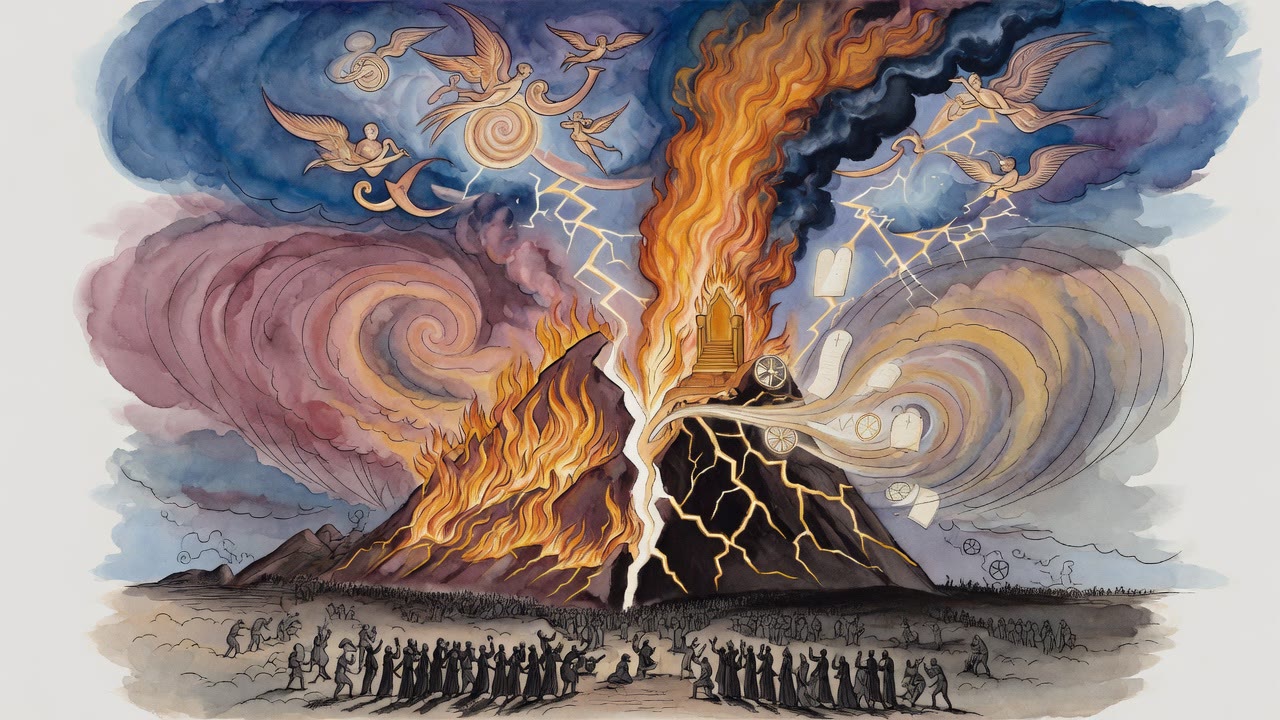
Moses set a line around the mountain and the people stood behind it with their breath held. Dust rose from shuffling feet. A goat strained at a rope and someone yanked it back hard. The command was not a suggestion for careful hikers. Touch the mountain with a hand, the Aramaic said, and you will be stoned with hailstone or pierced with arrows of fire. Beast or man, the trespasser would not live (Exodus 19:13).

The Hebrew had said stoned or shot. The Targum named the weapons. Hailstones like the plague that once struck Egypt. Arrows of fire like the fire that later took Nadab and Abihu when strange fire left their hands. No human executioner needed to climb the slope with a rope and a sentence. The holiness at the boundary would take its own payment from whatever crossed the line.

A child in the camp looked up at the smoking peak and understood, without a lecture, that the mountain was not empty rock. It was a living edge. Stay behind the line and live. Step over it and meet heaven's own stones and shafts. Mothers pulled toddlers closer. Men who had been brave at the sea felt their knees remember they were only knees under a sky that smoked.

When the Trumpet Would Invert the Gate

The same verse that killed the trespasser also promised an opening. When the voice of the trumpet was heard, they might go up toward the mount. The shofar (that ram's horn) would sound, and the prohibition would reverse. Sacred space was not eternally sealed. It was closed on a schedule that heaven alone kept.

Israel waited for a signal, not a private courage. The holy was not hostile for sport. It was patient, and it opened when it was ready. The job of the people was not to force the gate with clever feet or with a dare whispered among young men. The job was to hold the line until the blast said walk.

Moses stood between that patience and that terror. His body had already climbed where others could not. Their bodies learned the rhythm of a covenant that both kills and invites. Some stared at the mountain until their eyes watered. Some stared at Moses and tried to borrow his calm for a few more breaths.

One Glory in Two Clothes

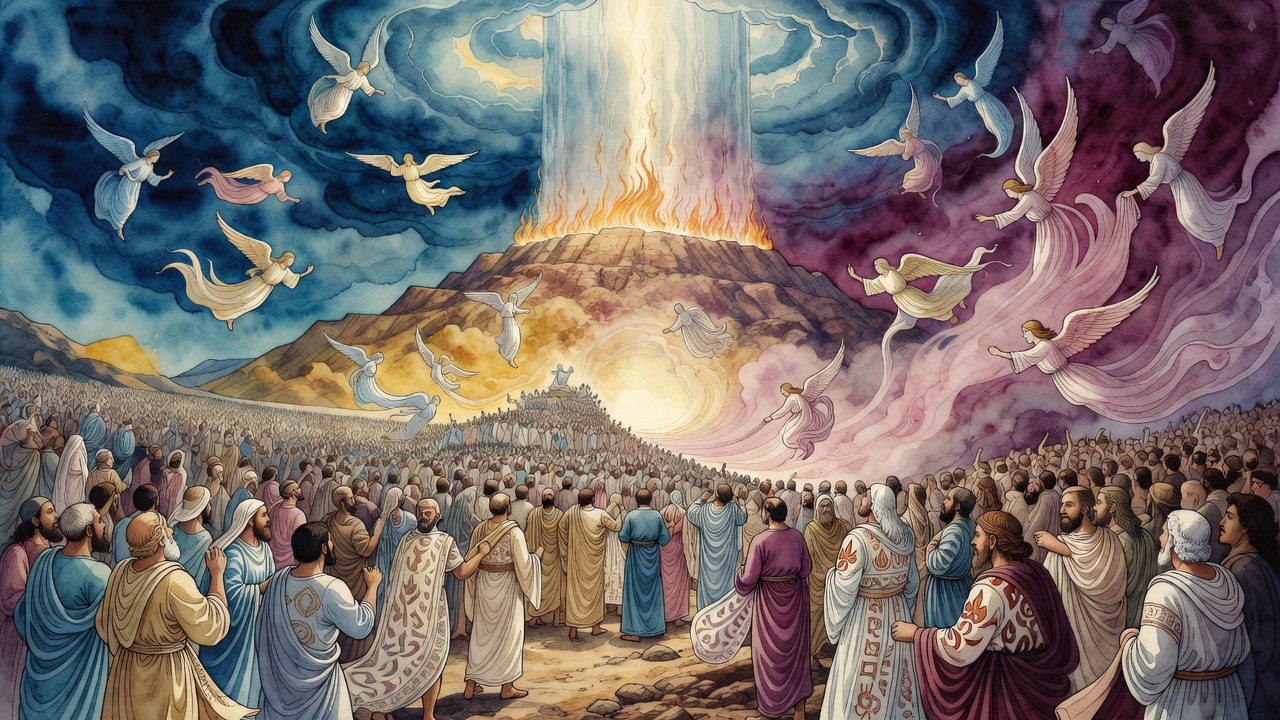
Later, when the Tabernacle stood finished, every Israelite could see the morning promise for the road. The Cloud of the Glory of the Lord overspread the tent by day. At night it became a column of fire, so all the sons of Israel might see in all their journeys (Exodus 40:38).

Cloud and fire were not two different miracles trading shifts like tired guards. They were the same Shekinah wearing the clothing each hour required. By sunlight, a cloud, visible, cooling, sheltering. By darkness, a pillar of fire, illuminating, warming, telling a sleepless child that the camp was not alone under a hard sky full of foreign stars.

On the road the cloud flattened hills before the march and cleared snakes and scorpions from the path. The fire asked less of geography and more of nerves. Look up. Still there. Keep walking. A man who woke from a bad dream did not need a speech. He needed the column burning steady above the tent poles.

No Gap Between the Watches

The sages caught a careful choreography in the wording. The pillar of cloud did not depart until the fire had already begun to rise in its place. There was never a moment of pure dark between the two. The day's guide held station while the night's guide took shape, and only then did the cloud give way like a watchman relieved by the next post.

God did not hand His people off carelessly from one sign to the next. Relief arrived before the first watch was set down. Israel walked in unbroken company from dawn into dusk and back again. The seam between day and night became a lesson in faithfulness more than a lesson in weather and wind.

The same precision that armed Sinai with hail and fire arrows later refused to leave a crack of abandonment between cloud and flame. Holiness that kills at a trespass line is also holiness that will not leave a night without light for the smallest sleeper in the camp.

Hands That Stay Off the Rock

A man in the wilderness might have wanted to touch the mountain to prove he was not afraid. The Targum left him no romantic death. Hail or fire would answer first. Another man, years into the march, might have feared the cloud would vanish before the fire rose. The Yalkut answered that fear with overlap, cloud still standing while fire already climbed.

Between the armed boundary and the seamless pillars, the camp learned a single discipline. Wait for the trumpet. Walk under the glory that changes clothes. Do not invent a private shortcut up the rock or a private panic in the dark. The mountain that would kill a trespasser is the same Presence that will not drop a watch between one hour and the next.


← All myths
From the tradition

Sources

3 sources

The texts behind this telling. Some cards carry a translation of the source; others are our own retelling of it, and each card says which. Every card links out to the original.

Targum Pseudo-Jonathan on Exodus 19:13Targum Pseudo-Jonathan on Exodus

Retold in our words. Read the original at the link below.The Targum of Jonathan ben Uzziel, trans. J. W. Etheridge, London, 1862 · Public Domain

The Targum Pseudo-Jonathan intensifies the penalty for trespass at Sinai: "Touch it not with the hand; for he will be stoned with hailstone, or be pierced with arrows of fire; whether beast or man, he will not live. But when the voice of the trumpet is heard, they may go up (forwards) towards the mount" (Exodus 19:13).

The Aramaic is vivid where the Hebrew is plain. The Hebrew says simply stoned or shot. The Aramaic identifies the weapons: hailstone and arrows of fire. These are not human weapons. They are the weapons of heaven itself, the same hailstones from the plague in Egypt (Exodus 9:24), the same fire that consumed Nadab and Abihu at (Leviticus 10:2).

The mountain would defend itself. No human executioner would need to be appointed. The holiness at the boundary would take its own payment.

Then the dramatic opening: "when the voice of the trumpet is heard, they may go up." The shofar would sound, and the prohibition would invert. The same boundary that killed the trespasser would, at the signal, open the approach. Sacred space is not eternally closed. It is closed on a schedule.

The takeaway: the holy is not hostile to us; it is patient with us, and it opens when it is ready. Our job is not to force the opening but to wait for the signal and walk up when the trumpet sounds.

Full source
Targum Pseudo-Jonathan on Exodus 40:38Targum Pseudo-Jonathan on Exodus

Retold in our words. Read the original at the link below.The Targum of Jonathan ben Uzziel, trans. J. W. Etheridge, London, 1862 · Public Domain

The closing verse of the book of Exodus is, among other things, a promise for the road. Targum Pseudo-Jonathan on (Exodus 40:38) describes what every Israelite could see the morning after the Tabernacle was finished: the Cloud of the Glory of the Lord overspread the tent by day, and at night it became a column of fire, "that all the sons of Israel might see in all their journeys" (Exodus 40:38).

One presence, two forms

The cloud and the fire were not two different miracles. They were the same Shekinah wearing the clothing that each time of day required. By sunlight, a cloud, visible, cooling, sheltering. By darkness, a pillar of fire, illuminating, warming, orienting. The Targum's Aramaic makes this continuity explicit: it was the one Glory, changing form as the camp's needs changed.

The midrash in Mekhilta de-Rabbi Ishmael, Beshalach 1, describes the cloud's functions in detail, it flattened hills in front of the camp, killed snakes and scorpions in the path, and generally prepared the ground. The pillar of fire at night did something simpler and more personal: it let a child waking from a bad dream look up and see that the camp was not alone.

"In all their journeys"

The Targum's translator, working in the land of Israel centuries before the modern era, would have understood this phrase as a promise that outlasted the wilderness itself. Every journey, geographic, spiritual, historical, carried the possibility of that same guidance. The rabbinic tradition took the cloud and fire as paradigmatic: God's presence does not always look the same, but it is always findable by those who look.

Why Exodus ends here

The book does not conclude with the giving of the Torah, the golden calf, or even the completion of the Tabernacle. It ends with a traveling God. The sanctuary was built so the Shekinah could move with the people. And the final image of Exodus is of Israel ready to march, with heaven overhead by day and alight by night.

The takeaway: the God of the Torah is not housed in a fixed temple. In the wilderness, divine presence walked. Whatever road Israel took, it was already lit.

Full source
Yalkut Shimoni on Torah 230:1Yalkut Shimoni on Torah

Translation of the source text.Torat Emet (Yalkut Shimoni) · CC-BY-NC

"The pillar of cloud did not depart" (Exodus 13:22). The verse tells us that while the pillar of cloud was still present, the pillar of fire was already growing forth.

Full source