Hannah Prayed Before the Court of the Fathers
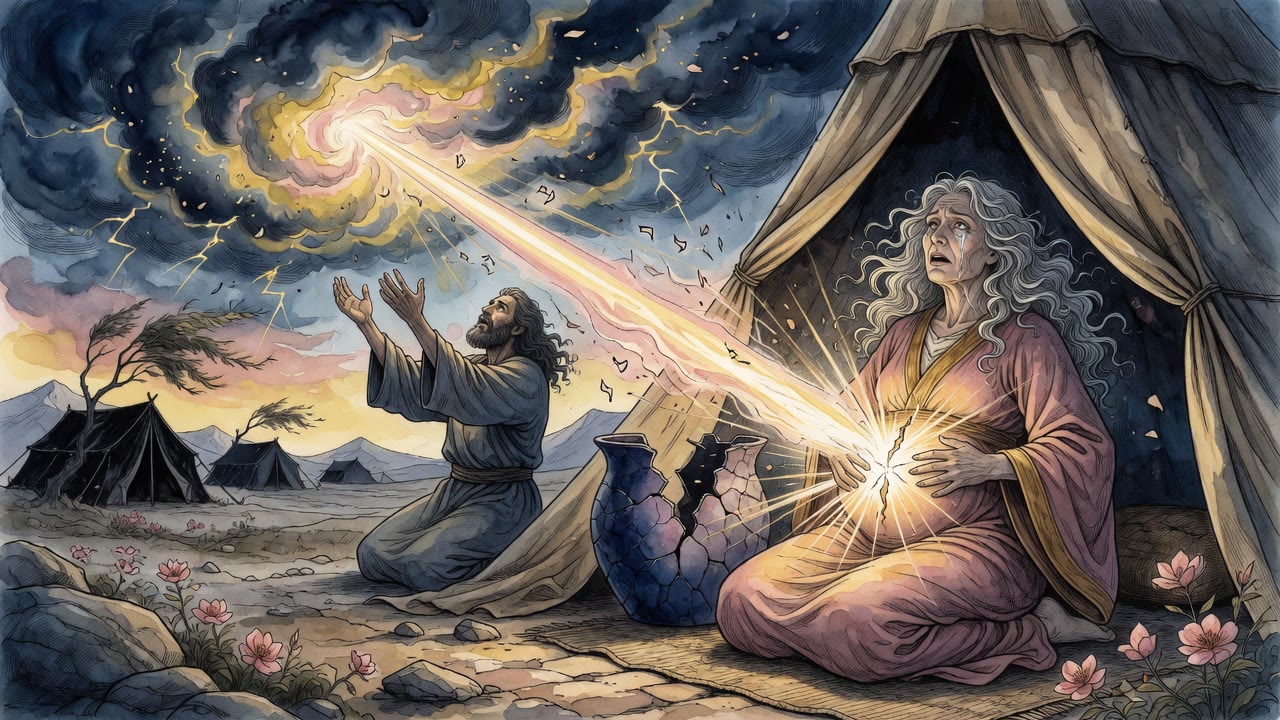
Peninnah's children filled the house, and Hannah had none. At Shiloh her lips moved without sound, and the priest watching decided she was drunk.
Table of Contents
Hannah's mouth moved, and the priest thought he saw drunkenness.
 Click for full size
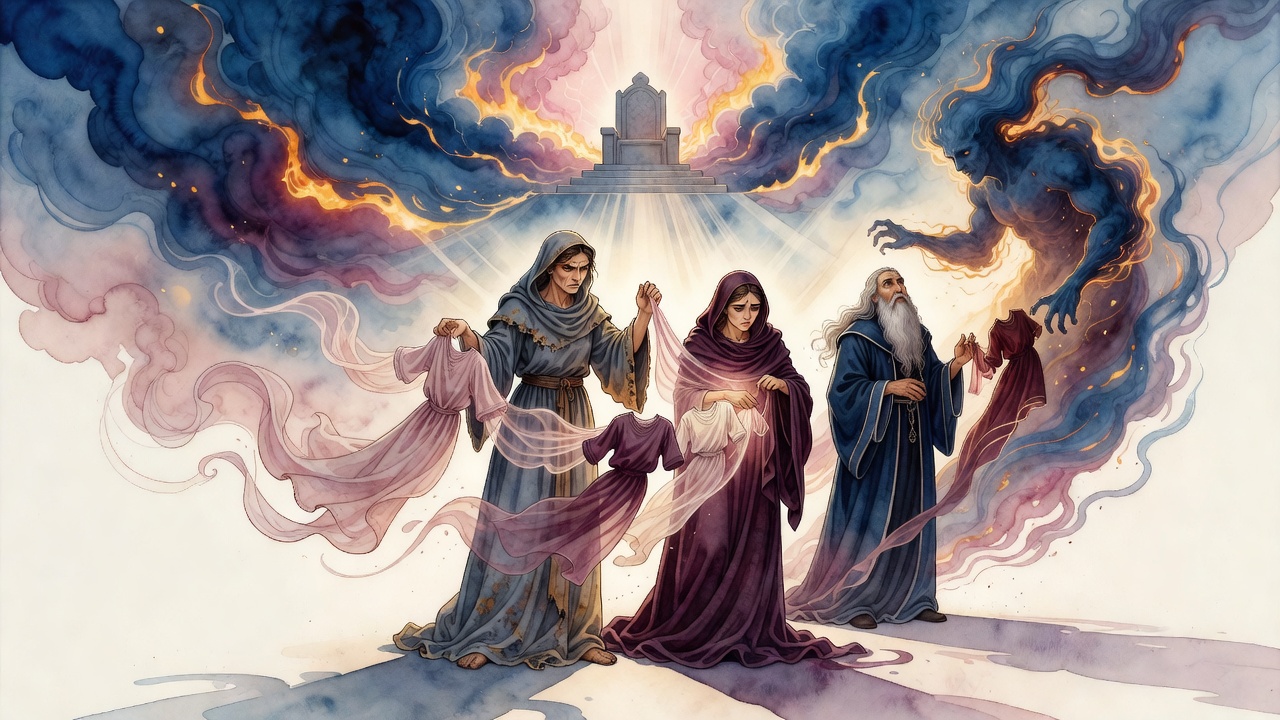
She stood in Shiloh with no child in her arms and no witness who understood her. Peninnah's children filled the house. Elkanah loved her, but love did not answer the empty place. Eli watched her lips and misread the deepest prayer in the room.
The Womb Closed With a Name on It
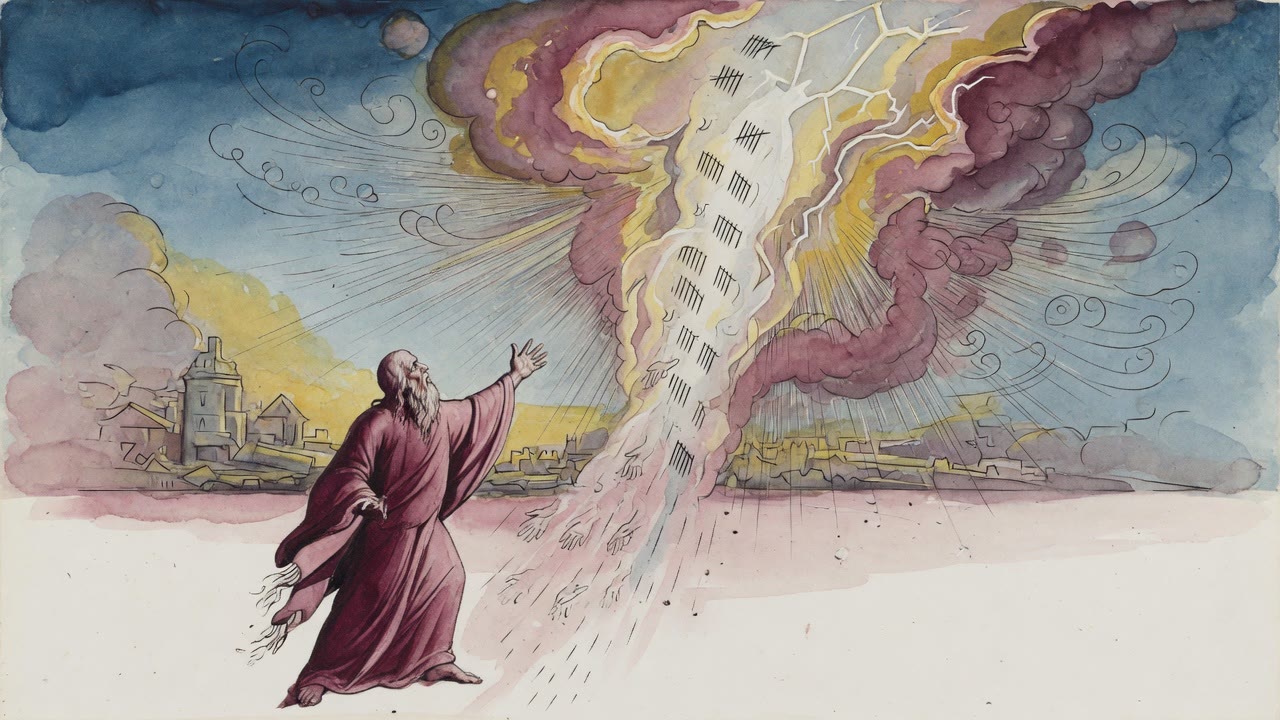
Aggadat Bereshit does not soften the sentence that begins Hannah's pain: "The Lord had closed her womb" (1 Samuel 1:5). The source refuses to call it luck, nature, or delay without author. God closed it. The same God who would open it later had first held the child back.
Isaiah gives the wound its language: "Shall I bring to birth and not cause to bring forth? Shall I, who cause birth, close the womb?" (Isaiah 66:9). The verse becomes a key in the midrash. Sarah, Rebekah, Rachel, Hannah. The closed womb is not an empty accident. It is a locked gate with God's hand on the bar.
The locked gate changes the child who finally enters. Isaac is not born like any other son. Jacob is not. Joseph is not. Samuel is not. The delay marks each child as someone whose arrival had to be timed, not merely conceived.
Eli Misread the Silent Mouth
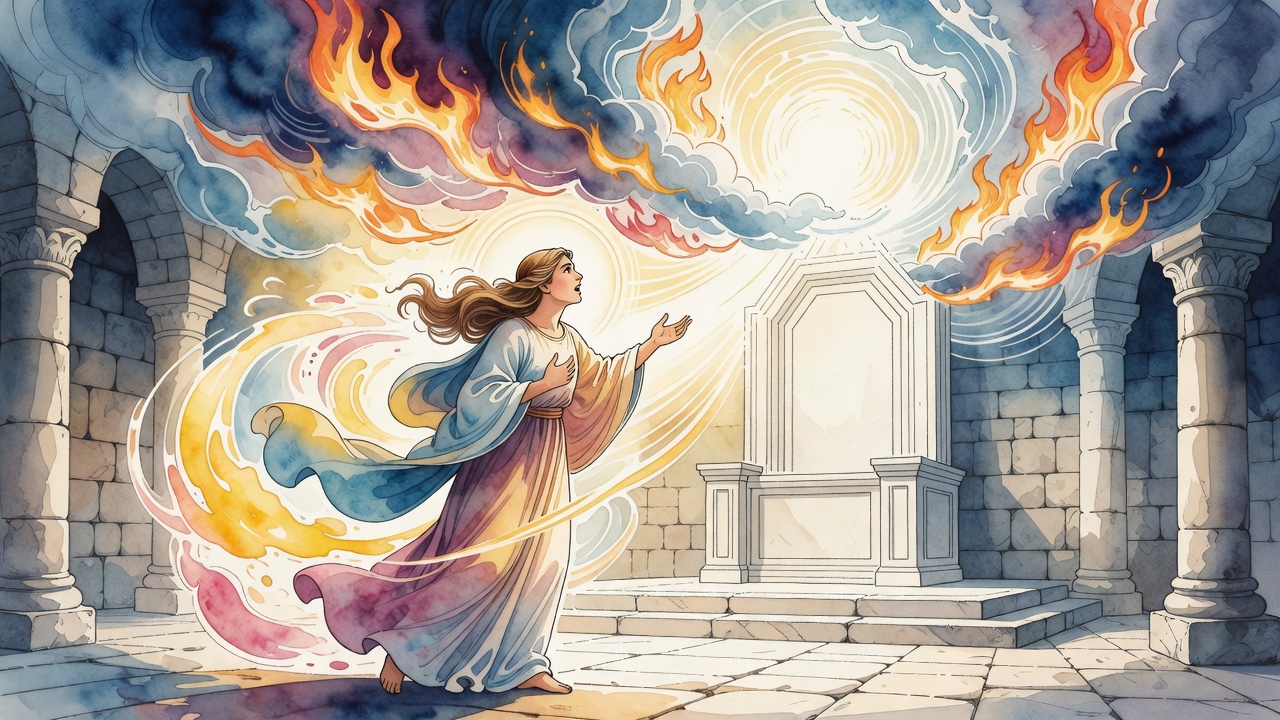
Hannah did not have the luxury of explaining herself to everyone. Her lips moved because the prayer had gone too deep for ordinary sound. Eli saw the body but missed the battle. He thought wine had loosened her mouth. It was grief.
She answered with restraint, but not weakness. She was a woman bitter in spirit, pouring herself before God. No spectacle. No public performance. A vow, a plea, a life pressed into words barely leaving the mouth. The priest corrected himself, and the blessing left him: go in peace, and may the God of Israel grant the petition.
That blessing did not erase the insult. It redirected the scene. The man who misread her became, for a moment, the mouth through which permission entered. Hannah left with no child yet, but the room had changed around her.
The Fathers Stood in the Court
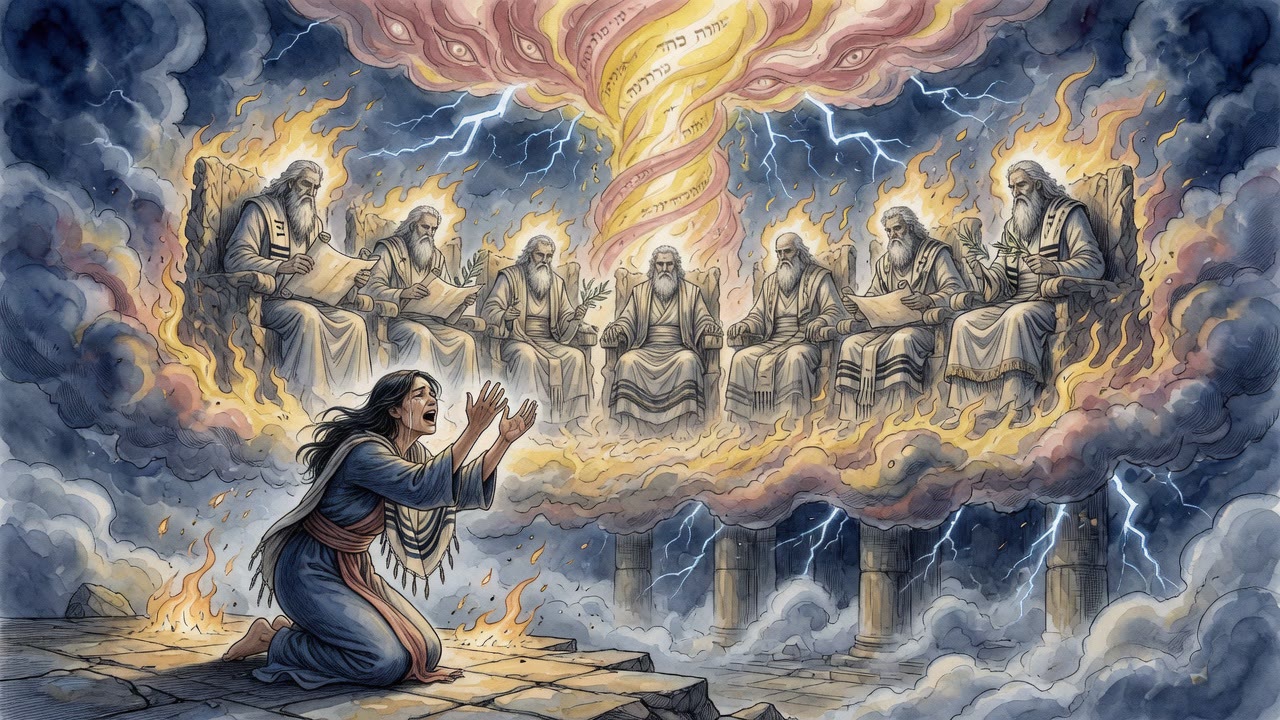
Another Aggadat Bereshit passage describes judgment with the patriarchs in the room. A father brings his son before a teacher who wants to punish the child. While the father stands there, the teacher holds back. Presence changes the sentence.
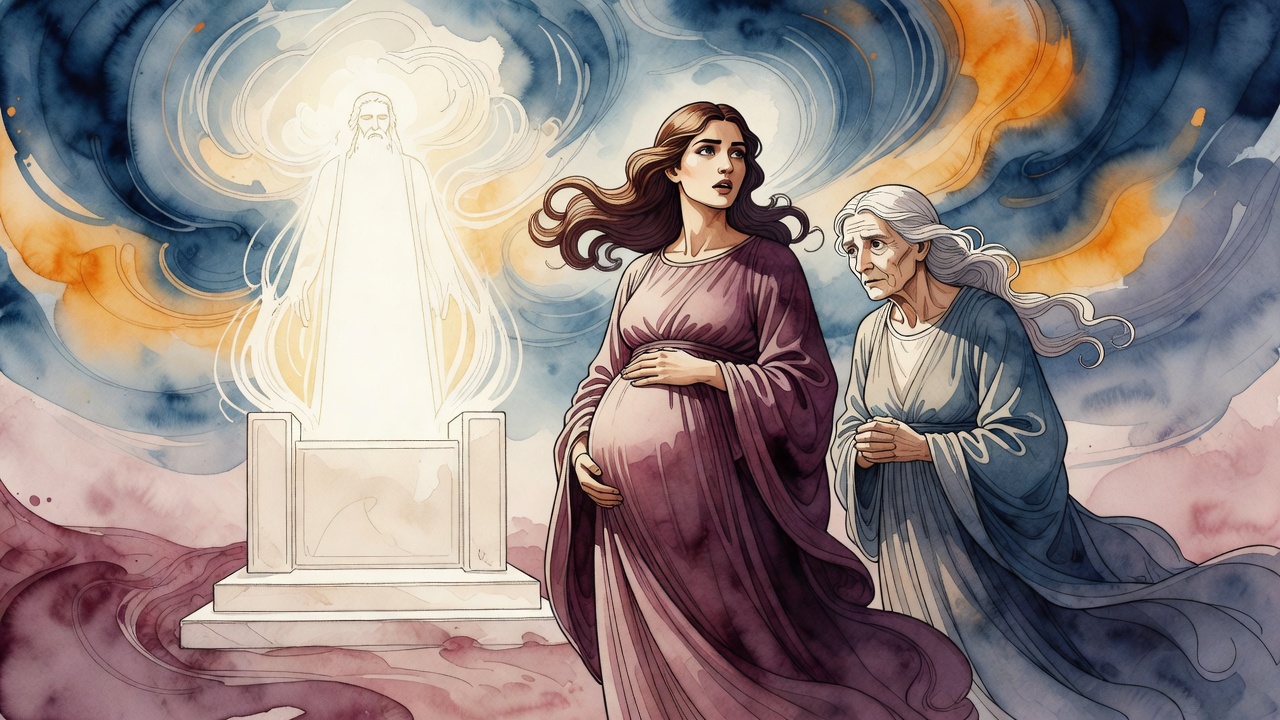
The midrash applies the image to Israel before God. Abraham, Isaac, and Jacob stand with their descendants. Their merit does not erase guilt, but it keeps correction from becoming destruction. Hannah's prayer belongs inside that wider court. She came as one woman, but she did not come from nowhere. Covenant names had entered before her.
That is why her isolation is not the whole truth. On the ground, she stood alone. In the heavenly court, the family promise stood behind her, not as a guarantee that pain would be short, but as a claim that pain would not be the last word.
Samuel Entered the Empty House
The gate opened. Hannah conceived and bore Samuel, the child whose name carried her asking. The boy would grow in the sanctuary where Eli's own sons had corrupted the priestly house. The barren woman had been carrying the future repair of that house before anyone in Shiloh understood what was missing.
When she returned with the child, she did not clutch him as proof that the pain had been pointless. She gave him back. The prayer had opened her womb, but the vow opened her hands. Samuel stayed before God, and Hannah's empty place became the doorway through which prophecy returned.
The child she wanted became the child Israel needed. Her private grief entered the public history of the sanctuary. Eli had watched her mouth and missed the prayer. God had heard the closed gate turning.
Samuel's name kept the sound of asking inside it. Every time she spoke it, Hannah remembered the day no one understood her except God. The child was not a replacement for the years of anguish. He was the answer that arrived with those years still visible, like a scar that had become a sign.
She had asked for a son. Israel received a prophet.
That is the force of Hannah's silence. It looked empty from the outside, but inside it a future judge and prophet was already pressing toward the world.
The gate opened when the silence had done its work.
← All myths