Sarah's Closed Womb Opened After Abraham Prayed
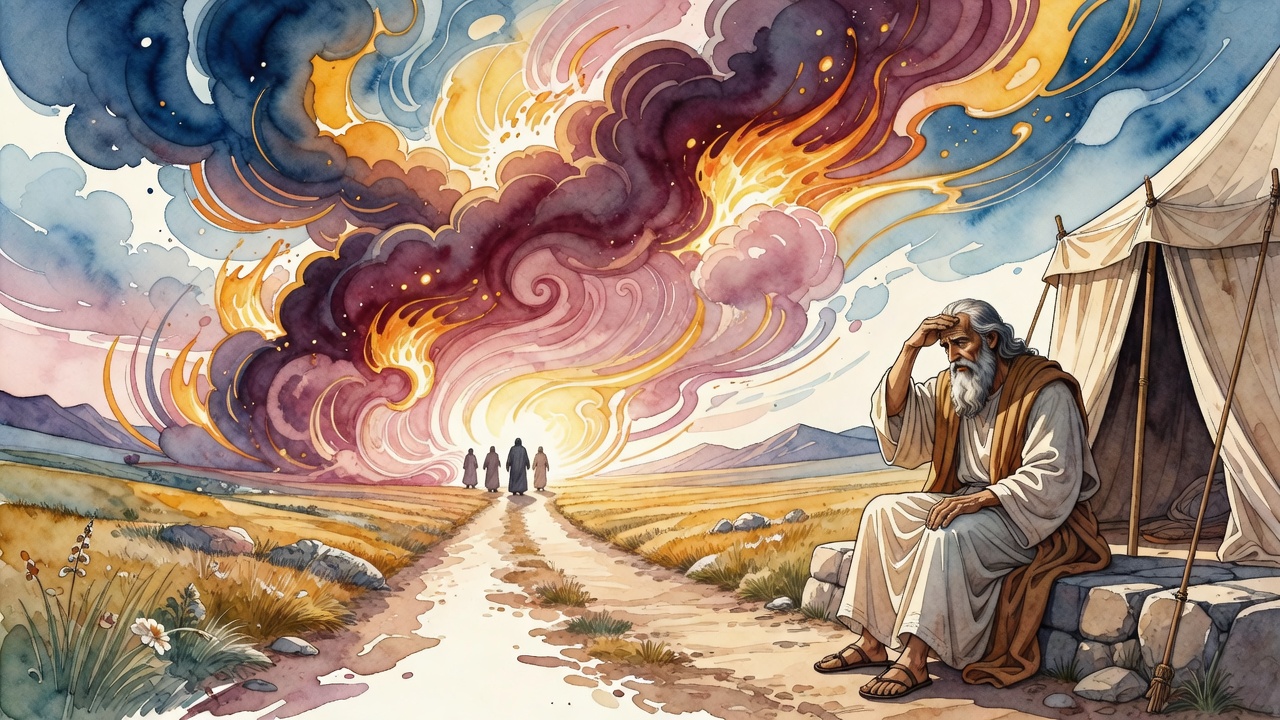
Sarah stood in a palace where every womb had shut, even the hens. Abraham prayed for that king, and the next name heaven spoke was hers.
Table of Contents
Sarah had learned the shape of waiting.
 Click for full size
Year after year, her body kept its silence. Abraham heard promises. Abraham counted stars. Abraham was told that a child would come from him, and then the seasons moved on with nothing in Sarah's arms. The tents were folded and pitched again. Servants aged. Roads changed. Names changed. Abram became Abraham. Sarai became Sarah. Her womb did not change.
Sarah Laughed Behind the Flap
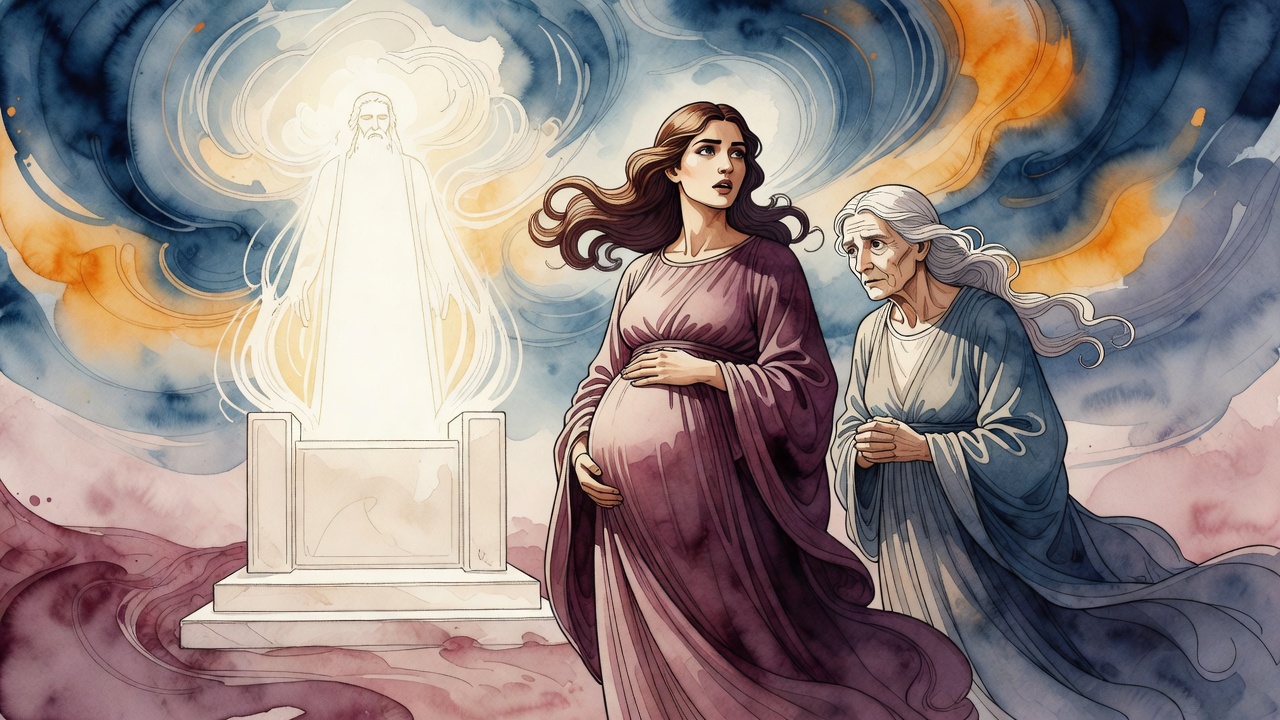
Visitors ate Abraham's meal under the tree. They spoke as if time were a servant waiting just outside the shade. At this season next year, Sarah would have a son. She heard the words from inside the tent and laughed into herself. Her body was old. Abraham was old. Desire had become memory. Milk, cradle, birth cries, a child tugging at her garment, all of it belonged to another life.
Then the voice asked why she laughed.
Sarah denied it because fear rose faster than speech. The laugh had already escaped. Heaven did not erase it. Heaven stored it. God had already told Abraham that Sarai would be called Sarah, that she would be blessed, that a son would come from her, that kings of nations would proceed from him. The covenant sat in the flesh of the household, marked on the eighth day. The laugh sat in Sarah's mouth, waiting for a body to wear it.
Then a king took her into his house, and the silence moved.
The Palace That Closed
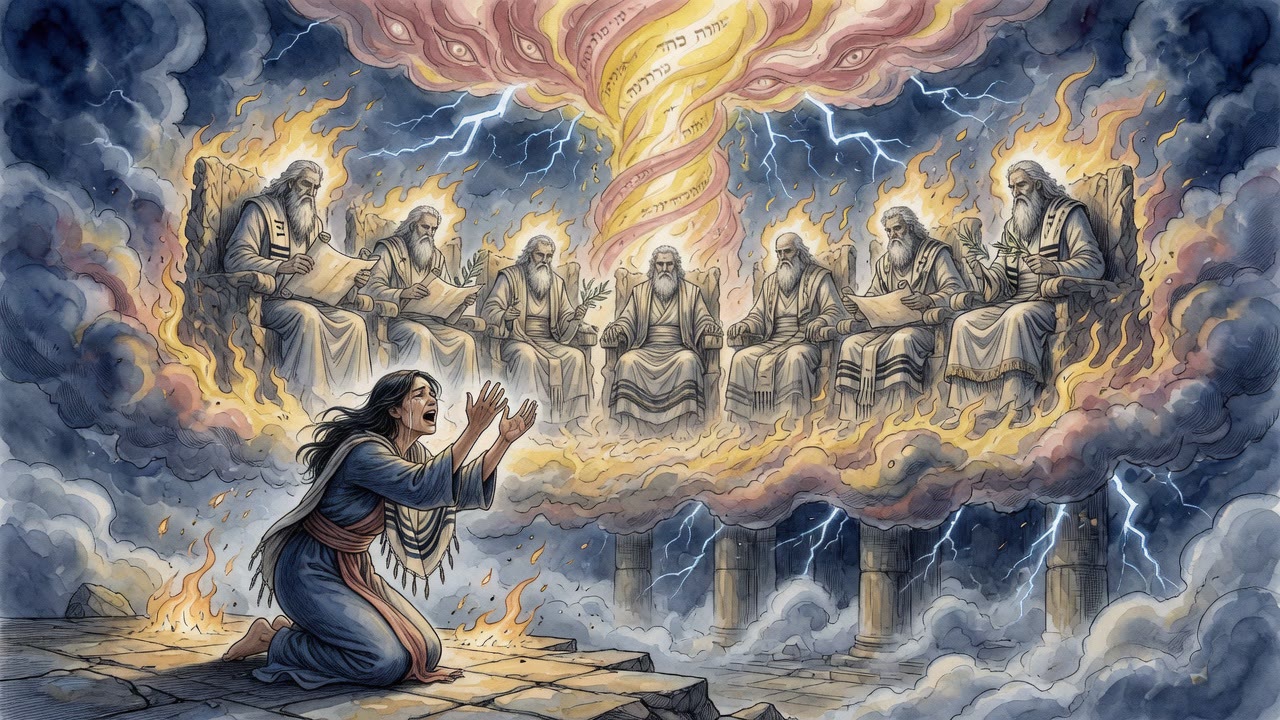
Abimelech did not know what he had taken. He saw Sarah and brought her into the royal house, and the whole place began to close around him. The verse says the Lord had closed, closed up the house, atzor atzar (עצר עצר). Mouths closed. Throats closed. Ears failed to carry sound. Eyes failed. Wombs shut. Even the hens of the household stopped laying. Nothing in that place could bring forth life while the king held Sarah.
Sarah stood inside that frozen house as the cause and the protected one. No hand could turn the moment into harm. Heaven had placed a wall around her by making the king's house feel, for a little while, what she had carried for decades.
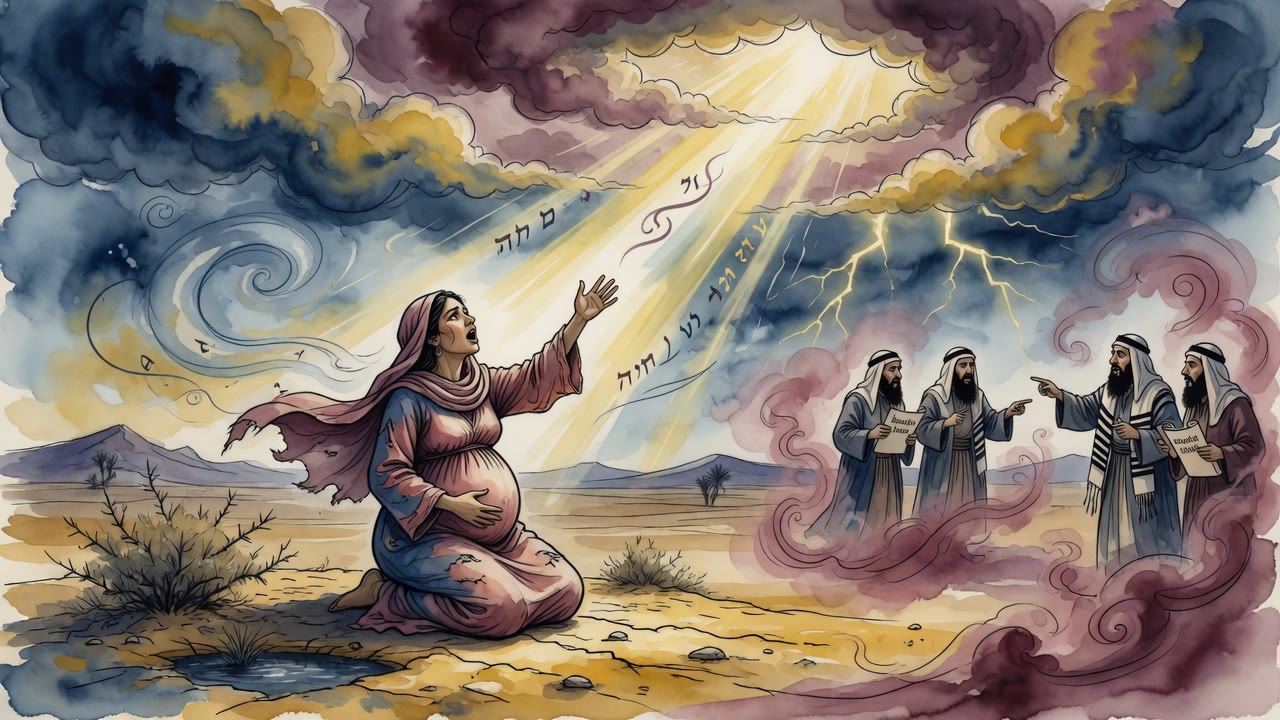
Abimelech learned enough to be afraid. Throughout that night Sarah was prostrate, pleading. "Master of the universe," she said, and the palace around her stayed sealed until the king understood he had taken what was not his.
Strike Him, Let Him Be
The matriarch held the rod. Angels waited on her word. When she said, "Strike him," they struck Abimelech. When she said, "Let him be," they stayed their hand. Commoners had come in to touch the noblewoman's shoe. The house paid for it in every passage through which life might move.
Pharaoh had once seized her in Egypt. The same phrase binds the two kings: whoever lays a hand on Sarah is shut up, and shut up again. Abimelech returned her. The doors of his house could open again, but not by royal order. They would open through Abraham's prayer.
Abraham Prayed for the King Who Took Her
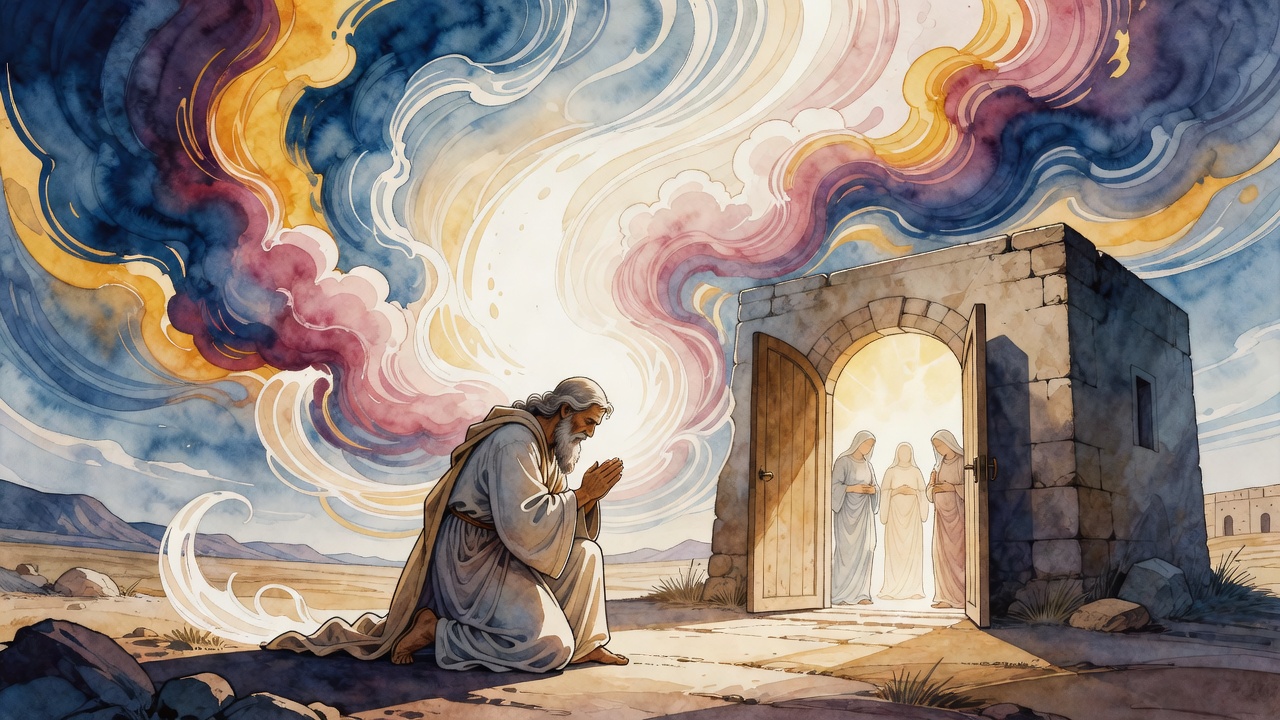
Abraham prayed for the man who had taken his wife.
The prayer was not for a friend, not for a righteous host, not for a wounded ally. Abraham stood before God and asked life to return to Abimelech's household. Children for servants. Birth for women who had been closed. Speech, sight, hearing, breath, motion. Eggs in the nests again. He asked mercy to enter the place where Sarah had nearly been lost.
No one in Abraham's line had yet prayed for another person this way. Once he prayed, the knot untied. Mouths opened. Hens laid. Wombs remembered their work.
Abraham still had no son. He pleaded for another house in the very matter of his own lack. The Lord remembered Sarah next. The one who prayed for another in his own area of need was answered first. Abraham's mouth became the hinge. He prayed for Abimelech's house, and the next name spoken was Sarah's.
The Boy Named Isaac
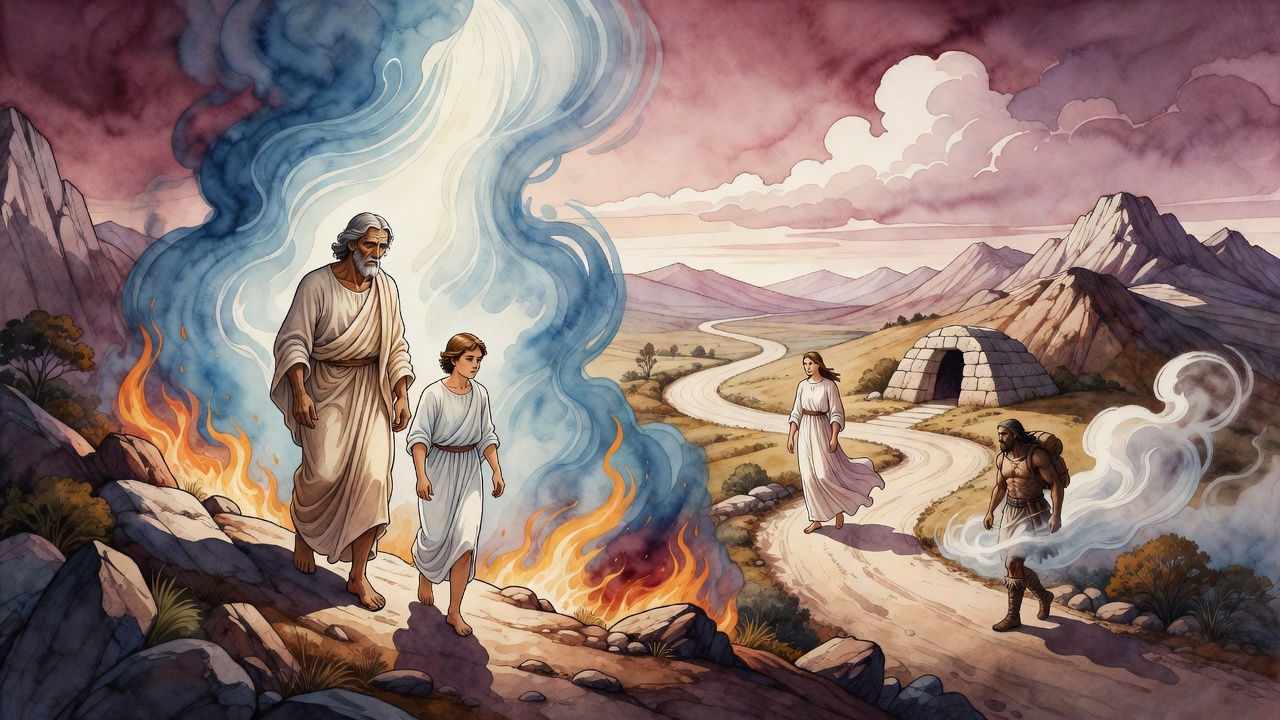
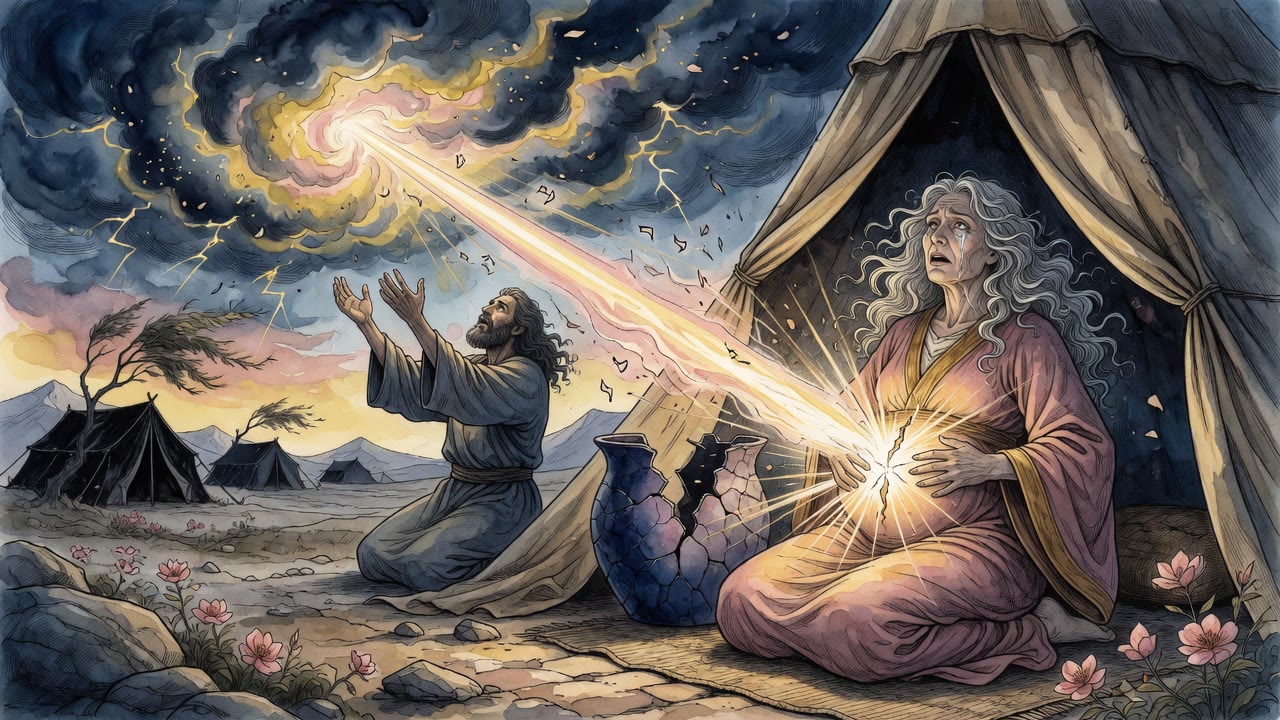
When Sarah conceived, the old silence broke. Not gently. It broke with astonishment, with neighbors staring, with servants whispering, with a mother past ninety nursing a child whose name sounded like the laugh she had tried to hide.
She did not name the child Patience. She did not name him Reward. She named him Isaac.
Every time she called him, the laugh returned. Not only the old laugh of disbelief, but a new laugh that had passed through a sealed palace, a king's fear, opened wombs, even the hens, and a promise older than the child's first breath. Sarah laughed because the door had finally opened inward, and the child who came through it made the waiting speak.
The years had been real. The humiliation had been real. So was the moment when the impossible entered the tent and demanded a cradle. God is the one who closes a womb and the one who opens it. Sarah had lived both sentences. Isaac was the second one, wearing the sound of the first.
← All myths