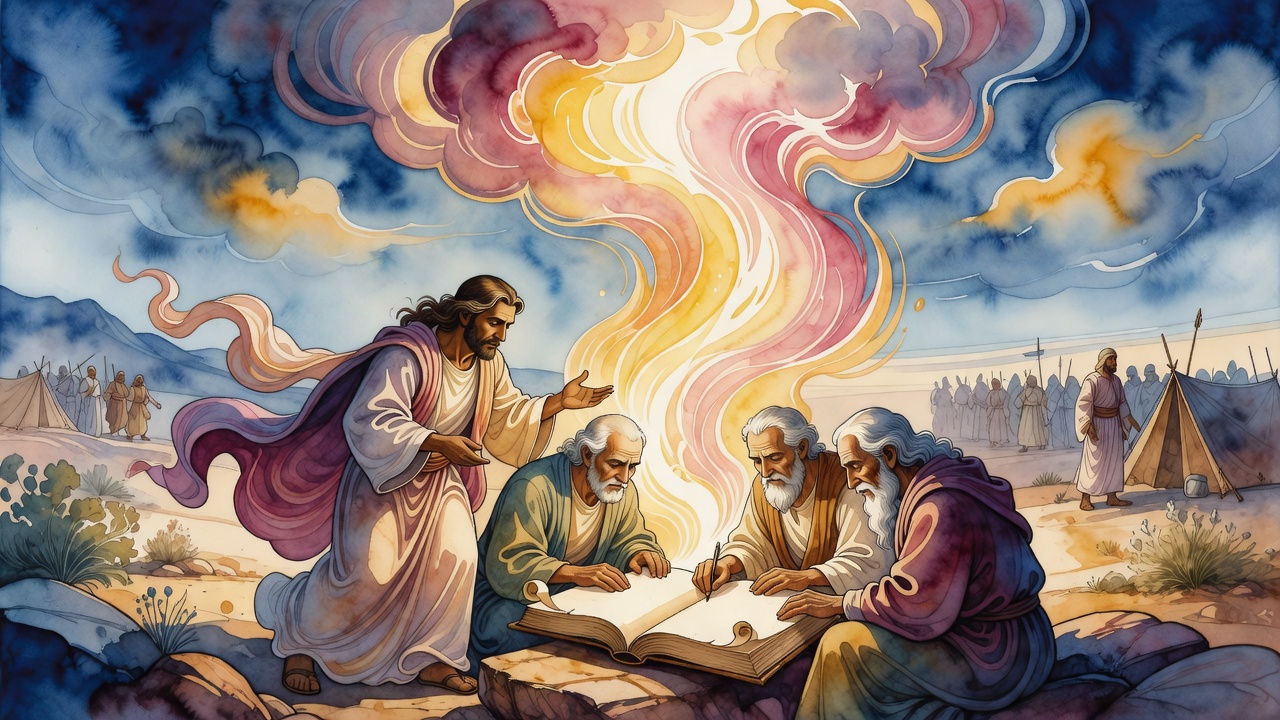
He Refused a Storehouse to Stay With Torah
In a drought a stranger offered wheat, barley, and legumes if the teacher would settle. He answered with a fortune he would not take.
Table of Contents
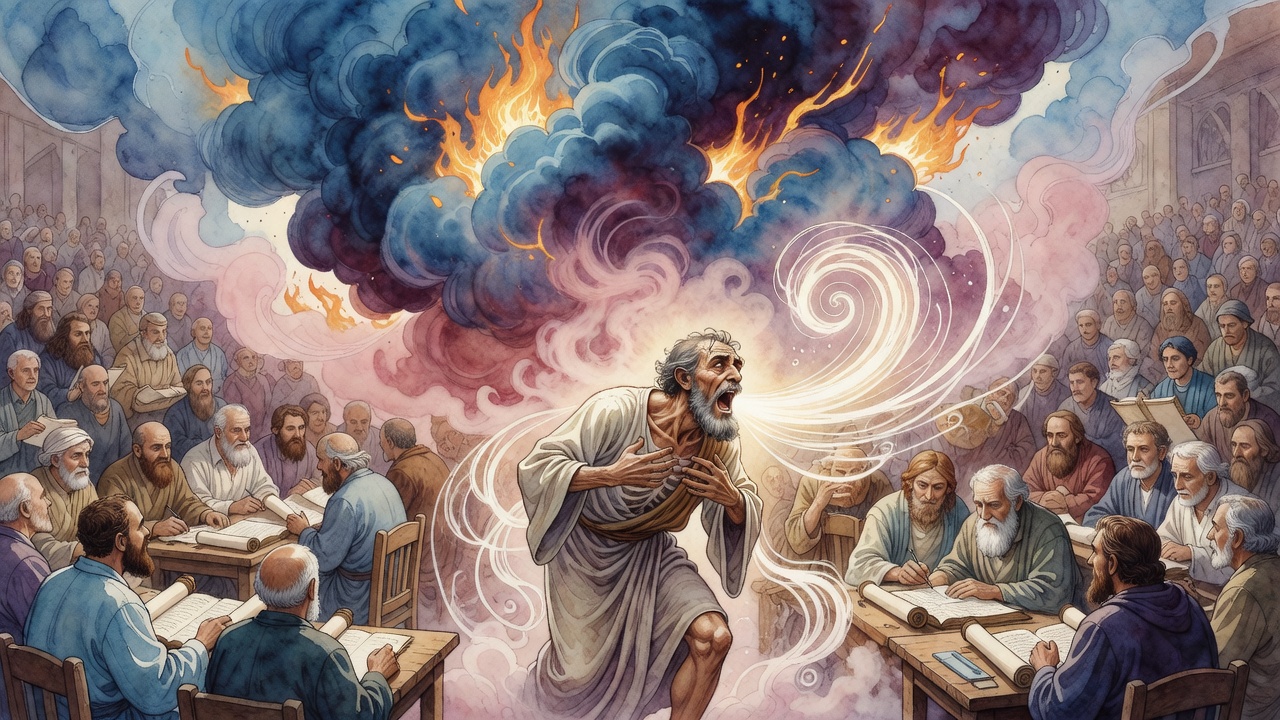
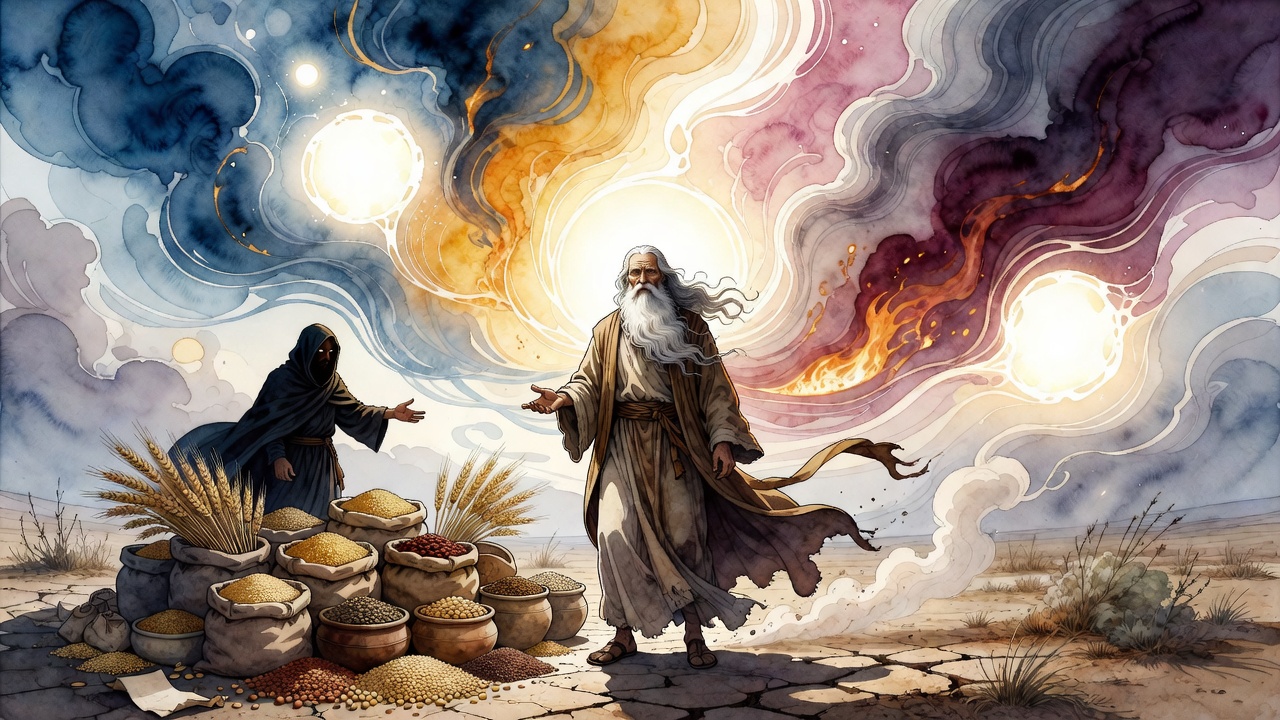
The road cut through a region cracked by drought. Dust rose at every step and settled on the tongue. A man stopped the traveler and asked where he came from, voice already measuring whether this stranger might be useful.
 Click for full size
"From a place of sages and rabbis," the teacher said. The stranger brightened as if rain had been promised. He offered a house stocked with wheat, barley, and every kind of legume if only the guest would settle there. Comfort stood on the table before a word of contract was written. In a year of batzoret, famine weather, the offer was not small talk. It was a full life held out in sacks.
A Thousand Thousand Dinars
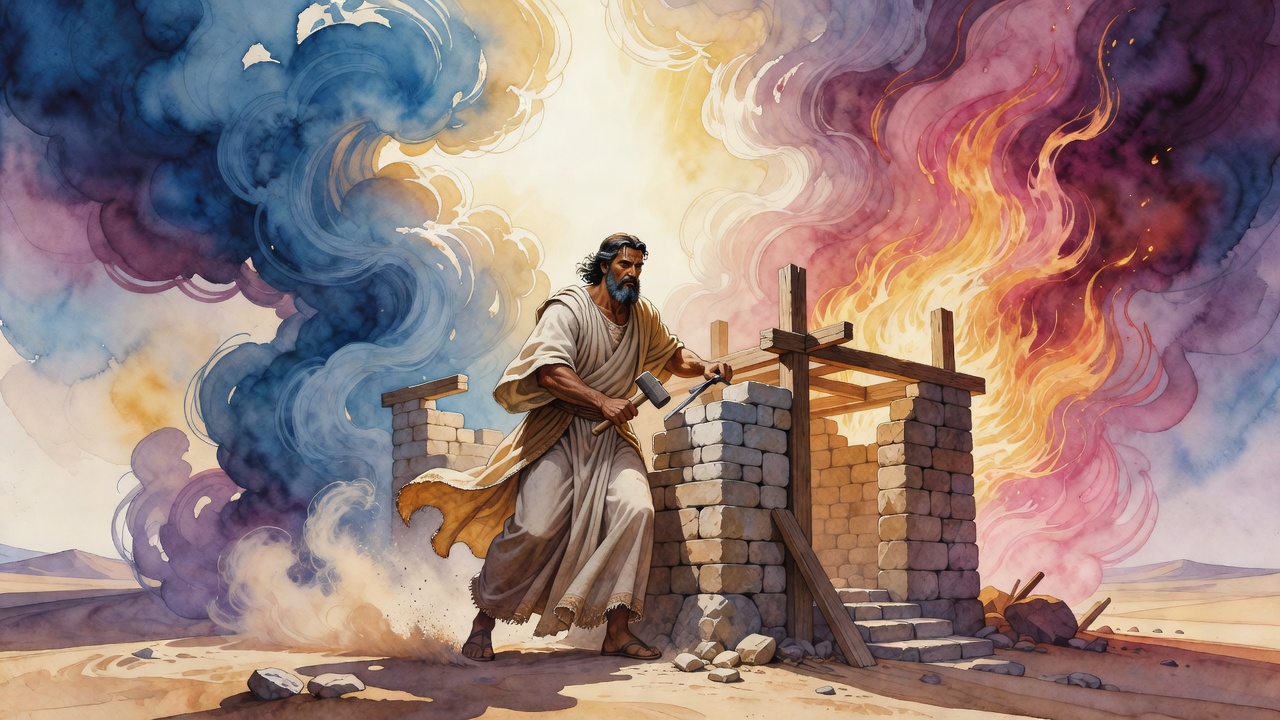
"Even if you give me a thousand thousand gold dinars," the teacher answered, "I will not leave the place of Torah."
The stranger pressed him for a reason. Gold and grain are hard to refuse with a straight face when the land is thirsty. The answer stayed blunt. People who plant themselves where there is no Torah feed themselves well, then die and vanish. Nothing escorts a person to the grave except Torah and good deeds. Grain fills a belly for a season. Study walks a soul into the night that follows.
He would rather walk hungry on a road that still held learning than sleep full in a storehouse that held none. The dinars he named were not a bargaining chip. They were a ceiling high enough to prove the refusal was not about price.
Primary, Not Secondary
The same stubbornness speaks in another register. "You shall speak in them," the Sifrei reads, and then sharpens the command: make the words primary and not secondary. Do not mix them with other chatter until they lose their edge. Do not say, I have learned the wisdom of Israel, now I will go learn the wisdom of the Canaanites, as if Torah were a first course before foreign desserts.
"Walk in them and do not depart." Sit in your house with them. Walk the road with them. Let them lead when you walk, guard when you lie down, speak when you rise (Proverbs 6:22). The teacher on the drought road was living that verse with his feet. He would not trade the primary for a secondary comfort, even when the secondary looked like survival and the primary looked like dust.
Other wisdom may have value. The midrash is not interested in flattering it. It is interested in what happens when Torah slides to the side of the plate and never returns to the center.
What the Heart Carries Away
Rabbi Hananiah, the deputy High Priest, taught that one who lays the words of Torah on the heart is freed from a list of terrors: sword, hunger, madness, lust, the evil inclination, adultery, vain thoughts, and the yoke of human cares. One who does not lay them there inherits the opposite load. The heart is not a metaphor only. It is a place where words either sit or do not sit, and the rest of life rearranges around that fact.
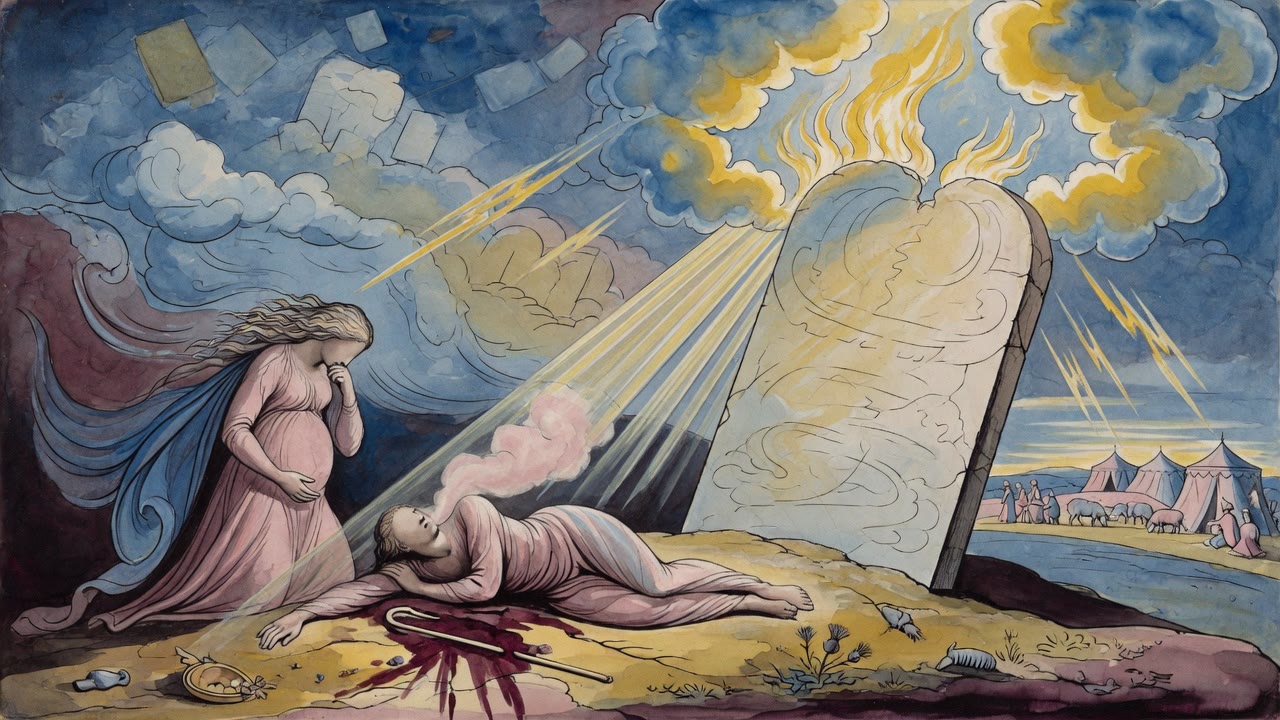
The midrash turns hunger into a bitter joke. When a man longs for barley bread and cannot afford it, his enemies demand white bread and rich meat. When he wants a drop of sour wine, they demand the best wine of all lands. When he wants a wool shirt, they demand silks. Want becomes mockery. The curse does not only deprive. It humiliates. "In want of all things" is read as a house without lamp, knife, table, even without vinegar and salt, the small sharpness that makes poor food bearable.
The teacher refused a full storehouse because he knew empty storehouses of the spirit kill more thoroughly than empty barns. He chose the anxiety of travel over the anxiety of a life without learning.
When the Gaze Turns
When Israel keeps Torah, God looks down from heaven in blessing. When they abandon it, that same gaze turns to curse, and the kingdoms of the nations rise and prosper. Daniel's vision of the host of heaven cast to the ground is read as Israel brought low by neglect of Torah. Truth thrown to the earth is the signal for foreign power to succeed. "And it cast truth to the ground, and it acted and prospered" becomes a verdict on a people that dropped the words first.
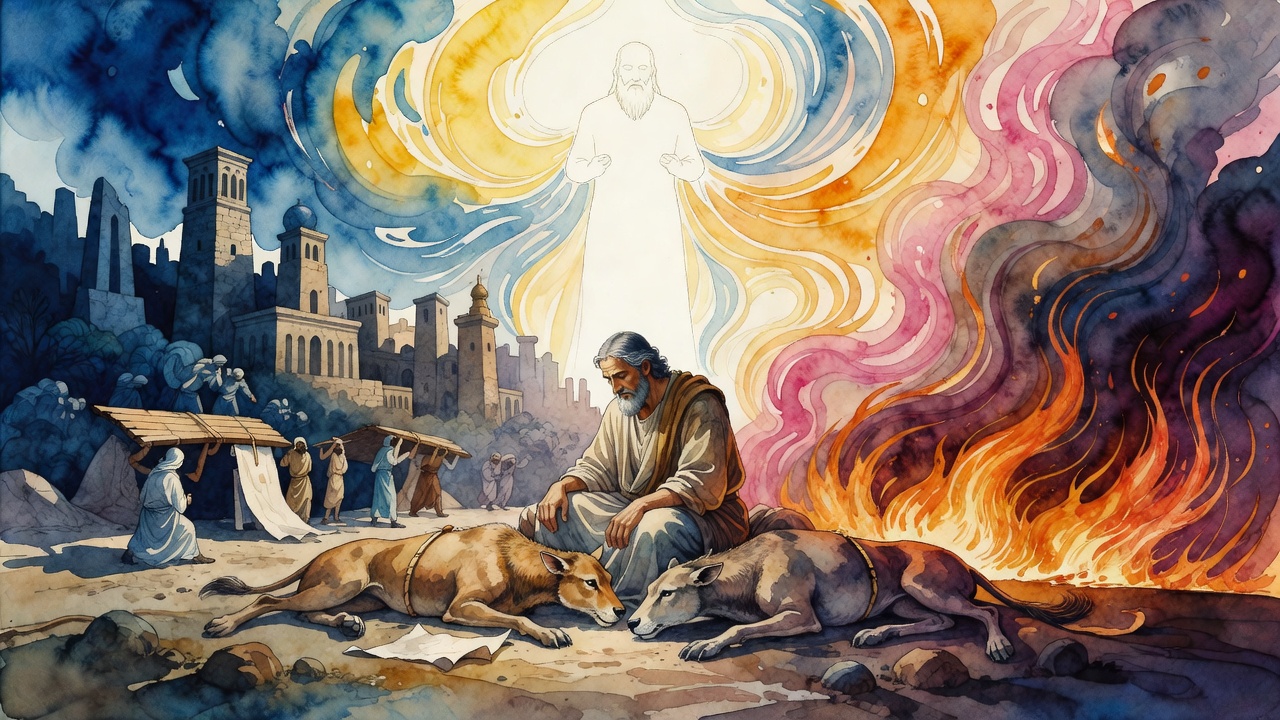
Jerusalem and the Temple did not fall to swords alone. They fell when Torah was set aside. The teacher on the dry road was answering a national question with a personal refusal. He would not become another man who prospered without learning and left nothing to walk him home.
Blessing Longer Than Curse
Still the sources refuse to let the curse own the last line. A human ruler's curse often outweighs his blessing. With God the blessing runs longer: from the first letter of the alphabet to the last, while the curse covers a shorter span. From "If you walk in My statutes" through the long stretch of good, versus a tighter run of blows when the statutes are refused. The measure is not symmetrical. Mercy stretches farther than the whip.
The man who refused wheat was betting on that longer measure. He walked back toward the place of sages with empty hands and a full claim: the road of Torah still escorts when barns burn and empires change names. The stranger kept his storehouse. The teacher kept the only wealth he trusted to outlast drought.
← All myths