5 min read

He Thought Children Ended the Need for a Wife

A man with grown sons planned a solitary old age. The sages answered with Eden's oldest verdict and the miracle of a child held nine months in the womb.

Curated by Arthur · Told by Maggid ·
Table of Contents
  1. The House After the Children
  2. What the Garden Named
  3. The Widow in the Market
  4. Nine Months Under Guard
  5. What Loneliness Refuses
He Thought Children Ended the Need for a Wife Click for full size

The House After the Children

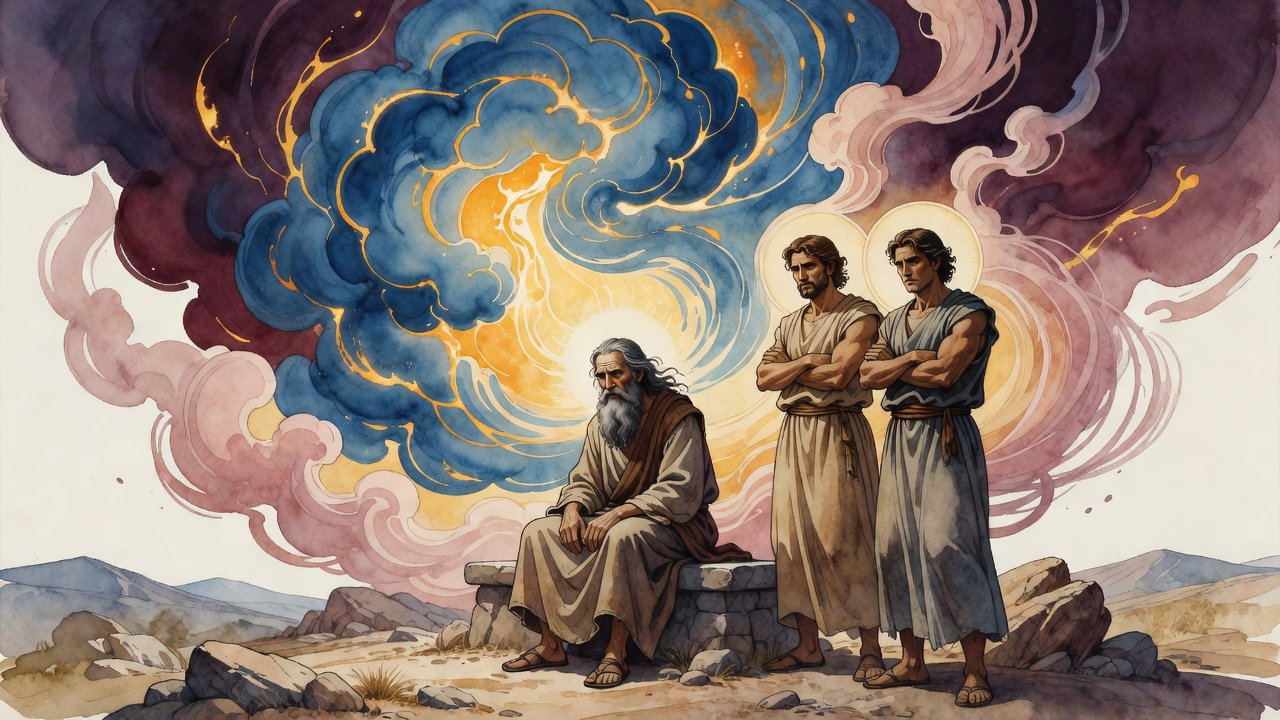
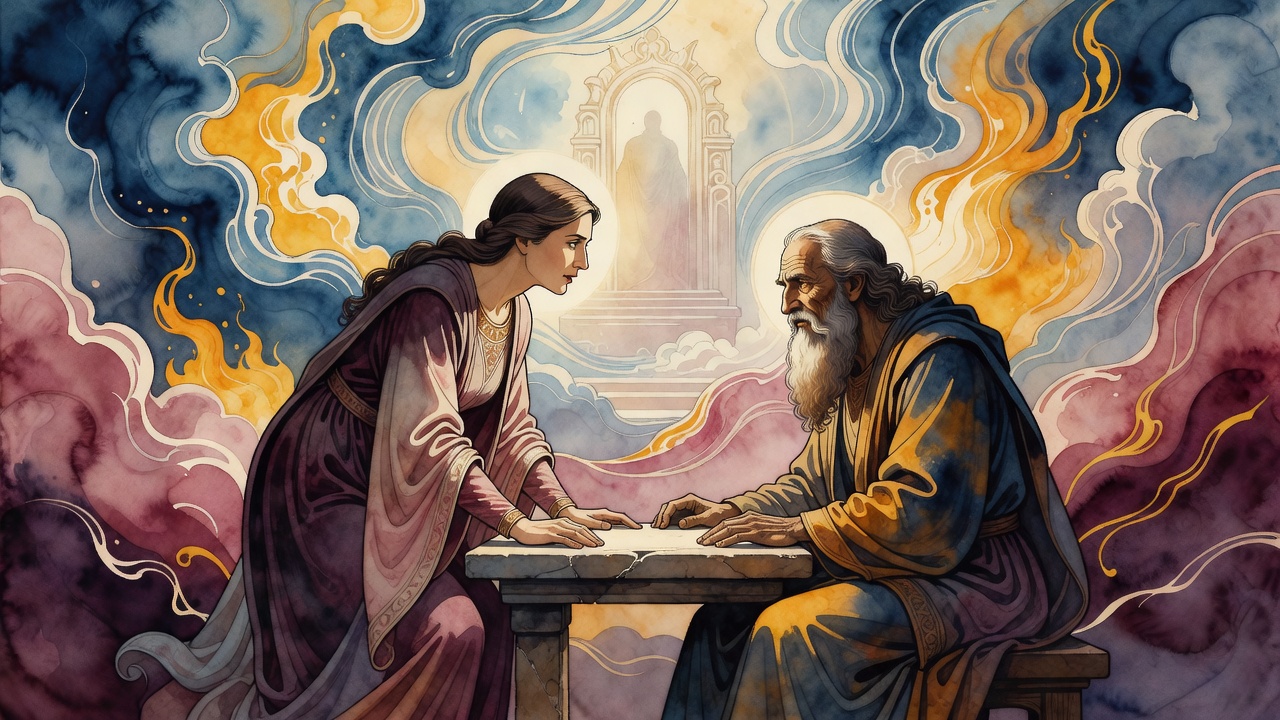
The last son married and left, and the man closed the door on an empty room with a satisfied breath. He had done his duty. He had filled the earth as the first command required. Now, he told himself, solitude was earned rest. The bed could be narrow. The table could hold one cup.

Rav Nachman, speaking in the name of Shmuel, cut that comfort open. Even a man already blessed with several children may not remain without a wife. The proof was not a later statute. It was the first verdict spoken over flesh in Eden: "It is not good for the man to be alone" (Genesis 2:18).

The verse does not say it is not good for the man to be childless. It names aloneness itself. Children do not cancel the sentence. A full house of offspring does not make a partner optional, and a quiet old age is not a loophole.

What the Garden Named

Adam received that word before any cradle, before any inheritance dispute, before any wedding feast for a grown son. Companionship was not a tool for producing heirs. It was the structure of a human life that God called good only after a second person stood opposite the first.

The man who planned a solitary old age was not breaking a social custom. He was trying to rewrite the Garden's diagnosis. The sages refused the rewrite. Solitude remained the problem the Torah named, and a household without a partner still fell under that ancient word no matter how many grandchildren ran through the courtyard on festival days.

The Widow in the Market

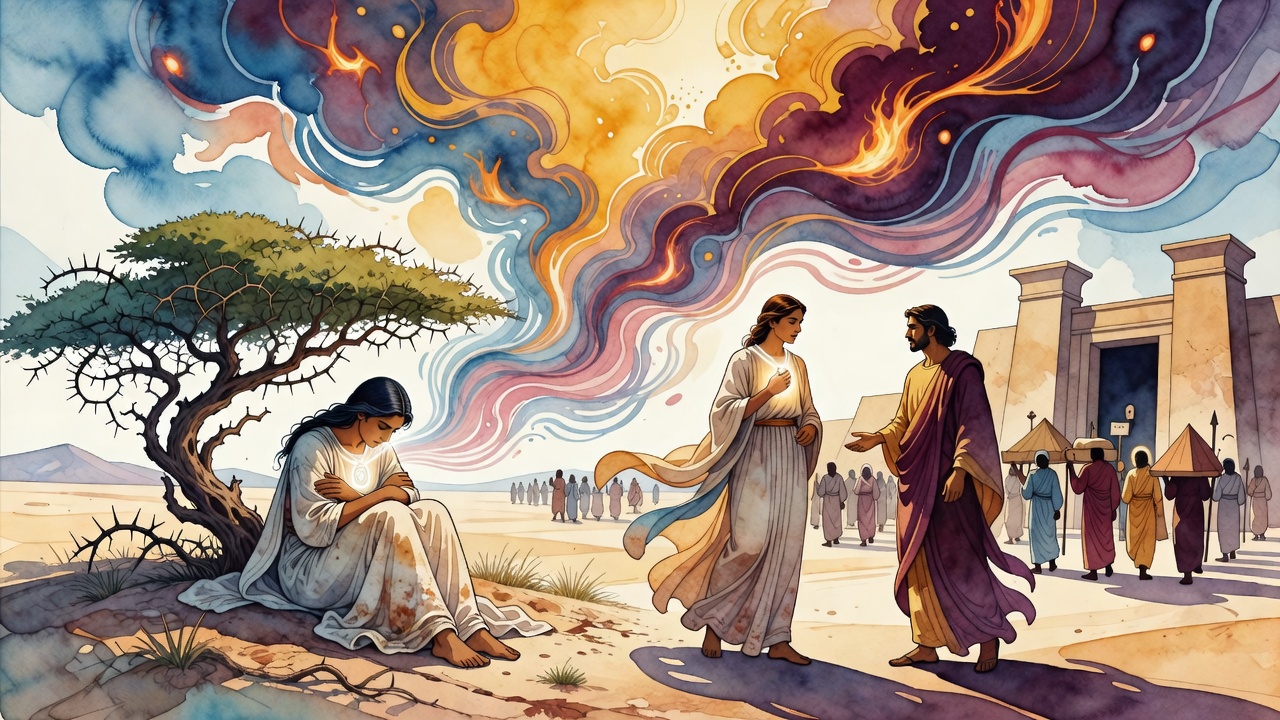
Another voice pressed in from a different corner of the tradition. The Alphabet of Ben Sira, fixed to the letter Ayin (עין), "eye," warned, "Blind your eyes because of a widowed woman, and do not covet her beauty in your heart." The proverb was sharp, even harsh, and it tied the warning to the letter itself, as if sight were the danger and the alphabet the medicine.

The same Torah that forbids abandoning a widow also knows how desire can dress itself as pity. Care for the fatherless and the bereaved is a command. Coveting her face among the stalls is another story. The child prodigy of Ben Sira's alphabet did not cancel the duty to protect. He warned a man not to confuse protection with appetite, and not to let the eye invent a claim the law never gave him.

Between the empty house and the marketplace, a man could fail in two directions: by refusing companionship, or by seeking the wrong kind of looking.

Nine Months Under Guard

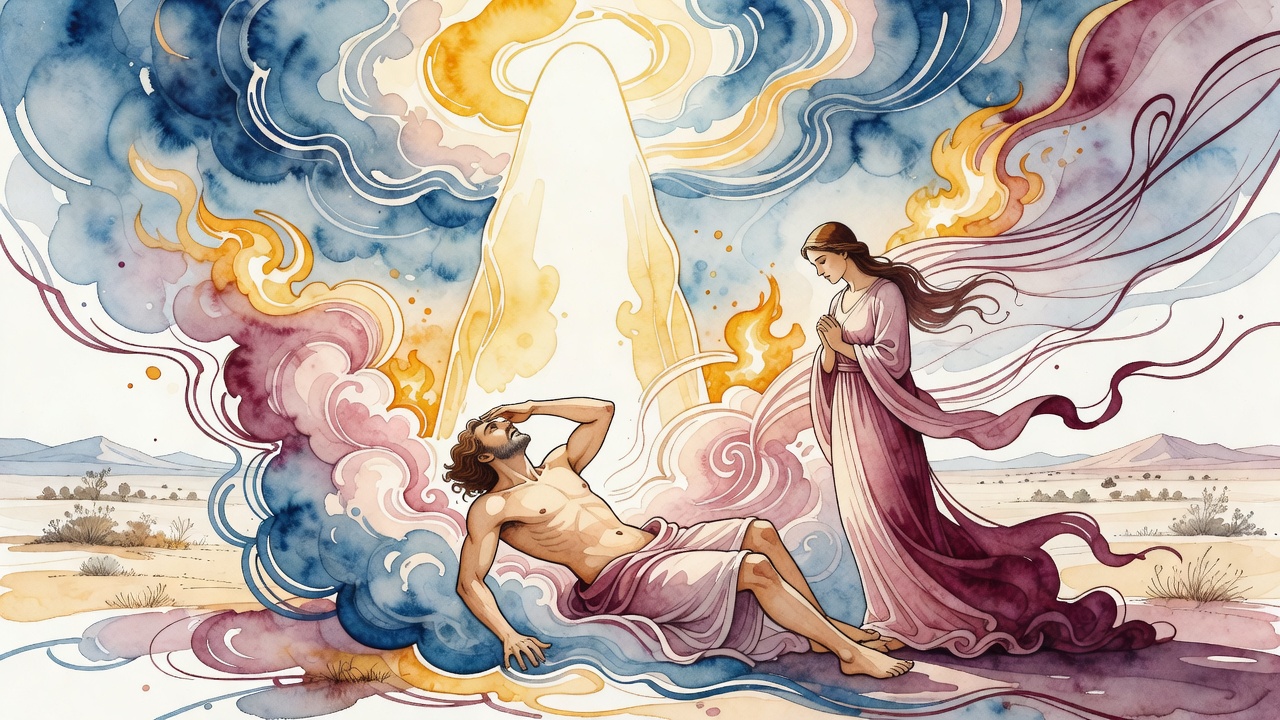
Meanwhile, in the body of a woman, a different miracle was already running. Rabbi Ayyevu said a person lowered into a hot bath for a single day struggles for life. An infant rests in the mother's belly for nine months, and the Holy One protects it so that its life does not fail. The masters repeated the image with a bathtub instead of a spring. The point held. Pregnancy is not neutral biology. It is sustained guardianship under pressure no adult bath could match.

The midrash on (Leviticus 12:2) also taught that who "comes first" in the act of coupling shapes the child, male or female, and that each sex depends on the other for the next generation. The male depends on the woman. The female depends on the man. Genesis already showed Milcah bearing sons and Bethuel bringing forth Rebekah (Genesis 22:20-23). Procreation is a paired labor, not a solitary achievement stamped finished when the last son leaves home.

What Loneliness Refuses

So the man alone after his children left was not finished with the human project. He had finished one chapter. The Garden still stood open with its first diagnosis. The womb still required two bodies and nine months of divine guarding. The widow still required eyes that could see her need without eating her beauty.

It is not good for the man to be alone. That sentence outlasted every cradle in his house. It outlasted his plan for a quiet old age. The favor of the first couple was never only about filling the earth. It was about not standing empty before God with only one's own voice for company, and not turning the eye into a thief in the market where the bereaved walk.

He walked past the empty chairs at the table and told himself the quiet was peace. It was not peace. It was a room missing a second will. The sages were not romantic about marriage. They were diagnostic. Alone is a condition the Garden named as not good, and no number of married children can reclassify it as good.


← All myths
From the tradition

Sources

3 sources

The texts behind this telling. Some cards carry a translation of the source; others are our own retelling of it, and each card says which. Every card links out to the original.

Yalkut Shimoni on Torah 22:10Yalkut Shimoni on Torah

Translation of the source text.Torat Emet (Yalkut Shimoni) · CC-BY-NC

Rav Nachman said in the name of Shmuel: Even though a man has several children, it is forbidden for him to remain without a wife, for it is said, "It is not good for the man to be alone" (Genesis 2:18).

Full source
Alphabet of Ben Sira, Letter AyinAlphabet of Ben Sira

Retold in our words. Read the original at the link below.Sefaria Community Translation · CC0

"Blind your eyes because of a widowed woman, and do not covet her beauty in your heart." That's what Ben Sira says, in the proverb attached to the Hebrew letter Ayin (ע). And it's a harsh one.

The Alphabet of Ben Sira, composed sometime between 700 and 1000 CE, doesn't pull punches. Here, the child prodigy warns his teacher against being lured by a widow's attractiveness, claiming that "her children are the children of straying." The implication is that a widow who remarries might carry complications from her previous life, loyalties, obligations, and heirs whose allegiances lie elsewhere.

This advice runs against the grain of much of rabbinic literature, which generally treats caring for widows as a sacred obligation. The Torah itself repeatedly commands protection of widows and orphans. The tension is part of what makes the Alphabet of Ben Sira such a fascinating text. It deliberately courts controversy, mixing genuine folk wisdom with provocative, even offensive, claims. Scholars have long debated whether the text is sincere or satirical, a parody of overly confident wisdom literature.

The word Ayin (עין) itself means "eye," which makes the proverb's opening command to "blind your eyes" a clever wordplay. Ben Sira ties his advice directly to the letter he's reciting, a literary flourish that runs through the entire alphabetical section.

Full source
Midrash Tanchuma, Tazria 3Midrash Tanchuma

Retold in our words. Read the original at the link below.Townsend 1989 translation of Midrash Tanhuma, S. Buber Recension · CC-BY

Another interpretation (of Lev. 12:2), “When a woman emits her seed [and bears a male]”: If the woman comes first, she bears a male; if the man comes first, [she bears] a female. R. Abbin the Levite said, “The text has given you a clue (in vs. 5), ‘If she bears a female’ (with no mention of her giving her seed). If the man comes first, a female is produced; [if] the woman comes first, a male is produced. Thus it is stated (in vs. 2), ‘When a woman emits her seed and bears a male.’” R. Hiyya bar Abba said, “Therefore, the male is dependent (for his procreation) upon the woman; and the female, upon the man. Thus it is stated (in Gen. 22:20-23), ‘Behold Milcah, she also has borne sons to your brother Nahor, Uz his first-born and Buz his brother…. And Bethuel brought forth Rebekah.’ It also says (in I Chron. 2:48-49), ‘Maacah, the concubine of Caleb bore [Sheber] and Tirhanah. She also bore Shaaph the father of Madmannah, Sheva the father of Machbenah and the father of Gibea. And the daughter of Caleb] was Achsah.’ Thus females are dependent (for procreation) upon the man; and the males, upon the woman. It is therefore stated (in Lev. 12:2), ‘When a woman emits her seed.’” R. Ayyevu said, “The Holy One, blessed be He, performs a miraculous act with a person. When a person is put in a hot water for [only] a single day, is not his life struggling [to survive] because of it? But when an infant is put in its mother's belly for nine months, the Holy One, blessed be He, protects it.” Our masters have said, “The Holy One, blessed be He, has performed a miraculous act with this person. When the person is put in a bath tub for one day, does not his life fail because of it? But when the infant is put in its mother's womb for nine months, its life does not fail because of it. Why? Because the Holy One, blessed be He, is performing a miraculous act with it (i.e., with the infant).” Job said (in Job 36:3), “I will fetch (‘S’) my knowledge from afar.” Now Job saw people, with a woman ('shh) giving birth to a man, and also the ship (of Prov. 31:14) sails in the midst of the waters inch by inch. Now he was surprised over these things and said (in Job 36:3), “I (like the woman of Prov. 31:14) will fetch my knowledge from afar.” R. Judah [bar Simon] said, “A woman's two haunches become like two haunches of stone, in order that she may have strength when she gives birth. As thus it is stated (in Exod. 1:16), ‘look at the birthstool (literally, the pair of stones).’” R. Meir said, “The Holy One, blessed be He, performs a miraculous act with the infant. How? Before the woman bears, she retains blood; after she gives birth, the blood departs to the breasts and becomes milk. Then the infant nurses on them.” R. Abba bar Kahana said, “The Holy One, blessed be He, performs a miraculous act with the infant. How? When the funda (i.e., pouch) is full with its mouth down, the coins are scattered; but the woman has her funda [with its opening] down, and the fetus is retained.” Another interpretation: An animal walks about with the fetus in the midst of its belly; but a woman walks about erect with the fetus in the midst of her belly, and the Holy One, blessed be He, preserves it.

Full source