5 min read

The Heavenly Voice From Horeb That Shames the Idle

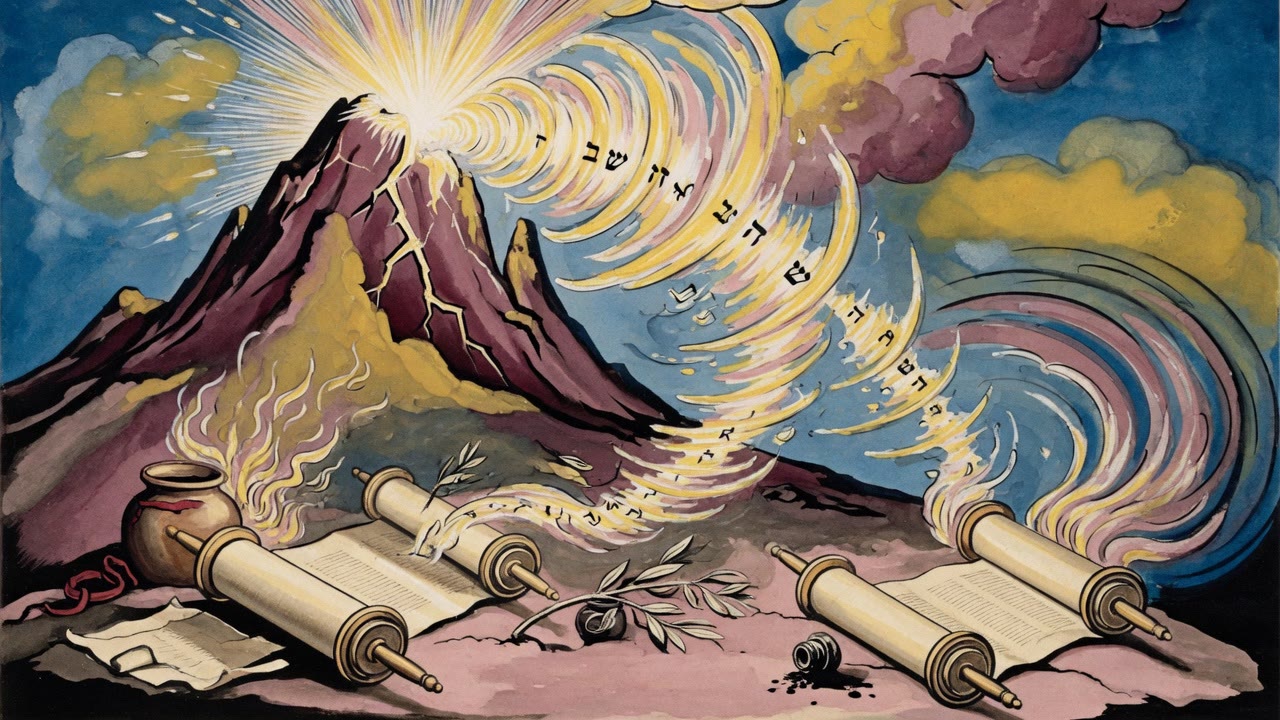
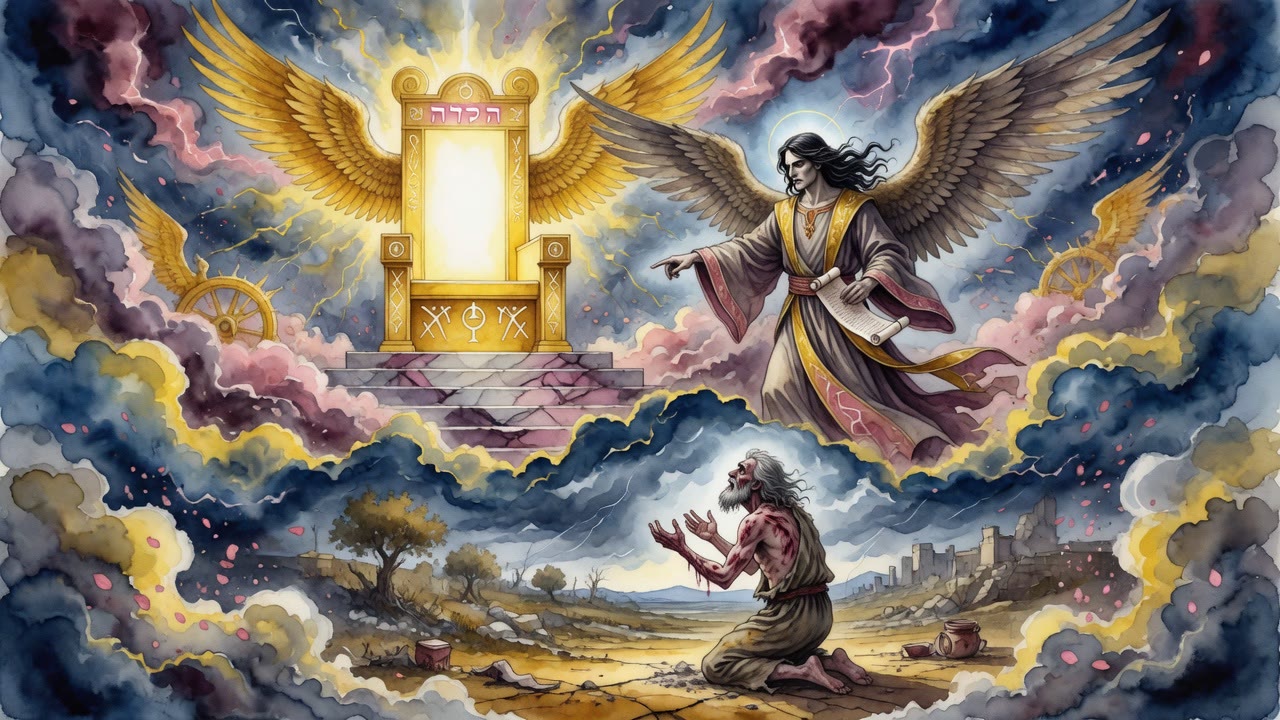
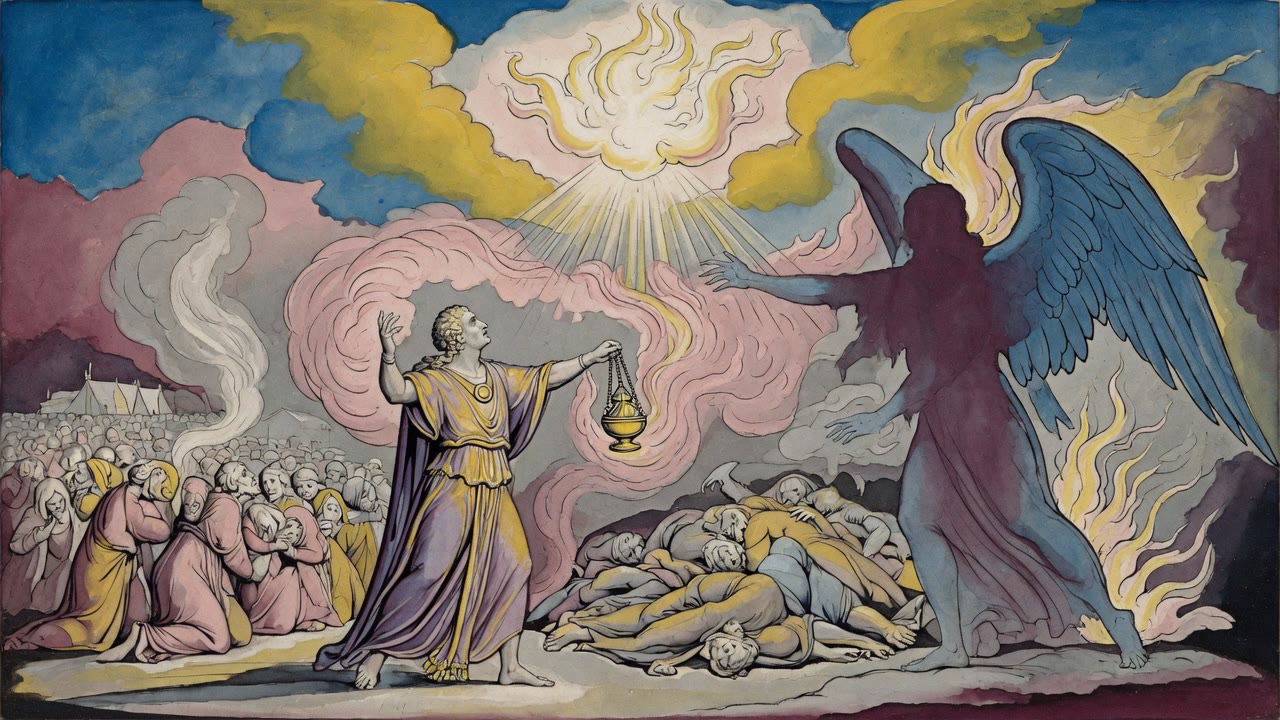
Each day a bat kol (a heavenly voice) leaves Mount Horeb crying woe over Torah left idle, mourning like a father whose carved gift lies unopened in the dust.

Curated by Arthur · Told by Maggid ·
Table of Contents
  1. The Voice That Does Not Thunder to Destroy
  2. The Orchard and the Sharecroppers
  3. Write These Words, Speak These Words
  4. A Book That Demands a Body
  5. Answer at the Table

Every dawn a voice leaves Mount Horeb. It does not shake mountains the way the first giving did. It mourns. "Woe to the creatures for the dishonor done to the Torah."

The Heavenly Voice From Horeb That Shames the Idle Click for full size

The tablets Moses carried were the work of God, graven by no mortal hand. Heaven still treats that gift as unfinished business. Whoever will not sit and labor in those words is called nazuf, held under rebuke, like a son who shames a father's gift by leaving it in the corner while dust settles on the carving.

The Voice That Does Not Thunder to Destroy

The bat kol, the heavenly echo, is not a second Sinai of fire. It is a daily summons. The tablets were broken once, yes, but the words endure, and the call to them never falls silent. Hope rides inside the woe: that one soul below will lift its eyes, open the book, and answer before the market noise swallows the morning.

Dishonor, here, is not only mockery shouted in the street. It is neglect practiced in a warm house. A treasure locked away and never studied is insult enough. The Master of the universe carved His speech into stone and placed it in human keeping. Silence in the study house is heard on the mountain as clearly as any calf's song once was.

The voice does not come to burn the camp. It comes to wake the camp. Mourning is a form of patience that still expects a reply.

The Orchard and the Sharecroppers

Teachers pressed a harder question still. Is it worse never to know, or to know and refuse? Rabbi Shimon ben Halafta said the one who studied and does not fulfill is punished more harshly than the one who never studied. Knowledge that dies in the hand is not neutral. It is a planted tree cut down for sport.

He told of a king with a beautiful orchard and two sharecroppers. One plants trees and then chops them down. The other plants nothing and chops nothing. The king's anger falls on the planter who destroyed. Potential turned into wreckage is a deeper wound than empty ground that never pretended to be a garden.

Isaiah's line is read in that light: grace may still reach the one who never studied righteousness (Isaiah 26:10). The one who learned the map and then chose the ditch stands under a heavier sky. "To observe, to perform" is not two hobbies stacked for display. It is one path with two feet, and Horeb's daily cry assumes both feet will move.

Write These Words, Speak These Words

Another pair of verses keeps the architecture honest. One breath says write these words. The next says by the mouth of these words. Written Torah and Oral Torah may not trade places. Rabbi Eleazar leaned toward the weight of what is written. Rabbi Yochanan leaned toward the living mouth that carries teaching forward from teacher to student without letting the fire go out.

The dispute is not a tear in the fabric. It is the fabric. Ink without voice becomes a relic behind glass. Voice without ink becomes a rumor that changes with every clever tongue. Horeb's daily cry assumes both: a text that can be opened and a mouth that will work it until the limbs obey.

Hosea's line about God writing the great things of His teaching sits in the same argument. Writing is real. Mouth is real. Swapping them until one cancels the other is another form of dishonor, quieter than neglect, just as fatal to a living tradition.

A Book That Demands a Body

The heavenly voice does not ask for admiration of Jewish books on a shelf. It asks for labor. Sit. Turn. Argue. Keep. The dishonor it names is the gap between possession and practice, between a people who carry Sinai in their luggage and a people who let Sinai rearrange their day, their contracts, their mouths.

Moses climbed for the words. Israel broke them once in the shadow of a calf. The voice from Horeb still treats every later morning as a chance not to break them again by indifference. A broken tablet can be rewritten. An ignored tablet is broken in a slower way, line by unread line.

Answer at the Table

Somewhere a student opens a page before the market noise thickens. Somewhere a teacher refuses to hoard what he knows, because a master who withholds can be stripped of wisdom while a rejected student is raised. Somewhere a person who learned a law yesterday arranges his hands today so the law is not a chopped tree in the king's orchard.

The bat kol (a heavenly voice) is already on the road from the mountain. It will arrive whether the house is ready or not. The only answer that quiets the woe is a life that treats the carved gift as unfinished work still in progress, still honored, still heavy in the hands.

Listen long enough and the mourning becomes an invitation. Open the book. Answer the mountain. Let the day begin under a voice that still cares whether the gift is used.


← All myths

From the tradition

Sources

3 sources

The texts behind this telling. Some cards carry a translation of the source; others are our own retelling of it, and each card says which. Every card links out to the original.

Midrash Tanchuma Buber, Ki Tisa 12:4Midrash Tanchuma Buber, Ki Tisa

Translation of the source text.Midrash Tanchuma (Buber), Public Domain, on Sefaria · CC-BY-SA

"And the tablets were the work of God" (Exodus 32:16). On each and every day a heavenly voice (bat kol) goes forth from Mount Horeb and says: Woe to the creatures for the dishonor of the Torah! For everyone who does not occupy himself with Torah is called "rebuked." [As it is said:] "the work of God", for they are the handiwork of the Holy One, blessed be He.

Full source
Devarim Rabbah 7:4Devarim Rabbah

Retold in our words. Read the original at the link below.The Sefaria Midrash Rabbah, 2022 · CC-BY

The rabbis of old grappled with this very question. They asked: Is it better to be ignorant of the Torah’s demands, or to know them intimately and then… ignore them? It’s a tough one.

Devarim Rabbah, a collection of rabbinic teachings on the Book of Deuteronomy, dives right into this. It quotes Rabbi Shimon ben Ḥalafta, who makes a rather stark claim: “Anyone who studied matters of Torah but does not fulfill them, his punishment is harsher than one who did not study at all." Harsher! for a second. Ouch.

So, what's the reasoning behind this seemingly harsh judgment? Rabbi Shimon offers a parable, a story to illustrate the point. He hires two sharecroppers to tend to it. One sharecropper eagerly plants trees, full of enthusiasm... but then, just as quickly, chops them down. The other sharecropper? Well, they don't plant anything at all, and they don't chop anything down either. They just… exist.

Which sharecropper would the king be angrier with? The one who did nothing, or the one who actively destroyed what he had built? The king's fury would be directed at the one who planted and chopped down. He had the potential to create something beautiful, but instead, he brought destruction.

The analogy to Torah study is clear. If we learn the Torah, if we plant those seeds of wisdom, but then fail to put them into practice, we're like that destructive sharecropper. We know better, and yet we choose to act against that knowledge. As Ginzberg recounts in Legends of the Jews, the Torah is not merely a collection of stories and laws, but a guide to living a righteous life. Knowing the guide and ignoring it is a profound betrayal.

The text then brings a verse from Isaiah (26:10) to support this idea: “Grace will be granted to the evil one who did not study righteousness.” The implication is that even the evildoer who didn't study has a chance at grace. But if someone did study and still chose wickedness? No grace. The verse highlights the weighty responsibility that comes with knowledge. The Zohar, a central text of Kabbalah, expands on this by emphasizing that true knowledge is inseparable from action; otherwise, it remains incomplete.

This all ties back to the verse “to observe, to perform all His commandments.” It’s not enough just to know them. We have to do them.

This passage isn't meant to discourage us from learning Torah. Absolutely not! Learning is vital! Instead, it serves as a powerful reminder. Knowledge demands action. Learning the Torah is a call to teshuvah (repentance), repentance and return. It's a call to align our lives with its teachings, to transform ourselves into those fruitful trees that bring beauty and blessing to the world. Are we ready to answer that call?

Full source
Yalkut Shimoni on Torah 404:4Yalkut Shimoni on Torah

Translation of the source text.Torat Emet (Yalkut Shimoni) · CC-BY-NC

"Write for yourself these words, for by the mouth of [these words]" (Exodus 34:27). Rabbi Eleazar said: the Torah is mostly in writing and a minority by mouth, as it is said, "I would write for him the great things of My Torah" (Hosea 8:12). Rabbi Yochanan said: it is mostly by mouth, as it is said, "for by the mouth of these words." And the other one too, is it not written, "I would write the great things"? That is asked as an astonished question. And the other one too, is it not written, "for by the mouth of these words"? That is because they [the Oral teachings] are difficult, and one is not able to state them fully in writing. Rabbi Yehudah bar Nachmani, the interpreter [meturgeman] of Resh Lakish, expounded: it is written, "Write for yourself these words," and it is written, "for by the mouth of these words." How can both stand? Words that are in writing you are not permitted to recite by mouth, and words that are by mouth you are not permitted to recite in writing. The school of Rabbi Yishmael taught: "these", these you write, but you do not write laws [halakhot]. Rabbi Yochanan said: the Holy One, blessed be He, made a covenant with Israel only for the sake of the words that are by mouth, as it is said, "for by the mouth of these words I have made a covenant with you and with Israel." They said: perhaps a new matter is different, for indeed Rabbi Yochanan and Resh Lakish would study a book of aggadah on the Sabbath, and they expounded thus: "It is a time to act for the LORD; they have voided Your Torah" (Psalms 119:126), better that one letter of the Torah be uprooted than that the Torah be forgotten from Israel. Great is circumcision, for it is weighed against all the commandments of the Torah, as it is said, "for by the mouth of these words I have made a covenant with you."

Full source