Heavens and Earth Rise Together Like Pot and Lid
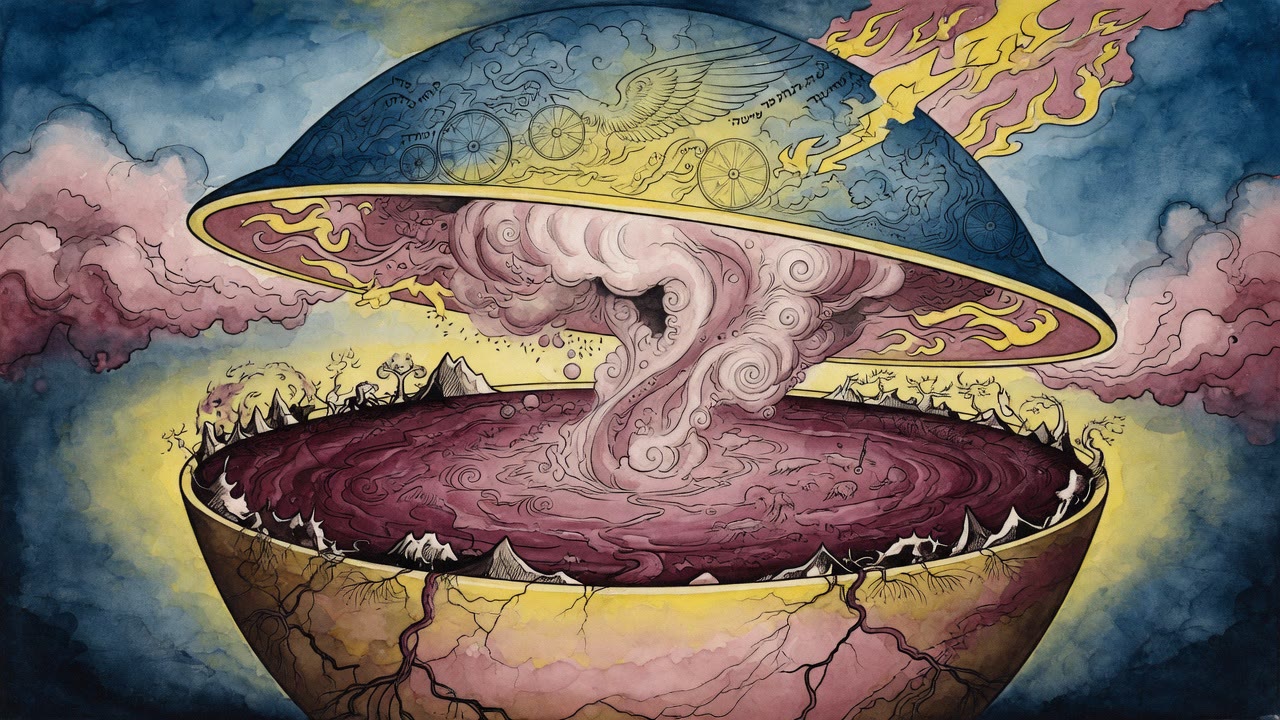
Beit Shammai built the throne first. Beit Hillel laid the floor first. Rabbi Shimon said they rose together like pot and lid.
Table of Contents
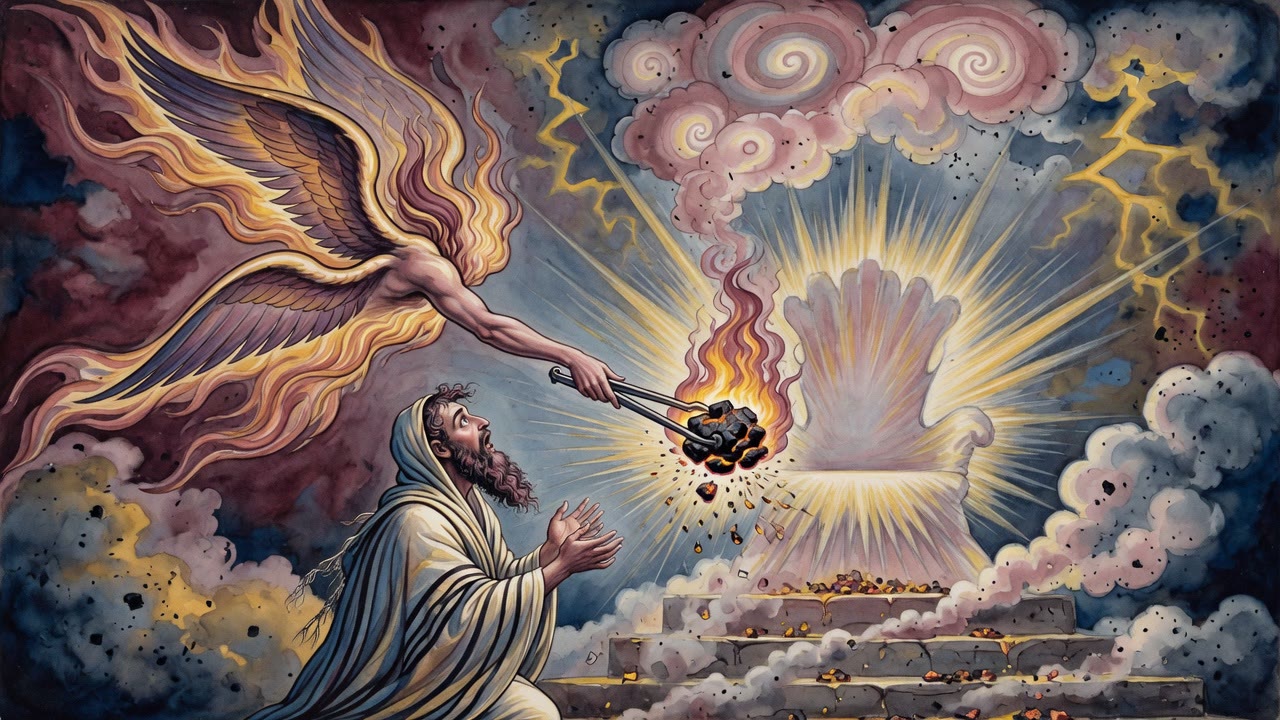
Before there was a first day anyone could count, the houses of the sages were already arguing about order. Beit Shammai said the heavens came first, then the earth. A king builds his throne before he sets a footstool under it. "The heavens are My throne, and the earth is My footstool," they quoted from Isaiah, as if the verse itself were a carpenter's plan.
 Click for full size
Beit Hillel flipped the beam. Earth first, then heavens. A king lays the foundation of a palace before he raises the roof. Psalms seemed to agree: foundations of earth first, heavens the work of the hands afterward. Two schools. Two blueprints. One world waiting to be told how it began.
Verses That Will Not Pick a Side
Rabbi Hanin shrugged at the war of prooftexts. "God created the heavens and the earth" sounds like Shammai. "The earth was" sounds as if earth already waited, which sounds like Hillel. Rabbi Yohanan, in the name of the Sages, offered a split decision: in creation, heavens first; in completion, earth first. Half a crown for each house.
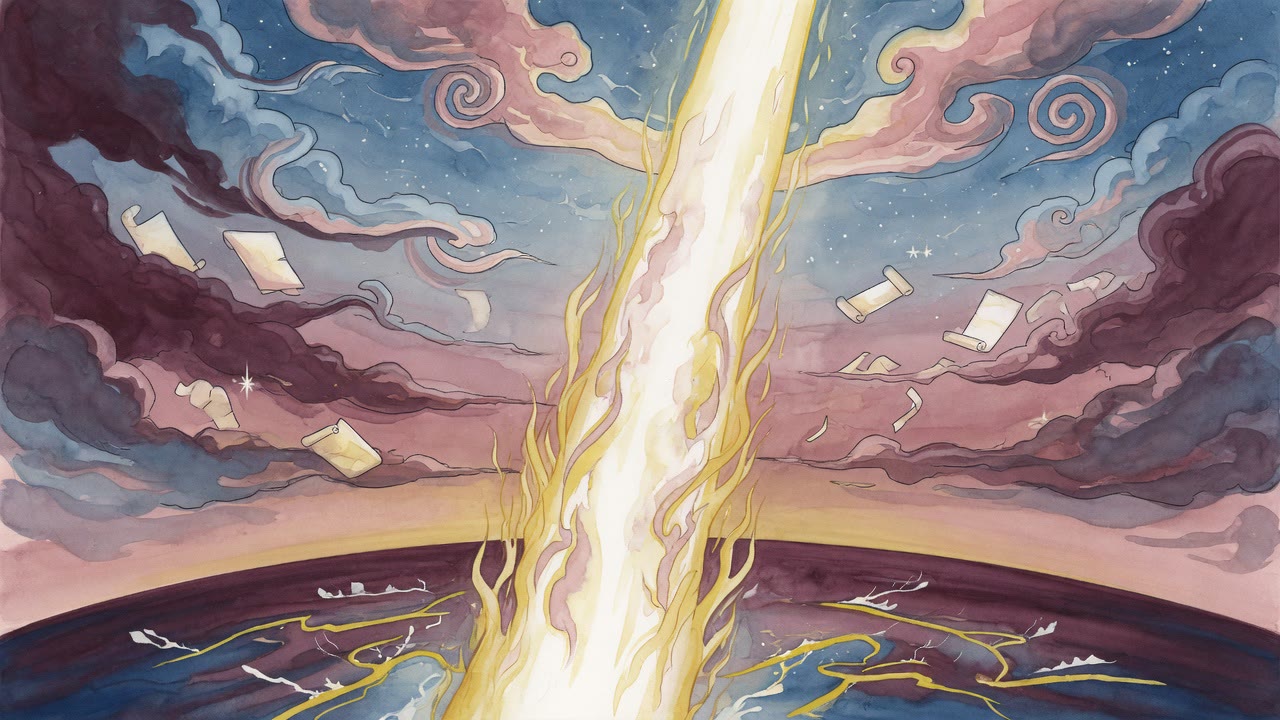
Then Rabbi Shimon ben Yohai refused the whole frame. Why fight over sequence if they rose together like a pot and its lid? Isaiah again, but another line: "I appointed them; they arise together." Simultaneous. Equal pressure on both sides of the hinge.
Why the Torah Switches the Order
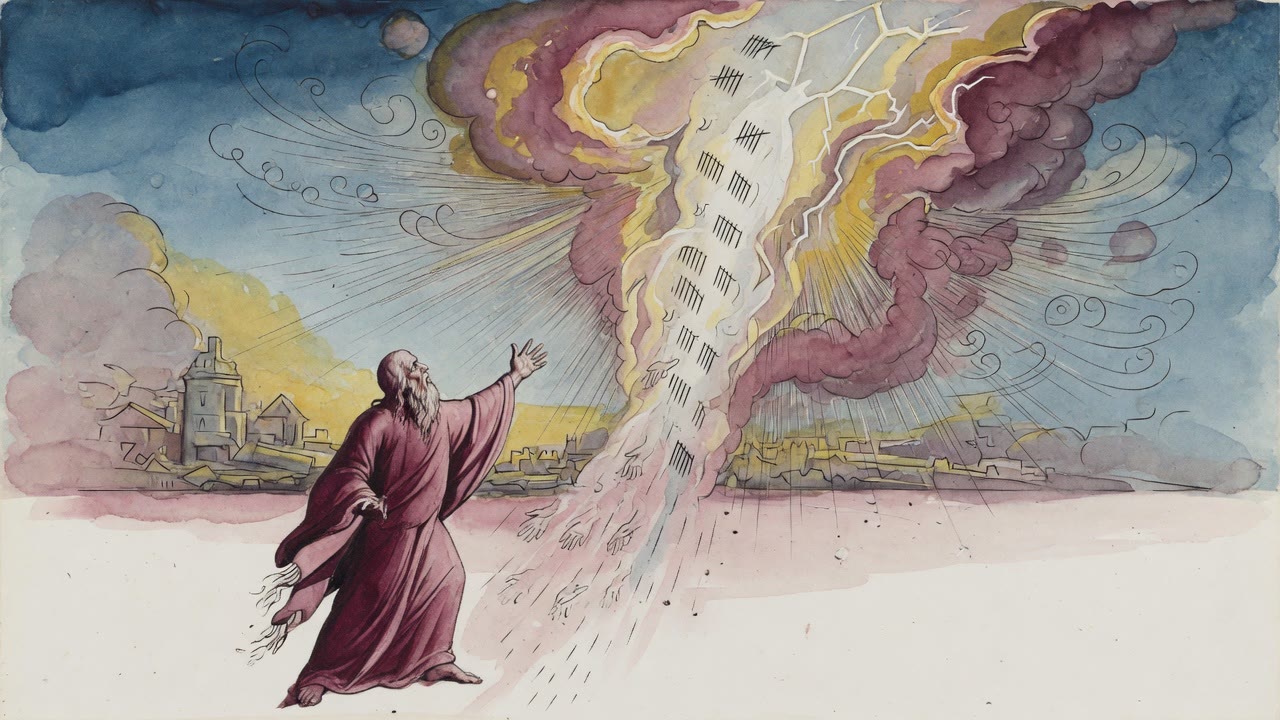
His son Rabbi Elazar asked the next question. If they were created as one act, why does Scripture sometimes name earth first and sometimes heavens? To teach equality. He ran the list until ears rang. Abraham, Isaac, and Jacob. Moses and Aaron. Joshua and Caleb. Turtledoves and young pigeons. Honor of father and honor of mother. Wherever a fixed order appears, another verse reverses it, so no one mistakes sequence for rank.
The argument about sky and soil became an argument about worth. Upper does not mean more beloved. Lower does not mean leftover.
When Light Is Called Day and Means Israel
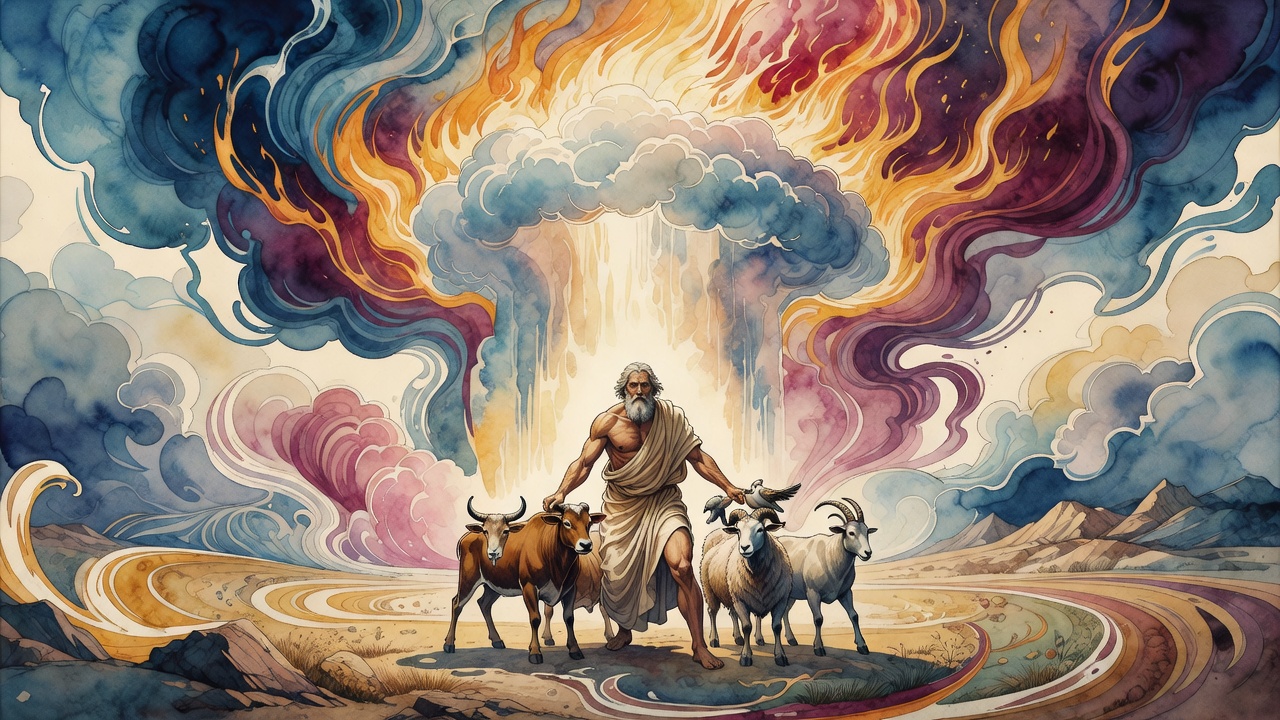
Later readers of the first morning heard more than chronology. When God called the light "day," the Tikkunei Zohar heard Israel. Light as a people. Clarity as a name. Darkness called "night" as the shadow side that will not step into that clarity. "And it was evening, and it was morning, one day" braided Isaac's evening with Abraham's morning: restraint and outpouring, judgment and kindness, bound into a single counted day.
Creation was never only furniture. It was already a map of who would carry the light and who would cling to the dark when the light finally stands in full.
Pot, Lid, and the People Named Day
So the first workshop ends with two images that refuse to let go of each other. Heavens and earth rising together like pot and lid. Light named day and read as Israel. Sequence fights give way to partnership. Hierarchy softens into mutual need. The footstool is not an insult to the throne. The foundation is not a slight to the roof.
A child who learns Genesis as a race between sky and soil misses the quieter ruling: they arise together, and the light that opens the count is already a people learning how to be day in a world that still knows night.
Equality Taught by Reversed Lists
Elazar's chain of pairs is easy to skim and hard to live. Father before mother in one verse, mother before father in another. Moses before Aaron, then Aaron's name first when the moment requires it. The midrash is not playing name games. It is training the ear against permanent ranking dressed up as holy order.
Beit Shammai's throne-and-footstool image still has force. Height matters in some registers of glory. Beit Hillel's foundation image has force too. Without floor, no roof. Rabbi Shimon's pot and lid refuses to let either school own the morning alone. Creation as mutual rising. Two hands of one Maker moving as one appointment.
When the Tikkunei Zohar later calls light "day" and hears Israel, the old debate gains a people-shaped stake. If heavens and earth are equal partners, Israel as named light is not license to despise the dark ground others still walk. Abraham's morning and Isaac's evening inside "one day" keep kindness and judgment braided. A nation called light still lives inside a counted day that needs both edges.
The first workshop of the sages, then, is less about winning a chronology fight than about learning how to hold two true pressures without crushing either. Sky and soil. Kindness and restraint. A people of light and a world that still knows night. Pot and lid, sealed together, holding whatever the day will cook.
On a clear night a person can still feel the old quarrel in the body. Neck tilts back toward throne-language. Feet press foundation-language. Rabbi Shimon's answer does not cancel either sensation. It asks the neck and the feet to rise in the same breath, pot meeting lid, so that neither heaven nor earth becomes an orphan in the story of the first morning.
Israel named as light does not float free of that bargain. A people called day still wakes on soil and prays under sky. Abraham's open hand and Isaac's closed one share the counted hours. The midrash's reversed honor lists keep whispering that the verse which names you second has not ranked you second in love.
← All myths