5 min read

Astrologers Who Burned Their Star Charts

Stargazers came baffled that Israel still lived. The sages said God names the stars, and Israel is not subject to their charts.

Curated by Arthur · Told by Maggid ·
Table of Contents
  1. Charts That Predicted a Death That Did Not Come
  2. When the Sky Becomes a Courtroom
  3. Watcher of Israel, Eyes Over All Flesh
  4. Charts in the Fire

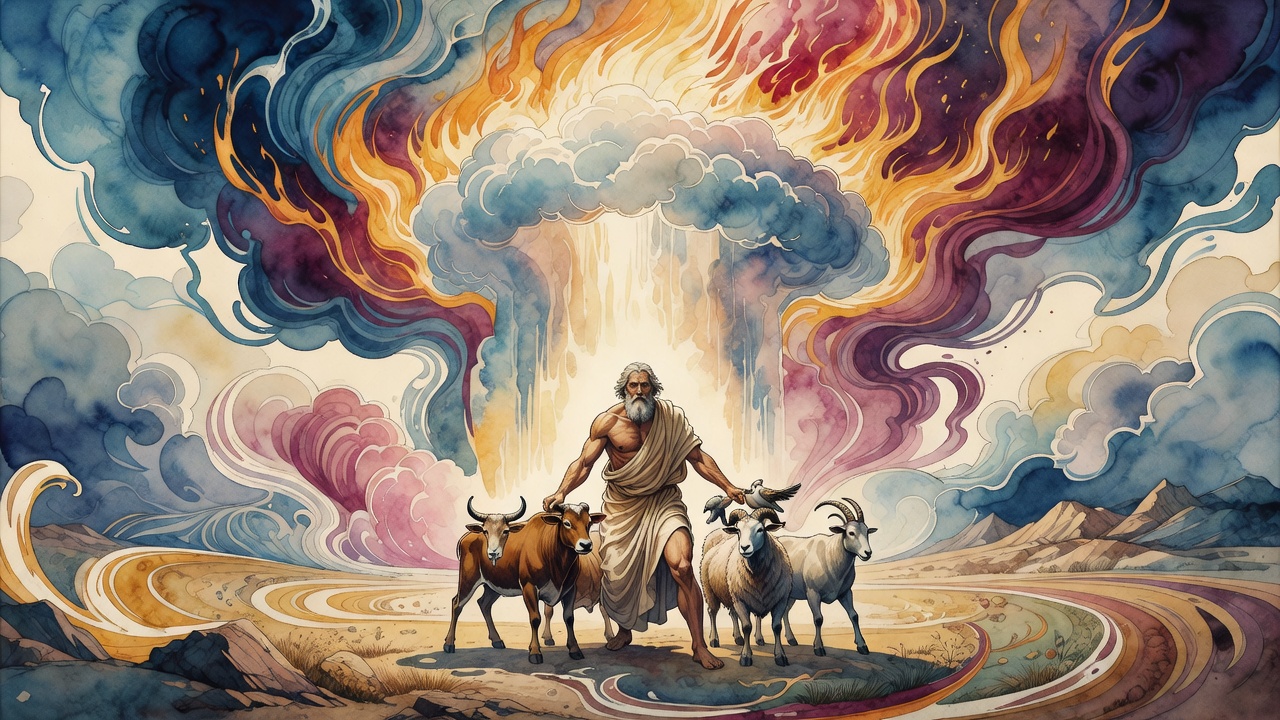
They arrived with ink-stained fingers and rolls of charts that had guided kings. Dust of many roads clung to their cloaks. In the Jewish court they did not bow first to the judges. They bowed to their own confusion.
Astrologers Who Burned Their Star Charts Click for full size

"We have read the heavens for nations," one said. "The stars do not lie. With your people the stars are wrong every time."

Charts That Predicted a Death That Did Not Come

By every astrological calculation Israel should have been destroyed long ago. Their constellations predicted doom. Empires the stars promised would endure forever had already fallen into dust, and the people the stars marked for erasure still bought bread in the market and taught children to read.

The stargazers had watched this for years from distant lands. Survival was the riddle their instruments could not solve. So they came to ask the people who should not have been there how they were still there.

The sages did not flinch. "Israel is not subject to the stars," they said. "He counts the number of the stars; He calls them all by name" (Psalms 147:4). God commands the stars. The stars do not command His people.

The fate of Israel, they taught, is determined not by celestial mechanics but by the covenant between God and Abraham's descendants.

When the Sky Becomes a Courtroom

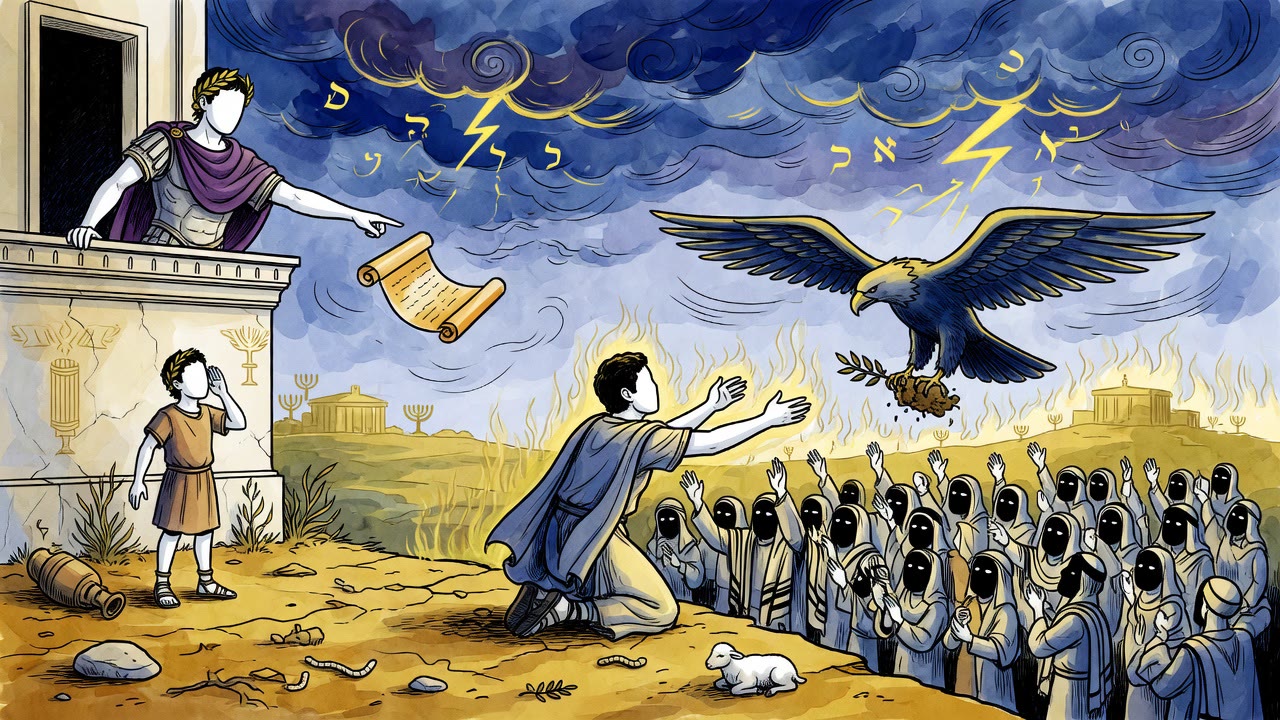
Another teaching turns the heavens from machinery into witness. The word for heavens hides a second lesson in the way it sounds. The sky is not only a roof over the world. It is a witness that watches what people do below.

When a person lives well, the heavens become a courtroom that speaks in his favor, for the Psalmist says the heavens declare God's righteousness through the lives of the righteous. When a person hides his sin and thinks no one is looking, Job warns that the heavens will eventually reveal his guilt. The same sky that praises the upright will expose the corrupt.

Nothing done under it stays secret forever. The air remembers. The One who made the sky reads that record with perfect attention.

The astrologers had treated the heavens as a book of fate. The sages treated them as a book of testimony.

Watcher of Israel, Eyes Over All Flesh

Sifrei on Deuteronomy presses the question of attention. "Behold, He neither slumbers nor sleeps, the Watcher of Israel" (Psalm 121:4). Does that mean God watches only Israel? Job answers that in His hand is the soul of every living thing and the spirit of all flesh.

The midrash refuses a cheap choice. God watches everyone, and yet it is as if He is watching only over Israel. Because of that intense focus, He can watch over everyone else as well. The same logic holds for the Temple: "My eyes and My heart shall be there all of the days," not because God is absent elsewhere, but because concentrated presence radiates outward.

A holy center does not shrink care. It focuses it until the world comes into clarity.

Charts in the Fire

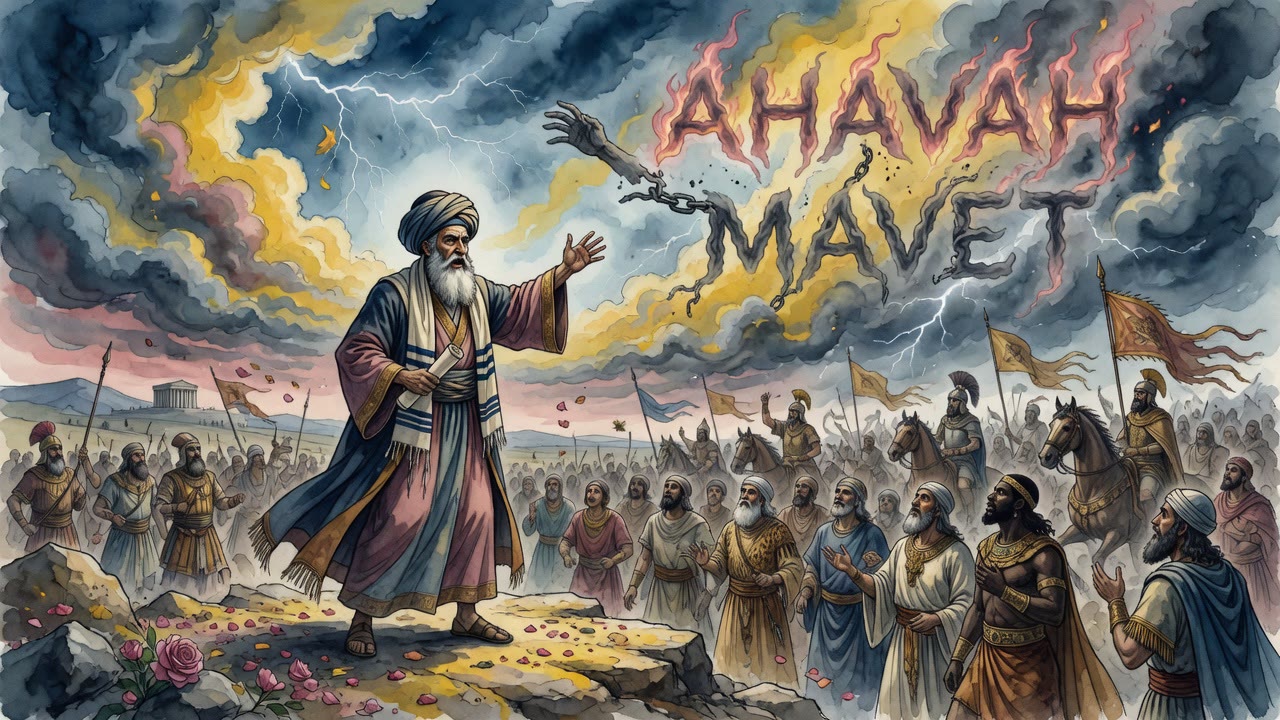
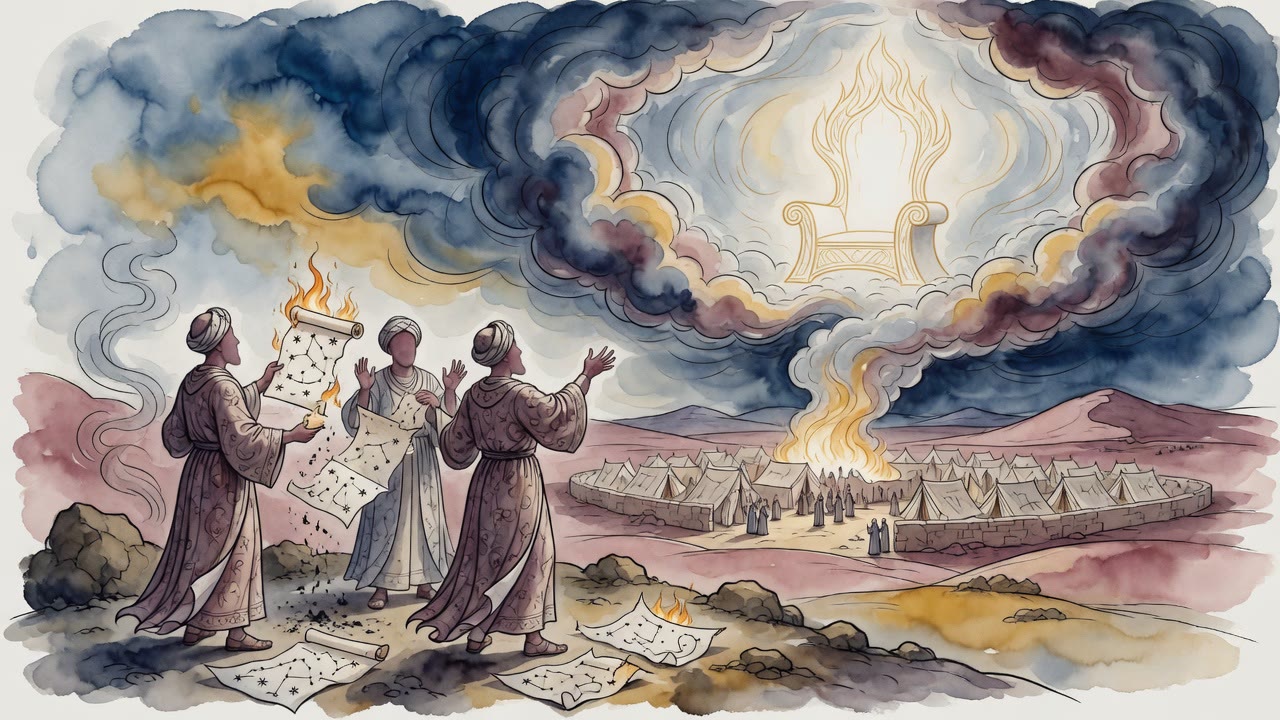
The stargazers left the court quieter than they entered. Everything they had believed about destiny had been overturned in a single conversation. That night, outside the city, they burned the charts that had failed them. Sparks rose like tiny false stars and went out.

They renounced the old craft and converted to the faith of Israel because they had found a power greater than the heavens themselves. Not a power that ignores the sky. A power that owns it.

In the morning the real stars were still there, cold and exact. Under them, Israel bought bread again. The covenant did not need the charts' permission to continue.

One of the converts kept a single ash flake from the burned charts in a pouch, not as magic, but as a reminder of the night his certainty died. When townsmen asked what he now read instead of stars, he pointed at the people buying bread and said, "A covenant older than my ink."

On another night a thief worked under a clear sky and believed the roof of the world was blind. The midrash of the witnessing heavens would have terrified him if he had known it. The same sky that the astrologers once treated as fate is, in Jewish speech, a record. Private sin is not private to the One who reads air.

In the Temple courts the watchfulness teaching took still another shape. Eyes and heart fixed there "all of the days" does not shrink God to a building. It names a focus from which care radiates. Israel is not a favorite toy. Israel is a lens. Through concentrated attention the whole field of living souls comes into view.

The former stargazers learned to pray without instruments. Their fingers, once always inking angles, learned to be empty. Above them the real stars kept their courses, demoted from masters to servants of a Name that counts them one by one.

In the court record no one wrote a formula for converting stargazers. They wrote only that men who trusted ink and angles left trusting a covenant. The difference is not anti-sky. It is a reordering: the Name above the constellations, Israel under mercy, the heavens as witness rather than tyrant.


← All myths
From the tradition

Sources

3 sources

The texts behind this telling. Some cards carry a translation of the source; others are our own retelling of it, and each card says which. Every card links out to the original.

Exempla of the Rabbis, No. 256Exempla of the Rabbis (Gaster, 1924)

Retold in our words. Read the original at the link below.The Exempla of the Rabbis, Moses Gaster (1924) · Public Domain

A group of pagan astrologers, men who read the stars and claimed to know the future, once came before a Jewish court. They had traveled from distant lands, driven by a question they could not answer with their charts and calculations. They had witnessed something that shattered their understanding of how the universe worked.

In account preserved in the Jerusalem Talmud (Baba Kama IV) and the Sifre on Deuteronomy, these stargazers had observed the nation of Israel and were baffled. By every astrological calculation, the Jews should have been destroyed long ago. Their stars were unfavorable. Their constellations predicted doom. And yet here they were, surviving, thriving, outlasting empires that the stars had promised would endure forever.

"How is this possible?" the astrologers demanded. "We have read the heavens for kings and nations. The stars do not lie. But with your people, the stars are wrong every time."

The sages explained. "Israel is not subject to the stars," they said. "The verse declares: 'He counts the number of the stars; He calls them all by name' (Psalms 147:4). God commands the stars, the stars do not command His people." The fate of Israel, the rabbis taught, is determined not by celestial mechanics but by the covenant between God and Abraham's descendants.

The astrologers were shaken. Everything they had believed about the nature of destiny was overturned in a single conversation. They abandoned their star charts, renounced their old beliefs, and converted to the faith of Israel, because they had found a power greater than the heavens themselves.

Full source
Yalkut Shimoni on Torah 3:5Yalkut Shimoni on Torah

Translation of the source text.Torat Emet (Yalkut Shimoni) · CC-BY-NC

Another interpretation: they are called heavens (shamayim) because they make appalled (mashmim) the deeds of creatures. If people are worthy, then 'the heavens declare His righteousness' (Psalms 50:6); and if not, then 'the heavens shall reveal his iniquity' (Job 20:27).

Full source
Sifrei Devarim 40:3Sifrei Devarim

Retold in our words. Read the original at the link below.Sifrei by Rabbi Shraga Silverstein · CC-BY

When it comes to the divine, the question of watchfulness, of attentiveness, becomes even more profound.

The ancient text Sifrei Devarim, a commentary on the Book of Deuteronomy, wrestles with just this idea. It’s looking at verses that speak of God’s watchful eye, and it asks a pretty fundamental question: Is God’s attention focused solely on Israel? Or is it universal?

Take (Psalm 121:4): "Behold, He neither slumbers nor sleeps, the Watcher of Israel.” Seems pretty specific. But Sifrei Devarim doesn’t let it rest there. Doesn’t God watch over everyone? (Job 12:10) tells us, "In His hand is the soul of every living thing and the spirit of all the flesh of man." So, what’s the deal with singling out Israel?

Here’s where it gets interesting. Sifrei Devarim suggests that God does watch over everyone, but the verse about Israel isn’t wrong. It's as if God is watching only over Israel. And it's because of this intense focus on Israel that He can watch over everyone else as well. Like focusing a lens to bring everything into sharper clarity.

The text then uses another example. I (Kings 9:3) states, "And My eyes and My heart shall be there (in the Temple) all of the days." Now, we know God is everywhere. (Zechariah 4:10) says, "They are the eyes of the L-rd, which range over all the world," and (Proverbs 15:3) adds, "In every place, the eyes of the L-rd look upon the evil and the good." So, why the special mention of the Temple?

Again, Sifrei Devarim offers a compelling explanation. It's not that God’s presence is only in the Temple, but rather, it’s as if it’s only there. And because it's so intensely present there, it radiates outwards, encompassing everything. The Temple becomes a focal point, a concentrated source of divine attention that then extends to the entire world.

What are we to make of this? It seems Sifrei Devarim is teaching us about the nature of divine attention. It's not about choosing favorites, but about a concentrated, almost laser-like focus on one thing that allows for a broader, more encompassing awareness. It’s about the power of a central point, a makom kadosh, a holy place, from which blessing and awareness can radiate outwards. Maybe it’s not just about God's watchfulness. Maybe it's a model for how we, too, can be more present in the world. By focusing our attention, by dedicating ourselves fully to a specific task or relationship, we can actually expand our capacity for compassion and understanding. Maybe by focusing intensely on one thing, we can better see and appreciate everything else.

Full source