5 min read

The Holy Name That Rests Only on the Light

God set His Name on Day and withheld it from Night. When exile looked pure evil, the Name still rode the craftsmen who carried Torah.

Curated by Arthur · Told by Maggid ·
Table of Contents
  1. Blessing Wears the Name, Curse Often Does Not
  2. When the Name Rides What Looks Like Ruin
  3. Complete Name for a Complete World
  4. Righteousness That Looks Like a March of Chains
  5. What Speech Chooses

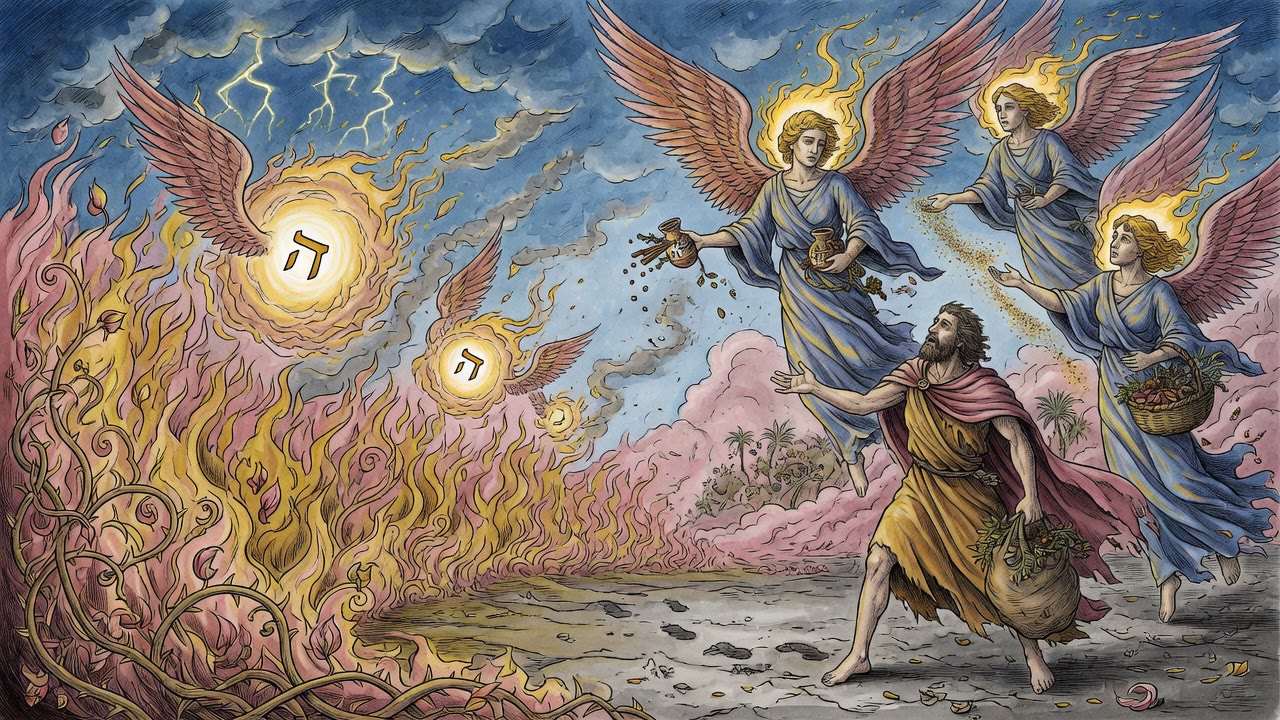
On the first morning there was light enough to name, and darkness enough to leave unnamed the same way. "God called the light Day." The Name sat on the brightness. "The darkness He called Night." The Name stepped back (Genesis 1:5). Speech itself chose a side.

The Holy Name That Rests Only on the Light Click for full size

Blessing Wears the Name, Curse Often Does Not

Rabbi Eleazar ben Pedat, speaking for Rabbi Yochanan, drew the rule from "Evil shall not abide with You." The Holy Name is pronounced over good, not over evil. When God blessed Adam and Eve, the verse rings, God blessed them. When the hour of cursing came, the wording thinned: unto the woman He said, unto Adam He said. Said by Him, yet the Name held back from the curse's surface.

The serpent's sentence is the hard case, because there the Name does appear. The sages answered that there are three matters in which God joined His Name even to what is for evil. The rule stands. The exceptions are counted. Light remains the natural home of the Name in speech.

When the Name Rides What Looks Like Ruin

Twice Scripture lets the Name rest on evil itself, and the midrash stops the ear. "And the Lord watched over the evil and brought it upon us, for the Lord our God is righteous" (Daniel 9:14). Because He is righteous, He watched over evil? The answer turns the ruin into mercy in disguise.

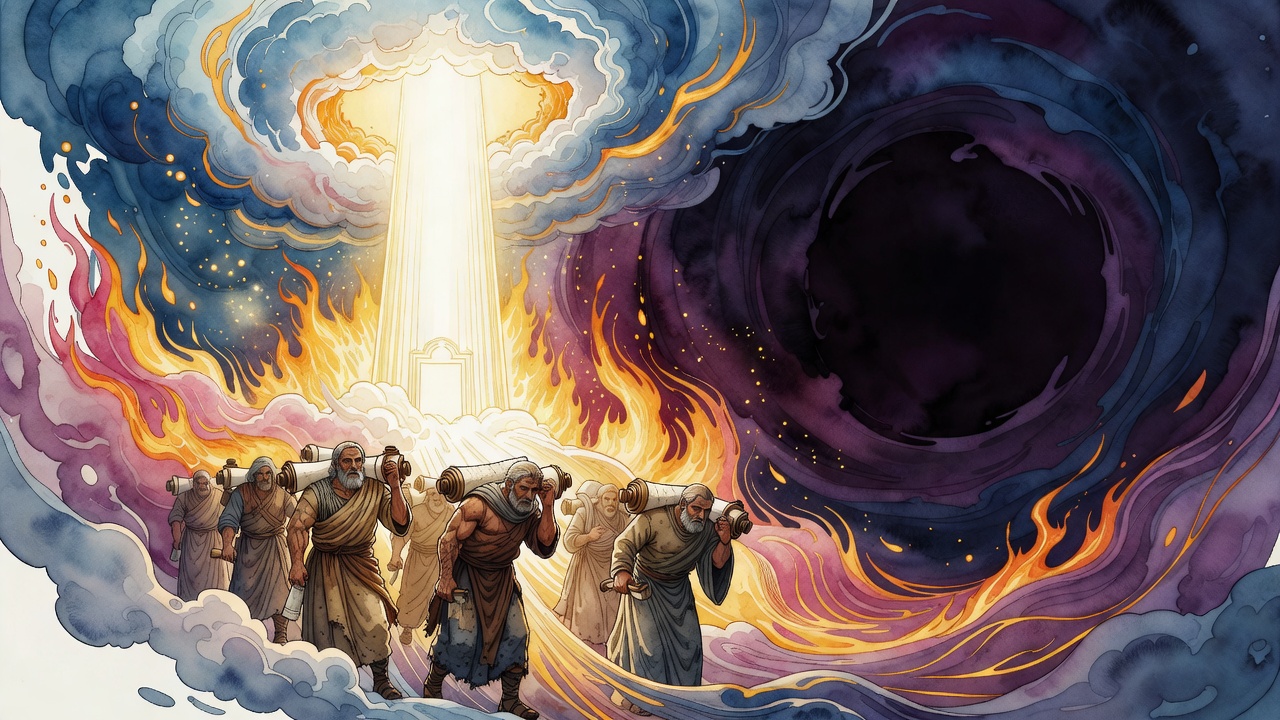
When God exiled Jeconiah to Babylon, He did not send fools. He sent the craftsman and the smith and every mighty master of Torah, a thousand of them (II Kings 24:16). They believed Jeremiah. They carried the Torah into captivity. By the waters of Babylon they planted an academy and made the Torah grow. Had they not gone first, the Torah would have been forgotten in exile. Cheresh, craftsman: when these sages opened a question, every other scholar fell silent as the deaf, chershin. Masger, smith: once they closed a teaching, sogerin, no one in Israel could open it again. The "evil" of exile was a convoy for the scroll.

Complete Name for a Complete World

Bereshit Rabbah hears the full Name, Lord God, first at the outgrowths of heaven and earth (Genesis 2:4). Rabbi Hilfai says a complete name for a complete world. The same complete Name returns when rain is withheld: because the Lord God did not cause it to rain upon the earth (Genesis 2:5). Rainfall is treated with creation's full title. Not a side errand. A pillar.

Rabbi Shimon bar Yochai set three matters as equals: earth, adam, rain. Rabbi Levi bar Hiyya noted that eretz, adam, and matar are each three letters. No earth, no rain. No rain, no earth. Without both, no human. The Name that rests on light also rests on the wet partnership that keeps people alive. Darkness may go without the Name in the first naming. Drought does not go without the full Name in the second telling.

Righteousness That Looks Like a March of Chains

Jeconiah's column leaving Jerusalem looked like pure loss. Crowns gone. Temple soon to burn. The midrash insists the Name was already riding the craftsmen's carts. Silence in other study halls was the sound of real authority walking east. What the eye called evil the verse called righteousness watching.

Night still does not get the same verbal honor as Day. That first distinction is not canceled. But when history forces a hard good through a bitter road, the Name may travel with the bitterness so the good is not lost. The academy by the river is the proof.

In Babylon a craftsman opened a scroll at dusk and the study house went quiet the way the midrash promised. A younger student tried to object and found his mouth empty. Outside, chains still clinked in memory. Inside, the Name was working through men the eye had labeled cargo. Rain fell on the flat roofs that night, complete Name weather, and someone said the three-letter bond of earth, human, and rain was still holding even here.

What Speech Chooses

Every later blessing that puts God's Name on a cup of wine stands in the first day's habit. Every curse that thins the wording stands in the same habit from the other side. And every exile that somehow delivers teachers and books is Jeconiah's convoy again, whether the mourners can see it while the dust is still rising.

Call the light Day. Let the Name rest there. When the road turns dark, watch for the craftsmen. The Name may be walking with them under another mask.

Children learning Genesis notice that Day gets God and Night does not in the same sentence shape. The midrash is only taking their notice seriously. Adults learning exile notice that sometimes the worst road carries the best teachers. The midrash takes that notice seriously too. Light and convoy. Name and name again under dust.


← All myths

From the tradition

Sources

3 sources

The texts behind this telling. Some cards carry a translation of the source; others are our own retelling of it, and each card says which. Every card links out to the original.

Midrash Tanchuma Buber, Tazria 12:1Midrash Tanchuma Buber, Tazria

Translation of the source text.Midrash Tanchuma (Buber), Public Domain, on Sefaria · CC-BY-SA

Another interpretation of (Psalm 5:5): "Evil shall not abide with You." Rabbi Eleazar ben Pedat said in the name of Rabbi Yochanan: The Name of the Holy One is not mentioned in connection with evil, but only in connection with good. You may know that this is so, for at the hour when the Holy One created the light and the darkness and gave them names, He mentioned His Name in connection with the light, but He did not mention His Name in connection with the darkness, as it is said (Genesis 1:5): "And God called the light Day, and the darkness He called Night." And so too you find, when He created Adam and Eve, He mentioned His Name in connection with them, as it is said (Genesis 1:28): "And God blessed them..."; but when He cursed them, He did not mention His Name in connection with them, as it is said (Genesis 3:16): "Unto the woman He said..."; and (Genesis 3:17): "And unto Adam He said..." And if you should say: In connection with the serpent He did mention it at the hour of its cursing, [as it is written (Genesis 3:14): "And the LORD God said unto the serpent: Because you have done this, cursed are you..."]; thus have the Sages taught: Concerning three things the Holy One mentioned His Name, even though they were for evil,

Full source
Midrash Tanchuma Buber, Tazria 13:1Midrash Tanchuma Buber, Tazria

Translation of the source text.Midrash Tanchuma (Buber), Public Domain, on Sefaria · CC-BY-SA

[Another interpretation:] What is the meaning of "and evil shall not dwell with You" (Psalms 5:5)? That the name of the Holy One, blessed be He, does not rest upon evil, except for two things upon which the Holy One, blessed be He, did rest His name. And these are they: "And the LORD watched over the evil and brought it upon us, for the LORD our God is righteous" (Daniel 9:14). Because "the LORD our God is righteous," He "watched over the evil"? Rather, the Holy One, blessed be He, performed an act of righteousness, in that He brought forward and exiled the exile of Jeconiah to Babylon together with the craftsman and the smith and all the mighty ones of the Torah; and they went down to Babylon and established an academy for the Torah. For had it not been so, the Torah would have been forgotten in the exile. Rather, these went out who believed the words of Jeremiah, with the Torah, "and the craftsmen and the smiths, a thousand" (II Kings 24:16). What is "craftsman" (cheresh)? When they would open the Torah, all became like the deaf (chershin). "Smith" (masger): once they would close (sogerin) it, there was none in all Israel who was able to open it. Thus, "for the LORD our God is righteous."

Full source
Bereshit Rabbah 13:3Bereshit Rabbah

Retold in our words. Read the original at the link below.The Sefaria Midrash Rabbah, 2022 · CC-BY

It might be more profound than just needing water for our lawns.

Our tradition teaches that rain, the earth, and humanity itself are deeply intertwined, almost inseparable. It’s a powerful idea, and it comes to us straight from Bereshit Rabbah, one of the most important collections of rabbinic interpretations on the Book of Genesis.

The passage starts with a seemingly simple phrase from (Genesis 2:5): "Because the Lord God did not cause it to rain upon the earth." But the rabbis, masters of uncovering hidden layers of meaning, see something significant in the way God’s name is written here – using the full, complete name.

Rabbi Ḥilfai points out that this complete name, Lord God, is first used in (Genesis 2:4), "These are the outgrowths…on the day that the Lord God made the earth and the heavens." He suggests a connection: a complete name for a complete world. And just as that complete name is used for the creation of the world, it's used again when discussing rainfall. It's as if the rainfall is as essential and fundamental as the very act of creation!

But the connection goes even deeper. Rabbi Shimon bar Yoḥai elevates the importance of rain even further. He argues that three things are of equal importance: eretz (earth), adam (man), and matar (rain). Earth, humanity, and rain, all holding the same weight.

Rabbi Levi bar Ḥiyya then adds another layer to this beautiful connection. He observes that each of these three words – eretz, adam, and matar – is made up of three letters in Hebrew. This isn't just a coincidence. It’s a teaching, he says. If there's no earth, there's no rain. If there's no rain, there's no earth. And without both of them, there is no humanity.

It's a perfect, interdependent system. We need the earth to sustain us, the rain to nourish the earth, and, in turn, the earth and rain to sustain us. The relationship is symbiotic, each relying on the other for existence.

It’s more than just water falling from the sky. It’s a vital connection to the earth, to each other, and to the very foundation of our existence. What responsibility does that place on us?

Full source