How the Ark's Sons Carved the Earth and Canaan Earned His Curse
The flood left the earth blank, and the sons of the ark began writing on it, one prince raising a tower, one grandson earning a curse of his own.
Table of Contents
 Click for full size
The Emptied World Divided
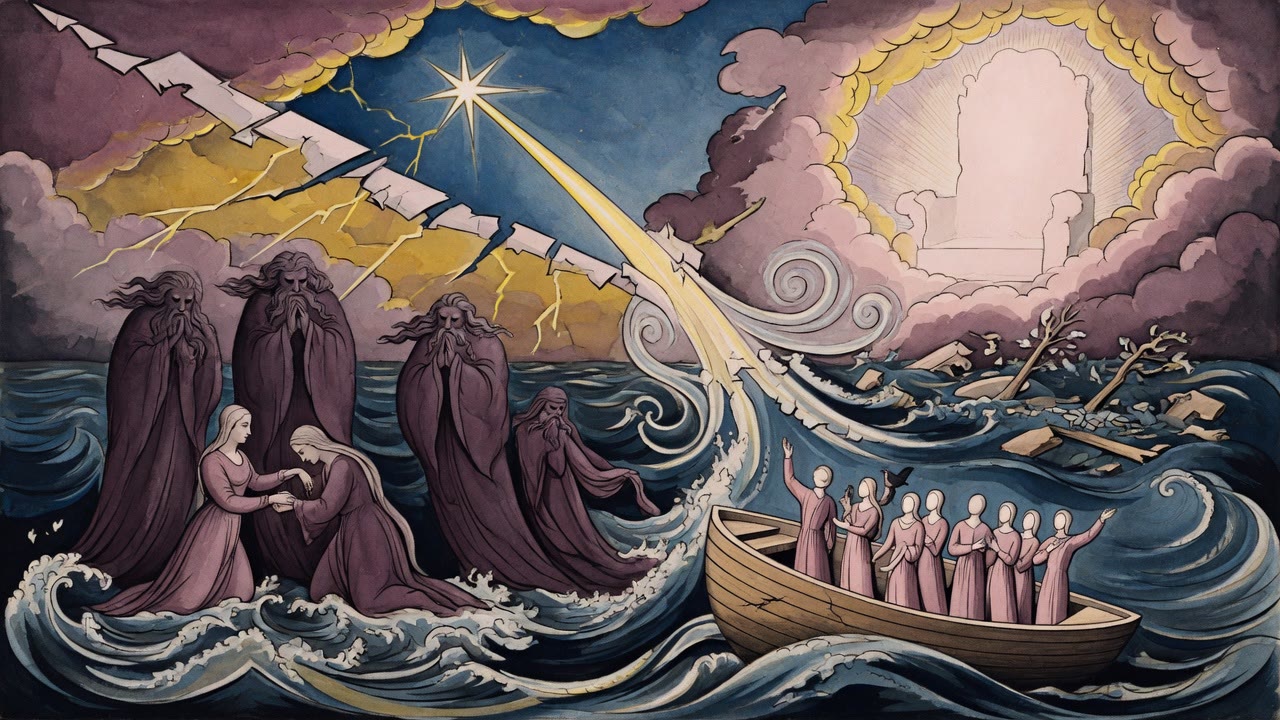
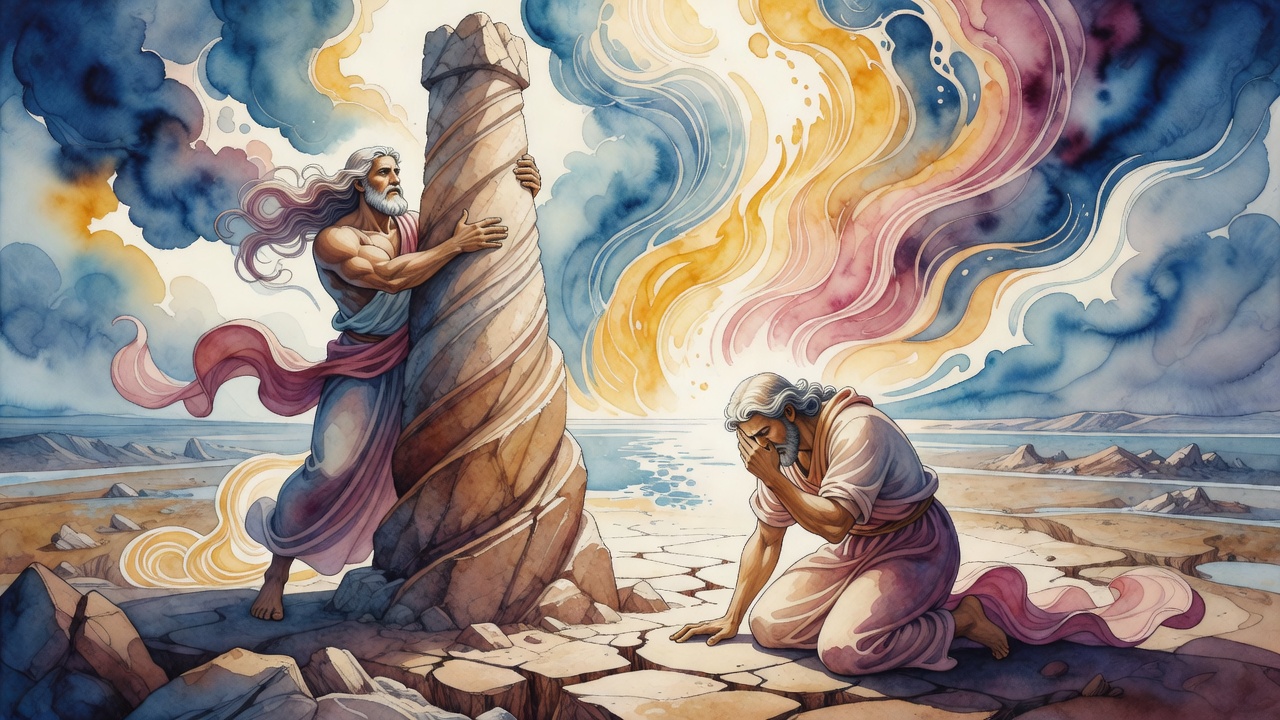
The water had gone down, and the ground it left behind smelled of rot and new mud. Noah was old now, older than any man would be again, and he watched his family fill the plain the flood had scraped bare. His three sons had sons, and those sons had sons, and the tents spread out toward every horizon like a stain widening on cloth.
They carved the emptied earth among themselves. Shem took his portion, Ham took his, Japheth took his, and their children pressed outward after them. The world was washed clean, and there was room in it for anything. That was the danger. A clean world is a blank one, and the men who inherited it began, almost at once, to write on it in their own hand.
Canaan at the Vineyard Tent
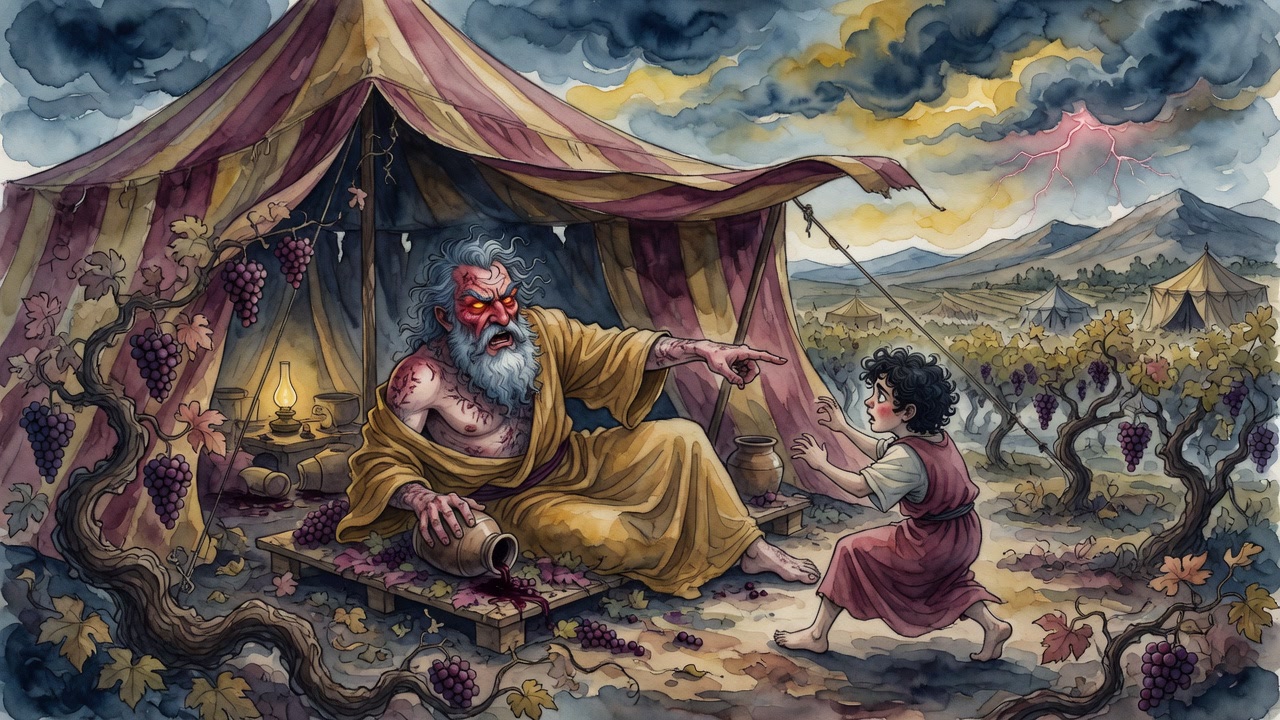
The trouble started, as trouble in that house often did, with a look through a tent flap. Noah had planted a vineyard, drunk of its wine, and lay uncovered inside. It was Canaan, youngest of Ham's line, who looked first. He did not turn away. He ran and told his father what the old man looked like, sprawled and shamed, and Ham went to see for himself and laughed instead of covering him.
So the curse, when it fell, did not fall on the man who laughed. It fell on the boy who pointed. Canaan had carried the shame from the tent into the open like a child carrying gossip, and the words that came down on him were rooted in that act, not only in his father's. He was marked before his own sons drew breath. Ham was a chip of the same wood, and the grandfather they had exposed spoke a sentence over the boy that his descendants would wear for generations.
Three Princes Over Millions
While Noah still drew breath, a new order hardened over the plain. The children of the three brothers had grown into nations, and nations want rulers. So princes were set over them. Nimrod took command of the descendants of Ham. Joktan was raised over the line of Shem. Phenech ruled those who came from Japheth. Ten years before the old man closed his eyes, these three governed millions between them, and the ark that had once held eight souls was a memory under a sea of people.
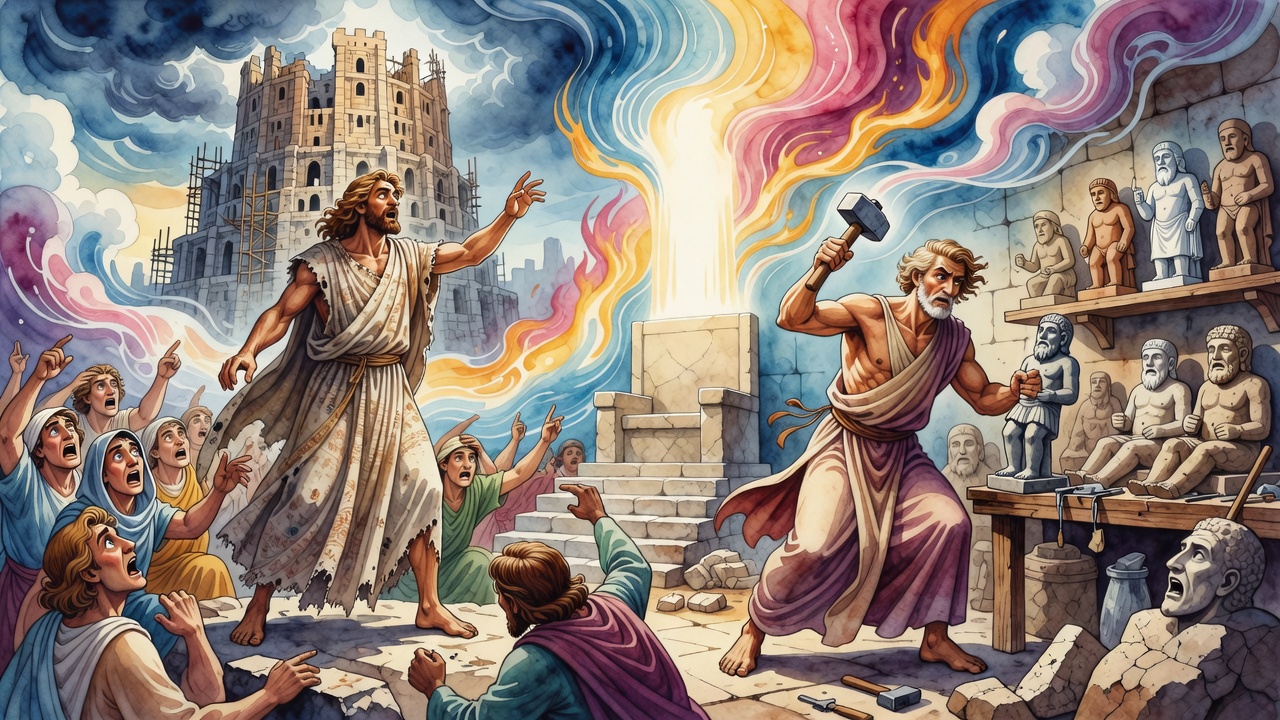
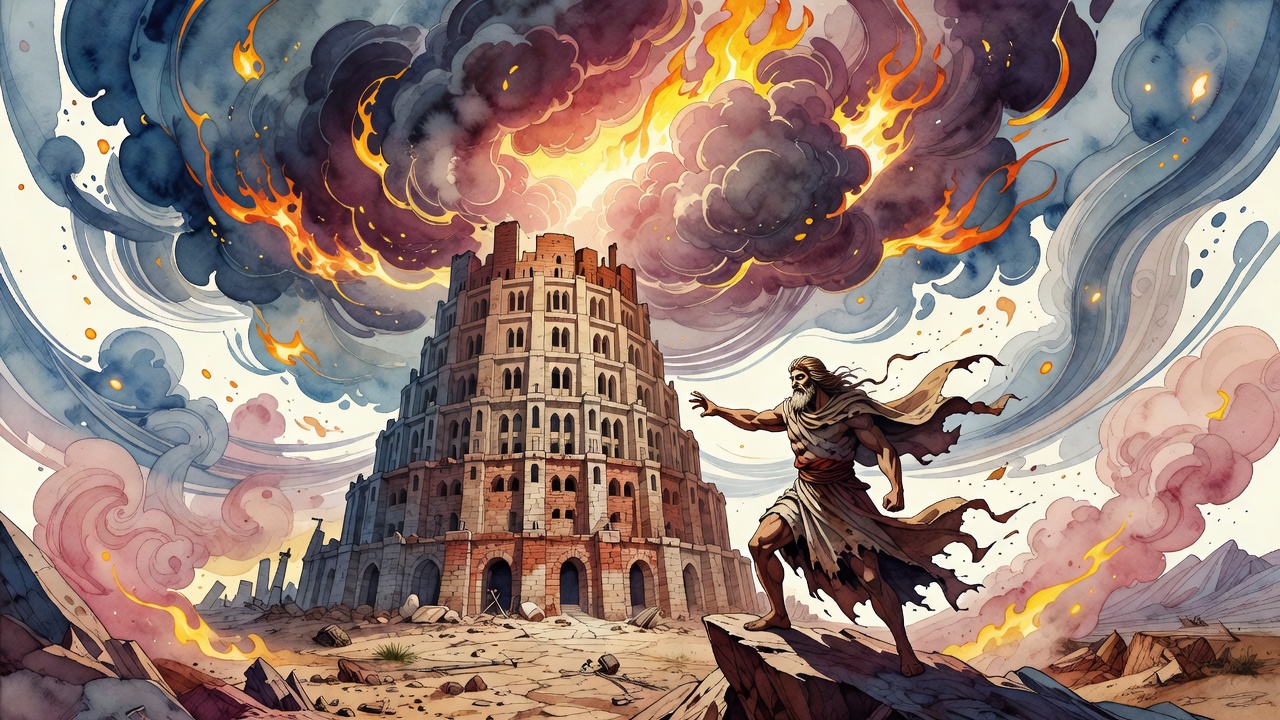
The multitude drifted toward Babylonia, and a fear traveled with them. They knew what men do when they scatter. Brother against brother. Neighbor against neighbor. A world at war with itself again. "Let us build a city," they said, "and a tower whose top may reach unto heaven, and let us make ourselves a name." Every man would mould his own bricks and cut his own name into the clay, so that the tower rose out of them, each brick a person, the whole of it a monument to the crowd that made it.
Twelve Who Would Not Make Bricks
Twelve men would not touch the clay. Among them stood Abraham. They said the thing no one on that plain wanted to hear, that there was one God and they served Him, and no name of theirs would go into a brick meant to climb past heaven.
They were seized and dragged before the three princes. They did not soften. "We will not make bricks, nor remain with you, for we know but one God, and Him we serve," they said. "Even if you burn us in the fire, we will not walk in your ways." Nimrod's face went dark, and Phenech's with it. A furnace, the two princes said. Throw them in and let the one God pull them out.
The Reprieve Joktan Bought
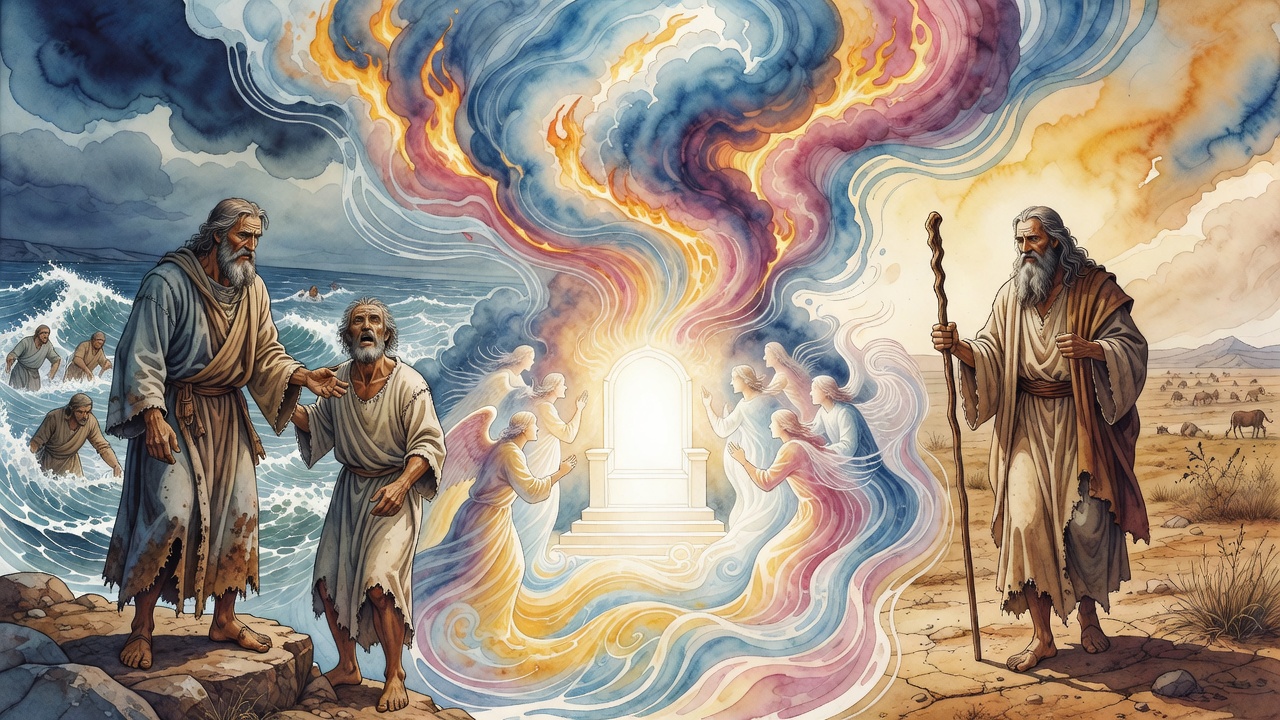
Joktan stopped them. He feared God himself, and some of the twelve were his own kin, and he stood first among the three, so when he asked for seven days the others gave them, grudging but bound by his rank. Then he moved in the dark. He called fifty of his own men, put the prisoners on mules, and sent them toward the mountains with food enough for a month. Let the people cool, he thought, or let God reach down into those hills. Either way the twelve would be out of the furnace's mouth.
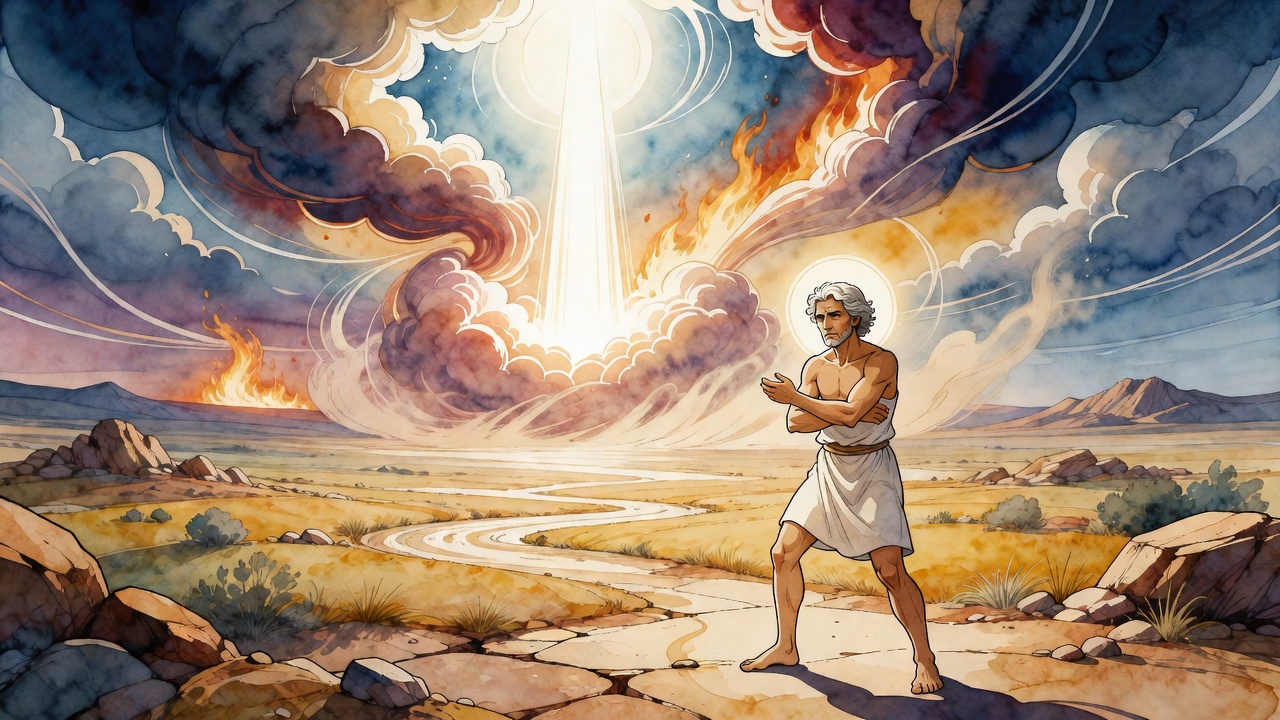
Eleven climbed onto the mules. Abraham would not. "Today we flee to the mountains to escape the fire," he said, "but if the wild beasts rush out and devour us, or the food fails and we die of famine, we shall be found running before the people of the land and dying in our sins. As the Lord liveth, in whom I trust, I will not leave this place where they imprisoned me. If I am to die for my sins, I will die by the will of God." He sat back down in his cell and waited to see what his God would do.
Canaan's Last Words
Far from that furnace, in the branch already marked, Canaan came to the end of his days and gathered his children to bless them, the way dying fathers do. What came out of him was not a blessing. "Speak not the truth," he told them. "Hold not yourselves aloof from theft. Lead a dissolute life. Hate your master with an exceeding great hate." Then, wedged into all that darkness like a coin dropped in mud, one last line. "And love one another." It was the whole inheritance of the cursed branch, spoken plain over the heads of children who had done nothing yet, in a world their grandfathers had been handed clean.
← All myths