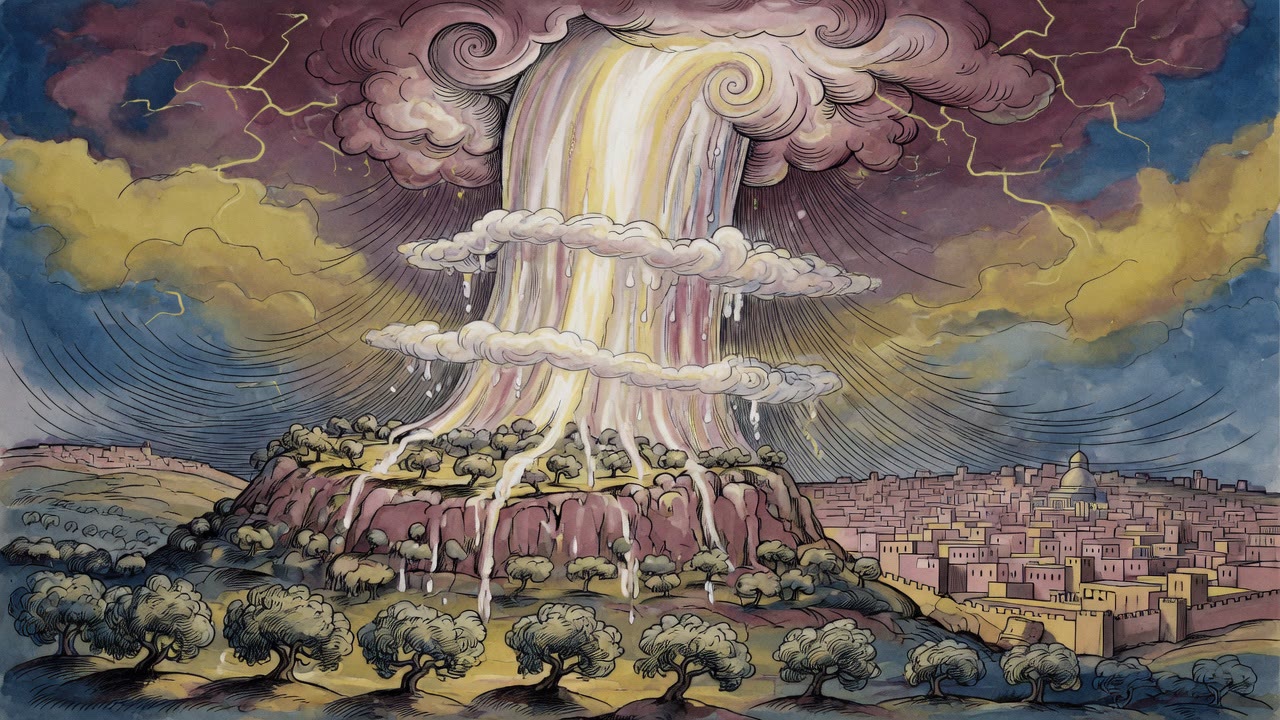
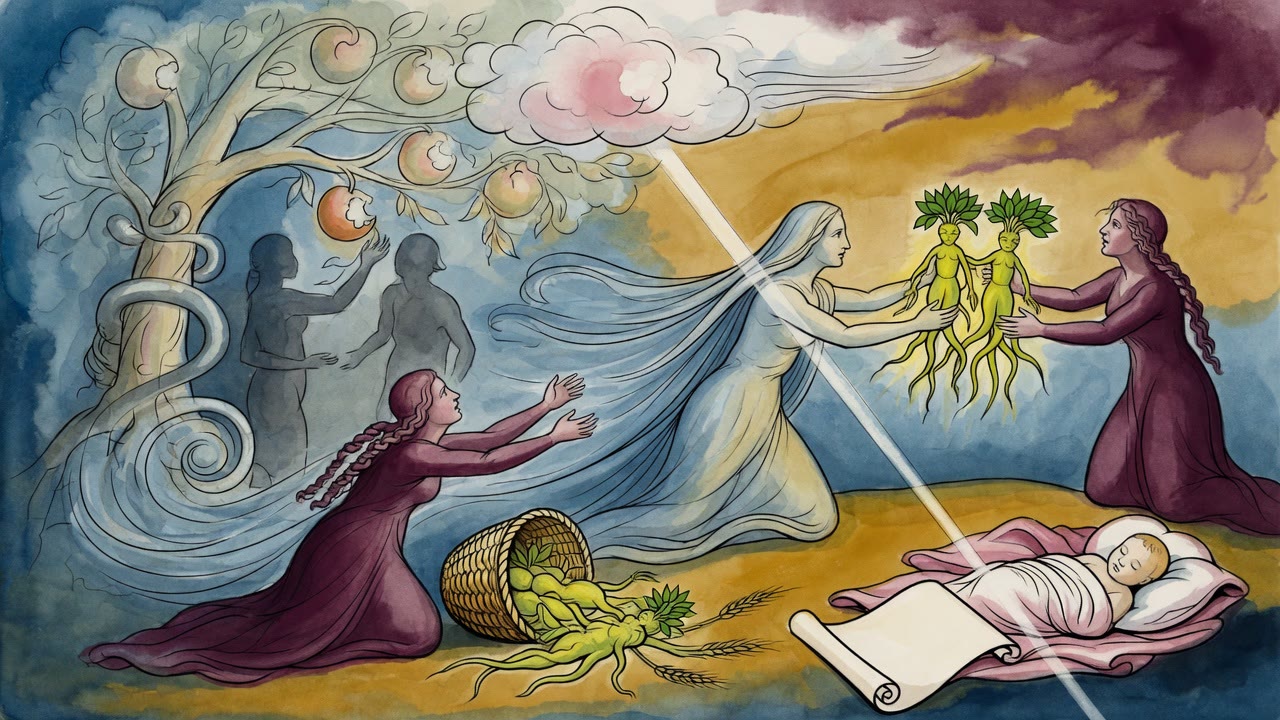
Imah Built the Woman from Lights and Judgment
Zeir Anpin shoved the severities off his back. Nukvah was built from what he refused. Below, Adam slept through the surgery and woke to a face.
Table of Contents
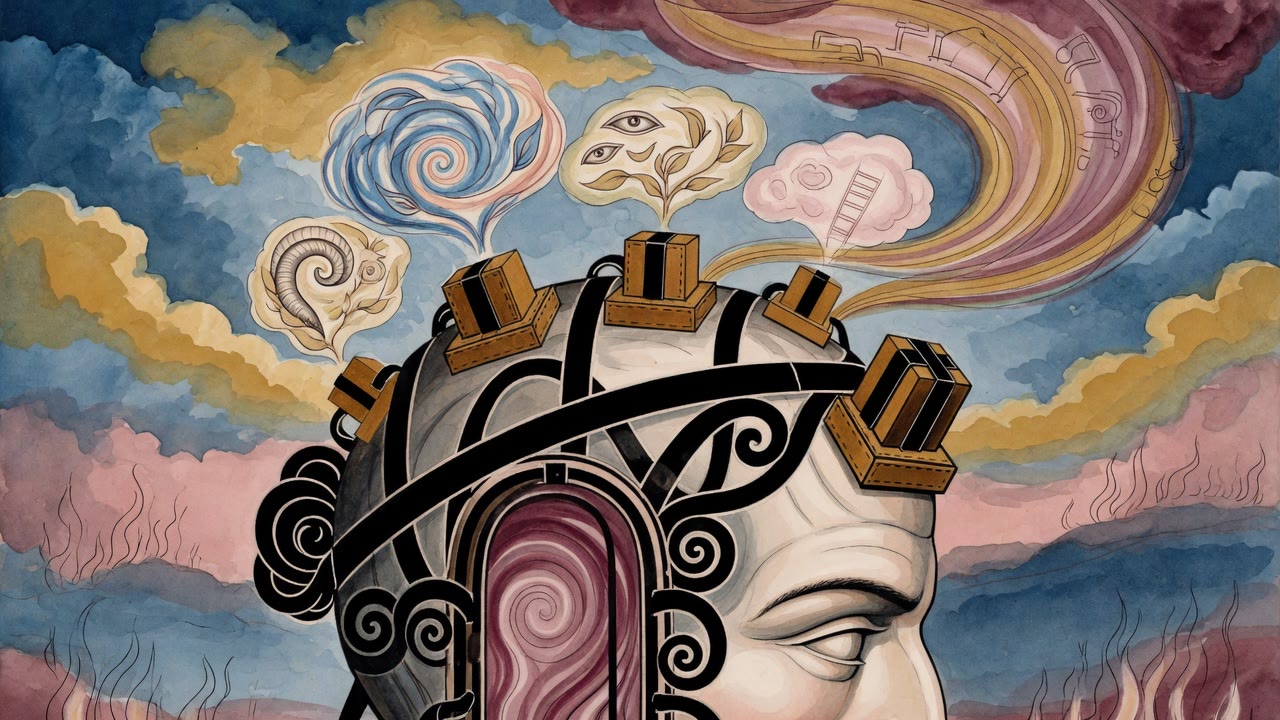
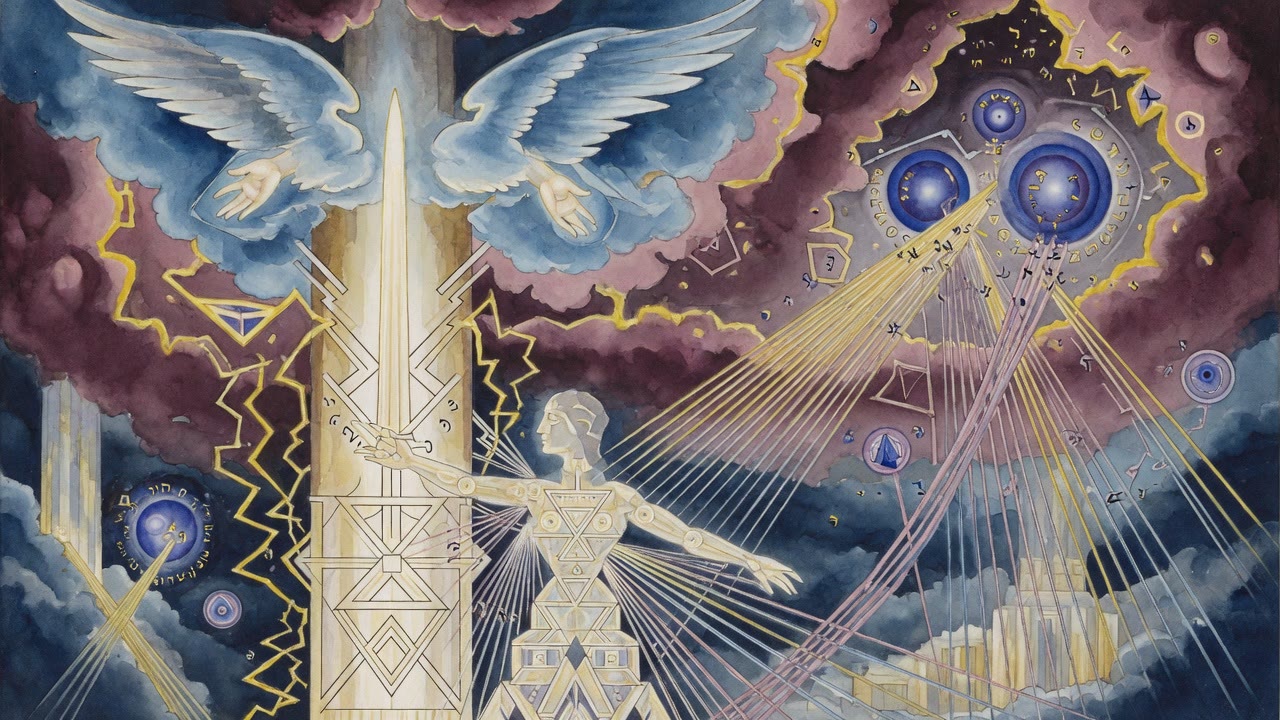
Imah turned her face away from Zeir Anpin, and the lights that had lived in him went with her like tools taken from an unfinished house. The upper mother did not slam a door. She simply left, and the space he occupied cooled.
 Click for full size
What She Carried Out
In her going she took mochin, the mental lights that had been his, and she also wore, like layered clothing, the lower measures of Abba, the father configuration: Netzach, Hod, Yesod, strength that finishes what wisdom begins. She was not fleeing empty. She was transporting a building plan.
From that load she began to arrange Nukvah, the female counterpart who had not yet stood complete. Construction is the word the masters use, not romance. Nukvah is built. She is fitted. She receives what can be given and what is pushed away.
Severity Pushed to Her Back
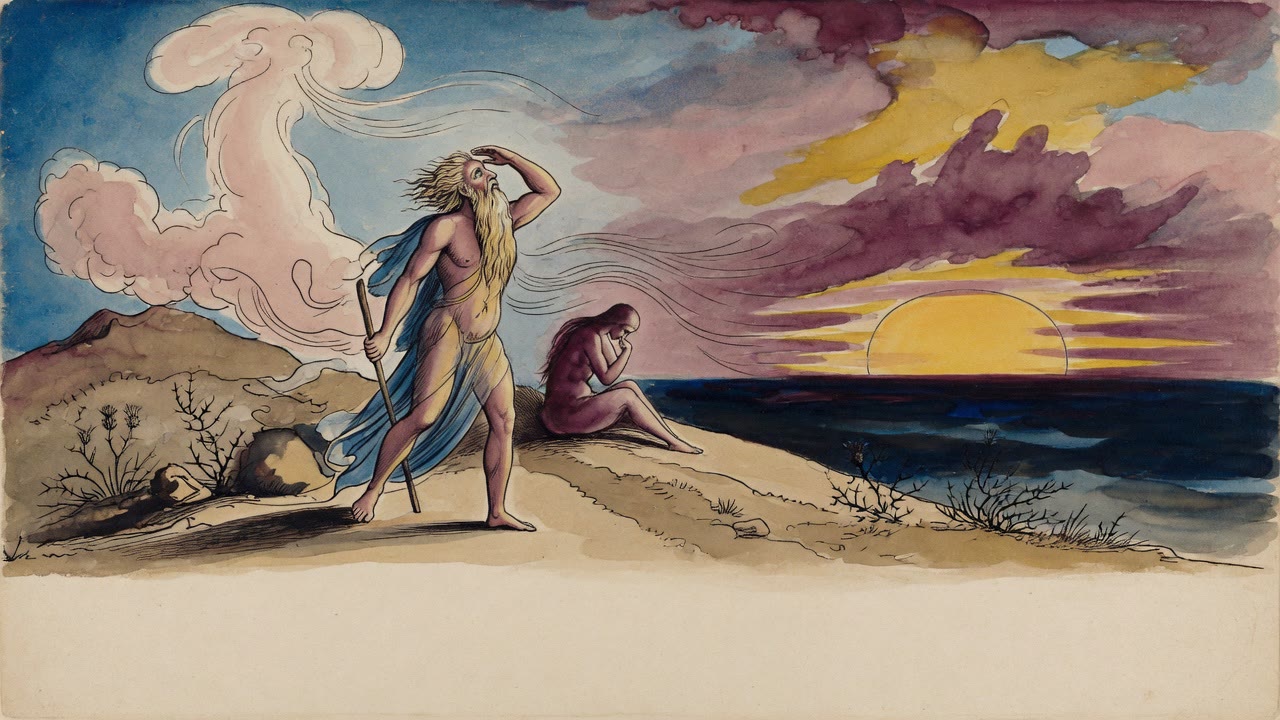
Chessed, loving-kindness, leaned toward Zeir Anpin as if to fill the gap Imah left. He would not hold every force. On his back lived Gevurot, severities, judgments that do not smile. He shoved them off. They did not fall into nowhere. They were given to Nukvah.
So she was first made from the left side of the system, from restriction and measure, while he kept the right hand of expansion. The first shape of the feminine in this telling is not soft by default. It is strong enough to hold what the masculine would not keep against his own spine.
Because of that gift of backs and leftovers, she stood apart from him at first. Separation was not punishment. It was architecture. Two faces cannot meet until both have edges.
Face to Face After the Side
Later they turned. The language is plain and hard: face to face. Nukvah was then built in front of him, not only from what had been discarded. The verse the masters bind to this turn is the building of the woman from the side taken from Adam, then brought to him (Genesis 2:22). Side first. Presentation second. Harmony is a second draft.
The human story and the partzuf story braid here without apology. What happens above in configurations of light is told again in bone and garden. Eve is not an afterthought in this reading. She is the place where rejected severity becomes a vessel that can stand opposite mercy and not dissolve.
Leah's Eighteen and the Outer Kingdom
Another thread names Leah as kingdom stacked on kingdom. Eighteen aspects of Leah rise from Abba and Imah, from Malkhut flowering out of Malkhut, from lights of smallness and greatness that overlap while one set enters and the other has not fully left. The outermost Leah is the one that matters most. The inner ones serve her.
That outer face is the one the world actually meets. Hidden layers support her, but the kingdom that shows is the one that has already walked through both immaturity and maturity of mind. When the king in the parable is said to have eighteen, the count is not a harem list. It is the full set of faces a completed structure can wear without tearing.
Imah's departure, Nukvah's hard first body, Leah's outer crown: three ways of saying the feminine is not a spare rib alone. She is a construction site where lights, judgments, and kingdoms learn to stand.
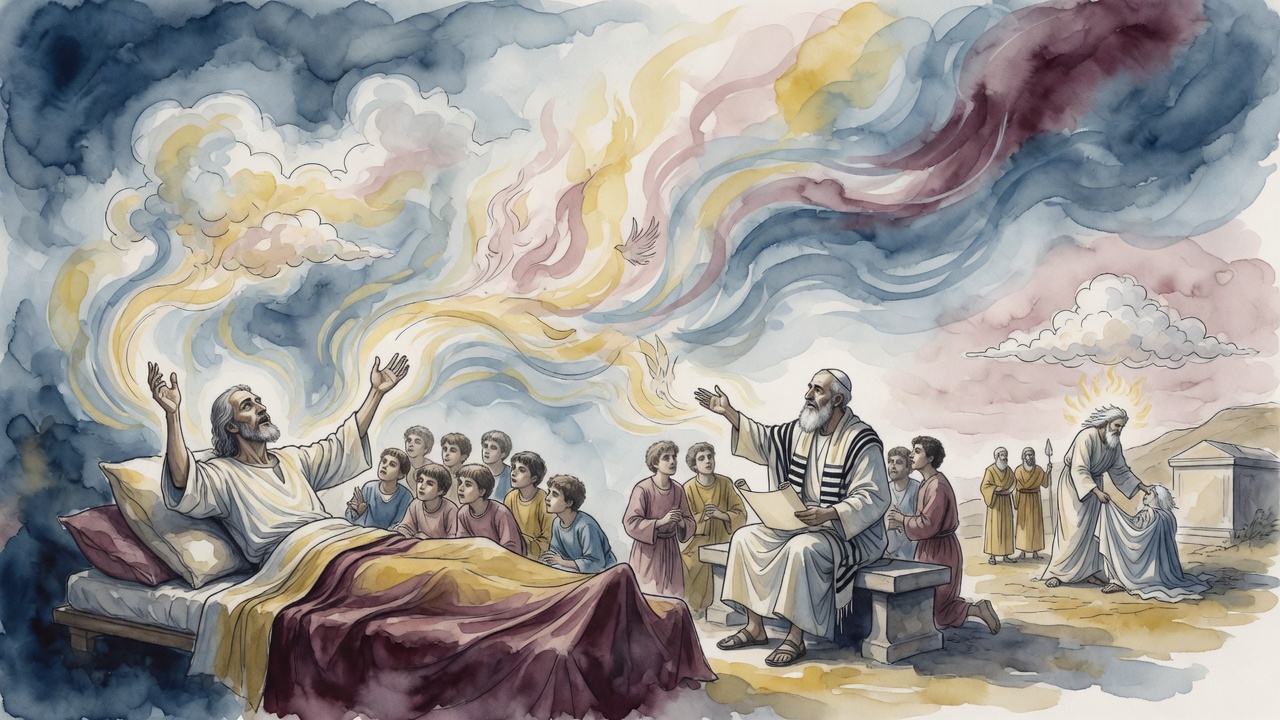
In the garden below, Adam slept through the surgery and woke to a face. In the worlds above, no one slept. The work of turning took as long as it takes for left to become a partner of right without either side pretending the other was never severe.
← All myths