Tefillin Straps Mapped Leah onto a Living Head
The leather was cold on his arm. He pulled until the knot sat at the skull. If it slipped, Leah's gate sat wrong all morning.
Table of Contents
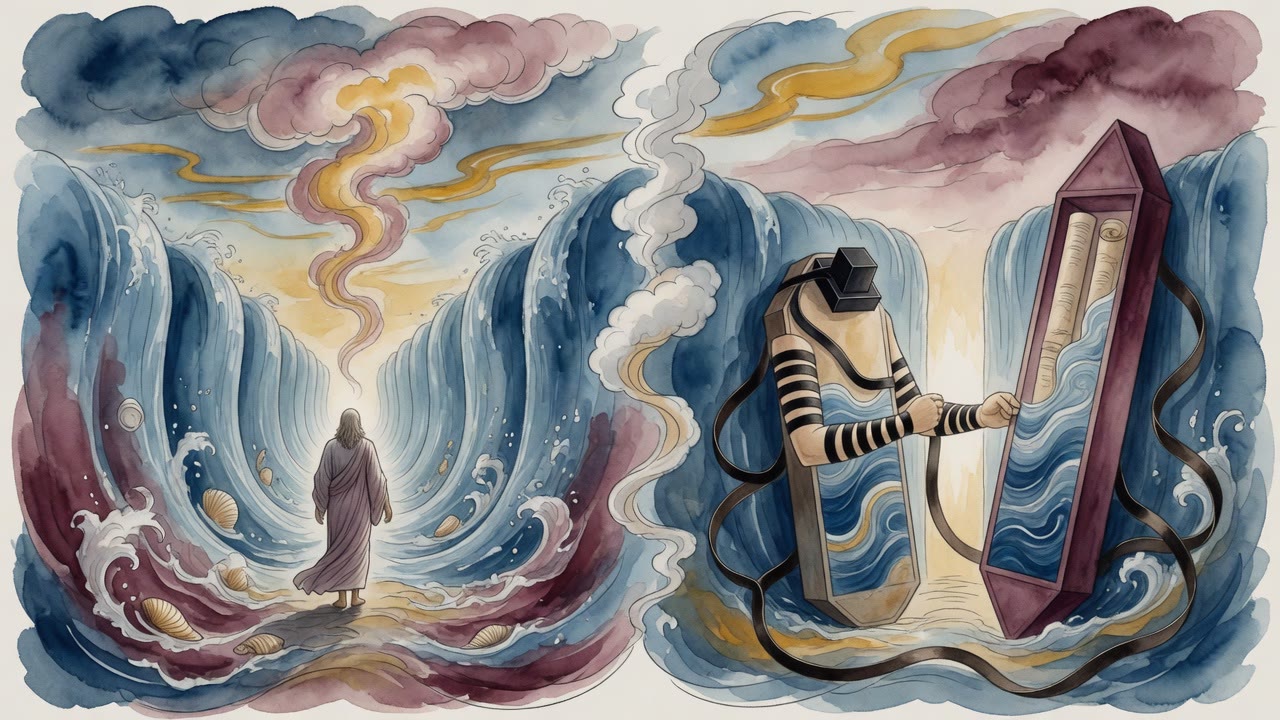
He took the tefillin (תפילין) from the bag while the room was still dark. Two black boxes. Leather straps still cold from the night. He set the arm box on the bicep and pulled until the leather bit. The body wanted the blanket. The commandment wanted a map drawn on living skin before the sun was up.
 Click for full size
Four Rooms Against the Arm
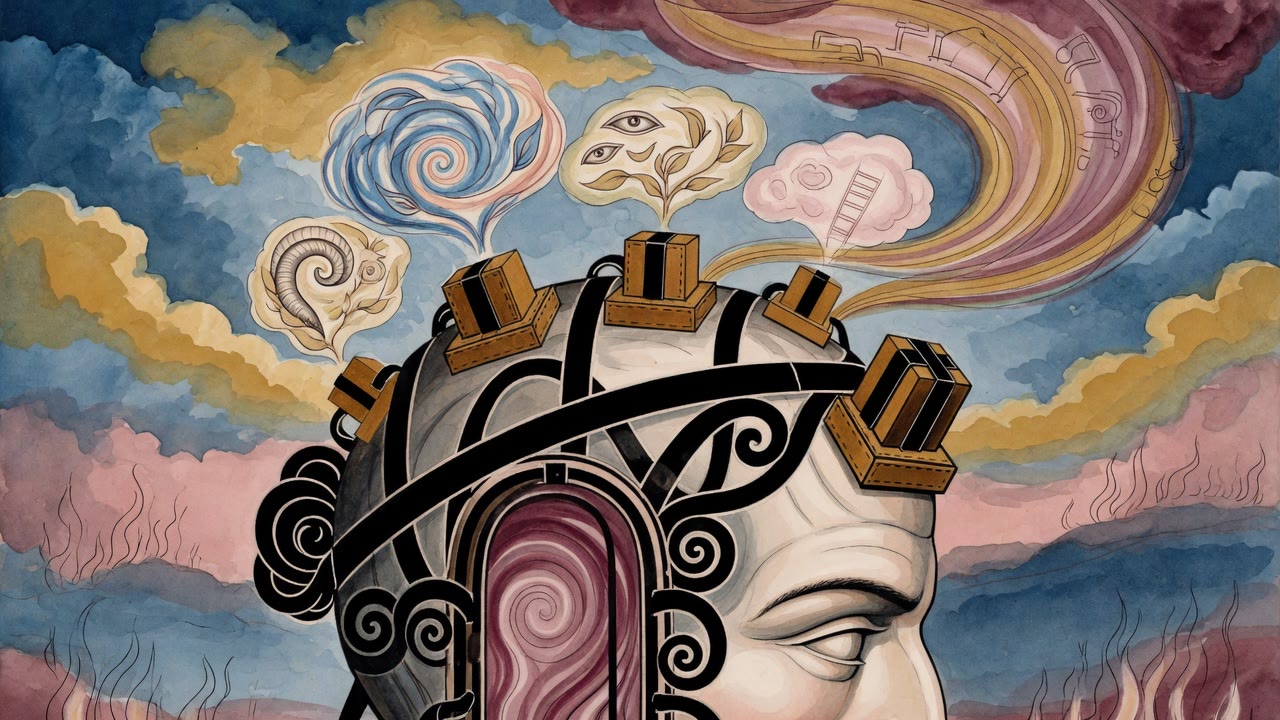
The box sat against the muscle like a small house. Inside it, four rooms of parchment waited, four minds a sofer had already seated: wisdom, understanding, knowledge, and the fourth that holds them together. He did not invent the rooms. He only bound them to flesh that had slept and still argued.
He wound. The strap circled and spoke. Each turn closed another finger of night. Kindness and strength would have to share the same orbit once the leather reached the head. He felt that as pressure, not as a picture in a book. The arm tightened. The fingers kept working.
He wrapped the forearm seven times because seven was the count he had been taught, and because a missed turn would sit on him all morning like a lie. The leather darkened where his heat had already begun to enter it. He tied the hand last, a small throne of straps across the fingers, and only then reached for the second box.
Leah Waited in the Knot
He lifted the head box and set it above the hairline. Two fingers found the hollow where neck becomes skull and settled the knot there. For a breath the leather was only leather. Then he pictured a gate.
Leah stands in that gate. Less sung than Rachel, more inward, the sister whose eyes were tender and whose work was often night work. In the tents she was a wife who kept bearing sons while the loved one waited. At the back of a living head she is the hidden face that looks upward while the revealed world looks out.
If the knot sits a finger too low, the gate sits wrong. He felt the slip, cursed under his breath, and pushed the knot back into the hollow. He corrected it with the impatience of a man who has done this too many years to pretend a mistake is charming.
This is how the straps mapped Leah onto a living head. Not with a chart on a wall. With a knot that either sat true or did not.
Two Straps Down the Chest
Two straps fell forward over the shoulders. One toward the chest. One toward the navel. Endurance and splendor, walking the same body in two lengths. He tucked them so they would not swing when he bowed. Nothing in the costume was random once the names were remembered. Random is only how it looks to someone who sees black boxes and thinks fashion.
Inside the boxes the words waited: the sanctifying of the firstborn (Exodus 13:2), the telling of the going out (Exodus 13:11), the Shema (Deuteronomy 6:4), the second acceptance of the yoke (Deuteronomy 11:13). A sofer had already fought the fight of their order, mother configuration or father, same verses arriving in a different sequence. The man who winds does not rearrange parchment. He only binds what has been written. Binding was the day's first honest work.
He stood. The house was still quiet. The bag lay empty on the table like a mouth that had given up its teeth.
When the Leather Took His Heat
Prayer began while the straps were still cold. He blessed God and the words came out rough, the way they do before the throat has decided to be awake. By the third blessing the leather had taken the heat of his blood. That is when the map stops being theory. A warm strap is a claim that the body has agreed to host the gate for one more morning.
If the arm box turned, the four rooms faced the wrong direction. He pushed it back with his thumb. Precision is respect. Sloppiness is a shrug at the worlds the straps copy.
He bowed. The knot held. Leah's gate stayed where he had set it. For a few minutes the man and the map were one piece of work, blood and ink and hide, and the argument between sleep and commandment went quiet.
When he unwound later, white lines stayed on the skin for minutes, pale tracks of pressure. Leah's knot was gone from the skull, but the scalp still knew where the gate had pressed. He rolled the straps the way a man folds a letter that still has power after it is closed. Outside, the day had begun without waiting. Inside the bag, four minds slept in four rooms until the next dark morning asked for the map again.
← All myths