5 min read

Isaac Dug Wells the Herdsmen of Gerar Kept Taking

Twice the herdsmen of Gerar said the water was theirs, and twice Isaac walked away and dug somewhere else instead of fighting them for it.

Curated by Arthur · Told by Maggid ·
Table of Contents
  1. His Father's Wells Were Full of Dirt
  2. The Herdsmen Said the Water Was Theirs
  3. The Third Well Nobody Came For
  4. A Voice at Beersheba the First Night
  5. The King Came to Swear an Oath
Isaac Dug Wells the Herdsmen of Gerar Kept Taking Click for full size

His Father's Wells Were Full of Dirt

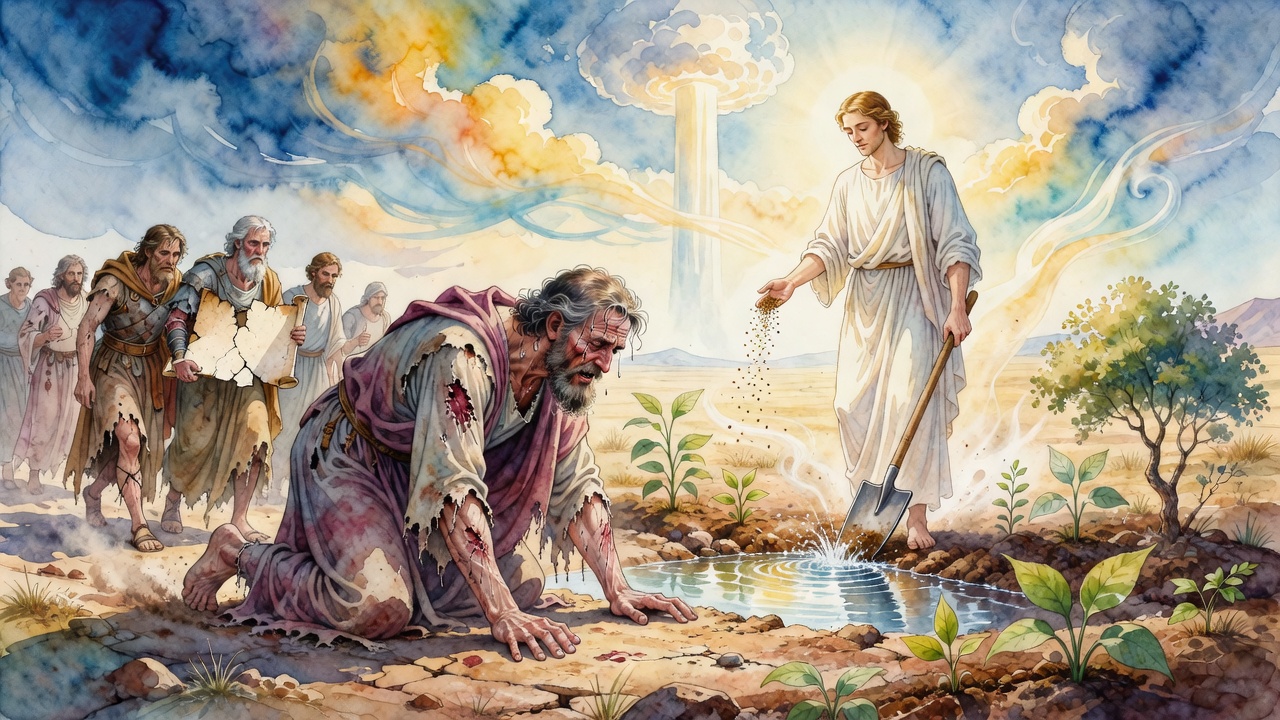
Isaac stood over a hole that had been a well when he was a boy. Somebody had filled it in. Not collapsed, not silted over. Filled, on purpose, with earth carried and tipped down the shaft until the water was under a plug of dry ground.

Every one of them was like that. His father's men had opened those wells a generation earlier and the Philistines had gone along the line after Abraham died and stopped them all.

There had been a famine, and Isaac had come to Gerar to wait it out, and God had told him not to go down to Egypt. So he stayed and sowed a crop in a hungry year and took a hundredfold out of it. He grew, and kept growing, until he had flocks and herds and a household big enough to make the men of Gerar count it. Then Abimelech sent for him.

"Go away from us. You have become far too strong for us."

The Herdsmen Said the Water Was Theirs

He pitched his tent down in the valley of Gerar and put his men to work reopening his father's wells, and as each one came clear he gave it back the name Abraham had called it. He did not invent new ones.

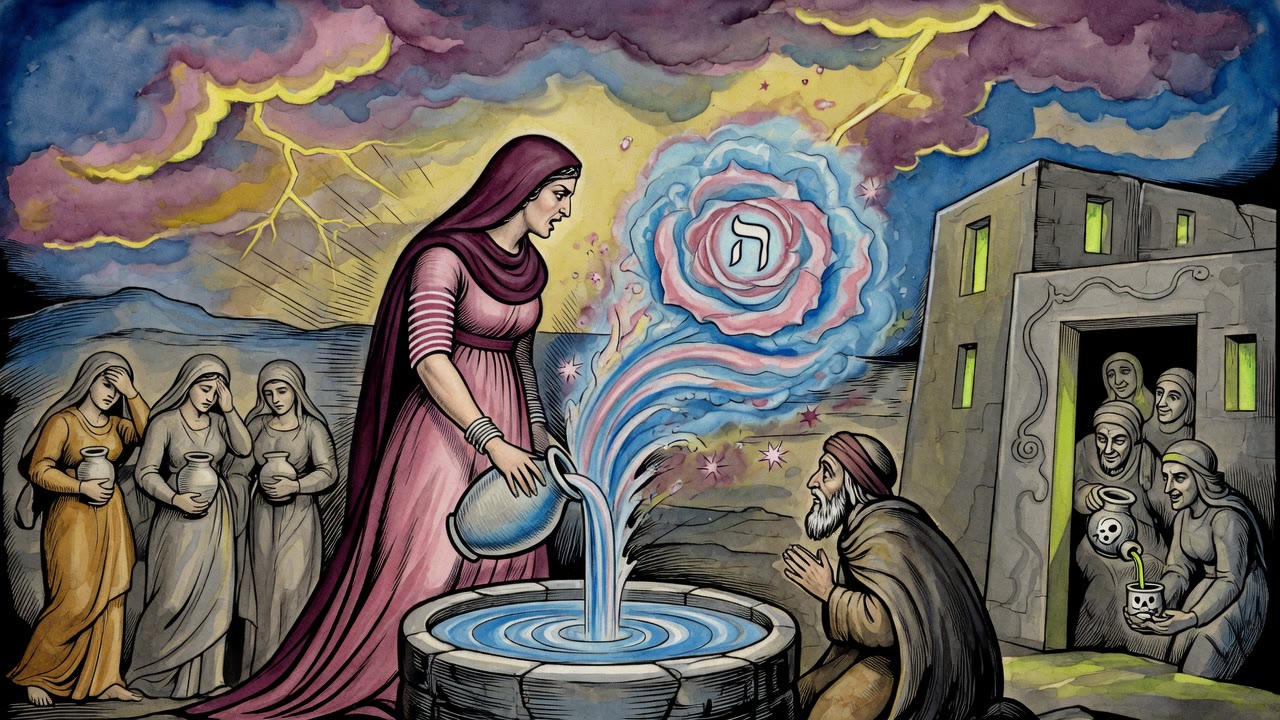
Then his servants cut a fresh shaft in the valley floor and hit living water, the kind that moves and keeps coming, and the herdsmen of Gerar were standing at the rim before the mud was off the ropes.

"The water is ours."

He could have counted his men and theirs and settled it in an afternoon. Instead he named the well Esek, which is what you call a thing men quarrel over, and moved his tents.

They dug again. The same herdsmen came, and this time it was worse, and he named that one Sitnah, which is the word for a grudge, and moved again.

The Third Well Nobody Came For

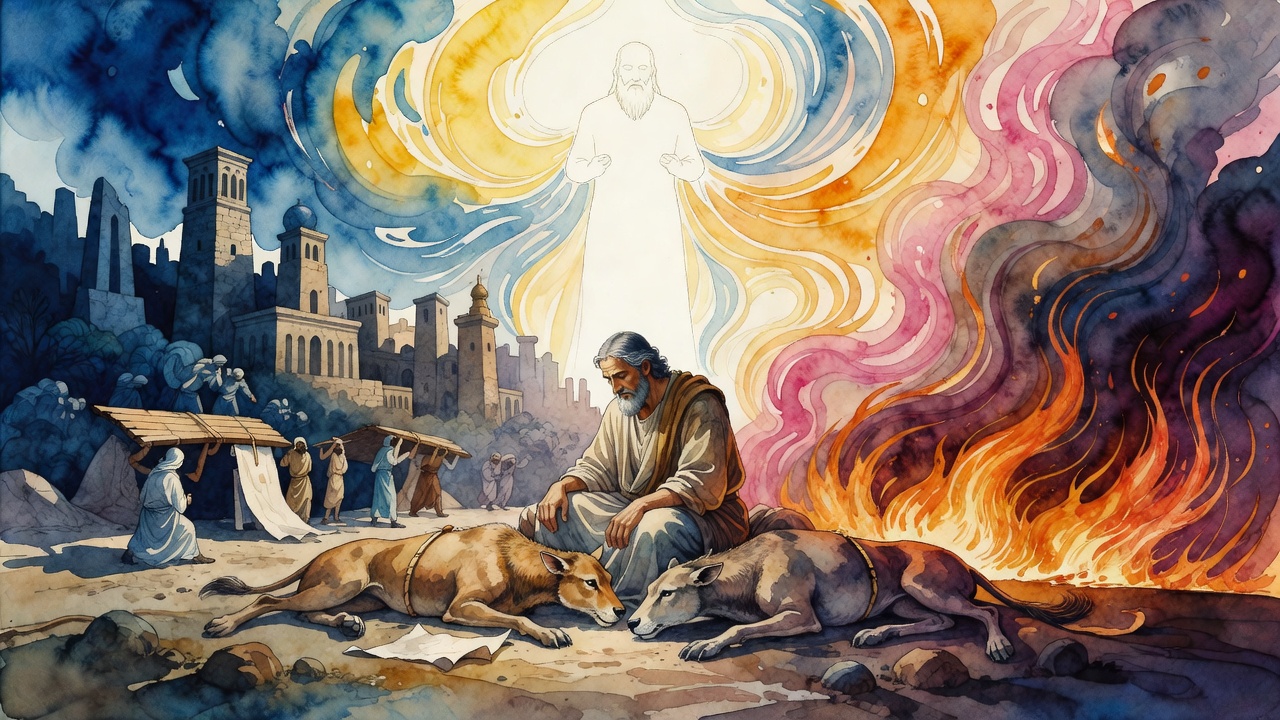
He dug a third time. The ropes went down, the water came up, and the day passed, and nobody walked over the rise to claim it. Then another day passed the same way.

He called that well Rehoboth. "Now the LORD has made room for us," he said, "and we will bear fruit in the land."

Two wells behind him with other men's animals drinking out of them. One under his own hand, and no argument.

A Voice at Beersheba the First Night

From there he went up to Beersheba, and God came to him that same night, before the tent pegs were properly in.

"I am the God of your father Abraham. Do not be afraid. I am with you, and I will bless you and make your offspring many, for the sake of Abraham My servant."

Isaac built an altar there in the morning and called on the name of the LORD. He set up the tent. Then he sent his men out with the ropes and the baskets, and they started another shaft in the ground at Beersheba, because that is what the man did wherever he stopped.

The King Came to Swear an Oath

Abimelech rode out from Gerar to find him, and brought Ahuzzath his adviser and Phicol the commander of his army.

Isaac watched the three of them get down off their animals and did not pretend to be glad. "Why have you come to me? You hate me. You sent me away from your country."

"We have seen plainly that the LORD is with you," they said. "Let there be an oath between us. Swear you will do us no harm, the way we did not lay a hand on you and sent you off in peace."

He made them a feast. They ate and drank, and got up early, and swore to one another there in the morning, and Isaac walked them out and they went home in peace.

That same day his servants came in from the field wet to the elbows and told him about the shaft they had been sinking.

"We have found water."

He called that well Shivah, for the oath sworn over it. The town that grew there is called Beersheba to this day, and men still lower buckets into a hole a man dug on the morning he made peace with the king who had thrown him out.


← All myths
From the tradition

Sources

3 sources

The texts behind this telling. Some cards carry a translation of the source; others are our own retelling of it, and each card says which. Every card links out to the original.

Yalkut Shimoni on Torah 111:13Yalkut Shimoni on Torah

Translation of the source text.Torat Emet (Yalkut Shimoni) · CC-BY-NC

How many wells did Isaac our father dig in Beersheba? Rabbi Yehudah son of Rabbi Simon said: four, corresponding to which his descendants became four banners [encampments] in the wilderness. And the Rabbis say: five, corresponding to the five fifths of the Torah [the five books].

"And he called the name of the well Esek" (Genesis 26:20) corresponding to the book of Genesis, in which the Holy One, blessed be He, occupied Himself [nit'asek] and created His world. "And he called its name Sitnah" (Genesis 26:21) corresponding to the book "And these are the names" [Exodus], on account of "and they embittered their lives" (Exodus 1:14). "And found there a well of living water" corresponding to the book of Leviticus, which is filled with many laws. "And he called it Sheva" [seven] (Genesis 26:33) corresponding to the book of Numbers, which completes [the count] to seven fifths of the Torah.

But are they not five? Bar Kappara treats from the beginning of the book of Numbers until "and it came to pass when the ark set out" (Numbers 10:35) as one book; "and it came to pass when the ark set out" and the verse after it [Numbers 10:35-36] as a book in itself; and from there until the end of the book as a book in itself. "And he called its name [Rehoboth]" (Genesis 26:22) corresponding to Deuteronomy [the Second Torah / Mishneh Torah].

Full source
Yalkut Shimoni on Torah 398:1Yalkut Shimoni on Torah

Translation of the source text.Torat Emet (Yalkut Shimoni) · CC-BY-NC

"Neither let the flocks nor the herds graze" (Exodus 34:3). It was taught: Rabbi Yose says: It is not a person's place that honors him; rather, he honors his place. For so we find at Sinai, that as long as the Divine Presence rested upon it, the Torah said, "Neither let the flocks nor the herds graze." Once the Divine Presence departed, the Torah said, "When the ram's horn sounds long, they may go up the mountain" (Exodus 19:13). And likewise we find regarding the Tent of Meeting, that as long as the Tent of Meeting was pitched, the Torah said, "And they shall send out of the camp every leper and everyone with a discharge" (Numbers 5:2). Once the curtain was rolled up, those with discharges and lepers were permitted to enter there.

Full source
Midrash Tanchuma, Bechukotai 1Midrash Tanchuma

Retold in our words. Read the original at the link below.Townsend 1989 translation of Midrash Tanhuma, S. Buber Recension · CC-BY

(Lev. 26:3:) “If [you walk] in My statutes (huqqim).” This text is related (to Job 14:5), “If his days are determined, the number of his months is with You; You have set limits (huqqim) that he shall not pass.” What is the meaning of “If his days are determined?” When the Holy One, blessed be He, created the world, He determined the days of each and every one, as stated (in Gen. 1:14), “and let them be for signs, seasons, days, and years.” Now to whom did He give them? To Israel, as stated (in Ps. 147:19), “He declares His words to Jacob, His statutes (huqqim) and His ordinances to Israel.” (Job 14:5, cont.) “The number of his months is with You; You have set his limits (huqqim) that he shall not pass.” The Holy One, blessed be He, said to Israel. “If you have carried out My statutes (huqqim), the adversary (Satan) shall not touch you, as stated, ‘that he shall not pass.’ But if you do not carry out My statutes, behold that the adversary will touch you, as stated (of death in Is. 28:19), ‘As often as he passes, he shall seize you.’ I said so to Solomon, when he asked for wisdom. And what did I say to him? (I (Kings 3:13):) ‘I have also granted you what you did not ask, both riches and honor.’ So if you fulfill the Torah, the angel of death shall not touch you, as stated to him (in I (Kings 3:1)4), ‘If you go in My ways to fulfill My statutes and My commandments as David your father did, [then I will lengthen your days].’” Ergo, (in Job 14:5) “You have set limits (huqqim) that he shall not pass….” If the first Adam had observed the Torah and the commandments that I gave him, he would not have died. Therefore, it is written (in Lev. 26:3) “If you walk in My statutes (huqqim)….”

Full source