Isaiah Saw the Burning Ones and Veiled Hooves Above the Throne
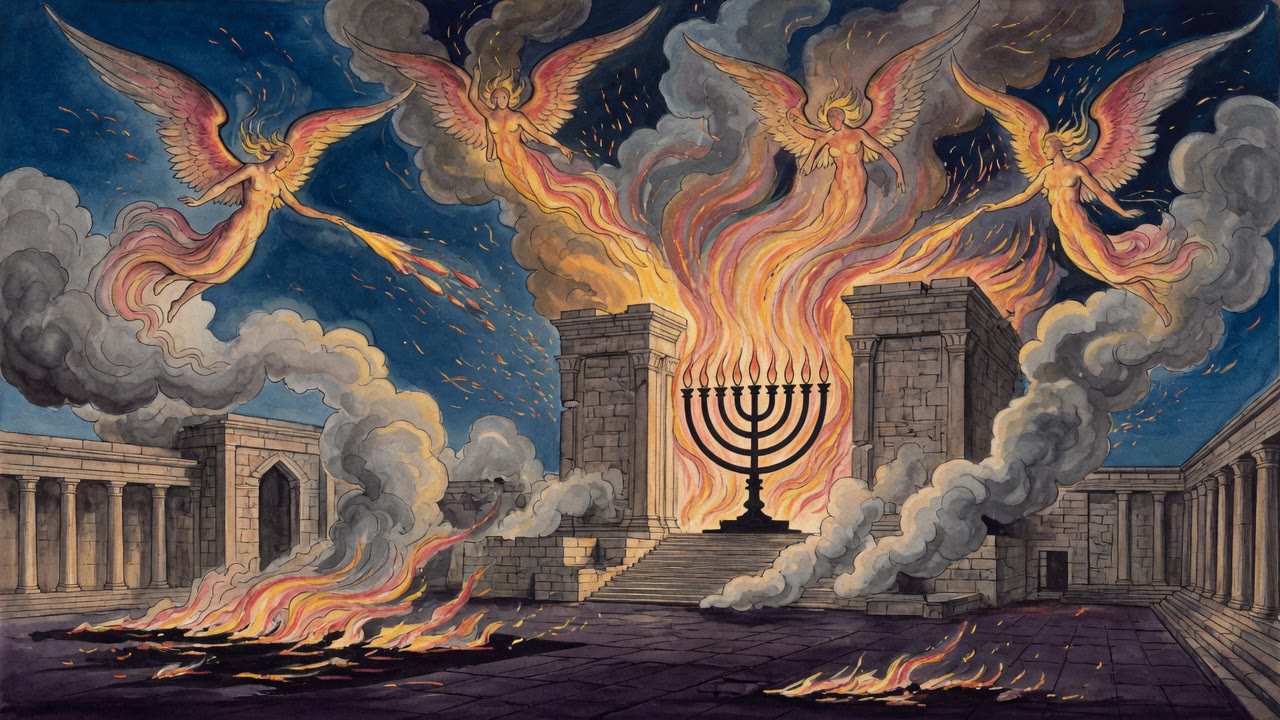
Isaiah walked into the Temple the year the king died and found burning ones above the throne, crying holy until the doorposts shook.
Table of Contents
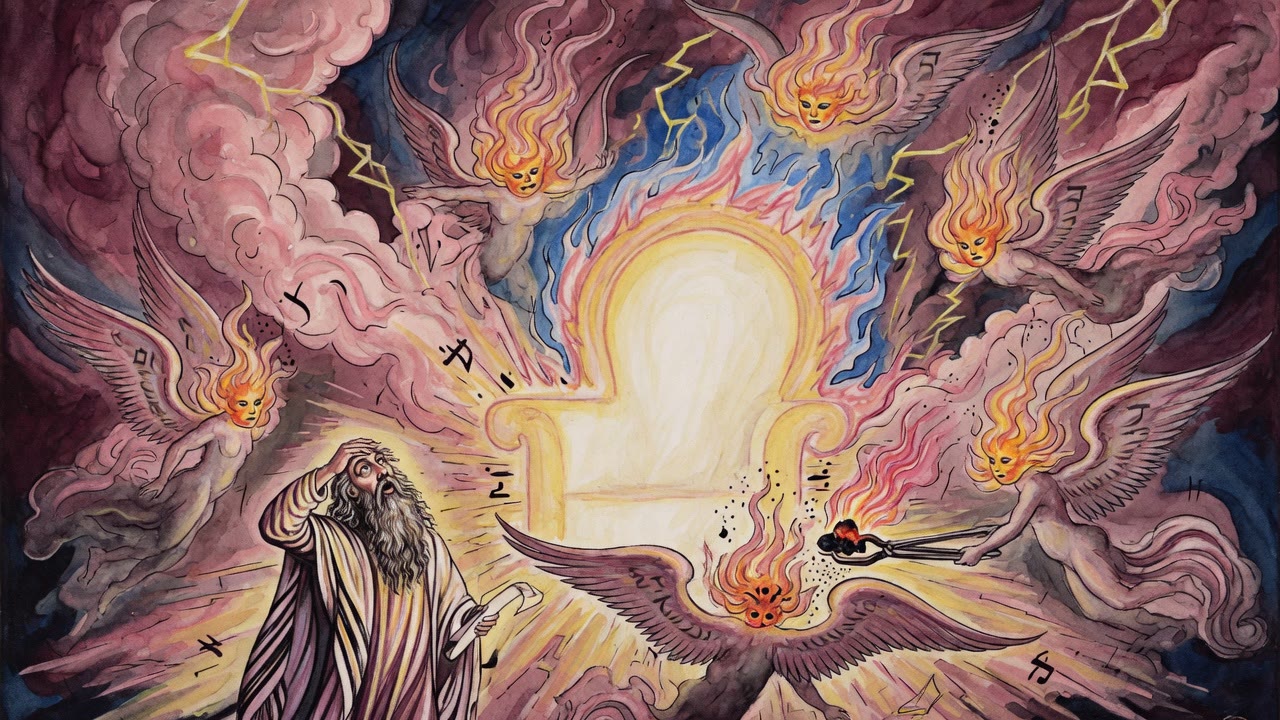
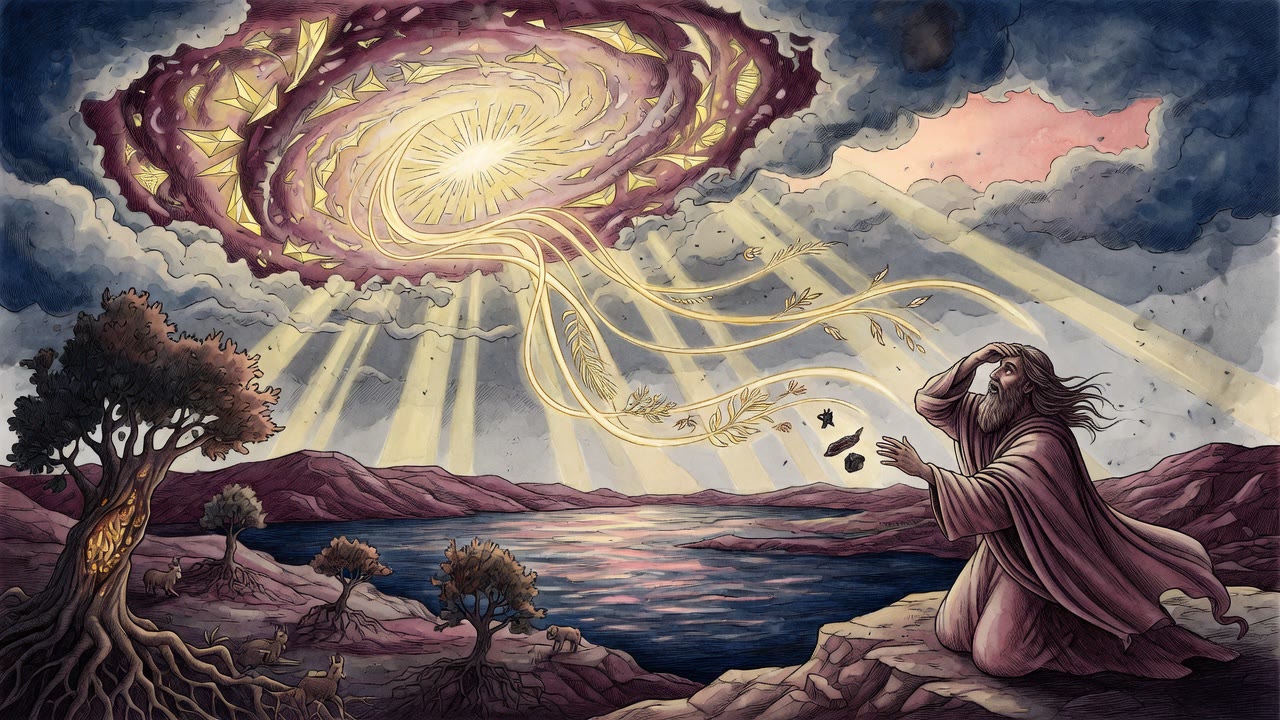
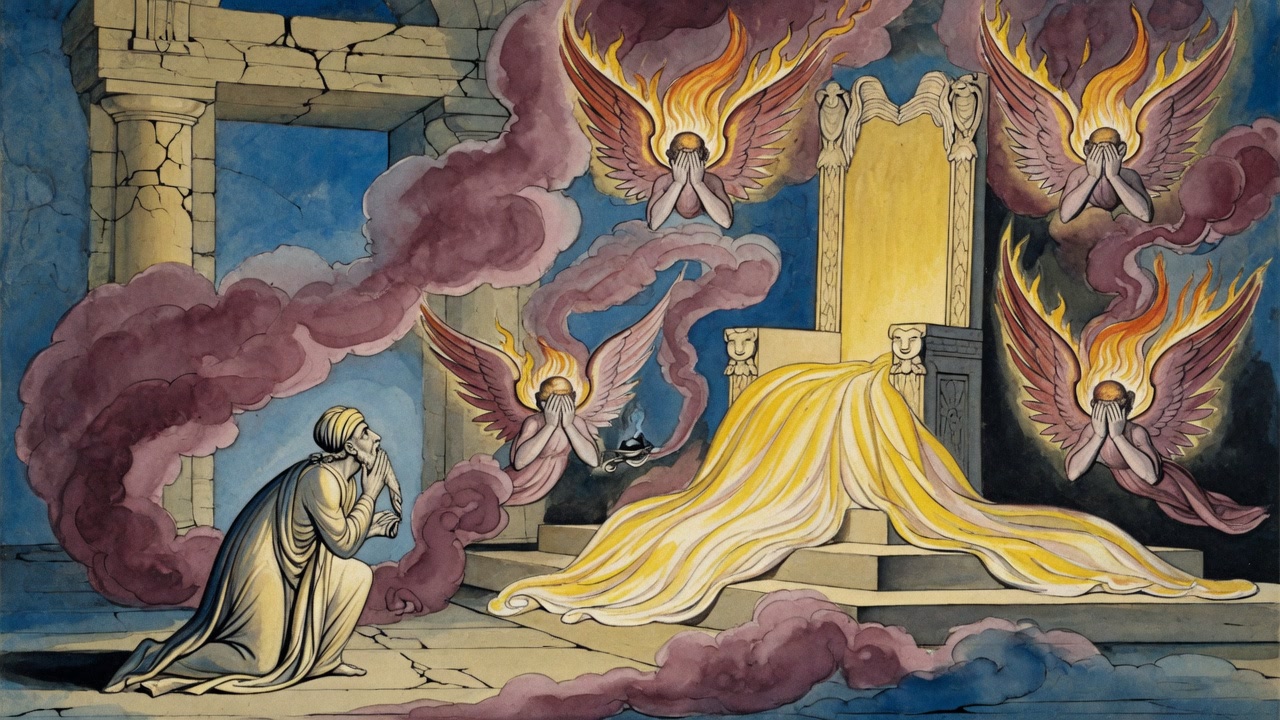
The doors stood open the way they always stood open, and Isaiah walked through them the way he always walked through them, and then the room was not the room anymore. The year the king had died, the air over the Temple split. A throne rose where no throne belonged, high and lifted up, and the hem of a robe poured down off it and kept pouring until the cloth filled the whole chamber, pooling against the walls, climbing the pillars. Smoke came with it. It rolled in low and thick until Isaiah could not see his own hands, and the doorposts in their sockets began to shake.
 Click for full size
The Room Lifts Off Its Foundations
He did not look up. He could not. Something seated above the smoke was too bright to be looked at, and the brightness pressed on his face like heat off an oven mouth. So Isaiah looked at the floor, at the trembling threshold, at the robe spilling endlessly across the stone, and he understood that he had walked out of the year the king died and into a place that had no year at all. The Temple he knew had a roof. This one opened straight up, with nothing between him and the seat of the Lord (Isaiah 6:1).
Then the burning ones came into view through the smoke, and his understanding nearly stopped his heart.
Burning Ones with Six Wings
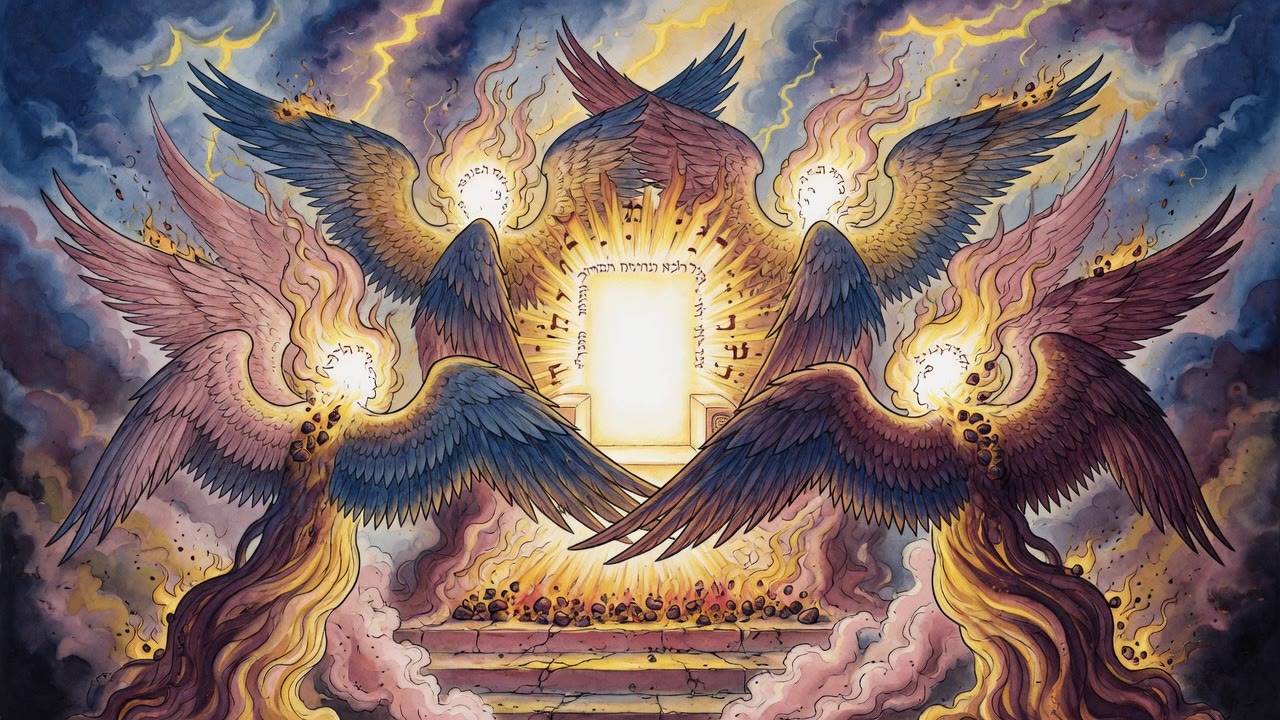
They were not soft. They were not the carved figures over the ark with their folded calm. These were seraphim, a name that means the burning ones, and they burned. Each had six wings, and Isaiah counted them without meaning to, because counting was the only thing his mind could still do. With two wings each one hid its face, because not even a creature of fire could stare into what sat on that throne. With two it flew, beating the smoke into slow spirals. And with two it covered its feet, low down, pressed close, hiding whatever was there from sight (Isaiah 6:2).
Isaiah wondered, in the small clear corner of him that was still capable of wondering, why the feet. The face he understood. No one looks at the face. But why veil the feet, down there against the floor, where no glory was?
Why the Hooves Stay Hidden
The answer was in what the wings concealed. Under those lowest feathers the seraphim did not have feet like a man's foot. They had feet like the sole of a calf's hoof, split and round and unmistakable, the same shape another seer would one day glimpse in his own vision of the chariot. And a calf's foot, lifted and shown openly before the Divine Presence, would carry a memory up to the throne that Israel could not afford to have remembered there.
The molten calf. The thing the people had built at the mountain while the smoke of another presence still hung on the slopes. The seraphim knew it. So they pulled their wings down over their hooves and kept them down, hour after hour, so that nothing in that court would point at the old sin and make the Presence recall it. They were burning before God, and they were also shielding the house of Israel from its own worst hour. Isaiah stood in the smoke and watched fire show mercy with its feathers.
The Three Voices That Could Kill
Then they sang, and the singing was nothing like a choir. The throne-bearers opened their mouths with distinct voices, and the voices did not blend. They climbed. The first voice rolled out and bent Isaiah's knees before he knew they were bending, a wave of awe so total it left no room in him for anything but submission. He thought that was the limit of what a body could take. It was not.
The second voice threw him into a confusion so complete that men who fell into it never came back from it, never found the edge of themselves again. He felt the boundary of his own mind start to dissolve and grabbed at it. And there was a third voice gathering behind the second, and he knew, the way a man knows a wave is too tall, that the third voice brought convulsions and then death, instant and clean, for anyone left standing in front of it. Holy, holy, holy, the burning ones called to one another across the throne (Isaiah 6:3), and the third voice was the holiness that no living throat can answer and survive.
Woe Is Me, the Wrong Confession
Isaiah stood silent in the middle of it. Every burning mouth was singing and he was not singing, and the silence opened a wound in him. The others were immortal. They could pour their whole selves into that hymn and not die of it. He could have joined. He thought, with the strange grief of the half-crushed, that if he had joined the song the vision that killed lesser men might have remade him instead, lifted him into their deathless company. And he had not. He had stood mute.
So he cried out the only confession he could find. "Woe is me, for I am undone, a man of unclean lips, and I dwell among a people of unclean lips" (Isaiah 6:5). He meant it as humility. He meant it as the reason for his silence.
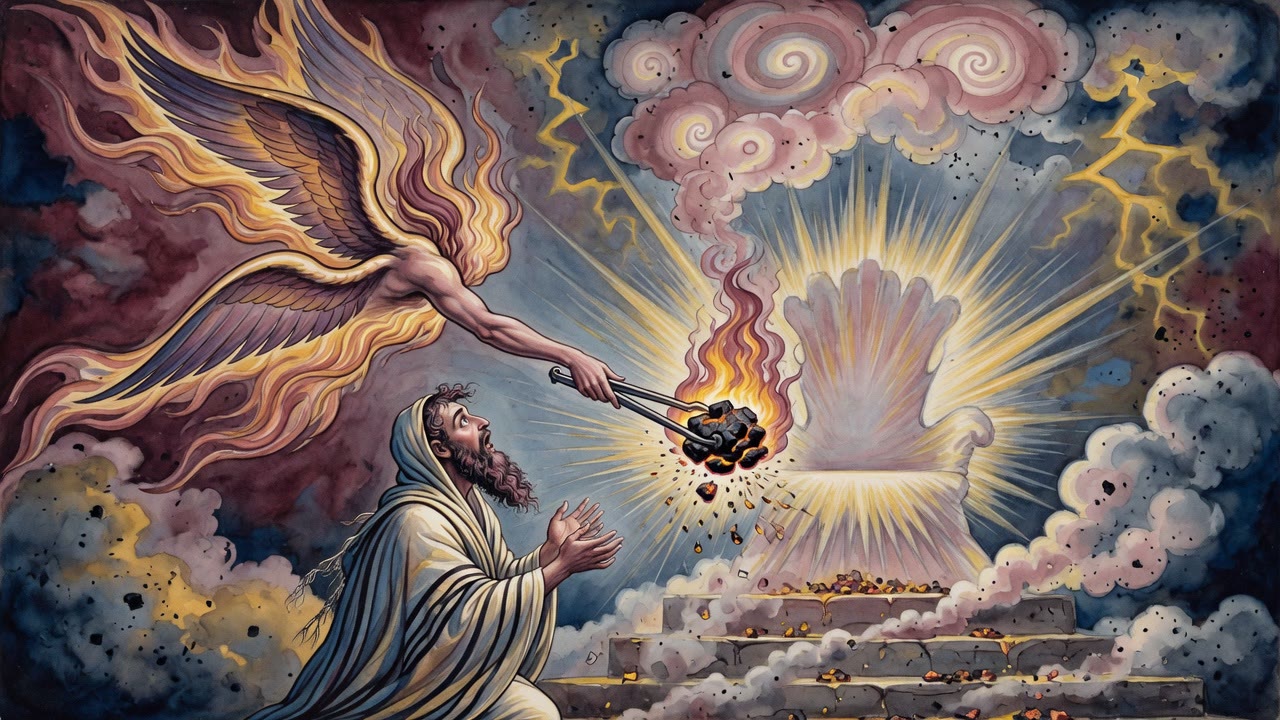
The voice that answered was not gentle. It came down through the smoke and it was angry, and the anger was not aimed where Isaiah expected. Of yourself, the voice told him, say whatever you choose. Call your own lips unclean as often as you like. But who gave you the right to lay that charge on Israel, to drag the whole people down with you, to slander the house that the burning ones were busy hiding hooves to protect? The seraphim were veiling their feet to spare Israel one bitter memory, and the prophet in his guilt had just handed up a fresh accusation. The court that worked so hard to shield the people, and the man God chose to speak for it had opened his mouth first to indict them. Isaiah, who had wanted to sing, had said the one thing the room was built to prevent.
← All myths