Parshat Yitro5 min read

Israel Bloomed Like the Apple Before Sinai

At Sinai Israel promised to do before they promised to hear. Angels set two crowns on each head, and a humble hyssop had already marked their doors.

Curated by Arthur · Told by Maggid ·
Table of Contents
  1. Blossom Ahead of Leaves
  2. Two Crowns on Every Head
  3. Hyssop on the Door Before the Mountain
  4. What the Camp Still Smelled Of

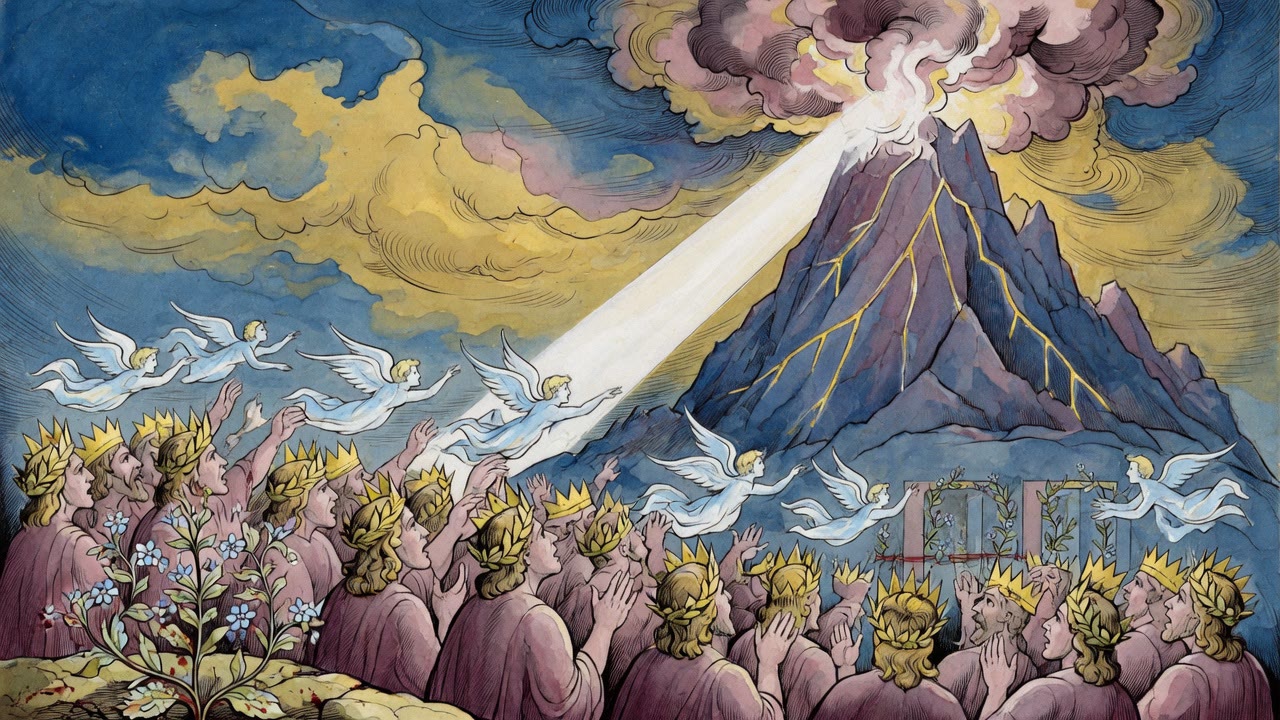
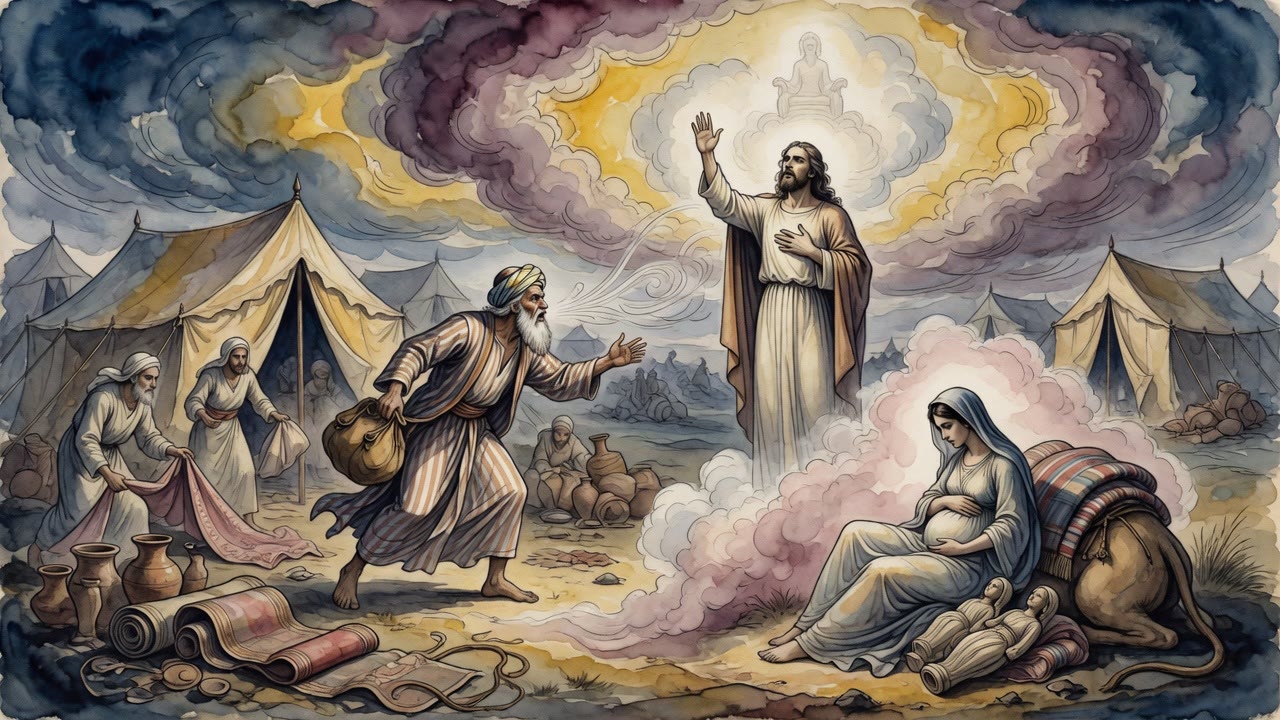
The mountain still smoked when the people answered as one. No flattery. No huddle to watch a neighbor's mouth. "All that the Lord has spoken we will do" rose clean from six hundred thousand throats, and only later did the fuller formula bind doing to hearing (Exodus 24:7). Moses climbed with their words though God already knew them. A messenger returns. Even heaven's messenger owes the report.

Israel Bloomed Like the Apple Before Sinai Click for full size

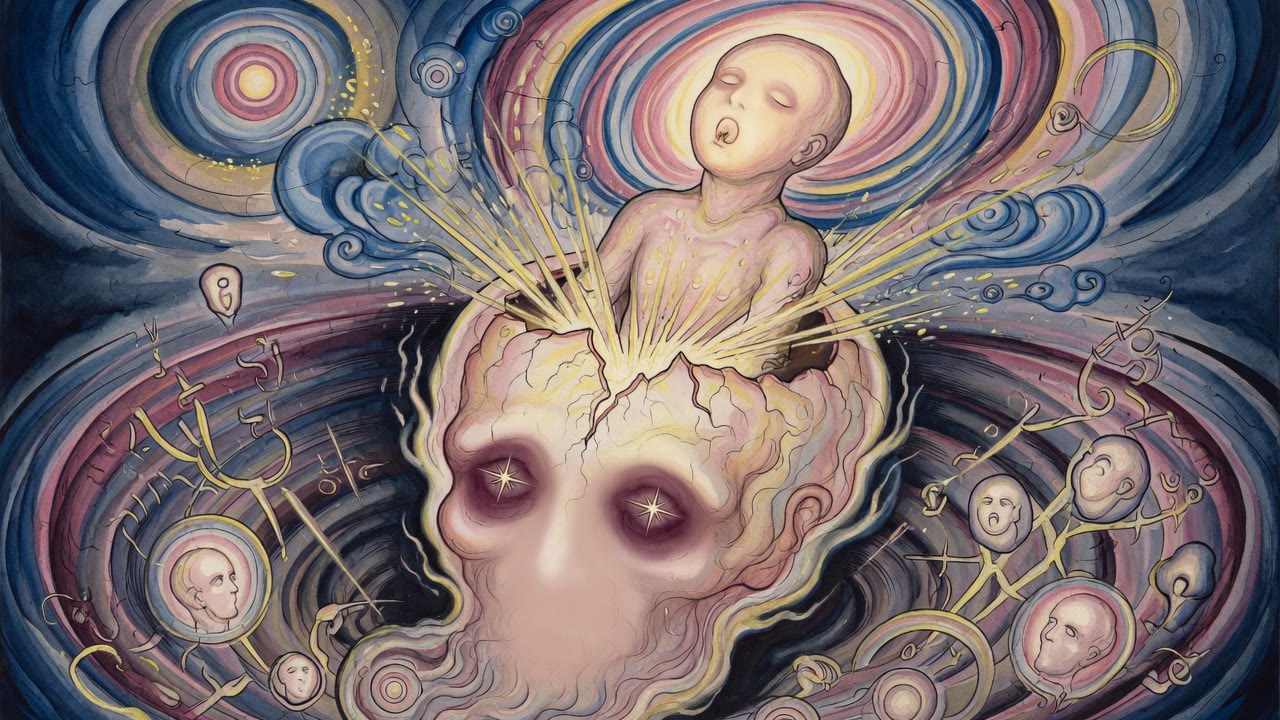
Under that answer the sages saw an apple tree in bloom. Fruit first. Leaves after. Commitment before the full map of law.

Blossom Ahead of Leaves

Rabbi Aha watched the order of the apple. Blossom first, then leaves. Israel stood under God's shade before the fruit of understanding ripened. Fifty days stretch an apple from blossom toward fruit. Fifty days stretched Israel from the Exodus to Sinai, from the first free breath to the month of Sivan and the feast of weeks. Freedom was not the finished fruit. Torah was.

The people stepped into shade that had not yet shown every leaf. That is not stupidity in the old telling. It is the order of love that acts before it audits. A nation just out of brick pits did not demand a full commentary before it said yes. It put its body under the tree and trusted the fruit to come.

Rabbi Azarya kept the calendar inside the image. Blossom to fruit, Egypt to mountain, a measured ripening that made Shavuot (the festival of the Torah's giving) smell like orchards and covenant at once.

Two Crowns on Every Head

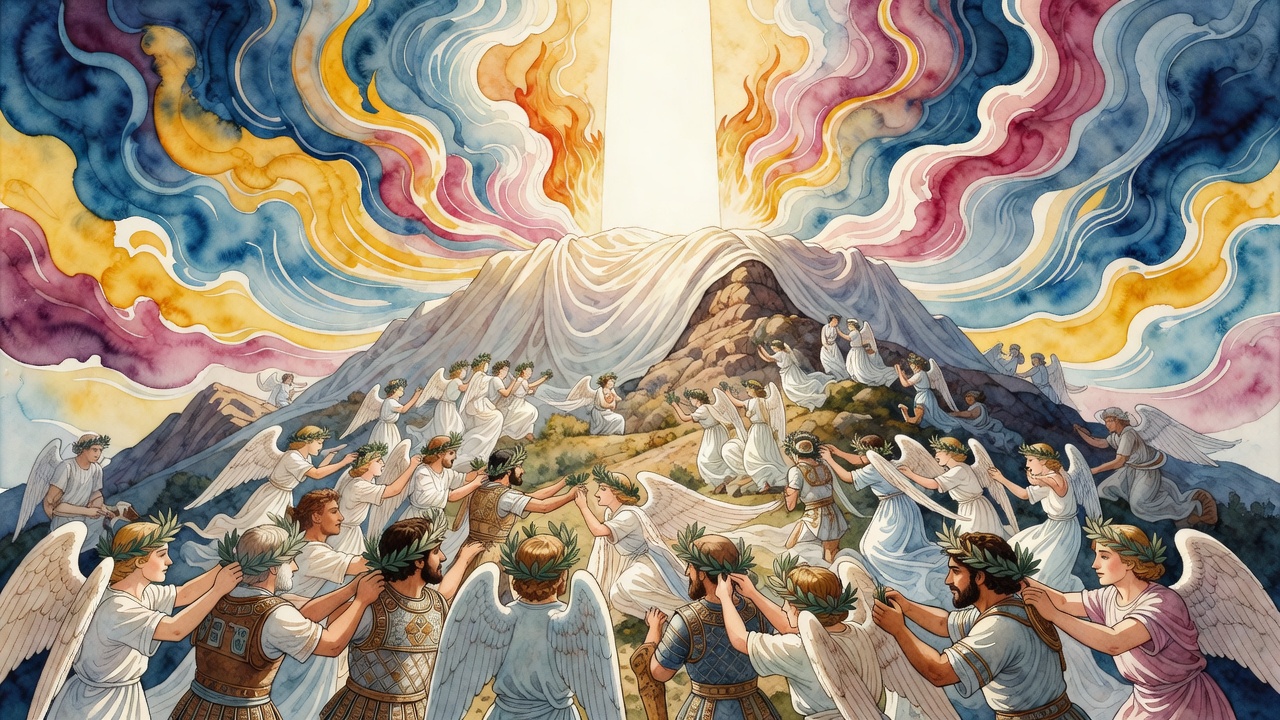
The instant "we will do" went before "we will hear," six hundred thousand angels came down. Each Israelite received two crowns, one for the promise to act and one for the promise to listen. A heavenly voice marveled. Who told this people the secret the angels live by, doing before hearkening?

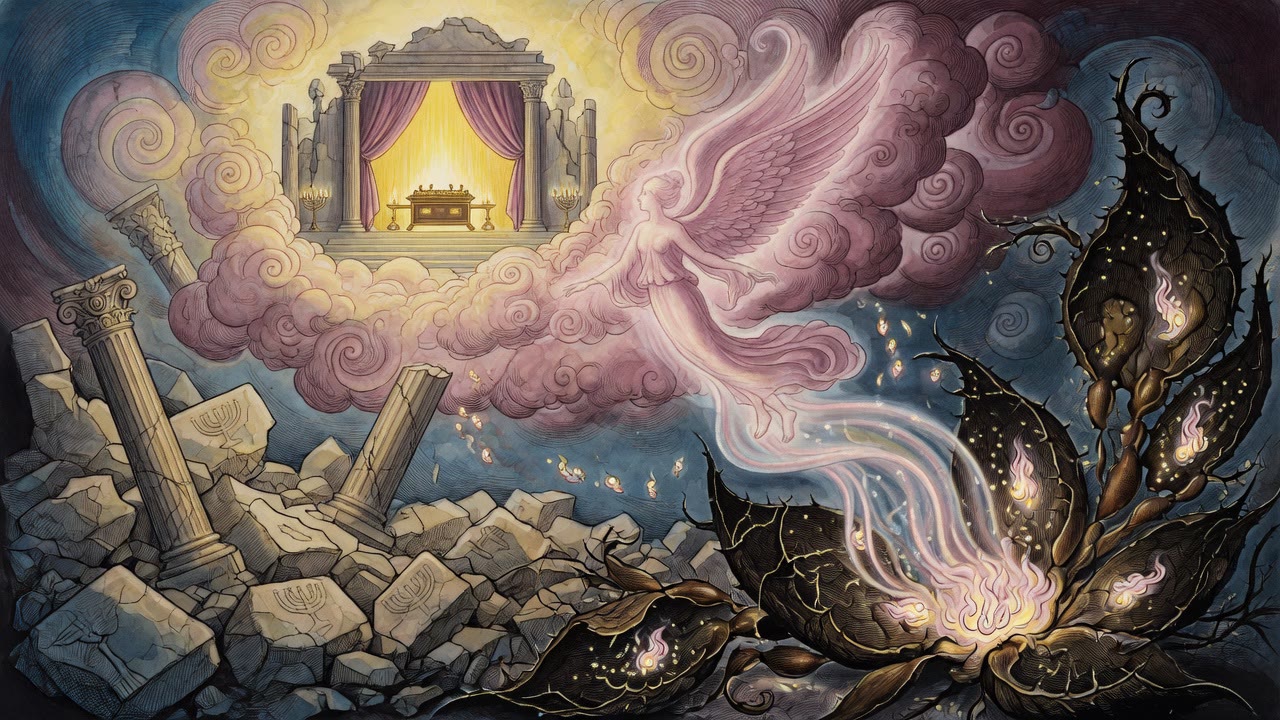
The crowns did not last the calf. Twice as many destroying angels tore them away when the gold animal rose in the camp. Moses gathered the fallen glory. Resh Lakish said God would one day set everlasting joy back on those heads. For one bright hour the nation wore heaven's fashion. Then the hour ended, and the story of return began.

Centuries later a heretic watched Rava study until his own finger bled under the page and mocked a people that put mouth before ear. Rava answered that the upright walk in wholehearted trust while the cunning who demand to inspect every term first are undone by their own crookedness. The apple tree still stood in the argument, fruit before leaf, act before full hearing.

Hyssop on the Door Before the Mountain

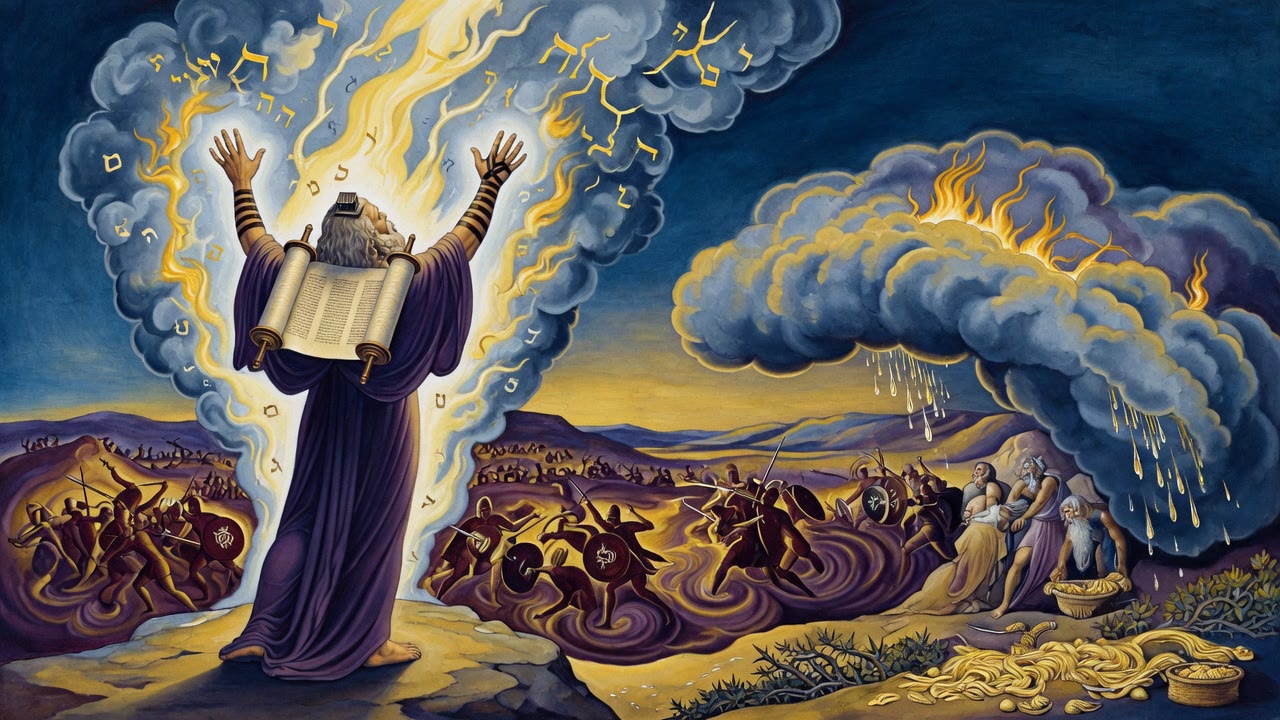
Long before crowns, redemption had begun with a plant worth almost nothing. Moses told Israel to take a bundle of hyssop and mark the doorposts with the blood of the Passover offering (Exodus 12:22). Hyssop grows in wall cracks. No cedar. No gold brush. A bound bunch, plain hyssop without a foreign name, dipped in a basin that held enough blood to wet the lintel and the two posts.

The low plant opened a night that led to plunder, sea, Sihon, Og, and the thirty-one kings. A little thing done at the commanded hour carried more than it seemed able to hold. Sinai's apple and Egypt's hyssop teach the same motion. Act with what is in the hand. Let the fruit explain itself later.

The sages bound the hyssop to other "takings" in the Torah, palm branch and purification wood, so the humble bundle became a pattern for how Israel holds ritual objects. Always the plain plant. Always enough blood in the vessel. Always the household kept inside until morning while judgment walked the street.

What the Camp Still Smelled Of

After the report climbed the mountain, the camp held the smell of free people who had already marked doors with weeds and now marked themselves with a promise faster than fear. The crowns would come and go. The calf would scar the hour. The apple order remained in the memory of the people who said do before hear.

When later generations lift a palm branch at Sukkot (the autumn festival of booths) or a humble plant in purification, the same stubborn lesson returns. Some commandments cost money and public effort. Others begin in a fistful of green that anyone can pick. Israel bloomed first. The leaves of explanation followed in every generation that still tries to keep the order.

Moses' climb with a message God already knew also left a human courtesy inside the thunder. Report back. Close the circle. The grand covenant taught a small faithfulness that holds ordinary errands together. The apple tree, the crowns, the hyssop, and the messenger's return all insist that Israel lives by acts that arrive slightly ahead of full understanding, then spend centuries growing the leaves.


← All myths

From the tradition

Sources

4 sources

The texts behind this telling. Some cards carry a translation of the source; others are our own retelling of it, and each card says which. Every card links out to the original.

Shir HaShirim Rabbah 3:2Shir HaShirim Rabbah

Retold in our words. Read the original at the link below.The Sefaria Midrash Rabbah, 2022 · CC-BY

The apple tree in Shir HaShirim Rabbah is not decoration. It is Sinai in bloom.

Rabbi Aḥa ben Rabbi Ze'eira notices the order of the tree: blossom first, leaves after. Israel, he says, did the same. At Sinai they said na'aseh v'nishma, "we will do and we will hear" (Exodus 24:7). The commitment came before the explanation. The fruit had not yet ripened, but the people had already stepped under God's shade.

Rabbi Azarya keeps the image alive. An apple tree needs fifty days from blossom to fruit. Israel needed fifty days from the Exodus to the giving of the Torah. The month was Sivan, the season of Shavuot, when a liberated people became fragrant with covenant. Freedom was not the finished fruit. Torah was.

Then Rabbi Yehuda ben Rabbi Simon turns from apples to hyssop. Moses tells Israel that redemption can begin with a small act: take "a bundle of hyssop" and place the blood of the Passover offering on the doorposts (Exodus 12:22). Hyssop is cheap. The people can almost hear the absurdity of it. Can a plant worth a few coins open the gates of Egypt?

Moses answers with the logic of faith. Even one humble bundle can lead to the plunder of Egypt, the sea, Sihon, Og, and the thirty-one kings. A little thing, done at the commanded hour, can carry more than it seems able to hold.

The same lesson returns with the palm branch of Sukkot (Leviticus 23:40). Some commandments cost money and public effort. Others begin in the hand, small enough to dismiss. Shir HaShirim Rabbah refuses to dismiss them. At Sinai, Israel answered before understanding. At Passover, a bundle of hyssop marked the door. The fruit came after the act.

Full source
Yalkut Shimoni on Torah 277:1Yalkut Shimoni on Torah

Translation of the source text.Torat Emet (Yalkut Shimoni) · CC-BY-NC

Rabbi Simai expounded: At the moment when Israel gave precedence to "we will do" over "we will hear," six hundred thousand ministering angels came, and to each and every one of Israel they bound two crowns, one corresponding to "we will do" and one corresponding to "we will hear." And once Israel sinned, one million two hundred thousand angels of destruction came down and removed them, as it is said, "And the children of Israel stripped themselves of their ornaments from Mount Horeb" (Exodus 33:6). At Horeb they were laden and at Horeb they were stripped. At Horeb they were laden, as we said. At Horeb they were stripped, as it is written, "And the children of Israel stripped themselves," etc. Rabbi Yochanan said: and Moses merited and took them all, since adjacent to it is, "And Moses would take the tent" (Exodus 33:7). Resh Lakish said: The Holy One, blessed be He, is destined to return them to Israel, as it is said, "And the ransomed of the LORD shall return and everlasting joy shall be upon their heads" (Isaiah 51:11). Rabbi Elazar said: At the moment when Israel gave precedence to "we will do" over "we will hear," a heavenly voice went out and said to them: My children, who revealed to you this secret that the ministering angels make use of, as it is written, "Bless the LORD, you His angels," etc. - first "who do" and afterward "who hearken"? Rabbi Chama bar Chanina said: What is the meaning of "As the apple tree among the trees of the wood" (Song of Songs 2:3)? Why are Israel likened to an apple tree? Just as this apple tree, its fruit comes before its leaves, so too Israel gave precedence to "we will do" over "we will hear." A certain heretic saw Rava absorbed in his studies while he pressed his finger beneath his foot and was crushing it until his finger spurted blood. He said to him: You rash people, who put your mouth before your ears - you still stand in your recklessness! First you should have listened: if you were able you would accept it, and if not you would not accept it. He said to him: We who walk in wholeness, of us it is written, "The integrity of the upright shall guide them" (Proverbs 11:3). Of those people who walk in cunning it is written, "and the perverseness of the treacherous shall destroy them."

Full source
Mekhilta DeRabbi Shimon Ben Yochai 19:8Mekhilta DeRabbi Shimon Ben Yochai

Translation of the source text.Mechilta de-Rabbi Simon b. Jochai, ed. D. Hoffmann, Frankfurt 1905 · Public Domain

"And all the people answered together" (Exodus 19:8): they did not answer with flattery, and they did not take counsel one from another. "And they said, All that the LORD has spoken we will do": we take it upon ourselves. "And Moses brought back the words of the people to the LORD": this was the third day. Another interpretation: "And Moses brought back the words of the people to the LORD", the verse comes to teach you proper conduct, that even though the one who sent a man has heard the message, the messenger must still report back his errand.

Full source
Mekhilta DeRabbi Shimon Ben Yochai 12:22Mekhilta DeRabbi Shimon Ben Yochai

Translation of the source text.Mechilta de-Rabbi Simon b. Jochai, ed. D. Hoffmann, Frankfurt 1905 · Public Domain

"And you shall take" (Exodus 12:22). Rabbi Yehudah says: "Taking" is stated here, and "taking" is stated regarding the red heifer, and "taking" is stated regarding the palm-branch [lulav], and "taking" is stated regarding the leper. Just as the "taking" stated here means a bound bunch, so too the "taking" stated in those places means a bound bunch. But the Sages say: "this", if it is not bound, it is invalid; "that" [the leper's], even though it is not bound, it is valid.

"Hyssop" (Exodus 12:22), not Greek hyssop, nor blue hyssop, nor wild hyssop, nor any hyssop that bears a qualifying name. "And dip it in the blood", that there be enough blood for dipping. "That is in the basin", I might understand this to mean a vessel's basin or a doorpost's socket [also called sap in Hebrew], since a vessel is called sap and a doorpost is called sap. And whence is it that a vessel is called sap? As it is said, "and the basins and the snuffers" (1 Kings 7:50). And whence is it that the doorpost is called sap? As it is said, "in their setting of their threshold by my threshold, and their doorpost beside my doorpost" (Ezekiel 43:8). Therefore Scripture says, "and you shall reach to the lintel and to the two doorposts with the blood that is in the basin", meaning a basin one can reach into. Say from now on: a vessel's basin, and not a doorpost's socket. Rabbi Akiva says: Since two verses stand, let one place blood both in a vessel's basin and on a doorpost's socket; the remainder of the blood he pours out upon the threshold.

"And you" (Exodus 12:22). I have only you yourselves. Converts, women, and slaves, whence are they included? Scripture teaches, "And as for you, none of you shall go out of the door of his house until morning."

Full source