Parshat Yitro5 min read

God's Voice Nearly Killed Israel at Sinai

When God said I am the Lord, Israel's souls left their bodies. The spoken word cried out against dead listeners until heaven sweetened the sound.

Curated by Arthur · Told by Maggid ·
Table of Contents
  1. The Word Refused Dead Ears
  2. Torah as the Kiss That Returned Breath
  3. Crowns for the Hour They Stood Alive Again
  4. What the Mountain Taught About Volume

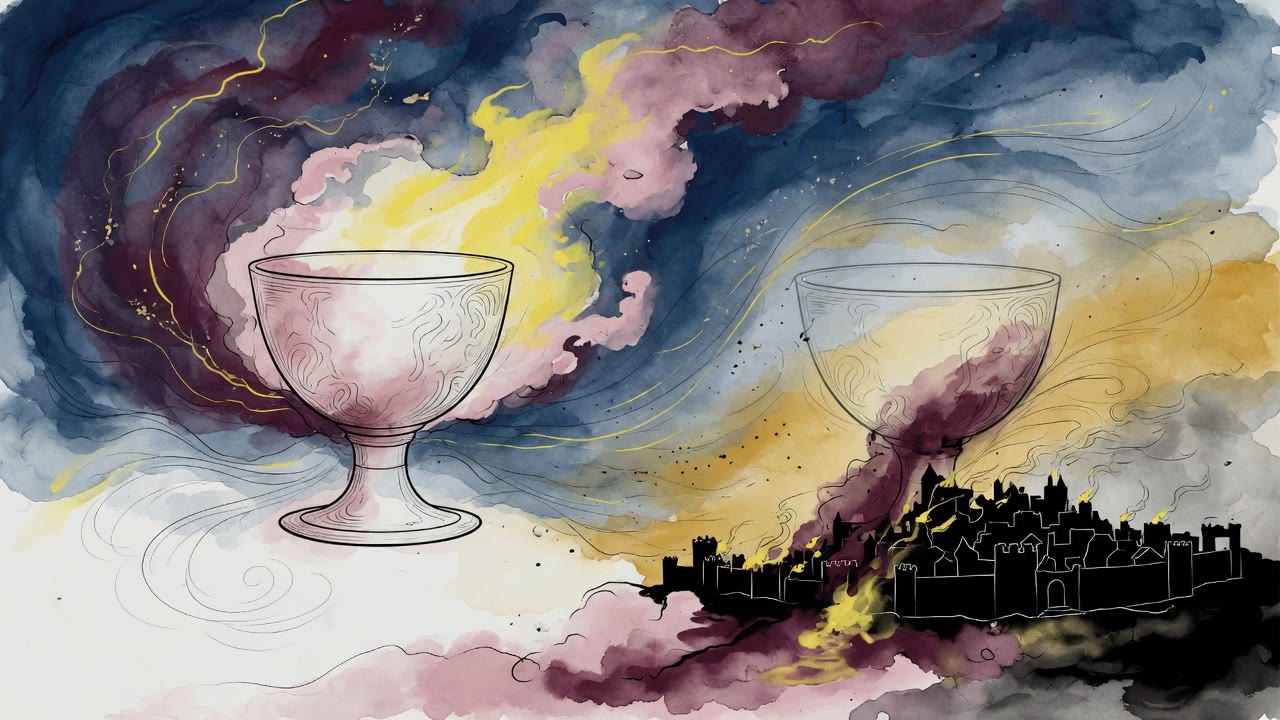
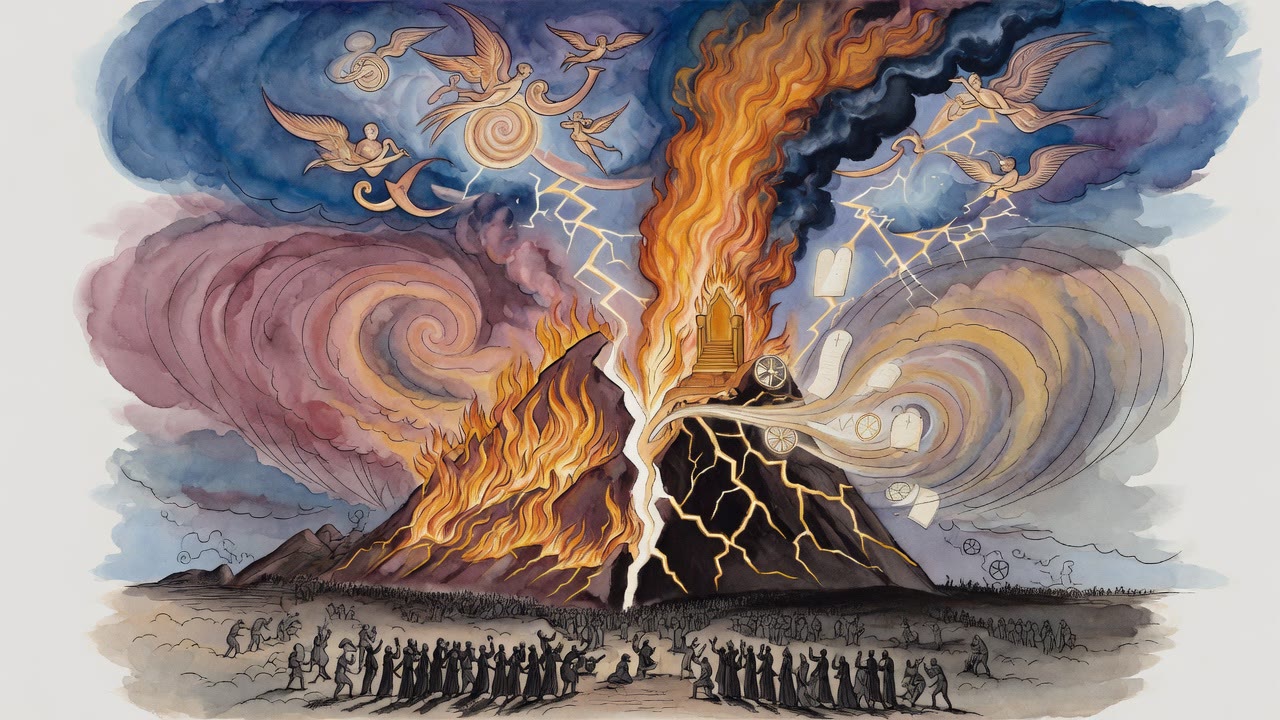
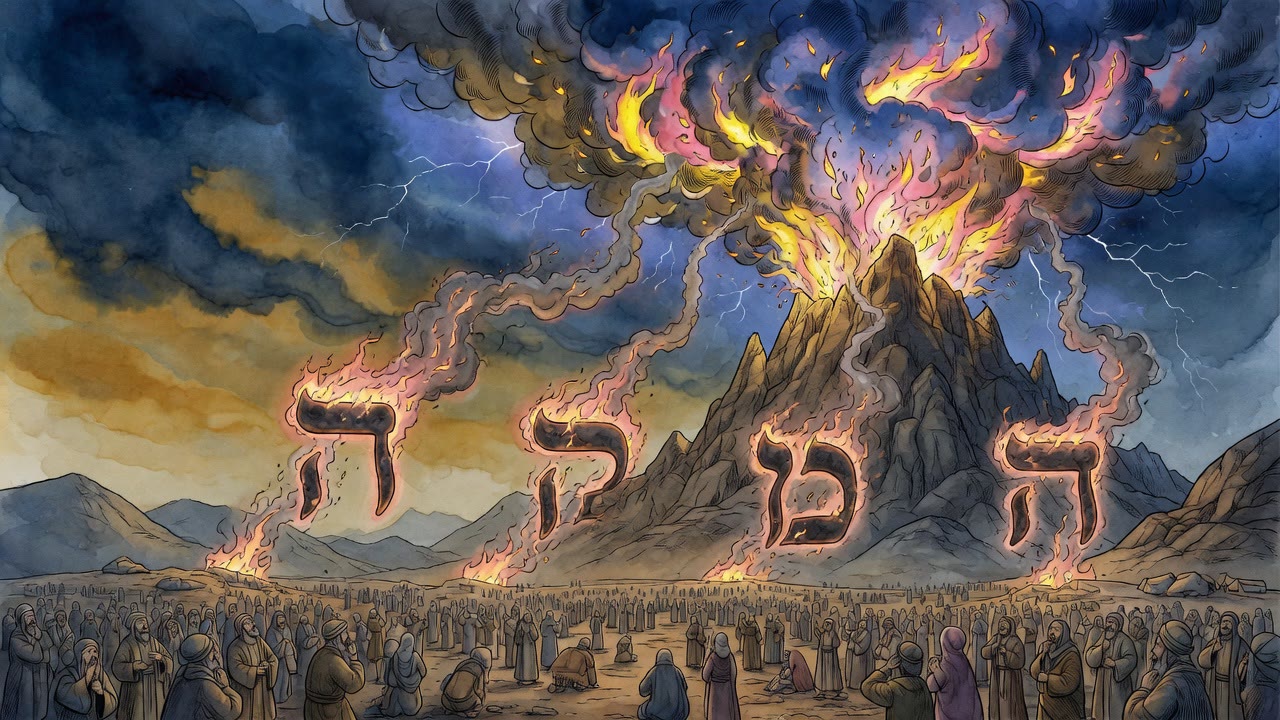
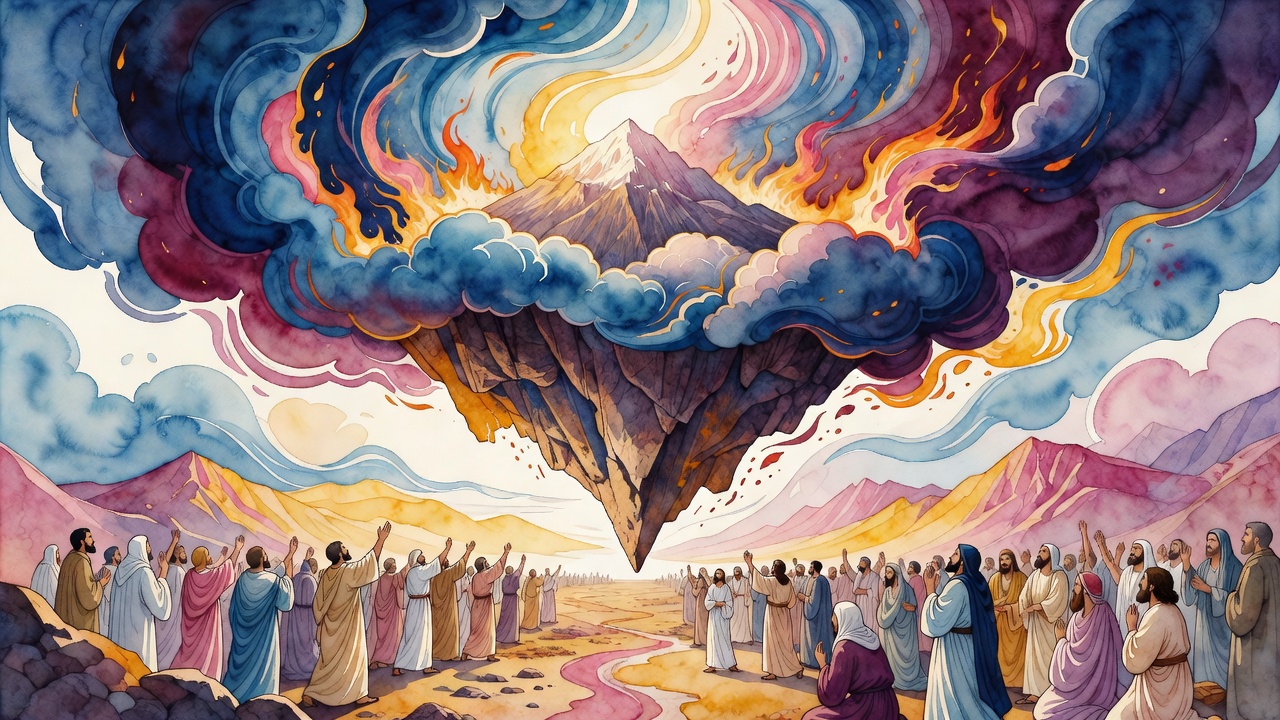
The first word hit like a wave that forgot the shore. "I am the Lord your God" (Exodus 20:2) left God's mouth, and the souls of Israel left their bodies. Bodies stood on the mountain's flank. The life inside them fled the sound. Song of Songs keeps the scar of that moment. "My soul departed when he spoke" (Song of Songs 5:6). The people later begged not to hear that voice again, lest they die (Deuteronomy 5:22).
God's Voice Nearly Killed Israel at Sinai Click for full size

Death on the day of covenant was not the plan. It was the cost of pure speech meeting clay.

The Word Refused Dead Ears

The spoken word, the dibbur, turned back toward the throne. It cried out as if it had a throat. Master of the universe, You are alive and enduring, and Your Torah is alive and enduring, and You send me to the dead? They are all dead.

Heaven had a problem only heaven could fix. Living law cannot land in corpses. God sweetened the spoken word. The palate that Song of Songs calls sweet became the medicine for a voice too absolute. Psalms names the shift. "The voice of the Lord is mighty; the voice of the Lord is majestic" (Psalms 29:4). Mighty for the young. Majestic, tempered, for the elderly. One revelation, many volumes, so no age would be shattered the same way twice.

The mountain held more than thunder. It held a negotiation between absolute speech and the thinness of human breath. The word would not waste itself on silence that could not answer. It demanded listeners who were alive enough to tremble and reply.

Torah as the Kiss That Returned Breath

Rabbi Shimon ben Yohai said the Torah itself restored the souls. "The Torah of the Lord is perfect, restoring the soul" (Psalms 19:8). The law that would bind them first had to reenter them as life. A king who speaks too harshly watches his son faint. He does not finish the lecture over a still chest. He embraces. He kisses. He reminds the child of the bond.

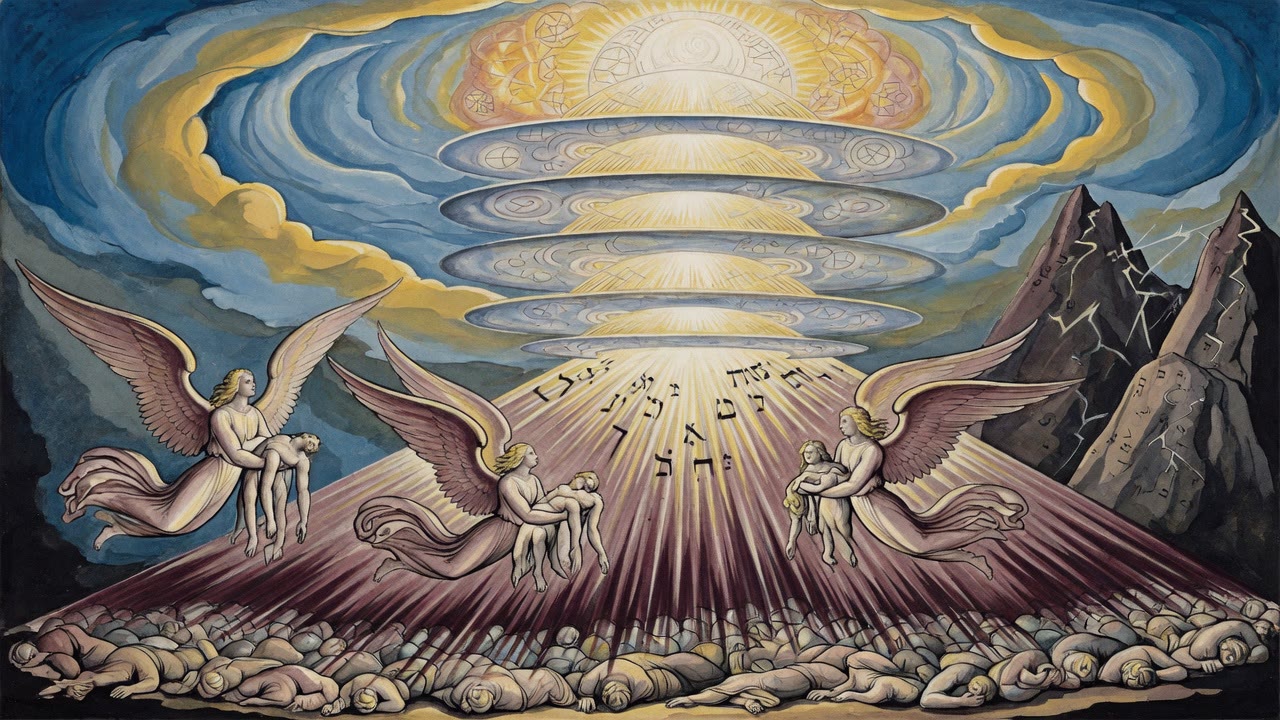
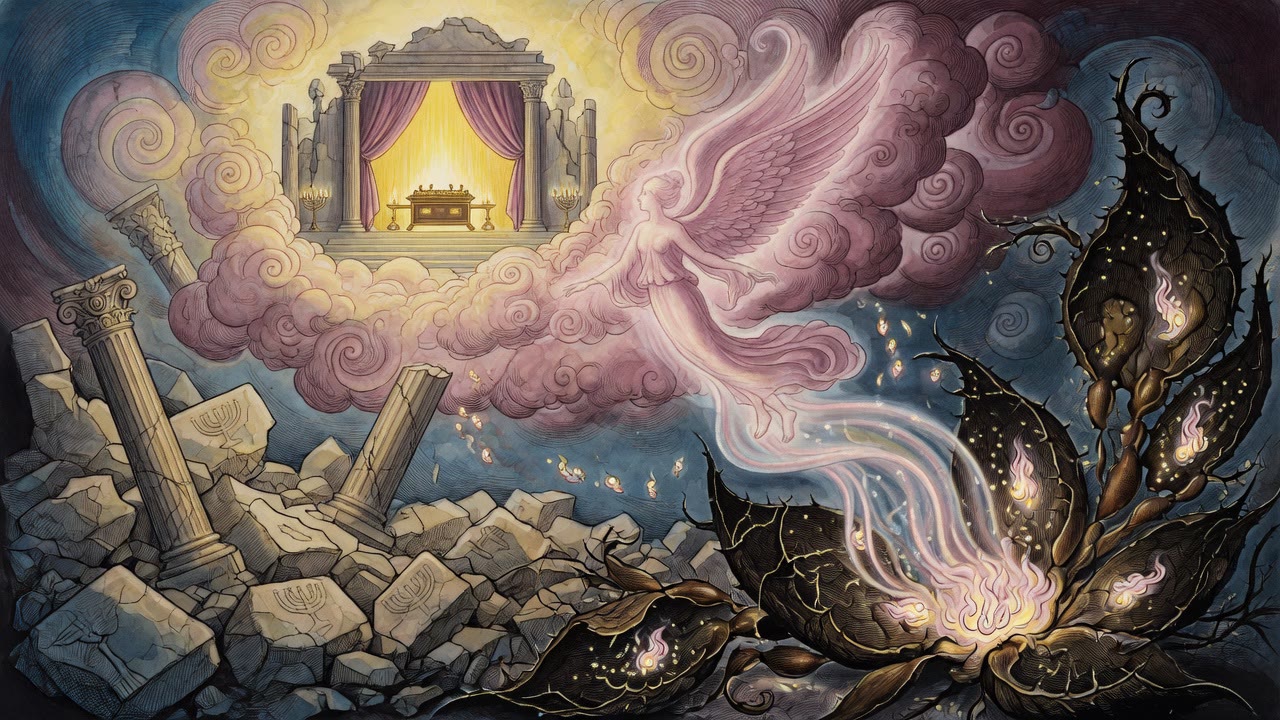
Angels did that work at Sinai. They embraced the fallen and returned breath so the next word could be heard by the living. Revelation paused for resuscitation. The mountain held a clinic before it held a court. Fire that could kill became fire that could teach only after the bodies filled again.

Israel's first experience of Torah was not a classroom. It was a near-death and a revival staged by the same Speaker who wanted a nation, not a field of corpses arranged in neat tribal rows.

Crowns for the Hour They Stood Alive Again

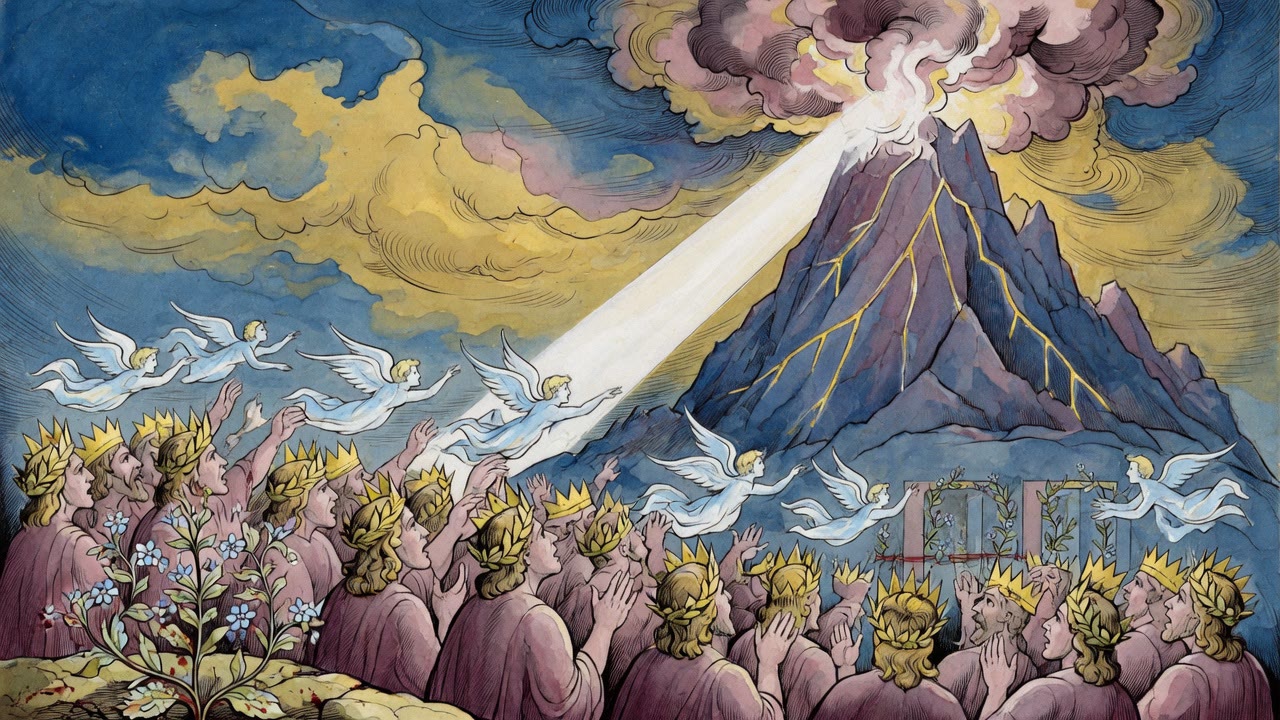
Once the people could stand, they had already said they would do and hear. Angels set two crowns on each head for that order of promise. For one hour Israel wore heaven's metal. The calf would strip it. Moses would gather what fell. The hour still counts because it proves the dead did not stay dead long enough to miss the gift.

The sequence matters. Death by voice. Return by Torah. Crowns for the answer. Loss for the sin. The story refuses a simple triumph. It keeps the almost-dying inside the wedding day of God and Israel. Every later synagogue that opens a scroll inherits both the sweetness and the danger of that first volume setting.

Six hundred thousand crowns flashed and vanished into the long work of repentance. The memory of the flash still trains the people to treat speech from heaven as something a body must be strong enough to host.

What the Mountain Taught About Volume

A voice that kills and a voice that heals came from the same mouth. The people learned that nearness is not safe by default. Safety is a second grace after the first shock. Children and elders needed different strengths of sound. The nation as a whole needed the word sweetened until clay could hold fire without cracking for good.

Later, when prayer rises soft in rooms far from any smoking peak, the old danger still sits under the sweetness. The same God who filled the world with one sentence once emptied every body that heard it. The Torah that walked back into those chests remains the only reliable way to survive the Speaker.

Israel did not leave Sinai as people who had merely agreed to rules. They left as people who had died of glory and been kissed awake by law, crowned for an hour, and sent into history still smelling of smoke and revived breath.

The fear that remained after the revival was not cowardice. It was accurate memory. A people that has died of a sentence does not treat later sentences as decoration. When they asked for Moses to stand between them and the raw voice, they were not rejecting God. They were asking for a human buffer strong enough to carry sweetness without collapsing again.

Every generation that opens the Ten Commandments inherits that double knowledge. The words give life. The Speaker can overwhelm. Torah is the path that lets clay stay near fire without becoming ash.


← All myths

From the tradition

Sources

3 sources

The texts behind this telling. Some cards carry a translation of the source; others are our own retelling of it, and each card says which. Every card links out to the original.

Shir HaShirim Rabbah 5:16Shir HaShirim Rabbah

Retold in our words. Read the original at the link below.The Sefaria Midrash Rabbah, 2022 · CC-BY

Shir HaShirim Rabbah turns to When God's Voice Nearly Overwhelmed Israel at Sinai.

Our sages explored this very idea. The verse from Song of Songs, "His palate is sweet," (Song of Songs 5:16) But in Shir HaShirim Rabbah, the classical commentary on Song of Songs, it unlocks a profound understanding of that pivotal moment at Sinai.

Rabbi Azarya and Rabbi Aḥa, citing Rabbi Yoḥanan, paint a startling picture. They suggest that when the Israelites heard God proclaim, "I am the Lord your God" (Exodus 20:2), their souls actually departed from their bodies. The very voice of God, so powerful, was almost too much for mortal ears. This idea, at first shocking, is supported by other verses. "If we continue to hear the voice of the Lord our God, we shall die" (Deuteronomy 5:22), and "My soul departed when he spoke" (Song of Songs 5:6) are both brought as evidence.

What happened to the words themselves? The davur – the spoken word – returned to God, so to speak. It cried out, "Master of the universe, you are alive and enduring, and Your Torah is alive and enduring, and You send me to the dead? They are all dead!" A pretty good question. So what did God do? the verse says, He "sweetened the spoken word" for them. How incredible is that? The voice of God, once overwhelming, was now tempered, made palatable. This is echoed in Psalms: "The voice of the Lord is mighty; the voice of the Lord is majestic" (Psalms 29:4). Rabbi Ḥama bar Rabbi Ḥanina interprets this to mean that the voice was mighty for the young, and majestic – perhaps gentler, more tempered – for the elderly.

Rabbi Shimon ben Yoḥai adds that the Torah itself, sent by God, restored the souls of the Israelites. It's almost like the Torah was the antidote to the intensity of God's initial revelation. "The Torah of the Lord is perfect, restoring the soul" (Psalms 19:8).

The Midrash (rabbinic interpretive commentary) then offers another beautiful analogy. What does the king do? He embraces and kisses his son, reassures him, and reminds him of their loving relationship. So too, when the Israelites' souls departed, the angels embraced and kissed them, reminding them, "You are children to the Lord your God" (Deuteronomy 14:1). God then sweetened His speech, saying, "I am the Lord your God. You are My people, you are beloved to Me."

The Israelites, now revived, began to request that God no longer speak to them directly. It was too much! They needed a mediator, a buffer. And the Torah itself, personified, pleaded for mercy on their behalf. "Master of the universe, is there any king who marries off his daughter and kills a member of his household? The whole world in its entirety is joyful for me, and your children are dying?"

Immediately, their souls were restored, and again we are reminded that "The Torah of the Lord is perfect, restoring the soul" (Psalms 19:8).

What does all of this tell us? It speaks to the immense power and potential overwhelming nature of divine revelation. It also shows us the incredible compassion and understanding that God has for humanity. God doesn't just give us the Torah; God tempers it, sweetens it, makes it accessible, so we can receive it and be nourished by it.

Full source
Shabbat 88aHebraic Literature (1901)

Retold in our words. Read the original at the link below.Project Gutenberg eBook #14368, Hebraic Literature · PD-US-pre-1929

At the foot of Mount Sinai, when Israel answered the Torah with five Hebrew words, na'aseh v'nishma, "we will do and we will hear" (Exodus 24:7), they did something strange. They committed to obey before they knew what obedience would demand. They said na'aseh first, nishma second.

The Talmud (Shabbat 88a) says heaven responded immediately. Six hundred thousand ministering angels descended, one for every adult Israelite, and each angel placed two crowns upon the head of each Israelite: one crown for na'aseh, one for nishma. For one hour, every Jew at Sinai wore the regalia of a being who had said yes before asking for the clause.

Then Israel sinned. The Golden Calf rose from the furnace. And the Torah says (Exodus 33:6), And the children of Israel stripped themselves of their ornaments by Mount Horeb. What ornaments? These crowns. Twice six hundred thousand destroying angels, the Talmud continues, one million two hundred thousand of them, came down and took back what had been given.

Resh Lakish refused to let the story end there. He quoted (Isaiah 35:10): The ransomed of the Lord shall return, and come to Zion with songs and everlasting joy upon their heads. Upon their heads. The crowns, Resh Lakish said, are not lost forever, they are in storage. In the future, the Holy One will return them, and the ransomed will come home wearing the very joy they wore in the hour when they said yes before asking why.

Full source
Yalkut Shimoni on Torah 277:1Yalkut Shimoni on Torah

Translation of the source text.Torat Emet (Yalkut Shimoni) · CC-BY-NC

Rabbi Simai expounded: At the moment when Israel gave precedence to "we will do" over "we will hear," six hundred thousand ministering angels came, and to each and every one of Israel they bound two crowns, one corresponding to "we will do" and one corresponding to "we will hear." And once Israel sinned, one million two hundred thousand angels of destruction came down and removed them, as it is said, "And the children of Israel stripped themselves of their ornaments from Mount Horeb" (Exodus 33:6). At Horeb they were laden and at Horeb they were stripped. At Horeb they were laden, as we said. At Horeb they were stripped, as it is written, "And the children of Israel stripped themselves," etc. Rabbi Yochanan said: and Moses merited and took them all, since adjacent to it is, "And Moses would take the tent" (Exodus 33:7). Resh Lakish said: The Holy One, blessed be He, is destined to return them to Israel, as it is said, "And the ransomed of the LORD shall return and everlasting joy shall be upon their heads" (Isaiah 51:11). Rabbi Elazar said: At the moment when Israel gave precedence to "we will do" over "we will hear," a heavenly voice went out and said to them: My children, who revealed to you this secret that the ministering angels make use of, as it is written, "Bless the LORD, you His angels," etc. - first "who do" and afterward "who hearken"? Rabbi Chama bar Chanina said: What is the meaning of "As the apple tree among the trees of the wood" (Song of Songs 2:3)? Why are Israel likened to an apple tree? Just as this apple tree, its fruit comes before its leaves, so too Israel gave precedence to "we will do" over "we will hear." A certain heretic saw Rava absorbed in his studies while he pressed his finger beneath his foot and was crushing it until his finger spurted blood. He said to him: You rash people, who put your mouth before your ears - you still stand in your recklessness! First you should have listened: if you were able you would accept it, and if not you would not accept it. He said to him: We who walk in wholeness, of us it is written, "The integrity of the upright shall guide them" (Proverbs 11:3). Of those people who walk in cunning it is written, "and the perverseness of the treacherous shall destroy them."

Full source