Rays of Glory Clung to Moses From Three Places
Moses comes down blazing and does not know it. Glory clings from the cave, from the gap between hands on the tablets, and from leftover ink on the pen.
Table of Contents
 Click for full size
He Did Not Know His Face Shone
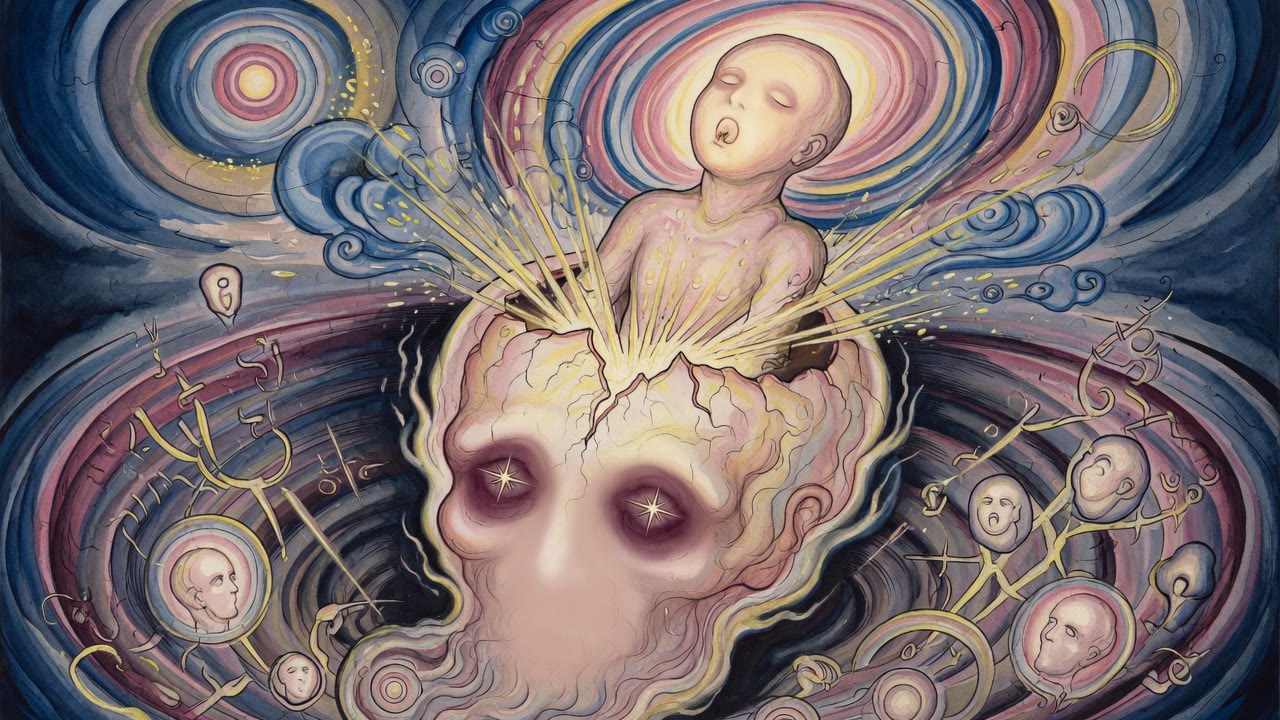
When Moses came down from the mountain, the skin of his face blazed with rays of glory, and he himself did not know it. The light was not a prize he had claimed in front of a mirror. It was a residue he carried the way a man carries dust from a road he has walked too long to notice.
From where did this radiance come? The masters split into three camps, and each camp points to a different nearness with God. None of them says Moses invented the light. All of them say the light stuck to him because he stood too close to something that does not usually touch skin.
Some teach it came from the cave. The Holy One had said, "When My glory passes by, I will put you in the cleft of the rock," and a sliver of that passing glory clung to his face like dew that will not dry in any earthly sun. He had stood where flesh is not supposed to stand, and the place left a mark that walked back down with him.
Two Hands and Empty Space
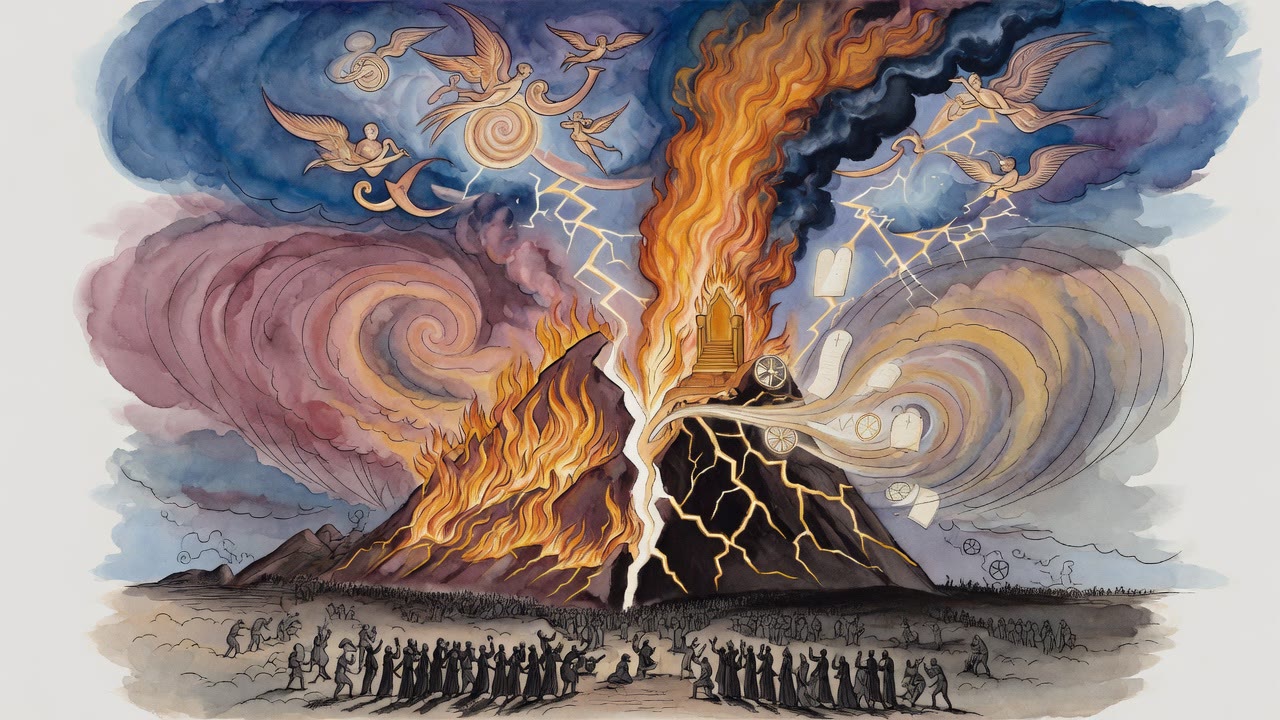
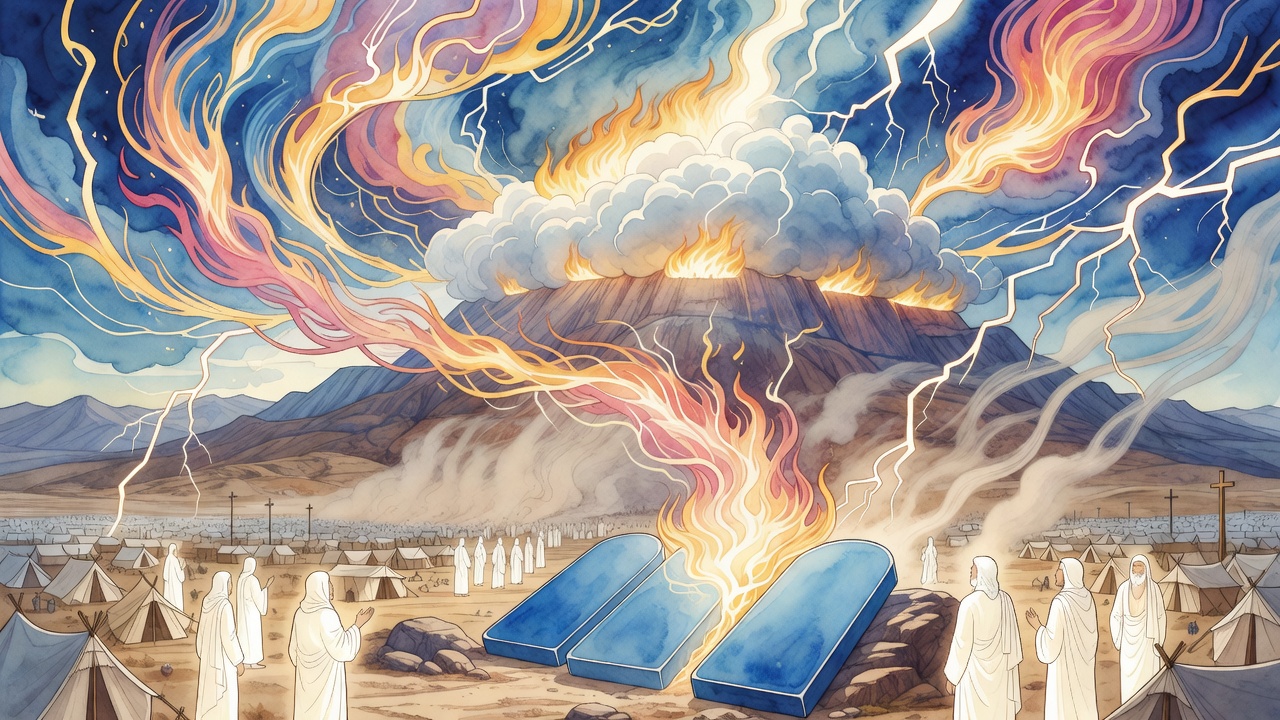
Rabbi Berekhyah taught otherwise. It came from the tablets. The tablets measured six handbreadths long and three wide. Moses grasped two handbreadths. The Holy One grasped two. Two handbreadths of empty space lay between them in the middle, a gap no finger filled.
From that space, where the hand of Moses neared the hand of his Maker without quite touching, the rays of glory were drawn. The light was born in the gap. Nearness without fusion. Covenant as a shared weight held from both ends of one stone.
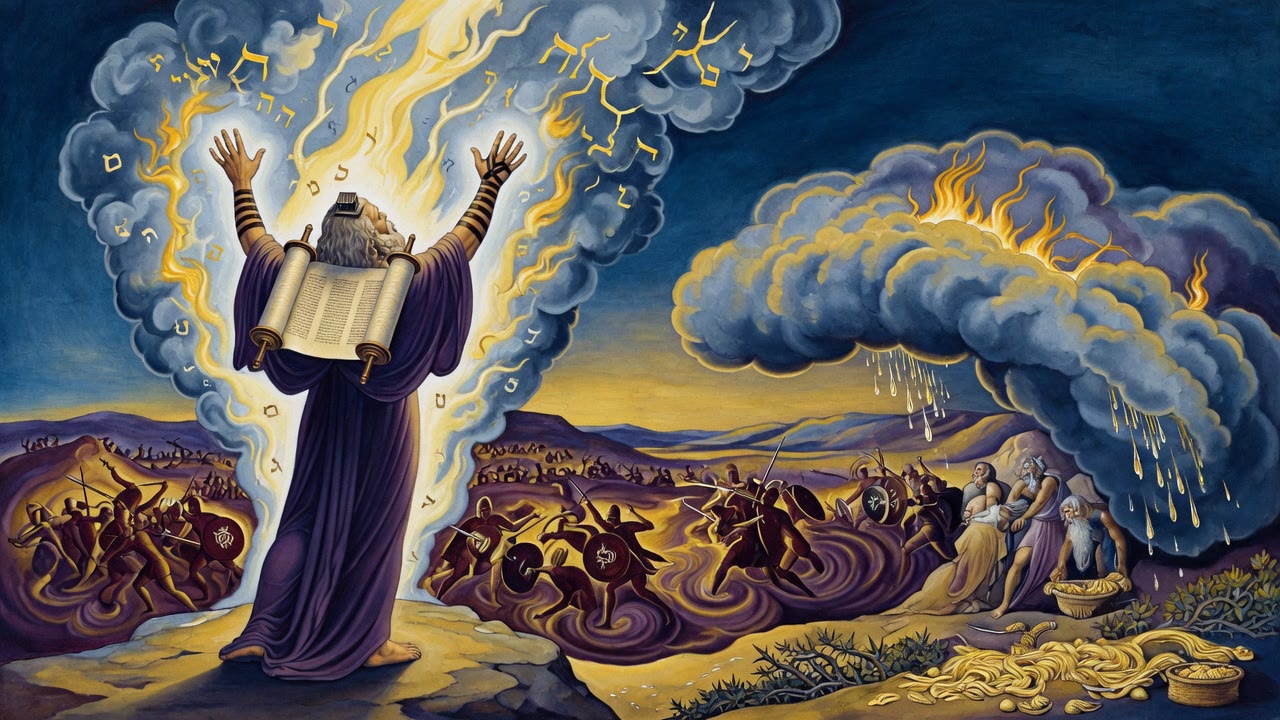
Rabbi Yehudah bar Nehemiah taught a third way, quieter and stranger. As Moses wrote out the Torah, a little ink remained upon the pen after the last letter. He passed the pen across his head to wipe it clean. From those last drops the radiance was made. The leftover of the writing became the crown of the writer. Heaven's alphabet did not waste even the smudge that a careful scribe might have wiped on a cloth.
Scripture insists on one more detail. He did not know that his face shone. All this brightness was only the beginning of his wage. The horn of light remains, the midrash says, and when the righteous receive their full reward in the world to come, Moses will receive his too, walking still in a brightness he never advertised.
Bread Below, No Bread Above
How can flesh and blood live forty days without a morsel or a sip? The sages answer by holding up a mirror to another visit between worlds. When the angels descended from heaven to visit Abraham, they came down into a world of bread and water, of tents and shade and the heat of the day, and so they ate. Heavenly beings entered the earthly realm and took on its ways at the table of a host.
Moses did the opposite. He climbed upward into the upper worlds and looked about at the furniture of that place. There was no eating there. There was no drinking there. The realm above does not run on bread and water but on the radiance of the Divine Presence alone. So Moses became as the place where he stood, empty of hunger because hunger had no office there.
Where angels who came down had eaten like men under Abraham's tree, Moses who went up lived like the angels in the cloud. He neither ate nor drank because the mountain's summit had no table set for hunger. The same nearness that later lit his face first emptied his need for forty days and forty nights of unbroken standing before the speech of God.
Crowns and Swords for a People
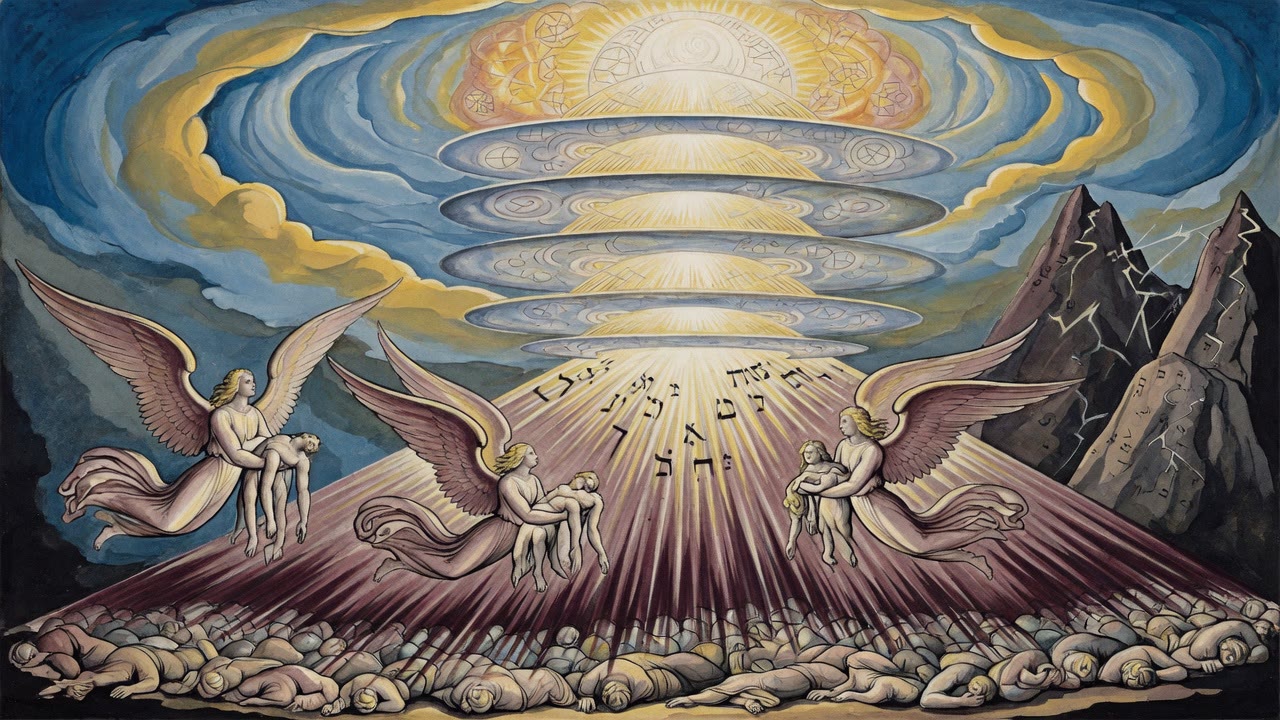
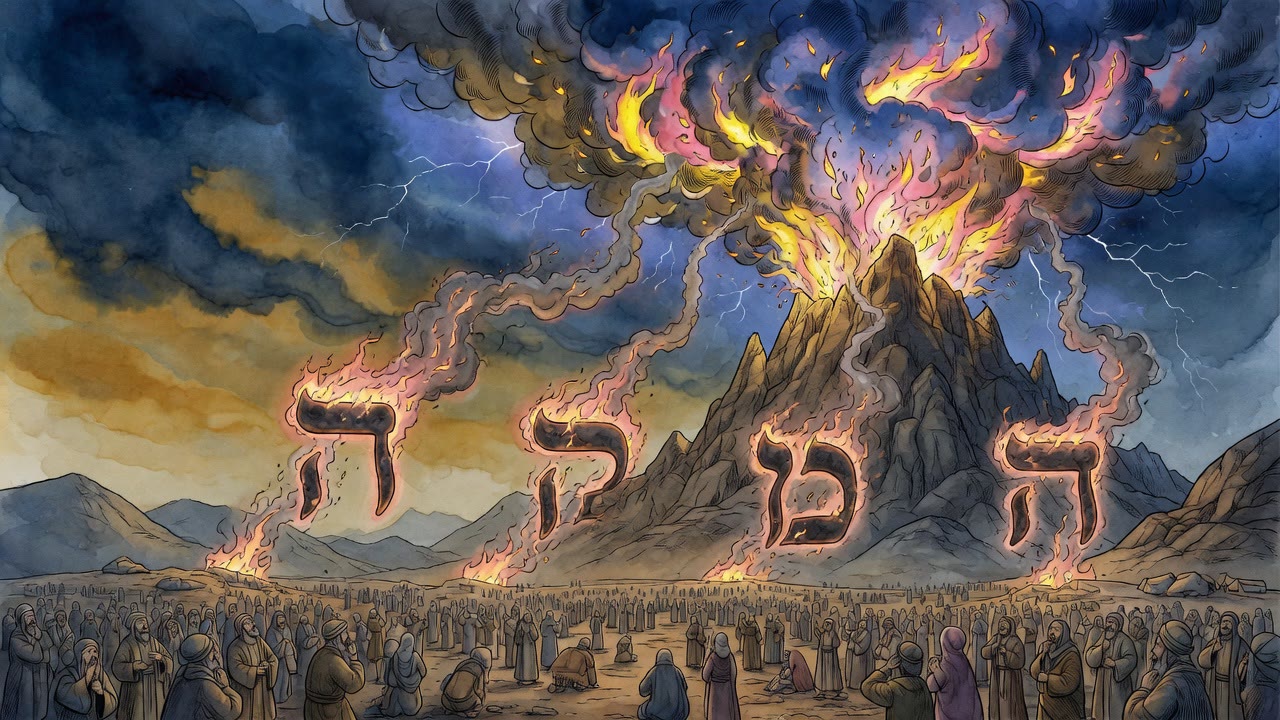
Israel also received glory at Sinai, not only their teacher. When they cried, "We will do and we will obey," sixty myriads of ministering angels came down with the Holy One. Rabbi Yochanan taught that they set a crown upon the head of every single Israelite until the valley glittered with more light than any king's court.
Rabbi Abba bar Kahana added that two angels attended each person, one to gird him with a weapon, one to crown him. Rabbi Shimon ben Yochai said the weapon bore the Ineffable Name engraved upon it, so that defense itself was a form of praise. Royal purple clothed them, as Ezekiel would later sing of embroidered garments given by a lover to a beloved.
The wise inherit glory, and the wise here are Israel who took the Torah. Fools carry away shame. Moses comes down blazing and unaware, hand still feeling the weight of tablets and the ghost of ink. The people stand crowned and armed with a Name. One man's face holds leftover ink, tablet-gap light, and cave-glory. Six hundred thousand heads hold angel-set crowns. The mountain does not hand out the same gift twice in the same shape, but every gift is nearness that refuses to stay invisible once it has touched a human brow.
When later generations lose the crowns, the midrash still remembers the hour they were set. Glory can be stripped. The story of how it arrived remains a claim on what Israel was willing to say with one voice under smoke and trumpet.
← All myths