Israel Vowed at Sinai and Received a Knowing Heart Only Years Later
God asked for a heart that would last. The people who had just vowed to do and hear kept still. On the plains Moses dated the delay.
Table of Contents
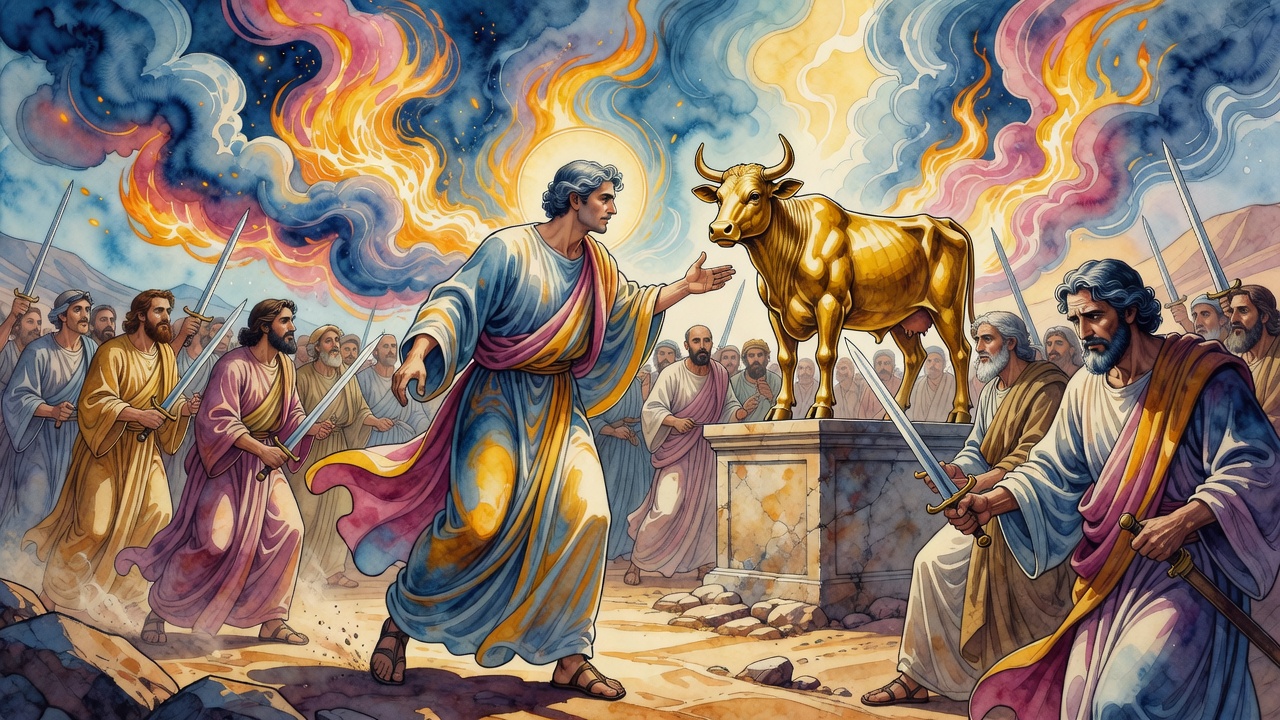
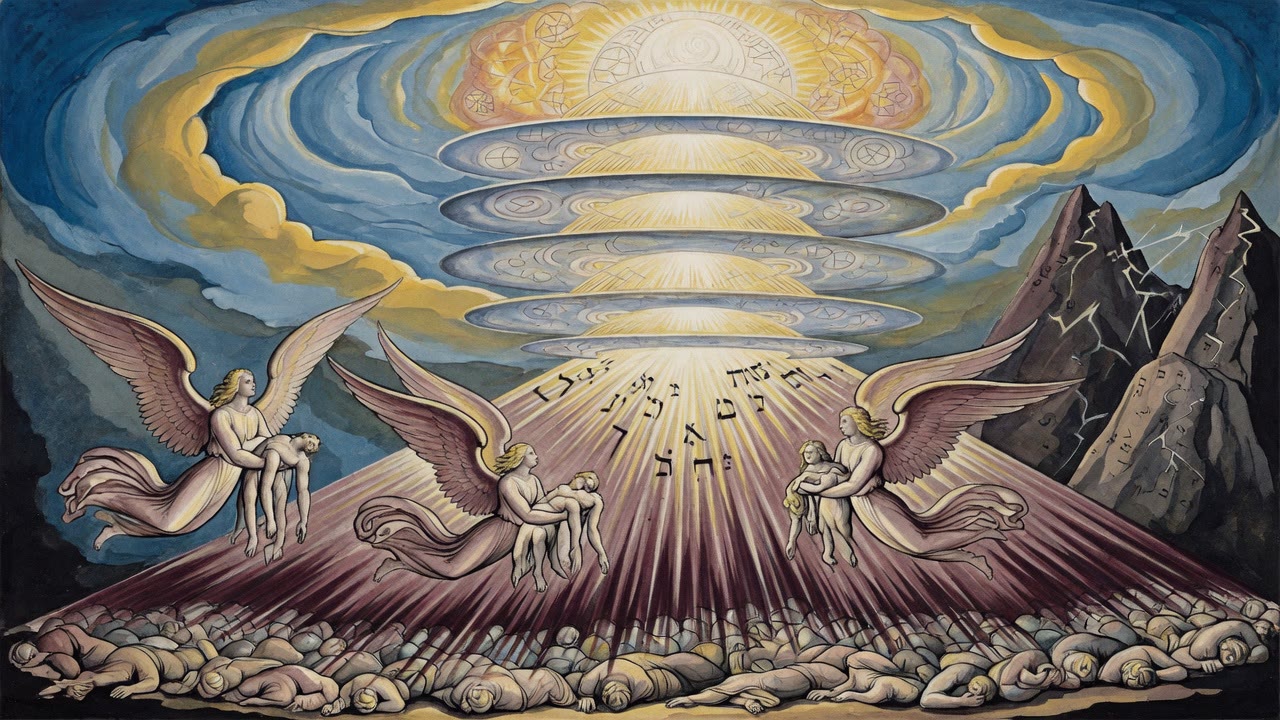
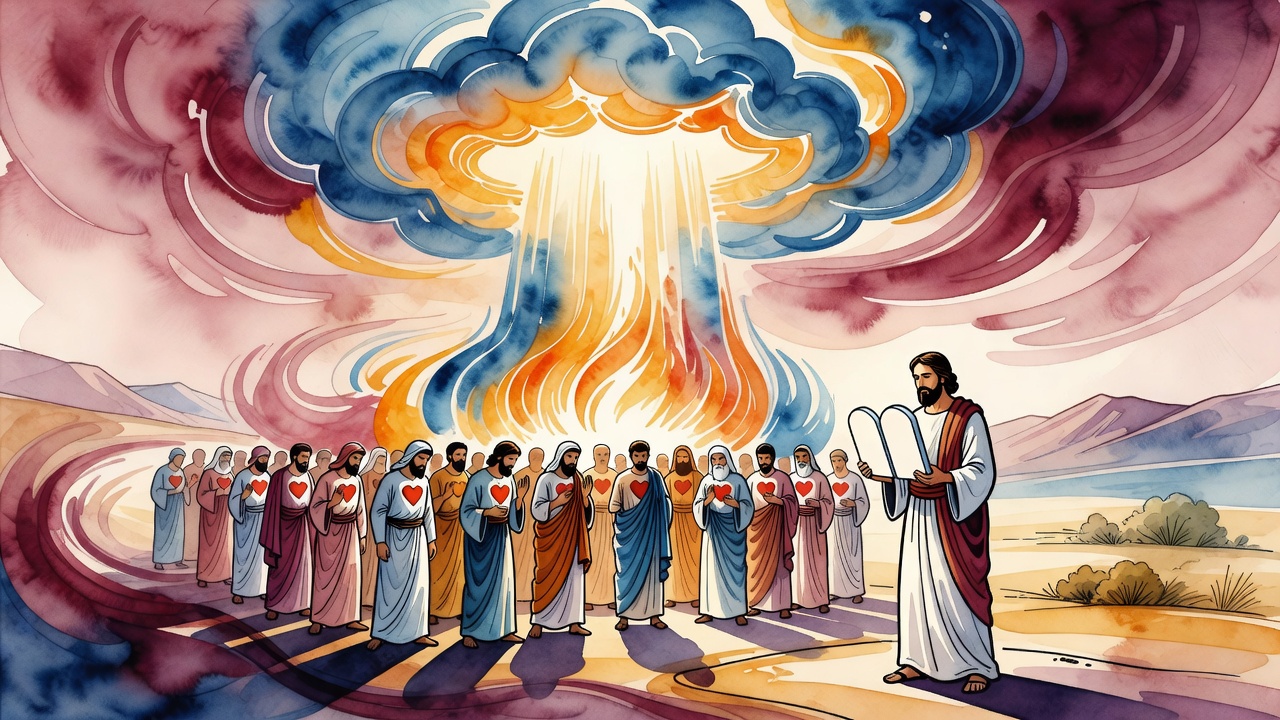
They shouted it while the mountain still smoked. "Everything that the Lord has spoken we will perform and we will heed" (Exodus 24:7). Moses heard the roar. So did the One who had spoken from fire.
 Click for full size
God answered with a longing that was almost a plea. Would that this heart would stay. Would that they would fear Him and keep the commandments forever, so it would be good for them and for their children (Deuteronomy 5:26). The people had volume. They did not ask the Giver to make the heart last.
The Vow That Did Not Ask
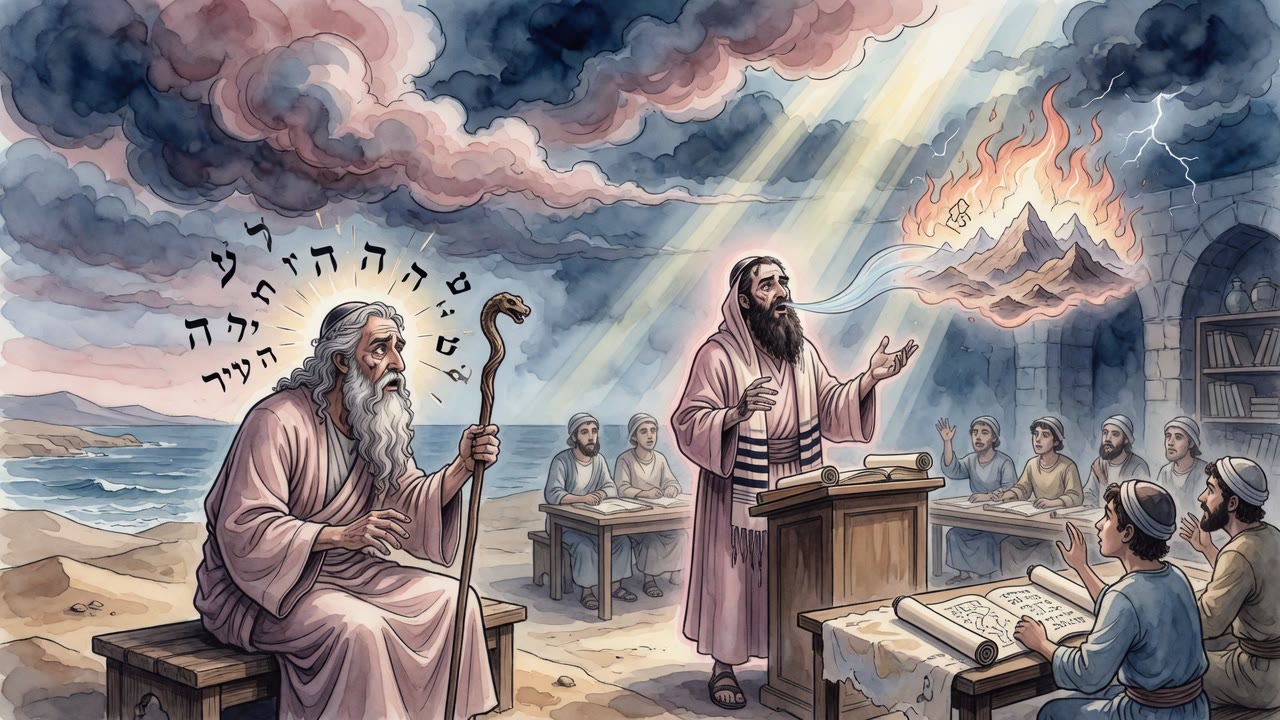
Israel heard the longing and stayed quiet. Rabbi Yehuda ben Levi put a picture on the silence. A snake charmer meets a hard serpent. Someone asks if he can master it. He does not shrug. He owns his craft. Faced with God's wish for a lasting heart, they could have answered, "You make it so." They said nothing.
Silence became a missing petition. Thunder without a request. A vow without the follow-up prayer that would have made the vow hold.
Until This Day
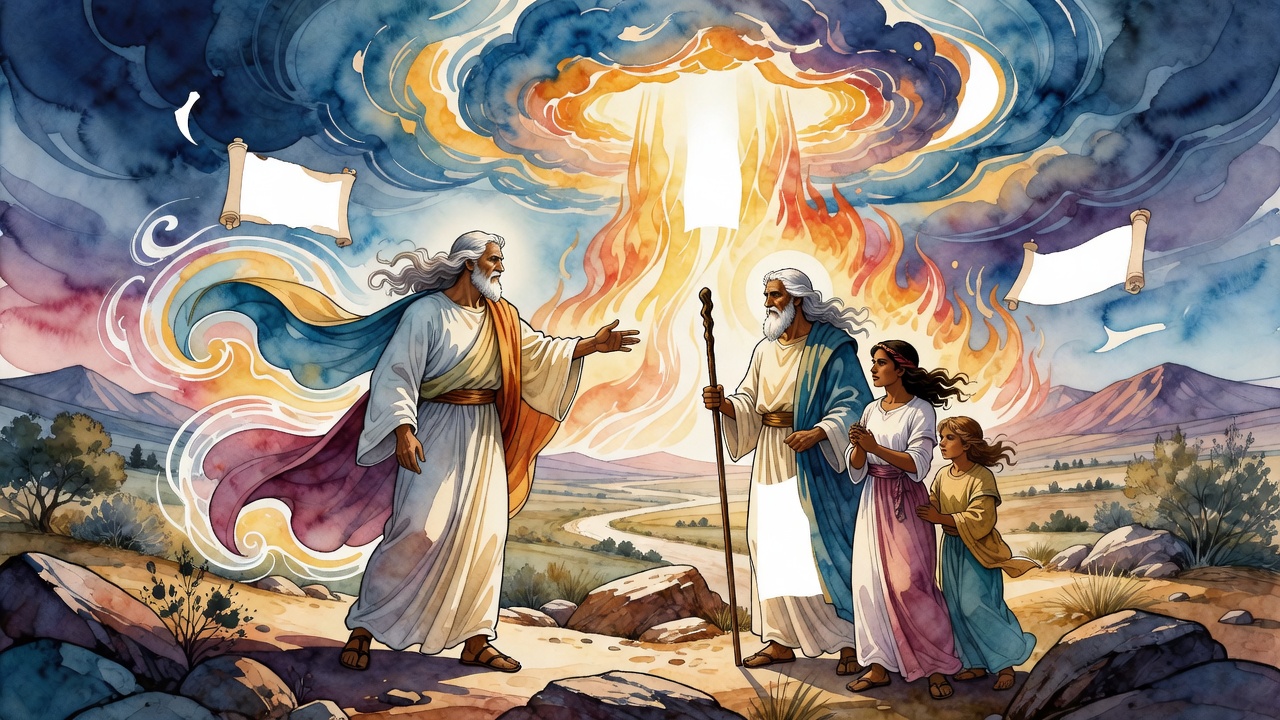
Years later on the plains, Moses said the hard line out loud. The Lord had not given them a heart to know, eyes to see, ears to hear, until this day (Deuteronomy 29:3). Graves of rebels lay behind them. The land sat ahead. Their garments had not worn out. Their shoes had not worn out. The interior had.
Rabbi Meir turned the frame with a thief riddle. Who is greater, thief or robbed? The robbed, he said, because they know and may still choose silence. God knew Israel's mouth could run ahead of its heart. They beguiled Him with their mouth and lied to Him with their tongue. Their heart was not steadfast, nor were they faithful to His covenant (Psalms 78:36-37). He still accepted the vow. He still said, would that this heart would stay.
Some heard Moses' line as rebuke. Some heard mercy with a calendar. Both hearings can live in one chest. "Until this day" is a door. Walking through it means admitting yesterday's numbness without drowning in it.
Two Decrees and One Rope
God had decreed two things. One on Israel, after the calf: let Me be, and I will destroy them (Deuteronomy 9:14). One on Moses, when he asked to see the good land: you will not cross this Jordan (Deuteronomy 3:27). Moses asked to void both. He got one.
"Please pardon the iniquity of this people" (Numbers 14:19). God pardoned according to his word (Numbers 14:20). When Moses came to enter, he began again. Please let me cross. God stopped him. You already voided Mine and I fulfilled yours. You wish to hold the rope by both ends. If you seek "please let me cross," void "please pardon." If you seek "please pardon," void "please let me cross."
Moses heard it and chose. "Master of the universe, let Moses and one hundred like him die, and let not the fingernail of one of them be damaged." He kept the pardon. He let the border stay shut.
He Assembled Them Because They Did Not Pray
When Moses was nearing death, they did not ask for mercy on his behalf so he could enter the land. He assembled them and began rebuking them. One redeemed six hundred thousand with the calf. Could six hundred thousand not have been able to redeem one person?
That, he said, is why the Lord had not given them a heart to know. Do you not remember everything I did when I led you in the wilderness? Forty years. Clothes that did not fail. A closed Jordan he would not be allowed to walk.
The people received a delayed heart. The leader received a closed border. The man who named their new knowing could not name a road for his own feet past the river.
A Priest in Rome Answers a Charge
Centuries later in Rome, a priest named Josephus sat with a charge in his hands. Apollonius Molo had called Moses an impostor and a deceiver. Lysimachus had said the laws taught wickedness and nothing virtuous. Josephus wrote back that the laws were arranged for piety, for communion with one another, for justice, for fortitude in labor, and for a contempt of death.
He ranked Moses older than the names those men admired. Lycurgus of Sparta. Solon of Athens. Zaleucus of Locri. Newborns, he said, beside the man who had already ordered a people's whole life. Homer never even used the word law. Moses had given a constitution and persuaded a nation to live it through fortune's swings.
The man they called a fraud had once stood on the plains and told Israel their knowing heart had arrived late. He had chosen their fingernail over his own crossing. He had died on the near side of the river. In Rome the defense of his laws went on without him. Moses did not cross. The heart arrived without him too.
← All myths