Parshat Pekudei5 min read

Israel Ran to the Mishkan After the Calf

After the golden calf, Israel did not creep back. When the Mishkan opened atonement, the whole congregation ran forward with gifts and joy.

Curated by Arthur · Told by Maggid ·
Table of Contents
  1. The Wife Who Raced Home
  2. Moses Dresses Every Future Priest
  3. Hope Spoken as Sacrifice Law
  4. White Linen and Running Feet

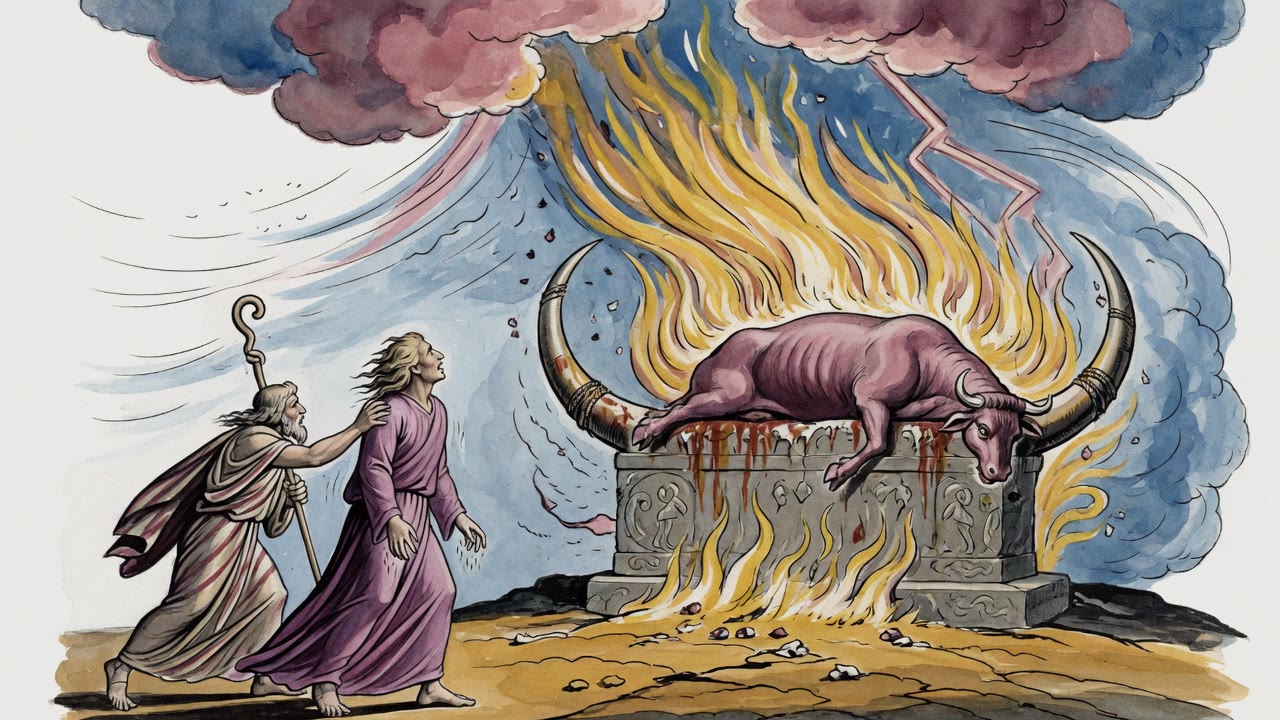
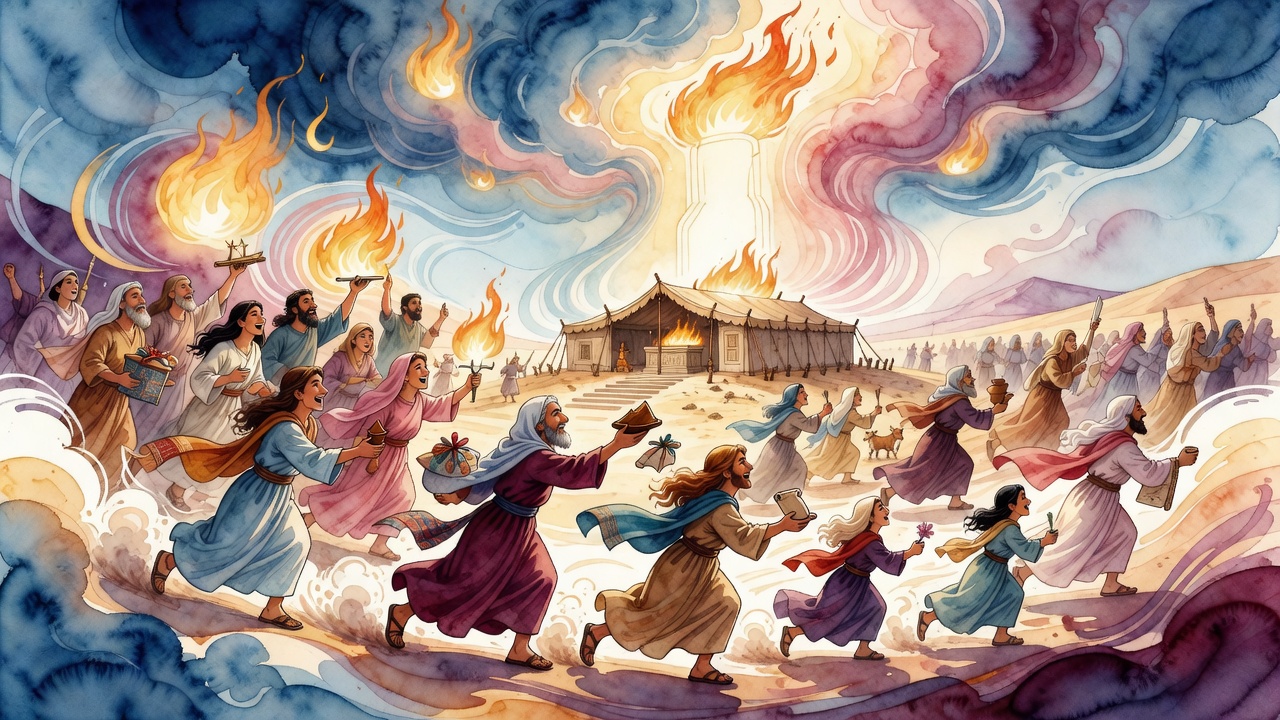
The gold that once danced as a calf still haunted the camp when Moses ordered gifts for the Mishkan (the portable sanctuary Israel carried through the wilderness). No one strolled. The whole congregation came forward at a run, arms full, faces raw with the memory of a night when they had demanded gods that would walk in front of them because Moses had vanished into cloud.
Israel Ran to the Mishkan After the Calf Click for full size

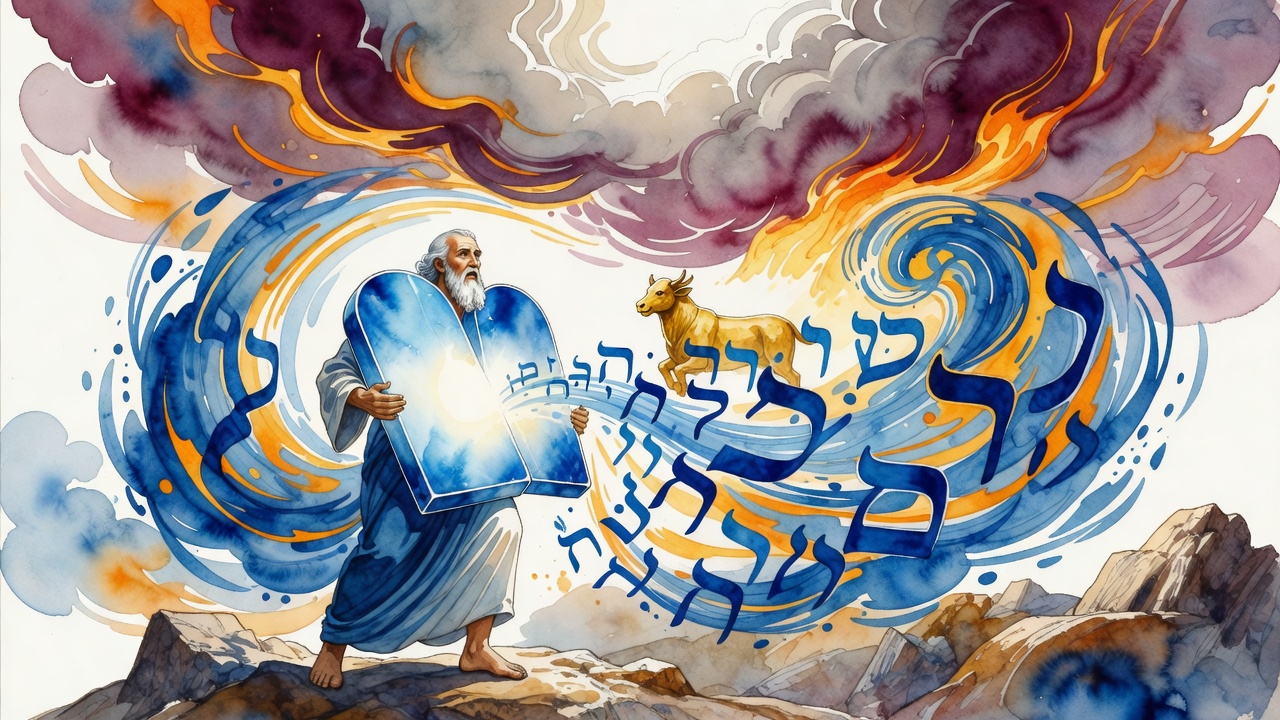
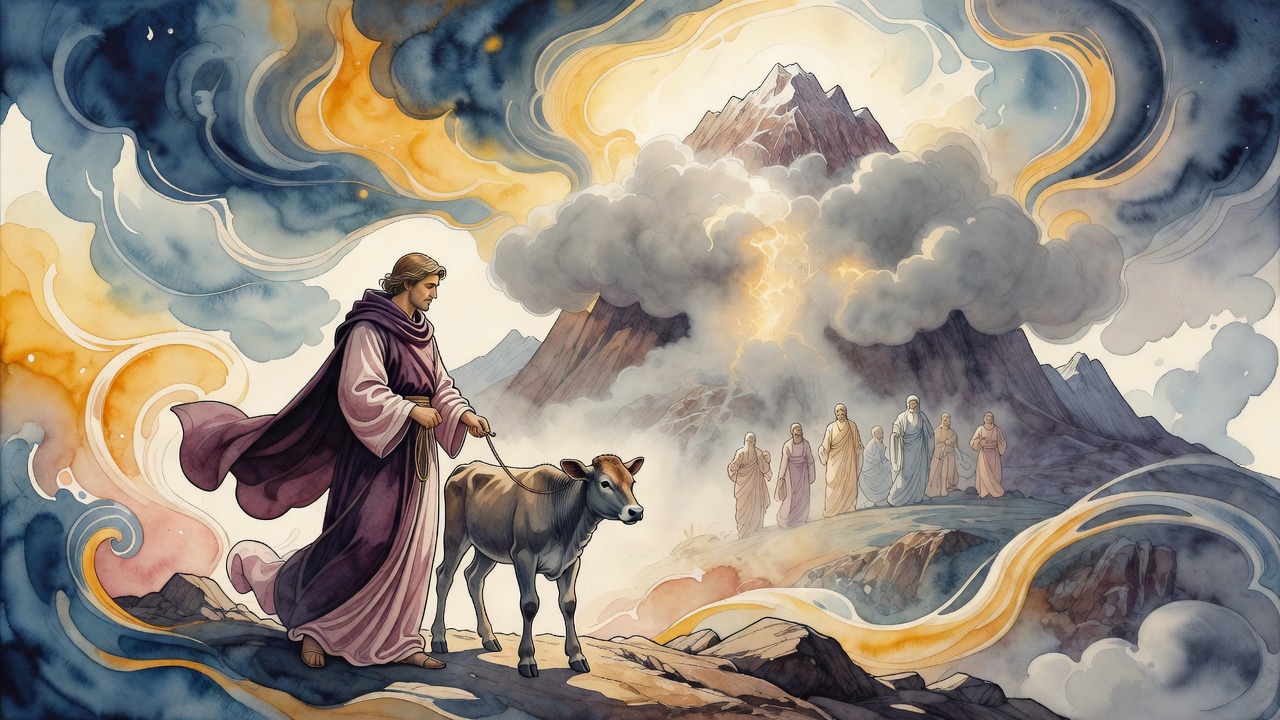
They had said, "Make us gods that will lead us, for this Moses, we do not know what happened to him" (Exodus 32:1). Aaron had taken rings and poured a molten shape. The people had pointed at metal and called it the power that brought them up from Egypt. Heaven had nearly erased them. Moses had argued until the decree bent. The tablets had broken on the stones.

Now a tent of meeting rose like a second chance made of boards and curtains, and Israel ran toward it as if distance itself were the last sin left to kill.

The Wife Who Raced Home

A king once drove his wife from the house in anger. Days passed heavy. When his heart softened and he called her back, she did not return at a sulk. She girded her thighs, braced her shoulders, and served him harder than before, pouring lost time into one stretch of devotion.

So Israel ran. They had opened a distance with the calf. When they saw that the Holy One would let them draw near again and atone at the Mishkan, they did not nurse the wound in private tents. The congregation hurried forward and stood before the Lord with joy that still tasted of fear.

Joy after betrayal is not light. It is weight that has decided to move toward mercy instead of away from it. Sand flew from their heels. Whatever gold had not already been melted into shame now bent toward sockets and clasps and boards that would hold a different presence.

Moses Dresses Every Future Priest

On the day of consecration Moses did not only dress his brother for one morning. When he fastened the choshen, the breastplate, upon Aaron, the act reached every priest who would ever stand before the Holy One. One morning became a pattern sewn into linen and gold.

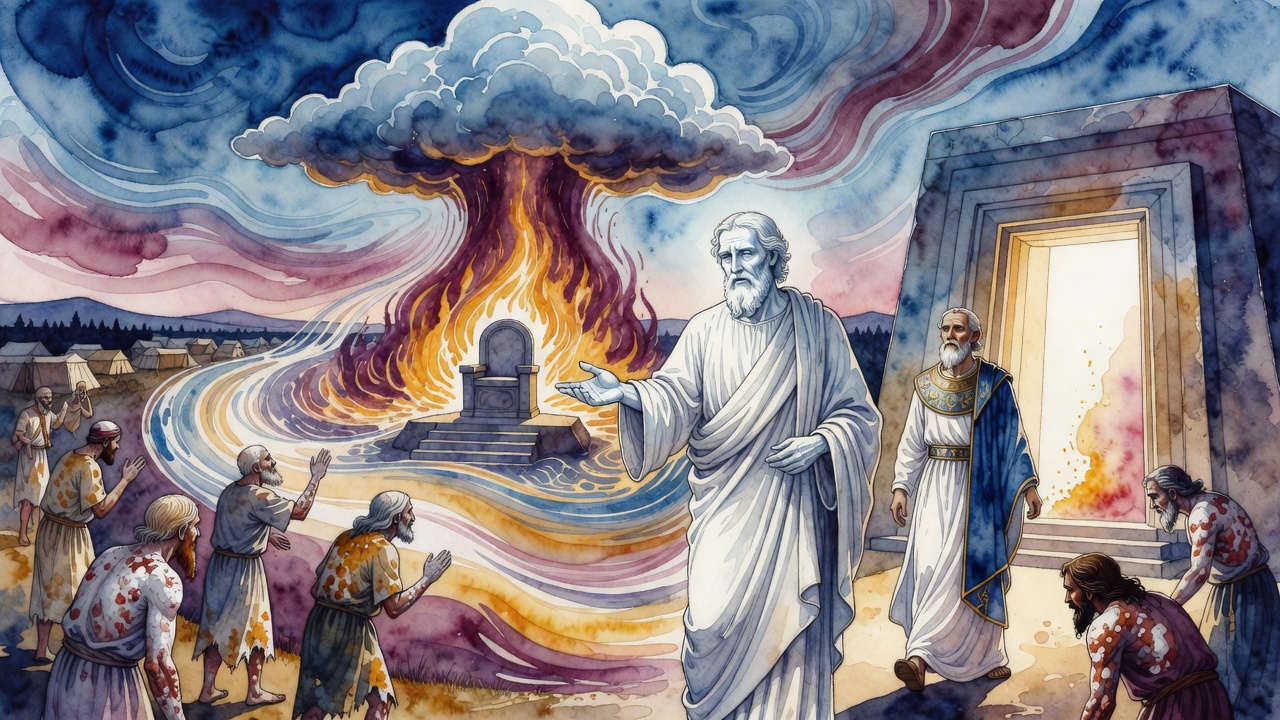
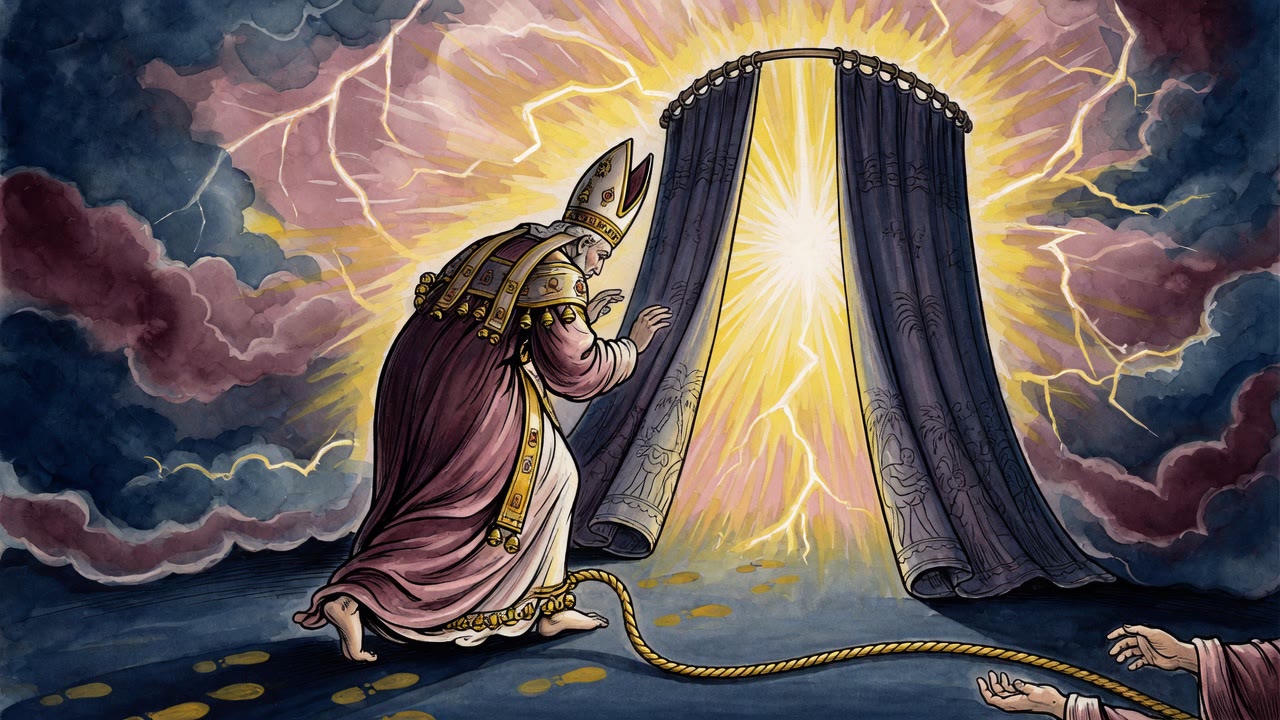
Through the ordinary year the High Priest would wear the golden vestments, splendor answering the glory of the sanctuary. On the Day of Atonement the gold came off. White linen alone entered the innermost place, humble, so that no gleam of pride would walk where forgiveness was sought.

Aaron stood still while Moses set each piece. The camp watched a man who had once held molten gold now receive holy gold and holy white under his brother's hands. The same fingers that had shaped a calf now received garments that would outlive his own body. Generations not yet born were dressed in that hour.

Hope Spoken as Sacrifice Law

After the calf, morale lay flat. God did not only forgive. He gave Moses laws of sacrifice for the land still ahead, a future with altars and offerings, as if to say the story would continue past the broken tablets. Hope arrived dressed as procedure.

Even then a quarrel rose. Native-born Israelites claimed the sanctuary service for themselves and tried to push the gerim, the strangers who had joined the covenant, outside the circle of offerings. God turned to Moses. "Why do these always quarrel with one another?" Moses answered that God already knew. The reply cut clean. One law and one ordinance for the native and for the stranger who sojourns (Numbers 15:15).

The Mishkan was not a prize for pure bloodlines. It was a house for a people still learning not to rebuild Egypt's ranks inside the camp of free men and women who had walked out under bloodmarked doors.

White Linen and Running Feet

Gold for ordinary glory. White for the day of return. Running feet for the day the distance closed. The calf had taught Israel how fast a crowd can invent a leader of metal. The Mishkan taught them how fast a crowd can race toward a door that actually leads to the Holy One.

Aaron's vestments fixed the rhythm for generations. Israel's joy fixed the emotional law of return. No one who has stood outside the house after anger forgets the sound of the call that lets them back in. They ran. They brought. They stood. The cloud would yet settle, and the work of atonement would begin in a tent that smelled of acacia and oil and second chances.

Behind them the desert kept the dust of the broken dance. Ahead of them the curtains waited. Between the two, a people who had almost been erased chose speed toward mercy over the slow dignity of shame. Moses watched the rush and remembered the night he had refused to stop praying even when Heaven asked him to leave prayer alone.


← All myths
From the tradition

Sources

4 sources

The texts behind this telling. Some cards carry a translation of the source; others are our own retelling of it, and each card says which. Every card links out to the original.

Sifra, Mekhilta deMiluim II 5Sifra, Mekhilta deMiluim

Translation of the source text.Sifra by Rabbi Shraga Silverstein · CC-BY

5) (Vayikra 9:5): "And they brought what Moses had commanded", with zeal! "and all the congregation drew near and stood before the L–rd": They all drew near with joy and stood before Him. An analogy: A king grew angry at his wife and sent her away. After several days he was reconciled to her. Immediately, she girded her thighs, braced her shoulders and served him more assiduously than ever. Israel, likewise, when they saw that the L–rd had been conciliated to atone their sins, they all drew near with joy and stood before Him. Thus: "and all the congregation drew near and stood before the L–rd."

Full source
Sifra, Mekhilta deMiluim I 7Sifra, Mekhilta deMiluim

Translation of the source text.Sifra by Rabbi Shraga Silverstein · CC-BY

7) (Vayikra 8:8) "And he placed the choshen upon him.": This section was learned for its time and for future generations (for the donning of the priestly vestments) for the daily service and for the Yom Kippur service. (It is just that) every day he serves in the golden vestments, and on Yom Kippur, in the white (linen) vestments.

Full source
Legends of the Jews 4:119Legends of the Jews

Retold in our words. Read the original at the link below.The Legends of the Jews by Louis Ginzberg (1909) · Public Domain

The ancient Israelites certainly did. Imagine the scene: they're fresh out of Egypt, they've messed up big time with the Golden Calf, and morale is, shall we say, a little low.

So, what does MOSES do? He receives a divine pep talk, essentially. God tells him to announce the laws of sacrifice – the rules, regulations, and rituals for when they finally reach the Promised Land. It's like God saying, "Hey, I'm not giving up on you. There's still a future, still a plan." This comes from Ginzberg's Legends of the Jews, a masterwork collecting and weaving together countless threads of Jewish tradition.

Even in this moment of hope, human nature kicks in. As Moses announces these laws, a dispute erupts. Who gets to offer sacrifices? Who gets to participate fully in the Temple service? The native-born Israelites declare that they alone are entitled to bring offerings to God in His sanctuary, excluding the gerim – the proselytes, or converts to Judaism.

Can you feel the tension? The "us" versus "them" mentality that can creep into any community?

God, witnessing this squabble, turns to Moses and asks, "Why do these always quarrel with one another?" Moses, ever the diplomat (or maybe just a little exasperated), simply replies, "Thou knowest why."

God's response is sharp, clear, and profoundly important. He reminds Moses – and all of Israel – of a fundamental principle: "Have I not said to thee, 'One law and one ordinance shall be for you and for the stranger that sojourneth with you?'" We find this concept echoed in (Numbers 15:15).

It's a powerful statement about inclusivity. It’s about the idea that everyone who commits to the covenant, regardless of their background, is entitled to the same rights and responsibilities. This isn't just a legal point; it's a moral one. After experiencing enslavement and then liberation, shouldn't the Israelites be the first to understand the importance of welcoming the stranger? Shouldn't they remember what it felt like to be the outsider?

This small passage, tucked away in the larger narrative, offers a powerful lesson. It’s a reminder that even in moments of great spiritual significance, human divisions can arise. And it’s a call to remember the importance of inclusivity, equality, and treating everyone with the same measure of dignity and respect. After all, aren't we all just sojourners on this earth, trying to find our way home?

Full source
Targum Onkelos, Exodus 32Targum Onkelos

Retold in our words. Read the original at the link below.Sefaria-hosted English Targum translation · Public Domain

The Hebrew Bible says the people told Aaron: "Make us gods that will lead us, for this Moses, we do not know what happened to him" (Exodus 32:1). Targum Onkelos translates this with devastating fidelity. No softening. No excuse-making. The people demanded a replacement for Moses, and Aaron complied.

The Golden Calf episode is one of the few narratives where Onkelos adds almost nothing to the Hebrew. The sin is too stark for interpretive cushioning. Aaron takes the gold rings. He forms a molten calf. The people declare: "These, Israel, are your gods who brought you up from the land of Egypt" (Exodus 32:4). Onkelos translates it straight. The idolatry is not metaphorical. It is not a misunderstanding. It is exactly what it appears to be.

God's response is fierce: "Leave Me alone, and My wrath will blaze against them and destroy them" (Exodus 32:10). Onkelos renders "leave Me alone" as "leave your prayer from before Me". God is asking Moses to stop praying. This is an astonishing reading. It means Moses's intercession was already underway before God even finished speaking. The prayer was so powerful that God had to explicitly ask Moses to cease.

Moses does not cease. He argues. He invokes the patriarchs. He warns God that Egypt will say the Exodus was malicious. And God "reconsidered the intent of doing evil to His people" (Exodus 32:14). Onkelos does not flinch at this language. God changed course because a human being argued persuasively. The Tablets, "the work of God, the writing of God" (Exodus 32:16), are about to be shattered. The highest expression of divine law will be broken by the very prophet who received it, in response to the people's betrayal.

Full source