The Calf Walked Out of the Fire Still Lowing
Men broke their own earrings. Aaron cast a plate bearing the Name. A living calf stepped from the flames, and Yom Kippur was born in the repair.
Table of Contents
 Click for full size
Earrings the Women Would Not Give
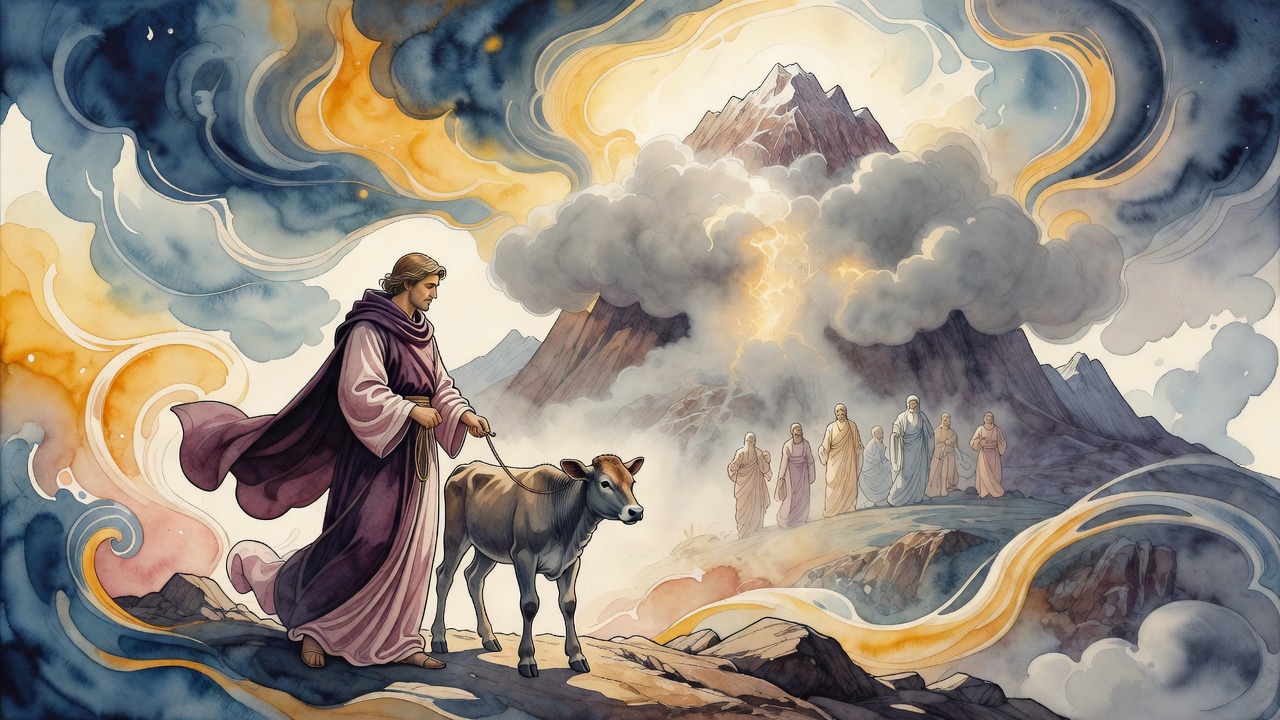
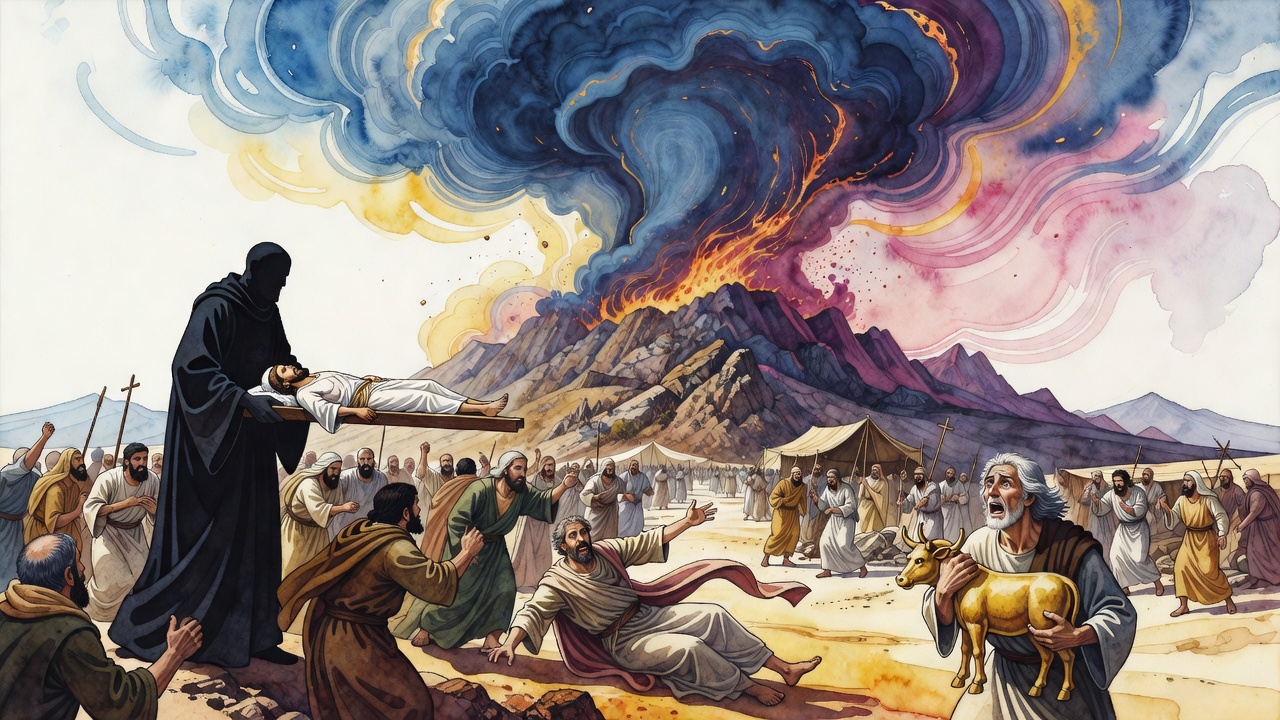
Moses stayed on the mountain longer than panic can count. Cloud covered him. Fire crowned the peak. Below, the camp fretted itself raw, measuring hours by the absence of a leader's footsteps. The people demanded a god they could see, something that would walk in front of them the way a standard walks in front of an army. Aaron faced a crowd that had just left Egypt's fashion still hanging from its ears, men and women marked like the Nile's children and the desert's traders, gold swinging with every anxious turn of the head.
The women hesitated to donate. Some clutched their rings as if memory itself were jewelry. The men did not wait for consensus. They broke off their own earrings with a sound like small bones snapping. Scripture says the people broke the gold from their ears. It does not say from their wives' ears. Pirkei DeRabbi Eliezer underlines the gap with a teacher's finger. The frenzy had a gender and a haste, and it would not be slowed by the slower conscience of the camp.
Among the gold Aaron found one plate that was not random jewelry. On it the explicit Holy Name, the Shem HaMeforash, cut with a precision no panicked crowd invents, and the image of a calf already waiting as if it had booked the hour. Not a crowd's accident. A seed of idolatry cut to fit the weakness of a people six weeks free and already homesick for shapes.
It, Not Them
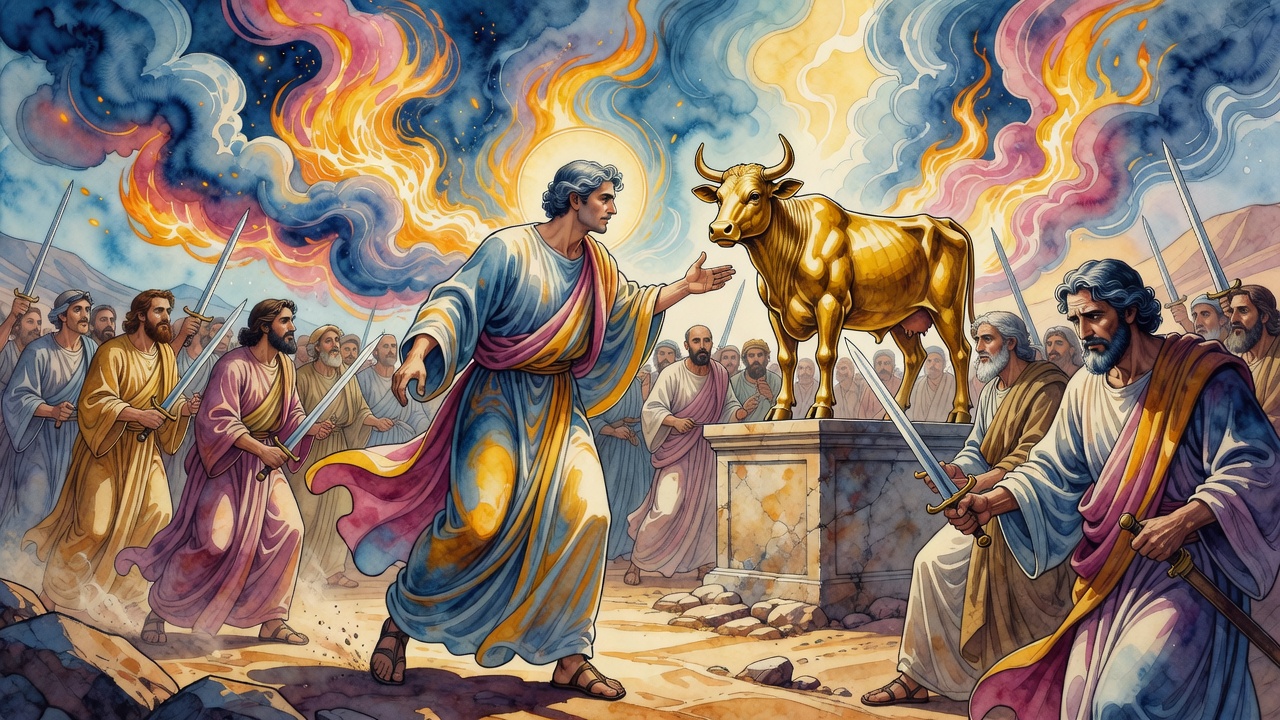
Aaron cast that single plate into the fire. The verse insists on the singular with a stubbornness sages refuse to smooth away. Not "I cast them in," but "I cast it in, and there came out this calf." The calf came lowing. Sound from metal. Breath from flame. Life from a furnace that should have only melted. Israel saw and went astray after a voice that should never have left a crucible, a moo that mocked the silence where law was being cut into stone above them.
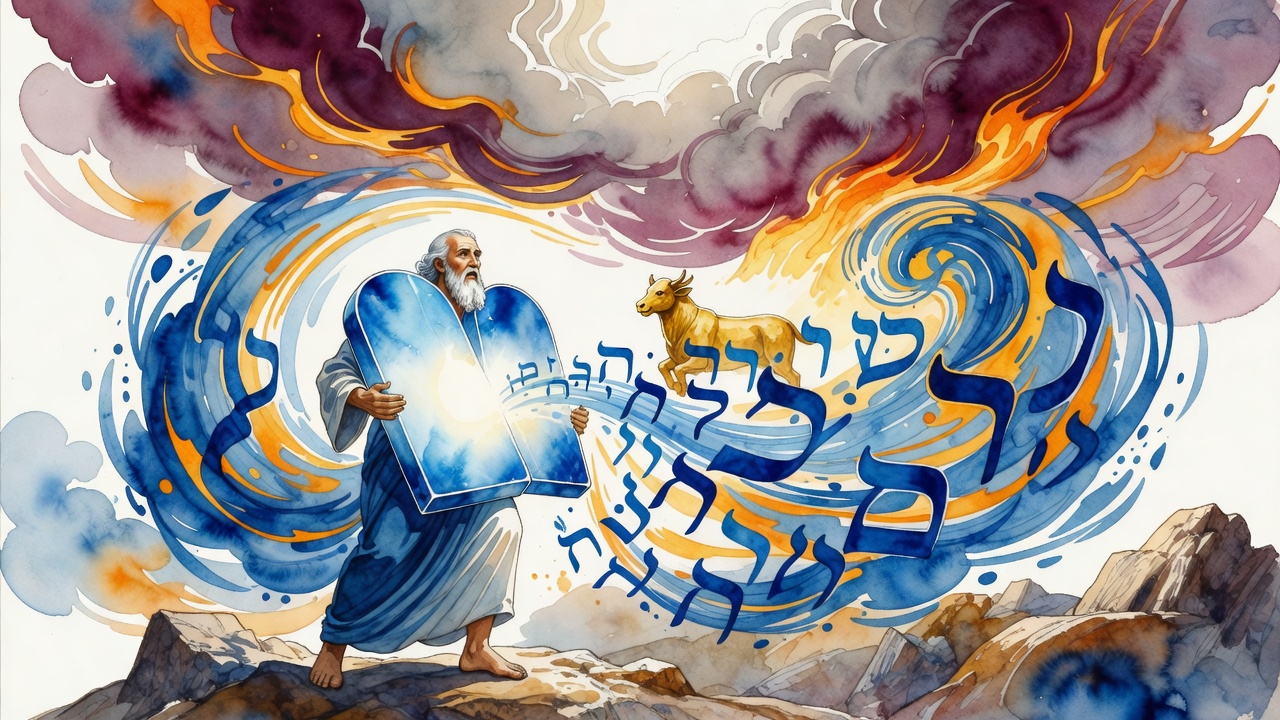
The mountain still held Moses in cloud and fire and the slow work of letters. The camp danced around a noise that made the valley look like Egypt had followed them in portable form. When Moses descended to the first ruin of the tablets, the sound in the valley was already history that would need a calendar day to heal and a second set of stones to carry more than the first had held.
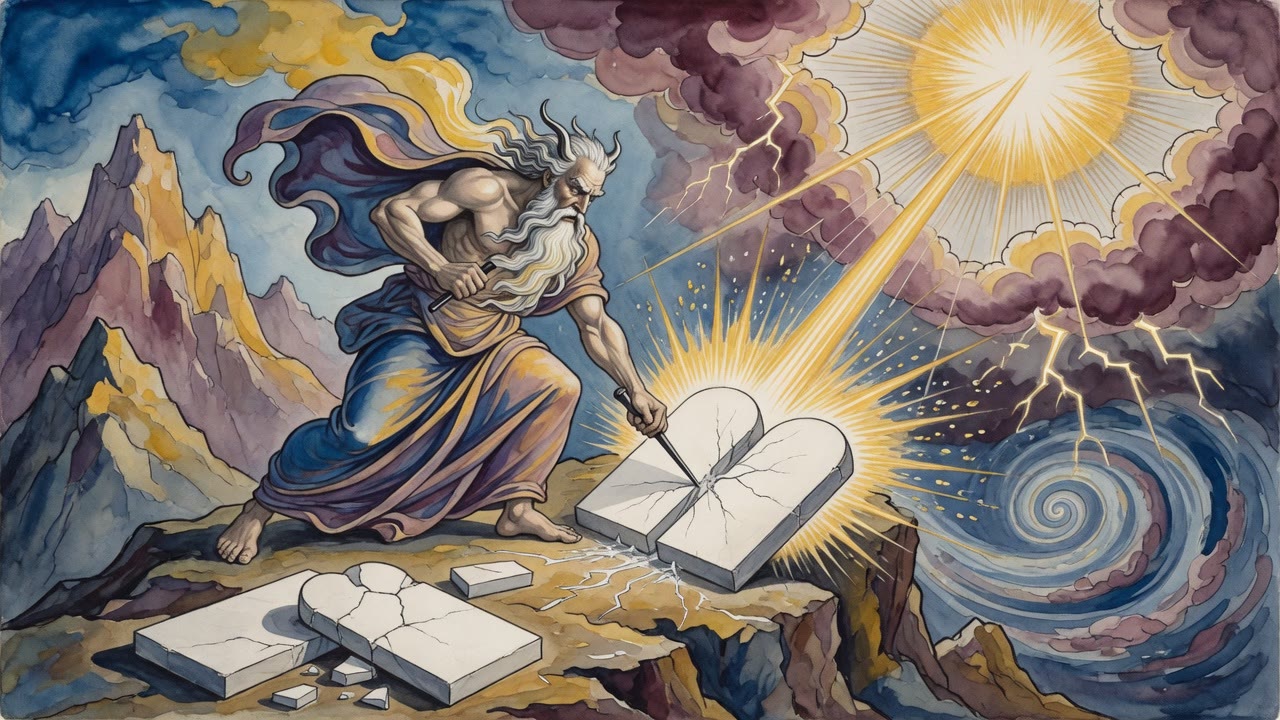
He smashed what he carried. The pieces glittered like a broken sky. Aaron would later answer for the lowing thing. The people would drink powder and learn the taste of their own gold. But the deeper repair was still climbing the mountain in the person of a man who refused to let God erase a nation for one bad afternoon of worship.
Forty Days That Became a Forever Statute
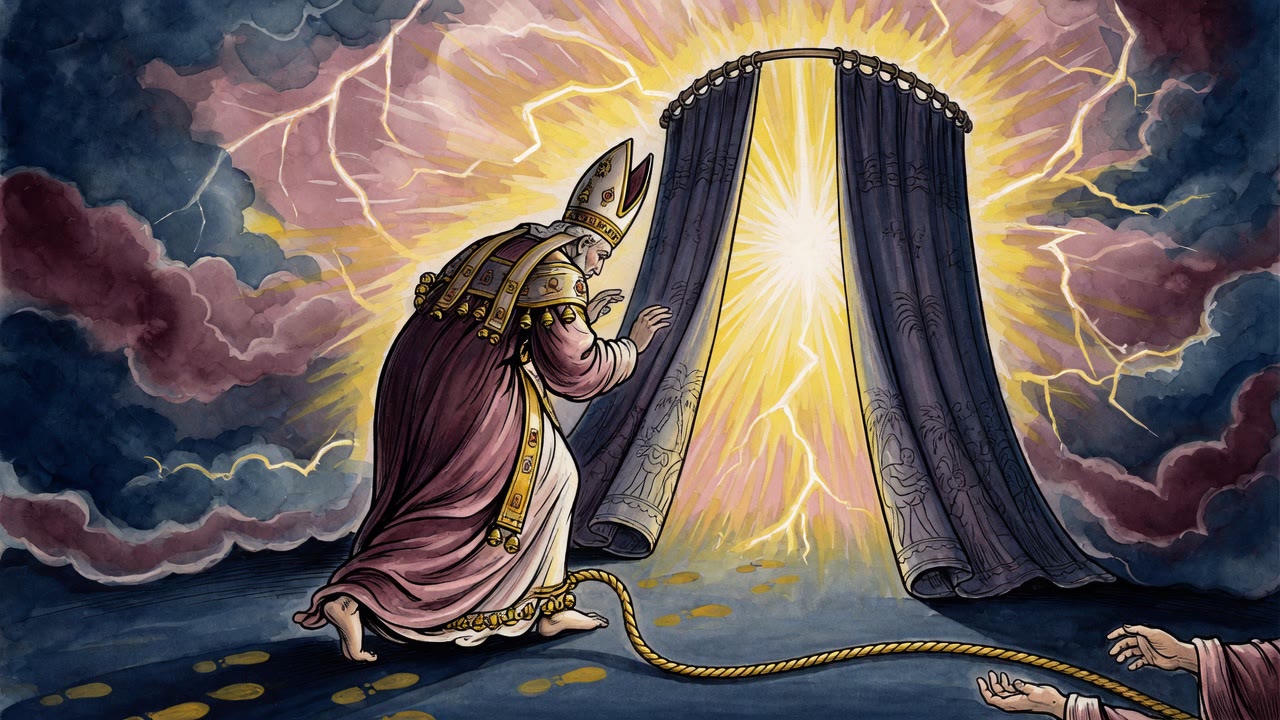
Moses went up again with a plea that scraped his throat raw. Forty days of exposition followed the forgiveness he wrung from heaven, letters examined, meanings pressed until they bled light, every crown on every letter turned like a key. He came down on the tenth of the month, the day that would be Yom Kippur, and gave Israel the teaching as an everlasting inheritance, not a loan contingent on perfect behavior.
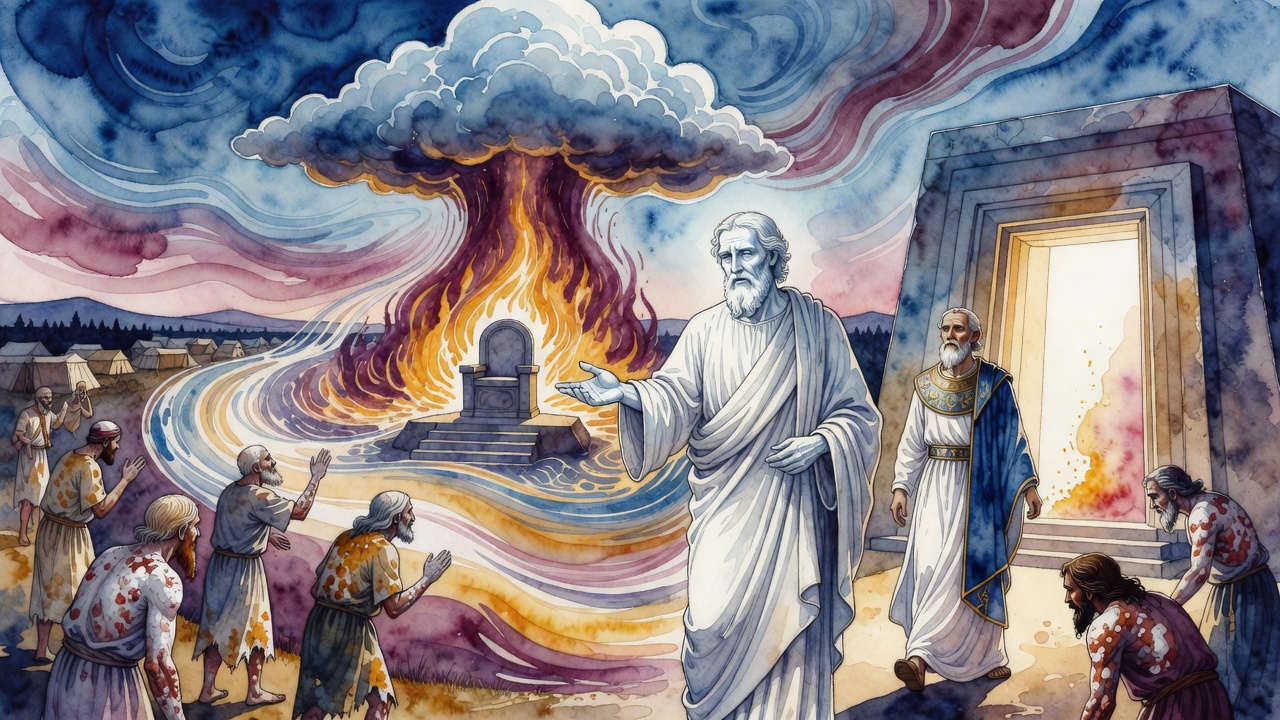
Afflict your souls, the command would say. Sound the shofar (the ram's horn trumpet) through the camp. Fast young and old until the body itself remembers it is not the final authority. Rabbi Zechariah taught that without the Day of Atonement the world could not stand, as if the cosmos needed an annual hinge. The day works in this world and the world to come, a sabbath of sabbaths that bridges realms ordinary weeks cannot reach. Even if other festivals were to pass away in a healed future, this one remains, because it reconciles serious offenses and slight ones, cleansing before the Lord from all sins, not some polite subset reserved for the nearly innocent.
The calf made the need visible. Forgiveness made the day permanent. The two cannot be pried apart without lying about either, the way a scar cannot be told without the wound that taught the skin to thicken.
Tablets Richer Than the First
After the long plea, when wrath cooled enough for relationship to resume, Moses still grieved the smashed first tablets the way a shepherd grieves a lost lamb he himself had to put down. "Israel asked me to intercede for them, but who will intercede for my sin in breaking the writing of Your finger?" God answered the shepherd's guilt with surplus instead of scolding. Do not grieve only for the Ten Words lost. The second tablets would carry Halakot, Midrash, and Haggadot, law and interpretation and living story, a fullness the first pair had not yet held in their thinner glory.
Yom Kippur thus marks more than a canceled execution of a stiff-necked camp. It marks a thicker Torah arriving on the far side of betrayal, as if heaven's answer to a lowing idol were more teaching, not less. The people who chased a calf received not only pardon but a curriculum wide enough to hold their repair for every generation that would still fail and still return.
Aaron lived with the memory of a plate he should never have recognized in the pile. Moses lived with the memory of stone he should never have broken and a second gift he did not earn by perfection. Israel lived with a day each year when the world is said to stand because atonement still works while the mountain's fire is only a story. The calf's lowing faded into midrash. The shofar (a ram's horn) did not. Each autumn it still cuts the air where gold once pretended to be a god.
← All myths