The Calf Marked Israel With Leprosy Outside the Camp
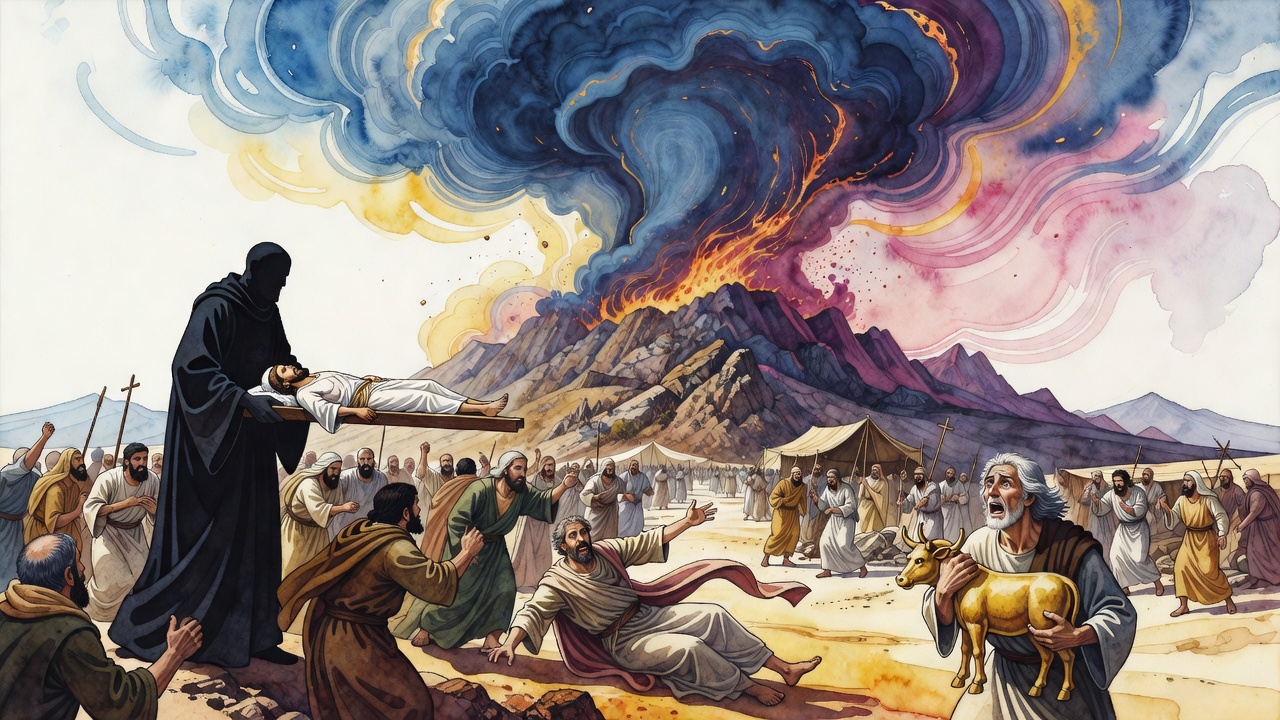
The dancers woke with white skin. They were walked to the edge of the camp, farther than ordinary uncleanness ever sent a body.
Table of Contents
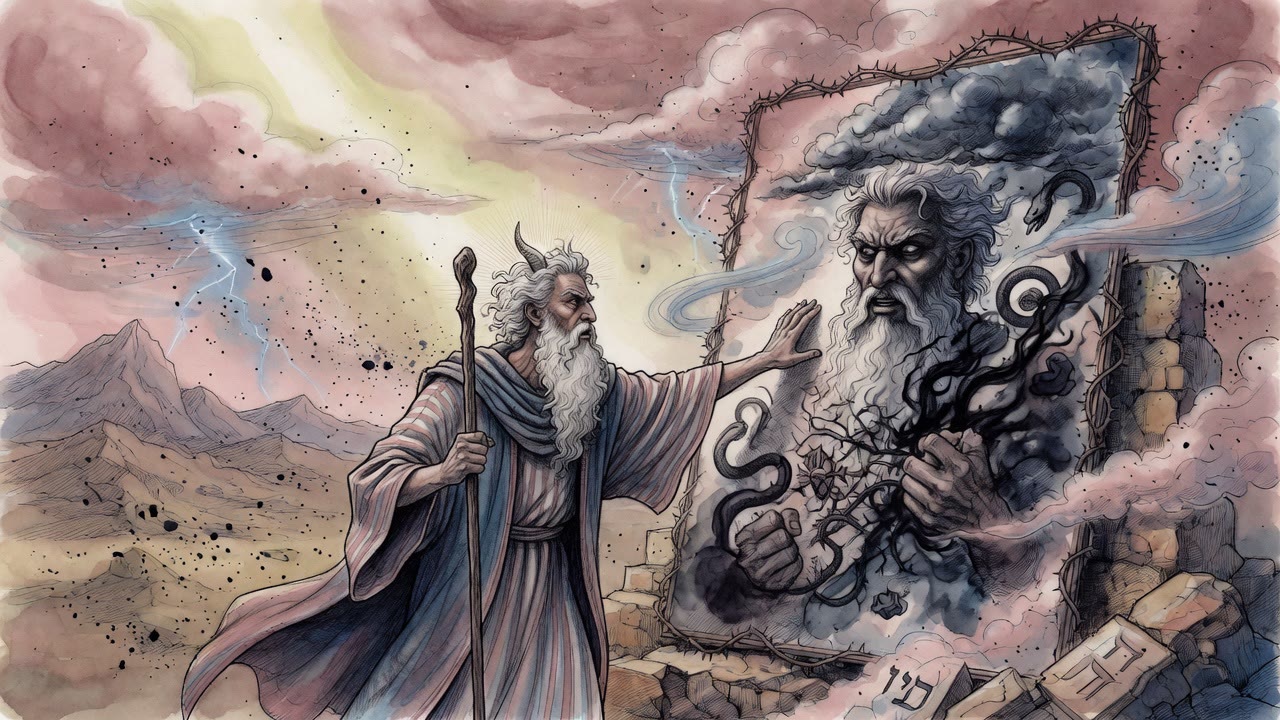
Moses put his hand into his robe because God told him to. He pulled it out white, leprous as snow.
 Click for full size
"They will not believe me," Moses had said. God answered that Israel were believers, and the sons of believers. The suspicion wrote itself on the intermediary's skin. Then the hand went back in and came out healed. The mark had done its work.
The Dancers Were Sent Past the Tents
Later the camp learned a harder version of the same writing.
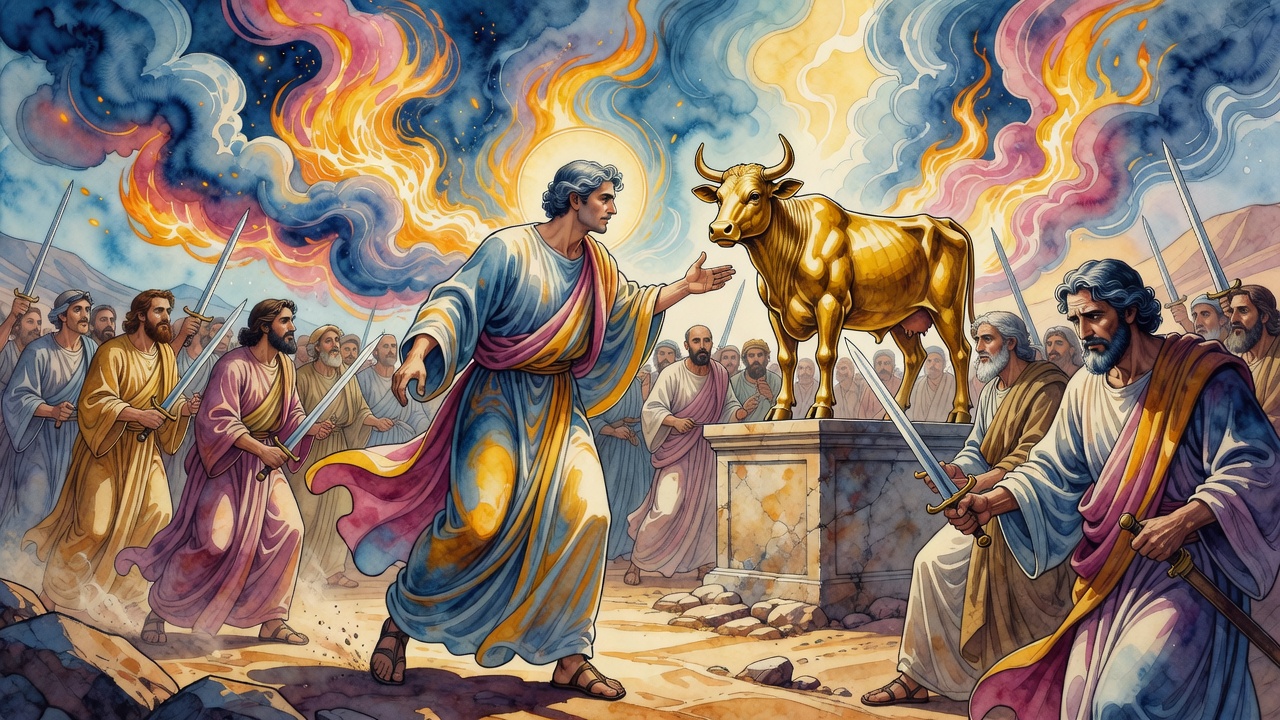
Ordinary uncleanness kept a person away from the sanctuary. Tzara'at (צרעת), the white plague the Torah treats as leprosy, kept a person out of the camp itself. After the Golden Calf, the first bodies walked that far were the ones who had danced around the gold. Heaven smote them with the disease that makes a community close a gate.
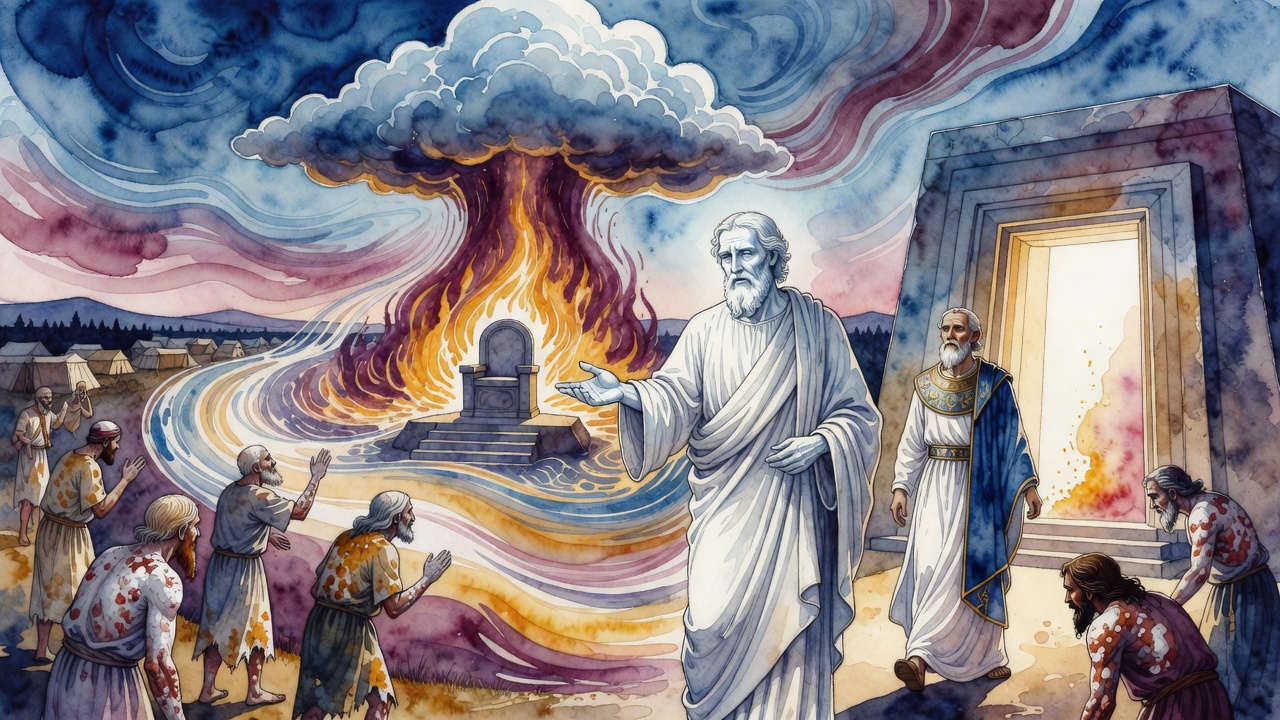
They went out past the last tent with their skin announcing what the altar of a false god had already said. Dust for a floor. Distance measured in paces. A man who had only touched a corpse still slept inside the rows. The dancers did not.
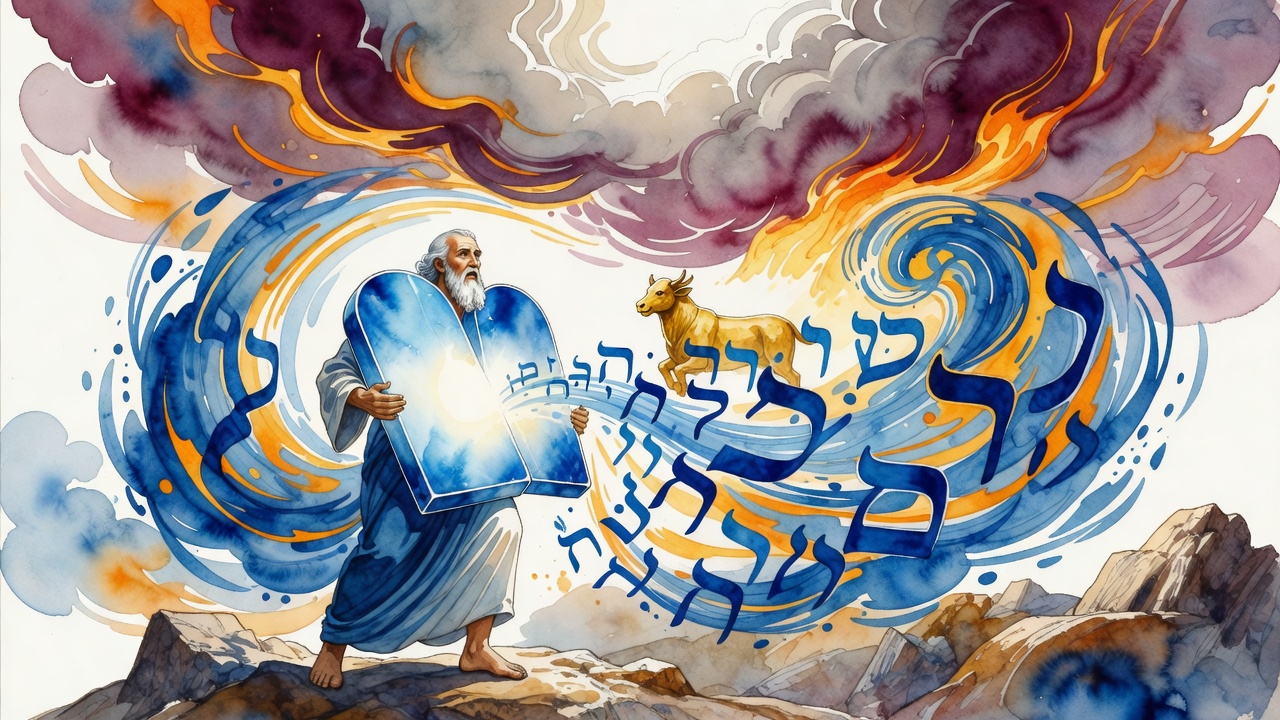
The calf was powder on water by then. The mark was not. It stayed on the people who had bowed, and it taught the rest of the camp how far idolatry sits from the center.
Ink on a Forehead They Could Not Bear
When Moses finished writing the Torah he wiped the pen on the hair of his forehead. Heavenly ink clung there and became beams. He came down shining.
The people stared and were afraid. Once they had borne the glory of the Lord like devouring fire in seven sheaths, one over another, and had not run. After the calf they could not bear the face of the man who stood between them and God. Sin had thinned their eyes.
Moses quieted them and taught anyway. The light that should have been joy arrived as a reminder of what they had lost the power to look at. Gold from earrings in a human fire had one kind of shine. Ink from heaven on a human brow had another. The camp could not hold both without trembling.
He did not dim the beams. He set about giving them the book. Fear sat in the rows while the teaching started.
Aaron Thanked God for the Fire
Fire took Aaron's two sons. God told Moses to comfort his brother. Aaron had not murmured. He had thanked God for a death that, God said, could have been harsher. Trust under that blow was the credential.
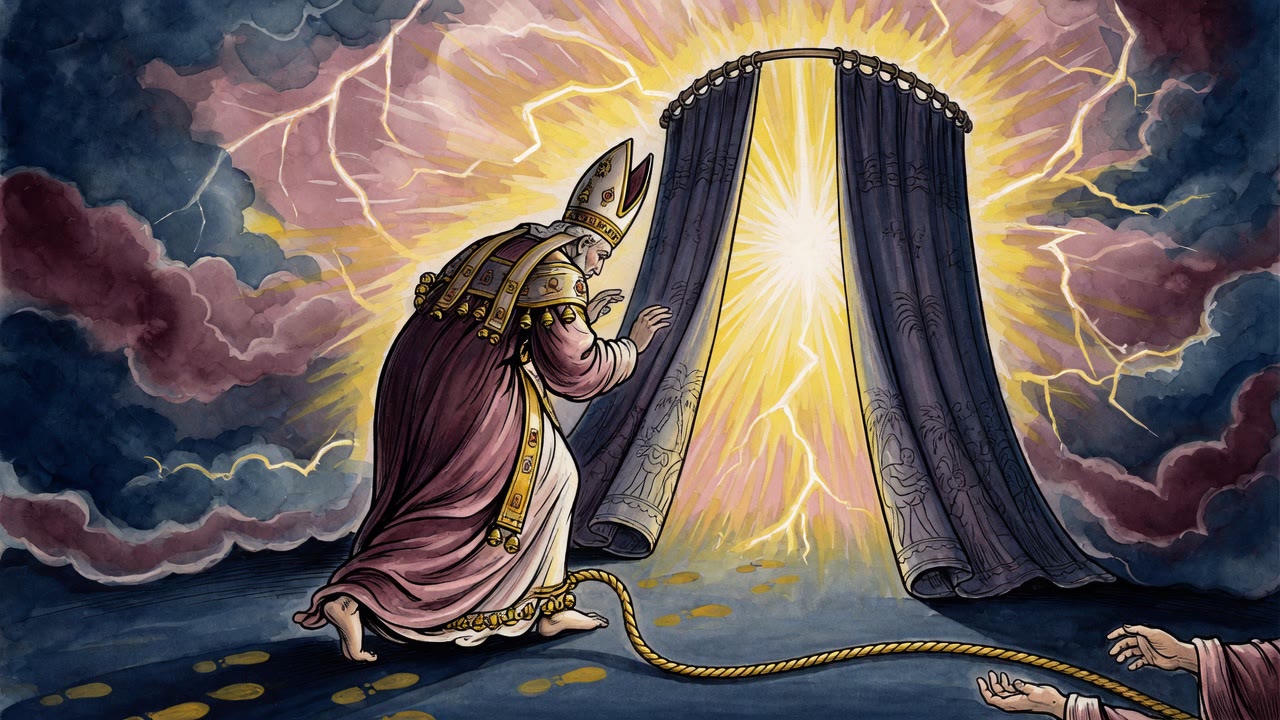
Then the warning. He must not come at all times into the holy place within the veil, before the cover that sat on the Ark. Moses heard demotion. No schedule. Hour, day, year, twelve years, seventy, never. The sentence sounded like a lock without a key.
God told him he had misheard. Aaron might enter at any time. He had to enter with the ceremonies. The door was not closed. It was exact.
The Angels Stepped Back
Those rites stood for the three Patriarchs, the four mothers, and the twelve tribes. Only on those merits could a high priest step into the Holy of Holies without fearing the angels that filled the room. The angels retreated when he came. Even Ha-Satan the Accuser fled at the sight and did not dare accuse Israel before God.
The brother who had once stood near the making of a calf learned the exact steps that let a mortal pass a host. He did not walk in on his own nerve. He walked in clothed in fathers and mothers.
Outside the curtain, the first dancers of the gold still knew the other direction: away from the tents, white on the skin, the camp closed. Two writings. Ink and plague. One face too bright. One body too marked to come home. Aaron crossed the inner line on borrowed merit, and the Accuser who might have stood over the calf's memory ran from a priest dressed in other people's names.
← All myths