5 min read

Moses Admitted the Dark Traits on His Portrait

An Arabian king trusted a portrait and physiognomists. Moses said every ugly trait they read was his by nature, then showed what will had rewritten.

Curated by Arthur · Told by Maggid ·
Table of Contents
  1. The Hall of the Exact Likeness
  2. Ink That Would Not Leave the Skin
  3. What the Camp Could Not Bear
  4. The Face That Proved the War

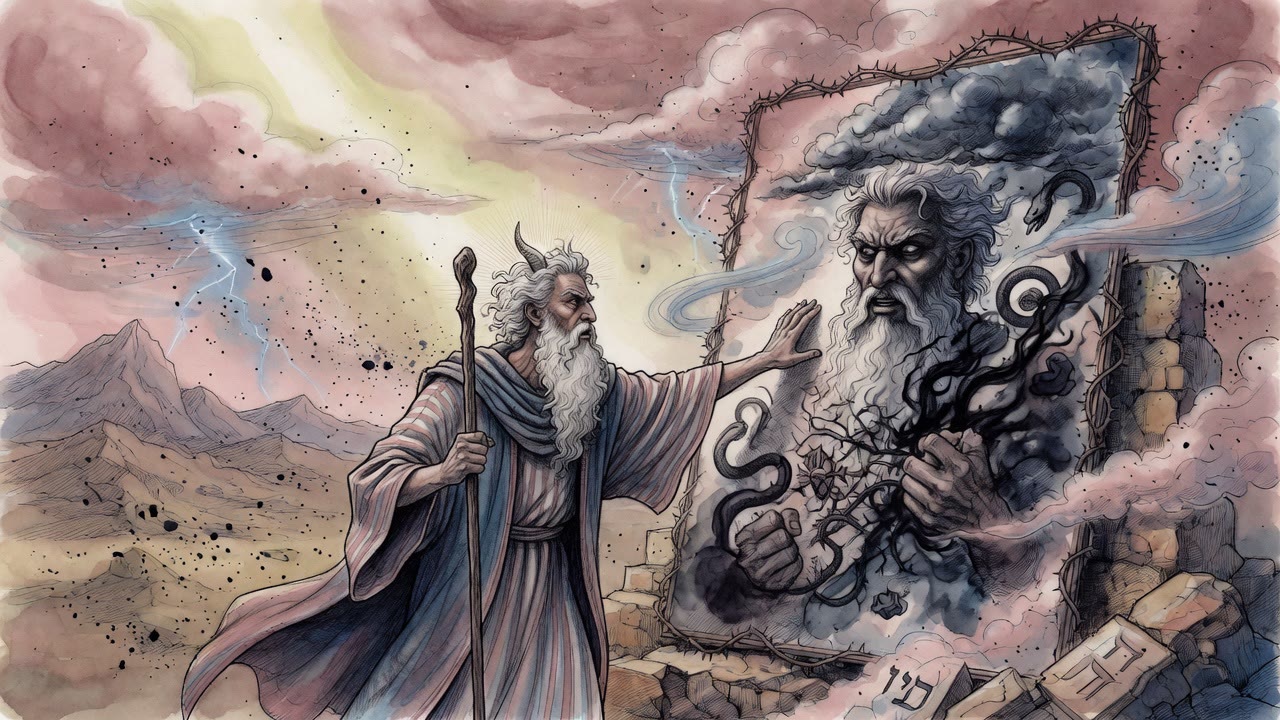
The Arabian king held the portrait at arm's length and frowned until the paint seemed to answer him. The likeness of Moses was exact: brow, mouth, the set of the jaw. The physiognomists had already spoken over that face. They had read cruelty in a line, pride in another, a catalog of ugly traits as if the skin itself were a ledger. Then the living man walked into the hall, and the king almost dropped the board, because flesh and pigment were one image.
Moses Admitted the Dark Traits on His Portrait Click for full size

"Who is lying?" the king asked. "The artist, the face-readers, or my own eyes?"

The Hall of the Exact Likeness

Moses listened without flinching. He did not mock the science of faces. He said the artist had skill. He said the experts had skill. Then he put the knife into his own chest with plain speech.

"If my fine qualities were a product of nature," he said, "I were no better than a log of wood, which remains forever as nature produced it at the first."

The court leaned in. A log does not repent. A log does not choose. Moses went further. By nature, he said, he possessed all the reprehensible traits the wise men had read in the picture, and perhaps to a greater degree than they guessed. The confession hung in the air like smoke from a too-hot lamp. No one rushed to polish it away.

"But I mastered my evil impulses with my strong will," Moses continued, "and the character I acquired through severe discipline has become the opposite of the disposition with which I was born."

The king looked from the portrait to the man. The face had not changed. The pressure had. What the ink said about nature, the living mouth rewrote as a war already fought and won inside one body.

Ink That Would Not Leave the Skin

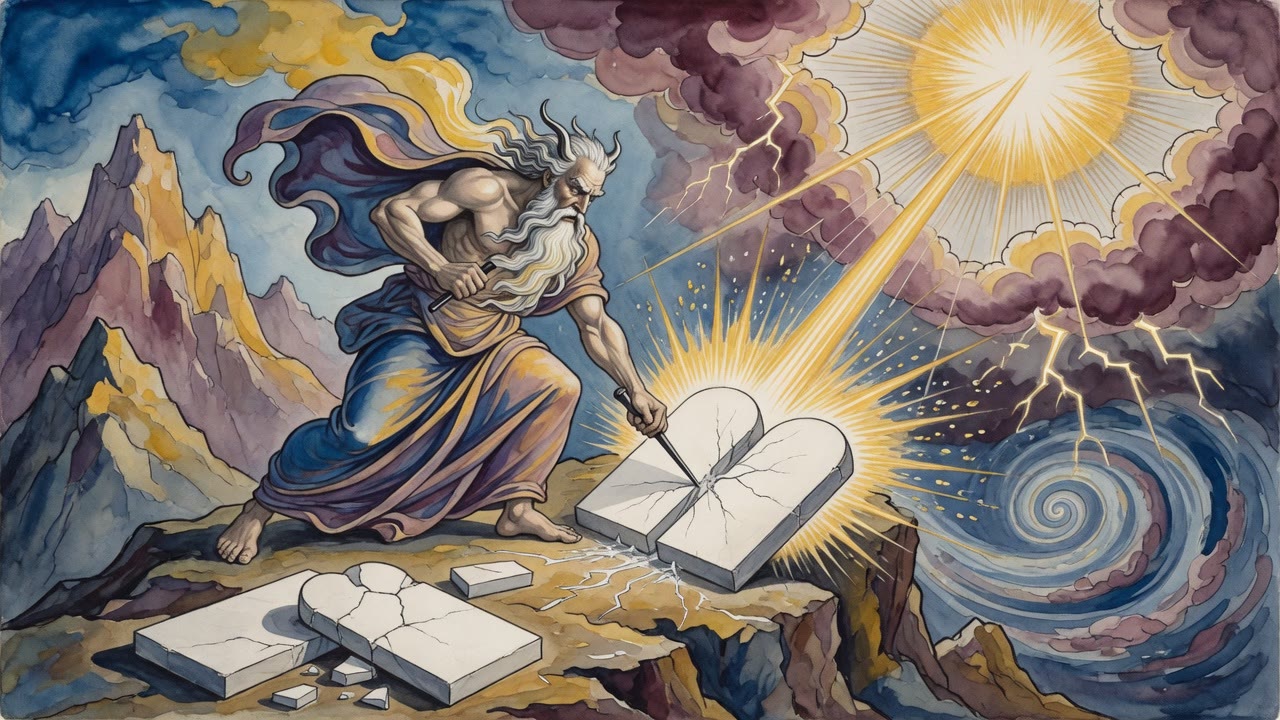
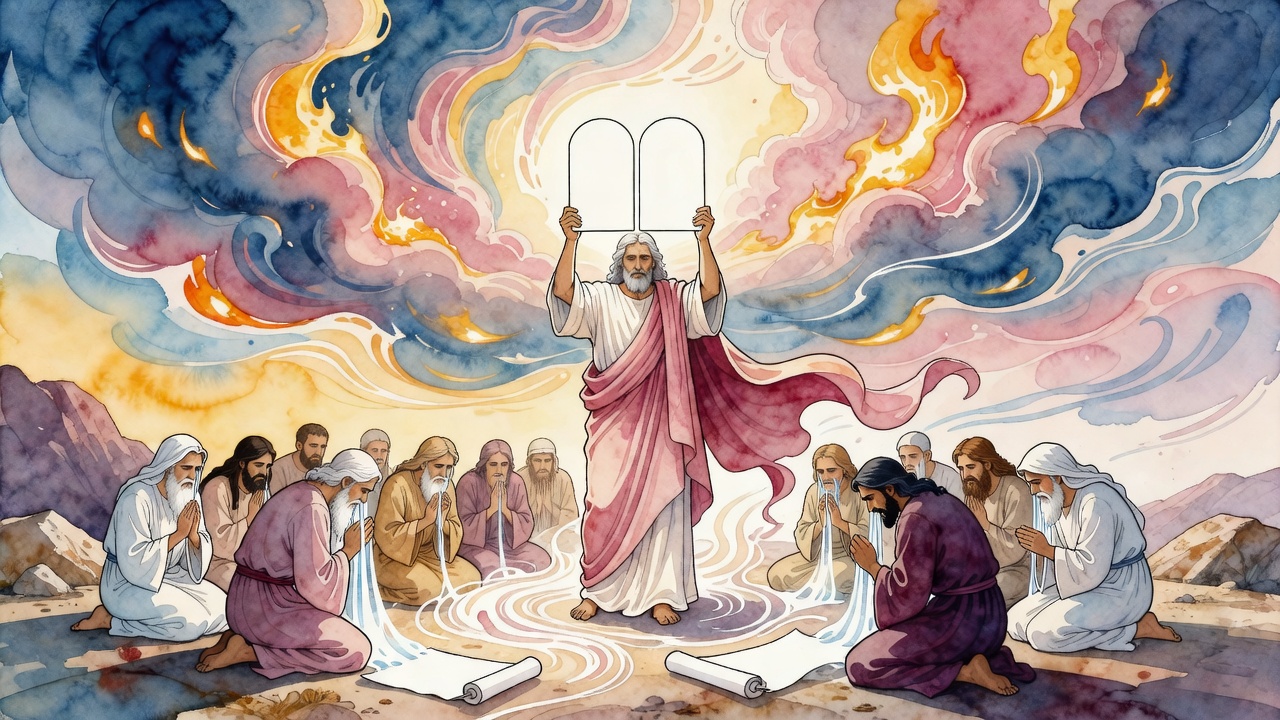
That same body later climbed and wrote until the letters of the Torah stood complete. When Moses finished, he wiped his pen on his forehead. The ink was not the ink of a market scribe. Heavenly light clung to the stroke. It stayed on his brow and became the source of the beams that shone from him, a marvel before the people such as had not been done in all the earth (Exodus 34:10).

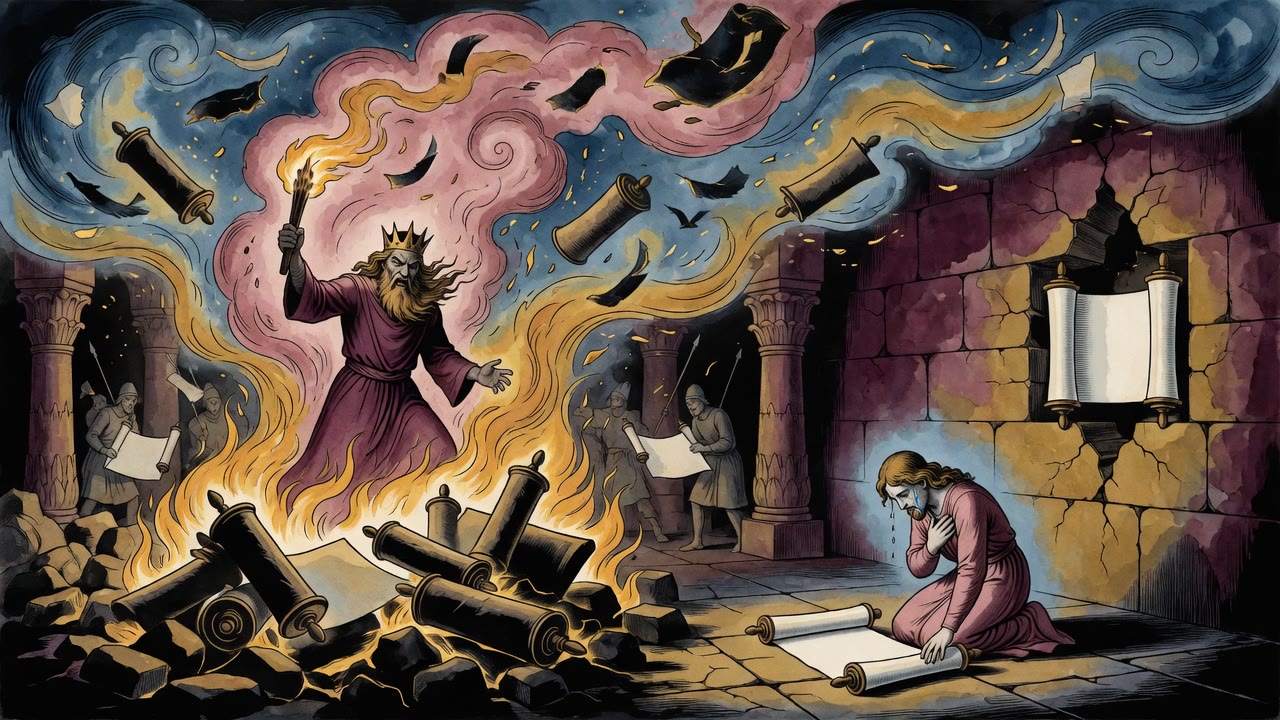
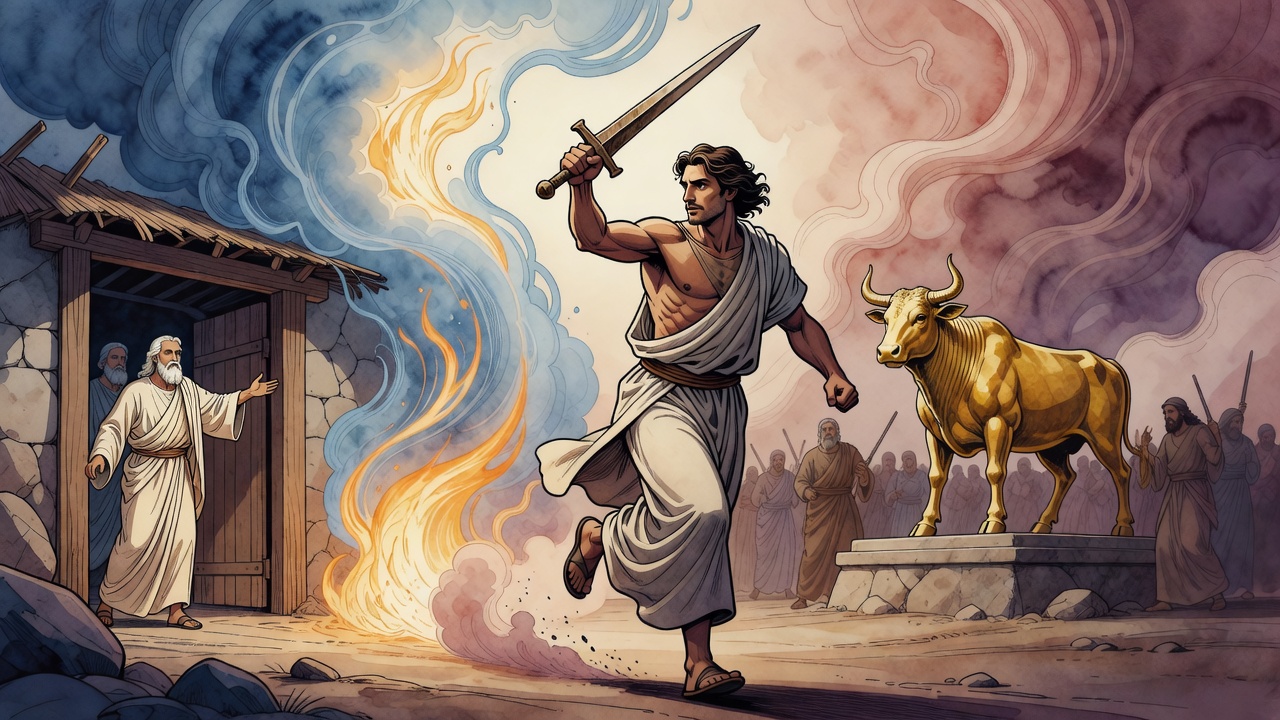
He came down with a face that burned without flame. The camp saw him and froze. Amazement rose first. Fear rose hard behind it. Before the sin of the Golden Calf, they had borne the sight of the glory of the Lord like devouring fire (Exodus 24:17). After the calf, they could not even hold their eyes on Moses. Sin had built a distance. The light that once would have been a gift now felt like judgment wearing a human face.

What the Camp Could Not Bear

Moses did not hide to spare himself. He calmed their fear and began teaching at once the Torah he had received. He would not let terror become a second calf, another refusal. The people who could not look still had to hear. The man who had mastered the traits in the portrait now carried light that their guilt made heavy.

Inside that glare sat the same confession he had given the king. Nature had offered him every dark line the physiognomists named. Will had rewritten the page. Heavenly ink on the forehead was not decoration. It was residue from labor, from writing what binds, from a discipline so complete that even the waste of the pen became radiance.

Someone in the crowd lifted a hand to shade his eyes and then dropped it, ashamed. Another turned sideways and listened with an ear only. Moses kept speaking. The words had to enter by whatever gate the camp still left open.

The Face That Proved the War

Years earlier, in a foreign court, a king had trusted paint and the reading of bone. Moses had refused to let nature be the last word. Now Israel stood before a face that nature alone could never have produced: a forehead marked by heaven's own writing tools, a light that made sinners flinch and still offered them teaching instead of exile from the tent.

What changed for good was double and single at once. He would never again be only the man the portrait described. They would never again look on him the way they had looked before the calf. Between those two losses rose a third thing that stayed: a character hammered against impulse, and a people forced to receive Torah through a brightness they could barely endure.

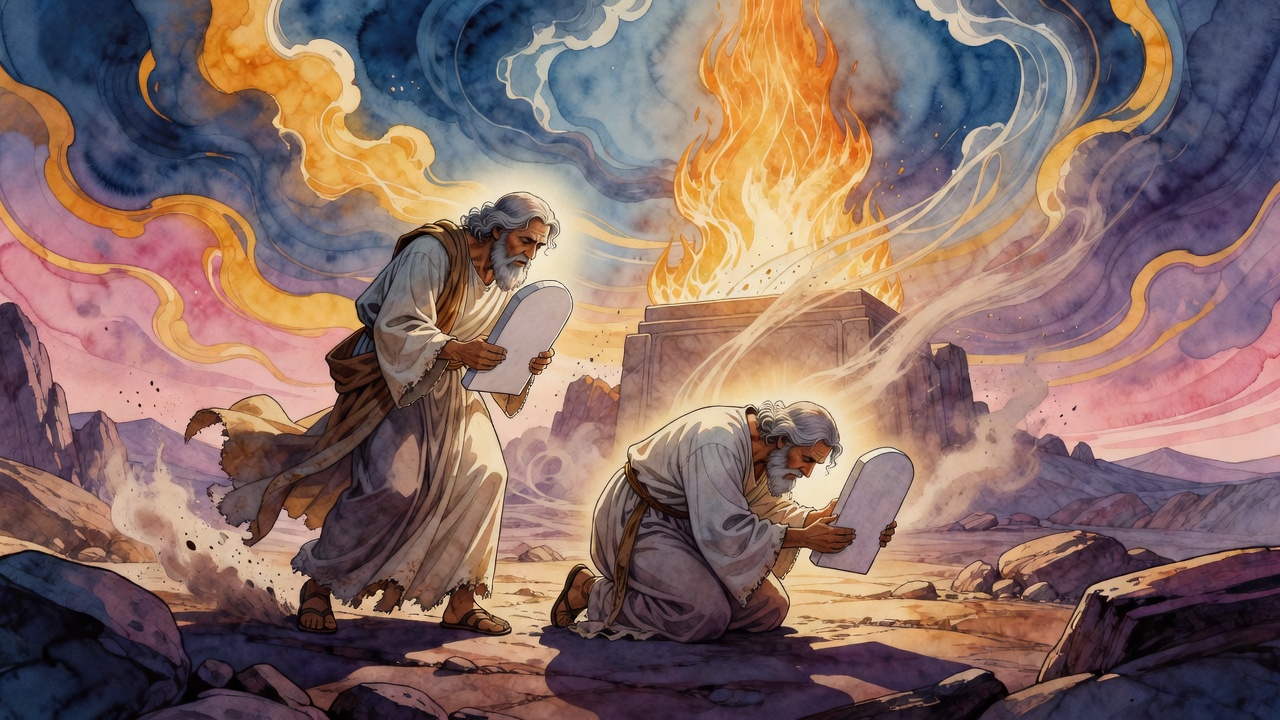
Night fell on the camp. Some slept with their faces to the tent wall. Moses set the tablets where the light would not be wasted. The portrait, if it still hung in Arabia, held the old lines. The living brow held the ink that would not wipe clean.


← All myths
From the tradition

Sources

2 sources

The texts behind this telling. Some cards carry a translation of the source; others are our own retelling of it, and each card says which. Every card links out to the original.

Legends of the Jews 4:82Legends of the Jews

Retold in our words. Read the original at the link below.The Legends of the Jews by Louis Ginzberg (1909) · Public Domain

There's a fascinating story in Ginzberg's Legends of the Jews that tackles this very question, and it involves none other than Moses himself.

An Arabian king commissions a portrait of Moses, the great leader of the Israelites. He also consults with experts in physiognomy, that's the ancient practice of judging character from facial features. These experts, poring over the portrait, paint a rather unflattering picture of Moses's character. They see all sorts of negative traits supposedly written on his face.

When the king finally meets Moses in person, he's astounded. The man before him is the very image of the portrait! The likeness is undeniable. This throws the king into a quandary: who is. The portrait, or the experts' reading of it?

He turns to Moses, relaying the whole bizarre situation and his utter confusion. And Moses's response? It's pure gold.

He acknowledges that both the artist and the experts are skilled in their respective fields. Then he drops a bombshell. "If my fine qualities were a product of nature," he says, "I were no better than a log of wood, which remains forever as nature produced it at the first." In other words, if Moses's goodness was just something he was born with, it wouldn't be anything special.

But here's the kicker: Moses confesses, "By nature I possessed all the reprehensible traits thy wise men read in my picture and ascribed to me, perhaps to a greater degree even than they think." Wow. He admits that, by default, he was prone to all those negative qualities.

But, and this is a HUGE but, he didn't let nature dictate his destiny. Moses continues, "But I mastered my evil impulses with my strong will, and the character I acquired through severe discipline has become the opposite of the disposition with which I was born." Moses is saying that through sheer willpower and self-discipline, he transformed his character. He actively fought against his negative inclinations and forged himself into the leader, the man, we know from the Torah.

And the reward for this incredible effort? "Through this change, wrought in me by my own efforts, I have earned honor and commendation upon earth as well as in heaven."

This story isn't just a quirky anecdote about Moses. It's a powerful message about our potential for change. It challenges the idea that we're simply prisoners of our nature or our circumstances. It suggests that, with conscious effort and unwavering determination, we can reshape our character and become the people we aspire to be. It shows us that tikkun (spiritual repair) atzmi, personal rectification, is always possible.

Perhaps it's a reminder that we all have the capacity to overcome our flaws and cultivate virtues. Maybe it's an invitation to examine our own "evil impulses" and consider how we can master them. Or perhaps it's simply a comforting thought that even the greatest among us, like Moses, had to struggle and strive to become the best versions of themselves.

Full source
Legends of the Jews 2:135Legends of the Jews

Retold in our words. Read the original at the link below.The Legends of the Jews by Louis Ginzberg (1909) · Public Domain

Jewish legend has a beautiful answer.

The story goes that after Moses finished writing the Torah, he wiped his pen on his forehead. Now, this wasn't just any ink. This was heavenly ink, imbued with the divine light of the Torah itself! And, according to legend, this ink clung to his forehead, becoming the very source of the radiant beams that shone forth from him.

Isn't that a stunning image? It's a powerful symbol of how deeply connected Moses was to the divine word. It also fulfills God's promise to Moses: "Before all thy people I will do marvels, such as have not been done in all the earth, nor in any nation" (Exodus 34:10).

There’s more to the story. When Moses returned from heaven with his face shining, the people were, understandably, amazed. But their amazement was mixed with fear. Why fear?

Legends of the Jews explains that this fear was a consequence of their sin with the Golden Calf. Before that transgression, they could bear the sight of "the glory of the Lord that was like devouring fire" (Exodus 24:17) without fear. In fact, Midrash Rabbah describes this glory as consisting of seven layers of fire!

But after their transgression, they couldn’t even look upon the face of Moses, the very man who mediated between them and God.: their sin had created a barrier, a distance between them and the divine. They were no longer worthy to look upon the face of God.

Moses calmed their fears and immediately began teaching them the Torah he had received. He didn’t let their fear paralyze them. He gave them the tools to repair their relationship with God.

Perhaps it's a reminder of the power and responsibility that comes with closeness to the divine. Or maybe it's a message of hope – even after transgression, a path to reconciliation remains open. The light of the Torah, even when reflected in the face of a man, can illuminate the way.

Full source