Israel Stands Pale After the Ninety-Eight Curses
Ninety-eight curses land and the camp turns white. Who can withstand even one? Moses gathers them close and answers with a single fact. You are still standing.
Table of Contents
 Click for full size
Color Drains from the Camp
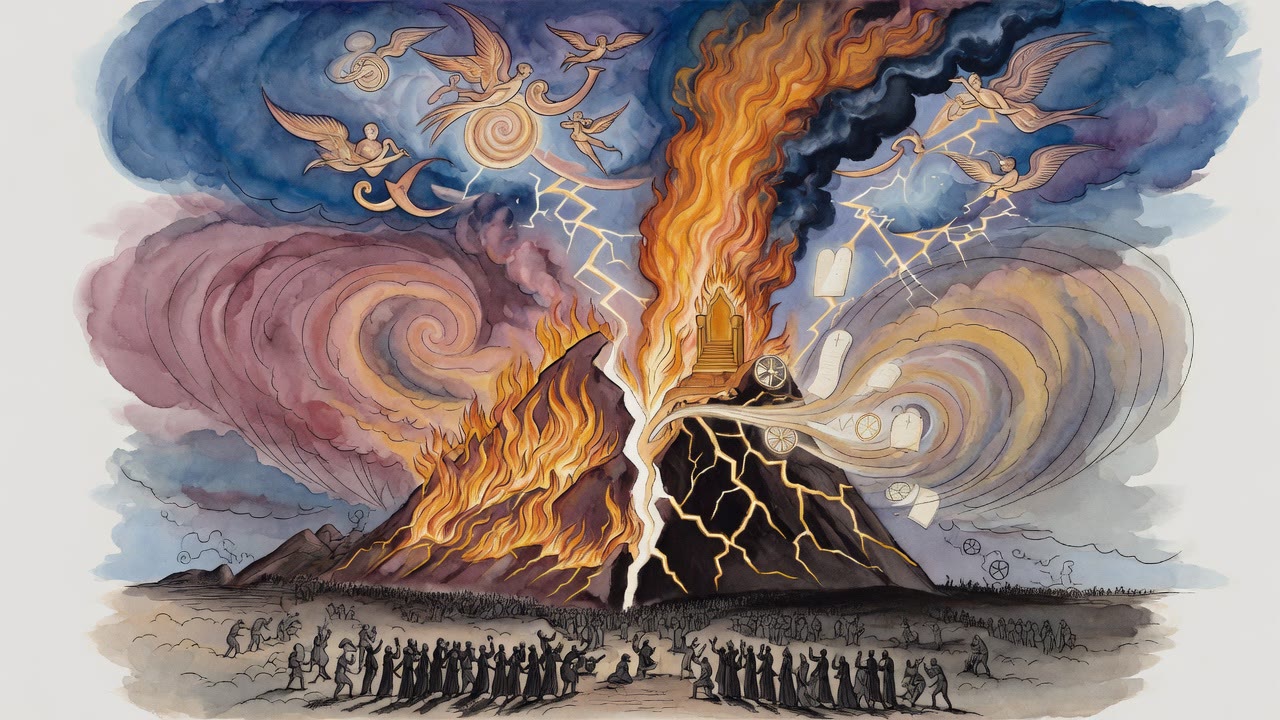
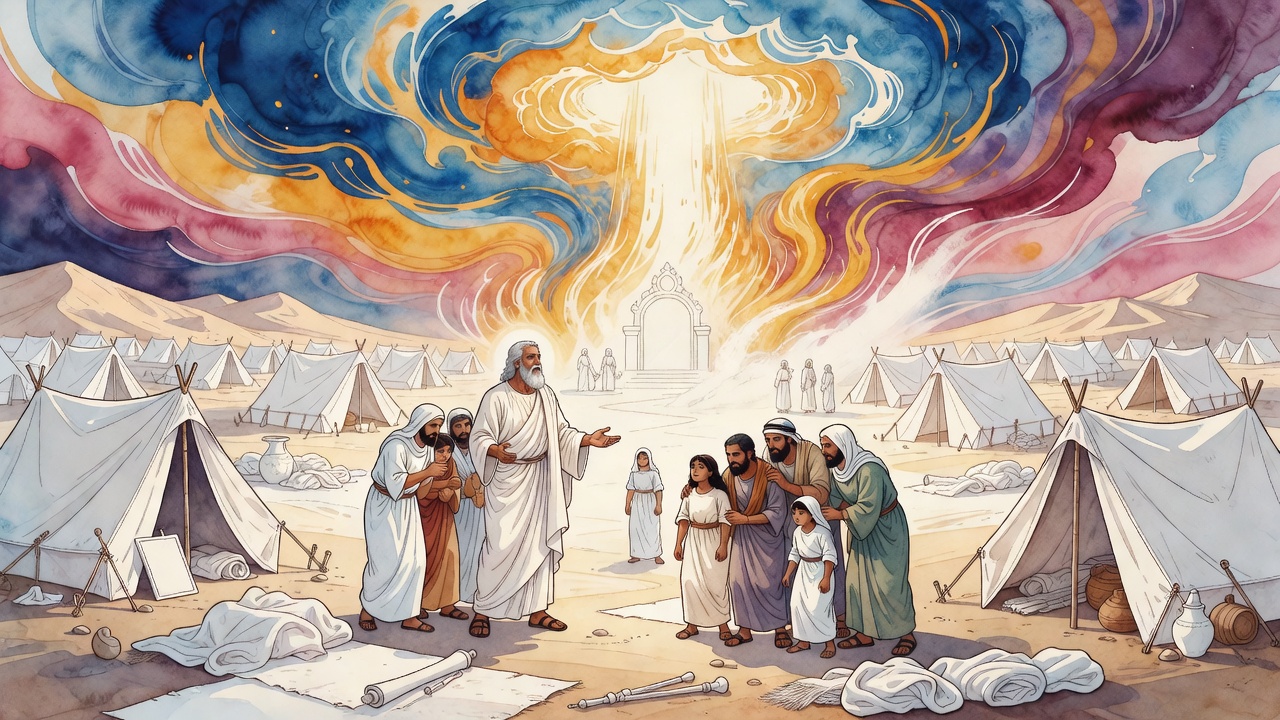
When the curses came down in Ki Tavo, the people counted. Ninety-eight in this portion. Another forty-nine already spoken in Leviticus, the Torah of the Priests. The words landed like blows. Color drained from faces. Lips went dry. They turned pale and cried among themselves. "Who is able to withstand these? Who could survive even one of them?" A covenant that had felt like a gift now felt like a sentence read aloud in the sun.
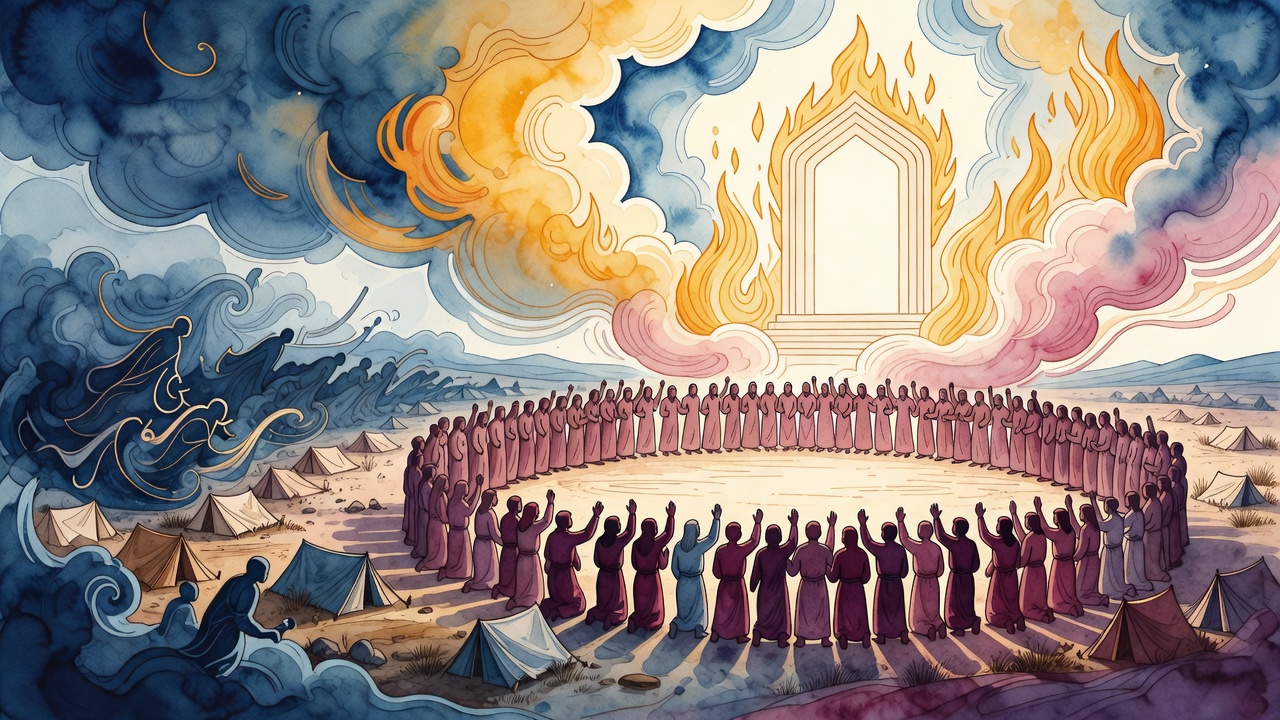
Despair pressed the whole camp. Knees softened. Someone sat hard on the ground without meaning to. Moses did not let them stand alone in that dread. Immediately he called them to himself, gathered them close, and began to appease them with words. He would not leave pale faces to invent their own end.
You Are Standing Today
He opened with the verse that gives the next portion its name. "You are standing today, all of you, before the Lord your God." "You are still standing," he told them. "Despite the curses, despite your fear, you are not fallen but standing, alive and whole before the Holy One. The very fact that you remain on your feet to hear is itself the comfort." The curses did not have the last word. The standing did. Breath in the lungs was already a counter-argument.
A day is not one thing. Sometimes it darkens. Sometimes it grows bright. So it is with Israel. Though darkness presses now, the Holy One is destined to kindle a light that never fails. Separate reeds snap. Bound as one bundle, they hold. The eternal light waits on the far side of the pale faces. Unity is not a slogan in that hour. It is the difference between a reed and a staff.
Why Were You Not Destroyed
Moses pressed the question that hung in every heart. "You have seen the great trials, the wonders in Egypt. You came at last to this place. Why, after all your failures, were you not destroyed? You did not heed the voice of God. You spoke words that should have ended you. Of the golden calf you cried, 'This is your God, O Israel.' And still you stand." History itself refused to match the worst of your mouths.
The answer turns on a single difference. When affliction falls upon the nations of the world, they kick against it. They do not know the Name. "Pour out Your wrath upon the nations that have not known You," the Psalmist sang. When sorrow comes upon Israel, Israel bows the head and opens the mouth. "I found trouble and sorrow, but I shall call upon the name of the Lord." The kick and the call are two different futures under the same weight.
Blows That Lift
So the Holy One declared a secret hidden inside the curses themselves. The very blows you dread are the hands that lift you. They come to humble you and to test you, to do you good in your end. Though afflictions break over you like waves, you do not fall away. You have a standing. Therefore Scripture says of you, "You are standing today," upright, alive, before your God. The threat and the address share a covenant page.
Moses knew the fear was real. He also knew fear that still calls the Name is not the same as the nations' kick against the dark. The covenant's threats do not cancel the covenant's address. You are still being spoken to. That is why you can still stand. A people that can still hear has not finished its story, even when its face has gone white.
Two Yokes, One Deliverance
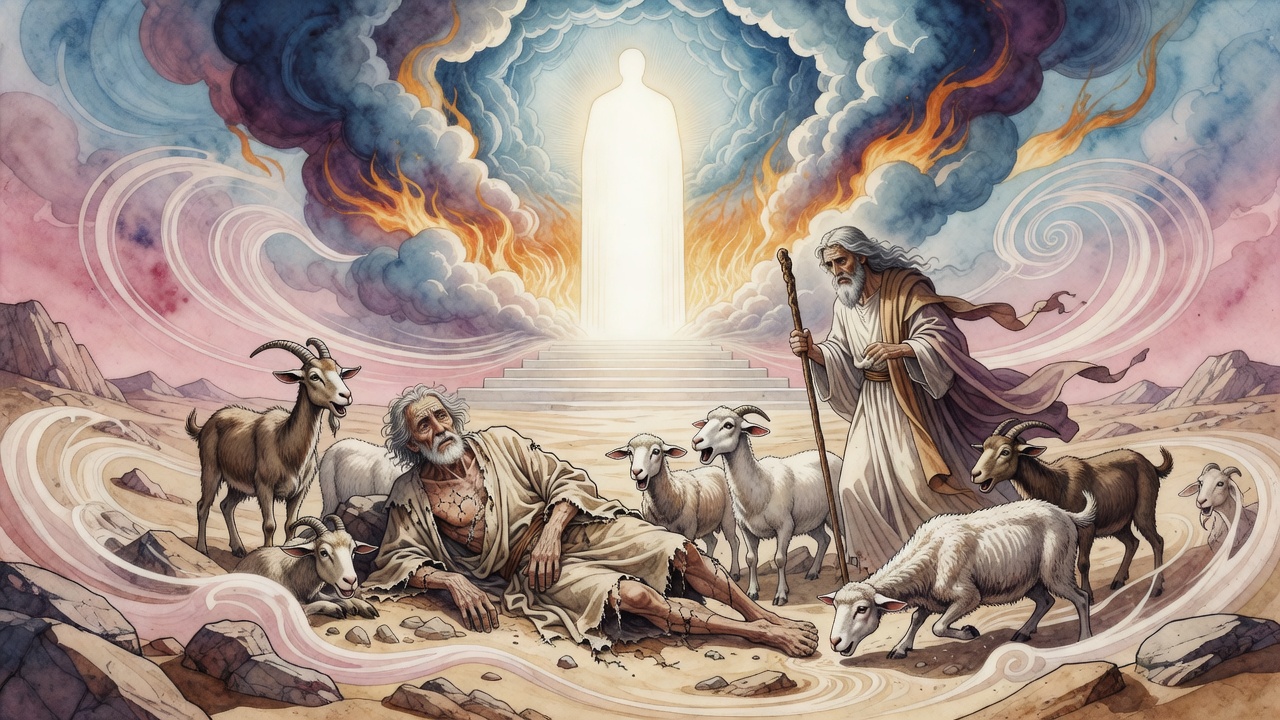
Near the end of his life Moses turned with a father's worry. "Master of the Universe, You have laid not one burden upon Your children but two yokes at once. The yoke of Torah: study, commandments, a covenant that asks everything. And the yoke of subjugation to the kingdoms: the long press of foreign empires. How can a people bear both?" The double weight looked like cruelty until the answer came.
The Holy One answered with a promise folded into the question. Whoever takes up the yoke of Torah is delivered from the yoke of the kingdoms. The two burdens are not equal weights pulling against each other. The first lifts away the second. Bend the neck willingly to study, and the iron collar of empire loosens. "All His holy ones are in Your hand." Those who cleave to Torah are held in the palm of God, beyond the reach of any king.
On the day the faces went white, Moses did not erase the ninety-eight curses. He set a standing people inside them, and a light beyond them, and a yoke that can outlast every other yoke. The camp was still pale. It was also still on its feet. When the gathering broke, pale faces still looked pale. They also looked up. Standing is not the same as being unafraid. It is the decision to remain addressable while the curses are still ringing in the ears.
← All myths