5 min read

The Mound of Stones Where Laban Stopped Harm

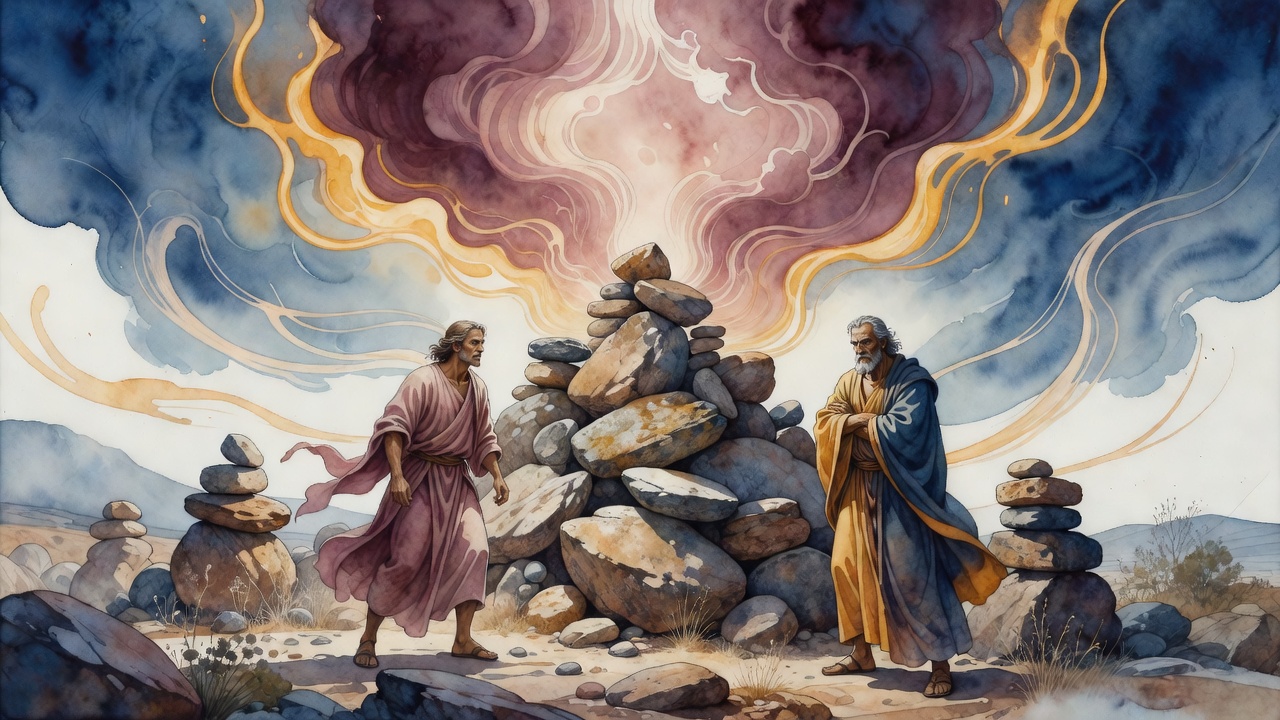
Jacob and Laban stacked rocks until the border could speak for them. No embrace followed, only a promise not to cross for harm while Israel learned to stand.

Curated by Arthur · Told by Maggid ·
Table of Contents
  1. Rocks Instead of Embrace
  2. A Peace That Is Only a Fence
  3. When the Wicked Are Overturned
  4. Pillars of a People Who Shift
  5. Nabal's Houses of Foolishness
The Mound of Stones Where Laban Stopped Harm Click for full size

Rocks Instead of Embrace

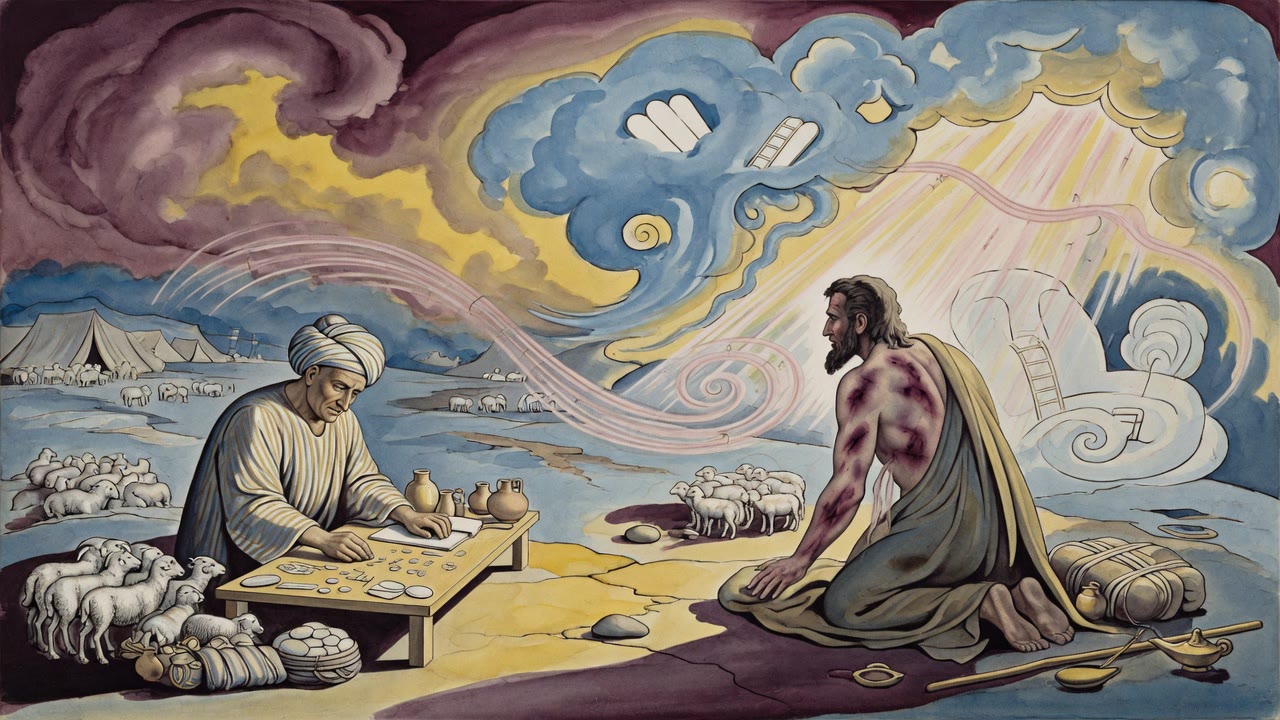
Jacob and Laban did not end twenty years with a feast of reconciliation. They ended them with a pile of stones under an open sky. This mound is a witness, and this pillar is a witness, that I will not pass beyond this mound to you for harm, and you will not pass beyond it to me. The words were as dry as the rocks they named, and the wind did nothing to soften them.

Targum memory keeps the mutuality strict. Two witnesses. Two promises. One border. The stones were not scenery for a family portrait. They were frozen speech pressed into the earth so that neither man could pretend later that the line had been unclear when anger returned with a better excuse.

Jacob's hands were cut from the stacking. Laban's face did not become kind. The work still held, which is more than some bloodlines manage after twenty years of cheating and counter-cheating.

A Peace That Is Only a Fence

Some families heal. Some families agree to stop bleeding each other. Jacob and Laban chose the second without pretending it was the first. No friendship bloomed on the mound. What bloomed was a rule: here and no further. A border can be a kind of peace when the alternative is another decade of mutual theft, pursuit, and night watches against a kinsman's schemes.

Jacob turned toward his own road with the knowledge that Laban still breathed behind him, separated now by rocks that both had sworn to respect. Distance became the covenant. That is not the prettiest ending in the family book, and the tradition does not pretty it for the sake of a warmer moral.

Sometimes the most a blood-feud can achieve is a well-marked pile that keeps knives in their sheaths. Years later, when Jacob's children told the story, they did not claim Laban became righteous. They claimed the border held.

When the Wicked Are Overturned

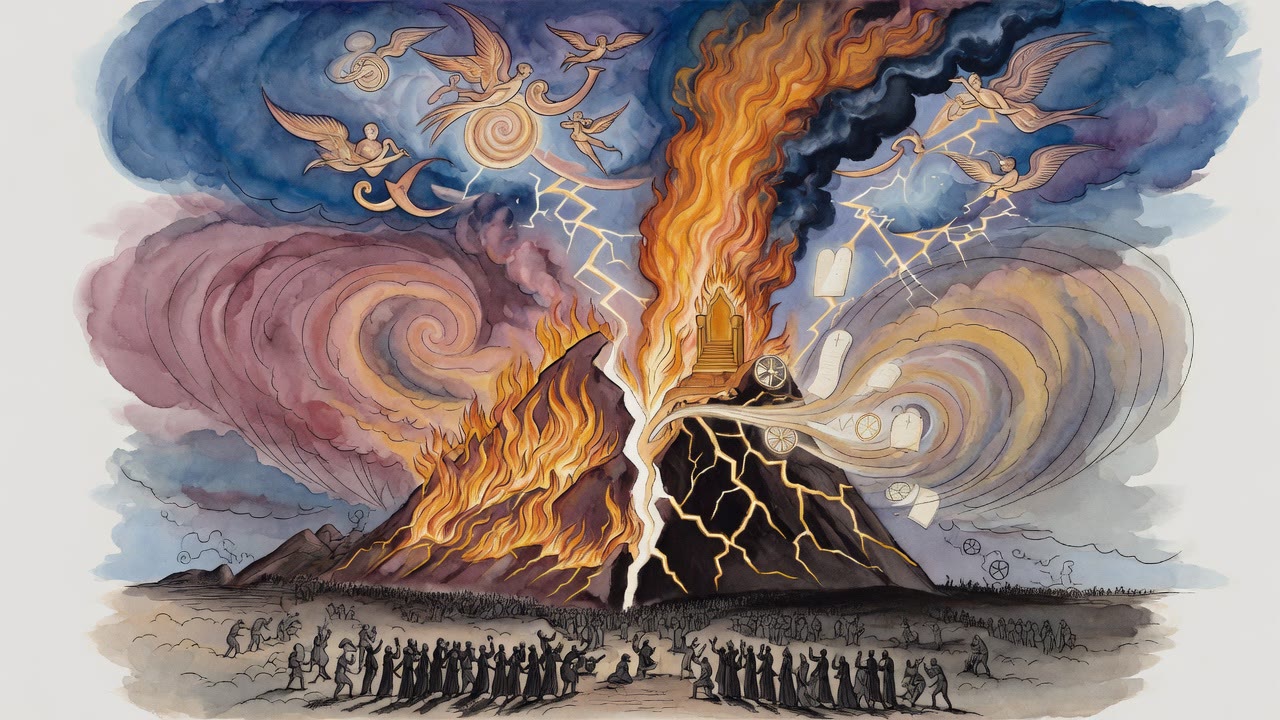
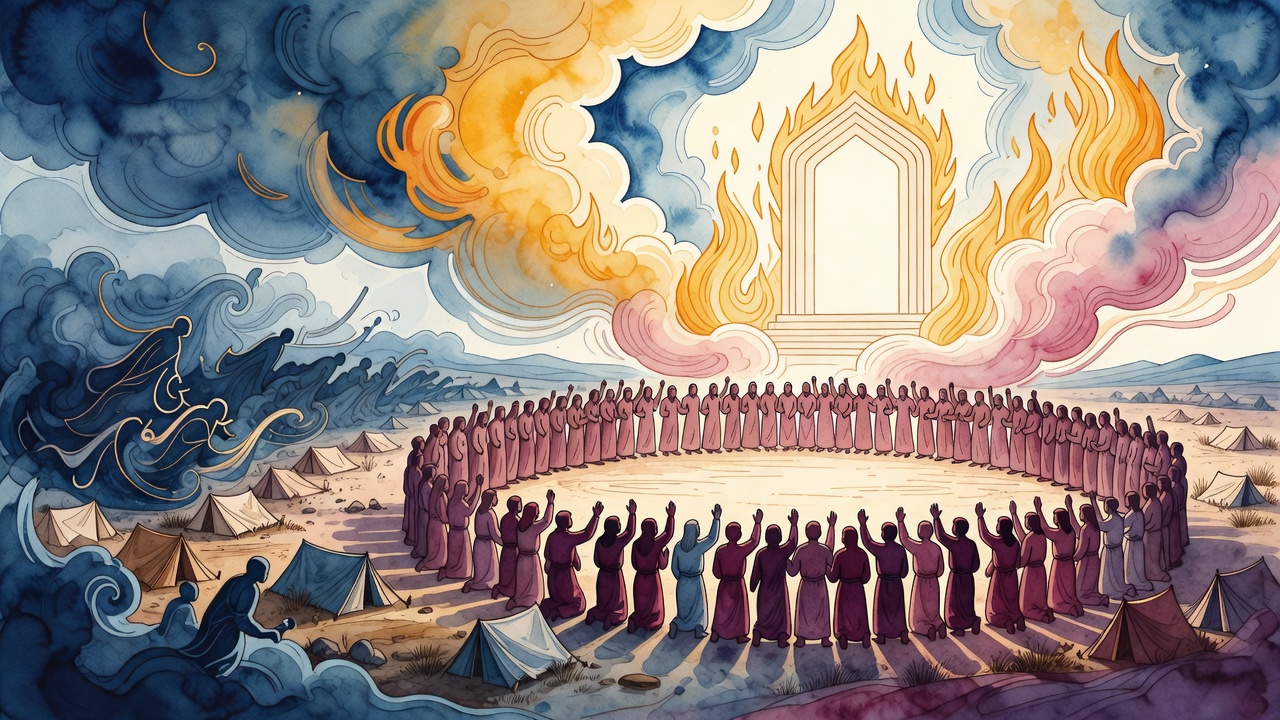
Midrash Tanchuma hears another kind of standing on a different plain. You are standing today, Moses tells Israel after a storm of curses that turned faces green. The wicked are overturned and are no more, but the house of the righteous shall stand. Flood, Sodom, Egypt, Babylon: when God turns their works over and examines them, no recovery remains for those structures of cruelty.

Israel falls and rises. The enemy should not rejoice. When I fall, I shall arise. Afflictions spend themselves like arrows shot at a post. The arrows are used up. The post still stands, scarred and upright. That is a different architecture from Laban's mound, yet both are about remaining after harm has shown its face and failed to erase the one who was targeted.

Standing is not the same as never being hit. Standing is what happens after the hit when the name is still spoken and the people still gather.

Pillars of a People Who Shift

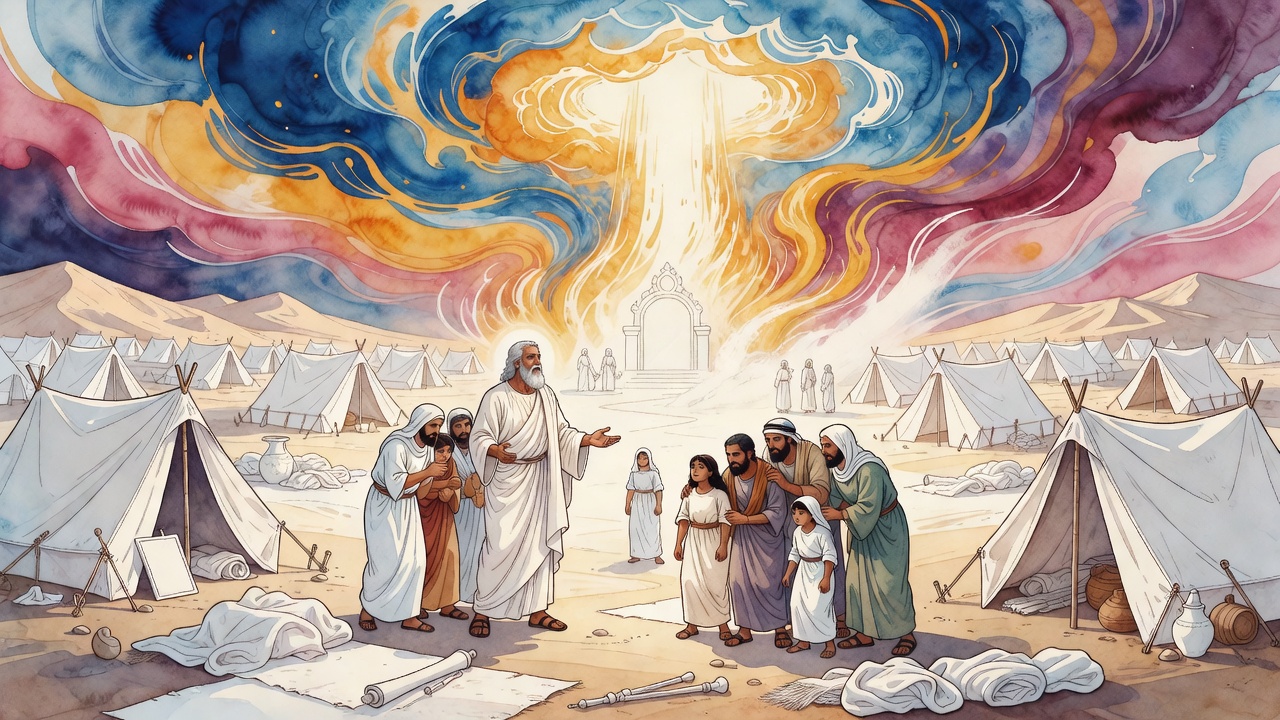
Why did Moses make them into a kind of pillar? Because they swung from opinion to opinion, from Moses to Joshua, from Joshua to the elders, always at risk of dissolving into factions. Joshua gathered them again at Shechem. Samuel later made them stand when they swung toward kings and needed a mirror held to their choice. Standing is not stiffness. It is the refusal to dissolve when leadership changes shape.

A single reed breaks in a child's hand. A bundle does not. Israel is told the same. Redemption waits on unity, children of Israel and children of Judah coming together as one group that cannot be snapped one by one. The mound between Jacob and Laban was a split made safe. The standing of Nitzavim is a joining made durable against a hundred curses less two.

Nabal's Houses of Foolishness

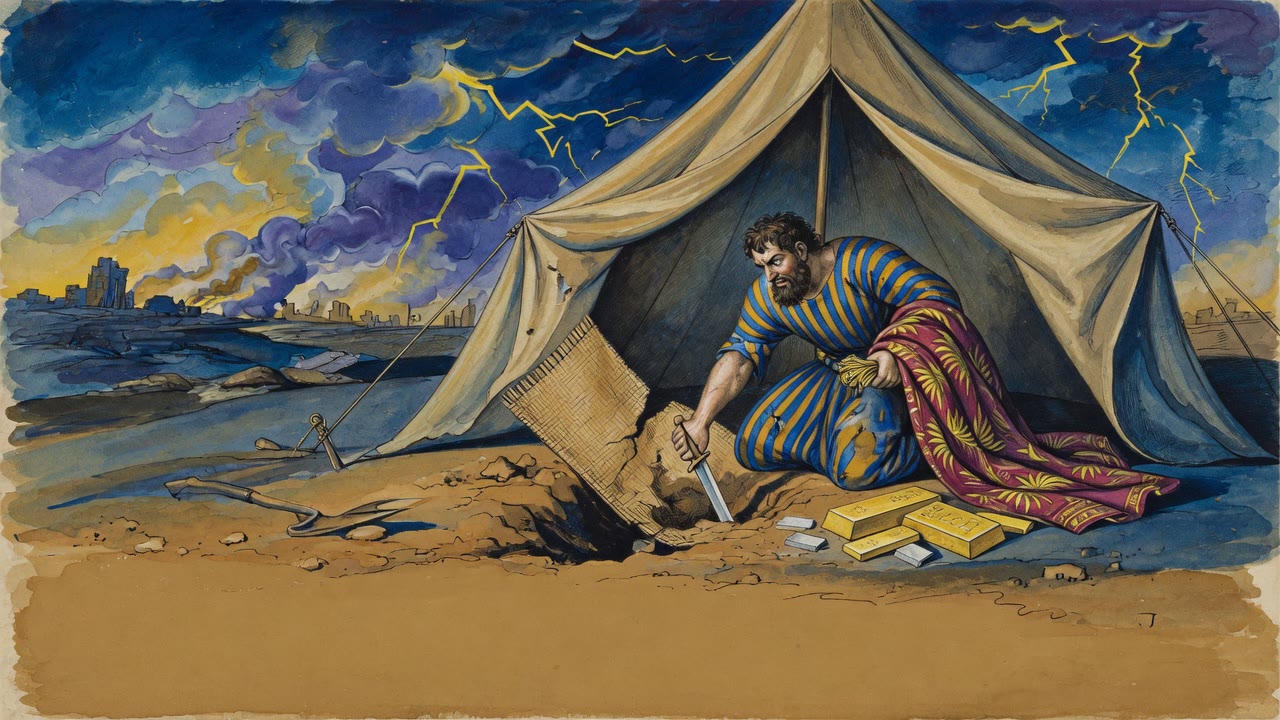
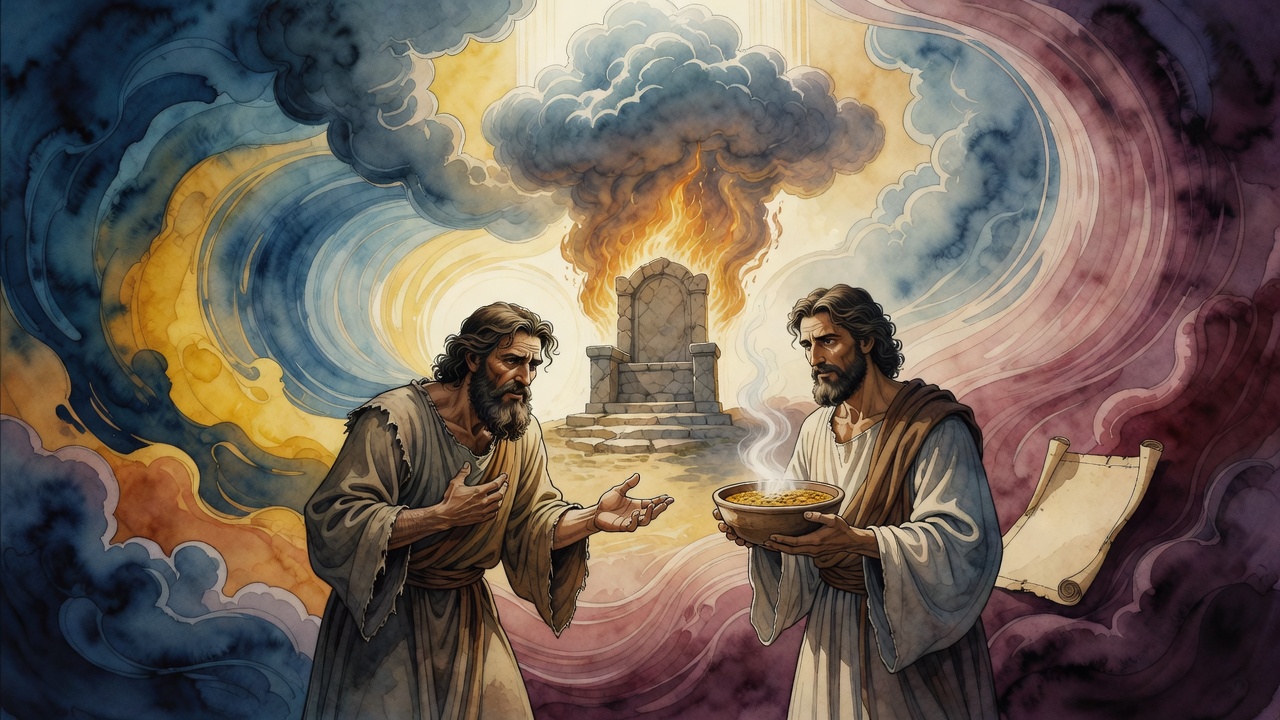
Against both kinds of ordered boundary stands Nabal, whose name the midrash hears as a builder of nabalot, structures of folly: houses of destruction, of prostitution, of idolatry. He marks the land with monuments of degradation rather than with stones of peace. Where Jacob stacks a witness against harm, Nabal stacks a witness to appetite and calls the heap a kind of power.

The contrast is deliberate in the longer memory of Israel. Not every pile of stones is a covenant. Some piles advertise contempt for neighbors and for heaven. The wise learn to read which heap they are looking at before they bow or before they cross. A border that prevents blood is holy work. A monument that celebrates emptiness is only a taller kind of ash.

Nabal's monuments taught the opposite lesson in a later generation. He built for appetite and called it status. Jacob built for restraint and called it witness. Israel, told to stand after curses, needs both memories: the fence that stops a kinsman's harm, and the refusal to become a builder of folly when standing feels harder than collapsing into empty heaps.


← All myths

From the tradition

Sources

3 sources

The texts behind this telling. Some cards carry a translation of the source; others are our own retelling of it, and each card says which. Every card links out to the original.

Targum Pseudo-Jonathan on Genesis 31:52Targum Pseudo-Jonathan on Genesis

Retold in our words. Read the original at the link below.The Targum of Jonathan ben Uzziel, trans. J. W. Etheridge, London, 1862 · Public Domain

They built a boundary out of stone. This mound is a witness, and this pillar is a witness, that I may not pass beyond this mound to thee, and that thou mayest not pass beyond this mound and this pillar to do harm (Genesis 31:52).

Targum Pseudo-Jonathan retains the strict mutuality. Two witnesses, two promises, one border. Neither Laban nor Jakob would cross in hostile direction. The stones were not just geography. They were the frozen memory of a treaty pressed into the earth.

It is the quiet end to a twenty-year tangle. No embrace. No reconciliation. Just the deliberate stacking of stones that said: here and no further. Sometimes that is the most a family feud can achieve, not love restored, but violence prevented.

The Maggid teaches: some relationships do not end in healing; they end in a well-marked border. A mound of stones can be a kind of peace, especially when the alternative was more years of mutual harm. Jakob and Laban did not become friends. They became neighbors who agreed never to cross the same pile of rocks.

Full source
Midrash Tanchuma, Nitzavim 1Midrash Tanchuma

Retold in our words. Read the original at the link below.Townsend 1989 translation of Midrash Tanhuma, S. Buber Recension · CC-BY

(Deut. 29:9:) “You are standing today.” This text is related (to Prov. 12:7), “The wicked are overturned (rt. hpk) and are no more, but the house of the righteous shall stand.” Every time that the Holy One, blessed be He, looks at the works of the wicked and turns (rt. hpk) them over (examines them), there is no recovery for them. He turned over the works of the generation of the flood, and there was no recovery for them, as stated (in Gen. 7:23), “And he wiped out all living things.” He turned over the works of the Sodomites, and there was no recovery for them, as stated (in Gen. 19:25), “And he overturned those cities.” He turned over the works of the Egyptians, and there was no recovery for them, as stated (in Exod. 14:28), “and not so much as one of them remained.” He turned over the works of Babylon, and there was no recovery for them, as stated (in Is. 14:22), “and from Babylon i will cut off name, remnant, offspring, and posterity.” Moreover, David has said about all of them (in Ps. 36:13), “There the evildoers have fallen; they are thrust down and cannot rise.” When Israel falls, however, it stands up [again], as stated (in Micah 7:8), “Rejoice not over me, O my enemy; when I fall, I shall arise….” It also says (in Mal. 3:6), “For I the Lord do not change; [and you, O Children of Jacob, are not destroyed (rt. klh).” R. Hanina bar Pappa said, “The Holy One, blessed be He, said, ‘I have never smitten a people and [restored] them, but (according to Mal. 3:6), “you Children of Jacob are not destroyed,”’ This is as stated (in Deut. 32:23), ‘I will use up (rt. klh) My arrows on them,’ [meaning that] My arrows are used up (rt. klh) but they are not destroyed (rt. klh).” And so has the assembly of Israel said (in Lam. 3:12), “He has bent his bow; he has set me as a target for the arrow.” To what is the matter comparable? To a warrior who raises up the [target] post and shoots the arrows at them. The arrows are used up (rt. klh), but the post stands. So it is also with Israel. Every time that afflictions came upon them, the afflictions ended, and they were standing in their place. Ergo it is stated (in Prov. 12:7), “The wicked are overturned and are no more.” Hezekiah the son of R. Hiyya said, “Why is this parashah next to the parashah about curses (i.e., Deut. 27:11-28:69)? Because Israel heard a hundred curses less two in this parashah, apart from the forty-nine which are uttered in the priestly Torah (i.e., in Leviticus). They immediately turned green in the face and said, ‘Who can withstand these [curses]?’ Moses called them immediately (in Deut. 29:1) and pacified them with [the words from Deut. 29:9].” What is written above the matter (in Deut. 29:1-2, 6)? “Then Moses summoned all of Israel [and said unto them, ‘You have seen all that the Lord did before your eyes in the land of Egypt,] …. The great trials [which your eyes saw, the signs, and those great wonders]. When you came unto this place, [Sihon king of Heshbon and Og king of Bashan came out to engage us in battle; but we defeated them].” And you did not heed My voice, and you uttered words before Me for which you deserved destruction. Still I did not wreak destruction upon you, when it is stated (in Ps. 106:7), “When our ancestors were in Egypt, they did not consider Your wondrous works….” And not only that, but they said of the calf (in Exod. 32:4), “This is your god, O Israel.” Now if you should say, “For what reason did the [other] nations deserve destruction, while we are remaining alive?��� It is because when afflictions come upon them, they kick against them and do not mention the name of the Holy One, blessed be He, as stated (in Ps. 79:6), “Pour out your wrath upon the nations that have not known you, [upon the kingdoms that do not invoke Your name].” In the case of Israel, however, when afflictions come upon them, they make submit and pray, as stated (in Ps. 116:3-4), “I found trouble and sorrow, but I shall invoke the name of the Lord.” Therefore the Holy One, blessed be He, said, “Even though these maledictions come upon you, they [themselves] stand you up; and so it says (in Deut. 8:16), ‘in order to humble you and in order to test you, [so as to benefit you in the end].’” Thus did Moses say to Israel, “Even though afflictions come upon you, you have a standing.” It is therefore stated (in Deut. 29:9), “You are standing today, all of you.” Another interpretation (of Deut. 29:9), “You are standing (nizavim) today”: Why did Moshe make them into a pillar (mazevah)? Because they would [change] from one opinion to another opinion: from the opinion of Moshe to the opinion of Joshua; from the opinion of Joshua to the opinion of the elders. And Joshua also made them into a pillar, as stated (in Josh. 24:1), “Joshua assembled all the tribes of Israel at Schechem, [and he summoned Israel’s elders and commanders, magistrates and officers; and they presented (yityazvu) themselves].” And Samuel – since they [changed] from his opinion to the opinion of the kings – also made them into a pillar, as stated (in I Sam. 12:7), “And now stand (hityazvu) and I will judge you.” Another interpretation (of Deut. 29:9), “You are standing today”: Just as today (literally: the day) sometimes darkens and sometimes lightens, so it is with you. Although you have darkness, the Holy One, blessed be He, is going to shine on you with light eternal, as stated (in Is. 60:19), “for the Lord shall be your everlasting light.” When? When you all become one group, as stated (in Deut. 4:4), “are all alive today.” According to universal custom, if one takes a group of reeds, will he be able to break them at one stroke! But if he takes them one by one, even an infant can break them. So also you find that Israel was not redeemed until they became one group, as stated (in Jer. 50:4), “’In those days and at that time,’ says the Lord,’ the children of Israel, they and the children of Judah, shall come together.’” When they are united, they shall welcome the face of the Divine Presence.

Full source
Midrash Tehillim 14:4Midrash Tehillim

Retold in our words. Read the original at the link below.Rabbi Mike Feuer, Jerusalem Anthology · CC-BY

Take Nabal, from the Book of Samuel. His name alone, seemingly simple, becomes a window into understanding his nature. But what does Nabal mean?

Midrash Tehillim, a collection of interpretations on the Book of Psalms, dives deep into this very question. It suggests that Nabal’s name isn’t just a label, but a description of his actions and their devastating consequences.

Rabbi Yehuda, quoting Rabbi Shmuel, offers a particularly striking interpretation: Nabal turned the entire world into "nabalot," foolishness. He didn’t just commit isolated bad deeds. He actively constructed structures of wickedness. Houses of destruction. Houses of prostitution. And even houses of idolatry. Think about the sheer scope of that!

Rabbi Huna takes it a step further, connecting Nabal’s actions to the land itself. He says that the Land of Israel became "nablatain," using the feminine form of the word, because of the wickedness of the Israelites. He ties this directly to the verse, "They gave your servants' food to the birds of the sky" (1 (Samuel 25:1)1), highlighting a profound lack of generosity and responsibility.

Rabbi Abba focuses on Nabal's personal vileness. He erected a monument, not to honor anything noble, but in front of a prostitute's door and also in front of public bathhouses and latrines. It was a deliberate act of degradation, a public display of his lack of respect. This is what Jeremiah meant when he said, "Your wickedness has turned you away, your own arrogance has made you stumble" (Jeremiah 2:19).

Rabbi Yaakov offers a slightly different perspective, suggesting that the Lord will sing over the wicked like "nabolot" that are plucked from a tree. It's like the wicked are overripe fruit, destined to be removed. And this ties into the verse "The sons of foreigners will serve me" (Psalm 18:46). A promise that even in the face of wickedness, divine service will prevail.

And then Rabbi Simon makes a fascinating connection, equating Nabal with Laban, Jacob's deceitful father-in-law. He suggests that Nabal was judged in the same way Laban was judged. Both were masters of deception. As Solomon says in (Proverbs 12:20), "Deceit is in the hearts of those who plot evil, but for those who plan peace, there is joy." It's a powerful reminder that our actions have consequences, and that true joy comes from pursuing peace, not plotting evil.

So, who did the Lord grant peace to in Israel? The answer lies in (Psalm 29:11): "The Lord gives strength to His people, the Lord blesses His people with peace." Peace, it seems, isn't just the absence of conflict. It's a divine blessing, a gift bestowed upon those who strive for good.

Nabal's story, and the exploration of his name, is a potent reminder that our actions echo far beyond ourselves. They shape the world around us, and they ultimately determine our fate. What kind of world are we building with our choices? Are we creating "nabalot," or are we striving for peace and righteousness?

Full source