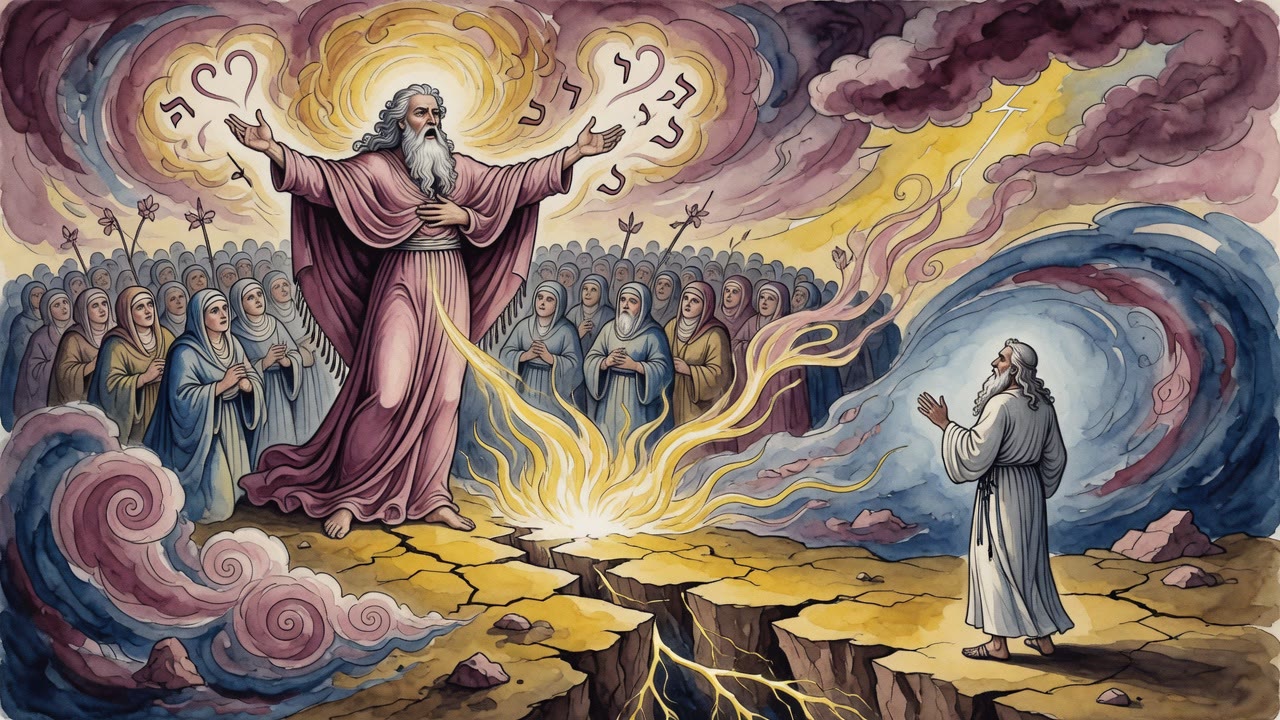
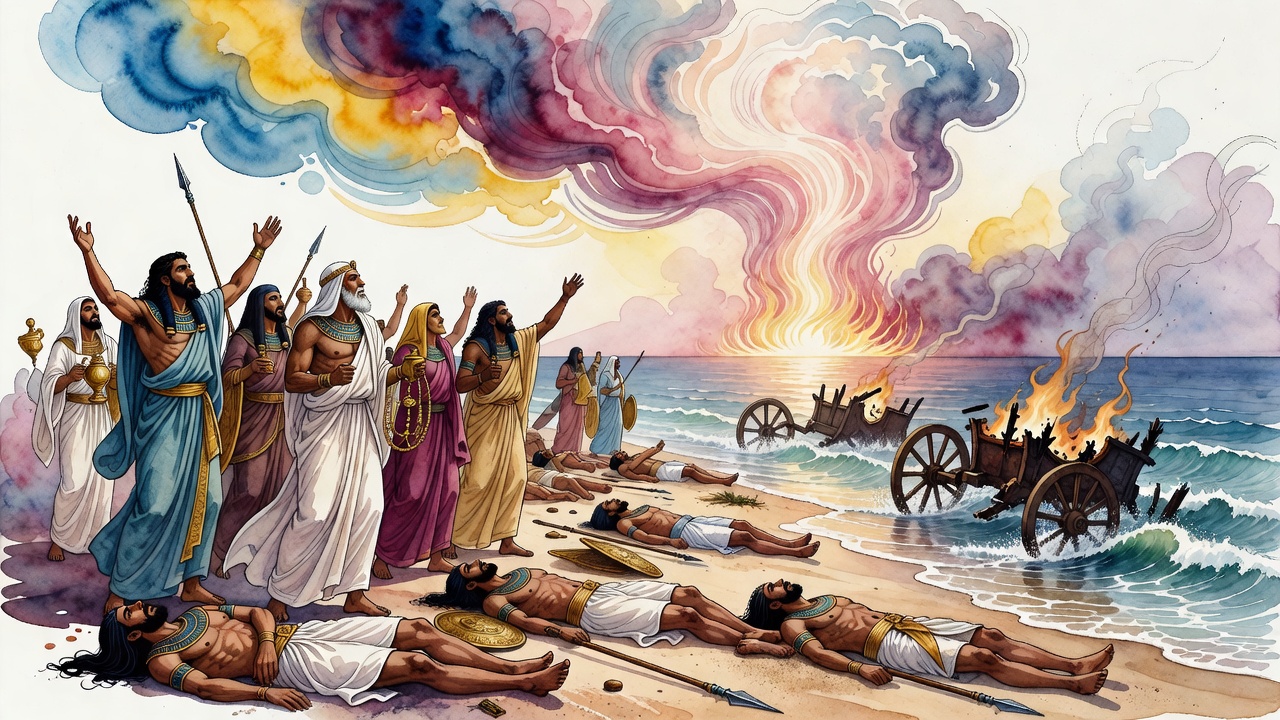
Israel Turned Back So Egypt Would Chase Into the Sea
In three days of darkness Israel buried its dead where Egypt could not watch. One in five hundred walked out toward the sea.
Table of Contents
Oxcarts groaned. Children asked why the cloud was leading them toward a wall of water. Feet that had just learned freedom now learned reverse.
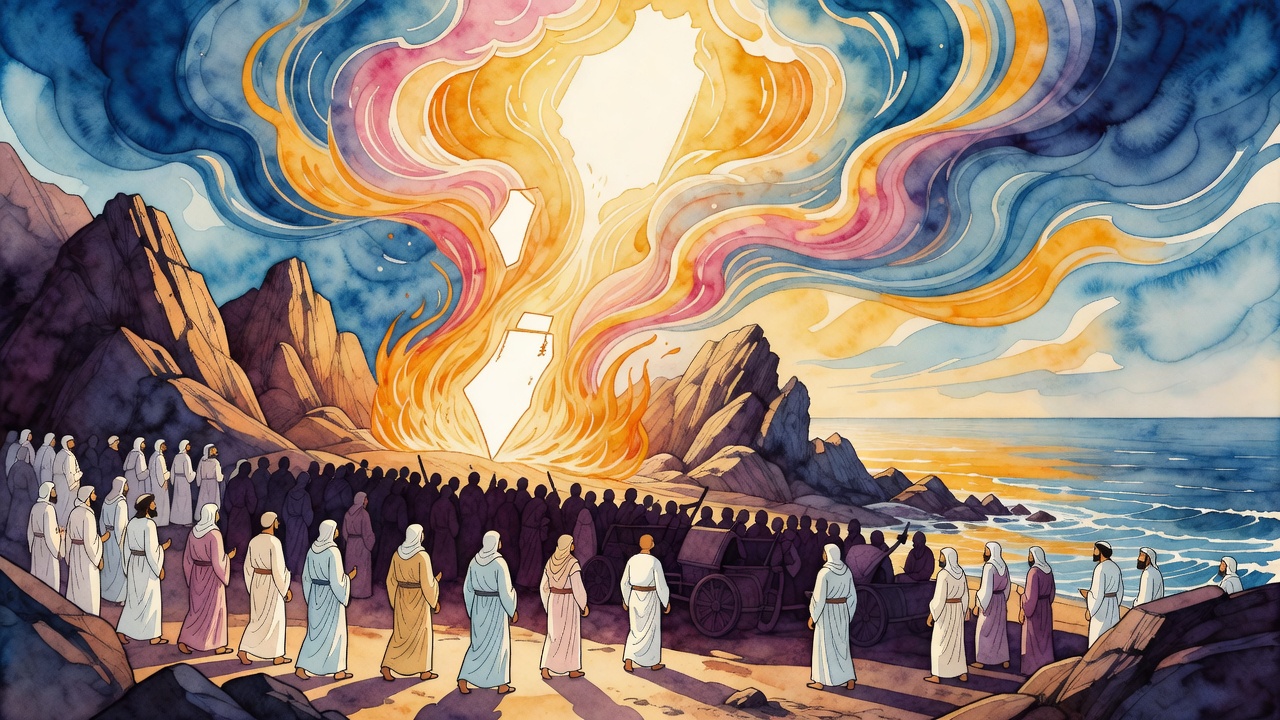 Click for full size
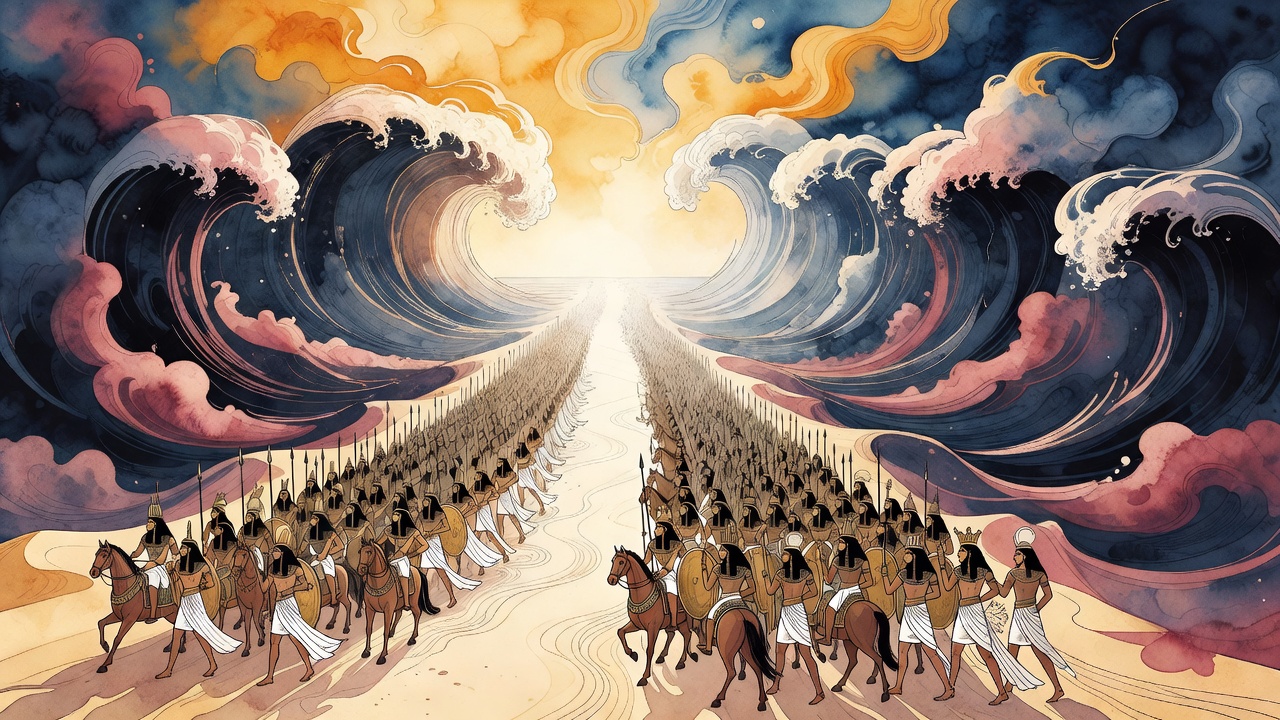
God had told Moses to speak to the children of Israel that they return and encamp (Exodus 14:1-2). The command sounded like retreat. Behind them, Egypt. Before them, the sea. On the flanks, Migdol and the chiroth.
Turn Around Before the Water
The chiroth were not ordinary rocks. Rabbi Eliezer said they were not slanting but straight, not open but surrounded, not round but square, not man-made but Heaven-made, with open eyes, one in the figure of a male and one of a female. No easy passage between them.
Rabbi Yehoshua mapped the trap simply. Hahiroth on one side, Migdol on the other, sea ahead, Egypt behind. Israel was not lost. Israel was bait arranged by the One who had already decided the ending.
Moses had no softer answer than the command. The map was a mouth waiting to close on chariots. The column turned. Dust rose the wrong way. A child held a parent's sleeve and asked again why the water was in front of them now.
Pharaoh Read the Map Wrong
Pharaoh saw a people boxed in and called it opportunity. The same Egypt that once said, "Come, let us deal shrewdly with them" (Exodus 1:10), now saw shrewdness in a dead-end camp. Forced labor had been shrewd. Infanticide had been shrewd. Each step had looked reasonable while it tightened.
God answered measure for measure. At the sea the breath of the divine nostrils made the waters ne'ermu, a word tied to armah (ערמה), cunning. The Egyptians had outsmarted slaves. The waters would outsmart chariots.
Pharaoh's scouts counted rocks and shorelines and wrote a victory in their heads. They did not count the intelligence of the tide. They rode toward a geometry they thought they owned.
Torrents That Hunt
The Song remembers walls of water. On the ground the sea embattled Egypt in all kinds of torrents, finding gaps, cutting routes, leaving no clean exit. Shrewdness became weather. The weapon of the oppressor returned as tide and current.
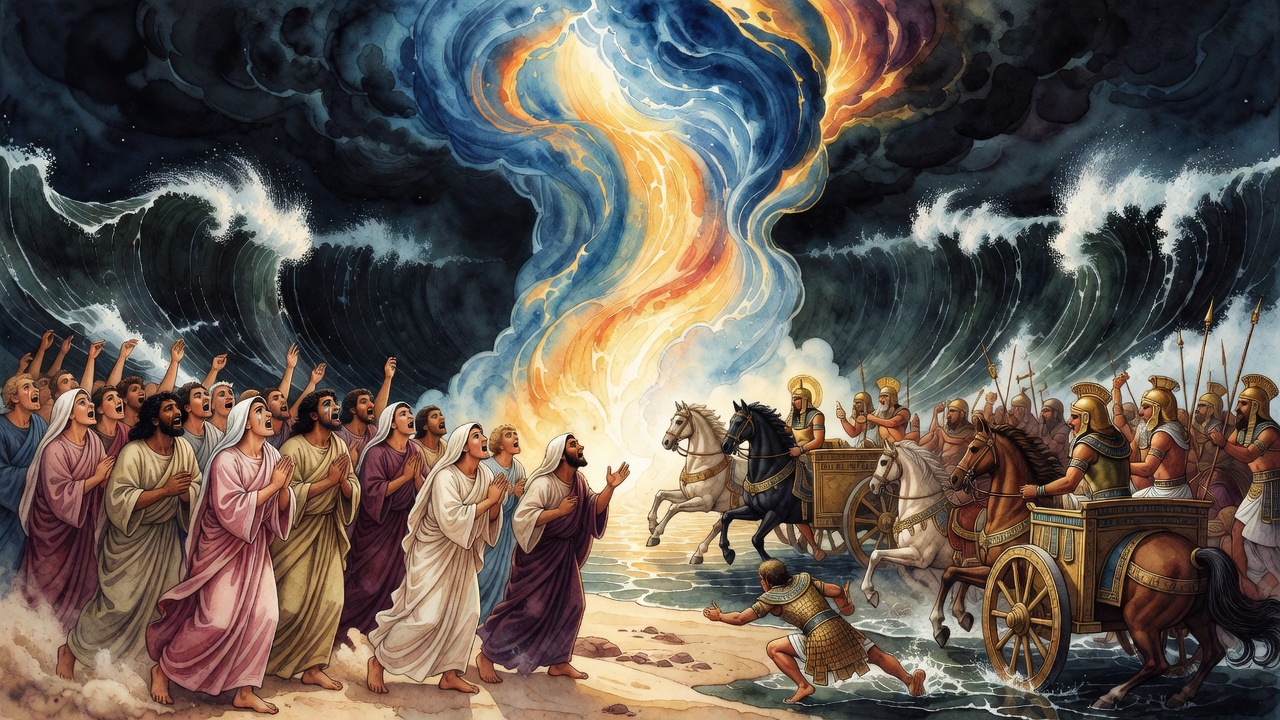
Israel stood between rock faces that looked like watching eyes and a sea that had taken a side. Pharaoh's army entered. Wheels locked. Horses screamed. Men who had thrown infants into the Nile learned how water keeps a debt.
The Song later calls it the breath of nostrils (Exodus 15:8). On the ground it felt like being hunted by liquid. There was no clean line of retreat left for a chariot. The torrents knew the paths better than the riders did.
One in Five Hundred Walked Out
Rabbi Nehorai swore upon his oath that not one in five hundred went out. Scripture multiplies Israel like field shoots. One woman bears six at a birth, in the reading of the teeming verbs. If so, six hundred thousand men are a remnant, not a full harvest.
Where did the rest go? They died in Egypt during the plague of darkness, when one man could not see another for three days (Exodus 10:23). Those judged unworthy of redemption fell under cover that also hid Israel's grief. The living buried the dead where Egyptians could not watch and rejoice. Darkness punished Egypt and veiled the losses in one cloth.
The column that turned back toward the sea already knew how to dig graves without an audience. Freedom began with subtraction. The people who camped at Pi Hahiroth were already a thinned people.
The Trap Closed on the Pursuer
They had buried kin in black noon. Now they waited where chariots would take the bait. Cunning met cunning. Abundance of Egyptians met scarcity of Israelites who had survived the darkness. The rocks watched. The sea waited. Moses raised his staff.
Chariot leather still wet, crests still bright, the pursuers learned too late that Pi Hahiroth was never a dead end for slaves. It was a funnel. The staff of Moses did not invent the funnel. The command to turn back did. Obedience drew the walls. The sea only closed them.
A child would later ask why the first journey after liberation looked like a mistake. The rocks hemmed. The waters thought. The people were small enough, after darkness, to fit through. The trap was never for Israel. It was for the pursuer who loved shrewdness more than truth.
← All myths