5 min read

When Israel's Complaint Became Wilderness Fire

Bread fell, water ran from stone, and still the camp whispered against God. The answer came as fire at the wilderness edge.

Curated by Arthur · Told by Maggid ·
Table of Contents
  1. The Table They Could Not See
  2. The Whisper Became an Accuser
  3. Moses Saw the Panic
  4. The Fire Drew Back
  5. Mercy After the Mouth

The desert had no table.

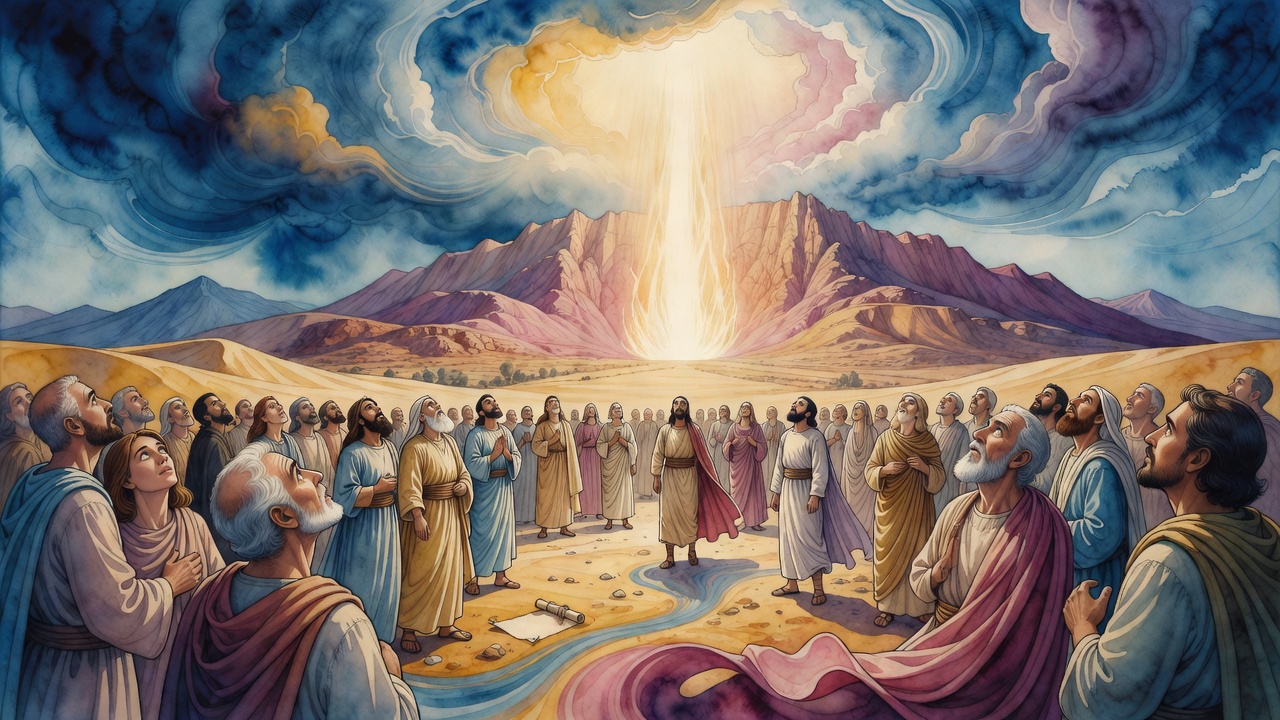
It had stone, glare, dust, and the long white silence of a place that did not care whether children were hungry. Israel stood there with Egypt behind them and nothing soft ahead. The sea had opened. Bread had fallen with the morning dew. Water had burst from rock and run in streams where no stream belonged.

Still, someone looked at the empty horizon and whispered the question that moved faster than wind through a frightened camp.

Can God feed us here?

The Table They Could Not See

The question did not arrive as honest hunger alone. Hunger has a plain voice. It says, Give us bread. This was sharper. It turned the miracle already given into an accusation. Yes, water had come from stone, the people murmured. But could a table be prepared in a wilderness like this? Could food appear where the ground itself looked cursed?

A man who has never seen water from rock might ask in fear. A people drinking that water while asking had crossed into something darker. Their mouths were wet with mercy, and they used those mouths to doubt the One who had given it.

The camp learned how quickly a question can become a stain. It began under breath, near cooking pots, beside tents, among families measuring what remained. Nobody had to shout. Secret speech knows how to travel. It slips between people with the modest face of concern, then hardens into contempt before anyone admits what has happened.

The Whisper Became an Accuser

Words spoken in hiding do not stay small. They grow because no one has to answer for them in the open. A charge made behind a curtain gives the accused no place to stand, no witness to face, no wound to bind.

That is what made the wilderness whisper so poisonous. Israel did not merely say, We are hungry. They struck at God's Glory in secret. They took the memory of water and bent it into evidence against the next act of care. The miracle became their argument. The gift became their weapon.

The sky did not darken. No court assembled. No herald announced sentence.

Fire came.

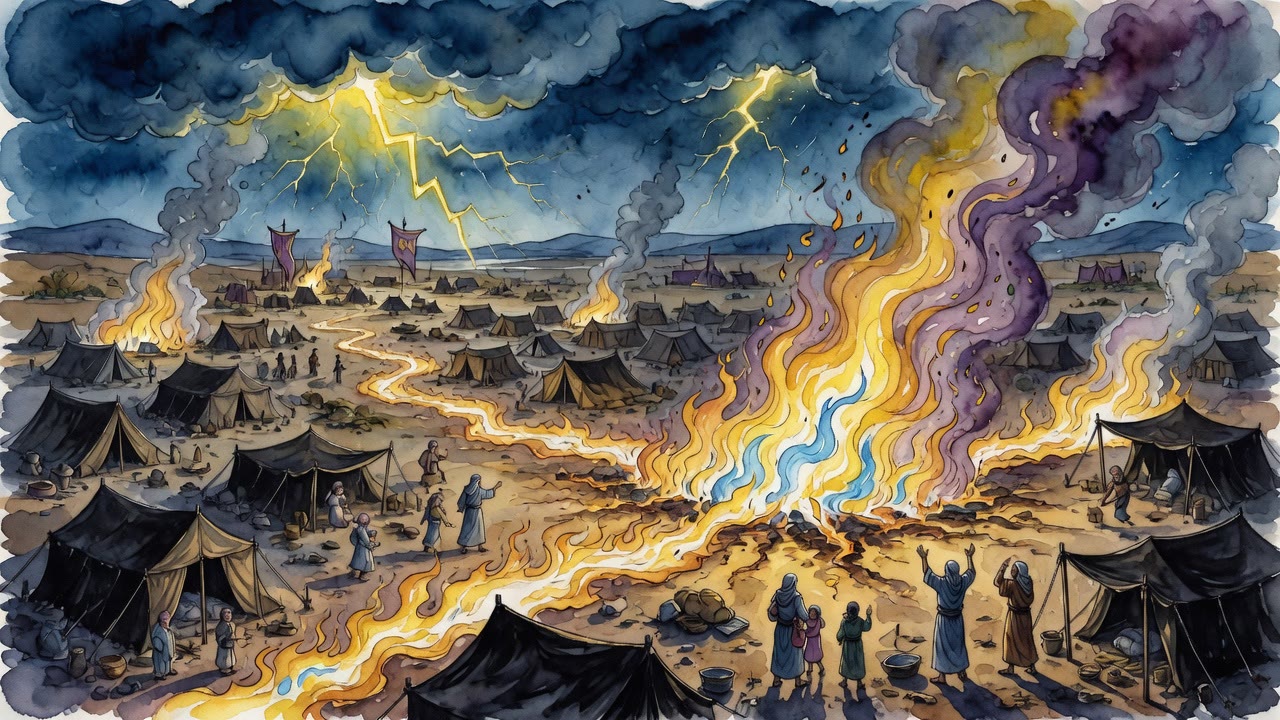
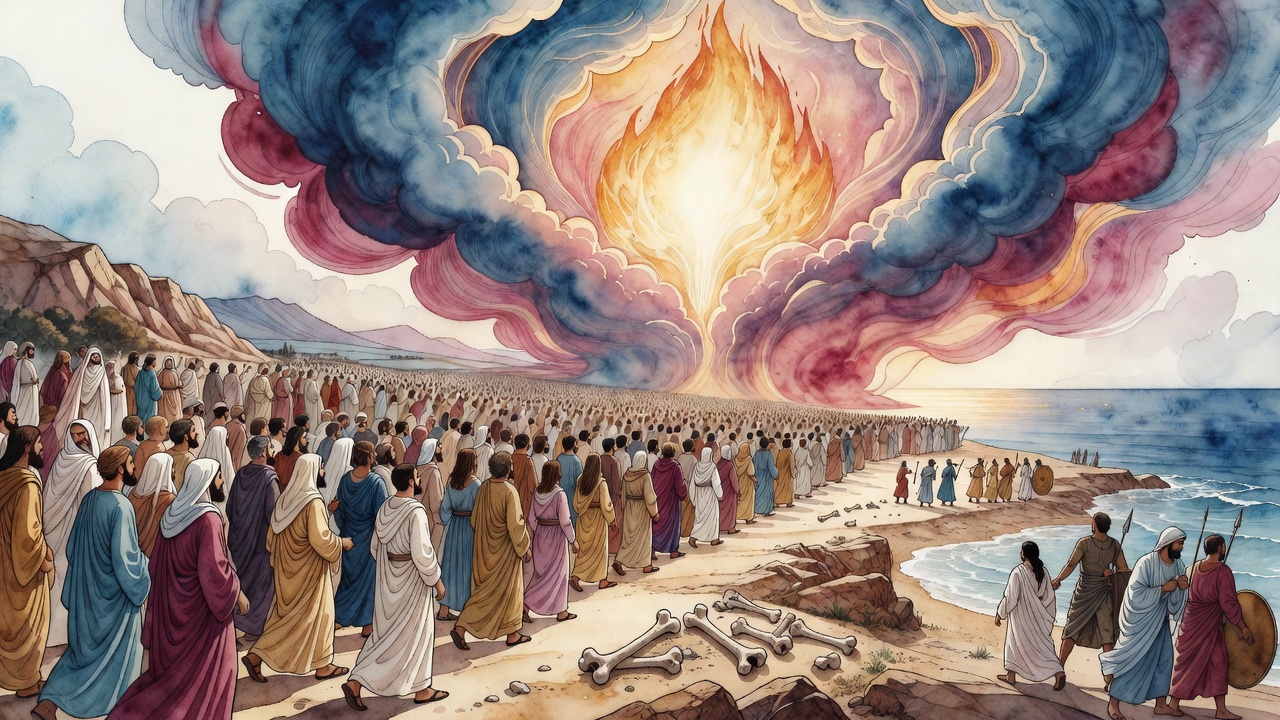
It moved with terrible clarity, not like an ordinary blaze hunting dry brush, but like Glory turned outward. The same holiness that had guided them, guarded them, and drawn near to them now burned at the camp's edge. What had been shelter became danger. What had been presence became heat.

Moses Saw the Panic

The people ran.

Smoke breaks courage quickly. The neat arguments of the hungry vanish when flame reaches the tents. Israel had spoken as if the Holy One were absent, and now the nearness was unbearable. They found Moses because Moses was where Israel always went when the road became impossible.

They begged him to look at them. Not as a crowd. Not as rebels. As bodies about to be consumed. Give us to slaughter, they cried, but not to this fire. A blade was imaginable. Fire from heaven was not. A blade ended a life. This entered the life before ending it.

Moses saw them.

That was the first mercy. Before the prayer, before the answer, before the flame sank back, he allowed their terror to reach him. He did not stand aside and calculate whether they deserved the burning. He did not rehearse their complaint. He saw the plight of Israel, and the seeing became prayer.

The Fire Drew Back

Moses prayed without a long speech. No argument filled the air. No list of ancestral promises. No bargaining over numbers. Only the pressure of a leader standing between a terrified people and the fire their own mouths had drawn.

God listened.

The flame stopped taking ground. The camp, which had filled itself with hidden accusation, now filled itself with breath. Men counted their families. Women gathered children. The outer places smoked. The question that had begun as a whisper remained, but now it had an answer burned into the edges of the camp.

God could feed them in the wilderness. God could bring water out of stone and bread out of morning. God could also make His nearness impossible to ignore.

Israel moved on carrying two truths at once. Speech can become an attack before it becomes a shout. Prayer can turn back fire even after the attack has already reached heaven.

Mercy After the Mouth

The road did not become easy after that. Deserts do not soften because a people learns one lesson. Hunger would return. Complaint would return. Fear would return with new names and new reasons.

But this moment stayed behind them like a charred border. It taught the camp that hidden slander is not harmless because it is hidden, and that divine mercy does not vanish because human speech has become rotten. Moses stood in the narrow place between both facts. He saw Israel, prayed for Israel, and the fire withdrew.

The people had asked whether God could set a table in the wilderness. They received a harsher answer first. The One who sets the table also hears what is muttered around it.


← All myths

From the tradition

Sources

2 sources

The texts this telling draws on, in full. Open a card to read inline, or expand it for a wider, quieter read.

Pirkei DeRabbi Eliezer 53:2Pirkei DeRabbi Eliezer

The ancient Israelites certainly did. And sometimes, their reactions… well, let's just say they weren't always their finest moments.

We find a particularly vivid example of this in Pirkei DeRabbi Eliezer, specifically chapter 53. Now, Pirkei DeRabbi Eliezer is a fascinating text, a kind of midrashic (rabbinic interpretive commentary) (interpretive) retelling of biblical narratives, attributed to Rabbi Eliezer ben Hyrcanus. It's filled with expansions and embellishments that really bring the stories to life.

Here, Rabban Gamaliel picks up the narrative. He recounts a moment of profound doubt and, frankly, a bit of back-talking aimed straight at the Divine. Can you imagine questioning God's ability to provide?

The Israelites, fresh from their miraculous exodus from Egypt, found themselves wandering in the wilderness. They looked around at the barren landscape and started to grumble. "Wilt thou say that He has power to feed us in the wilderness?" they asked. They even quoted back at God, twisting scripture to fit their doubt: "Can God prepare a table in the wilderness? Behold, he smote the rock, that waters gushed out, and streams overflowed" (Ps. 78:19, 20). In other words, "Okay, okay, you gave us water, but food? Really?"

Ouch.

As Pirkei DeRabbi Eliezer tells it, the Holy One, blessed be He, heard their slander. It wasn’t just a passing complaint; it was a direct assault on His glory – His very essence. And what happens when you slander the divine? From His Glory, which is a consuming fire, He sent against them a fire which consumed them round about, as it is said, "And the people were as murmurers… and the fire of the Lord burnt among them, and devoured in the uttermost part of the camp" (Num. 11:1).

A bit harsh? Perhaps. But remember, these stories aren’t always literal; they’re often conveying deeper truths. The fire here represents the consequences of their lack of faith, the destructive power of doubt.

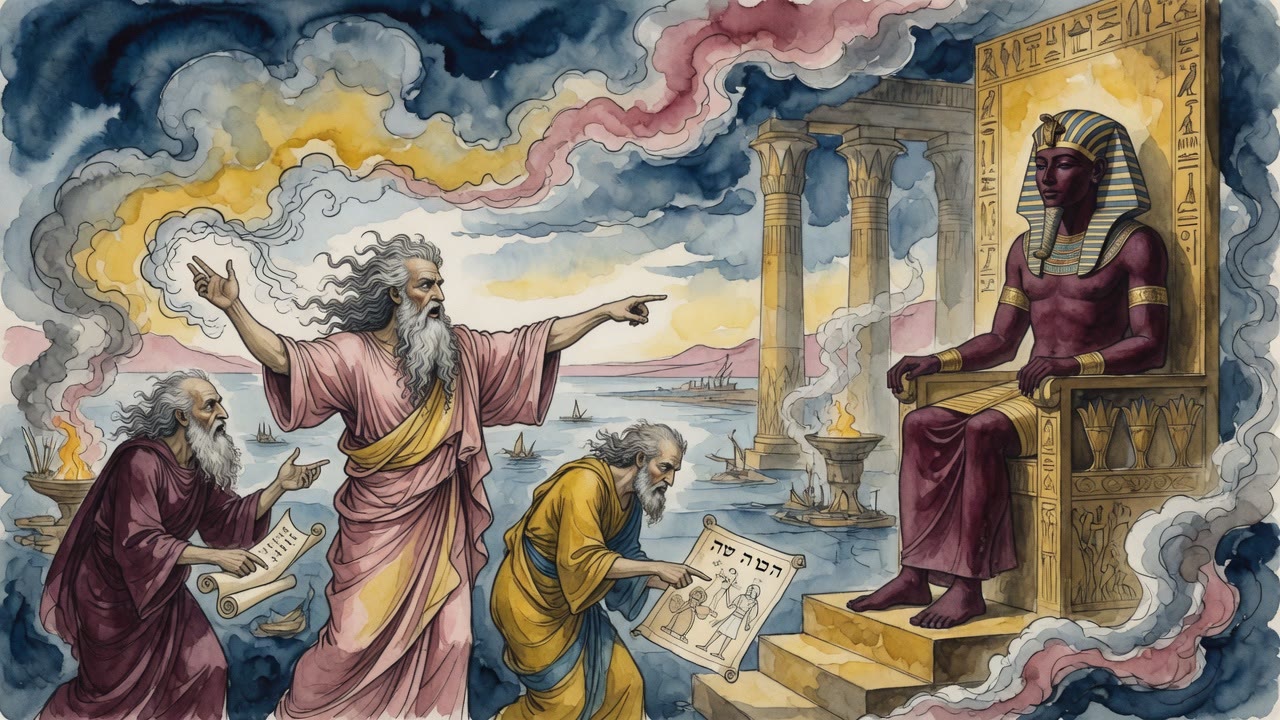
Panic set in. The Israelites, suddenly regretting their sass, turned to Moses. "Moses, our lord! Let these be given like sheep to the slaughter, but not to the fire which is consuming fire." They'd rather face a swift death than be consumed by this divine wrath.

Moses, ever the compassionate leader, saw their plight. He interceded on their behalf, pleading with God to forgive them. And, "He was entreated of him, as it is said, "And the people cried unto Moses" (Num. 11:2). Their cries, channeled through Moses's prayer, were heard.

The fire subsided. The Israelites were spared. But the lesson, hopefully, was learned.

This short but powerful story from Pirkei DeRabbi Eliezer offers a stark reminder about the power of faith and the dangers of doubt. It's a reminder that even when faced with seemingly impossible circumstances, questioning the very source of our blessings can have… fiery consequences. It also shows the power of intercession, of having someone stand in the gap for us when we falter.

What does this ancient story mean for us today? Maybe it’s a call to examine our own moments of doubt. To recognize when we’re questioning the source of our own blessings. And perhaps, most importantly, to remember that even when we stumble, there's always a chance for repentance, for a second chance. Just like the Israelites in the wilderness.

Full source
Pirkei DeRabbi Eliezer 53:1Pirkei DeRabbi Eliezer

Pirkei DeRabbi Eliezer, a fascinating and somewhat enigmatic work of Jewish literature, dedicates a section to this very topic, emphasizing its gravity. It states, unequivocally, that "everyone who secretly slanders his fellows has no remedy." But why such severity?

The text backs this up with powerful verses. "Whoso privily slandereth his neighbour, him will I destroy," we read in (Psalm 101:5). And (Deuteronomy 27:24) delivers a similar blow: "Cursed be he that smiteth his neighbour in secret." These aren't just suggestions; they're pronouncements.

Why is secret slander so awful? Isn't it "just words?" Perhaps the answer lies in the insidious nature of hidden attacks. When something is done in secret, there's no chance for defense, no opportunity to address the accusation, no way to heal the damage openly. It festers, unseen.

Pirkei DeRabbi Eliezer then drives home the point with a story, a story The familiar version gives us well: the tale of the serpent in the Garden of Eden. What was the serpent's primary weapon? Not brute force, but words. Slander, in fact. It whispered doubts about God, planting seeds of distrust in Adam and Eve. It uttered slander concerning the Holy One, blessed be He, to Adam and his helpmate."

And what was the consequence? The serpent was cursed. "Dust shalt thou eat all the days of thy life," (Genesis 3:14) tells us. A life of degradation, a constant reminder of its transgression.

The connection is clear. Slander, even when directed at the Divine, has devastating repercussions. If God punishes the serpent so harshly, what does that say about our own responsibility to guard our tongues?

This isn't just an ancient lesson, is it? In our modern world, where gossip spreads like wildfire online, where reputations can be ruined with a single click, the importance of guarding against slander is more relevant than ever. What are the modern equivalent to the serpent's lies? What "dust" are we eating today?

So, the next time you're tempted to speak ill of someone in secret, remember the serpent. Remember the curse. Remember the power of words. And choose them wisely. Because as the verse says, there might be no remedy for the damage we inflict.

Full source